 EdCircuit Staff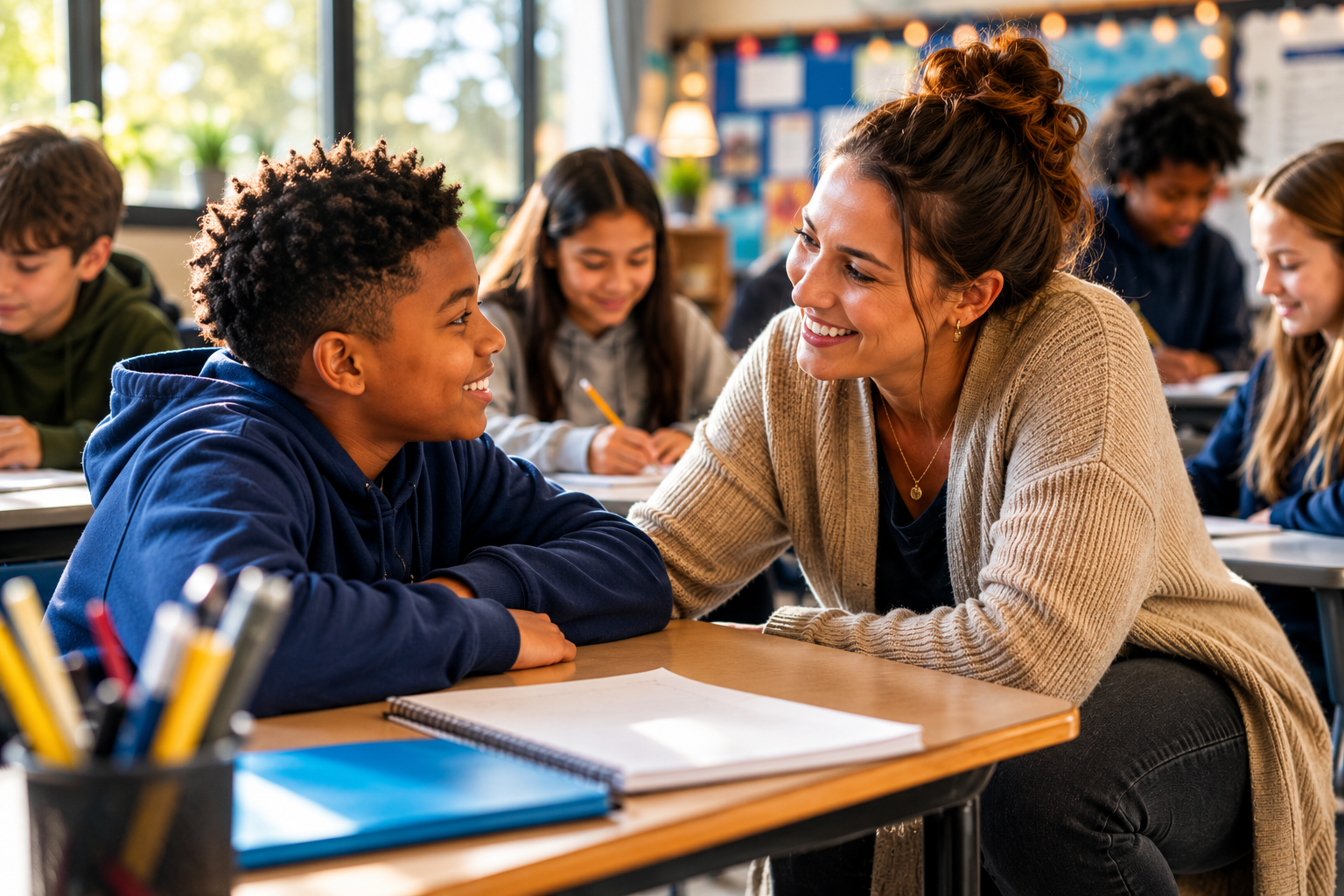
Why students need relationships before rigor begins with a simple but powerful reality.
A student sits quietly in the back of a classroom on the first day of school.
No one noticed the anxiety they carried through the doors that morning.
No one sees the uncertainty behind their smile.
No one hears the questions running through their mind.
Will I fit in?
Will I make friends?
Will my teachers care about me?
Will I succeed here?
Before that student can focus on a lesson, solve a problem, write an essay, or participate in a discussion, they must answer a much more important question:
Do I belong here?
For decades, educators have focused on curriculum, instruction, assessment, and accountability. These elements remain essential to student success. Yet growing research and everyday experience continue to reinforce a truth that many educators have always understood instinctively: learning is deeply connected to relationships.
Students learn best when they feel connected.
They learn best when they feel valued.
They learn best when they feel that they belong.
Relationships are not separate from learning.
They are the foundation of learning.
Every Student Wants to Be Seen
One of the most powerful questions educators can ask is deceptively simple:
Does every student feel known?
Students arrive at school carrying different experiences, challenges, strengths, and dreams. Some enter the building eager to engage. Others arrive carrying burdens that classmates and teachers may never fully understand.
For many students, school may be the most stable environment in their lives. It may be the place where they encounter caring adults, supportive peers, and opportunities to succeed. For others, school may represent uncertainty or anxiety.
Regardless of circumstance, every student wants to know that they matter.
A teacher greeting students at the classroom door, a counselor checking in after a difficult week, a principal attending extracurricular activities, or a bus driver remembering a student’s name may seem like small gestures. Yet these moments communicate something powerful.
You belong here.
Students rarely remember every lesson they receive.
They remember how people made them feel.
Belonging Drives Engagement
Engagement is often discussed as a goal in education, but engagement does not happen by accident.
Students who feel connected to their school community are more likely to participate in class, attend regularly, complete assignments, and seek support when needed. They are more likely to join activities, develop friendships, and view themselves as valued members of the school community.
Belonging creates investment.
When students believe they are part of something larger than themselves, they become more willing to contribute, collaborate, and challenge themselves academically.
The opposite is also true.
Students who feel disconnected often withdraw. They may stop participating, avoid opportunities, or disengage entirely. In many cases, what appears to be an academic issue is actually a relationship issue.
Before schools can improve outcomes, they must first ensure students feel connected.
Students Show Up for People
Schools across the country continue to focus on improving attendance, reducing chronic absenteeism, and increasing student engagement. While attendance data often highlights the problem, relationships frequently reveal the solution.
Students are more likely to show up when they know someone is expecting them.
They are more likely to attend when they feel connected to a teacher, coach, counselor, advisor, or support staff member who genuinely cares about their success.
For many students, the motivation to come to school is not a schedule, a program, or even a class.
It is a person.
A trusted adult can become the difference between engagement and withdrawal, participation and isolation, persistence and giving up.
Students show up where they feel connected.
And connection begins with relationships.
Relationships Create Safe Places to Learn
Learning can be uncomfortable.
Students are asked to solve unfamiliar problems, express new ideas, take academic risks, and confront concepts they do not immediately understand. These experiences require courage.
Students are far more willing to embrace those challenges when they trust the adults guiding them.
A classroom built on strong relationships becomes a place where mistakes are viewed as part of growth rather than evidence of failure. Students become more willing to ask questions, share ideas, and persevere through difficult tasks because they know they will be supported along the way.
Psychological safety is not a luxury.
It is a prerequisite for learning.
The most effective educators understand that creating safe learning environments begins long before instruction starts.
It begins with relationships.
Teachers Are the Difference
Few people influence a student’s experience more than a teacher.
Teachers have the opportunity to create classrooms where students feel respected, encouraged, and challenged. They establish the tone, shape expectations, and often become the adults students trust most within the school setting.
The strongest teachers understand that relationships and rigor are not competing priorities.
They are complementary.
Students are more likely to embrace high expectations when they know those expectations come from someone who genuinely believes in their potential. Trust creates the confidence necessary to tackle difficult work and overcome obstacles.
Great teachers do not lower standards to build relationships.
They build relationships that allow students to meet high standards.
Support Staff Strengthen Connections
The adults who impact students extend far beyond classroom teachers.
Office professionals, paraprofessionals, counselors, cafeteria employees, bus drivers, custodians, coaches, and countless others contribute to the relationships that shape student experiences.
Many students develop meaningful connections with adults they encounter outside the classroom. A counselor may help a student navigate a personal challenge. A bus driver may provide a consistent source of encouragement. A cafeteria employee may offer a smile that changes the trajectory of a difficult day.
These interactions matter because belonging is built throughout the school, not just inside classrooms.
Every adult contributes to the culture students experience.
And every adult has the potential to become the trusted person a student needs.
Student Voice Matters
Students are more likely to feel connected when they believe their voices matter.
Schools that actively seek student input often discover valuable insights about culture, engagement, and learning. Students want opportunities to contribute ideas, share perspectives, and participate in decisions that affect their daily experiences.
Listening to students communicates respect.
It demonstrates that schools view learners not simply as recipients of education but as active members of the community.
When students feel heard, they become more invested.
When they become more invested, they become more engaged.
And engagement leads to growth.
Families Help Build the Bridge
Relationships do not stop at the school doors.
Families play a critical role in helping students feel connected to their learning environments. Strong partnerships between schools and families create consistency, trust, and shared expectations.
Parents and guardians want to know that educators care about their children as individuals. Communication that focuses on strengths, progress, and partnership helps build confidence and trust.
When schools and families work together, students benefit.
They receive a powerful message that the adults in their lives are united in supporting their success.
Rigor Still Matters
The argument for relationships before rigor is not an argument against academic excellence.
In fact, it is the opposite.
Strong relationships create the conditions necessary for rigorous learning. Students who trust their teachers are more likely to embrace challenges. Students who feel connected are more likely to persevere through setbacks. Students who believe they belong are more likely to engage fully in the learning process.
Relationships do not replace rigor.
They make rigor possible.
The most successful schools are not forced to choose between academic excellence and meaningful relationships.
They understand that the two are inseparable.
Great Schools Start With Belonging
Schools will continue to evolve.
Technology will change.
Curriculum will change.
Assessment models will change.
Educational initiatives will come and go.
Yet one truth remains remarkably consistent.
Students learn best when they know someone cares.
They learn best when they feel safe enough to take risks.
They learn best when they believe they belong.
Long after the lessons are forgotten, and the grades fade into memory, students remember the adults who saw potential in them before they saw it in themselves.
They remember the teacher who believed in them.
The counselor who listened.
The coach who encouraged them.
The bus driver who greeted them.
The cafeteria employee who knew their name.
The adults who helped them feel seen.
Because relationships leave lasting impressions.
Relationships create belonging.
Relationships build confidence.
Relationships unlock potential.
And relationships are not an obstacle to academic achievement.
They are the pathway to it.
Subscribe to edCircuit to stay up to date on all of our shows, podcasts, news, and thought leadership articles.