



 EdCircuit Staff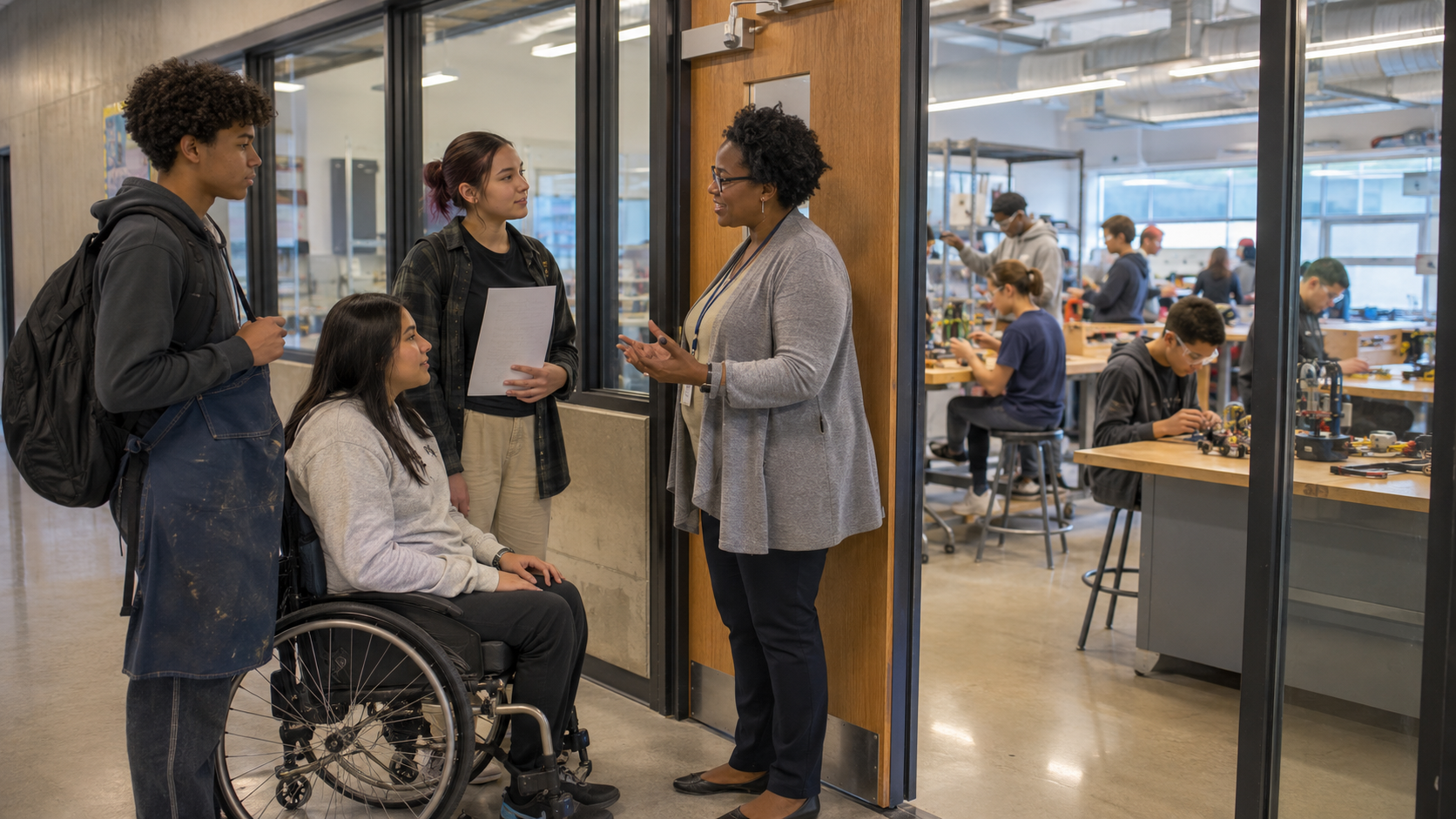
CTE access can disappear somewhere between the course catalog and the first day of class.
The program is listed, and the lab exists. Yet one student cannot fit the required three-period block alongside advanced math. Another has no ride to the career center. A third cannot leave a paying job for an unpaid internship. Someone else never applies because no adult suggested the pathway was meant for them.
Each student could technically enroll. None could participate without giving up something important or receiving additional support.
As districts invest in career and technical education, enrollment tells only part of the story. The harder question is who reaches the experiences carrying the most value after high school.
The Barriers Hidden Inside an Ordinary School Day
Some of the biggest obstacles to CTE do not look like barriers. They look like schedules, bus routes, eligibility rules, and long-standing school procedures.
Many pathways require extended periods for equipment, projects, or travel. That makes instructional sense, but it can collide with Advanced Placement courses, band, athletics, or graduation requirements. Students may be free to enroll only if they surrender something else they value.
Transportation creates another dividing line. A career center six miles away may be reachable by district bus during school but inaccessible for an evening certification course or internship. Students with cars gain flexibility; those relying on others have fewer choices.
The U.S. Department of Education’s Regional Educational Laboratory Northwest identifies transportation, financial constraints, scheduling, staffing, and employer capacity as conditions shaping access. They determine whether a pathway functions as a system or only for students whose lives already fit it.
When “Real-World Experience” Comes With a Price
Internships, apprenticeships, clinical placements, and job-shadowing experiences are often the most valuable parts of CTE. They are also where inequities can become most visible.
An unpaid internship may be manageable when a family can cover transportation, meals, and lost work hours. It may be impossible for a teenager contributing to household expenses. Paid opportunities can also be out of reach when shifts conflict with caregiving or require upfront purchases.
Research involving Indianapolis Public Schools found that jobs, family responsibilities, transportation, scheduling, and limited awareness could interfere with work-based learning. The district and Regional Educational Laboratory Midwest used surveys and process mapping to find where students were losing access instead of assuming low participation meant low interest.
Jenny Berry, CTE pathway director at IPS, said “getting the input from stakeholder groups was valuable through the surveys, particularly from the student perspective”. Low participation did not automatically mean low interest; sometimes students were reacting to how the opportunity had been structured.
Gatekeeping Can Begin Before a Student Applies
Written policies are only one source of gatekeeping. Guidance from adults can have just as much influence.
A counselor may steer a high-achieving student away from CTE to protect college-preparatory courses. Another student may be directed toward a trade based on test scores rather than interest. Prerequisites can screen out students who might thrive with support, while competitive applications favor those with stronger attendance, transportation, or family knowledge.
Some students are pushed toward CTE while others are guided away from it. Neither approach treats career education as a genuine choice.
Federal CTE researchers have cautioned that selectivity can restrict equitable access. Programs need reasonable safety and readiness expectations, but districts should ask whether each requirement is essential. If a rule repeatedly excludes one group, leaders should know why.
Student Choices Do Not Develop in a Vacuum
The latest detailed national transcript table released by NCES—published in 2024 and based on 2019 graduates—shows how strongly CTE participation remains divided by gender.
Among 2019 public high school graduates, 25.9 percent of male graduates earned computer and information sciences CTE credit, compared with 13.5 percent of female graduates. The gaps were wider in construction, at 15.6 percent versus 3 percent, and in engineering, design, and production, at 33.9 percent versus 11.5 percent. Healthcare moved in the opposite direction: 18.9 percent of female graduates earned credit in the field, compared with 8.4 percent of male graduates.
Those patterns are not explained by preference alone. Interests are shaped by what students see, how adults describe careers, and whether young people can picture themselves belonging in the room.
Recruitment requires more than a diverse photograph. Students need early exposure, honest information, visible role models, and chances to try unfamiliar work without being defined by one exploratory course.
Equal Access Requires More Than an Open Door
Students with disabilities encounter barriers in lab layouts, equipment, transportation, communication, and assumptions about what they can do. English learners and their families may receive information without adequate translation or explanation of credentials, fees, and deadlines.
Federal civil rights oversight requires equal CTE access regardless of race, color, national origin, sex, or disability. Meeting that requirement does not automatically mean that labs, equipment, or placements were designed well.
Accessibility belongs in the design of facilities, equipment, and placements—not in a retrofit after a request. Multilingual communication must explain where a pathway leads, what it costs, which credits transfer, and whether transportation and paid experiences exist.
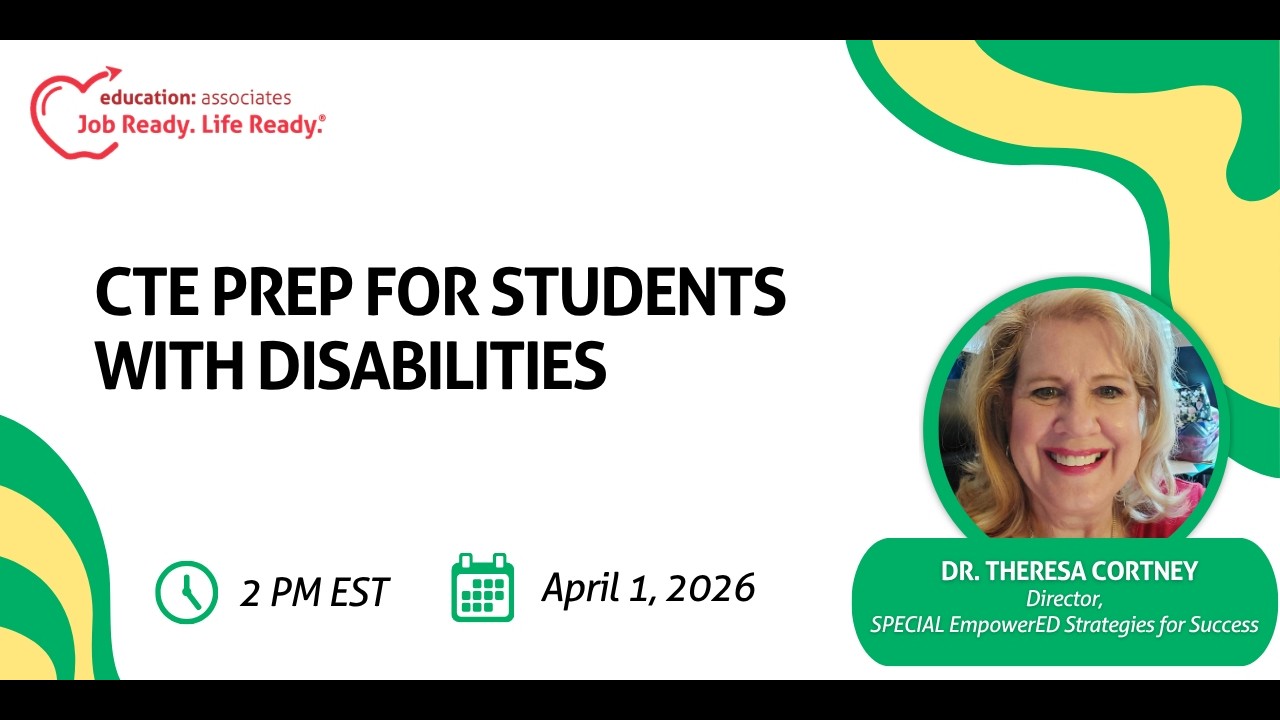
Watch: CTE Prep for Students with Disabilities (Education Associates, Inc.)
Dr. Theresa Cortney discusses how collaboration, advance preparation, appropriate accommodations, and inclusive instruction can help students with disabilities succeed in CTE classrooms.
Geography Changes the Options
CTE access looks different in a large urban district, a suburban high school, and a small rural community.
Urban students may live near employers but struggle to reach placements across a city. Rural students often participate in CTE at high rates, yet small districts may lack specialized programs or nearby placements. Suburban districts can still face competitive admissions and scheduling conflicts.
Regional career centers, mobile labs, shared instructors, college partnerships, and school-based enterprises can expand reach. In southern Indiana, three rural districts share work-based-learning opportunities across district lines rather than expecting each school to build everything alone.
Designing CTE Access Instead of Hoping for It
Districts serious about access should be able to answer practical questions:
- Can a student participate without owning a car, and are high-value work experiences paid whenever possible?
- Do pathway schedules conflict with advanced academics or other major programs?
- Are application requirements necessary, transparent, and reviewed for unequal effects?
- Can students with disabilities use the facilities and placements, and do families receive clear information in languages they understand?
- Who receives dual credit, valuable credentials, and advanced work-based learning—not simply an introductory course?
Districts should examine applications, acceptances, completion, credentials, paid placements, and post-secondary outcomes by student group. A pathway may appear diverse in introductory courses while its highest-value opportunities remain concentrated among fewer students.
Students often recognize barriers adults overlook: a bus leaving too early, an unexplained application, a fee mentioned too late, or a placement that does not feel welcoming.
Opportunity Has to Be Reachable
Expanding CTE is not only a matter of adding programs, renovating labs, or signing employer agreements. It means examining the distance between an opportunity being announced and a student being able to use it.
Some students need transportation. Some need financial support, translated information, an accommodation, a different schedule, or one adult who recognizes an interest that does not match an old stereotype. Those supports are not extras added after the “real” program is built. They are part of the program.
Districts need to look beyond whether students were invited and examine whether they were actually able to participate. That is the standard the next stage of CTE expansion should meet.
Subscribe to edCircuit to stay up to date on all of our shows, podcasts, news, and thought leadership articles.

