
This explainer, published by edCircuit in April 2026 under the EdCircuit Staff byline, describes how summer learning programs support reading, STEM, enrichment and community partnerships. A new section below adds the research the original does not cite, including 2025 and 2026 findings on summer learning loss and on what makes summer programs work.
Summer learning programs help students maintain academic progress, build new skills, and stay engaged during the months when school is not in session. While summer break offers students an important opportunity to rest and recharge, it can also lead to learning gaps if students are not regularly engaged in educational activities.
Schools and communities across the country recognize the importance of providing summer learning opportunities. Programs such as summer reading initiatives, enrichment camps, academic support programs, and STEM activities help students continue developing knowledge and skills while keeping learning engaging and enjoyable.
When schools and communities work together to provide meaningful summer learning experiences, students are more likely to return to the classroom confident, prepared, and ready to continue their academic journey.
Understanding Summer Learning Loss
One of the main reasons summer learning programs are important is the concept often referred to as summer learning loss. During the summer months, students who do not regularly practice academic skills may lose some of the progress they made during the school year, particularly in reading and mathematics.
Editor’s note (2026): Recent NWEA data, reported by K-12 Dive, shows a loss in math but flat results in reading.
Even small gaps in practice can make it more difficult for students to retain knowledge and maintain strong academic habits. When students return to school in the fall, teachers may need to spend time reviewing previous material before introducing new lessons.
Summer learning programs help address this challenge by providing structured opportunities for students to review concepts, strengthen skills, and continue learning in a supportive environment. These programs help ensure that students return to school ready to build upon the knowledge they gained during the previous school year.
Encouraging a Love of Reading
Reading is one of the most effective ways students can stay connected to learning during the summer months. Many schools and libraries promote summer reading programs that encourage students to explore new books, discover different topics, and build lifelong reading habits.
Summer reading programs often include book challenges, reading lists, and community events designed to motivate students to keep reading throughout the break. These initiatives help maintain reading comprehension skills while allowing students to discover stories and subjects that spark their curiosity.
Families also play an important role in encouraging reading at home. Setting aside time each day for reading, visiting local libraries, or participating in community reading challenges can help students stay engaged with learning during the summer.
Developing strong reading habits benefits students far beyond the classroom and supports long-term academic success.
Exploring Safer STEM and Hands-On Learning
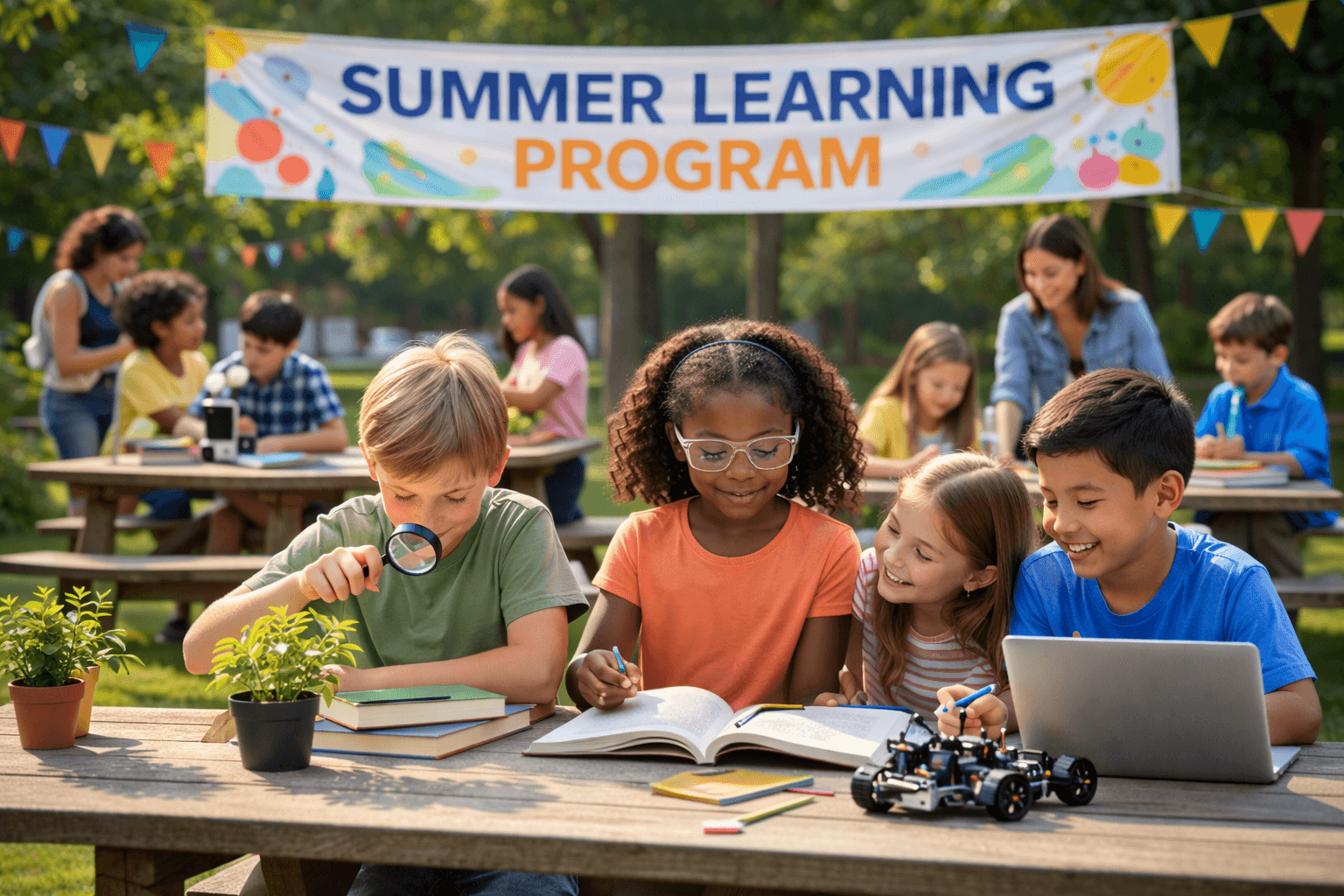
Summer learning programs often give students opportunities to explore science, technology, engineering, and mathematics through hands-on experiences. Safer STEM-focused camps and workshops allow students to experiment, solve problems, and apply their knowledge in creative ways.
Students may participate in activities such as building simple machines, conducting science experiments, learning the basics of coding, or exploring robotics. Hands-on learning helps students develop critical thinking skills while making learning interactive and exciting.
For many students, summer STEM programs introduce new interests that can inspire future academic pathways and career goals. These experiences encourage curiosity and help students develop confidence in their abilities.
Supporting Students Who Need Additional Academic Help
Summer learning programs also provide valuable support for students who may benefit from additional academic reinforcement. Some students may need extra time to review key concepts or strengthen foundational skills before moving on to the next grade level.
Targeted summer programs allow educators to provide focused instruction in smaller group settings. These environments often make it easier for students to ask questions, practice important skills, and receive individualized support.
With the right support, students can return to school with improved confidence and a stronger understanding of important subjects.
These programs help ensure that all students have the opportunity to continue progressing academically.
Providing Enrichment and Creative Opportunities
Not all summer learning programs focus strictly on traditional academic subjects. Many districts offer enrichment activities that encourage creativity, exploration, and personal development.
Programs may include art workshops, music camps, theater programs, outdoor education experiences, or community service projects. These opportunities allow students to discover new talents and interests while remaining engaged in meaningful learning activities.
Enrichment programs also help students develop important life skills such as teamwork, communication, and creative problem-solving.
By offering a variety of summer learning opportunities, schools can create experiences that appeal to a wide range of student interests.
Strengthening Community Partnerships
Successful summer learning programs often involve partnerships between schools, libraries, community organizations, and local businesses. These collaborations expand the range of opportunities available to students and families.
Libraries frequently host reading challenges and literacy programs, while community organizations may offer camps focused on arts, sports, or science exploration. Colleges, nonprofits, and local businesses may also support educational programs and mentorship opportunities.
These partnerships strengthen the connection between schools and the communities they serve while creating a supportive network that encourages student learning throughout the summer.
When communities work together to support education, students benefit from a broader range of experiences and resources.
Helping Students Stay Connected and Engaged
Summer learning programs also help students remain socially connected. Many students enjoy seeing friends, working with mentors, and participating in group activities during the summer months.
These interactions help maintain a sense of belonging that supports both emotional well-being and academic motivation. Programs that combine learning with recreational activities create a balanced experience that supports both personal and academic growth.
Maintaining these connections can help students return to school feeling comfortable, confident, and ready to learn.
Preparing Students for the Next School Year
One of the most important benefits of summer learning programs is that they help students return to school ready to succeed. Students who remain engaged in educational activities during the summer are often better prepared to begin the new school year.
By reviewing key concepts, practicing skills, and exploring new interests, students maintain momentum in their learning journey.
Teachers also benefit when students return prepared and ready to continue learning. Strong summer learning programs help create a smoother transition into the next grade level and allow teachers to focus on introducing new concepts rather than revisiting old material.
Looking Ahead
Summer break is an important time for students to relax and recharge, but it can also be a time for exploration, creativity, and continued learning. Summer learning programs provide opportunities for students to stay engaged, strengthen academic skills, and discover new interests.
By encouraging reading, offering enrichment activities, supporting academic growth, and building community partnerships, schools help ensure that students remain connected to learning throughout the summer months.
When schools, families, and communities work together to support summer learning, students gain experiences that strengthen their academic foundation, spark curiosity, and prepare them for continued success in the school year ahead.
Summer learning loss: what the research shows and what makes summer programs work
Summer learning loss is the drop in academic skills that some students show between spring and fall testing. The article above treats it as a reason for summer programs, and the research supports that in part: the loss is real for some students and subjects, the evidence for programs is stronger in math than in reading, and the details of a program matter a great deal. This section sets out those findings with their limits.
How large is the loss, and in which subject?
An NWEA analysis of spring and fall 2023 testing, reported by K-12 Dive in May 2026, found that math scores for students in kindergarten through grade 8 fell significantly over the summer, by about 10 to 30 percent of a typical school year’s learning, while average reading scores stayed close to unchanged. NWEA suggested that students may read more outside school than they practice math, and that procedural math skills may fade faster. This is a correction to a common assumption, repeated in the article above, that reading and math both slip.
The same report carries cautions. Individual results varied widely, and NWEA’s researchers could not fully explain why some students gain over the summer and others lose. The analysis used NWEA’s own MAP Growth test, applied 2025 norms to 2023 data, and did not record what students did over the summer. The finding describes averages across a large sample, not what will happen to a given child.
What a randomized trial found
The best-known test of district summer programs is a RAND Corporation study funded by The Wallace Foundation. Its second report, Ready for Fall? (McCombs and colleagues, 2014), randomly assigned 3,194 low-income students in five districts to a voluntary summer program and compared them with 2,445 who applied but were not admitted. The programs ran five days a week for at least five weeks, with at least three hours of instruction a day from certified teachers, classes of no more than 15 students, and no fee, transportation or meals cost to families.
The programs improved math achievement in the fall, with an average effect size of 0.11, and made no measurable difference in reading or in social and emotional measures. Students who attended at least 22 days and received at least 13 hours of math instruction did better in math, and for reading, instructional quality and a well-ordered site were linked to better results, although that part of the study was not experimental and cannot show cause.
What a newer analysis adds
An NWEA study of 2022 and 2023 summer school in ten districts serving nearly 450,000 students, reported by K-12 Dive in December 2025, found a similar pattern: summer school raised math achievement by roughly two to three weeks of school-year learning and had no measurable effect on reading. NWEA recommended programs of at least four weeks, ideally five to six, with at least 90 minutes of math and 120 minutes of reading daily and at least 75 percent attendance. In four districts, students who returned for a second summer gained as much or more in math as first-time attendees.
NWEA said the reading result does not mean summer literacy teaching should be dropped, and called for more intensive literacy approaches, targeted help for struggling readers and community partnerships. One possible explanation it offered is that students who did not attend may have read on their own, which could hide a program effect.
What this means for school and family decisions
For leaders, the research points to design choices over simply offering a program:
- Plan for length and daily time. Programs shorter than four weeks fall below NWEA’s recommendation.
- Track attendance, since both studies link benefit to time actually spent in class. The chronic absenteeism guide covers ways to improve attendance.
- Set reading goals separately, with more intensive approaches than math needs, and do not assume a general enrichment camp builds reading skill.
- Keep the enrichment and partnerships the article above describes, which these studies were not designed to evaluate.
For families, the same findings suggest that a few weeks of regular math practice and continued reading may matter more than the choice of any one program. Readers interested in a calendar alternative can read edCircuit’s discussion of year-round schooling, and those weighing hands-on options can start with the STEM education guide.
Subscribe to edCircuit to stay up to date on all of our shows, podcasts, news, and thought leadership articles.
Related reading
More on School Calendar