


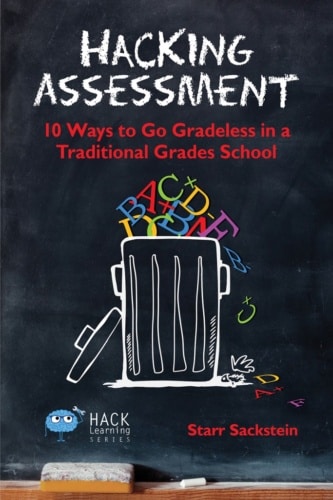
A conversation with writer and educator, Starr Sackstein Starr Sackstein is a writer and education reformer focusing on the student learning experience. She has authored a number of books, including her recent Times 10 publishing works, Hacking Assessment and Hacking Homework. Many years of teaching in New York led Starr to the realization that there were crucial changes needed in preparing students for future success. Frequently, these changes were antithetical to the traditional methods of assessing and teaching to the test. By documenting and experimenting with personal learning environments, Starr found a much-needed wellspring of knowledge that became the impetus for her writing.
Starr noticed that far too often, veteran educators found themselves reluctant to make changes to their practice. Success in standardized testing and state expectations can sometimes make it difficult for a seasoned teacher to switch up their methods and adopt more modern project-based approaches. As Starr points out, it’s often hard to accept the immediate challenge of “listen, we want you to do project-based learning in your classroom, and we understand that grades are going to drop for a little bit, but this is better for kids in the long term.”
It’s important that teachers remember the reason they chose teaching in the first place, she says. “If you go into education, you need to be a lifelong learner; and, with that, comes constantly reading what’s going on and learning about new practices.” There are obstacles to consider between public perception and real long term education growth and preparedness. She poses the question, “Do we care what’s printed in the newspapers with standardized testing or do we want to see practices change, so students are ready for the world they’re going into instead of just preparing them for antiquated exams?”
Starr believes that offering a personal experience as a teacher acts as a way into the process of change. Real growth comes from getting to know students to such a high degree that teachers choose to include a personalization component that ensures students are getting what they need. Being a rule-breaker happens to be part of the process, “When you’re working with 11th and 12th graders who are going into college so soon after they leave you, you’d be doing them a disservice to tell them just to follow the rules. I’m a natural kind of rule breaker, that’s always been my M.O. So it would also be very disingenuous for me to say to people, ‘Hey, do as I say, not as I do.'”
When Starr was working on Hacking Assessment, she found herself breaking rules daily. It was important that she understand what motivates kids and, often, that meant veering from common core edicts and support materials that were offered primarily for assessment and testing reasons. “It’s being able to connect with kids and finding those things that really get them excited and then using that to make a space they want to be in every single day. That’s really what Hacking Assessment is about. The grades are the last thing that kind of happen. As soon as you put a grade on something, the learning ends.”
Student ownership has a way of being buoyed by teachers giving feedback that allows for better individual assessment. “Make sure you’re teaching kids how to reflect and use their own goal setting as a means to provide great feedback for them, and then help them assess themselves along the way―especially with reluctant learners, they don’t always give a hundred percent in class and they know a lot more than they let on,” she suggests.
Merely providing a grade to a student’s performance is a “gross miscarriage to their learning experience,” she adds. It’s essential that students discuss and express specific takeaways from a project, piece of writing, or presentation. As Starr reveals, “Let’s have a conversation about what you actually learned. Demonstrate what you know. And then, let’s assess that in a less formal, but more specific kind of way.”

- EdTech Magazine – K–12 Professional Development Is Critical, So Make It Count
- Tedx Talks – A Recovering Perfectionist’s Journey To Give Up Grades
- EdWeek – Make Learning Interactive and Student-Led
Related reading
More on Assessment and Testing