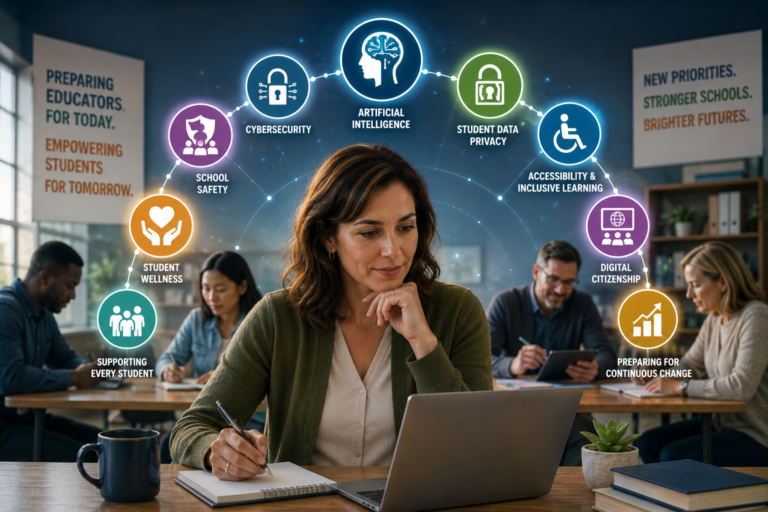
Back to school in 1996 meant Trapper Keepers and textbooks. In 2026, students return with laptops, cloud assignments, and AI.
EdCircuit Staff
edCircuit is a mission-based organization entirely focused on the K-20 EdTech Industry and emPowering the voices that can provide guidance and expertise in facilitating the appropriate usage of digital technology in education. Our goal is to elevate the voices of today’s innovative thought leaders and edtech experts. Subscribe to receive notifications in your inbox
Author Posts
K-12 technology leadership is evolving as AI, cybersecurity, and strategic planning reshape what districts need from their leaders
School safety drills should do more than satisfy a requirement. They should reveal whether people, plans, and systems will work under pressure.
Why school culture matters more than ever starts with relationships, trust, and belonging. Strong cultures help schools thrive.
New York City schools ban AI through eighth grade while introducing screen-time limits and guided AI instruction for high school students.
AI deepfakes are creating school safety risks through cyberbullying, impersonation, sextortion, misinformation, and attacks on trust.
Measuring technology impact in schools requires more than usage statistics. District leaders must identify meaningful outcomes and align metrics with goals.
Ohio’s school attendance law brings earlier notices and tiered support as the state works to reduce chronic absenteeism.
E-bike safety is becoming a school priority as more students arrive on electric bikes and scooters amid changing rules and rising injuries.
Teacher in-service is becoming more personalized, giving educators professional learning tailored to their roles, experience, and career growth.
A student’s digital footprint follows them for life. Here’s why schools must teach digital citizenship before it’s too late.
Teacher input in edtech adoption helps districts select better tools, strengthen training, support classrooms, and improve student learning.
Rural districts can use AI to expand access and support teachers by starting small, targeting real needs, and building trust before scaling.
AI literacy for students should grow with age, from recognizing AI and protecting privacy to verifying sources, disclosing use, and exercising judgment.
Why students need relationships before rigor starts with belonging. Strong connections create the foundation for academic success.