

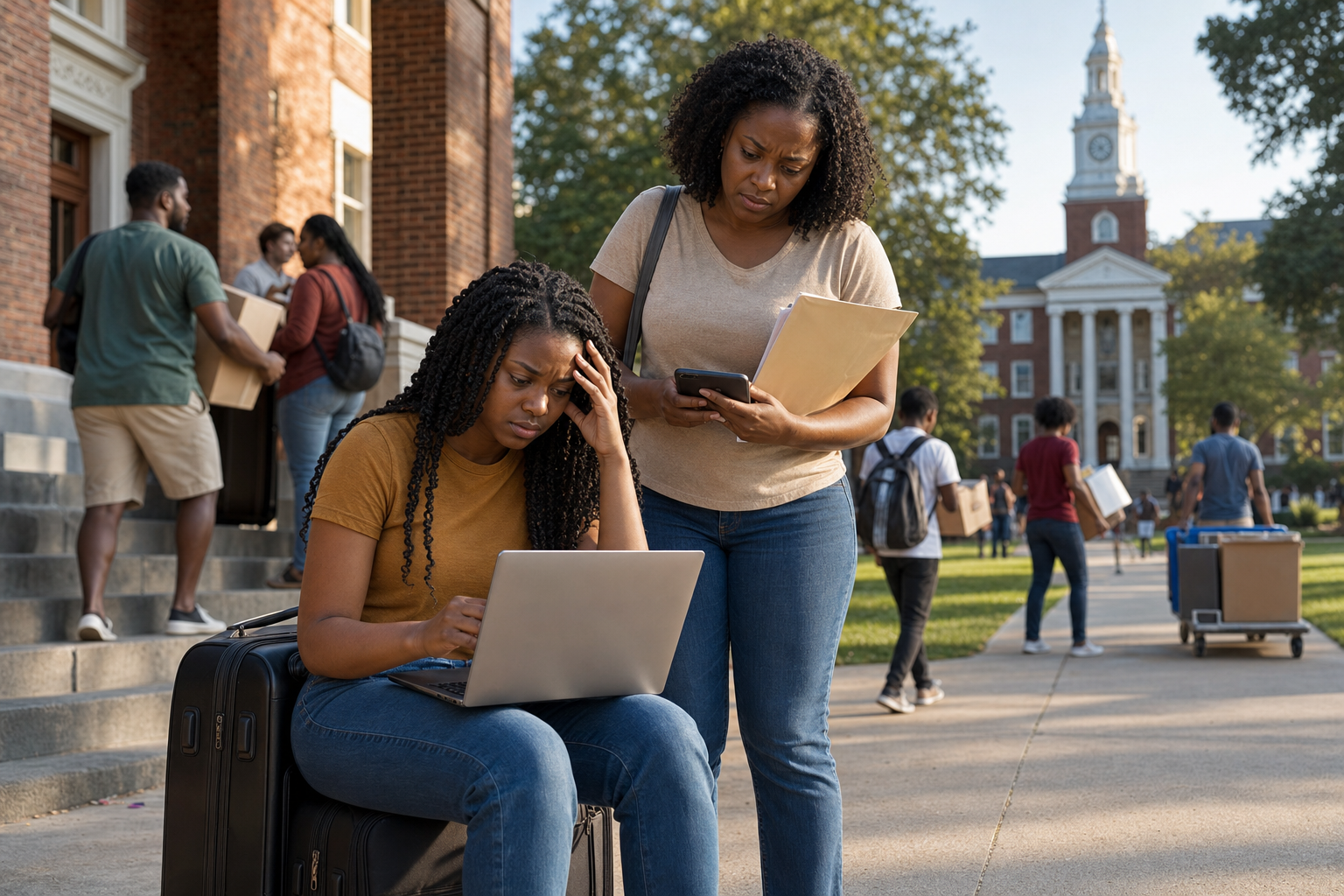
Weeks before classes began in August 2026, Howard University removed 502 incoming freshmen from enrollment because their accounts did not show required payments, payment plans or financial aid by the university’s deadlines. After an outcry from students and families, Howard reinstated about 200 of them. The episode left many Howard University students and families asking how it happened, and it holds lessons for any family relying on financial aid and scholarships to pay for college, at Howard or at any of the country’s historically Black colleges and universities.
What happened at Howard
Howard says it began communicating enrollment and payment requirements to incoming students in March 2026, by email and at orientation sessions. Students were told to pay their balance or set up a payment arrangement by July 10, with financial aid counted toward the balance.
On July 22, Howard sent notices to 502 first-time-in-college students whose accounts “did not reflect the required enrollment and financial obligations,” the Associated Press reported. A university spokesperson told ABC News that removing a small number of late freshmen was standard in earlier years, and that new enrollment officials had increased enforcement of the deadlines.
Many students said they believed their aid or scholarships covered them. Howard acknowledged that “timing differences may have occurred” between when financial aid appeared on accounts and when charges were finalized, and said it would review each case. Keyana Scales, the university’s senior vice president for enrollment management, apologized, and Howard said the update had “caused real distress.” Seats were held during the review rather than given to students on the waitlist.
How it ended
By July 29, more than 200 of the students had been readmitted, interim president Wayne A. I. Frederick told the AP. He said the remaining cases involved outstanding balances after aid and scholarships and, in some cases, missing immunization records, and he defended the process: “I think Howard adhered to its policies or procedures.” About 2,200 incoming students remained enrolled, from about 37,000 applications.
By early August, reinstated students were moving into residence halls ahead of the August 17 start of the semester. Howard said a voluntary retirement buyout offered to about 600 employees around the same time was unrelated and aimed at long-term financial sustainability.
Was this about federal aid cuts?
No source has linked the Howard unenrollments to changes in federal financial aid or federal funding for HBCUs. Howard and outside experts described a deadline-enforcement problem: balances that were not cleared, or aid and scholarships that had not yet posted to accounts, when the university applied its rules. One expert told ABC News that what happened is “standard across colleges and universities across the country.”
Federal policy toward HBCUs has shifted in other ways. In September 2025 the Department of Education ended about $350 million in discretionary grants for minority-serving institutions, while announcing a one-time $495 million for HBCUs and tribal colleges on top of their expected funding. And from July 2026, new limits on Parent PLUS loans cap parent borrowing at $20,000 a year per student.
HBCUs by the numbers
There were 99 HBCUs in 2022 in 19 states, the District of Columbia and the U.S. Virgin Islands: 50 public and 49 private nonprofit, according to the National Center for Education Statistics. They enrolled about 289,000 students, 11 percent fewer than in 2010, and non-Black students made up 24 percent of enrollment. Howard, one of the best known, reports a six-year graduation rate of 70 percent and costs more than $66,000 a year to attend, the AP reported.
Lessons for HBCU students and families
- Know every deadline. Payment, payment-plan, scholarship-reporting and health-record deadlines are often separate, and missing any one can affect enrollment.
- Check the account, not just the award letter. An aid offer or outside scholarship does not reduce the balance until it posts to the student’s account. Confirm in the student portal that it has.
- Report outside scholarships early and send the college whatever proof it needs to count them before the deadline.
- Get confirmation in writing. If the bursar or financial aid office says a balance is covered or a plan is accepted, ask for it by email.
- Ask about emergency aid. During the Howard episode, organizations including UNCF offered emergency help to affected students; colleges often have their own emergency funds for a small final gap.
For colleges, the lesson is about timing and communication. When aid posts late, a firm payment deadline can fall hardest on the students with the least room for error. Clear notice, a chance to resolve problems before enrollment is cancelled, and a review process that families can reach quickly reduce the risk of losing students over paperwork.
Frequently asked questions
Why did Howard University unenroll students? Howard said 502 incoming freshmen had not met payment, payment-plan, financial aid or scholarship reporting deadlines; some also lacked immunization records.
Were the students reinstated? About 200 were reinstated by the end of July 2026 after the university reviewed their cases.
How many HBCUs are there? 99 in 2022, according to NCES, 50 public and 49 private nonprofit.
How much does Howard cost? More than $66,000 a year in total cost of attendance, according to federal data reported by the AP.
Subscribe to edCircuit to stay up to date on all of our shows, podcasts, news, and thought leadership articles.