

Bullying and Belonging
Tamara Fyke's 2017 piece on belonging as bullying prevention, updated with NCES and CDC data on how often students are bullied.


Bullying prevention starts with knowing the numbers. See what NCES and CDC data show and how Tamara Fyke's belonging lessons apply.
In this 2017 piece, Tamara Fyke of Love In A Big World tells how Fyke’s son was teased about reading and glasses, and argues that stopping bullying starts with a caring, nurturing environment built through relationships. The section after the article adds current national figures on bullying and looks at what that evidence suggests schools and parents can do.
It starts with committing to creating a caring and nurturing environment
by Tamara Fyke

“What’s going on, sweetie?” I asked with great concern.
“I’m stupid. The other kids are reading chapter books, and I can’t. They make fun of me,” he confessed.
I promised him that we would get help, figure out what was going on. I held him and reassured him of my love as he wept. I whispered the truth to him that he was the most special little boy in the world to me.
From that moment, we began the investigation with reading specialists and tutors. He even got glasses. We were on our way to a better school experience.
But the teasing didn’t stop. Now my son was laughed at because he wore glasses. The kid just couldn’t get a break!
We had another tearful conversation, and I encouraged my boy to stand up for himself. “Tell them to stop. And if they don’t, ask a teacher for help.”
My son’s story isn’t unique or particularly severe, but it affected his heart and his view of school. To this day he tells me that his favorite experience was preschool because he got to ride the bikes in the gym. That makes sense because he’s a boy and an athlete. However, I wonder if the fondness of that memory is also because he was in a nurturing environment.
Defining Bullying and Why It Resonates
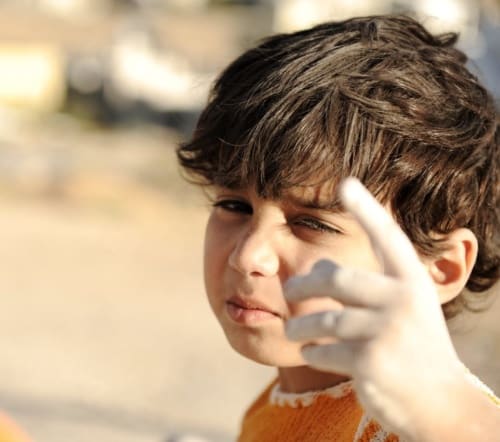
The current popularity of the Netflix hit show 13 Reasons Why is evidence that this is a story that resonates with kids. Additionally, a recent social media post about bullying on our Love In A Big World FaceBook page prompted the greatest response we’ve ever seen. That tells me that people are looking for answers.
Three Lessons About Bullying
First, bullying is not relegated to childhood. As an adult, I have experienced bullying in relationships and in the workplace. Often, schools that have the biggest problems with bullying are the ones where teachers don’t get along. We owe it to ourselves and our kids to get our act together. The gossip, backbiting, and meanness must stop. Instead, let’s get to know each other and cultivate healthy relationships both in and out of the workplace.

And last, we all know bullying is a problem; this is nothing new. Years ago, bullying was often regarded as a right of passage experience. When the underdog stood up to the bully, he or she became the hero. What I think is different now is that the stakes are higher. This is no longer about a bloody nose on a playground; this is about life and death, in some cases homicide or suicide. Therefore, we must take action.
Building a Caring and Nurturing Environment

We must choose Kindness — treating others the way we want to be treated. Yes, what I’m advocating for takes time… it’s neither glamorous nor complicated. We must be committed to creating a caring and nurturing environment, starting with a smile, a positive attitude and kind words. We need to build each other up, not tear each other down.
The simple truth is we all want to be seen and safe; we have a need to belong. So, let’s challenge ourselves to experience life with our whole heart engaged — and teach our kids to do the same.
- Daily News – Bullying on the rise in NYC schools, reports jump 10% compared to 2016: survey
- ESPN – Once bullied, David Johnson now touts anti-bullying campaign
- Dodge City Daily Globe – Bullying is a problem
Bullying prevention in schools in 2026: what the current figures show and what builds belonging
Bullying prevention is the aim behind Fyke’s account above, and the argument that relationships and belonging matter more than a poster on the wall deserves to be read next to what national surveys now measure. This section sets out those figures, explains what they suggest about where adults can act, and points parents to qualified help.
How common bullying is in the latest federal data
The National Center for Education Statistics reports, in its Condition of Education indicator on bullying, that about 19 percent of students ages 12 to 18 reported being bullied at school in the 2021-22 school year. The rate was 22 percent for female students and 17 percent for male students, and it was highest in the middle grades: 27 percent in sixth grade, 26 percent in seventh and 25 percent in eighth, against 10 to 18 percent in grades 9 to 12. NCES notes that the 2021-22 survey changed how bullying was defined and measured, so comparisons with earlier years need caution.
The CDC’s 2023 Youth Risk Behavior Survey results list the share of high school students bullied at school at 19 percent in 2023, up from 15 percent in 2021. The two surveys cover different ages and use different questions, which is why their figures should not be added together or compared closely. Both place roughly one student in five on the receiving end in a given year.
What kinds of bullying students describe
The NCES indicator breaks the 19 percent into types. Students most often reported being the subject of rumors (13 percent) and being made fun of, called names or insulted (12 percent). Being pushed, shoved, tripped or spit on was reported by 5 percent, being excluded on purpose by 4 percent, and being threatened with harm, being pressured to do things they did not want to do and having private information shared by 3 percent each.
These categories match Fyke’s story, in which a child was laughed at for reading level and then for glasses. They also show that most reported bullying is spoken or social, the kind adults rarely witness. The same indicator reports that about 44 percent of bullied students told an adult at school, with higher rates among sixth and seventh graders (62 and 57 percent) than in grades 8 to 12 (32 to 41 percent). Whatever else a prevention plan contains, it depends on students trusting an adult enough to tell.
Applying Fyke’s three lessons
Fyke draws three lessons: that adults model the behavior, that bullying often targets areas where a person feels weak, and that the stakes are higher than a playground scuffle. The figures give each lesson a practical form.
- Adults model the culture. Staff relationships are part of a school’s climate, so a leader can start by asking how colleagues speak to each other in meetings and hallways.
- Support for a struggling child comes first. Fyke’s family sought reading specialists and tutors, and the same step helps because it addresses the area Fyke says bullying often targets.
- Reporting must be easy. Schools can offer more than one way to tell an adult, including a counselor, a trusted teacher or a written note, and then show students what happens after they tell.
The sources reviewed for this section do not show that any single program prevents bullying, so a school should adopt a program only after reading its evaluation and should measure its own results.
Where parents can turn for help
A parent who finds a child upset, avoiding school or withdrawn can start with the classroom teacher and the school counselor, and can ask the child’s doctor about the child’s wellbeing. Fyke’s article mentions the most serious outcomes, and a child who talks about self-harm should be taken to a qualified health professional promptly.
Schools can also tell families what to expect when a report is made: who will look into it, how the student will be kept safe in the meantime, and when the family will hear back. In the article, the advice to the boy is to tell the other children to stop and, if they do not, to ask a teacher for help, and that advice works only when the teacher’s response is dependable.
For more, see edCircuit’s School Safety Guide.
Related reading
More on Bullying