Family and Community Engagement in a Pandemic: Larry Ferlazzo and Emily Frawley
Larry Ferlazzo explains how families and teachers can lead with care in a crisis, and Emily Frawley describes turning school 3D printers into face shields.

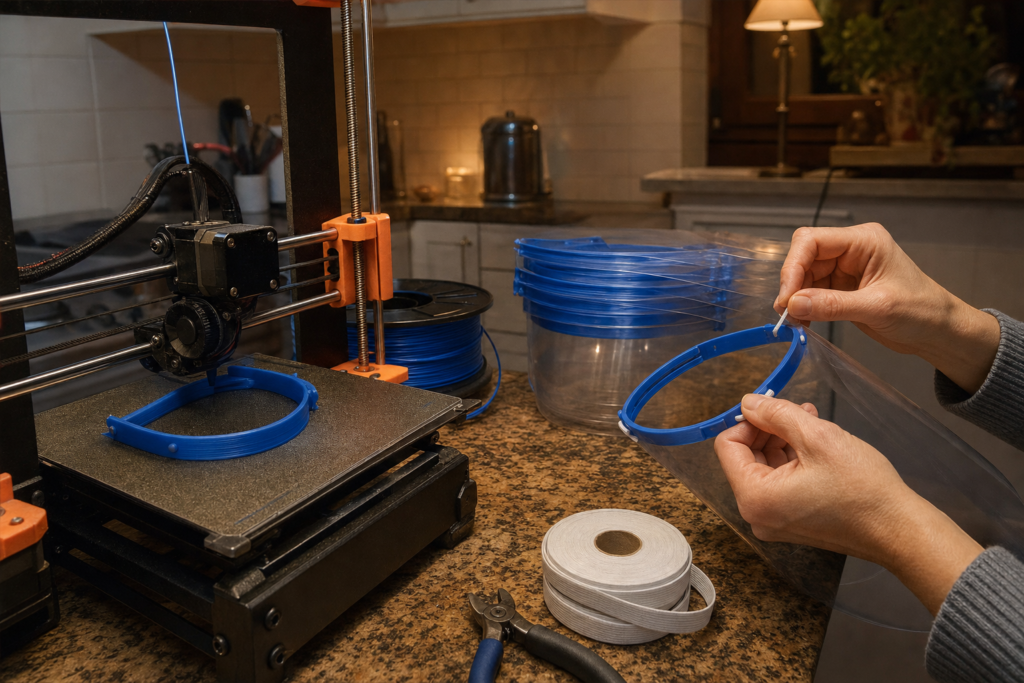
Larry Ferlazzo on empathy in teaching and leading with care during remote learning, and Emily Frawley on making face shields with school 3D printers.
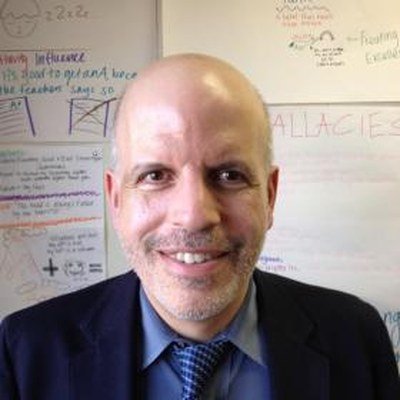
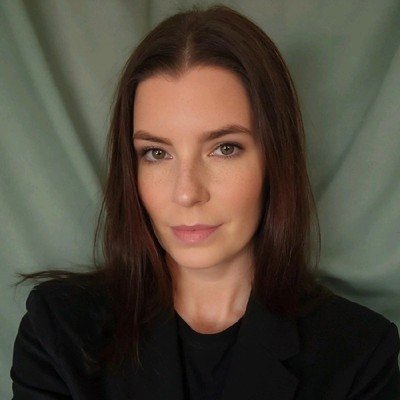
By the end of May 2020, families had spent more than two months learning at home, and many were also dealing with lost jobs and income. This episode of edCircuit’s Education Today podcast, presented by Soundtrap for Education, looked at engagement from two directions. Larry Ferlazzo, an award-winning English and social studies teacher at Luther Burbank High School in Sacramento, California, and the author of several books on student and parent engagement, built on his Education Week video of tips for parents supporting remote learning. Emily Frawley, a middle school science and social studies teacher at The Windward School in White Plains, New York, then described how she used her school’s 3D printers to make protective equipment for health care workers.
 Education TodayS1E7 - Authentic Student, Family & Community Engagement to Address COVID-19Play episode: S1E7 - Authentic Student, Family & Community Engagement to Address COVID-19 (32 minutes 48 seconds)Follow on SpotifyApple
Lead with love
Ferlazzo, who also writes Education Week’s Classroom Q&A blog and hosts a podcast of the same name, said many of his students’ parents had lost their jobs, and some families were working together to keep small businesses alive. Parents were worried about food and rent, but most of all about their children and their futures. For parents and teachers alike, he said, modeling how to face a crisis comes down to perseverance and a commitment to show “that the most important thing is love in all of this.”
Empathy in teaching comes before grading
For teachers, that meant not worrying about taking points off for missed assignments. Even in normal times, he noted, research finds that factors outside school have the greatest effect on student achievement, and that is even more true in a crisis. Teachers should “treat students the way we would like to be treated if our worlds were coming apart.”
He was candid about why that can be hard. Many teachers were successful in school as it is designed, so it can be difficult to put themselves in the place of students for whom it does not work. Teachers also still had their jobs and were not worried about paying rent. Empathy, he said, is critical, and “this is the time to get a whole lot better” at it.
Questions parents can ask
Few things, Ferlazzo said, have a greater effect on learning than parents asking children about what they are learning and what they enjoy, in an inquisitive way rather than an interrogating one. It works in any language and whether or not school is in session, and it builds children’s awareness of their own learning. He asks his grandchildren what they are learning, what has gone well, what has not, and what they will do about it.
For parents who find those conversations awkward, he suggested a simple opener: “What is the most interesting thing you learned today?” When children answer “nothing,” as they usually do, a little humor helps, along with picking the right moment.
Learning conversations can happen at any hour. That week, he said, many families were talking with children about the murder of George Floyd in Minneapolis, and parents could ask what their children and their friends thought about the news. Research also shows that telling family stories, including misadventures and the lessons learned from them, helps children develop a stronger sense of identity and confidence. Families can write together too, in any language. Ferlazzo pointed to museums that were collecting people’s pandemic journals and wishing more people had kept them during the 1918 flu pandemic.
Academics as a tool for social-emotional health
Looking ahead to the fall, Ferlazzo said the school closures had made the case for leading with social-emotional learning. Before teaching, he spent 19 years as a community organizer, where campaigns for childcare, housing or neighborhood safety were also tools for developing leaders, and were more effective because of it. In the same way, teachers can treat academic work as a tool for developing students’ social-emotional health.
His own classes had unusually high participation during the closures. In an anonymous survey, students said they did the work because he cared and kept checking on how they were doing. He expected that, nationally, the teachers with the highest engagement would be those most focused on students’ social-emotional well-being.
One tip he would add to his original list: when contacting parents, lead with positivity and with what students are doing, not what they are not doing. That does not mean avoiding hard conversations, he said, but parents listen when they see teachers as partners who care about their children and their lives.
From garbage bags to 3D-printed shields
Frawley lives in Manhattan, and in the spring of 2020 New York was the center of the pandemic in the United States. She saw nurses and doctors posting pictures of protective gear made from garbage bags, plastic sheeting and old overhead-projector transparencies. She wanted to help but had no sewing skills.
Then she saw a post from the mayor of White Plains showing a Yonkers doctor picking up 3D printers from the public library to print face shields for his hospital. She tracked the doctor down, asked for his design and emailed Windward’s head of school, Jamie Williamson, and the school’s science coordinator to ask whether she could borrow the school’s two MakerBot printers. Within minutes she had a yes, along with an offer of whatever else she needed. The school also gave her its filament and said it would cover replacements, which removed her biggest worry: how much of her own money the project would cost.
A community effort
Frawley expected to work alone, but others joined quickly. Her mother, a technology teacher at nearby Harrison High School, brought home three larger printers with her school’s support. Neighbors used their connections to find scarce materials such as elastic and filter fabric. On the morning of the recording, Frawley had delivered 50 face shields and 47 masks to Columbia and NewYork-Presbyterian, leaving them in a donation box in a hospital lobby. By her count, the effort had donated about 220 shields and masks.
Windward had closed a week before New York’s statewide closure, and spring break followed, which gave her two weeks to focus on the project before online teaching began. She described the school’s support as typical of its leadership.
Lessons for students
The Windward School serves students with language-based learning disabilities, with the goal of preparing them to return to mainstream schools. Instruction is usually direct, with students facing the front of the room. Remote learning pushed students to use online tools in new ways, which Frawley believed would help those moving on to mainstream schools, where they would be expected to email teachers and post homework online. Online education will never replace the classroom, she said, but the moment created a new opportunity to prepare students.
Listen to the full conversation in the player above, or find every episode on the Education Today show page.
Subscribe to edCircuit to stay up to date on all of our shows, podcasts, news, and thought leadership articles.
Related reading
More on Parents