

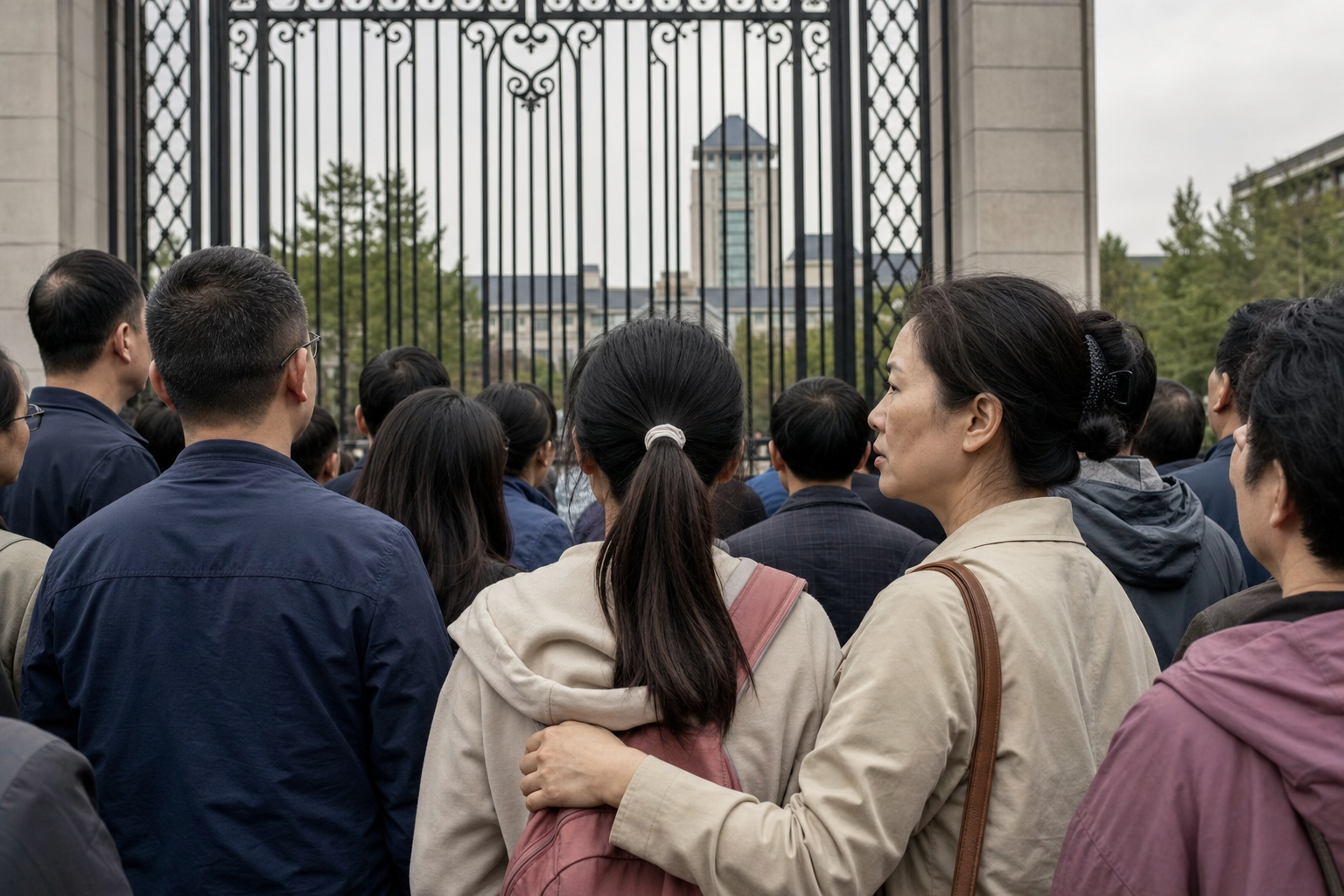

The InformED Report from edCircuit for February 14, 2017, began in China, where parents had protested university admission quotas that moved places away from wealthy provinces. The edition then followed New York City Schools Chancellor Carmen Fariña’s call at New York University’s EdTech Week for teachers to act as facilitators rather than lecturers, and closed in Dubai, where schools were building programs to teach tolerance.
Taken together, the three stories dealt with fairness and culture in education: who gets access to scarce places, how the teacher’s role changes as technology spreads, and how a school community learns to treat difference with respect.
In this edition
- Jiangsu province is setting aside 38,000 tier one university places for students from ten poorer inland provinces, and middle-class parents have protested in 13 cities.
- Carmen Fariña told NYU’s EdTech Week that teachers should become facilitators, not lecturers, as technology becomes part of every classroom.
- InformED Report spotlight: Dubai’s education authority gathered about 500 teachers to share programs that build tolerance and reduce bullying through positive education.
Why are Chinese parents protesting university admission quotas?
Foreign Policy reported on February 6, 2017, that anger among China’s middle class over the education system was growing. The immediate cause was an announcement the previous May that Jiangsu, a wealthy coastal province, would allocate 38,000 places at tier one universities to students from ten poorer inland provinces. Those places would no longer be available to Jiangsu students. Beijing and Shanghai, home to universities such as Tsinghua, Peking University, and Fudan, did not receive a comparable reduction.
The day after the announcement, more than a thousand parents gathered near the provincial education authority, and protests followed in 13 cities across Jiangsu and in Hebei, the other province hardest hit by the change. The article set out the arithmetic behind the frustration: about 24 percent of Beijing students were admitted to first-tier universities, against 9 percent of Jiangsu students, although entry depends on the same national entrance examination, the gaokao.
The article also described the pressure of that examination, with students in class until 9:30 in the evening and families paying for hours of extra study each day. For American schools and universities, the story helped explain why so many Chinese families were looking at education overseas.
Carmen Fariña: teachers as facilitators, not lecturers
Carmen Fariña, chancellor of the New York City school system, the largest public school district in the country, spoke at New York University’s EdTech Week, a weeklong event co-hosted by StartEd. NewsOne reported on February 2, 2017, that she urged teachers to become facilitators rather than lecturers as technology becomes a regular part of classroom life.
Fariña said the goal goes beyond buying the newest software, which can strain budgets. Technology, in her view, should support a range of teaching approaches suited to how children learn, and should help produce students who think critically rather than memorize and repeat information. She warned that schools risk losing tech-savvy middle schoolers if they do not engage them with technology, and she acknowledged that many teachers face a learning curve and may learn some software from their own students.
For district leaders, Fariña’s remarks were a reminder that purchasing is the easier half of technology adoption. Professional learning that helps teachers change how they run a lesson is what determines whether a device or program improves instruction.
InformED Report spotlight: Dubai schools teach tolerance
Schools in Dubai were starting programs to promote tolerance on campus. Gulf News reported on What Works, an event hosted by the Knowledge and Human Development Authority (KHDA) at Amity University in Dubai International Academic City and attended by about 500 teachers. Its theme was tolerance, with the aim of encouraging positive education across school communities.
Justin Robinson of Geelong Grammar School in Melbourne, Australia, described how his school had rebuilt its policies around kindness six years earlier, to the point that a student could not receive a detention even for misconduct and always had someone to talk to. He said that reducing bullying becomes possible when schools discuss empathy as part of positive education. KHDA director-general Dr. Abdullah Al Karam said tolerance leads to happier schools with fewer problems such as bullying. Students had prepared research projects on tolerance for the event, and the episode reported that they were responding well to the programs.
For school leaders elsewhere, the Dubai example showed a system-level approach to school climate, in which an education authority convenes teachers around a single theme and invites schools from other countries to share what they have tried.
Sources
- Lauren Teixeira, “China’s Middle Class Anger at its Education System Is Growing,” Foreign Policy, February 6, 2017.
- Nigel Roberts, “NYC Schools Chancellor Carmen Fariña Plans Tech Future At NYU EdTech,” NewsOne, February 2, 2017.
- Faisal Masudi, “Schools inspired to promote tolerance on campus,” Gulf News.
About the InformED Report
The InformED Report is edCircuit’s short news program on education. This edition first ran on February 14, 2017. In 2026, edCircuit re-presented it with a new anchor and this full written account. Both report the stories as they stood on that date and link the original reporting, so readers can see exactly where each claim came from.
Subscribe to edCircuit to stay up to date on all of our shows, podcasts, news, and thought leadership articles.
Related reading
More on InformED Report