
The InformED Report for March 2, 2017 opened on a gap that every high school and college leader recognizes: students who arrive at college with a diploma but without the skills for college-level work. A Hechinger Report investigation counted more than half a million of them in remedial classes, and economists questioned whether the placement tests that send students there were sorting them accurately. The edition then went to Armenia, where a free after-school network was teaching technology and design, and closed with a record year of giving at Fidelity Charitable.
In this edition
- A Hechinger Report investigation of 44 states found most public colleges enrolling students not ready for college-level work, more than half a million of them.
- National Bureau of Economic Research authors put remedial coursework at roughly $7 billion a year and found many students mis-assigned by placement tests.
- TUMO’s free after-school centres in Armenia taught 3D printing, web design, film and animation, and a new partnership brought the program to army draftees.
- Fidelity Charitable donors recommended a record $3.5 billion in grants in 2016, including support for preschool scholarships in Michigan.
College students who arrive unprepared
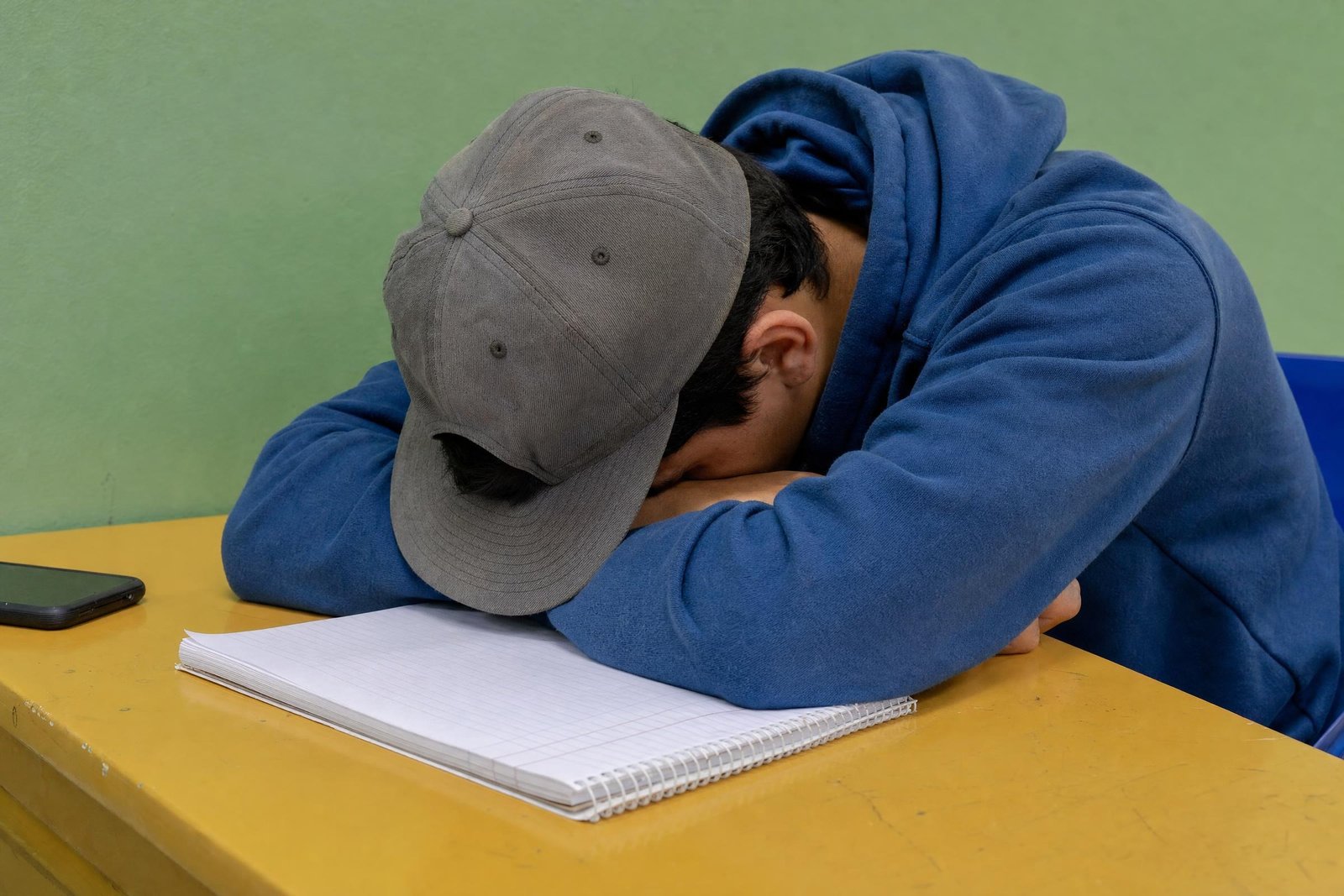
Sarah Butrymowicz’s investigation for The Hechinger Report gathered remediation data from 44 states. Ninety-six percent of the 911 two- and four-year public colleges in the data enrolled students who needed remedial courses, and at least 569,751 students were placed in those classes in 2014-15. At more than 200 campuses, more than half of incoming students took at least one remedial course. The report stressed that the true total was likely higher, because states track remediation unevenly, and that recent high school graduates, not only returning adults, made up much of the count.
A National Bureau of Economic Research paper by Judith Scott-Clayton, Peter M. Crosta and Clive R. Belfield asked whether colleges were remediating the right students. The authors put the national cost of remedial coursework at roughly $7 billion a year and compared it to a costly medical treatment whose value depends on giving it to the people who will benefit. Using administrative data, they found that about one in four test-takers in math and one in three in English were severely mis-assigned under test-based placement, most often placed in remediation they did not need. Adding high school transcript information, such as grades, reduced those errors, and the authors estimated colleges could remediate substantially fewer students without lowering success rates in college-level courses. This is a modelling result from the data the authors studied, and its strength lies in pointing to a better placement rule rather than proving what any one college would see.
For school and district leaders, the two pieces put the transition to college in plain view. A diploma was being read by colleges as a weak signal of readiness, and a single placement test was being used in its place. High schools could help on both sides: by aligning senior-year courses with what entry-level college work requires, and by working with local colleges that were willing to count high school grades in placement decisions.
Armenia’s TUMO: where art meets technology
Al Jazeera’s Rebel Education series visited TUMO, a free after-school centre in Yerevan led by chief executive Marie Lou Papazian. Armenia became independent from the Soviet Union in 1991, and Papazian argued that its schools still carried that legacy, lacking creativity, flexibility and problem-solving. TUMO’s answer was a self-directed program in which teenagers choose their classes and build “maker” skills such as 3D printing, web design, film, animation and robotics. The centre was preparing to open its fifth location, in Koghb near the border with Azerbaijan.
The Armenian Weekly reported a new step. A partnership between the TUMO Center for Creative Technologies and Armenia’s Ministry of Defense would let draftees attend TUMO centres twice a week for eight months during their service, studying fields such as computer programming, robotics, digital graphics and digital music composition. The announcement came from TUMO itself, so it described the plan rather than its results. The broader point for educators was the model: a free, out-of-school program could give young people access to technical and creative skills their regular schools did not yet teach.
InformED Report spotlight: a record year at Fidelity Charitable
Fidelity Charitable, an independent public charity, announced in February 2017 that its donors had recommended a record $3.5 billion in grants in 2016, a 15 percent increase over 2015. That came to well over three-quarters of a million individual grants to more than 110,000 charities, and it carried the organization past a goal of $25 billion in cumulative grants over its first 25 years.
Among the donors it highlighted were Dan and Jill Francis, who used their giving account to support Child Care Network, a nonprofit in Southeastern Michigan that funds preschool scholarships for lower-income families facing homelessness or other crises. Fidelity Charitable said their giving had helped 743 children attend preschool, and that the couple planned an annual grant of $100,000 to help the nonprofit expand into two more counties. For anyone who works with young children, the example showed what targeted private giving can do in a community: a steady grant, aimed at families in crisis, helped hundreds of children reach a preschool classroom they would otherwise have missed.
Further reading from that week
- The New York Times: Beyond ‘Hidden Figures’: Nurturing New Black and Latino Math Whizzes
- The Washington Post: An alternative to remedial college classes gets results
- edCircuit: Teacher Perspective: In Sync with EdTech
Sources
- Sarah Butrymowicz, “Most colleges enroll many students who aren’t prepared for higher education,” The Hechinger Report, January 30, 2017.
- Judith Scott-Clayton, Peter M. Crosta and Clive R. Belfield, “Improving the Targeting of Treatment: Evidence from College Remediation,” National Bureau of Economic Research working paper.
- Al Jazeera, “After School: Where Art Meets Technology,” Rebel Education, January 2017.
- TUMO Center for Creative Technologies, “TUMO Army: 21st Century Learning with a Buzz Cut,” The Armenian Weekly, January 18, 2017.
- Fidelity Charitable, “Fidelity Charitable Surpasses Grant-Making Goal of $25 Billion to Charities in 25 Years,” Business Wire, February 1, 2017.
About the InformED Report
The InformED Report is edCircuit’s short news program on education. This edition first ran on March 2, 2017. In 2026, edCircuit re-presented it with a new anchor and this full written account. Both report the stories as they stood on that date and link the original reporting, so readers can see exactly where each claim came from.
Subscribe to edCircuit to stay up to date on all of our shows, podcasts, news, and thought leadership articles.
Related reading
More on Higher Education