
The InformED Report from edCircuit for April 17, 2017, began with MindShift’s account of how podcasts help students read with more skill and interest. The edition then reported UNICEF’s finding that more than half of South Sudan’s children were out of school, and closed with a grant from the Arrow Education Foundation to support all-day kindergarten in Watertown, South Dakota.
All three stories concerned the foundations of literacy and schooling: how teachers can draw reluctant readers into text, what happens to a generation when conflict closes its schools, and how a community helps its youngest students start well.
In this edition
- Students who listened to podcasts while following a transcript became more engaged readers, and one teacher found that podcasts made his students want to read more.
- UNICEF reports that 1.8 million children in South Sudan, 51 percent of those aged 6 to 15, are out of school, and more than 800 schools have been destroyed.
- InformED Report spotlight: the Arrow Education Foundation awarded a $15,000 grant for classroom materials as the Watertown School District prepares all-day kindergarten.
Can listening to podcasts help students read?
MindShift, the education site of KQED, described the experience of high school English teacher Michael Godsey, who brought podcasts such as This American Life and Serial into his classes. He first chose them for the critical thinking and discussion they produced, and found that students also talked about the episodes with adults who listened to the same shows.
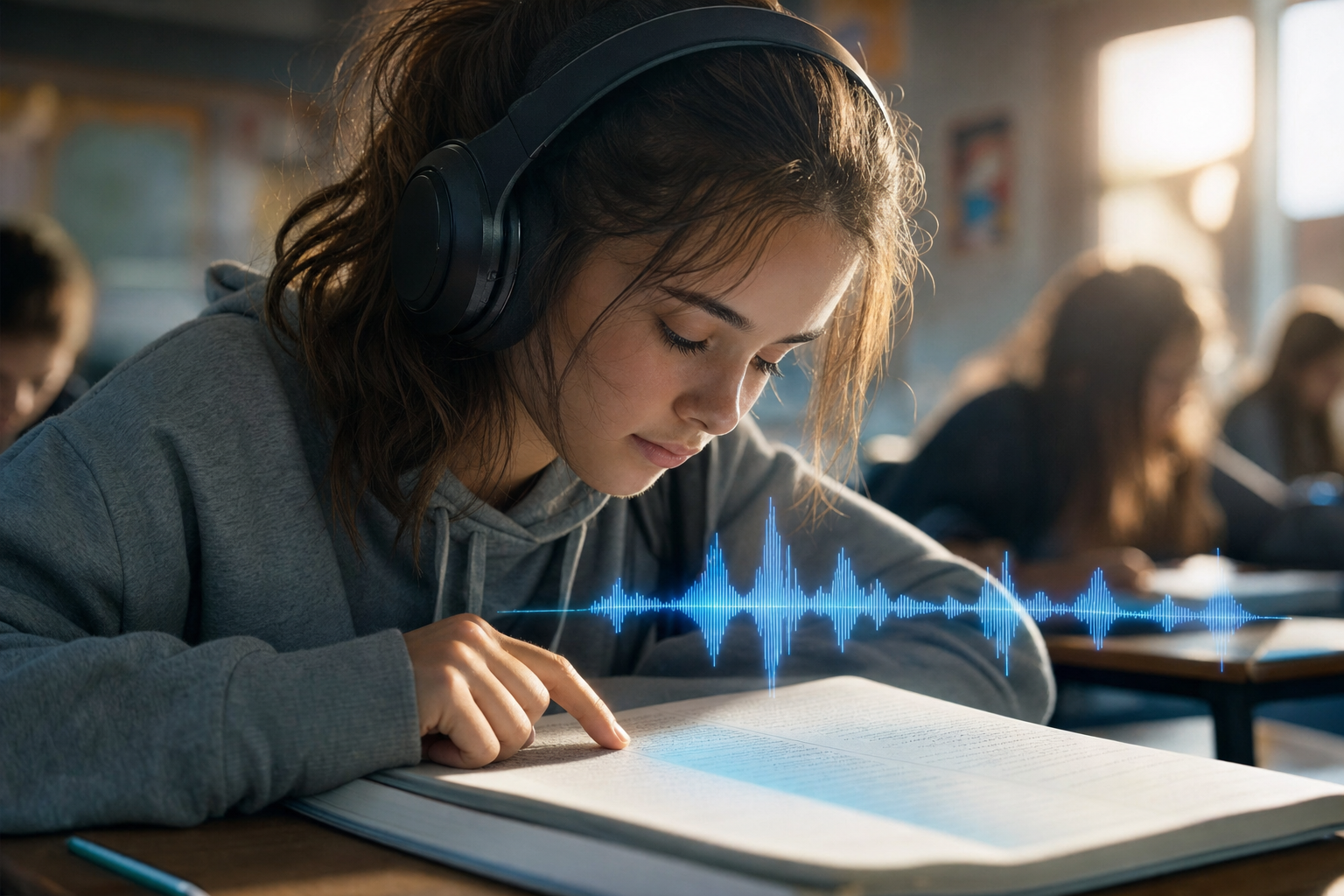
His most useful finding concerned transcripts. Most of his students preferred to listen to a podcast while following its written transcript, rather than only listening or only reading, and listening to podcasts made his students want to read more. Pairing audio with text gave students breaks from heavy reading and helped English language learners connect written words with their sounds. The article linked the approach to research on listening while reading, which supports decoding and lets students complete several successful reading sessions in a row. It also cited India’s use of same-language subtitles on television, where functional literacy in participating areas was reported to have more than doubled over nine years.
Some readers had argued that podcasts lack rigor. For teachers and literacy coaches, the more useful question is how audio is used. A podcast paired with its transcript keeps students working with text, and it can give struggling readers and English learners a way into material that would otherwise be out of reach.
UNICEF: more than half of South Sudan’s children are out of school
UNICEF reported that 51 percent of children in South Sudan between the ages of 6 and 15, about 1.8 million children, were not in school, the highest share of any country. The Associated Press reported that more than 800 schools had been destroyed since fighting began between government forces and rebels, and that more than 400,000 children had been forced to leave their classrooms. The government and rebels had signed a peace agreement, but violence continued in parts of the country.
The figures pointed to deeper problems. Only about one in ten students who start school finishes primary education, and education received 4 percent of the national budget. Phuong T. Nguyen, UNICEF’s chief of education for South Sudan, described government funding for education as very low. Enrollment had risen after independence in 2011, but war and a shortage of school buildings and qualified teachers had slowed that progress.
For educators in the United States, the report was a reminder of what children who arrive as refugees from conflict zones may have missed, and of the language, academic, and emotional support they may need when they enroll.
InformED Report spotlight: a grant for all-day kindergarten in Watertown
The Watertown School District in South Dakota was preparing to offer all-day kindergarten, and its teachers were looking for help equipping their classrooms for the longer day. The Arrow Education Foundation, a nonprofit that supports the district’s schools, stepped in with a $15,000 grant. The money was to buy classroom materials for purposeful play, giving young students what they need for play-based learning throughout the school week.
A move from a shorter day to all-day kindergarten changes more than the schedule. Teachers need materials and room arrangements that support a full day of learning, including play that builds language, social skills, and early mathematics. District leaders planning a similar change can look to local education foundations as partners for start-up costs that a regular budget may not cover.
Sources
- “Why Listening to Podcasts Helps Kids Improve Reading Skills,” MindShift (KQED), March 18, 2016.
- Associated Press, “UN: More than half of South Sudanese kids not in school,” The Philippine Star, January 12, 2016.
- “Arrow Education Foundation,” Arrow Education Foundation.
About the InformED Report
The InformED Report is edCircuit’s short news program on education. This edition first ran on April 17, 2017. In 2026, edCircuit re-presented it with a new anchor and this full written account. Both report the stories as they stood on that date and link the original reporting, so readers can see exactly where each claim came from.
Subscribe to edCircuit to stay up to date on all of our shows, podcasts, news, and thought leadership articles.
Related reading
More on InformED Report