This summer I was leading a staff check-in at YMCA Camp Widjiwagan in Nashville, Tennessee. One of the twentysomething male leaders asked a question: “I’ve been focusing on building relationships with the boys in my group, but one of the boys was hitting me on the back of my head. What do I do about that?” He gave me a sincere yet incredulous look.
I smiled and nodded my head. “It sounds like it’s working.”
His countenance communicated his disbelief. I heard him say, “What are you thinking, lady?” without even saying a word.
“Let me explain,” I continued. “This boy is testing the boundaries with you. He wants to see how far he can go.”
I’ve heard this concern in different words from other educators over the years. The underlying question seems to be: “If my students get to know me, will they still respect me?”
It’s important to start with unpacking what we mean by the word respect. If you are implicitly defining respect as keeping silent and doing everything you say the first time, because they don’t want to be punished, then I encourage you to consider another job. The days of “children should be seen and not heard” are over. When our society embraced social media, we also embraced giving voice to the previously voiceless. The fourth wall has dropped between brand and consumer, screen and viewer, teacher and student. To continue to stifle the voices of children is to operate out of fear and control.
Instead, what if we choose to operate out of love ― to do whatever it takes to let each person in the building know that they are seen and known ― that they belong? Our understanding of respect would be much different, wouldn’t it? Respect is valuing ourselves and others.
When we value something, such as a family heirloom, it means we bestow worth onto that object. Oftentimes it is not the object itself that has great dollar value. A handmade holiday ornament has worth because it was passed down from generation to generation, not because a lot of money was spent buying it. What if we give ourselves permission to see the worth of each one of our students? How would that value revelation change our practice?
Taking the extra step to let our students know that we are more alike than different helps build relationships. Sharing age-appropriate stories about our school days, family life, athletic or artistic accomplishments lets our students know that they are not alone in their struggles. Growing up is not easy. They can take a cue from the lessons we learned. We give them permission to be human with us, with each other, and with themselves.
We may not be celebrities, but we are role models for our kids ― everyday heroes. They are learning by our example. Therefore, it is not unusual for them to test boundaries with us. In fact, it’s a good sign that they are starting to open up. As our relationships are developing, what they need to know is that we are bigger, stronger, wiser, and kind. We’ve got them! They need to know we are a safe place for them to share their hearts.
There is a difference between value and authority. Each and every individual has inestimable value. I am not worth more than my students because of my age, education, or skin color. However, I am an adult who has been given a special job to do to help them learn and grow. My right and power to impart knowledge and give direction is because I’ve lived longer and I’ve learned a lot along the way. Therefore, I need not be afraid if a student is unhappy with me because I remind him of appropriate boundaries.
 Many years ago, I read a quote from a magazine that has stuck with me: Boundaries define you. They give you shape. They let you know who you are. Live within them, and the possibilities are endless. Let’s teach our kids boundaries with love.
Here are a few quick tips for establishing boundaries and building relationships:
1.) Adopt three simple rules – boundaries – and reinforce them, especially at the start of class meetings or sharing circles, such as:
- I will listen when someone is talking because I may learn something.
- I will use my hands, feet, and words to build up and not tear down.
- I will work as a member of my team.
2.) Remind your students regularly that you are a safe place for them. Show you are a safe place by staying calm and using an even tone of voice, especially when students are upset.
3.) Listen. When students speak, listen to what they are saying and what they are not saying. Read between the lines. Invite students who do not feel as comfortable talking in front of their peers to write letters to you or start a conversation journal with them – a special journal for the two of you to talk through what is going on in their world.
Hear more from Tamara Fyke of Love In A Big World at the 2019 Future of Education Technology Conference in Orlando, Florida, January 27-30. Tamara will be a featured panelist for the analyst session, Insights for Supporting SEL with EdTech, January 29 at 2 p.m.
- edCircuit – Tamara Fyke Columns
- Forbes – The Realities Of How Emotional Intelligence Is Improved And Applied
- New York Times – Elite New York High Schools to Offer 1 in 5 Slots to Those Below Cutoff

 As you begin to think about planning, we want to emphasize the importance of using an inclusive process to make your vision of a more effective school a reality. We’ve discovered that involving others in planning is one of the most important tools. It allows people to develop collaborative skills, and to learn and grow together. Hearing different points-of-view can help assure that what is planned is most appropriate for your school.
 Planning is just the beginning. Implementing and sustaining changes can be even more of a challenge because it is the implementation that forces people to face the reality that things “may be different.” Implementation often provokes a range of feelings including regret about abandoning familiar practices, exhilaration at the prospect of new ideas, or fear of being overwhelmed by the challenge of doing something new.
 Change is more likely to be sustained when your work is guided by a shared vision, and where teachers and other school staff are actively involved in planning, implementing, and monitoring your progress. When change is the result of the personal vision of one or two people, the change is more likely to be abandoned as soon as its advocates leave.
 The final stage of our BASE planning model is to “Evaluate and Adjust.” We’ve come to appreciate that the best schools are those that are comfortable with routine evaluation of their program. They want to know what is going well and they are not afraid of identifying areas for further growth. This routine monitoring and adjusting is what sets them apart from other schools.
 When Chip Barder left the United States to teach in Africa for two years back in 1973, he was 26 years old. He thought that he would have an international adventure and be back in Colorado in no time, ready to resume a “normal” career in the American public school system. But when I recently sat down to talk with him at age 71, Barder was several months into a “gap year” after spending over 45 years working in education all across the globe.
 In the meantime, Chip hopes he can take advantage of this downtime to read more, but he’s very focused on not losing touch with what’s going on in education across the worldwide community. “My son is a college math professor in Washington, and he keeps telling me, ‘Dad, you’ve got to up your game here because leadership holds everybody back,’ and he’s right,” Chip says. “Especially where technology is concerned.”
 Dr. Chip Barder is entering his 46th year as a professional educator. He has a BA in Economics with a teaching credential in the Social Sciences, a Master’s in Counselling, and a Ph.D. in Curriculum and Teaching. He has been a teacher, counselor, and principal at all three levels: Elementary, Middle, and High School. He has also been a university faculty member in teacher education and school administration.

 Mia Laudato received her MSEd in Exceptional Student Education specializing in Learning Disabilities and Emotional Behavioral Disorders from the University of Miami. She continued her learning at the University of Central Florida and the University of Florida receiving an Autism Endorsement and Pre-K ESE certificate. She has taught students from Pre-K through college in inclusive and separate classroom settings. Her love of teaching students with ASD and passion for using assistive technologies to create successful learners, contributed to her being recognized by Orange County as a district top five finalist for Teacher of the Year 2016. At FDLRS Action she provides professional development on instructional and assistive technology for teachers, administration, and staff in 5 Florida Districts.
 Robin Williams earned her Bachelor of Arts in Psychology with University Honors from the University of Central Florida in 1998 and continued her education at Florida State University where she earned a Bachelor of Science and Master of Science in Exceptional Student Education in 2000. She has over 18 years of experience working with children and adults with severe developmental disabilities, including those with autism spectrum disorders and intensive behavioral disorders. Throughout the years, Robin has written and developed a variety of trainings for teachers, parents and staff who have regular interaction with children and adults with disabilities. She has also presented at local education and behavior conferences.
 As Johanna¹
 But when the rubber hits the road, not all teachers carry the banner. Leaders get frustrated that their boots on the ground don’t understand the vision. But for teachers, the ideas that look so shiny in fresh packaging just aren’t as helpful as they were sold to be. And when one initiative after another enters a school without really landing, it’s easy to see why many teachers have allergic reactions to new initiatives.
 A year after personalized learning came to Johanna’s district, the district rebooted its approach and invited teachers to join a new digital learning cohort. Johanna had used classroom technology as part of her teacher preparation program and knew how effective digital devices could be for supplementing her lessons and class projects with learning content tailored to her students’ individual needs and preferences, thereby boosting engagement. But she was reluctant to sign up given how time-intensive and disruptive the district’s last initiative had turned out. However, her anxieties subsided when teachers from the first cohort told her about the great professional development they received to help them adopt new digital-learning practices. Her worries aside, Johanna was thrilled by the idea of joining the cohort to get a class set of iPads.
  Thomas Arnett is the Senior Research Fellow in Education at the
 “I think an arguable purpose is to help students gain ample academic mastery,” Sonny says. To master current learning, we need to present students with problems and puzzles that teach them how to reason logically, how to evaluate effectively, how to use creativity and innovation to tackle and solve the problem… essentially, teach them how to think. “Design the problem or question that they’re facing so that they develop the skills, the habits, the aptitudes, the mindsets, and the agency to master current learning,” Sonny says.
 But to ignite a student’s passion and have them truly take ownership of their learning, they need to recognize that their learning has a greater long-term outcome than just passing the next test or jumping through the next hoop. “I suggest that we stop asking kids ‘What do you want to be when you grow up?’ because I think that question has little value,” he says. “A better question to ask is ‘What wicked problem matters to you and what are you going to do to solve it?’”
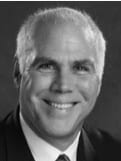 Dr. Sonny Magana is an award-winning teacher, best-selling author, and pioneering educational technology researcher. Sonny is a highly sought-after leadership consultant, speaker, and instructional coach with more than thirty years’ experience helping educational systems around the world realize the power of transcendent learning. The author of numerous research studies and articles, Sonny’s newest book,