Finalists at elementary, middle, and high school levels will present their innovative approaches to STEM education to conference attendees.
January 17, 2018
PALM BEACH GARDENS, Fla.―The National Future of Education Technology Conference (FETC) has announced the nine schools named finalists for the 2018 STEM Excellence Awards. FETC, the largest, national, independent education technology event, will introduce the finalists and unveil the winner at its 38th annual conference, to take place January 23-26, 2018, at the Orange County Convention Center in Orlando, Fla. The three finalists at each level—elementary, middle, and high school—will present their successful approaches to STEM education to FETC attendees and the winner will be formally announced on Friday, January 26, at the FETC STEM Excellence Awards Ceremony on the Keynote Stage.
 “In the 21st century global economy, innovative STEM education is one of the most important factors in preparing students for successful futures. Each of the nine STEM Excellence Awards finalists represents the very best in STEM instruction and serves as a shining example of what schools can accomplish with the right vision and leadership,” said Jennifer Womble, program chair of FETC. “We are impressed with the wonderful work each school has done to support their students and look forward to the start of FETC, where they’ll have the opportunity to share their successes with members of the global education community.”
Throughout the conference, each finalist will present in the STEM Theater, located at Booth 2305 in the FETC Expo Hall. During these sessions, representatives from these schools will showcase their strategies for teaching STEM―which may include presentations about specific model programs or overall tips from their experiences―so that attendees from around the world can learn innovative ways to build their own successful STEM programs. The nine schools recognized as 2018 STEM Excellence Awards finalists are:
Elementary School Division
- Buck Lake Elementary, Leon County Schools, Tallahassee, Fla.
- Union Elementary STEM and Demonstration School, Sumner County School District, Gallatin, Tenn.
- Liberty Elementary School, Loudon County Public Schools, South Riding, Va.
Middle School Division
- Christ the King Catholic School, Diocese of St. Augustine, Jacksonville, Fla.
- Harpeth Hall School, private college preparatory school, Nashville, Tenn.
- Washington Middle School, El Dorado Public Schools, El Dorado, Ark.
High School Division
- Lanier High School, Gwinnett County Public Schools, Sugar Hill, Ga.
- Commonwealth Academy, independent preparatory school, Alexandria, Va.
- All Saints Academy, independent preparatory school, Lakeland, Fla.
Each presentation given by the finalist schools will last for 30 minutes. The presentations will offer an opportunity for conference attendees who want to improve their own STEM practices to learn about lesson ideas, program successes, and implementation strategies.
The STEM Excellence Awards are judged by a panel of seven high-ranking education professionals from across the U.S. The committee is comprised of the following:
- Timothy Childers, assistant principal for Technology Integration, L&N STEM Academy
- Karie Huttner, education technology coordinator and math resource teacher, Verona Area School District
- Dr. Carla Johnson, associate dean for Research, Engagement and Global Partnerships and professor of science education, College of Education, Purdue University
- Todd Kennedy, manager of Technology Services, Golden Hills School Division No. 75
- Lance Lennon, district technology director, Eagle Grove Community School District
- Dr. Erin Peters-Burton, director and associate professor, Division of Educational Psychology, Research Methods and Education Policy, George Mason University
- Mark Smith, executive director, Michigan Association for Computer Users in Learning (MACUL), and chair, FETC STEM Excellence Awards Committee
The panel evaluated more than 100 applications and, based on each school’s use of interdisciplinary curriculum, collaboration, design, problem solving, and the STEM experiences offered to their students, selected the finalists based on their innovation and educational impact.
Registration is open for the 2018 Future of Education Technology Conference. For additional information and to register, visit fetc.org/register or call toll-free 1-800-727-1227. Learn more about the FETC Expo, including the Startup Pavilion, Pitchfest, and exhibiting companies at www.fetc.org/expo.
About the Future of Education Technology Conference (FETC)
The Future of Education Technology Conference (FETC) annually attracts thousands of education and technology leaders from around the world. Delivering strategies and best practices for student success and schoolwide advancement, FETC is known as one of the nation’s premier education technology events. Recognized for its outstanding program year after year, FETC provides CTOs, CIOs, Innovation Directors, Special Ed/Pupil Services Directors, Early Childhood Directors, Media Specialists, Technologists, Administrators and other Educators, the opportunity to explore the most effective integration of technology across the curriculum — from PK-12 — through premium sessions, intensive workshops, various concurrent sessions, live demonstrations of several hundred hardware and software products, plus much more.
About LRP Conferences
LLC LRP Conferences, LLC, an affiliate of LRP Publications, produces more than a dozen professional conferences and trade shows annually including: Campus Technology Conference, Ergonomics Conference & ErgoExpo, Future of Education Technology Conference (FETC), Recruiting Trends Conference, Talent Acquisition Tech Conference, and Women Leaders in Education Conference.
About LRP Publications
 LRP Publications, founded in 1977 by Kenneth Kahn, is a broad-based media company serving business and education professionals. Specializing in the fields of education administration, education law, education technology, federal employment, human resources, workers’ compensation and disability, the company publishes hundreds of books, pamphlets, newsletters, videos and online resources on various topics including Title 1 and Special Education. Additionally, LRP publishes two industry-leading magazines: Human Resources Executive® and Risk & Insurance®, plus delivers top-quality training and professional development with eLearning, conferences and tradeshows including: HR Technology Conference & Exposition®, National Institute on Legal Issues of Educating Individuals with Disabilities®, National Workers’ Compensation and Disability Conference® & Expo and dozens more. For a complete list of LRP products, eCourses and conferences, please visit www.lrp.com.
Media Contacts:
Rennette Fortune
LRP Publications
P: 561.622.6520
C: 561.373.9870
MindRocket Media Group, Inc.
E: info@mindrocketmediagroup.com
Further Reading
- The Huffington Post – Inspiring Young Minds to Solve the Challenges of the World with Technology
- Nibletz – FETC 2018 Will Be Here Before You Know It
- edCircuit – Sir Ken Robinson to Keynote 2018 Future of Education Technology Conference

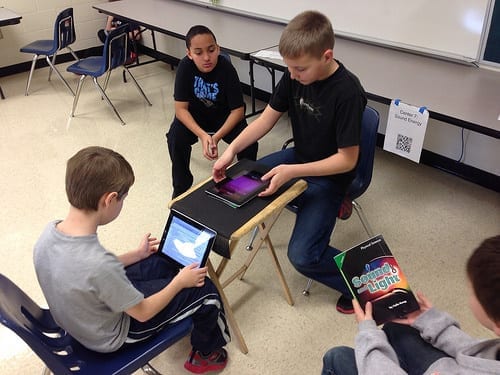 Let us imagine for a moment the following scenario: students buzzing around a classroom, out of their seats, sending messages to one another, talking and bouncing from one computer to the next. In one corner of the room, a few students sit huddled and whispering. As the clock ticks by, the students begin to open tablets and click on what appears to be a game. The teacher moves around the room — occasionally commenting — but doesn’t appear to do much teaching. One student calls out, “we’ve got it!” The classroom applauds and all the students join together in a victory dance. The teacher sends out a quick email, and 15 minutes later an announcement is made over the intercom. “Starting next month, Miss Wilson’s 6th grade classroom will be designing the lunch menu.” You hear cheering from adjoining classes and the students in Miss Wilson’s class are all beaming.
 useful for enabling the use of technology in the classroom but in learning how to transcend educational settings and affect positive societal and practical change.
  The final tier, T3, is illustrated at the beginning of this book review, and will vary depending entirely on your students’ passions. At this stage, educational technologies enable a form of transcendence, where students’ passions, will, grit and positive social economy meld together to solve the world’s “wicked” problems. The final product is not a classroom of students who ace tests and gain acceptance into good colleges. The final product is a more well-connected social network of learners who continue to “…imagine, to dream up scenarios of applied ideas [through this] uniquely human enterprise.” T3 enables the most important social entrepreneurs of the future. For educators willing to take the leap into translating, transforming and transcending technology in the classroom, we think Magana’s T3 Framework is an exciting, accessible and obtainable way forward.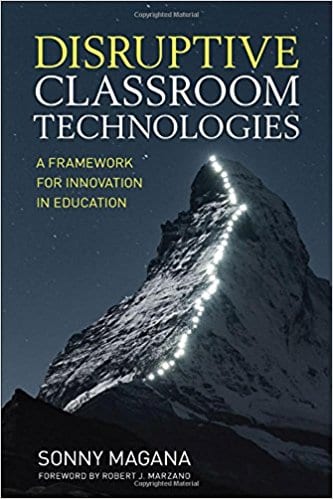

 Student-centered learning has long been at the heart of special education and service provision for students with disabilities – with a focus on meeting the needs of individual learners. However, this approach to instruction has become increasingly prominent in general education settings. This crossover of practice benefits all students. Ideally, it includes an environment rich in flexibility. This begins with the seating options and tech devices available, to adaptive and accessible instructional materials. Students are directed toward print text, digital text, and multimedia content that is scaled for various cognitive levels.
 My colleague,
  Assessment is changing in schools and I think that five years from now we’ll see a larger emphasis placed on formative assessment. With formative assessment, we’re gathering information in real-time that can inform instruction. My book
  Empathy. It’s an overused term, but it is intertwined with effective communication skills because the most effective communication requires us to also listen. Communication isn’t just broadcasting; it’s a two-way conversation. We need to make sure what we are communicating is relevant to the intended audience, and we do this by using empathy.


 In this week’s special series, presenters from the upcoming Future of Education Technology Conference will share their best insights, advice, and strategies in response to key EdTech questions. What should educators think about when planning for education technology implementation that will meet the needs of today’s and tomorrow’s students? What new leadership skills or strategies are needed to take EdTech – and other aspects of education – to the next level? Read on below for insights:
  Technology, particularly digital portfolios that let students and teachers capture evidence of learning through images, video, audio, and all kinds of artifacts, makes it much easier to provide visibility into every child’s experiences and achievement. Imagine a child uploads video of a bridge building project that instantly is received on the phone of her parents, grandparents in a different country, Boys and Girls Club leader, and youth pastor, all of whom can comment, question, and support, instantly and in their own language, and continue that conversation outside of school. Involving more members of the community at a personal level can bring a deeper understanding and support for education.
 The use and implementation of technology in isolation from quality instruction, relevant feedback, the cultivation of collaboration, and personalized learning alone cannot meet the needs of all learners. Access alone does not provide equity in educational outcomes. Secondly, technology as a tool for access is dependent upon the accessibility of the target content. Ensuring that all content meets accessibility standards for those with visual, hearing, or other sensory impairments, print text reading disabilities, access barriers, etc., is key when looking at technology to provide equity.
 While the recent proliferation of educational technology tools in classrooms has focused on students in general education, many of these tools have significantly improved access and independence for students with special needs. One of the most promising of these has been the shift toward cloud-based applications and supports. From software, such as word processing, or online assessments, to browser-based supports, such as text-to-speech and voice dictation, a single login now allows a student access across devices and environments. Technology in the cloud allows for access outside of the traditional school day, as well as customization to meet varied individual needs. Additional, but important benefits include the cost effectiveness and increased acceptance of solutions targeted at all students, not just a small minority.
 When it comes to new education technology tools that support learners with special needs, I’m very excited about wearables. This includes the Apple Watch, which has been used in a variety of settings to support learners in their educational technology. From voice commands, haptic responses, and monitoring of movement and rate, it really has the potential to be a game changer for students with special needs.
 Karen saw a problem in the Orange schools when it came to reading proficiency. After some thought, she came up with the idea of the
 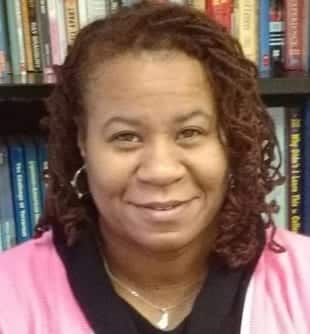 Karen Harris has been Director of English Language Arts & Testing for Orange Board of Education, Orange, NJ since July 2017. Previously, she served as the Special Assistant of Language Art Literacy at
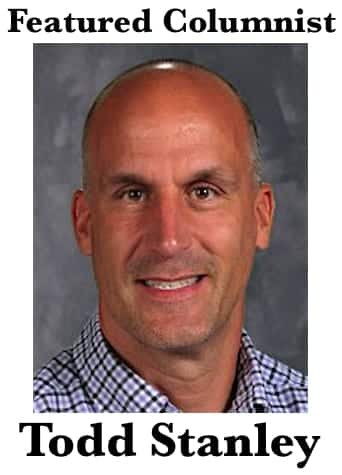 The way many gifted services work across the nation is that if a school or district has gifted programming, it is focused in the younger grades. Very rarely is there gifted-specific programming at the high school level. Instead, we rely on nationally recognized programs such as Advanced Placement (AP) and College Credit Plus (CCP) to fill the need for rigor and challenge. While these courses are certainly more rigorous than your typical high school class, they are not specific to the needs of gifted students. Even if they were, they would only be meeting the academic needs of the students. What of their social/emotional needs?
 The other impediment for gifted learners in high schools is that many high school teachers have a traditional style in the classroom, standing in front of the students and talking at them. They are the disseminators of information, the sage from the stage, the content expert. If you don’t believe me, go into most any high school and see how the desks are situated in the classroom. I would bet a majority are lined up in symmetrical rows, all pointed toward the front of the classroom where the teacher’s desk sits. This drill and kill style of teaching has been proven to not be the most effective method of reaching students, especially gifted ones, and yet it continues.
  These methods of teaching allow students to learn for themselves rather than having it spoon-fed to them by the teacher. They also are engaging and challenging at the same time. They teach students not just the content, but how to find that content and use it best. This way, whether that student retains that content or forgets about it, they still possess the skill of knowing how to learn.
 The main advice for high school teachers is to remain open minded. To recognize that even though you might be the content expert of your subject, you are not necessarily the strategy expert. There is always room to learn. If we expect this of our students, we should expect it of ourselves. If there is anything I have learned after twenty years in education, it is that I still have a lot of learning to do.