It’s not about classrooms that look like a coffee shop by Cheryl Fenlason
When you think of an innovative school, your mind most likely goes to pristine school architecture, including classrooms that look more like coffee shops, modular or mobile furniture, loads of instructional technology, multiple informal learning spaces or huddle areas throughout the building, and more. These modern spaces are thought to inspire innovative teaching and soaring student outcomes.
 However, what if you want inspiring pedagogy and amazing student outcomes, but don’t have the ability to create a state-of-the-art school building to house it? Poudre School District Global Academy (PGA) is a perfect example of inspired teaching and learning—and it was achieved without the need to build a new school.
PGA of the Past
When PGA opened in 2009, it was a totally virtual school that focused on students who struggled in a traditional brick-and-mortar setting. These struggles included learning disabilities, anxiety disorders or other mental health considerations, as well as unique scheduling needs. We started out with only 22 students, but between 2010 and 2013, PGA opened itself up to any student who needed or wanted a nontraditional education, including advanced and accelerated students.
 As enrollment grew, we had to accommodate a variety of different student needs and skill levels. Because of this, the administration felt it was time to rethink the instructional model. Administration asked the question “is fully virtual the best solution for our students or is there another way to meet students’ needs for nontraditional education while better supporting them?”
Redesigning Our School: PGA Now
In 2014, PGA decided to move away from the fully virtual model to a blended model. Blended learning can mean a lot of things, but at PGA, it means there’s a blend between virtual schooling at home and onsite instruction in the classroom. While our classrooms may look traditional in design, our instruction is what makes PGA so innovative.
Students spend three days a week working through online courses at home and two days a week at school with their teachers and fellow students. Approximately 60 percent of all instruction for K–8 students is online and 80 percent of instruction is online for high school students. During these online work days, parents act as “learning coaches” by accessing online assignments, communicating with PGA teachers, and signing off on work their students have completed.
 To help parents effectively support their child during virtual learning days, we created several training opportunities. In addition to successful learning coaches mentoring new families, parents participate in a Jump Start Week where they practice correspondence with their learning coach mentors and their child’s teachers, and they attend a half-day onsite orientation to overview policies and procedures. Learning coaches who have children in grades K–8 also have the option of attending a monthly learning coach academy.
The two days per week of onsite instruction typically include a variety of learning models. In addition to lectures or whole class instruction, teachers can differentiate instruction by grouping students based on needs and progress. Students who are excelling with a concept can work together on a project to explore the topic deeper and the teacher can work with those in need of extra support either in small groups or on a one-to-one basis. Students can also work on their online courses at school, which gives students the opportunity to receive mentoring from their teachers face-to-face and work with other students collaboratively.
Making it Work
In addition to deploying online course content, our school model requires time management skills from students, parents, and teachers, as well as the development of strong relationships between key stakeholders. There are six different relationships we foster, which we call our Six Pillars of Success.
 Teacher-Teacher relationships: Teachers are usually on campus Tuesday through Friday. On Wednesdays, we host Student Support Team (SST) meetings to discuss individual students and brainstorm the best way to support and personalize learning for each student. On Fridays, we host professional development opportunities, additional SSTs, and grade-level collaboration. This emphasis on collaboration creates a professional learning community, where fellow teachers can problem solve and seek support and innovation.
Teacher-Parent relationships: Teachers and parents share a common goal: they want students to succeed. Teachers count on parents to help them understand their child and how he or she learns best, and the parents count on the teacher to be a content-area expert and mentor with wisdom to offer their child. Therefore, creating and sustaining this relationship is arguably the most important relationship the school fosters. Although the learning coach training opportunities are a great first step in creating this relationship, teachers and parents work daily to maintain it.
Teacher-Student relationships: Since a majority of instruction is conducted via online courses; teachers have more time to spend with students in individual or small group settings. Even though students are only in class two days per week, students and their teachers regularly communicate via email, text, or phone when they are not on campus. Both teachers and students cite this ability to develop meaningful relationships as a positive aspect of our school model.
 Parent-Parent relationships: Acting as a learning coach is a big responsibility for parents. In addition to the learning coach mentoring program, parents have access to a Facebook group where they can ask questions and provide advice and support.
Parent-Student relationships: Because so much instruction is happening at the student’s pace off campus, the role of learning coach is necessary. PGA teachers and staff help parents adjust to the instructional model and understand the best way to “coach” their children. The level of support—and the tactics they use to support their child—will change as the child matures. K–8 students typically need more support and a different type of support than high school students.
Student-Student relationships: Although students are only on campus for two days per week, students form friendships just like brick and mortar school students. Students spend time with their peers during class and lunch, and they also have the opportunity to hang out at PGA community social events and outside of school. All K–12 students work together on projects in small groups and high school students also participate in a mentoring program where juniors and seniors are paired with younger students to meet on a regular basis.
Instructional Redesign’s Impact
The combination of a split week schedule, engaging online courses and on-site instruction, and meaningful relationships have been successful for PGA. We experienced an all-time high enrollment for the 2016–2017 school year with 194 students, which is maximum capacity for our facility. Our students’ standardized test scores are consistently higher than the state average, too. When we received our PARCC scores for English language arts and math in Spring 2016, our average scores for students in grades 3–9 were not only higher than the state average; they were higher than the Poudre School District average. Additionally, PGA won two major awards during the 2015–2016 school year. The Colorado Department of Education awarded PGA the John Irwin Schools of Excellence in Education Award for exceeding expectations in student achievement, and the Governor awarded us the Distinguished Improvement Award for exceeding expectations in academic growth.
Student achievement is important to PGA, of course, but we also believe that our students’ happiness with their choice to seek out a non-traditional instructional model is another sign of success.
Author
Cheryl Fenlason is the principal at Poudre School District Global Academy (PGA), an innovative hybrid school in Fort Collins, CO that serves K–12 students. Student schedules include classes and support delivered both on campus and online.
Further Reading
- Waco Tribune Herald – New literacy software part of Waco ISD’s new blended learning model
- EdTech Magazine – Small Steps Lead to Big Wins in Blended Learning
- The Frederick News Post – In the Classroom: Magnet class uses blended learning to explore creativity

 As a class, we would watch a clip from a popular movie and then analyze it scientifically. For instance, when Spider-Man holds Mary Jane and swings from the left of the screen to the right of the screen, which direction should her hair fly? Is it possible for Tony Stark to create a new stable element when all the positively charged protons would repel each other? If light is shining through the invisible girl’s body, including her eyes, doesn’t that mean she is blind since her eyes cannot act as receptors of light?
 When I moved on to teach math at the elementary level, I realized if I make the examples something students can relate to, they are able to understand it better. Instead of asking them to divide 25 imaginary apples, if I ask them to put their 25 classmates in teams, they can visualize the problem and understand what operation to use. With my high school students, they start paying extra attention if the word problem deals with money in a scenario they might encounter. Most students enjoy hearing stories to which they can relate, and tend to remember the lessons associated with an experience.
  your current boyfriend/girlfriend. In biology, mutualism is an equal relationship while parasitism is like that friend who keeps eating your food but never brings any to share.
  Joy Lin attended the


 It’s no secret that technology follows finances. In a world that’s increasingly connected by social media and runs off web-based systems, technology is currency, literally. From manufacturing motherboards to creating software, it costs money to develop and maintain an infrastructure that supports access to digital devices and tools, which means that if you find yourself born into a wealthy or middle-class household, you’re more likely to benefit from having easy access to both the tech as well as the education to put it to use. On the other hand, if you happen to live on the opposite end of the educational and financial spectrum, it’s more likely that you’ll find yourself lacking the technology skills to keep up with job market demands, and thus eventually find yourself in a less privileged position socially, educationally, and financially. Experts have christened this growing gap between the tech-savvy and the less-than-savvy the “Digital Divide.”
  According to the
  It’s important to frame best practices for afterschool providers in terms of engagement and participation in the world, not simply proficiency with computers and the Internet. It’s not about having a laptop or a smart phone, it’s about using the laptop or smartphone to translate a child’s worldview into content. It’s about giving them the creative space to digitally develop a voice. Here are a few examples:
 As the digital divide continues to widen as a result of the rapid evolution of technology, it’s critical that in-school and out-of-school time work together to ensure that all youth have the opportunity to become content creators, develop their digital voice, and make connections beyond their physical community. By investing in these opportunities to level the playing field for today’s young people, we’re investing not only in their future but in the future of our communities, our nation, and our world.
  Edwin Link, M.Ed. is the
 Christa Krohn is a math coach for the Orange City Schools district in Pepper Pike, Ohio, outside of Cleveland. Having been a math and physics teacher and adjunct college professor for 16 years, people assume that math was easy for her in high school, but it wasn’t. She had to continuously study and fight to learn, and she was only average or slightly above average at best. Her experience in school was frustrating because the traditional method of teaching was not effective. She just wasn’t getting it, but she kept fighting, learning and enduring.
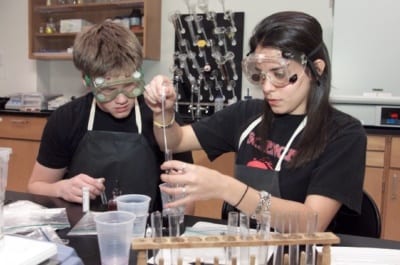 Parents and our educational systems have the same fundamental goals, but everyone appears locked into certain traditional ideas. Methods of teaching and administrative communication are caught in preconceived notions that inherently resist change. Parents expect their children’s progress to be assessed in the form of information and data that simply tells them information one way or the other that is logged, recorded, and shared. It has a way of changing with competency-based education and parents can become uncomfortable with the new procedures and standards.
 To change this mindset, Christa says we need a major cultural mind shift. She says the secret is to have the honest conversations with parents where they understand and accept that change to competency-based learning and assessment is the right choice. This is difficult from the start because everyone is still used to and leans towards the old traditional teaching and assessment practices. “Change is traditionally not something that schools do well,” Christa says. “We don’t keep up with it at the rate at which businesses and other entities change to keep up with things.”
 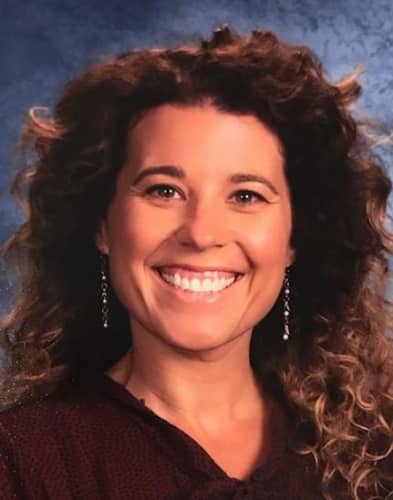 Christa Krohn has been an educator for 16 years teaching all grades from K through college in Math and Physics with various types of learners and student demographics. She has worked as a teacher, gifted Math Teacher, adjunct college professor and Instructional Math Coach (K-8). In addition to a teaching license, she also holds a Curriculum & Instruction, Professional Development, Principal, and a Gifted license.