
Transforming traditional teacher PD with video coaching by Adam Geller
 In today’s high-stakes environment of teacher evaluation, there is an increasing demand for higher quality professional development. Administrators and school leaders are challenged with providing teachers individualized, ongoing support, while not being stretched too thin – both from a capacity and budgetary standpoint.
One of the ways schools and districts are meeting this demand is by taking a technology-enabled approach to professional learning to deliver video coaching as an alternative to a system of solely in-person observation. Having a lesson recorded on video reduces the need for administrators, coaches, or colleagues to physically visit a teacher’s classroom at a specific time.
With a technology-enabled reflection process, teachers can also take an active role in the process. Teachers record and share video of their classroom practices with others who can provide time-stamped annotations alongside the teacher who also analyzes the video.
Video observation can additionally provide instructional coaches and colleagues with access to classrooms that might otherwise be unreachable. For example, in South Dakota, new teachers are paired with mentor teachers across the state who virtually visit and observe the classroom.
 In “Evidence of Practice: Playbook for Video-Powered Professional Learning,” we examine how video coaching can enrich the professional learning process and provide implementation guides for 12 strategies that utilize recorded video.
If you’re on the fence about adopting an online video analysis process, here are three benefits that you might consider for using video in teacher professional learning, adapted from the research we conducted for the book:
- Video gives teachers a mirror. Instead of relying on the teacher’s memory or notes that an observer took, video serves as an objective record. It can show evidence that the teacher did not see in real-time during instruction. And looking back on video clips can provide the cognitive space teachers need to analyze their instruction more productively.
- Video helps build instructional communities. Powerful learning is possible when teachers work in networks that make viewing peer video a central activity. Several studies have found that teachers’ participation in video professional learning communities helped build vital professional knowledge and improve their practice.
- Video helps teachers see themselves as their students do. John Hattie’s “Visible Learning” argues that teachers need to be able to see learning in their classrooms through the eyes of their students. Video provides a mechanism for teachers to see directly how their teaching is having an impact on student participation and learning.
 Like any initiative, video coaching involves planning logistics, developing a smart strategy, establishing a supportive culture, and implementing it well day in and day out. When this is done with fidelity, video coaching can transform the professional learning process for administrators, coaches, and teachers alike.
Interested to learn more? Watch this past video interview with edCircuit.
Author
Adam Geller is the founder and CEO of Edthena, a video coaching platform for teacher development. A former classroom teacher, he is also the author of “Evidence of Practice: Playbook for Video-Powered Professional Learning,” which helps school leaders make and implement a plan for how to best use video-powered professional learning with teachers.
Follow Adam on Twitter.
Further Reading
- TeachThought – 22 Apps To Make Videos In The Classroom
- Edutopia – How to Use Online Video in Your Classroom
- EdTechTeacher – The Video Classroom

 Gezim Gashi is a storyteller that enjoys teaching kids how also to be storytellers. As a songwriter early in life, Gezim found a natural progression into his role as public relations and marketing guru for the Academy of Music and Business (AMB) in Tingsryd, Sweden.
  Gezim tells the story of one of his students named Belle, a 15-year-old girl who was troubled by the street violence in Stockholm. She poured her heart and emotions into a song she wrote, and approached Gezim. He was impressed and started collaborating with her to record and promote her creation. After producing a video of her singing her song, he posted it on Facebook and it got over 100,000 views within an hour; a week later she was doing the morning talk shows in Sweden, and was approached by record companies offering her a recording contract. It was a demonstration of the power of public relations and marketing.
 Students from Christian Oaks flew to Sweden to perform with their AMB counterparts at the American Embassy in Stockholm, and the resulting conference was a massive success. The AMB students returned the favor and flew to Los Angeles to perform with the Oaks Christian orchestra, for what was declared a life-changing magical event. The students in Sweden and Los Angeles learned so much by connecting through Soundtrap that the experience went far beyond just making music. It allowed the power of storytelling to make a huge impact on lives spread across the globe.
 Gezim Gashi is a 27-year-old marketer and entrepreneur who is Head of PR and Marketing at
 Steven W. Anderson is an accomplished education consultant who travels from coast to coast talking about the use of Social Media in the classroom to teachers and administrators in schools and districts all across the country.
 To Steven, quality professional development is a critical tool in helping schools keep up with the constantly shifting education technology and the variety of electronic devices that parade through classrooms on a daily basis. “One of the issues that I have a lot with professional development in some conferences, they’re trying to cram the technology into the learning process versus ‘Let’s talk about how collaborative classrooms through the use of technology work and what they look like.’ Technology comes and goes. What we need to be focused on are pedagogy and processes and how students are creating new knowledge and new opportunities through that technology. And technology enables us to do things we weren’t able to do before.”
 “We get too hyper-focused on one particular application and then tomorrow it’s gone, and we haven’t understood the processes that made that application so great,” he says. “We’re at a loss. I want to see schools, districts and educators focusing more on their pedagogy and having good solid sound pedagogy around the use of technology.”
 Steven W. Anderson is a Dad, Learning Evangelist, Speaker and Author. After a successful career in public education as a Teacher, Instructional Technologist, and Director of Instructional Technology, Steven works with educators across the globe as a consultant. Highly sought after for his skills in helping educators and school leaders better understand technology and social media through his humorous approach to learning, Steven can work with you to improve learning for all students.

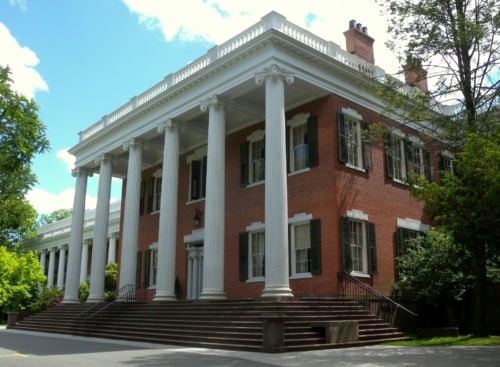
 “We’re there to help young people mature into adulthood, help them learn how to make their own decisions,” he says. “To grow and develop in ways that are necessary to have a successful and sustainable life.”
 A robust advising and counseling system helps support student needs once on campus. Dr. Massa directs his admissions staff to check in on undergraduates from time to time throughout their school year – reaching out as far as their junior and senior terms. Mentors remain critical in helping students cope with the extraordinary pressures of university and higher education.
 Robert J. Massa serves as Senior Vice President for Enrollment and Institutional Planning at Drew University in Madison, NJ. He is responsible for admissions, financial aid, athletics, career planning and Institutional Research. Prior to assuming his current position in January, 2015, Massa served for five years as Vice President for Communications at
 The looming teacher shortage isn’t exactly looming… it’s here. Per The Charleston (SC) Business Journal, “The Center for Educator Recruitment, Retention & Advancement, South Carolina’s teacher recruitment program, said in its annual Teacher Supply Study that approximately 6,400 teachers across the Palmetto State left their positions at the end of the 2015-16 school year — 1,600 of them left for another district, but at least 330 left the profession completely and 1,400 cited personal reasons for leaving or did not give a reason.
  And beautiful as it is, most people don’t want to move to rural Hawaii because the nearest mall is on Venus. You can’t switch districts for higher pay since its all one district. It’s a crisis in Paradise. Personally, I think they should market to retired Upstate NY and all New England teachers who will still get their pensions, will also get a Hawaii salary and get as far away from Winter as humanly possible. You can listen to my show on the Hawaii teacher shortage which is in crisis mode
  So, let’s add insult to injury.
  On my podcast, I deal with all the educational associations who annually march up Capitol Hill to explain their particular interest to their representatives in Congress. They get a lot of head shaking, up and down rather than right to left, but as you can see from what the House has proposed and what the Senate might pass, the up and down headshake was obviously their never-ending answer to the question,