
Growing up, Mohamed Hassan watched as other people used their ideas to create success and build legacies. The observation inspired him to use his creativity to make his ideas come alive. He became interested in technology and found that it provided him with the ability to test ideas and bring them to life.
I happened to meet Mohamed at the 2017 Imagine Cup World finals. His team, Green Jam, is made up of university students from the American University in Dubai. The UAE has a goal of zero waste to landfills by 2030. Mohamed noticed that the recycling stations in Dubai were rarely used correctly and set out to improve the situation. His solution was to create automated public recycling stations that automatically sorted recyclables and also rewarded individuals for their use – a technology that can be used not only in Dubai but cities worldwide.
About Mohamed Hassan
Mohamed Hassan attends the American University in Dubai, in the United Arab Emirates. He is a student of the Electrical & Computer Engineering Department. His Imagine Cup team, Green Jam, was the winner of 2017 United Arab Emirates National Finals, and competed in the 2017 Imagine Cup World Finals in Seattle.
- Construction Week Online – Dubai’s Dnata cuts ground equipment waste by 110t
- Waste Management World – ‘Namaa’ Project for Paper Recycling Launched by Dubai Culture
- Gulf News – Over 48 tonnes of paper collected for recycling

 To best prepare our students for such an uncertain future of work,
  This new foundation for readiness might seem straightforward. At one level, it is. Social-emotional skill development has been receiving increasing attention as an educational priority. But when one really unpacks what this new foundation for readiness could mean for education systems and other learning settings, it has profound implications. Chief among them, education systems will need to establish a new focus on feeling and relating to help young people get ready for future work environments. We need, essentially, to redefine readiness at both the K-12 and postsecondary levels.
 Encourage and support cognitive diversity and flexible thinking.
  Seek to cultivate deep partnerships with afterschool, summer, and out-of-school-time learning providers.

 Parents of boys should ask themselves this question as they enter the doors of their schools. A myriad of incidents suggests that the answer is yes. By the time they reach school, many boys are already lagging behind in literacy: at age five, there is a gap of 11 percentage points between boys’ and girls’ achievement in reading.
 Across the country, schools are demonizing the distinctive, assertive sociability of boys. The obsessive focus of zero tolerance policies is creating hostile environments for young boys. Do we really need to ban much-loved games such as Red Rover and tag? Will changing the name of “tug of war” to “tug of peace” change the act of competition the game requires? Young boys love action narratives involving heroes, bad guys, rescues and shoot-ups. As boys’ play proceeds, imaginations soar and plots become more elaborate. They naturally learn the component parts of stories and novels while developing the skills of visualization and problem solving.
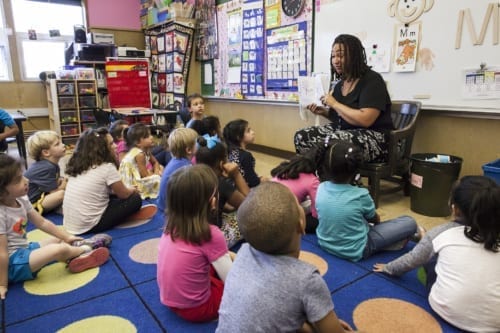
 In a word: kindergarten. In my kindergarten classroom, you would have seen kids doing lots of different things: singing, dancing, playing, finger-painting, and maybe even a little formal instruction. Walk into almost any kindergarten today and you will see something quite different. The kindergarten of today looks very much like first grade looked 30 years ago.
 Gender identities significantly impact boys’ attitudes towards reading. Their literacy behaviors and ultimately their skills are frequently affected by attitudes which see success as being linked to non-academic activities. Boys see reading as being more for girls. These identities increase the likelihood of boys having a low interest in reading as an enjoyable activity and may undermine their literacy attainment.
 significant portion of class time to check for completion, review answers, think pair share or any of 100 strategies to prove that the homework was meaningful. This, as we all know, can become its own vicious cycle, as the dreaded pile of ungraded assignments just gets bigger. Neither new teachers nor expert educators can escape this yearly homework grading dilemma.
 chose a balancing act where parents need not feel like a science expert to actively participate in the homework and where, at times, students would feel like an expert. Parent engagement homework assignments could be simply conversational in style. I created the simplest of homework slips, asking for a parent signature that they had indeed had a conversation with their student.
  later find out that according to multiple studies, students who eat dinner with their families often are 40 percent more likely to earn As and Bs in school. Similarly, family dinners also have an impact on reading and vocabulary skills for the obvious reason that you are more likely to be exposed to new and complex vocabulary.

 Jonathan Cassie has been a teacher and education leader for 20 years and is currently Director of Innovation at TVT Community Day School in Irvine, CA in the heart of Orange County. Cassie is the author of
  Jon Cassie:
 JC:
JC: JC:
JC: JC:
JC: JC:
JC: JC:
JC: JC:
JC:
 My son was about eight years old, and he was in second grade. I found him one day upstairs in his room
  According to
  Second, as in my son’s case, bullying often hurts us most when it targets areas in which we feel weak. Therefore, it behooves us to increase our own
  From a