
edCircuit
  • Start Here
    • Login
    • Register
    • Subscribe
    • Submit a Press release
    • Advertise or Sponsor
    • Contribute
    • Get Interviewed
  • On the Wire
  • EdTech
    • All EdTech
    • Online Learning
    • Hybrid and Remote Learning
    • Augmented and Virtual Reality
    • ESports
    • Gamification and Game-Based Learning
    • Digital Citizenship
    • EdTech Entrepreneurs
    • Market Trends
    • Future of Education
  • Artificial Intelligence
  • K-12 Education
    • All K-12
    • K-12 Teachers
    • Teaching Strategies
    • Special Education and IEPs
    • Dyslexia
    • Gifted and Advanced Learning
    • Early Childhood, Pre-K and Kindergarten
    • School Calendar
    • Tutoring and Homework Help
    • Attendance and Absenteeism
    • After-School Programs
    • School Counselors
    • Homeschooling
    • School Models
    • Teacher Retention
    • Parents
    • Students
    • STEM and STEAM Education
  • Teaching and Learning
    • Literacy and Reading
    • Math Education
    • Civics and History Education
    • Financial Literacy
    • Assessment and Testing
    • Curriculum and Instruction
    • Personalized Learning
    • Project-Based Learning
    • Social-Emotional Learning
    • Executive Function
    • Creativity
    • Diversity, Equity, Inclusion
  • Professional Development
    • All Professional Development
    • Educators
    • Administrators
    • edLeaders
  • Higher Education
    • All Higher Education
    • College Admissions
    • Career and Technical Education (CTE)
    • Graduation
    • FAFSA and Financial Aid
    • Student Loans
  • Cybersecurity
  • School Safety
    • All School Safety
    • Science and Lab Safety
    • School Design and Facilities
    • Bullying
    • Duty of Care and School Liability
  • Continuing Education
    • All Continuing Education
    • Online Certificate Programs
    • Teaching Jobs and Careers
    • Teacher Appreciation
  • Education Policy and Government
    • All Education Policy
    • Department of Education
    • School Choice
    • Global
    • Advocates
  • EDU Shows
    • All EDU Shows
    • Safer Ed
    • Mind the Gap
    • Education Industry Questions
    • CoffeEd
    • InFocus
    • InformED Report
  • EDU Podcasts
    • All EDU Podcasts
    • Author Chats
    • CoSN The Podcast
    • Education Today
    • Building the Bridge
    • Students Speak
  • Education Industry Guides and Reports
  • Archived Media
    • Future of School: The Podcast
    • Equity Everywhere
  • About edCircuit
  • Subscribe
edCircuit
  • LOGIN
Home Tags Posts tagged with "Headline"
Tag:

Headline

This if for posts to be in the featured/top section of site
Three adults review documents in a science lab, surrounded by equipment and experiments; as others work near a whiteboard, they discuss protocols—demonstrating that everyone plays a role in answering the question: who owns safety?.
Safer EdScience and Lab SafetyK-12

Who Owns Safety? Turning Near Misses Into Action

by EdCircuit Staff January 26, 2026
written by EdCircuit Staff 8 minutes read

In this January 2026 article from the Safer Ed Podcast, the edCircuit staff look at why near misses in schools, such as a blocked eyewash station or cords across a walkway, so often go unreported and who should act on them. The section below adds a practical guide to near miss reporting in schools, drawing on the federal Occupational Safety and Health Administration (OSHA).

Who Owns Safety is one of the most difficult questions schools face—and near misses expose why. A blocked eyewash station, power cords stretched across walkways, carts crowding exits, or equipment stacked just a little too high rarely trigger formal reports. Instruction continues. Students remain unharmed. The day moves on.

Yet those moments quietly signal something deeper: systems operating at their limits.

In the latest episode of the Safer Ed Podcast, we move beyond identifying near misses and explore what actually determines whether those warnings lead to change—or disappear into routine operations. The conversation focuses on leadership, authority, budgeting, culture, and the structures schools need to convert everyday close calls into prevention.
Safer EdWho Owns Safety? Turning Near Misses Into ActionJanuary 26, 2026 · 5 min 55 sPlay episode: Who Owns Safety? Turning Near Misses Into Action (5 minutes 55 seconds)0:00-5:55Follow on SpotifyApple

Why Near Misses Stall in Complex Systems

Schools are collaborative by design. Teachers, administrators, facilities teams, safety officers, and boards all play legitimate roles in keeping students safe. But that shared responsibility can blur ownership.

A teacher mentions a concern to a department chair. Facilities resolve the immediate obstacle. Administrators never hear about the underlying pattern. The fix works for today, but the condition that created the risk remains.

Near misses thrive in those gaps. When responsibility is distributed, but authority is unclear, escalation slows. Over time, workarounds become permanent operating conditions. Tape on cords lasts for months. Storage carts migrate into walkways. Congestion becomes normalized.

These adaptations keep learning going—but they also mask the strain on the system.

The Hidden Emotional Barriers to Reporting

Ownership is not just structural. It is cultural.

Educators often hesitate to elevate near misses because they worry about blame, paperwork, or being perceived as careless. In high-performing schools, the instinct to “solve problems quietly” can unintentionally suppress learning at the organizational level.

When close calls stay local, leadership loses the ability to see patterns across rooms, departments, and buildings. Without pattern recognition, prevention becomes reactive rather than strategic.

What Effective Safety Ownership Looks Like

Schools that handle safety well do not treat reporting as punishment. They create clarity.

That clarity includes:

  • Defined pathways for reporting concerns

  • Clear decision-makers for follow-up

  • Timelines for response

  • Communication back to staff about what changed

These feedback loops build trust. When teachers see layouts adjusted, storage redesigned, or schedules modified in response to near-miss trends, they keep speaking up. Silence is replaced with shared vigilance.

Leadership Lives in Real Spaces

Some of the most important safety leadership never appears in board packets.

It shows up when administrators walk through classrooms during instruction instead of relying only on floor plans. It appears when leaders watch how students move between stations, where congestion forms, and how equipment accumulates throughout the day.

Asking a simple question—What almost went wrong this week?—often surfaces more risk than waiting for an accident report.

Near misses live in flow. In transitions. In crowded prep areas. In temporary setups that quietly become permanent.

Turning Close Calls Into Planning Data

The most powerful shift occurs when schools treat near misses as data rather than inconveniences.

This does not require complex systems. A shared log, a recurring agenda item, or a simple reporting form can quickly reveal patterns. Three similar notes about blocked walkways or overloaded outlets should trigger deeper analysis.

Those trends strengthen conversations about:

  • Renovations

  • Storage systems

  • Electrical upgrades

  • Class-size adjustments

  • Scheduling changes

Near-miss data transforms vague concerns into actionable evidence for boards and budget committees.

Formal Roles Matter—When They’re Empowered

Many districts formalize safety ownership through designated leaders such as chemical hygiene officers, lab safety coordinators, or district-wide safety directors.

These roles succeed when they carry authority—not just compliance duties. Access to leadership teams, influence over purchasing decisions, and budgetary support turn safety positions into engines of prevention rather than box-checking exercises.

Without that empowerment, systemic change remains slow.

What Schools Can Do Now

For districts wondering where to start, the first step is clarity:

  • Who receives near-miss reports?

  • Who decides what happens next?

  • Who communicates outcomes?

If those answers are uncertain, that uncertainty itself is the system gap to fix.

Near misses are generous warnings. They allow schools to respond before harm occurs—but only if someone is positioned to listen and act.

Listen to the Full Episode

This conversation is explored in depth in the Safer Ed Podcast episode Who Owns Safety? Turning Near Misses Into Action, available now on edCircuit and major podcast platforms.

Take Action

If any of the scenarios described here sound familiar, visit ScienceSafety.com and use the free Occupancy Load Calculator. The tool helps schools understand how space, class size, and layout intersect with safety—before near misses escalate into incidents.

Near miss reporting in schools: a practical guide for leaders

The article above explains that near misses stall when responsibility is shared but authority is unclear, and that educators may hesitate to report them because they fear blame or paperwork. Near miss reporting is the practice that answers both problems. It is a simple process for staff to tell someone about a close call, and a clear path for that report to lead to a decision. This section sets out what OSHA, the U.S. agency that oversees workplace safety, recommends for such a process and how a school or district can apply it.

What OSHA recommends

OSHA’s recommended practices for safety and health programs are written for workplaces generally, and school staff are workers in a building, so the same ideas apply. On its page about worker participation, OSHA recommends that employers set up a process for workers to report injuries, illnesses, close calls and near misses, and hazards, and respond to the reports promptly. It says that anonymous reporting is an option that can reduce fear of reprisal. Employers should emphasize that management will use reported information only to improve workplace safety and health and that no worker will experience retaliation for bringing such information to management’s attention. The page also lists investigations that focus on blaming individuals rather than the underlying conditions as a barrier to worker participation. It also says employers should update workers regularly on what was done in response, so that workers can see their input is being heard.

These points match the article above, which says that effective schools define pathways for reporting, name decision-makers, set response times and communicate back to staff. The feedback step is the one that is most often missing, and it is the one that keeps reports coming.

OSHA’s page on hazard identification and incident investigation adds that investigations should cover close calls and near misses and not only events that cause injury or illness. Its stated purpose is to identify root causes, which often means more than one. Investigators should keep asking why, and if a worker made an error, they should check whether the worker had proper tools, time, training and supervision before stopping at blame. OSHA recommends that trained teams with both management and worker representatives carry out the investigation, that the employer develop a clear plan and procedure for investigations, and that results be shared with managers, supervisors and workers.

Applying it in a school

OSHA’s guidance is for employers in general and was not written for classrooms, and the examples below are suggestions for how a school might apply it. The article’s own examples, a blocked eyewash station, cords stretched across walkways and carts in exits, fit the kind of event OSHA describes.

  1. Define a near miss for staff. A short sentence works: something that could have caused harm but did not. Include examples from your own building, such as a blocked exit or a spill that was caught in time.
  2. Make reporting easy. A one-page form, a shared log or a short online form is enough. Allow an anonymous option, as OSHA suggests, and say in writing that reports will not be used to blame the person who made them.
  3. Name who receives the report and who decides. The article above asks three questions: who receives near-miss reports, who decides what happens next and who communicates outcomes. Write the three names or roles down.
  4. Set a response time. Decide how soon staff will hear back, and keep the promise.
  5. Look for the cause. For each report ask why it happened. A cord across a walkway may point to too few outlets, a room layout or a schedule, and not to a careless teacher.
  6. Review the pattern on a schedule. Put near misses on a regular agenda. The article above suggests that three similar notes should prompt deeper analysis.
  7. Tell staff what changed. Share the fix in a staff message, so that people see their reports lead to something.

Who owns the process

OSHA lists worker participation as one of the seven core elements of its recommended safety program, which fits the article’s point that roles such as a chemical hygiene officer or district safety director work best when they have authority and budget. For a small school, ownership may sit with the principal. For a district, it may sit with a safety director who reports to the superintendent. Whoever it is, the board should hear a summary of patterns at least once a year, so that near-miss data can support requests for storage, electrical work or schedule changes, as the article describes.

The Safer Ed Podcast has covered related ground in other episodes, and the edCircuit article What 15 Episodes Taught Us About School Safety summarizes what the series found about how safety systems perform when they are tested. A leader who wants a place to begin can start with the three questions above and one blank log.

For more, see edCircuit’s School Safety Guide.

Subscribe to edCircuit to stay up to date on all of our shows, podcasts, news, and thought leadership articles.

January 26, 2026 0 comments
0 FacebookTwitterPinterestLinkedinWhatsappCopy LinkEmail
A young boy in a wheelchair sits at a classroom desk, smiling as a teacher and another adult woman help him with his work, reflecting the supportive environment encouraged by IDEA. Other students and a teacher are visible in the bright, busy classroom background.
edLeadersHot Topics - controversialK-12Special Education and IEPs

Over 50 Years of IDEA: Impact on Educators and Families

by EdCircuit Staff January 26, 2026
written by EdCircuit Staff 6 minutes read

In 2025, the Individuals with Disabilities Education Act reached its 50th anniversary, marking a defining moment in the history of American public education. As schools move through 2026, that milestone is no longer just a celebration of the past. It is a reminder that IDEA remains an active force in classrooms across the country, shaping how students are taught, how families engage with schools, and how educators approach their work.

A milestone that still shapes education

Passed in 1975 as the Education for All Handicapped Children Act, IDEA established a clear civil right: children with disabilities are entitled to a free appropriate public education. At the time, this idea was far from universal. Millions of children were excluded from public schools altogether or placed in segregated settings with limited academic instruction. Families often had little say, and educators had few tools or expectations for serving these students.

More than 50 years later, IDEA stands as one of the most influential education and civil rights laws in U.S. history. Its legacy is not confined to legal language or compliance checklists. It lives in daily classroom practice, in family-school partnerships, and in the expectations society holds for students with disabilities.

What education looked like before IDEA

Before IDEA, access to education for students with disabilities depended largely on where a child lived and how a school district chose to operate. Many states permitted schools to deny enrollment to children with physical, intellectual, emotional, or learning disabilities. Others placed students in separate facilities that emphasized supervision over instruction.

There were no consistent standards for identifying disabilities, providing services, or measuring progress. Students were often labeled and tracked without meaningful evaluation. Families were informed of decisions after they were made, not included in the process. Educators who wanted to help often lacked guidance, training, or resources.

This system left countless children without opportunities to learn, socialize, or prepare for adult life. IDEA fundamentally challenged that reality by declaring that education is a right, not a privilege.

How IDEA changed outcomes for students

For students with disabilities, IDEA opened doors that had long been closed.

One of the law’s most significant contributions was the requirement that schools identify and evaluate students who may need special education services. This ensured that students were no longer overlooked or dismissed as incapable of learning. IDEA also introduced the Individualized Education Program, or IEP, which shifted the focus from disability labels to individual needs and goals.

The IEP changed how education worked. Instruction became intentional. Goals were measurable. Progress had to be monitored and reported. Students were no longer expected to fit into a one-size-fits-all system. Instead, schools were required to design instruction around the learner.

Over time, IDEA also strengthened the principle of educating students in the least restrictive environment. This encouraged greater inclusion in general education classrooms, with appropriate supports and services. As expectations rose, outcomes improved. Many students with disabilities now earn diplomas, pursue postsecondary education, and transition into employment and independent living.

These changes did not happen overnight. They are the result of decades of advocacy, professional growth, and sustained commitment to IDEA’s core principles.

A new role for families

IDEA transformed not only how students are educated, but also how families engage with schools.

Before the law, parents were often excluded from decision-making. IDEA recognized families as essential partners by granting them clear rights and protections. Parents gained the ability to participate in meetings, review records, consent to evaluations, and challenge decisions they believed did not serve their child’s best interests.

This shift gave families a stronger voice and greater confidence. Parents became collaborators in setting goals and monitoring progress. Many learned to navigate educational systems, understand instructional strategies, and advocate effectively for services and supports.

The partnership between families and schools has not always been simple. Disagreements still occur, and navigating special education can be complex. Yet IDEA created a structure that values transparency, communication, and shared responsibility. For many families, that structure has made education more predictable, more accountable, and more humane.

How IDEA reshaped the work of educators

IDEA also brought lasting change to the profession of education.

Teachers today are expected to serve a wide range of learners with diverse needs. IDEA formalized that expectation and provided a framework for meeting it. Special education teachers developed specialized expertise in assessment, individualized instruction, data collection, and compliance. General education teachers took on shared responsibility for students with disabilities, often working closely with specialists and support staff.

As a result, collaboration became central to teaching. Educators learned to plan together, adjust instruction, and use data to inform decisions. Many adopted new strategies such as differentiated instruction, co-teaching, and universal design for learning.

These changes raised professional expectations and increased workload, but they also strengthened teaching practice. IDEA pushed educators to be more reflective, flexible, and responsive. It challenged schools to think differently about success and to recognize that learning looks different for different students.

Inclusion and today’s classrooms

One of IDEA’s most visible legacies is the growth of inclusive education.

Inclusion is not simply about physical placement. It is about belonging and access to meaningful instruction. IDEA encouraged schools to educate students with disabilities alongside their peers whenever appropriate, with supports rather than separation.

As a result, modern classrooms are designed with flexibility in mind. Assistive technology, accommodations, and varied instructional approaches are common. Students without disabilities benefit as well, gaining exposure to diverse perspectives and learning to collaborate with peers who have different strengths and challenges.

Inclusive practices reflect IDEA’s broader message: disability does not define a student’s potential. Instruction, environment, and support matter.

Ongoing challenges and opportunities

While IDEA has driven significant progress, challenges remain.

Funding has not always kept pace with the law’s requirements. Educators often manage large caseloads and increasing documentation demands. Families still experience disparities based on race, income, language, and location. The meaning of a “free appropriate public education” continues to evolve as expectations change.

At the same time, these challenges present opportunities. Advances in research, technology, and instructional practice offer new ways to support students. Greater awareness of mental health, neurodiversity, and inclusive design continues to expand IDEA’s reach.

The law’s flexibility allows it to adapt, but its success depends on continued investment, professional support, and collaboration among educators, families, and policymakers.

Why IDEA’s legacy still matters

More than 50 years after its passage, IDEA remains a cornerstone of public education.

It changed systems, but it also changed beliefs. It affirmed that students with disabilities belong in schools, communities, and conversations about the future. It recognized families as partners and educators as professionals capable of meeting complex needs.

IDEA’s lasting impact is visible in classrooms where students receive individualized support, in meetings where families are heard, and in educators who approach teaching with a deeper understanding of diversity and equity.

As education continues to evolve, IDEA’s principles remain essential. Access, inclusion, and individualized support are not outdated ideals. They are the foundation of effective, humane education.

Over 50 years on, IDEA is not just a law worth remembering. It is a commitment worth renewing.

Subscribe to edCircuit to stay up to date on all of our shows, podcasts, news, and thought leadership articles.
January 26, 2026 0 comments
0 FacebookTwitterPinterestLinkedinWhatsappCopy LinkEmail
A collage showing data privacy, a female student, two educators talking, and students conducting a science experiment in a classroom—capturing the stories that matter in education today.
Hot Topics - controversialK-12

The Stories That Matter: edCircuit’s Weekly Roundup Issue 13

by EdCircuit Staff January 24, 2026
written by EdCircuit Staff 3 minutes read

Education leaders are navigating an increasingly complex landscape—one shaped by rapid advances in artificial intelligence, heightened privacy risks, evolving literacy research, and renewed attention to safety in learning environments. This week’s Stories That Matter explores how these forces are colliding inside schools and what they demand from educators, administrators, and partners moving forward.

Each piece below goes beyond headlines to surface deeper questions about trust, responsibility, and readiness in K–12 education.

Deepfakes in Schools: The New Cyberbullying Crisis

Why you should read:

Deepfakes are no longer a future concern—they are already appearing in school communities, targeting students and educators alike. This article explains how AI-generated images, audio, and video are reshaping cyberbullying, creating challenges that traditional discipline policies and digital citizenship lessons were never designed to handle.

What discussion it brings:

This piece invites districts to rethink how they define harm, intent, and accountability in the age of generative AI. It raises urgent questions about policy gaps, response protocols, and the emotional toll on victims—while pushing leaders to consider whether their current safeguards are adequate for a world where “seeing is believing” no longer applies.

Read Here 

Data Privacy in Schools: Protecting Teachers and Students

Why you should read:

Data privacy conversations often focus exclusively on students, but educators’ personal and professional data are increasingly exposed through digital tools, platforms, and breaches. This article broadens the lens, highlighting why teacher data protection is not just a legal issue—but a trust issue.

What discussion it brings:

The story challenges school leaders to consider privacy as a shared responsibility across the entire school ecosystem. It encourages discussions about vendor vetting, internal access controls, staff training, and how districts communicate privacy expectations to both employees and families.

Read Here

Education Vendors: How to Talk With Educators at Conferences

Why you should read:

With conferences back in full swing, this article serves as a reality check for education vendors. It outlines why traditional sales-first approaches often miss the mark—and how meaningful conversations start with understanding educators’ constraints, pressures, and priorities.

What discussion it brings:

This piece reframes conferences as opportunities for listening, not pitching. It invites vendors, district leaders, and educators to reflect on what productive partnerships actually look like—and how trust, relevance, and empathy drive adoption far more than flashy demos.

Read Here

Safer STEM Spaces Begin With Honest Signals

Why you should read:

Near misses in STEM classrooms are often overlooked or quietly dismissed, yet they are among the strongest indicators of systemic risk. This article explains why these “almost incidents” are not failures—but early warnings that can prevent serious accidents if taken seriously.

What discussion it brings:

The story encourages school leaders to move beyond compliance checklists and ask harder questions about space design, supervision, scheduling, and safety culture. It reframes safety as an ongoing dialogue—one that depends on transparency, trust, and leadership follow-through.

Read Here

Listen to the podcast

Safer EdWhen Curriculum Outpaces Infrastructure: What Near Misses Reveal About Safer STEM SpacesJanuary 19, 2026 · 7 min 28 sPlay episode: When Curriculum Outpaces Infrastructure: What Near Misses Reveal About Safer STEM Spaces (7 minutes 28 seconds)0:00-7:28Follow on SpotifyApple

The Science of Reading: How Research Shapes Literacy

Why you should read:

The science of reading continues to influence curriculum adoption, teacher preparation, and state policy—but misunderstandings remain. This article breaks down what the research actually supports and how it translates into classroom practice.

What discussion it brings:

Rather than fueling debate, this piece encourages informed conversation about evidence-based instruction, professional development, and implementation challenges. It prompts educators and leaders to reflect on how research, policy, and practice can align without oversimplifying the work of teaching literacy.

Read Here

Why These Stories Matter

Taken together, this week’s stories highlight a shared theme: systems are changing faster than policies, training, and culture. Whether addressing AI misuse, protecting personal data, improving vendor relationships, strengthening safety practices, or refining literacy instruction, districts are being asked to respond with clarity, intentionality, and leadership.

The conversation is no longer about if schools must adapt—but how thoughtfully they do so.

Related: The Stories That Matter: edCircuit’s Weekly Roundup Issue 12

Subscribe to edCircuit to stay up to date on all of our shows, podcasts, news, and thought leadership articles.

January 24, 2026 0 comments
0 FacebookTwitterPinterestLinkedinWhatsappCopy LinkEmail
People interact around display tables with laptops and posters at a busy exhibition or conference, where Education Vendors showcase resources in a brightly lit indoor venue.
Hot Topics - controversialK-12Market Trends

Education Vendors: How to Talk With Educators at Conferences

by EdCircuit Staff January 23, 2026
written by EdCircuit Staff 4 minutes read

Education Vendors arrive at conference season with packed calendars, booth goals, and high expectations. Events like FETC, AASA, TCEA, SXSW EDU, and CoSN bring together thousands of educators and vendors in a single space over a few intense days.

But schools don’t buy the way most industries do.

Educators aren’t browsing for quick wins. District leaders aren’t making purchasing decisions between sessions. And teachers often approach booths cautiously, shaped by years of tools that promised more than they delivered.

Conference season isn’t about winning people over in a single interaction. It’s about starting conversations that feel credible enough to continue after the conference ends.

The First 30 Seconds Matter More Than the Demo

Many education vendors open with a product description. That’s usually where things go wrong.

If the first thing an educator hears is a pitch, they immediately go into listening mode instead of conversation mode. You can see it happen. The body language changes. The eye contact fades. The interaction becomes polite but shallow.

A better opening sounds more like curiosity than confidence:

  • “What role do you play in your district?”

  • “What made you stop by today?”

  • “What’s something your team is wrestling with right now?”

These questions signal respect. They also tell educators that you understand that their context matters more than your features.

If the problem they describe doesn’t align with what you offer, that’s not a failure. It’s a chance to build trust by avoiding a forced fit.

Decision Makers Matter, but Influencers Shape Reality

One of the fastest ways to derail a conference conversation is to focus only on titles.

Education vendors often ask, “Are you the decision maker?” That question can feel dismissive, even if it’s well-intentioned.

In reality, school and district decisions are shared. While a superintendent or CIO may approve a purchase, the path to that decision usually includes:

  • Teachers piloting tools in classrooms

  • Instructional coaches providing feedback

  • IT teams evaluating security and integration

  • Curriculum leaders assessing alignment

A teacher who feels unheard can quietly stop momentum. An IT leader with unanswered concerns can stall progress for months.

When someone says, “I’m not the one who decides,” the most productive response is curiosity:

  • “Who else weighs in?”

  • “What usually matters most in that process?”

  • “What questions tend to come up?”

Respecting influence is often how access is earned.

Not Everyone at a Conference Is Shopping

Here’s a reality education vendors sometimes forget: many educators are browsing, not buying.

They might be:

  • Researching ideas for the next budget cycle

  • Attending sessions between meetings

  • Exploring what’s new without intent to adopt

  • Looking for inspiration, not solutions

Pushing for next steps in these moments can feel uncomfortable and unnecessary. Educators notice when vendors rush the conversation.

A better approach is to be useful without expectation:

  • Share a trend you’re seeing across districts

  • Offer a resource or article

  • Suggest a question they should ask any vendor in your space

When educators feel no pressure, they’re more likely to remember the interaction positively.

Avoid Overpromising. Schools Have Heard It Before.

Educators are experienced consumers of edtech marketing. They’ve seen tools that promised to save time, improve outcomes, and “just work.”

They’ve also lived through implementations that required far more training, support, and change management than expected.

Education vendors build credibility when they talk honestly about:

  • What implementation actually looks like

  • Where adoption can stall

  • The level of support required

  • Situations where their solution might not be ideal

Saying “this takes work” doesn’t scare schools away. Pretending it doesn’t exist does.

Honesty is one of the fastest ways to differentiate yourself in a crowded exhibit hall.

Speak Like a Partner, Not a Pitch Deck

Conference halls are full of buzzwords. Educators hear them all.

What resonates more is language grounded in reality:

  • Teacher workload

  • Student engagement

  • Data privacy concerns

  • Budget cycles

  • Sustainability over time

Instead of listing features, connect your solution to lived experience:

  • “Teachers tell us this saves them planning time.”

  • “Districts usually start with a small pilot.”

  • “This works best when there’s coaching support.”

Concrete examples feel real. Abstract promises feel forgettable.

Follow Up Like a Person, Not a Campaign

What happens after the conference often determines whether the conversation continues.

Effective follow-up is personal and patient:

  • Reference something specific you discussed

  • Acknowledge busy school schedules

  • Offer next steps without urgency

Ineffective follow-up feels automated:

  • Generic emails

  • Immediate pricing pushes

  • Multiple messages in the same week

A short note that says, “It was great talking about your district’s priorities. Happy to reconnect when timing makes sense,” respects how education operates.

Conference Success Is Measured in Trust

For education vendors, conference season isn’t about booth traffic or badge scans.

It’s about trust.

Vendors who listen closely, respect every role in the decision-making process, and communicate honestly stand out quickly. They’re the ones educators remember weeks later, when real conversations begin.

When the interaction feels human, the relationship has room to grow.

And in education, that’s where real progress starts.

Subscribe to edCircuit to stay up to date on all of our shows, podcasts, news, and thought leadership articles.
January 23, 2026 0 comments
0 FacebookTwitterPinterestLinkedinWhatsappCopy LinkEmail
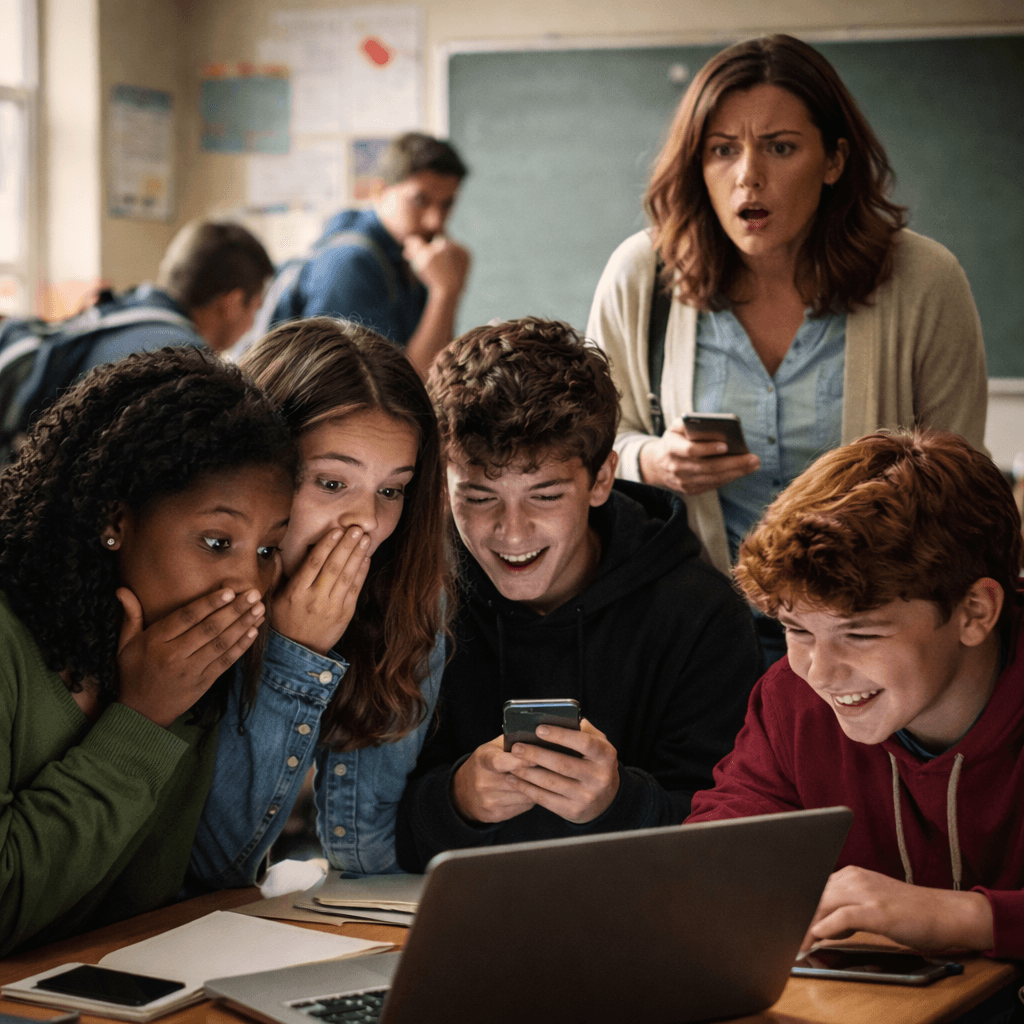
Four surprised and amused teenagers look at a phone and laptop in a classroom, discovering Deepfakes in Schools, while a concerned teacher stands behind them, holding her phone and watching their reactions. Other students are blurred in the background.
Hot Topics - controversialSchool SafetyArtificial IntelligenceK-12Bullying

Deepfakes in Schools: The New Cyberbullying Crisis

by EdCircuit Staff January 22, 2026
written by EdCircuit Staff 6 minutes read

Deepfakes in schools are no longer an abstract concern for educators. The substitute teacher has been in the classroom for less than ten minutes when she notices it.

A cluster of students huddled around a Chromebook. Laughing too loudly. Phones angled toward the screen. When she walks over, the laughter stops.

What she sees makes her pause.

On the screen is an explicit image of a woman. The face looks familiar. Too familiar. It takes a moment to register why. It’s hers, or at least it looks like her. The body is not real. The image was generated using artificial intelligence, stitched together from a Facebook photo pulled online and shared across group chats before the day even started.

By the time the front office is alerted, the image has already spread well beyond that classroom.

This is no longer a hypothetical scenario. Versions of this moment are unfolding in schools across the country, and increasingly, the targets are students, teachers, and school staff alike.

Deepfakes in schools have become one of the most disruptive and damaging forms of cyberbullying, combining artificial intelligence, sexual exploitation, and peer cruelty in ways that directly threaten student mental health, school safety, and trust in educational systems.

What deepfake bullying looks like in schools today

Deepfake cyberbullying differs from earlier forms of online harassment because it fabricates something that looks like proof. An image. A video. A voice recording. Content that appears real long enough to cause lasting harm.

In school communities, this often includes:

  • AI-generated sexual images created from real student or staff photos

  • Face-swapped videos falsely depicting sexual behavior, drug use, or criminal acts

  • Synthetic audio clips imitating a student’s or educator’s voice

  • Rapid distribution through private group chats, backup accounts, and direct messages

The barrier to entry is low. Many tools are easy to access and require little technical skill. A single yearbook photo or social media post can be enough to generate content that spreads faster than adults can intervene.

Deepfakes in Schools: A real case schools should be paying attention to

In late 2025, Associated Press reported on a case in Louisiana that drew national attention. A high school student learned that classmates had used an AI “nudify” app to create and circulate a fake nude image of her.

Although the image was fabricated, the harm was real. When the student confronted those responsible, she was disciplined and ultimately removed from school. The students who created and shared the image faced limited consequences.

The case exposed a critical gap. Many school discipline systems were not designed to address AI-generated abuse. When policies fail to account for synthetic media, responses can unintentionally punish the targeted student rather than protect them, deepening trauma and eroding trust.

The mental health impact is severe and distinct

Cyberbullying has long been linked to anxiety, depression, school avoidance, and increased risk of self-harm. Deepfake bullying intensifies these effects in several ways.

Identity violation

Deepfakes manipulate a person’s likeness in ways that feel invasive and deeply personal. For students, this can trigger intense shame, fear, and a sense that their identity has been taken from them.

Loss of control and permanence

Even when content is removed, students know copies can exist indefinitely. The fear that an image could resurface at any moment creates ongoing stress and hypervigilance.

Inescapable exposure

Unlike harassment that stays online, deepfake bullying follows students into classrooms, hallways, buses, and extracurricular spaces. School becomes the place where the harm is silently replayed.

Institutional betrayal

When adults minimize the incident because the content is “fake,” delay intervention, or discipline students for emotional reactions, students experience a second injury. Trust in the system breaks down.

These responses align with trauma reactions, not misconduct. When schools fail to recognize this, distress is misinterpreted as defiance.

This is also a cybersecurity and safety issue

Deepfake incidents involve unauthorized image manipulation, mass digital distribution, and, in some cases, content that may meet legal definitions related to sexual exploitation of minors.

Schools need clear procedures for:

  • Preserving digital evidence without further spreading harm

  • Coordinating platform reporting and takedown requests

  • Protecting student privacy

  • Knowing when incidents rise to the level of legal involvement

Treating deepfake abuse as “student drama” rather than digital harm exposes districts to serious legal, ethical, and reputational risk.

Deepfakes in Schools: The scale of the problem is accelerating

The growth of AI-generated abuse is no longer anecdotal. According to the National Center for Missing and Exploited Children, reports of AI-generated child sexual abuse images submitted to its CyberTipline increased from 4,700 in 2023 to more than 440,000 in just the first six months of 2025.

That surge reflects both the rapid spread of generative AI tools and how quickly they are being misused in ways that directly affect children and adolescents. Schools are not insulated from this trend. They are often where the consequences surface first.

Laws are changing, but schools cannot wait

Lawmakers across the country are moving to address the misuse of generative AI. According to the National Conference of State Legislatures, by 2025, at least half of U.S. states had enacted legislation addressing the creation and distribution of AI-generated images and audio, including laws targeting simulated child sexual abuse material.

Enforcement is no longer theoretical. Students have faced prosecution in states such as Florida and Pennsylvania. Schools in states including California have expelled students involved in deepfake abuse. In Texas, a fifth-grade teacher was charged after allegedly using AI tools to create child sexual abuse material involving students.

The legal landscape is shifting quickly, and schools that fail to update policies and training risk being caught unprepared when incidents escalate beyond campus.

Why current school policies fall short

Most bullying and harassment policies were written for an earlier digital era. They focus on intent, repetition, and direct communication. Deepfake bullying often does not fit those categories.

The harm can occur:

  • Without repeated actions by the same individual

  • Without direct confrontation

  • Before administrators are even aware content exists

Without explicit policy language addressing AI-generated and manipulated media, responses become inconsistent and reactive.

What districts and states must do now

This issue cannot be managed classroom by classroom. System-level leadership is required.

Districts and states should lead by:

  • Updating policies to explicitly address AI-generated images, video, and audio

  • Establishing response protocols that prioritize victim protection and evidence preservation

  • Providing trauma-informed mental health supports without disciplinary bias

  • Training staff on recognizing and responding to synthetic media abuse

  • Engaging families and community partners before crises occur

Deepfakes in Schools: The responsibility ahead

The rise of deepfake bullying is not simply a student behavior issue. It is a test of leadership.

Artificial intelligence is already embedded in the lives of young people. Waiting for another incident, another lawsuit, or another headline is not caution. It is avoidance.

The responsibility of education systems is clear: ensure schools are places of protection, accountability, and care in a rapidly changing digital world.

The question facing education leaders is no longer whether deepfakes will reach your community.
It is whether your system will be ready to respond when they do.

Subscribe to edCircuit to stay up to date on all of our shows, podcasts, news, and thought leadership articles.
January 22, 2026 0 comments
0 FacebookTwitterPinterestLinkedinWhatsappCopy LinkEmail
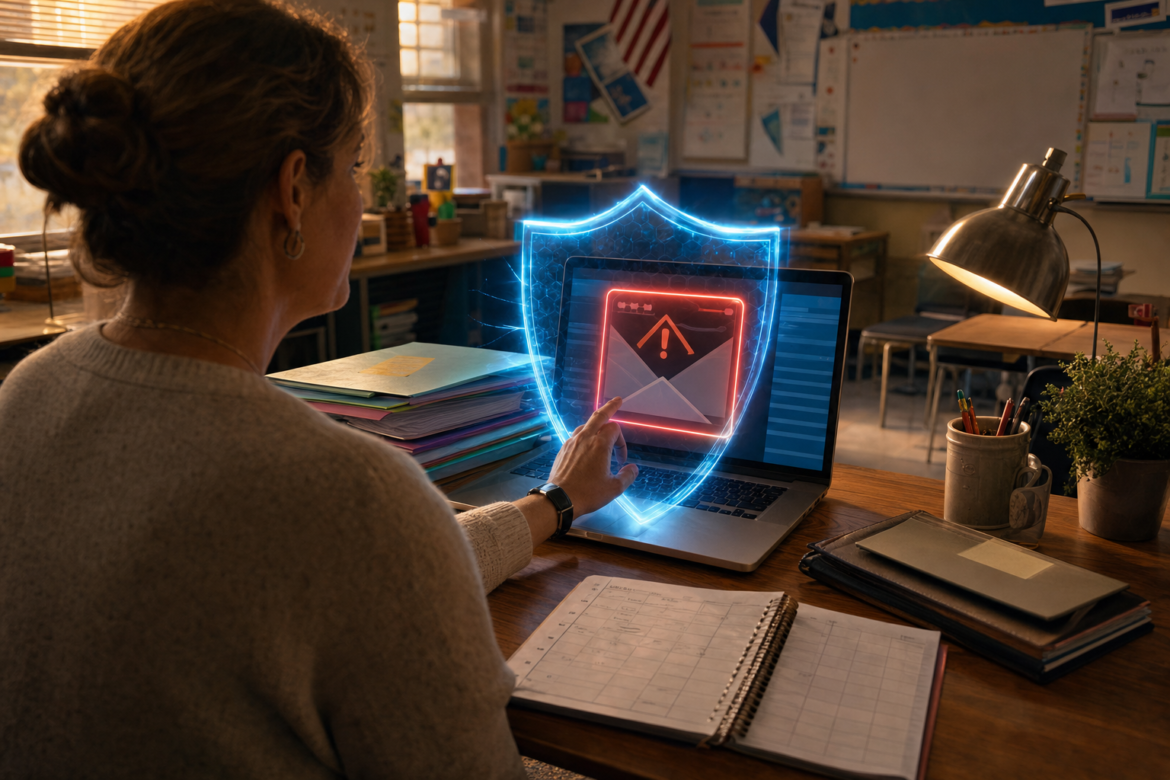
Data privacy in schools: a glowing shield blocks a teacher from clicking a suspicious email on her classroom laptop, keeping student records safe
Hot Topics - controversialK-12K-12 TeachersSchool Safety

Data Privacy in Schools: Protecting Teachers and Students

by EdCircuit Staff January 21, 2026
written by EdCircuit Staff 6 minutes read

Data Privacy in Schools is often talked about at the district office or in IT meetings, but the truth is simpler and more urgent. Teachers are the first gatekeepers of student information, and no data privacy plan works unless the people in classrooms understand how to protect the data they use every day. District policies matter. IT safeguards matter. Still, none of it prevents a breach if the people handling student information hour by hour don’t have the training, the clarity, and the support to do it well.

Over the past decade, schools have adopted more digital tools, more cloud platforms, and more data-driven instruction. This growth brought real benefits, but it also opened the door to real risk. The PowerSchool data privacy incident last year was a sharp reminder of how quickly student information can be exposed. Even though that event happened upstream from teachers, it sent shockwaves through classrooms because it highlighted a hard truth. A single weak point anywhere in the chain can compromise sensitive information for thousands of families.

That is why every school and district, no matter its size, needs a clear and practical data privacy handbook written specifically for teachers. And teachers need to understand that they are not passive users of technology. They are the frontline defense that protects students from avoidable harm.

Why Teacher-Level Data Privacy Matters

Teachers work with the most sensitive information in real time. Grades, attendance, behavioral notes, health restrictions, parent communications, student documents, reading assessments, IEPs. This is not abstract data stored on a server somewhere. It is information teachers see, touch, share, and store every single day.

Yet many teachers assume data privacy is “handled by IT.” They may think that if the district has strong firewalls, encryption, and vendor contracts, their own choices in the classroom matter less. But breaches rarely start with a firewall. They usually start with something small. A shared password. An unapproved app. A student list posted online. A document emailed to the wrong person. A laptop left unattended. A personal device used for school work. These moments seem harmless until they aren’t.

When teachers understand that their daily habits form the foundation of the school’s entire privacy posture, their behavior shifts. They slow down. They think before clicking. They ask questions. They become a protective layer no software can replace.

The Lesson From Recent Data Incidents

The PowerSchool incident showed how one vulnerability can ripple outward and affect districts everywhere. It also showed how families hold schools accountable for any breach involving their children. Even if the issue originates with a vendor, parents turn to teachers asking what happened. Teachers then face tough questions without having any guidance for how to explain what data schools hold, how it is used, and what the school is doing to protect it.

A teacher privacy handbook fills that gap. It explains the boundaries, the responsibilities, and the protections in terms teachers can use confidently. It sets a standard long before an incident occurs. Without that foundation, teachers are left with guesswork during the worst possible moment.

What a Teacher Data Privacy Handbook Should Include

A strong handbook does not overwhelm teachers with legal jargon. It gives them practical steps, real examples, and clear procedures. The most effective handbooks include the following sections.

1. What counts as student data

Not all teachers realize how much qualifies as protected information. A good handbook lists examples: academic records, identifiers like student ID numbers, attendance histories, IEP or 504 information, medical notes, family details, behavioral records, and even metadata generated by digital tools.

2. Approved tools and platforms

Teachers need to know which apps, websites, and services are cleared for classroom use. This prevents the common mistake of introducing a new platform without district approval, which can expose student information to unvetted vendors.

3. Password and access guidelines

Simple steps such as unique passwords, multi-factor authentication, and storing login details securely reduce risk dramatically. The handbook should outline the minimum expectations and the consequences of ignoring them.

4. Handling and sharing student information

Teachers should know exactly when they can share data, with whom, and through what channels. This includes email etiquette, parent communication protocols, and rules around sharing documents with colleagues.

5. Device and classroom management

Unattended laptops, unlocked screens, and shared classroom devices all create vulnerabilities. A good handbook outlines procedures for securing devices, especially during passing periods or after school.

6. Reporting a data concern

Teachers need a simple path for reporting suspicious activity or accidental exposure. They should never fear consequences for raising a concern early. Early reporting is how problems get contained.

7. Scenarios and examples

Story-based examples make the guidelines real. A scenario might show a teacher accidentally emailing a spreadsheet to the wrong parent or using an unapproved quiz app. The handbook then walks through best practice solutions. These examples stay with teachers longer than any policy list.

Training Teachers to See Themselves as Protectors

A handbook is a starting point. The real shift happens through training. Teachers benefit from sessions that show how data privacy connects to the work they already do, not separate from it. Training should feel practical, not punitive. It should treat teachers as partners, not compliance hurdles.

Strong training includes live demonstrations of common mistakes, breakdowns of recent incidents, practice with secure communication tools, and time for teachers to ask questions without judgment. When teachers understand the “why” behind the rules, they follow them with purpose.

Training should happen every year, not only when a breach occurs. Technology changes. Threats evolve. New staff join. Annual refreshers keep everyone aligned and confident.

Why This Matters For School Culture

When teachers see themselves as data stewards, the entire culture shifts toward protection. Students learn safer digital habits because their teachers model them. Staff begin to think before posting photos online. Parents feel more informed and more trusting. District leaders sleep better knowing the people closest to student data understand how to protect it.

The alternative is a culture where privacy is assumed to be someone else’s job. That mindset leaves schools exposed. It creates confusion during an incident and prevents proactive improvement. A handbook and training program eliminate that confusion by defining roles clearly.

A Teacher-Centered Approach to Privacy

Data privacy in schools is not just a technical issue. It is a human issue built on everyday decisions. Teachers control more touchpoints with student data than any other group in a district. They are the first line of defense, and with the right guidance, they can be the strongest one.

A clear, teacher-focused data privacy handbook is not optional anymore. It is essential. It protects students. It supports staff. It strengthens district systems. And it ensures that when the next data incident hits the news, teachers feel prepared instead of caught in the dark.

Subscribe to edCircuit to stay up to date on all of our shows, podcasts, news, and thought leadership articles.

January 21, 2026 0 comments
0 FacebookTwitterPinterestLinkedinWhatsappCopy LinkEmail
Newer Posts
Older Posts

Participate

  • Contribute
  • Sponsor
  • Submit Release
  • Subscribe
  • Get Interviewed

We value your privacy

We use cookies to enhance your browsing experience, serve personalized ads or content, and analyze our traffic. By clicking "Accept All", you consent to our use of cookies.

Customize
  • Needed for the site to work: signing in, the cart, your consent choice. Always on.

    8 cookies
    • ss_consent 1 yearYour cookie choice on this site, so you are not asked again.
    • wordpress_logged_in_* 2 days, or 14 days with "remember me"Keeps you signed in as you move between pages.
    • wordpress_sec_* 2 days, or 14 days with "remember me"The secure half of your sign-in.
    • wordpress_test_cookie SessionChecks that your browser accepts cookies when you sign in.
    • wp-settings-* 1 yearYour display settings when signed in.
    • wp_woocommerce_session_* 2 daysYour shopping session: the cart and the checkout.
    • woocommerce_cart_hash SessionTells the site whether your cart has changed.
    • woocommerce_items_in_cart SessionWhether your cart holds anything.
  • Remembers choices you make, such as a language or a region, and supports features like live chat.

    1 cookie
    • woocommerce_recently_viewed SessionThe products you looked at, so the site can show them again.
  • Helps us understand how visitors use the site: which pages are read, and for how long.

    2 cookies
    • _ga 2 yearsGoogle Analytics: tells one visitor from another. Set only after you allow analytics.
    • _ga_* 2 yearsGoogle Analytics: keeps your session state. Set only after you allow analytics.
  • Measures how fast pages load so we can make them faster.

  • Used to show you content and offers that match your interests, on this site and elsewhere.

    1 cookie
    • sbjs_* SessionWooCommerce order attribution: where you came from, so a purchase can be credited to the campaign or site that sent you.

Your browser asks us not to sell or share your information (Global Privacy Control), so advertising cookies stay off.

Do not sell or share my personal information

Some cookies from other companies help show you offers on other sites. Tick the box and save your preference to opt out of that sharing; untick it to opt back in at any time.

Your browser sends Global Privacy Control, so this preference is set for you and cannot be changed here.

Sign In

Keep me signed in until I sign out

Forgot your password?

Password Recovery

A new password will be emailed to you.

Have received a new password? Login here

Shopping Cart

Close

No products in the cart.

Close
-
00:00
00:00

Queue

Update Required Flash plugin
-
00:00
00:00

Your cart (items: 0)

Products in cart

Product Details Total
Subtotal $0.00
Shipping and discounts calculated at checkout.
View cart
Go to checkout

Your shopping cart is empty

Return to shop

Notifications