


edCircuit
  • Start Here
    • Login
    • Register
    • Subscribe
    • Submit a Press release
    • Advertise or Sponsor
    • Contribute
    • Get Interviewed
  • On the Wire
  • EdTech
    • All EdTech
    • Online Learning
    • Hybrid and Remote Learning
    • Augmented and Virtual Reality
    • ESports
    • Gamification and Game-Based Learning
    • Digital Citizenship
    • EdTech Entrepreneurs
    • Market Trends
    • Future of Education
  • Artificial Intelligence
  • K-12 Education
    • All K-12
    • K-12 Teachers
    • Teaching Strategies
    • Special Education and IEPs
    • Dyslexia
    • Gifted and Advanced Learning
    • Early Childhood, Pre-K and Kindergarten
    • School Calendar
    • Tutoring and Homework Help
    • Attendance and Absenteeism
    • After-School Programs
    • School Counselors
    • Homeschooling
    • School Models
    • Teacher Retention
    • Parents
    • Students
    • STEM and STEAM Education
  • Teaching and Learning
    • Literacy and Reading
    • Math Education
    • Civics and History Education
    • Financial Literacy
    • Assessment and Testing
    • Curriculum and Instruction
    • Personalized Learning
    • Project-Based Learning
    • Social-Emotional Learning
    • Executive Function
    • Creativity
    • Diversity, Equity, Inclusion
  • Professional Development
    • All Professional Development
    • Educators
    • Administrators
    • edLeaders
  • Higher Education
    • All Higher Education
    • College Admissions
    • Career and Technical Education (CTE)
    • Graduation
    • FAFSA and Financial Aid
    • Student Loans
  • Cybersecurity
  • School Safety
    • All School Safety
    • Science and Lab Safety
    • School Design and Facilities
    • Bullying
    • Duty of Care and School Liability
  • Continuing Education
    • All Continuing Education
    • Online Certificate Programs
    • Teaching Jobs and Careers
    • Teacher Appreciation
  • Education Policy and Government
    • All Education Policy
    • Department of Education
    • School Choice
    • Global
    • Advocates
  • EDU Shows
    • All EDU Shows
    • Safer Ed
    • Mind the Gap
    • Education Industry Questions
    • CoffeEd
    • InFocus
    • InformED Report
  • EDU Podcasts
    • All EDU Podcasts
    • Author Chats
    • CoSN The Podcast
    • Education Today
    • Building the Bridge
    • Students Speak
  • Education Industry Guides and Reports
  • Archived Media
    • Future of School: The Podcast
    • Equity Everywhere
  • About edCircuit
  • Subscribe
edCircuit
  • LOGIN
Home Tags Posts tagged with "Headline"
Tag:

Headline

This if for posts to be in the featured/top section of site
A spilled beaker of blue liquid on a science lab table highlights the importance of learning from near misses in schools, with safety goggles, paper towels, test tubes, and microscopes visible in the background.
Safer EdScience and Lab SafetyK-12

Safer Ed: Learning From Near Misses

by EdCircuit Staff January 12, 2026
written by EdCircuit Staff 3 minutes read

Safer Ed begins with the moments schools rarely discuss—the near misses that almost become incidents, but quietly reveal safety risks.

A cart tips but doesn’t fall.

A chemical spills, but no one is injured.

A piece of equipment malfunctions, but class ends before it escalates.

Because these incidents stop short of harm, schools frequently move on without discussion. Yet near misses are not meaningless. They are early warning signals—indicators that something in the system didn’t work as intended, even if luck or timing prevented a more serious outcome.

This idea sits at the heart of Season 3’s opening episode of the Safer Ed Podcast, “Learning from Near Misses: Signals in Schools.” Rather than focusing only on emergencies, the episode and this article examines how schools can use near misses to strengthen safety culture before injuries occur.
Safer EdLearning from Near Misses: Signals in SchoolsJanuary 12, 2026 · 4 min 37 sPlay episode: Learning from Near Misses: Signals in Schools (4 minutes 37 seconds)0:00-4:37Follow on SpotifyApple

Why Safety Is Too Often Treated as Binary

In many schools, safety is viewed in simple terms:

Either something went wrong, or it didn’t.

If no one was hurt, the moment is often framed as a success. But the absence of injury does not automatically mean systems worked correctly. Near misses frequently depend on chance, quick reactions, or favorable timing—not strong planning or design.

When schools only ask “Did anyone get hurt?”, they miss a more important question:

What allowed this to almost happen?

What Near Misses Reveal About School Systems

When schools pause and reflect, near misses tend to expose patterns rather than isolated mistakes. These moments often reveal:

  • Equipment stored too high or in unsafe locations

  • Workspaces that are crowded or poorly designed

  • Time pressures that encourage rushing

  • Procedures that rely on memory rather than structure

  • Mismatches between training, expectations, and reality

These conditions don’t disappear just because a spill was cleaned up or a class ended. The next group of students enters the same environment, facing the same risks.

Why Near Misses Go Unreported

Near misses sit in an uncomfortable middle ground. They feel serious—but not serious enough to demand attention on a busy school day.

There are also cultural barriers:

  • Fear of blame or judgment

  • Concern about paperwork or compliance

  • Worry about being labeled unsafe

  • Pressure to keep schedules moving

When reflection feels punitive instead of productive, silence becomes the default response.

Safer Ed and the Leadership Moments Most People Don’t See

The decision to pause—or to move on—is a leadership decision, even when it doesn’t feel like one.

Leadership isn’t only visible during emergencies. It’s visible in what schools choose to examine and what they choose to ignore. Schools that learn from near misses shift safety from reaction to prevention and from blame to shared responsibility.

Instead of asking “Who caused this?”, they ask:


“What conditions made this possible?”

That single shift changes the tone of safety conversations across a building.

A Simple Step Schools Can Take Immediately

One practical way to begin learning from near misses in schools is to normalize the conversation.

Ask regularly:

“What almost went wrong this week?”

When educators see that reporting leads to action—not punishment—they are more likely to speak up. Even small adjustments signal that leadership is listening and that safety matters.

Near Misses Buy Schools Time

Near misses are easy to ignore because they don’t demand attention. But they matter because they give schools something rare: time.

Time to learn.

Time to adjust.

Time to prevent harm before someone gets hurt.

Safety isn’t just about what goes wrong. It’s about what almost does—and what leaders choose to do next.

Listen to the Podcast

Safer Ed Podcast – Season 3, Episode 1

Learning from Near Misses: Signals in Schools

Subscribe to edCircuit to stay up to date on all of our shows, podcasts, news, and thought leadership articles.

January 12, 2026 0 comments
0 FacebookTwitterPinterestLinkedinWhatsappCopy LinkEmail
Four students sit at a round table in a library, smiling and talking with notebooks and a laptop—a perfect example of modern classroom design. In the background, two more students read books on beanbags near shelves and windows.
EducatorsHot Topics - controversialK-12School Design and Facilities

How Classroom Design Shapes Student Learning

by EdCircuit Staff January 12, 2026
written by EdCircuit Staff 4 minutes read

Classroom design throughout most of the 20th century followed a model of control, with straight rows of desks facing a single focal point — the teacher. The layout communicated that learning was passive and authority flowed in only one direction.

But the modern classroom has become a far more dynamic place. Learning is interactive, inquiry-driven, and collaborative. Students work in teams, move between digital and physical spaces, and learn through experimentation. This shift has forced architects, educators, and designers to rethink how the physical environment either supports or suppresses the way students learn.

According to research from the University of Salford’s Clever Classrooms study, classroom design can impact academic progress by as much as 25% in a single year. Factors such as lighting, color, temperature, flexibility, and air quality all play measurable roles in student achievement.

Designing for Movement, Flexibility, and Flow

Today’s classrooms function less like lecture halls and more like learning ecosystems. Every square foot must serve a purpose — whether for discussion, creation, reflection, or digital collaboration.

Modern layouts often use “learning zones” to support different activities:

  • Collaboration Zones: Circular tables, writable walls, and digital screens invite teamwork and brainstorming.

  • Focus Zones: Quiet corners, soft seating, or small study pods allow for deep concentration.

  • Exploration Zones: Maker areas or lab spaces where students can engage in hands-on work and design thinking.

  • Presentation Zones: Flexible spaces where students can showcase projects or teach their peers.

Furniture is no longer static — it’s modular and mobile. Desks roll, chairs swivel, and tables fold, allowing educators to shift from lecture mode to group work in seconds. This adaptability empowers teachers to tailor space to pedagogy, not the other way around.

Classroom Design: The Role of Light, Color, and Acoustics

Environmental psychology has proven what teachers have long sensed — the physical atmosphere deeply affects learning.

  • Natural Light: Students exposed to daylight perform better on reading and math tests, as found in studies by the Heschong Mahone Group. Sunlight boosts mood, focus, and energy while reducing fatigue.

  • Color Palette: Warm tones like soft yellows encourage energy and creativity; cooler tones like blue and green enhance focus and calm. Balanced palettes can reduce anxiety and overstimulation, particularly for neurodiverse learners.

  • Acoustics: Poor sound quality can reduce word recognition by 25–30%. Materials like acoustic panels, rugs, and soft furniture help absorb noise and create calmer environments.

The sensory experience of the room — the air quality, sound, temperature, and even smell — matters. When students are physically comfortable, their brains are better able to learn.

Technology as a Design Partner

Technology has become an architectural consideration, not just a classroom accessory. Classrooms are being built with integrated AV systems, charging stations, wireless hubs, and multipurpose projection zones that allow digital learning to flow naturally.

In well-designed spaces, tech enhances collaboration rather than isolates learners. Interactive displays can pivot between whole-class instruction and small group sessions. Charging towers and mobile devices encourage autonomy and reduce the “tethered to one spot” problem common in outdated classrooms.

Districts like San Diego Unified and Baltimore County Public Schools have begun piloting classroom models that combine flexible furniture with one-to-one device programs and hybrid teaching setups. The goal is to build environments that match the flexibility of digital learning itself.

Classroom Design for Inclusion and Accessibility

Inclusive design recognizes that every learner experiences space differently. Classroom layouts that prioritize accessibility — from wide walking paths to adjustable desks and clear visual sightlines — ensure all students, including those with mobility or sensory challenges, can fully participate.

Color-contrast cues, consistent signage, and thoughtfully positioned technology also support students with visual or auditory needs. Universal Design for Learning (UDL) principles are now influencing architecture, not just instruction — creating classrooms where every student feels a sense of belonging.

Sustainability Meets Learning

Eco-conscious classrooms do more than save energy — they model environmental responsibility for students. Recycled materials, green roofs, natural ventilation, and indoor plants enhance air quality and teach sustainability by example.

Studies show that biophilic design — incorporating elements of nature like wood, plants, and natural textures — improves focus and creativity while lowering stress levels. A classroom that breathes feels alive, and so do its learners.

The Future: Adaptive, Human-Centered Learning Spaces

The next generation of classrooms may not have “walls” in the traditional sense. Movable partitions, outdoor learning areas, and AI-powered lighting or temperature systems are emerging in forward-thinking districts.

These classrooms are designed to evolve — to expand, contract, and reconfigure as learning methods change. The central question for architects and educators alike is: Does this space invite curiosity and agency?

Because when design mirrors how students actually learn — collaboratively, actively, and socially — the classroom itself becomes a teacher.

Final Thought

Classroom design is not a luxury. It’s an essential part of the learning process. Whether through flexible seating, natural light, or digital integration, the space where learning happens should reflect the world students are preparing to enter — adaptable, connected, and full of possibility.

Play video: Furniture pilot programs gives students options for flexible seating (2 minutes 58 seconds)2:58
Furniture pilot programs gives students options for flexible seating2 min 58 sLindbergh Schools on YouTube

Lindbergh Schools – Furniture pilot programs gives students options for flexible seating (Play video)

Subscribe to edCircuit to stay up to date on all of our shows, podcasts, news, and thought leadership articles.

January 12, 2026 0 comments
0 FacebookTwitterPinterestLinkedinWhatsappCopy LinkEmail
In a CES 2026-inspired classroom, children use tablets, VR glasses, and robots to learn. A large digital display shows a solar system as the teacher oversees students working with advanced tech and interactive tools at their desks.
EdTechHot Topics - controversialK-12

CES 2026 and the Quiet Evolution of EdTech

by EdCircuit Staff January 9, 2026
written by EdCircuit Staff 4 minutes read

CES 2026, held each January in Las Vegas, offers a glimpse into where technology is headed. While education technology was not positioned front and center, the signals for educators and education leaders were unmistakable.

Rather than unveiling traditional classroom tools, CES 2026 highlighted platforms, devices, and experiences that are likely to influence how students learn as they are adapted for educational use. The most important education signals were embedded inside broader consumer innovations: artificial intelligence, smart play, wearables, robotics, and immersive interaction.

The takeaway for education is clear: the next wave of edtech will not arrive neatly labeled “for schools.”

AI Learning Tools Move From Supplemental to Foundational

Artificial intelligence dominated CES 2026, but what stood out for education was not novelty — it was integration.

Education-adjacent platforms demonstrated how AI is becoming contextual, conversational, and embedded into everyday workflows. Rather than focusing on drill-and-practice or test preparation, these systems emphasized:

  • Personalized explanations and pacing

  • Audio-first learning formats

  • Real-time summaries and reinforcement

  • Learner support that adapts to individual needsCES 2026 

Companies such as Think Academy showcased AI-driven learning tools that blend academic support with broader learner engagement, reinforcing a shift toward more holistic educational experiences.

At the platform level, Google highlighted Gemini-powered content capabilities that point toward AI-generated lesson summaries, audio learning modules, and embedded instructional support — tools designed to assist teachers rather than replace them.

For classrooms, this signals a future where educators guide instruction and context, while AI supports personalization, feedback, and access.

Smart Play and Hands-On STEM Take a Leap Forward

One of the most compelling education-adjacent trends at CES 2026 came from the evolution of smart physical play.

Interactive building systems demonstrated how physical materials can now respond dynamically through sensors, lights, sound, and software integration. The LEGO Group, for example, showcased advancements in smart play platforms that blend tactile construction with digital feedback.

For schools investing in STEAM, maker spaces, and project-based learning, these tools reinforce an important lesson: the future of learning is not screen-only. Physical-digital hybrids support collaboration, design thinking, and kinesthetic learning in ways traditional software cannot.

Wearables and Personal AI as Learning Companions

CES 2026 also featured a surge in AI-powered wearables and personal companion devices. While primarily consumer-focused, their implications for learning are increasingly visible.

Devices such as Plaud NotePin, an AI-enabled wearable designed to capture and summarize conversations, demonstrate how personal AI tools may eventually support learning if adapted within appropriate educational frameworks, including:

  • Note-taking and lecture capture

  • Study organization and review

  • Memory reinforcement

  • Executive function support

In education, these technologies raise important questions around privacy, equity, and appropriate use — but they also hint at future supports for learners who struggle with traditional academic structures.

Robotics, Interaction, and the Next Generation of STEM

Robotics remained a strong presence at CES 2026, with a noticeable shift away from novelty and toward purposeful interaction.

Many platforms emphasized human–machine collaboration, adaptability, and real-world application. While most demonstrations targeted consumer or enterprise markets, the underlying technologies align naturally with education — particularly in advanced STEM and career-technical pathways.

As robotics, automation, and AI continue to converge, schools will increasingly be tasked with preparing students not just to use technology, but to understand, design, and ethically engage with it. Robotics is increasingly aligned with workforce preparation goals, especially in engineering, manufacturing, and applied sciences.

What CES 2026 Tells Educators About the Road Ahead

While CES 2026 included notable EdTech Innovation Awards honorees, the show’s strongest education signals came from broader AI, wearables, and smart-play platforms that will likely flow into classrooms over time.

Three signals stand out:

  1. AI is becoming invisible, embedded into tools rather than marketed as a standalone feature.

  2. Learning is expanding beyond screens, blending physical, digital, and experiential environments.

  3. Personalized technology is accelerating, increasing both opportunity and responsibility for schools.

For district leaders, educators, and edtech developers, CES 2026 reinforces a familiar truth: innovation will continue — but intentional adoption, strong pedagogy, and ethical frameworks will determine its impact.

Why This Matters for Schools Now

The technologies showcased in Las Vegas may not appear in classrooms tomorrow. But they will influence the platforms, devices, and expectations schools encounter over the next three to five years.

CES 2026 reminds us that the future of education will be shaped not only by edtech companies, but by broader technology ecosystems — and schools that understand those signals early will be better positioned to lead rather than react.

Play video: CES 2026: what actually stood out (6 minutes 5 seconds)6:05
CES 2026: what actually stood out6 min 5 sCNN on YouTube

CNN – The coolest tech at CES 2026 (Play video)

edCircuit Note: Products referenced reflect CES 2026 demonstrations and early-stage platforms and should not be interpreted as classroom endorsements or procurement recommendations.

Subscribe to edCircuit to stay up to date on all of our shows, podcasts, news, and thought leadership articles.


January 9, 2026 0 comments
0 FacebookTwitterPinterestLinkedinWhatsappCopy LinkEmail
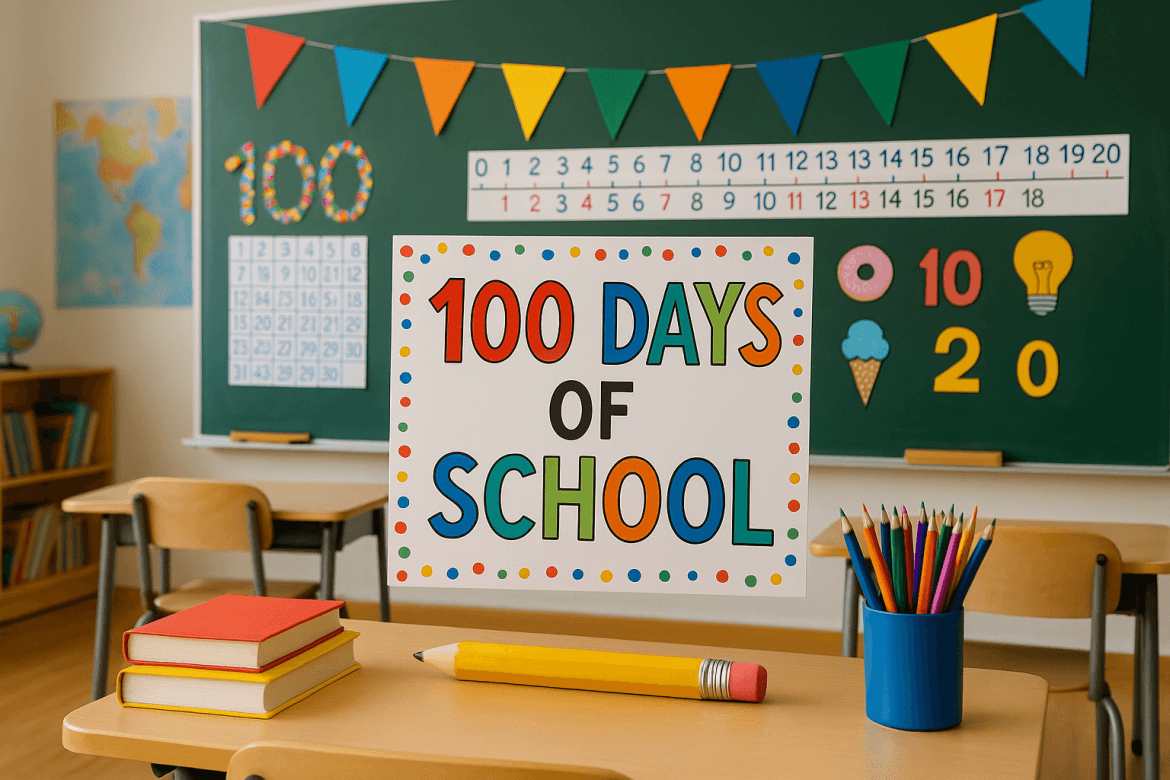
100 days of school: a classroom decorated for the 100th day with books, pencils and a chalkboard of banners and numbers
EducatorsHot Topics - controversialSchool CalendarK-12

100 Days of School: A Celebration of Progress & Possibility

by EdCircuit Staff January 9, 2026
written by EdCircuit Staff 5 minutes read

Updated October 2026 for the 2026–27 school year.

100 Days of School is more than a date on the calendar. It is a moment of reflection, celebration and renewed momentum for students and educators, landing in the middle of winter when routines could use a spark. This guide explains when the 100th day of school falls in 2027, where the tradition came from, and classroom and schoolwide ideas for every grade level.

When is the 100th day of school in 2027?

There is no single national date. The 100th day is simply the 100th day of instruction, so it depends on when a school starts and on its holidays and closures. As author Joan Holub puts it on her page about the tradition, “The date of the 100th day varies since different schools begin their year on different days,” with most celebrations falling somewhere from mid-January to mid-February. Connections Academy notes it can fall as late as February or early March.

Two 2026–27 examples show the range: one district whose classes begin August 3, 2026 marks its 100th day on January 22, 2027, while one online school plans its celebration for Monday, February 8, 2027. Many districts do not print the 100th day on their calendars at all.

How to find your school’s 100th day

  1. Find the first day of school on your district calendar.
  2. Count only days students attend, skipping weekends, holidays, breaks and teacher workdays.
  3. Recount after any snow or emergency closures, which push the 100th day later.

Where the 100 days of school tradition came from

Accounts differ. Connections Academy credits California teacher Lynn Taylor, who in 1979 used a Count von Count puppet and 100 pennies to help young students understand the number 100, and who described the activity in a teachers’ math newsletter two years later. Another account says Taylor began the tradition with fellow teachers David Cooper and Mary Hurdlow, while Joan Holub notes that the idea has also been credited to Mary Baratta-Lorton, creator of the Mathematics Their Way program. Whatever its start, the celebration fits a core kindergarten math goal: the Common Core standard K.CC.A.1 asks students to “count to 100 by ones and by tens.”

Why 100 Days of School matters

In a school year that often feels rushed, the 100th day offers a rare moment to slow down. Students can see tangible proof of their effort, teachers can reflect on routines and growth, and schools can reinforce a simple message: progress happens through consistency.

For younger students, 100 days feels enormous, an achievement worth celebrating. For older students, it becomes a moment to look back at skill development, resilience and improvement. The milestone also fits naturally with social-emotional learning, encouraging reflection, gratitude, goal-setting and community building.

100th day of school ideas for elementary classrooms

1. The power of 100

  • Build structures using 100 blocks, cups or interlocking bricks.
  • Create collections of 100 buttons, pennies, stickers or stamps, grouped in tens.
  • Write a story using exactly 100 words.
  • Count out 100 steps, jumps or claps as a movement break.

These hands-on activities reinforce counting, grouping by tens and place value while keeping energy high.

2. 100 acts of kindness

  • 100 kind notes written to classmates or staff
  • 100 compliments shared aloud
  • 100 acts of service tracked on a bulletin board

3. Then and now: growth reflections

Have students compare what they could do on day 1 and day 100: reading, writing, math or how they have changed as learners. Younger students can draw pictures; older students can write short reflections or make digital slides.

4. 100 questions

Challenge the class to generate 100 questions about a subject, the world or the rest of the year. The list can fuel future lessons, especially in science, inquiry-based and project-based units.

Middle and high school: the 100th day still works

Older students benefit from recognition and reflection too.

  • Academic check-ins: review the goals set in the fall, look at progress in portfolios or data notebooks, and set targets for the next 100 days.
  • Future connections: ask students to list skills they are building, habits that help them succeed and things they have learned that apply beyond school.

Schoolwide celebrations that build culture

  • Dress like you are 100 years old, or from the future.
  • A schoolwide “100 Wall” highlighting achievements.
  • 100-second announcements featuring students and staff.
  • A shared list of 100 favorite books, songs or moments across grades.

A reset button for teachers, too

For educators, the 100th day is also a moment to breathe. The first stretch of the year brings new students, new curricula and constant adjustment. It is a good time to ask what is working, what routines need adjusting and how to finish the year strong without burning out.

Frequently asked questions

When is the 100th day of school in 2027? It depends on your school’s calendar. Most schools reach it between mid-January and mid-February 2027; schools that start later in the fall may reach it in late February or early March.

How do you calculate the 100th day of school? Count 100 instructional days from the first day of school, skipping weekends, holidays, breaks and closure days.

Who started the 100th day of school? It is most often credited to California teacher Lynn Taylor in the late 1970s or early 1980s, though accounts differ.

What grades celebrate 100 days of school? It is most popular in kindergarten and the early grades, where counting to 100 is a key math goal, but many schools celebrate across all grades.

Looking ahead to the next 100 days

As classrooms move past the midpoint of the year, the energy of the 100th day can carry forward. In education, progress is not always loud or flashy. Sometimes it looks like showing up, 100 days in a row, and believing that each day matters.

Subscribe to edCircuit to stay up to date on all of our shows, podcasts, news, and thought leadership articles.
January 9, 2026 0 comments
0 FacebookTwitterPinterestLinkedinWhatsappCopy LinkEmail
A desk with a laptop showing a lock and shield symbol, a tablet displaying AI, and a smartphone with a bar chart highlights Technology Leadership 2026, alongside paper charts, a clock, notebook, and pen.
Artificial IntelligenceK-12Hot Topics - controversial

Technology Leadership 2026: Top Concerns for K–12 Districts

by EdCircuit Staff January 8, 2026
written by EdCircuit Staff 5 minutes read

Technology leadership 2026 is defined by new risks, new expectations, and new pressure on school systems to adapt quickly while protecting what matters most.

For district CTOs and technology leaders, the year ahead demands sharper decision-making, stronger security posture, and more intentional planning around AI, staffing, and long-term sustainability. While many priorities remain familiar—cybersecurity, data privacy, budgets—2026 amplifies their urgency and intertwines them with emerging challenges few districts can afford to ignore.

After analyzing current market conditions, 2025 trends, district reports, and leading K–12 technology indicators, here are edCircuit’s top five concerns for district technology leaders heading into 2026.

1. Cybersecurity & Data Privacy: The Permanent, Rising Threat

If 2025 was a wake-up call, 2026 is a full-volume alarm. Cyber incidents—ransomware, credential harvesting, AI-powered phishing, SIS/LMS breaches, and third-party vendor exposures—continue to rise sharply. Districts remain the most targeted public-sector institutions per capita, and attackers are now using more sophisticated, automated tools that learn, adapt, and strike faster than ever.

Why is this the #1 concern

  • AI-generated attacks (deepfake voicemails, insider-style emails, synthetic documents) make phishing indistinguishable from authentic communication.

  • Legacy systems and fragmented infrastructure create vulnerabilities districts struggle to patch.

  • Vendor ecosystem risk continues to grow; one weak link can expose thousands of students.

  • Compliance pressure is intensifying, with states tightening laws around student data protection.

What 2026 demands

  • Zero-trust frameworks across identity, access, and device management.

  • Aggressive MFA adoption—students included.

  • Annual cybersecurity training for all staff with AI-simulated phishing tests.

  • Vendor privacy contract reviews and districtwide data-mapping audits.

  • A comprehensive cybersecurity playbook aligned with tabletop exercises, escalation protocols, and board-level visibility.

No district can treat cybersecurity as “IT’s job” anymore. It is now districtwide risk management, and 2026 will push leaders to institutionalize it.

2. Budgeting for Technology Sustainability in a Post-ESSER Era

With ESSER funding fully expired and replacement federal support unlikely, 2026 budgets are exposing long-standing technology gaps. Districts must now sustain 1:1 programs, device lifecycles, cloud platforms, cybersecurity layers, and digital curriculum subscriptions without temporary federal dollars.

Why budgeting is a top concern

  • Tens of thousands of devices purchased in 2020–2022 are reaching end-of-life simultaneously.

  • Cloud and SaaS renewals are becoming unavoidable recurring costs.

  • Cybersecurity requirements (monitoring, incident response, staff training) require real investment.

  • Enrollment declines in many regions are tightening operating budgets.

Where districts are focusing their planning

  • Prioritizing total cost of ownership (TCO) for every tool.

  • Negotiating multi-year contracts to stabilize costs.

  • Reducing redundant platforms and unused digital tools.

  • Bundling cybersecurity spending under risk management, not IT alone.

  • Using analytics to right-size device inventories and avoid overbuying.

In 2026, districts must move from reactive purchasing to strategic, sustainable investment models built for the long haul.

3. Staff Retention and Professional Development: The Human Crisis in Tech

Technology is advancing, but human capacity is shrinking. Districts nationwide report challenges retaining network specialists, cybersecurity engineers, instructional technology coaches, and help-desk staff—roles in high demand across private sectors offering stronger salaries and remote flexibility.

Why retention is becoming mission-critical

  • Cybersecurity roles are being aggressively poached by industry.

  • Districts are running leaner technology departments than ever before.

  • Workloads have expanded beyond devices and networks to include AI governance, cybersecurity, data privacy, and instructional support.

What leaders are doing in 2026

  • Creating grow-your-own IT pipelines through partnerships with community colleges.

  • Expanding remote/hybrid options for tech roles where feasible.

  • Designing professional learning that is ongoing, relevant, and integrated with job expectations.

  • Cross-training staff so tech teams don’t have single-point failure roles.

Retention is no longer just about salary—it’s about building career pathways and modern working conditions that reflect today’s digital demands.

4. Staying Ahead of the Curve With AI: Beyond Hype and Into Governance

AI adoption in K–12 is accelerating. Yet the challenge for 2026 isn’t whether districts use AI—it’s how responsibly, strategically, and consistently they do so. Leaders worry about AI moving faster than policy, teachers experimenting without guardrails, and students encountering tools that outpace classroom management.

Key pressures in 2026

  • AI tools vary widely in quality, safety, and privacy protections.

  • Teachers need training in AI-assisted instruction, assessment, and productivity.

  • Students need explicit instruction in ethical use and academic integrity.

  • Boards and parents want clarity about how AI is used in classrooms.

Where leaders must stay ahead

  • Establishing AI governance committees with cross-department representation.

  • Integrating AI literacy into teacher PD and student curricula.

  • Vetting tools for data privacy, bias mitigation, and instructional alignment.

  • Using AI to support—not replace—educator expertise.

The districts that thrive in 2026 will treat AI not as an add-on, but as a thoughtfully governed ecosystem.

5. Developing a Districtwide AI Playbook and Data Strategy

Beyond individual tools, district leaders need a cohesive plan. The AI playbook is quickly becoming the new must-have strategic document for K–12—a blueprint that clarifies the district’s vision, rules, use cases, responsibilities, and metrics.

Why AI playbooks are essential in 2026

  • They unify leadership, instruction, and technology under one strategy.

  • They protect districts from inconsistent use, data exposure, and student risk.

  • They articulate expectations for teachers, students, administrators, and vendors.

  • They help districts justify budget decisions with a clear roadmap.

A strong AI playbook addresses:

  • Data governance and vendor contracts

  • Curriculum alignment

  • Teacher training and assessment design

  • Academic integrity protocols

  • AI-supported tutoring, literacy, and personalized learning

  • Accessibility and equity impacts

  • Evaluation metrics and review cycles

Coupled with a robust data-security posture, the AI playbook becomes the backbone of a district’s digital future.

Closing: 2026 Will Reward Prepared, Strategic, Forward-Thinking Leadership

District technology leadership in 2026 isn’t simply about managing devices or renewing software contracts. It’s about protecting students, empowering staff, planning sustainably, and guiding schools through a rapidly shifting AI landscape.

The challenges are real—but so are the opportunities. Districts that invest now in cybersecurity, sustainable budgeting, human capital, AI governance, and strategic planning will enter 2026 with clarity and confidence while others scramble to keep up.

Technology leadership has never been more essential. And in 2026, it may determine whether schools move forward with innovation—or fall behind in a world that refuses to slow down.

Related: Technology Leadership Is No Longer About Technology

Subscribe to edCircuit to stay up to date on all of our shows, podcasts, news, and thought leadership articles.

January 8, 2026 0 comments
0 FacebookTwitterPinterestLinkedinWhatsappCopy LinkEmail
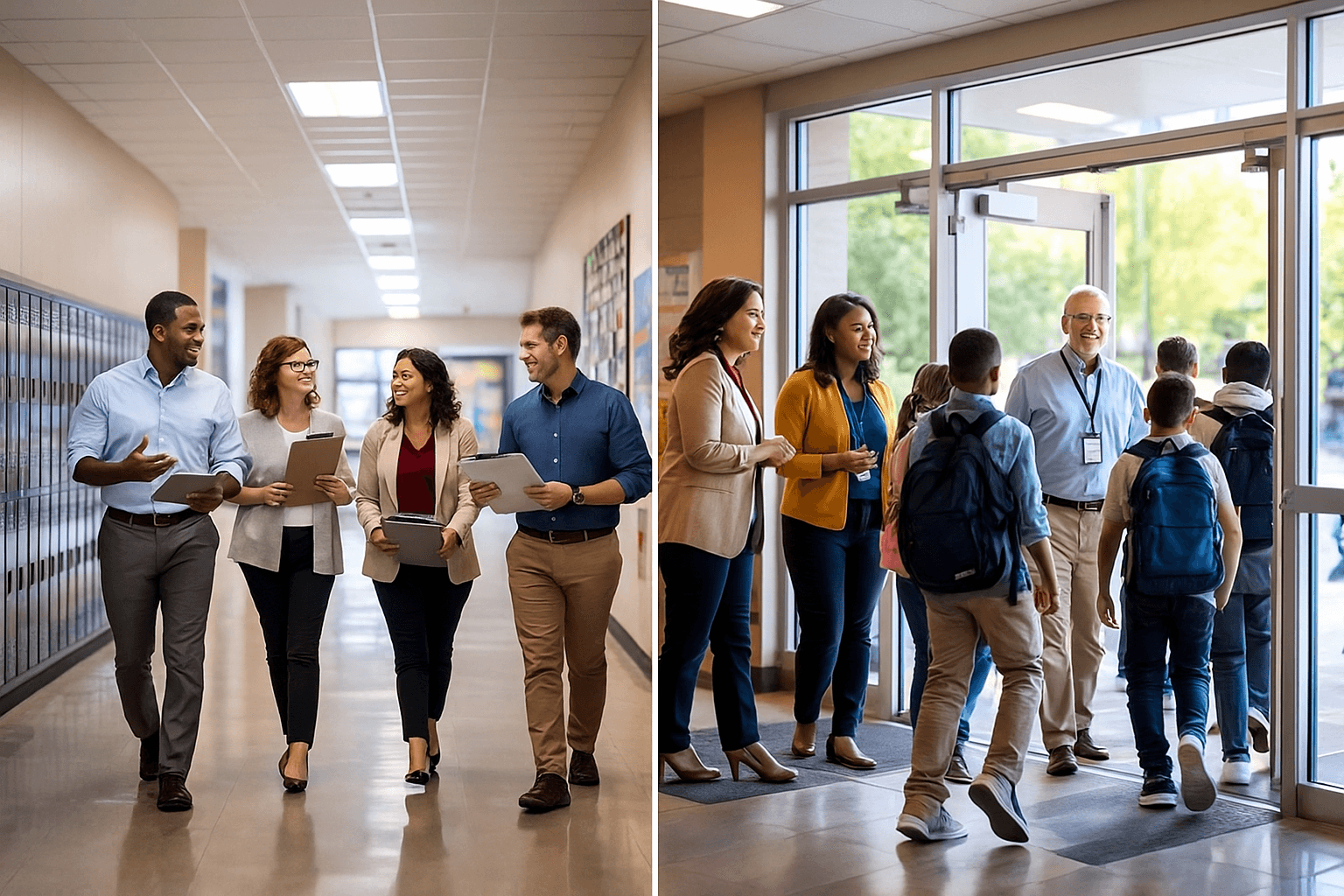
Left: Four teachers, members of School Leadership Teams, smile and talk as they walk down a hallway with folders and tablets. Right: Three teachers greet students with backpacks as they enter the school through glass doors.
EducatorsHot Topics - controversialK-12

School Leadership Teams and the Culture They Create

by EdCircuit Staff January 7, 2026
written by EdCircuit Staff 7 minutes read

School leadership teams are the heartbeat of a building. They connect district vision with daily classroom reality, and when they are strong, the school feels steady, supported, and aligned. This is the story of how a leadership team grows, how it works, and why it shapes the culture students and staff live in every day.

The Principal’s First Big Move

When a new principal steps into a building, they carry more ideas than hours in the day. But one job rises to the top fast. They need the right people around them.

That was the case for Principal Torres.

The building she entered had capable teachers, but the energy felt scattered. Staff worked hard, but not together. District initiatives were arriving faster than anyone could keep up with. The school needed a place where voices could meet and decisions could land.

So she started building the leadership team.

She didn’t choose the loudest voices or only veteran teachers. Instead, she paid attention during the first weeks. Who asked thoughtful questions? Who noticed student behavior trends? Who saw how decisions affected people who weren’t in the room?

Her final group included a third-year teacher who was trusted by students, a calm veteran who understood the building’s unwritten rules, the instructional coach, two grade-level leads, and the counselor who kept a finger on the emotional pulse of the school.

Torres didn’t need a committee. She needed a crew. And she had one.

Where District Direction Meets Building Reality

Every district has a strategic plan. It might focus on literacy growth, equity work, student behavior, or instructional consistency. But a plan only becomes culture when it survives contact with real classrooms.

That bridge is the leadership team’s job.

In Torres’s district, a new behavior framework was rolling out. On paper it was clean and structured. Building expectations, reinforcement systems, clear tiers of support. The district held trainings and sent resources.

But in her school, the day-to-day behavior challenges were tied to things the district couldn’t see from afar. Students were transitioning between specials with inconsistent expectations. Some teachers were unclear on consequences. Lunch routines were chaotic because the cafeteria schedule clashed with staffing patterns.

In their first leadership meeting, Torres laid out the district’s plan and then asked the team what no district document could:
“What’s going to break first if we try to roll this out as written?”

The team didn’t hesitate.

The counselor pointed out that students coming from recess needed a different set of routines than those coming from the library. One teacher noted that the system would fall apart if a common language wasn’t set building-wide. Another warned that if they didn’t start with hallway behavior, nothing else would stick.

The district gave the “what.”
The leadership team shaped the “how.”

They adjusted the order of rollout, created a visual guide with kid-friendly language, set common scripts for transition reminders, and planned grade-level supports for the first month. When teachers received the plan, it felt doable because it fit their building, their students, and their routines.

This is the quiet power of a leadership team. They make change livable.

The Culture Work No One Sees on Paper

Most culture work is invisible. But its effects are unmistakable.

Strong leadership teams influence culture through dozens of quiet decisions:

1. They shape what is recognized

They choose to highlight growth, collaboration, kindness, and consistency, not only test scores or flashy moments. Staff follow what leaders celebrate.

2. They keep communication aligned

One clear message builds stability. Five different versions erode trust. Leadership teams protect clarity.

3. They intervene early

They notice patterns before they become problems: rising referrals, exhausted teams, confusing expectations, or shifts in student behavior. Early action protects morale.

4. They give teachers a real voice

Teachers who feel heard invest more deeply. Leadership teams provide that channel and ensure feedback turns into action, not just notes on a page.

These actions don’t show up in a strategic plan, but they shape the tone of a school.

A School Without a Strong Leadership Team

Imagine a building without one.

A principal tries to manage everything. District plans arrive, but no one translates them. Communication feels scattered. Staff debate expectations because nothing feels consistent. The building reacts instead of leads.

Teachers feel isolated. Families sense the instability. Students experience shifting boundaries from classroom to classroom.

The principal becomes the bottleneck. The culture becomes uneven. The work becomes exhausting.

The difference between a strong building and a struggling one often comes down to one structure:
a functioning leadership team that spreads leadership instead of hoarding it.

The Inner Workings of Strong School Leadership Teams

Leadership teams that thrive share a few core traits.

1. Roles are clear

Everyone knows their lane. Decisions move smoothly.

2. Debate is healthy

Members push back, question assumptions, and refine decisions. This strengthens outcomes and removes blind spots.

3. Follow-through is reliable

When the team commits to something, it happens. Teachers trust leaders who deliver consistently.

4. Ownership is collective

Once a decision is made, the team stands behind it together. Mixed messaging disappears.

These traits keep a building steady even when the year gets unpredictable.

How School Leadership Teams Shape Staff Culture

1. They reduce uncertainty

Clear expectations lower stress. Staff can focus on teaching, not decoding shifting expectations.

2. They make the building feel connected

Teachers know who to approach with questions. They feel supported instead of alone.

3. They model adult behavior students benefit from

When leaders collaborate well, teachers follow their lead. Students benefit from that aligned adult community.

4. They anchor morale

In tough months, a strong team shields the building from chaos and helps staff stay steady.

The Student Experience: The True Measure

If you walk into a school with a strong leadership team, you can feel it before anyone explains it.

Students move with purpose.
Transitions have a rhythm.
Classrooms feel calm.
Expectations match from room to room.
Adults respond instead of reacting.

One fourth grader once told Torres, “This year feels easier because everyone knows what to do.” She didn’t know why. She didn’t need to. Students rarely see the leadership team meetings, the planning documents, or the debates. But they feel the results every day.

Culture is not for adults.
It is built by adults for kids.

And when leadership is distributed well, the student experience becomes smoother, safer, and more predictable.

What Education Authors Have Said About Shared Leadership

Several authors interviewed by edCircuit made the same case for spreading leadership across a staff. Eric Kalenze, author of What the Academy Taught Us, described a principal he worked for who built “a nucleus of leaders who authentically lead.” He said the approach “was contagious among the rest of the staff” and gave the school “a very ‘team-first’ psychology.” (Driving Change from the Bottom-Up)

Dr. Kulvarn Atwal, author of The Thinking School, warned that hierarchical schools encourage “monitoring and compliance,” and argued that “we need to release the creative energies of those people who are at the front line.” (What Is a Thinking School?)

Two others spoke to how a leadership team treats its teachers. Kat Howard, author of Stop Talking About Wellbeing, said a senior leader “has to choose and select deliberately and thoughtfully what they are filling a teacher’s week with because there is a finite amount of time.” (Taking a Pragmatic Approach to Teacher Workload) Tom Sherrington, co-author of Teaching WalkThrus with Oliver Caviglioli, pointed to instructional coaching, as part of wider professional learning, as the strongest evidence for good teacher development. (Instructional Coaching Artfully Defined)

A Stronger Close: The Real Impact

Leadership teams are not committees. They are the core of how a school becomes the place students deserve, and teachers thrive in. They make district initiatives workable. They steady the building. They give teachers a voice. They shape culture from the ground up.

A principal can guide a school, but a leadership team lifts it.

When that team is thoughtful, balanced, and committed, the school grows stronger than any single leader could make it alone. Students feel it. Families notice it. Staff lean into it.

A strong leadership team doesn’t just support school culture.
It creates it.

Subscribe to edCircuit to stay up to date on all of our shows, podcasts, news, and thought leadership articles.
January 7, 2026 0 comments
0 FacebookTwitterPinterestLinkedinWhatsappCopy LinkEmail
Newer Posts
Older Posts

Participate

  • Contribute
  • Sponsor
  • Submit Release
  • Subscribe
  • Get Interviewed

We value your privacy

We use cookies to enhance your browsing experience, serve personalized ads or content, and analyze our traffic. By clicking "Accept All", you consent to our use of cookies.

Customize
  • Needed for the site to work: signing in, the cart, your consent choice. Always on.

    8 cookies
    • ss_consent 1 yearYour cookie choice on this site, so you are not asked again.
    • wordpress_logged_in_* 2 days, or 14 days with "remember me"Keeps you signed in as you move between pages.
    • wordpress_sec_* 2 days, or 14 days with "remember me"The secure half of your sign-in.
    • wordpress_test_cookie SessionChecks that your browser accepts cookies when you sign in.
    • wp-settings-* 1 yearYour display settings when signed in.
    • wp_woocommerce_session_* 2 daysYour shopping session: the cart and the checkout.
    • woocommerce_cart_hash SessionTells the site whether your cart has changed.
    • woocommerce_items_in_cart SessionWhether your cart holds anything.
  • Remembers choices you make, such as a language or a region, and supports features like live chat.

    1 cookie
    • woocommerce_recently_viewed SessionThe products you looked at, so the site can show them again.
  • Helps us understand how visitors use the site: which pages are read, and for how long.

    2 cookies
    • _ga 2 yearsGoogle Analytics: tells one visitor from another. Set only after you allow analytics.
    • _ga_* 2 yearsGoogle Analytics: keeps your session state. Set only after you allow analytics.
  • Measures how fast pages load so we can make them faster.

  • Used to show you content and offers that match your interests, on this site and elsewhere.

    1 cookie
    • sbjs_* SessionWooCommerce order attribution: where you came from, so a purchase can be credited to the campaign or site that sent you.

Your browser asks us not to sell or share your information (Global Privacy Control), so advertising cookies stay off.

Do not sell or share my personal information

Some cookies from other companies help show you offers on other sites. Tick the box and save your preference to opt out of that sharing; untick it to opt back in at any time.

Your browser sends Global Privacy Control, so this preference is set for you and cannot be changed here.

Sign In

Keep me signed in until I sign out

Forgot your password?

Password Recovery

A new password will be emailed to you.

Have received a new password? Login here

Shopping Cart

Close

No products in the cart.

Close
-
00:00
00:00

Queue

Update Required Flash plugin
-
00:00
00:00

Your cart (items: 0)

Products in cart

Product Details Total
Subtotal $0.00
Shipping and discounts calculated at checkout.
View cart
Go to checkout

Your shopping cart is empty

Return to shop

Notifications