


edCircuit
  • Start Here
    • Login
    • Register
    • Subscribe
    • Submit a Press release
    • Advertise or Sponsor
    • Contribute
    • Get Interviewed
  • On the Wire
  • EdTech
    • All EdTech
    • Online Learning
    • Hybrid and Remote Learning
    • Augmented and Virtual Reality
    • ESports
    • Gamification and Game-Based Learning
    • Digital Citizenship
    • EdTech Entrepreneurs
    • Market Trends
    • Future of Education
  • Artificial Intelligence
  • K-12 Education
    • All K-12
    • K-12 Teachers
    • Teaching Strategies
    • Special Education and IEPs
    • Dyslexia
    • Gifted and Advanced Learning
    • Early Childhood, Pre-K and Kindergarten
    • School Calendar
    • Tutoring and Homework Help
    • Attendance and Absenteeism
    • After-School Programs
    • School Counselors
    • Homeschooling
    • School Models
    • Teacher Retention
    • Parents
    • Students
    • STEM and STEAM Education
  • Teaching and Learning
    • Literacy and Reading
    • Math Education
    • Civics and History Education
    • Financial Literacy
    • Assessment and Testing
    • Curriculum and Instruction
    • Personalized Learning
    • Project-Based Learning
    • Social-Emotional Learning
    • Executive Function
    • Creativity
    • Diversity, Equity, Inclusion
  • Professional Development
    • All Professional Development
    • Educators
    • Administrators
    • edLeaders
  • Higher Education
    • All Higher Education
    • College Admissions
    • Career and Technical Education (CTE)
    • Graduation
    • FAFSA and Financial Aid
    • Student Loans
  • Cybersecurity
  • School Safety
    • All School Safety
    • Science and Lab Safety
    • School Design and Facilities
    • Bullying
    • Duty of Care and School Liability
  • Continuing Education
    • All Continuing Education
    • Online Certificate Programs
    • Teaching Jobs and Careers
    • Teacher Appreciation
  • Education Policy and Government
    • All Education Policy
    • Department of Education
    • School Choice
    • Global
    • Advocates
  • EDU Shows
    • All EDU Shows
    • Safer Ed
    • Mind the Gap
    • Education Industry Questions
    • CoffeEd
    • InFocus
    • InformED Report
  • EDU Podcasts
    • All EDU Podcasts
    • Author Chats
    • CoSN The Podcast
    • Education Today
    • Building the Bridge
    • Students Speak
  • Education Industry Guides and Reports
  • Archived Media
    • Future of School: The Podcast
    • Equity Everywhere
  • About edCircuit
  • Subscribe
edCircuit
  • LOGIN
Home Tags Posts tagged with "Headline"
Tag:

Headline

This if for posts to be in the featured/top section of site
Fireworks spell 2026 over a school, with bursts shaped like a book, math symbols, a pen, a coin and a speech bubble
Artificial IntelligenceHot Topics - controversialK-12

AI in Education: What the New Year Brings in 2026

by EdCircuit Staff January 6, 2026
written by EdCircuit Staff 4 minutes read

AI in education entered 2026 as an everyday part of schoolwork rather than an experiment. RAND’s 2025 surveys found that 54 percent of students and 53 percent of English, math and science teachers used AI for school. The more useful question for this year is not whether students and teachers use AI, but where the benefits of AI in education are real, and what has to be in place for students to gain from them.

This article looks at the main benefits in tutoring, reading, math, writing and financial literacy, what the research shows so far, and the conditions that decide whether those benefits reach students.

Tutoring: help when students need it

AI tutoring is one of the clearest benefits so far. Good tutoring systems respond to signs that a student is stuck, such as repeated errors, with short hints and questions rather than answers. Picture a seventh grader stuck on a science question at 9 p.m.: instead of giving up, the student gets a reminder about variables, a short example and a question that moves their thinking forward.

The evidence is promising when AI and people work together. In a randomized trial with 165 students aged 13 to 15 in the UK, run by the tutoring company Eedi, students whose human tutors supervised AI-drafted messages solved new problems 66.2 percent of the time, compared with 60.7 percent with human tutors alone. The study had not yet been peer reviewed. In Stanford’s Tutor CoPilot trial, students were 4 percentage points more likely to master math topics when their tutors had AI suggestions, and 9 points more likely with less experienced tutors. Teachers benefit too, from dashboards showing which skills a class finds hardest.

Reading: more practice with feedback

AI reading tools listen to students read aloud, note mispronunciations and hesitations, and give practice targeted to each student. A student who stumbles on multisyllable words gets practice with them; a fluent reader who misses deeper meaning gets questions that push comprehension. Students can also read texts on topics that interest them at their level.

The evidence base is still developing and often comes from vendors. Amira Learning, for example, reports that students using its reading tutor in 12 Louisiana districts in 2023–24 scored higher on state reading measures than non-users, in a study it published without effect sizes. Districts should treat such claims as a starting point and ask for independent evidence. See How AI Is Transforming Reading for Students.

Math: feedback on the reasoning, not only the answer

Newer math tools look at each step of a student’s work and point to where the reasoning went wrong. A student solving a linear equation who combines terms incorrectly can see exactly which step to fix, try again and move on. For teachers, AI-generated practice at several levels makes it easier to keep every student working at the right challenge.

Writing: a coach, not a ghostwriter

Used well, AI can give students feedback on drafts quickly, which is hard for a teacher with 150 students to do. A randomized study of 459 upper-secondary students found that AI-generated feedback improved students’ revisions and motivation compared with no feedback. The benefit depends on the student doing the writing and revising. Assignments should make that expectation clear, and teachers keep the deeper conversations about ideas and voice.

Financial literacy: practice with real decisions

Financial literacy is becoming a graduation requirement in many states: Next Gen Personal Finance counts 30 states that guarantee a personal finance course before graduation. AI-driven simulations let students choose a job, receive a paycheck and manage rent, transportation, savings and spending, then see the long-term results of their choices. Teachers can tie scenarios to local costs of living. See AI Financial Literacy in Schools.

What decides whether the benefits are real

The research behind these benefits shares a pattern: AI helps when it is designed to teach and when people stay involved. When students simply get answers, the effect can reverse, as a study of high school math students in Turkey showed, where unrestricted chatbot use during practice led to lower scores on the later exam. Schools gain most when they:

  • choose tools that guide students rather than hand out answers;
  • keep teachers responsible for decisions about students;
  • set clear rules for when AI may be used, and teach students why;
  • protect student data with privacy agreements;
  • make sure every student has access, not only those with tools at home.

In 2026, the benefits of AI in education are clearest where it extends what good teachers already do: more practice, faster feedback and help at the moment a student needs it. For a full overview, including the risks, see edCircuit’s guide to AI in education.

Related reading

  • AI in Education: A Guide for Schools and Colleges
  • How AI Is Transforming Reading for Students
  • AI Financial Literacy in Schools: Smarter Money Education

Subscribe to edCircuit to stay up to date on all of our shows, podcasts, news, and thought leadership articles.

January 6, 2026 0 comments
0 FacebookTwitterPinterestLinkedinWhatsappCopy LinkEmail
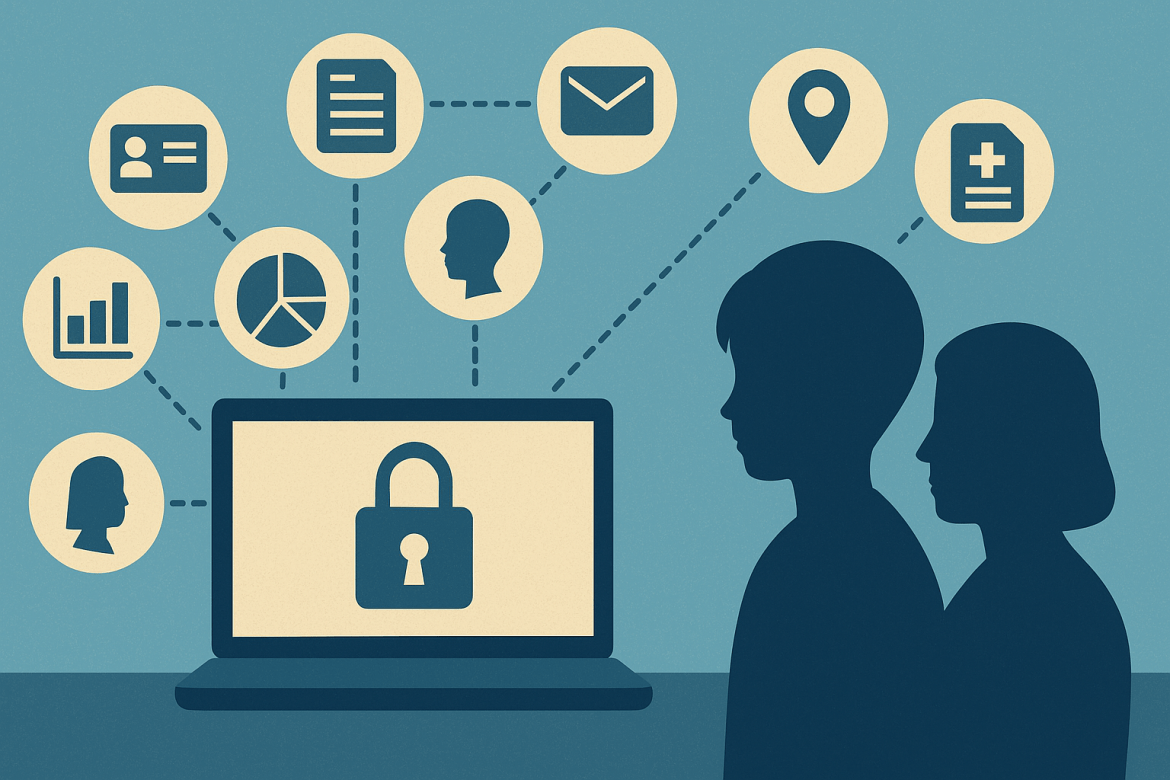
Illustration of two people at a laptop showing a padlock, surrounded by icons for student data and sharing
CybersecurityEducatorsHot Topics - controversialK-12

Student Data Privacy: What Schools Collect & Why It Matters

by EdCircuit Staff January 5, 2026
written by EdCircuit Staff 6 minutes read

Student data privacy is about what information schools and their technology vendors collect about students, who can see it, how long it is kept and how well it is protected. Schools now collect far more than most families realize. Nearly every part of the school day leaves a digital record, much of it stored by private companies, and the risks became concrete in December 2024, when a breach at the student information system provider PowerSchool exposed records of tens of millions of students.

What data do schools collect?

Academic data. Beyond grades and test scores, learning platforms can record how long a student spends on each question, the order in which they work through tasks and which passages they reread.

Behavior and discipline records. Schools log suspensions, tardies and behavior notes. Some systems include narrative descriptions that follow students from school to school.

Device and network activity. When students use school-issued laptops or district Wi-Fi, filtering and monitoring tools can log browsing history, search terms and app activity. These tools are usually installed for safety, but they collect far more than families tend to expect.

Communications. Email, chat and messages inside learning platforms are archived, and monitoring software may scan them for warning signs.

Biographical and demographic information. Enrollment systems store addresses, family contacts, languages spoken, race and ethnicity, disability status and income-related information needed for federal reporting.

Health and wellness data. Records include immunizations, nurse visits, counseling notes and special education documents. Some districts use outside screening tools that collect students’ answers to mental health surveys.

Campus security data. Cameras, door-entry systems and bus trackers create records of where students go. A few districts have tried facial recognition: Lockport City School District in New York switched on a $1.4 million system in 2020 and stopped using it later that year, and New York banned facial recognition in schools in 2023 after a state report found the risks may outweigh the benefits.

Family information. Parent contact details, custody documents and financial forms for meal or fee programs are often stored in the same systems.

Why districts gather all this information

Districts usually collect data for practical reasons: to comply with state and federal reporting rules, to run attendance, transportation and meal programs, to improve instruction and to watch for threats or signs of self-harm. Each system makes sense on its own. Together, they create detailed records that few districts have the staff or safeguards to manage well.

The laws that protect student data

Three federal laws set the baseline:

  • FERPA, the Family Educational Rights and Privacy Act, gives parents the right to see their children’s education records, to ask for corrections, and to some control over who receives personally identifiable information from those records. The rights transfer to the student at age 18 or when they enter college.
  • PPRA, the Protection of Pupil Rights Amendment, covers surveys and evaluations that ask students about eight protected areas, including political beliefs, mental health, sexual behavior, religious practices, family relationships and income.
  • COPPA, the Children’s Online Privacy Protection Act, governs online services that collect personal information from children under 13. The Federal Trade Commission’s amended COPPA rule took effect June 23, 2025, with most companies required to comply by April 22, 2026. It requires separate parental consent before children’s data is shared with third parties such as advertisers, bars keeping children’s data indefinitely, and adds biometric and government-issued identifiers to the definition of personal information. The FTC did not adopt proposed changes aimed specifically at education technology.

Many states have added their own student privacy laws, often limiting how education technology companies may use student data. The Future of Privacy Forum keeps a state-by-state tracker.

The risks to students and families

Data breaches. Schools are frequent targets. The Center for Internet Security analyzed more than 5,000 K-12 organizations and found that 82 percent of reporting schools experienced cyber threat impacts between July 2023 and December 2024, with 9,300 confirmed incidents. The PowerSchool breach exposed data on 62.4 million students and 9.5 million teachers from 6,505 school districts; the 19-year-old responsible was sentenced in October 2025 to four years in prison and ordered to pay $14 million in restitution. Districts reported that grades and medical information were among the records accessed, TechCrunch reported.

Oversurveillance. Monitoring tools can flag innocent searches or ordinary teenage behavior, and those flags can lead to discipline. In a 2022 Center for Democracy and Technology survey reported by The 74, 89 percent of teachers said their schools used monitoring tools. Among teachers in those schools, 78 percent said the tools had flagged students for discipline, and 44 percent of all teachers said students had been contacted by police because of monitoring.

Unclear data sharing. Vendors may use de-identified data for product development or research, and districts may share records with outside agencies. Families are rarely told when this happens.

Long-term consequences. Old behavior notes, inaccurate flags or archived messages can follow students through school if they are not reviewed and deleted on a schedule.

Equity concerns. Students from low-income families depend more on school-issued devices, so more of their activity is logged. In the same CDT survey, 48 percent of Black students and 55 percent of Hispanic students said they or someone they knew had gotten in trouble for something monitoring software flagged, compared with 41 percent of white students.

Loss of trust. When families learn how much is collected, many feel blindsided, and students may change how they research or communicate because they believe someone is always watching.

What strong protection looks like

  • Collect only what is needed for teaching, safety or operations.
  • Write strict vendor contracts: encryption, breach notification, deletion timelines and a ban on using student data for advertising or unrelated purposes.
  • Invest in cybersecurity basics: multifactor authentication, regular updates and tested backups.
  • Tell families plainly what is collected, who sees it and how long it is kept.
  • Set clear rules for monitoring tools: what is flagged, who reviews flags, and when police may be involved.
  • Teach students how their data is used and how to protect themselves online.

Frequently asked questions

What is FERPA? A federal law that gives parents, and students once they turn 18, the right to see and request corrections to education records and some control over who receives them.

Does COPPA apply to schools? COPPA applies to companies that collect personal information online from children under 13, including many education technology providers. The FTC’s 2025 update did not add new school-specific rules.

Can my school see what I do on my personal account at home? Monitoring software on a school-issued device or school account can record activity on that device or account wherever it is used, including at home. What a school can see beyond its own devices and accounts depends on the tools it uses, so families can ask the district for its monitoring policy.

Who owns student data? Under FERPA, education records are maintained by the school, but parents and eligible students have rights to see, correct and control the disclosure of them. Vendor contracts should state that the district, not the vendor, controls student data.

Student data privacy: the bottom line

Schools hold some of the most detailed records that exist about children and their families. Most of it is collected for good reasons, but the risks are real, as the PowerSchool breach showed. Protecting student data privacy takes careful collection, strong contracts, real security and honest communication with families.

Subscribe to edCircuit to stay up to date on all of our shows, podcasts, news, and thought leadership articles.

January 5, 2026 0 comments
0 FacebookTwitterPinterestLinkedinWhatsappCopy LinkEmail
A series of four photos delivers an Inspirational Message for Educators, capturing a Black boy's journey from a young child with a backpack to a young adult in graduation cap and gown, symbolizing growth, achievement, and the impact of education.
EducatorsHot Topics - controversialK-12

An Inspirational Message for Educators as We Welcome 2026

by EdCircuit Staff January 1, 2026
written by EdCircuit Staff 4 minutes read

This inspirational message for educators begins with a simple truth: what you do matters, even on the days it feels unnoticed.

As 2026 arrives, classrooms look different than they did years ago. Technology moves faster. Expectations grow heavier. The world outside school walls feels louder and more complicated. And yet, one thing remains constant. Educators show up. Every year. Every day. For their students.

That consistency is powerful. It’s also easy to forget when the calendar flips, the emails pile up, and the work feels endless. So this moment, this welcome to a new year, is a chance to pause and recognize the extraordinary role educators continue to play in shaping lives.

Education Has Changed, But the Heart of It Hasn’t

Over the years, education has evolved in countless ways. Lesson plans have gone digital. Classrooms have expanded beyond four walls. Students are learning skills today that didn’t exist a decade ago.

But beneath all that change is something steady and human.

A teacher noticing when a student seems off.
An educator staying late to help someone understand one more problem.
A quiet word of encouragement that changes how a child sees themselves.

No update or innovation has replaced the simple act of being there. And that act is still at the center of meaningful education.

Educators Do More Than Teach Subjects

Teaching has never been just about content. Educators teach confidence. They teach perseverance. They teach young people how to recover from mistakes and keep going.

Sometimes that lesson happens during a carefully planned activity. Other times, it happens in the hallway, during a quick check-in, or in the way a teacher responds when a student struggles.

These moments don’t always show up in data or reports. But they stay with students for years. Many adults can still name the teacher who believed in them when they didn’t believe in themselves. That impact doesn’t fade.

Being There Is the Most Powerful Lesson

If there’s one message that carries from year to year, it’s this: presence matters.

Educators show students that consistency exists. That someone will listen. That someone cares enough to notice. In a world that often feels unpredictable, that presence becomes an anchor.

Being there doesn’t mean having all the answers. It means creating a space where students feel safe to ask questions, try again, and grow. That alone can change the course of a life.

The Work Is Hard, and the Reward Is Real

Education is demanding. The workload is heavy. The emotional investment is real. There are days when progress feels invisible and energy runs low.

But the rewards, while sometimes quiet, are profound.

They appear when a student finally understands something they once feared. When a former student comes back to say thank you. When a child begins to see a future for themselves they hadn’t imagined before.

Those moments are the result of patience, dedication, and care. They are built slowly, through daily effort. And they matter more than any statistic ever could.

Educators Are Changing Lives, Even When They Don’t See It

One of the hardest parts of teaching is not always seeing the outcome. Seeds are planted long before they bloom. Lessons take root in ways that aren’t immediately visible.

A kind word offered during a tough year.
A standard held when it would’ve been easier to lower it.
A belief in a student who hadn’t earned it yet.

These choices shape futures. They influence how students treat others, how they face challenges, and how they view their own potential. That influence extends far beyond the classroom.

Why Education Remains So Important

Education is about more than preparing students for jobs. It’s about helping them become thoughtful, capable, and compassionate people.

Educators help students learn how to think, not just what to think. They encourage curiosity. They model respect. They teach responsibility and resilience through example.

In every community, education creates opportunity. It opens doors. It gives young people tools to build lives with purpose. And educators are at the center of that mission.

A Message of Gratitude for 2026

As this new year begins, educators deserve recognition not just for what they do, but for who they are.

They are listeners.
They are guides.
They are steady figures in moments of change.

This inspirational message for educators is a thank you for the unseen effort, the emotional labor, and the unwavering commitment to students. It’s an acknowledgment that the work is meaningful, even when it’s hard.

Moving Forward With Purpose

2026 will bring new challenges and new opportunities. There will be moments of joy and moments of frustration. Through it all, educators will continue to show up.

And that is enough.

Because showing up changes lives.
Because believing in students shapes futures.
Because education, at its best, is an act of hope.

So as the year begins, take a moment to reflect on the difference you make. The lessons you teach. The lives you touch. The impact that continues long after the school day ends.

Welcome to 2026. Education is better because you’re in it.

Subscribe to edCircuit to stay up to date on all of our shows, podcasts, news, and thought leadership articles.

January 1, 2026 0 comments
4 FacebookTwitterPinterestLinkedinWhatsappCopy LinkEmail
An open book, stacked books, and a pencil holder sit on a classroom desk. On the chalkboard behind them, icons represent education in 2026 alongside AI and technology themes, with "2026" at the center.
Hot Topics - controversialFuture of EducationK-12

Education in 2026: Where K–12 Schools Are Headed Next

by EdCircuit Staff December 31, 2025
written by EdCircuit Staff 4 minutes read

As the final days of 2025 wind down, education leaders looking toward education in 2026 are entering the new year with fewer illusions and clearer priorities.

The emergency phase of the pandemic is long over, but its aftershocks remain. Pandemic-era federal relief funding is phasing out, leaving districts to absorb costs once covered by temporary aid. Political pressure is persistent. Technology is advancing faster than policy. Schools are no longer reacting to crisis, but they are still rebuilding core systems while using them every day.

2026 will not be a year of recovery. It will be a year of restructuring under pressure.

Here’s where K–12 education, with higher education close behind, is headed next.

2026 Will Be the Year AI Gets Governed

Artificial intelligence will continue expanding in classrooms in 2026, but the focus is shifting from access to accountability.

Several states are already drafting AI-related guidance for schools, and districts are moving beyond temporary rules toward formal governance frameworks. Expect clearer policies around data privacy, procurement, transparency, and student use.

The questions are becoming more concrete.
Who owns AI-generated instructional materials?
How is student data protected across platforms?
What does academic integrity mean in an AI-supported classroom?

Districts that invested in staff training and clear guardrails in 2025 will be better positioned. Others will be forced to catch up quickly.

Cybersecurity Will Be Treated as Core School Safety

In 2026, cybersecurity will no longer be viewed as a back-office function.

Following high-profile data breaches and system disruptions in 2025, including incidents tied to major student information systems, districts are reassessing their vulnerability. School leaders increasingly understand that a single cyber incident can disrupt enrollment, payroll, transportation, special education services, and family communication.

Boards and superintendents are beginning to respond with:

  • Board-level cybersecurity oversight

  • Mandatory staff training beyond IT teams

  • Stronger vendor accountability requirements

  • Investment in multi-factor authentication and incident response planning

Cybersecurity is becoming part of the broader school safety conversation, not separate from it.

Cell Phone Policies Will Enter a Refinement Phase

Cell phone bans are here to stay in 2026, but the next phase will be about sustainability.

After a year of implementation, districts are adjusting enforcement, clarifying exceptions, and addressing edge cases like smartwatches and instructional use. Parents continue to push for emergency communication access, while teachers push for consistency.

The debate is shifting from whether phones belong in schools to how policies can support learning without becoming a daily source of conflict. Expect more nuanced approaches, particularly in high schools.

Attendance Will Shape Accountability and Resources

Chronic absenteeism will be one of the most influential data points of 2026.

States are increasingly tying accountability systems, intervention decisions, and even funding considerations to attendance metrics. Districts with persistently high absenteeism rates should expect greater scrutiny.

Schools are being pushed to move beyond compliance-based approaches and address root causes, including transportation gaps, mental health needs, housing instability, and family trust.

Attendance is no longer just an operational concern. It is shaping policy decisions at every level.

Staffing Pressures Will Force Structural Change

Teacher shortages are unlikely to ease in 2026, and districts are adjusting expectations accordingly.

Rather than waiting for pipelines to refill, many systems are redesigning how staffing works. This includes expanded use of paraprofessionals, more flexible certification pathways, hybrid instruction models, and adjusted class size policies.

Retention is emerging as the critical issue. Districts that improve working conditions, planning time, and professional respect will see more stability than those relying solely on recruitment incentives.

Funding Conversations Will Grow More Difficult

With pandemic relief gone, school funding debates will intensify in 2026.

Inflation, enrollment shifts, and aging infrastructure are colliding with political resistance to increased spending. Legal challenges around equitable funding are likely to expand, but systemic reform remains uncertain.

District leaders will face difficult conversations with communities about what schools can realistically provide under current funding structures.

Student Mental Health: From Awareness to Capacity

By 2026, awareness of student mental health needs is widespread. Capacity is the challenge.

Schools are struggling to meet demand with limited staff and funding. In response, districts are expanding partnerships with community providers, exploring telehealth options, and embedding social-emotional supports into daily instruction.

The focus is shifting from pilot programs to sustainable delivery models that can scale without burning out staff.

Higher Education Will Continue to Influence K–12

Higher education enters 2026 under financial and cultural pressure.

International student enrollment is unlikely to rebound quickly, and competition for students remains global. At the same time, NIL policies continue to reshape college athletics, recruiting, and budgets.

As more states consider or expand NIL opportunities for high school athletes, K–12 systems will be pulled into new conversations about equity, compliance, and commercialization. The line between school sports and broader economic opportunity is becoming harder to define.

Entering 2026 With Clearer Eyes

As the calendar turns, education leaders face a narrower margin for error.

Communities want stability. Educators want support. Students need consistency. Yet policy, funding, and technology remain in motion.

The districts that succeed in 2026 will not be the ones chasing every new idea. They will be the ones building clear rules, strong systems, and trust with their communities.

After years of disruption, that kind of steady progress may be the most ambitious goal of all.

Subscribe to edCircuit to stay up to date on all of our shows, podcasts, news, and thought leadership articles.

December 31, 2025 0 comments
0 FacebookTwitterPinterestLinkedinWhatsappCopy LinkEmail
Two men stand in a school hallway lined with lockers, one in a black police uniform and one in a navy security uniform
Hot Topics - controversialK-12School Safety

School Safety: SRO vs School Safety Officer Explained

by EdCircuit Staff December 30, 2025
written by EdCircuit Staff 6 minutes read

School safety officers and school resource officers can look alike in a school hallway, but they hold two very different positions. A school resource officer, or SRO, is a sworn police officer assigned to a school. A school safety officer, sometimes called a school security officer, is usually a civilian employed by the district or a security company, without the power to arrest. Parents often hear both titles and assume they mean the same thing. The difference shapes what each one can do when something goes wrong, and how each one spends an ordinary school day.

The question matters to more families than ever. In the 2021–22 school year, 44 percent of public schools had an SRO on campus at least once a week, and about a quarter had non-sworn security staff, according to the National Center for Education Statistics. Several states now require armed officers or guards at every school. This article explains the role of each position, how their training differs, what the research says about police in schools, and what parents and school leaders should ask.

What is a school resource officer?

A school resource officer is a sworn law enforcement officer assigned to work in one or more schools, usually through an agreement between the district and a local police or sheriff’s department. The National Association of School Resource Officers describes the job through a three-part model: law enforcement officer, public safety educator and informal counselor or mentor. An SRO can respond to emergencies, investigate crimes and make arrests, and in most schools an SRO carries a firearm: among schools with a sworn officer, 93 percent said the officer routinely carried one, according to the same federal survey.

Good SROs spend much of their time on the other two parts of that model. They teach lessons on safety, help with emergency planning and threat assessment, and become adults students trust. NASRO’s basic SRO course adds 40 hours of school-specific training to an officer’s police academy preparation, covering how to work with young people and school staff.

What is a school safety officer?

A school safety officer is a non-sworn staff member hired by the district or a contracted security firm to keep the campus safe day to day. Virginia’s law, for example, defines a school security officer as someone employed by the school board to maintain order and discipline and prevent crime, and the state requires a certification course for every security officer in its public schools. School safety officers do not have arrest powers, and in most districts they are unarmed.

Their work is prevention. They watch entrances and hallways, check visitors, supervise lunch and dismissal, respond to fights and conflicts, and get to know students well enough to notice when something is wrong. NASRO offers a separate 24-hour course for non-sworn school security officers. In New York City, the nation’s largest district, school safety agents are trained for up to 17 weeks at the NYPD Police Academy and work unarmed.

SRO vs. school safety officer: the key differences

The two roles differ in who employs them, what authority they carry and how they are trained. An SRO is employed by a police or sheriff’s department, holds full police powers, completes a police academy plus school-specific training, and usually carries a weapon. A school safety officer is employed by the district or a security company, has no arrest authority, completes shorter state or district training, and usually does not carry a weapon. An SRO’s day includes law enforcement and emergency response as well as teaching and mentoring; a safety officer’s day centers on supervision, de-escalation and prevention.

Many schools use both. A district may assign one SRO to a high school while safety officers cover the entrances, the cafeteria and the buses, with the SRO responding when a situation requires police authority.

What is the role of safety officers in schools?

The role of safety officers in schools is to prevent problems before they start and to respond calmly when they do. That means controlling who enters the building, supervising the places where students gather, stepping in early when a conflict starts, and helping during lockdowns, evacuations and medical emergencies. Because they see students every day, safety officers are often the first adults to hear about a threat, a fight being planned or a student in distress, and the relationships they build are a large part of what makes them effective.

What the research says about school police

The evidence on school police is mixed, and fair-minded readers will find support for more than one view. A 2023 study by Sorensen and colleagues in the Journal of Policy Analysis and Management, using national data from 2014 to 2018, found that SROs reduced some forms of violence in schools but did not prevent gun-related incidents. It also found that SROs increased suspensions, expulsions, police referrals and arrests, with the largest increases for Black students, boys and students with disabilities. An earlier study of Texas schools by Weisburst found that federal grants for school police raised discipline rates in middle schools and were associated with small declines in high school graduation and college enrollment.

A 2024 review by RAND summed up the research this way: SROs are associated with more detection of weapons and drugs and less violence, and also with more discipline and law enforcement referrals. Much depends on how officers are selected and trained and on the agreement that defines their role, which is why NASRO and many researchers stress clear written expectations about when an officer is and is not involved in school discipline.

States are requiring more officers and guards

Several states now require security staff at every school. Texas has required at least one armed security officer at each campus during regular school hours since 2023, with an exception when funding or qualified staff are unavailable, under its Education Code. Florida requires a safe-school officer at every school, who may be an SRO, a school safety officer, a trained school guardian or a contracted guard. Kentucky requires a certified, armed SRO on site at each campus where funding and qualified officers are available, under state law.

Other districts moved the other way. After 2020, at least 50 districts ended or cut their school policing programs, and some later reversed course, Education Week found. Denver’s school board, for example, voted in 2023 to bring officers back.

What parents and school leaders should ask

Parents can ask a few direct questions. Does my child’s school have an SRO, a safety officer, or both? Who employs them, and are they armed? What training have they completed? Most important, what is the written agreement between the district and the police department, and does it say when an officer handles a discipline matter and when the school does?

For school leaders, the research points to the same priorities. Choose officers for their ability to work with young people, train them for the school setting, define their role in writing, and track what happens, including arrests, referrals and who is affected. Whether a campus relies on an SRO, safety officers or both, the safest schools tend to be the ones where students know the adults in the hallway and trust them enough to tell them when something is wrong.

Video: understanding school resource officers

Play video: The role of resource officers in school safety (1 minute 50 seconds)1:50
The role of resource officers in school safety1 min 50 sWFMJ on YouTube

Related reading

  • School Lockdown: Duty of Care and Safety Protocols
  • Cameras in Schools: Safety, Surveillance, and Privacy
  • The Modern Mandate for School Incident Reporting
  • School Bus Cameras and Student Privacy

Subscribe to edCircuit to stay up to date on all of our shows, podcasts, news, and thought leadership articles.
December 30, 2025 0 comments
0 FacebookTwitterPinterestLinkedinWhatsappCopy LinkEmail
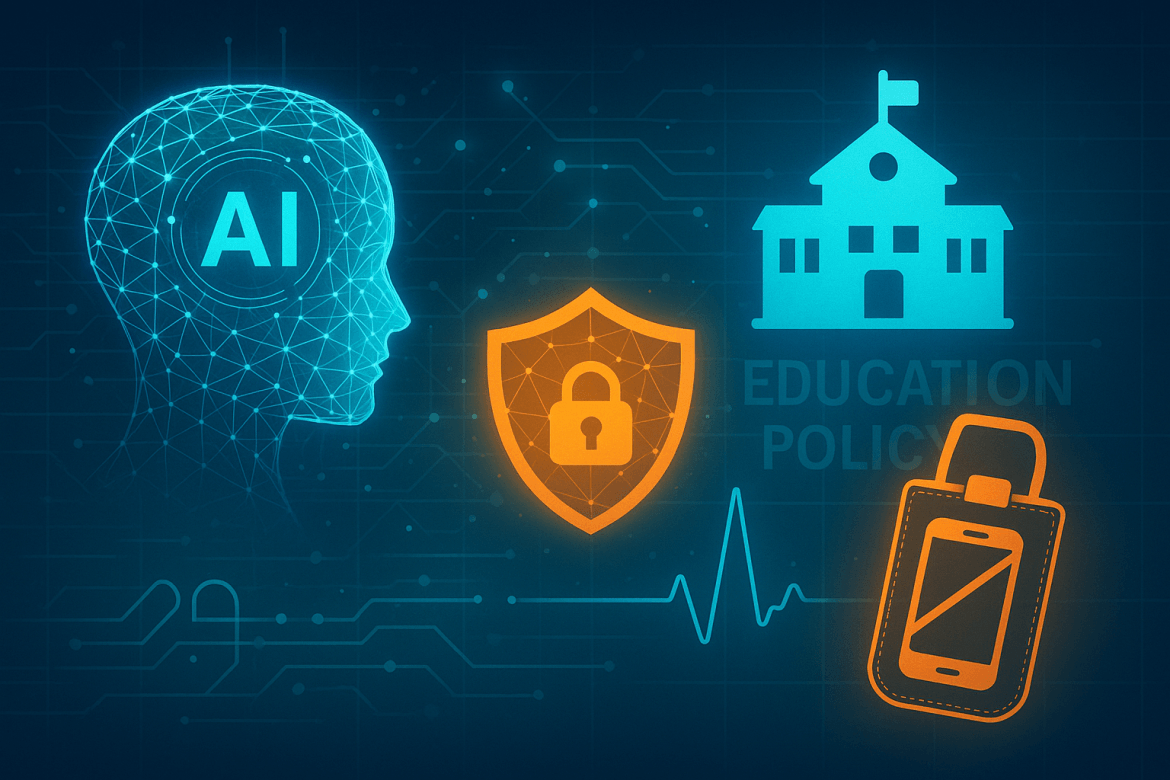
Digital illustration showing an AI head, a school labeled EDUCATION POLICY, a shield with a padlock, and a smartphone with a padlock—highlighting Education Trends 2025 in AI security and policy for education technology.
Hot Topics - controversialArtificial IntelligenceK-12

Education Trends 2025: AI, Security, and Systems in Flux

by EdCircuit Staff December 29, 2025
written by EdCircuit Staff 6 minutes read

Education Trends 2025 captures a year where artificial intelligence, cybersecurity threats, classroom culture battles, and unprecedented federal restructuring reshaped the K–12 landscape. AI became a practical instructional tool rather than a novelty. A national data breach shook confidence in edtech systems. States and districts pushed sweeping cellphone bans. And the U.S. Department of Education entered an era of profound instability.

For teachers, principals, superintendents, school boards, and policymakers, the year revealed something deeper: education is no longer evolving in slow cycles. It is shifting in real time. And the systems school communities rely on—technology, staffing, policy, and culture—are being rebuilt while still in motion.

Below is a detailed overview of the biggest national stories that defined 2025 and the implications for 2026.

1. AI Became Core Infrastructure, Not an Experiment

While AI has been part of K–12 conversations for years, 2025 marked the moment when it quietly became infrastructure rather than “innovation.” Instead of pilot programs, districts began integrating AI tools directly into LMS platforms, SIS workflows, teacher planning, and instructional resources.

AI’s footprint expanded across instruction

In literacy, math, and writing, AI tools supported practice, generated targeted prompts, offered instant feedback, and helped teachers differentiate instruction. Instead of replacing educators, AI increasingly handled repetitive, time-consuming tasks—drafting lesson components, generating reading passages, analyzing student writing patterns, or creating quick checks for understanding.

AI policy moved from optional to essential

Districts also began adopting AI governance frameworks addressing:

  • Transparency and explainability

  • Ethical use guidelines for students

  • Data privacy and acceptable-use parameters

  • Guardrails to prevent overreliance

  • Oversight committees connecting curriculum, IT, and legal

This shift marked a transition from “What AI tools should we buy?” to “What AI capacity should our system build?”—a critical distinction heading into 2026.

Why the emphasis changed

The story of 2025 was not AI hype. It was AI normalization. Educators stopped asking whether AI belonged in classrooms and started asking how to implement it responsibly and sustainably.

2. Cybersecurity Became a Daily Operations Crisis

No story in 2025 forced as much immediate action as the massive national data breach affecting PowerSchool users. Districts across the country faced questions about compromised student information, vendor accountability, and the broader fragility of edtech ecosystems.

The breach forced systemic reevaluation

Thousands of schools experienced:

  • Forced password resets

  • Emergency incident-response protocols

  • Parent-notification obligations

  • Legal and compliance reviews

  • Contract audits with third-party vendors

District leaders realized that cybersecurity is no longer an IT problem—it’s an operational, financial, and reputational one. One breach could halt enrollment, payroll, transportation routing, special education documentation, or communication systems.

Boards and superintendents took a new role

2025 saw an expansion of:

  • Board-level cybersecurity committees

  • Mandatory staff training across all departments

  • Districtwide privacy handbooks for teachers

  • Third-party vulnerability assessments

  • Increased investment in MFA, IAM, and encryption

As districts prepare for 2026, cybersecurity has become the cornerstone of school safety—not secondary to physical security, but equally essential.

3. The National Wave of Cellphone Bans Reshaped Classroom Culture

One of the most widely discussed education stories of 2025 was the rapid acceleration of cellphone bans in schools. This trend crossed political lines, geographic regions, and district sizes, revealing a rare point of bipartisan consensus.

Why cellphone bans surged in 2025

Several factors converged:

  • Escalating concerns about anxiety and social comparison

  • Evidence linking phones to academic distraction

  • Increased on-campus bullying and digital harassment

  • TikTok-driven disruptions during class

  • Teacher burnout from constant enforcement

  • Parent frustration with social media conflicts bleeding into school

States such as Florida, Indiana, and Ohio debated or enacted statewide restrictions, and hundreds of districts moved to locked-pouch systems or full “away for the day” policies.

What schools saw after implementing bans

Teachers and administrators reported:

  • Higher engagement and more academic focus

  • More face-to-face interaction, especially in middle school

  • Reduced hallway drama and office referrals

  • Greater consistency in behavior expectations

But challenges emerged

Bans also raised complex questions:

  • How should emergencies be handled?

  • When should phones be allowed for instructional use?

  • How do districts ensure consistent enforcement?

  • How does policy adapt to smartwatches and wearable tech?

The cellphone debate is now shifting from “Should we ban phones?” to “How do we build sustainable, equitable, enforceable policies?”

4. The U.S. Department of Education Entered a Period of Radical Transition

Late 2025 brought an unprecedented policy shift as the U.S. Department of Education began transferring significant responsibilities to other federal agencies. This restructuring created uncertainty across the nation’s school systems.

Decentralization reshaped federal oversight

Programs tied to early education, career pathways, special populations, and international education began shifting into partner agencies. With this came:

  • Confusion about grant administration

  • Shifting compliance expectations

  • Unclear chains of accountability

  • Concerns about civil rights enforcement stability

States suddenly found themselves managing multiple new federal touchpoints. Districts braced for funding delays, updated reporting requirements, and changes to long-standing program guidance.

Districts adapted with stronger internal governance

In the absence of predictable federal structure, school boards and superintendents leaned on:

  • Local policy development

  • Multi-year strategic planning

  • Tighter alignment with state guidance

  • More robust internal compliance systems

Heading into 2026, districts cannot depend on federal consistency—they must build systems capable of operating in flux.

5. Staffing, Attendance, and Enrollment Pressures Continued to Strain Schools

Even with technological and policy upheavals dominating headlines, the everyday realities of school operations remained challenging.

Teacher shortages and under-certification persisted

Special education, STEM fields, multilingual education, and rural districts saw particularly acute shortages. Even where vacancies were filled, many educators were working outside their certification areas—straining instructional quality and increasing burnout.

Chronic absenteeism stayed alarmingly high

Many districts reported absenteeism rates that remained double pre-pandemic levels. Contributing factors included:

  • Illness

  • Anxiety and mental health barriers

  • Housing and transportation instability

  • School avoidance tied to digital peer conflict

  • Immigration enforcement concerns in certain communities

Enrollment shifts complicated planning

Declines in major urban districts forced difficult conversations about staffing, building utilization, and resource allocation. Migration patterns and local economic changes further reshaped enrollment trends.

What Schools Must Take From 2025 Into 2026

The year revealed a clear pattern: innovation and instability rose together.

For education leaders, this means:

AI must be governed, not just adopted

Districts need clear guardrails, transparent communication, and ongoing professional development to ensure AI amplifies—not replaces—good instruction.

Cybersecurity must be treated as core safety infrastructure

Every adult in a district, not just IT professionals, plays a role in protecting student data.

Cellphone policy must balance culture, safety, and feasibility

Expect more states to implement regulations—and more districts to experiment with enforcement models.

Federal uncertainty requires strong local systems

Districts must build resilient governance structures that can adapt to shifting federal landscapes.

People—not tools—determine outcomes

Staff capacity, student engagement, and community trust remain the most important variables in whether any innovation succeeds.

Subscribe to edCircuit to stay up to date on all of our shows, podcasts, news, and thought leadership articles.

December 29, 2025 0 comments
0 FacebookTwitterPinterestLinkedinWhatsappCopy LinkEmail
Newer Posts
Older Posts

Participate

  • Contribute
  • Sponsor
  • Submit Release
  • Subscribe
  • Get Interviewed

We value your privacy

We use cookies to enhance your browsing experience, serve personalized ads or content, and analyze our traffic. By clicking "Accept All", you consent to our use of cookies.

Customize
  • Needed for the site to work: signing in, the cart, your consent choice. Always on.

    8 cookies
    • ss_consent 1 yearYour cookie choice on this site, so you are not asked again.
    • wordpress_logged_in_* 2 days, or 14 days with "remember me"Keeps you signed in as you move between pages.
    • wordpress_sec_* 2 days, or 14 days with "remember me"The secure half of your sign-in.
    • wordpress_test_cookie SessionChecks that your browser accepts cookies when you sign in.
    • wp-settings-* 1 yearYour display settings when signed in.
    • wp_woocommerce_session_* 2 daysYour shopping session: the cart and the checkout.
    • woocommerce_cart_hash SessionTells the site whether your cart has changed.
    • woocommerce_items_in_cart SessionWhether your cart holds anything.
  • Remembers choices you make, such as a language or a region, and supports features like live chat.

    1 cookie
    • woocommerce_recently_viewed SessionThe products you looked at, so the site can show them again.
  • Helps us understand how visitors use the site: which pages are read, and for how long.

    2 cookies
    • _ga 2 yearsGoogle Analytics: tells one visitor from another. Set only after you allow analytics.
    • _ga_* 2 yearsGoogle Analytics: keeps your session state. Set only after you allow analytics.
  • Measures how fast pages load so we can make them faster.

  • Used to show you content and offers that match your interests, on this site and elsewhere.

    1 cookie
    • sbjs_* SessionWooCommerce order attribution: where you came from, so a purchase can be credited to the campaign or site that sent you.

Your browser asks us not to sell or share your information (Global Privacy Control), so advertising cookies stay off.

Do not sell or share my personal information

Some cookies from other companies help show you offers on other sites. Tick the box and save your preference to opt out of that sharing; untick it to opt back in at any time.

Your browser sends Global Privacy Control, so this preference is set for you and cannot be changed here.

Sign In

Keep me signed in until I sign out

Forgot your password?

Password Recovery

A new password will be emailed to you.

Have received a new password? Login here

Shopping Cart

Close

No products in the cart.

Close
-
00:00
00:00

Queue

Update Required Flash plugin
-
00:00
00:00

Your cart (items: 0)

Products in cart

Product Details Total
Subtotal $0.00
Shipping and discounts calculated at checkout.
View cart
Go to checkout

Your shopping cart is empty

Return to shop

Notifications