

edCircuit
  • Start Here
    • Login
    • Register
    • Subscribe
    • Submit a Press release
    • Advertise or Sponsor
    • Contribute
    • Get Interviewed
  • On the Wire
  • EdTech
    • All EdTech
    • Online Learning
    • Hybrid and Remote Learning
    • Augmented and Virtual Reality
    • ESports
    • Gamification and Game-Based Learning
    • Digital Citizenship
    • EdTech Entrepreneurs
    • Market Trends
    • Future of Education
  • Artificial Intelligence
  • K-12 Education
    • All K-12
    • K-12 Teachers
    • Teaching Strategies
    • Special Education and IEPs
    • Dyslexia
    • Gifted and Advanced Learning
    • Early Childhood, Pre-K and Kindergarten
    • School Calendar
    • Tutoring and Homework Help
    • Attendance and Absenteeism
    • After-School Programs
    • School Counselors
    • Homeschooling
    • School Models
    • Teacher Retention
    • Parents
    • Students
    • STEM and STEAM Education
  • Teaching and Learning
    • Literacy and Reading
    • Math Education
    • Civics and History Education
    • Financial Literacy
    • Assessment and Testing
    • Curriculum and Instruction
    • Personalized Learning
    • Project-Based Learning
    • Social-Emotional Learning
    • Executive Function
    • Creativity
    • Diversity, Equity, Inclusion
  • Professional Development
    • All Professional Development
    • Educators
    • Administrators
    • edLeaders
  • Higher Education
    • All Higher Education
    • College Admissions
    • Career and Technical Education (CTE)
    • Graduation
    • FAFSA and Financial Aid
    • Student Loans
  • Cybersecurity
  • School Safety
    • All School Safety
    • Science and Lab Safety
    • School Design and Facilities
    • Bullying
    • Duty of Care and School Liability
  • Continuing Education
    • All Continuing Education
    • Online Certificate Programs
    • Teaching Jobs and Careers
    • Teacher Appreciation
  • Education Policy and Government
    • All Education Policy
    • Department of Education
    • School Choice
    • Global
    • Advocates
  • EDU Shows
    • All EDU Shows
    • Safer Ed
    • Mind the Gap
    • Education Industry Questions
    • CoffeEd
    • InFocus
    • InformED Report
  • EDU Podcasts
    • All EDU Podcasts
    • Author Chats
    • CoSN The Podcast
    • Education Today
    • Building the Bridge
    • Students Speak
  • Education Industry Guides and Reports
  • Archived Media
    • Future of School: The Podcast
    • Equity Everywhere
  • About edCircuit
  • Subscribe
edCircuit
  • LOGIN
Home Tags Posts tagged with "Headline"
Tag:

Headline

This if for posts to be in the featured/top section of site
A suitcase, passport, boarding passes, and travel expense documents are placed outside a building with a sign that reads Chicago Public Schools, hinting at concerns over Chicago Public Schools travel abuse.
K-12Hot Topics - controversial

Chicago Public Schools Travel Abuse Exposed

by EdCircuit Staff November 18, 2025
written by EdCircuit Staff 4 minutes read

Chicago Public Schools travel abuse became a statewide flashpoint earlier this month after multiple investigations revealed a dramatic rise in questionable travel spending. Reporting from NBC Chicago, CBS Chicago, WGN Investigates, the Chicago Tribune, the Chicago Sun-Times, and Chalkbeat Chicago shows that CPS travel expenditures doubled post-pandemic—even as classrooms faced shortages of staff, materials, and essential resources.

The CPS Office of Inspector General (OIG) found patterns that educators and taxpayers describe as “excessive,” “misaligned,” and “deeply concerning.”
Read the full OIG report here.

Despite the regional focus, the scale of CPS—serving more than 320,000 students—makes this a nationally relevant case with implications for oversight, equity, and public trust within public education.

Inside the Chicago Public Schools Travel Abuse Findings

Post-Pandemic Travel Spending Doubled

NBC Chicago and Chalkbeat Chicago reported that CPS travel spending more than doubled following the pandemic.
Trips included destinations such as:

  • Las Vegas

  • Finland

  • Estonia

  • Other high-cost or luxury travel locations

The OIG found that many trips lacked clear academic justification, had minimal documentation, or were connected only loosely to educators’ official roles.

Luxury Hotels and High-Cost Trips With Weak Documentation

CBS Chicago and WGN Investigates detailed cases involving:

  • Stays at luxury hotels

  • High-priced international flights

  • Duplicate or unapproved travel expenses

  • Trips extended for personal benefit

  • Missing receipts and vague explanations

Several international visits cost tens of thousands of dollars, despite schools reporting that they needed funds for core instructional materials.

Oversight Breakdown Across the District

Chalkbeat Chicago reported that CPS’s approval systems became decentralized and inconsistent after the pandemic, allowing staff to bypass essential controls.
The OIG cited “serious deficiencies” in:

  • Pre-travel approval

  • Post-travel documentation

  • Budget verification

  • Department-level accountability

These failures allowed questionable spending to escalate for years.

How the Travel Abuse Harmed Teachers and School Administrators

While travel budgets swelled, teachers and school administrators faced growing pressure.

Classrooms Struggled While Travel Costs Skyrocketed

During the same period, many CPS classrooms reported:

  • Shortages of substitute teachers

  • Outdated or broken equipment

  • Limited funds for classroom supplies

  • Aging HVAC systems that disrupted learning

Educators expressed frustration to reporters at NBC Chicago and the Sun-Times, describing the spending as a “misplaced priority” while essential resources remained scarce.

Unequal Professional Development Access

Teachers also noted an equity problem:
A small group of central-office staff benefited from expensive travel, while frontline educators were expected to “make do” with limited training opportunities.
The OIG report showed no clear criteria for who received these travel opportunities.

Burden on School Leaders

Principals expressed concerns about inconsistent budget communication and a lack of transparency around who approved travel and why.
This contributed to what several administrators described as “a culture of confusion” and “minimal trust in district decision-making.”

Why Chicago Public Schools Travel Abuse Matters Nationally

Though the story centers on Chicago, its implications reach far beyond Illinois.

A National Pattern of Post-Pandemic Oversight Weakness

School districts across the country expanded travel and professional development spending using federal ESSER funds, often without updating internal controls.

CPS is now one of the clearest examples of how rapid funding increases + weak oversight = systemic abuse.

Large Urban Districts Are Especially Vulnerable

CPS, Los Angeles Unified, and New York City Public Schools all manage massive budgets with complex administrative structures.

CPS’s scandal highlights:

  • Variability in oversight across departments

  • Difficulty tracking reimbursements

  • Structural gaps that can be exploited

Public Confidence in Education Spending Is at Stake

As national debates intensify around school budgets, taxpayer trust becomes critical. Chicago’s travel abuse scandal fuels growing skepticism about:

  • How school dollars are spent

  • Whether funds reach classrooms

  • Whether district leaders are held accountable

  • How equitably opportunities are distributed

What CPS Says It Will Do Next

Following the media coverage, district leadership pledged to:

  • Strengthen travel documentation

  • Centralize approval processes

  • Add new layers of fiscal oversight

  • Increase post-travel reporting

  • Conduct internal audits on past travel

While these steps may help restore public trust, many educators believe deeper systemic reforms are needed to align spending with student needs.

Conclusion

The Chicago Public Schools travel abuse investigation reveals more than financial missteps.
It exposes profound systemic failures in oversight, transparency, and priority-setting in one of America’s most important school districts.

As other districts confront their own post-pandemic spending choices, CPS serves as a national warning:

When oversight erodes, students and frontline educators pay the price.

Play video: CPS faces backlash over luxury travel expenses (3 minutes 20 seconds)3:20
CPS faces backlash over luxury travel expenses3 min 20 sCBS Chicago on YouTube

CBS Chicago – CPS faces backlash over luxury travel expenses (Play video)

Subscribe to edCircuit to stay up to date on all of our shows, podcasts, news, and thought leadership articles.

November 18, 2025 0 comments
0 FacebookTwitterPinterestLinkedinWhatsappCopy LinkEmail
Four young athletes in uniforms pose on a yellow backdrop with a football, baseball bat, tennis racket and basketball
Hot Topics - controversialHigher EducationCollege Athletics and NIL

Student-Athletes Are Entrepreneurs: How NIL Is Reshaping College Athletics

by EdCircuit Staff November 18, 2025
written by EdCircuit Staff 7 minutes read

NIL stands for name, image and likeness: a college athlete’s right to be paid when a business uses who they are to sell something. Since 2021, athletes have been able to sign endorsement deals, post sponsored content, make paid appearances, sell their own merchandise and run camps. In 2025 the system changed again, when a federal court approved a settlement that lets schools pay athletes directly. For many student-athletes, college sports now involves running a small business alongside a full course load and a training schedule, and colleges have been slow to treat that work as part of their education.

What is NIL?

For most of its history, the NCAA barred athletes from earning money from their own fame to protect the idea of amateurism. That changed in the summer of 2021, when the NCAA adopted an interim policy allowing athletes in all three divisions to make NIL deals consistent with the law of the state where their school is located. The policy kept two limits that still matter: a deal cannot be pay-for-play, and it cannot be used as a recruiting inducement.

A typical NIL deal is an exchange of value for promotion. A local car dealership pays a quarterback to appear in an advertisement. A clothing brand sends a gymnast products and a fee for posts on her social media accounts. A basketball player is paid to sign autographs at a store opening. Athletes can also earn through group licensing, such as jerseys and video games, and through collectives, which are booster-funded groups that pool money for NIL deals with a school’s athletes.

How NIL works after the House settlement

On June 6, 2025, a federal judge in California approved the settlement in House v. NCAA, the antitrust case brought on behalf of former and current athletes. According to a summary from CUPA-HR, the settlement:

  • allows schools to share revenue directly with athletes, up to about $20.5 million per school in 2025–26, with the cap rising each year;
  • provides about $2.8 billion in damages to Division I athletes who competed as far back as 2016;
  • requires outside NIL deals worth more than $600 to go through a clearinghouse that checks for a valid business purpose and fair market value;
  • created the College Sports Commission to enforce the new rules.

The cap for 2026–27 allows up to $21.3 million per school, FootballScoop reported. The clearinghouse, called NIL Go and operated by Deloitte, has been a real check on deals. In its first year it approved about $355 million in deals and rejected nearly $90 million, ESPN reported. The most common reasons for rejection were no valid business purpose, pay out of line with what similar athletes receive, and no actual NIL activity.

How big are NIL deals?

The money is large and uneven. Opendorse, which runs a widely used NIL marketplace, estimates that total pay to college athletes, including revenue sharing, will reach $4.5 billion in 2026–27, and projects the NIL market will top $5 billion by 2028–29. Its figures also show how concentrated the money is: the highest-paid athlete it tracks, a Power Four quarterback, averages $1.5 million, while men’s basketball players average nearly $14,000 per deal and the top earner outside football and men’s basketball, a Power Four women’s basketball player, makes about $137,500 a year.

For most athletes, then, NIL is not a fortune. It is a few hundred or a few thousand dollars, earned by doing the same things any small business owner does: finding customers, agreeing on terms, delivering the work and keeping records.

The athletes behind the headlines

The best-known NIL stories show how quickly the field moves. Olivia “Livvy” Dunne, the LSU gymnast whose NIL value was estimated at $3.3 million by On3 in 2023, signed deals with brands including Vuori, Grubhub and American Eagle before retiring from gymnastics in April 2025. Shedeur Sanders signed with Gatorade, Beats by Dre and Nike while playing quarterback at Colorado, then was drafted by the Cleveland Browns in 2025. The Cavinder twins, Haley and Hanna, built a large social media following while playing basketball at Fresno State and then Miami; their college careers ended after the 2024–25 season.

Not every star rushed to sign. Texas quarterback Arch Manning, the most recruited player in the country, was kept out of NIL deals at first: his coach said in 2023 that Manning’s grandfather would not let him take NIL money until he became a starter. He has since signed with brands including Warby Parker, Uber and Raising Cane’s, Sports Illustrated reported.

Student-athletes are entrepreneurs

Being a student-athlete with NIL income now means pitching yourself to sponsors, reading contracts, tracking how your content performs and often managing a small team of agents, family members or friends. The most successful athletes run their social media accounts like small media companies, planning content, studying what their audience responds to and working with other creators. That is a long list of business skills to learn while attending class, training and traveling.

Colleges already accept that students learn outside the classroom. A theatre major who takes a role in an independent film, or a music student who tours with a band, is seen as gaining real experience in their field. When athletes negotiate deals, manage a brand and report income, they are doing the kind of hands-on work an internship provides. There is a case for colleges to recognize that work, and to teach the skills it requires, rather than treating it as a distraction from school.

What colleges can teach athletes

Some schools have started. At Ohio University, the Center for Entrepreneurship and the athletics department ran a pilot workshop series in 2024 that taught football players personal branding and how to launch a business, with talks from athletes who had started companies. Programs like this point to what a fuller NIL curriculum could include:

  • contract literacy and how to evaluate an NIL offer;
  • personal finance, taxes and record-keeping for self-employment income;
  • how the clearinghouse reviews deals and what makes a deal valid;
  • social media strategy, brand identity and audience growth;
  • intellectual property, including trademarks for an athlete’s name or logo;
  • forming a business and working with agents and advisers.

Much of this help now comes from outside the university, from agents, collectives and marketing firms with their own interests. Colleges that offer it in-house, through business schools and entrepreneurship centers that already exist, can give athletes advice that is in the athlete’s interest and give them skills that last after their playing careers end.

NIL in high school and in Congress

NIL has also reached high schools. In 41 states and Washington, D.C., high school athletes can sign NIL deals, Capital News Service reported in 2025. Arkansas allows it only for athletes who have been accepted to an Arkansas college, and Wyoming does not allow it. That brings the same questions about contracts, money and guidance to younger students and their families, and to the high school counselors and athletic directors who advise them.

A national NIL law is still pending. The U.S. Senate passed the Protect College Sports Act 77–22 on September 29, 2026; the bill would create a federal NIL right, require disclosure of deals over $600 and override conflicting state laws. House leaders said the bill will not be considered until after the midterm elections, so for now NIL is governed by the House settlement, NCAA rules and a patchwork of state laws.

Frequently asked questions

What does NIL stand for? Name, image and likeness. It refers to an athlete’s right to be paid for the commercial use of their identity.

When did NIL start? The NCAA adopted its interim NIL policy in the summer of 2021.

Can colleges pay athletes directly now? Yes. Since the House settlement was approved in June 2025, schools can share revenue with athletes up to an annual cap, about $20.5 million per school in 2025–26.

What is an NIL collective? A group, usually funded by boosters and fans, that pools money to pay a school’s athletes for NIL activities. Under the settlement, collective deals worth more than $600 are reviewed by the NIL Go clearinghouse.

Can high school athletes get NIL deals? In most states, yes. As of 2025, 41 states and Washington, D.C. allowed it.

Subscribe to edCircuit to stay up to date on all of our shows, podcasts, news, and thought leadership articles.

November 18, 2025 0 comments
0 FacebookTwitterPinterestLinkedinWhatsappCopy LinkEmail
Illustration of diverse STEM and STEAM scientists and engineers, including women and men of various backgrounds, shown with science-themed icons like gears, a beaker, an atom, a rocket, and a laptop on an orange background.
STEM and STEAM EducationSafer EdScience and Lab SafetyK-12

STEM and STEAM Pioneers Who Shaped Safer Learning

by EdCircuit Staff November 17, 2025
written by EdCircuit Staff 2 minutes read

National STEM and STEAM Day may have passed, but the innovators who shaped science, engineering, math, technology, and the arts continue influencing student learning every day. Their stories fuel curiosity, confidence, and a sense of belonging—especially for students who may not see themselves represented in these fields.

As highlighted in our recent Safer Ed Podcast episode, these pioneers show students—especially girls and underrepresented learners—that curiosity, resilience, and imagination are powerful forces in shaping the future. Their lives remind us that innovation grows strongest in environments where students feel safe to try, safe to fail, and safe to create.

Safer EdCelebrating the Pioneers Who Shaped STEM & STEAMNovember 17, 2025 · 9 min 13 sPlay episode: Celebrating the Pioneers Who Shaped STEM & STEAM (9 minutes 13 seconds)0:00-9:13Follow on SpotifyApple

Science Innovators Who Changed STEM and STEAM Learning

Figures such as Marie Curie, George Washington Carver, and Chien-Shiung Wu show students how courage, persistence, and inquiry push science forward. They also remind educators that exploration is safest in classrooms with strong procedures, clear expectations, and supportive guidance.

Technology Trailblazers Who Built Our Digital World

Grace Hopper, Mark Dean, and Radia Perlman laid the groundwork for the computing tools students use today. Their work influences everything from digital citizenship to cybersecurity lessons, helping students navigate technology safely and confidently.

Engineering Leaders Who Modeled Creativity and Grit

Emily Roebling, Mae Jemison, and Lonnie Johnson demonstrate what’s possible when creativity and precision come together. Their stories are powerful examples for students engaged in robotics, makerspaces, and hands-on engineering challenges.

Where Creativity Meets Innovation

Artists and designers like Maya Lin show that creativity isn’t separate from STEM—it elevates it. Her approach mirrors modern project-based learning and design thinking, where students use emotion, space, and storytelling to communicate ideas.

Mathematical Thinkers Who Expanded What’s Possible

Hypatia, Ada Lovelace, and Maryam Mirzakhani reshaped mathematical understanding across centuries. Their work reinforces that math is expressive, visual, and imaginative—and that safe, structured environments help students explore deeply without fear of failure.

Why Representation Supports Safe, Confident Learning

When students see women and underrepresented groups at the center of scientific and creative discovery, they engage more fully. Representation builds psychological safety—a foundation for taking healthy risks, asking questions, and embracing challenges.

A New Generation of STEM and STEAM Innovators Is Emerging

Students today are designing apps, building prototypes, creating digital art, joining robotics teams, and developing sustainability projects. These achievements thrive in classrooms committed to safety: proper training, accessible equipment, and supportive environments.

A Safer STEM and STEAM Future, Inspired by Their Legacy

The mission of Safer Ed echoes the message of these pioneers: learning flourishes when students feel safe, supported, and inspired. Honoring their stories helps educators build classrooms where creativity thrives—and where every student sees themselves as capable of shaping the future.

Subscribe to edCircuit to stay up to date on all of our shows, podcasts, news, and thought leadership articles.
November 17, 2025 0 comments
0 FacebookTwitterPinterestLinkedinWhatsappCopy LinkEmail
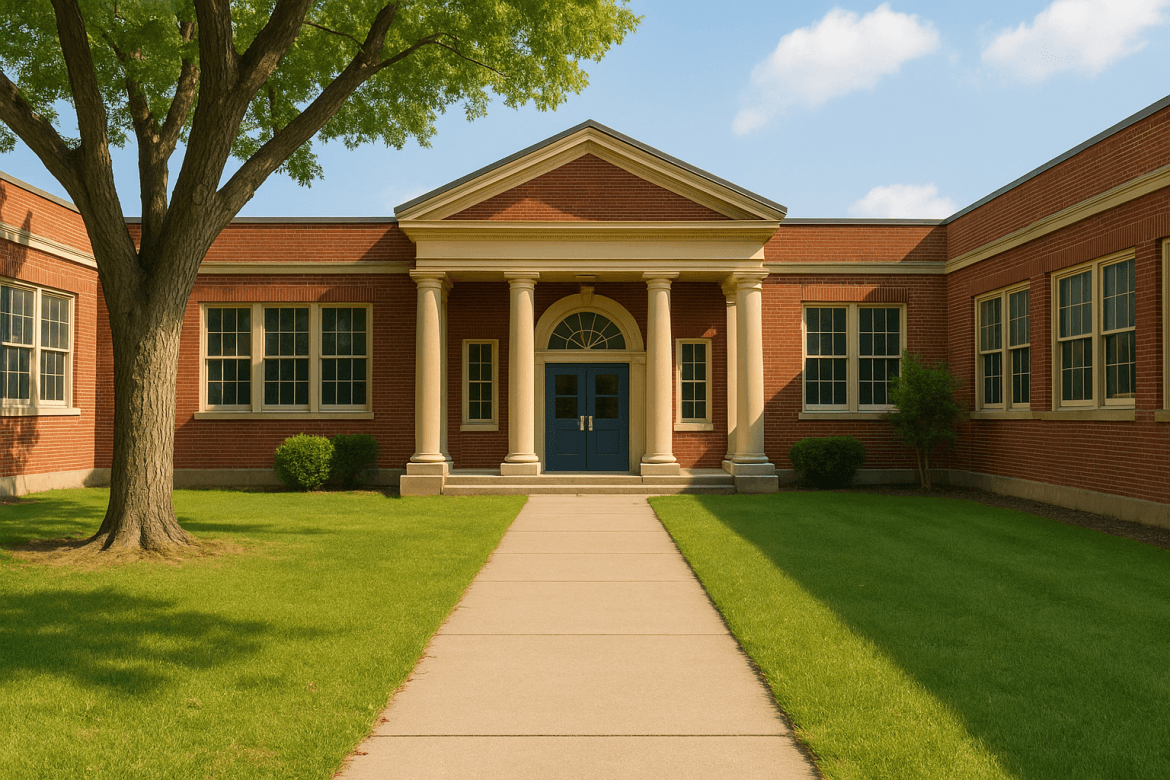
A walkway leads to the entrance of a red-brick building with columns, large windows, and a triangular pediment—an impressive campus featured in U.S. News school rankings—surrounded by green grass, trees, and a bright blue sky with scattered clouds.
EducatorsHot Topics - controversialK-12

2026 U.S. News School Rankings: Best K–8 Schools

by EdCircuit Staff November 17, 2025
written by EdCircuit Staff 4 minutes read

The 2026 U.S. News school rankings provide a clearer look at how elementary and middle schools perform, where equity gaps persist, and how K–8 schools compare across each state. Families across the country quickly search for their schools each October, scanning percentile scores and rank positions to understand how their child’s school measures up. For districts, however, these rankings are more than a public snapshot — they are a moment of reflection about progress, challenges, and opportunity.

Whether a school lands in the top 10% or the consolidated bottom quartile, the rankings influence how communities talk about quality, resources, and expectations. The deeper story behind the rankings is not just where a school appears on a list — it’s what that placement reveals about achievement, demographics, and equity.

What the 2026 U.S. News School Rankings Reveal About Achievement and Equity

While many ranking systems focus solely on test scores, the 2026 U.S. News Best Elementary Schools and Best Middle Schools Rankings attempt to balance student performance with socioeconomic context. This year’s methodology — which remains consistent across all 50 states — relies entirely on publicly available data from the U.S. Department of Education.

Two equally weighted indicators determine every ranking:

1. Mathematics and Reading Proficiency (50%)

This measures the percentage of students who score at or above proficient on state exams in math and reading.

2. Mathematics and Reading Performance vs. Expectations (50%)

U.S. News uses regression models to predict how schools should perform based on:

  • the percentage of students receiving free or reduced-price lunch

  • the percentage of students from historically underserved racial/ethnic groups

Schools that exceed these expectations — even by a few points — can significantly improve their ranking.

Why this matters

The model acknowledges a long-standing truth backed by decades of research: achievement is deeply tied to poverty and demographics. Test scores alone cannot explain the complexity of school performance, which is why this blended approach provides a more nuanced picture.

District-Level Insights From the 2026 Best Elementary and Middle Schools Rankings

The rankings are calculated at the state level, not nationally, making comparisons meaningful only within each state.

In Kentucky, for example, regional reporting highlighted several important patterns:

Eastern Elementary School (Pleasureville, KY)

  • State Rank: #243

  • Percentile Score: 63.66%

  • Math: 52% proficient

  • Reading: 47% proficient

  • Economically Disadvantaged: 53%

  • Student–Teacher Ratio: 14:1

Eastern performed above expectations in a mixed socioeconomic community, aligning closely with how U.S. News evaluates value-added performance.

Campbellsburg, New Castle, and Eminence Elementary Schools

These schools were placed in the consolidated #500–667 range, which U.S. News uses for all schools falling below the 25th percentile. Their performance reflects lower proficiency levels:

  • Campbellsburg: 32% math | 32% reading

  • New Castle: 22% math | 37% reading

  • Eminence Elementary: 32% math | 35% reading

Middle School Rankings

  • Henry County Middle School: #226 statewide (34% math | 36% reading)

These examples align with the publicly reported state proficiency data used in the U.S. News methodology.

How Families Should Interpret the 2026 U.S. News School Rankings

The rankings provide a snapshot, not a full portrait. Parents often ask:

“Does a lower rank mean my school is failing?”

Not necessarily. Rankings measure proficiency, not school culture, safety, teacher commitment, or student growth.

“Why is my school ranked differently from a nearby school?”

Even small differences in:

  • reading intervention,

  • class sizes,

  • demographics,

  • student mobility,

  • or resource access
    can lead to significant shifts in ranking.

“Why can’t schools be compared across states?”

Because every state uses different assessments, cut scores, and proficiency definitions.
A top-ranked school in one state may not have the same level of exam rigor as a top-ranked school in another.

What District Leaders Can Learn From the Best Elementary and Middle Schools 2026 U.S. News School Rankings

1. Percentile shifts matter more than rank changes

A move from the 40th to the 55th percentile is real improvement, even if the rank shift is small.

2. Internal data must be paired with ranking data

MTSS indicators, early literacy diagnostics, attendance, and climate surveys fill in the gaps rankings cannot capture.

3. Schools that exceed expectations should be recognized

Overperformance among high-poverty populations reflects strong instructional practice and effective intervention systems.

4. Communication with families is essential

Transparent conversations about both strengths and challenges help counter misconceptions that come from a simple rank number.

The Big Takeaway From the 2026 U.S. News School Rankings

The 2026 Best Elementary and Middle Schools rankings illuminate real themes in K–8 education:
achievement trends, socioeconomic influences, and the persistent link between opportunity and outcomes.

But the rankings cannot tell the full story.
Behind every number is a school shaped by:

  • the teachers working tirelessly to close gaps

  • the families choosing the best environment for their children

  • the administrators balancing resources and needs

  • the students doing their best in circumstances far beyond the test booklet

The rankings show where a school stands — but the community shows who a school is.

Play video: Oneida County School in Top 100 of 2026 U.S. School Rankings (30 seconds)0:30
Oneida County School in Top 100 of 2026 U.S. School Rankings30 sWKTV NEWSChannel2 on YouTube

WKTV NEWSChannel2 – Oneida County School in Top 100 of 2026 U.S. School Rankings (Play video)

Editor’s Note: All ranking data were sourced from publicly available U.S. News & World Report materials. edCircuit is not affiliated with U.S. News & World Report.

Subscribe to edCircuit to stay up to date on all of our shows, podcasts, news, and thought leadership articles.

November 17, 2025 0 comments
0 FacebookTwitterPinterestLinkedinWhatsappCopy LinkEmail
Four students in a classroom work together with tablets, a laptop, and notebooks, while a glowing holographic robot with a friendly face appears between them, suggesting they are learning about technology or AI.
K-12Hot Topics - controversialArtificial Intelligence

Generative AI in Middle School: Collaboration, Curiosity, and Classroom Impact

by EdCircuit Staff November 17, 2025
written by EdCircuit Staff 4 minutes read

As students move from the playful exploration of elementary school to the social and intellectual growth of middle school, Generative AI takes on a new role—less about discovery, more about application.

Bridging Curiosity and Capability with Generative AI

In Generative AI in Elementary Schools: Creative Curiosity Meets Classroom Innovation, educators laid the groundwork by introducing AI as a creative tool. Now, in grades 6–8, that curiosity evolves into collaboration. Teachers and students are learning with AI—testing ideas, analyzing outcomes, and refining skills that will carry them into high school and beyond.

Generative AI refers to artificial intelligence systems that can create new content—text, images, music, or code—based on the data they’ve been trained on. Unlike predictive AI, which interprets or categorizes information, generative models produce something new each time. For middle school classrooms, that means AI can help students write essays, visualize science concepts, design projects, or even simulate historical debates—all while teaching them to question, verify, and think critically.

Collaboration in the Classroom

Middle school teachers often describe AI as a “third voice” in the room—a tool that sparks dialogue rather than ends it. In English language arts, students use generative tools to brainstorm story ideas or practice revising paragraphs for tone and clarity. In science, they generate lab hypotheses or explore cause-and-effect relationships.

Teachers are finding that when AI is introduced thoughtfully, it enhances—not replaces—critical thinking. Students quickly learn that AI’s first answer isn’t always the best one. Instead, they must refine their questions, evaluate the responses, and explain why a certain result is more accurate or creative.

“AI gives us a chance to teach reflection,” said one middle school literacy coach. “Students see how different prompts produce different results, and that helps them understand the value of precision and persistence.”

Student Interaction and Engagement Generative AI

Generative AI’s biggest impact in middle school may be its ability to increase engagement. Students who might hesitate to share ideas in front of peers often use AI as a practice partner—testing thoughts, drafting responses, or visualizing concepts privately before presenting to the class.

In collaborative projects, students use AI to distribute tasks: one student refines prompts, another reviews the generated content, and a third verifies accuracy or bias. The process not only builds teamwork but introduces AI literacy, helping students understand how bias, training data, and word choice affect outputs.

Teachers are beginning to design rubrics that include AI interaction skills—assessing how students prompt, evaluate, and cite AI-generated content responsibly.

Ethics and Responsible Use: Learning the Limits

Middle school is also where ethical instruction becomes crucial. Students are old enough to recognize that AI doesn’t “know” truth—it predicts patterns. That realization becomes a powerful teaching moment about integrity, bias, and authorship.

Classrooms across the country are implementing AI Integrity Pledges, where students agree to disclose when and how they use AI. Teachers model citation practices and discuss when collaboration with AI is appropriate versus when it crosses into academic dishonesty.

Some schools integrate AI lessons into social studies or digital literacy classes, using real-world scenarios to discuss issues like misinformation, algorithmic bias, and copyright. These lessons prepare students for a digital future where critical thinking matters as much as technical skill.

Supporting Teachers Through Adaptation

For educators, this stage of AI integration is about finding balance. Teachers experiment with AI lesson planning tools—like MagicSchool.ai, ChatGPT Edu, or SchoolAI—to streamline grading rubrics, design quizzes, and translate materials into multiple reading levels.

But the real shift happens in professional development. Districts are beginning to offer AI learning cohorts where teachers collaborate on lesson design, share successful prompts, and reflect on how to align AI use with academic standards.

“Generative AI isn’t about shortcuts,” said a curriculum coordinator in Pennsylvania. “It’s about insight. It helps us identify misconceptions faster and personalize instruction more effectively.”

edCircuit’s Feature Series: Generative AI in K–12

edCircuit is excited to share its feature series, “Generative AI in K–12: Teaching, Learning, and Leading Through Change.”

In Part 1, educators explored how AI builds creative curiosity in elementary classrooms. In this second installment, we examine how middle school teachers and students are learning with AI—collaborating, experimenting, and developing digital responsibility.

Each article in the series highlights the practical tools, classroom experiences, and leadership insights shaping how schools approach this transformative technology.

Looking Ahead: From Middle School to High School

As students prepare for high school, the relationship with AI evolves once again—from curiosity and collaboration to responsibility and reflection.

The next article in this series, “Generative AI in High School: From Using to Understanding,” will explore how students learn to use AI responsibly, preparing for college, careers, and ethical digital citizenship.

Play video: AI education tools are helping students learn, grow and gain confidence (3 minutes 31 seconds)3:31
AI education tools are helping students learn, grow and gain confidence3 min 31 sCBS News on YouTube

CBS News – AI education tools are helping students learn, grow and gain confidence (Play video)

Subscribe to edCircuit to stay up to date on all of our shows, podcasts, news, and thought leadership articles.

November 17, 2025 0 comments
0 FacebookTwitterPinterestLinkedinWhatsappCopy LinkEmail
A collage shows: a charging cart filled with laptops, two children using a laptop, three students working together on a laptop, and a bus driver beside a school bus—capturing stories that matter in everyday school life.
K-12Hot Topics - controversial

The Stories That Matter: edCircuit’s Weekly Roundup, Issue 9

by EdCircuit Staff November 15, 2025
written by EdCircuit Staff 3 minutes read

Schools are navigating rapid changes—from early-grade AI to declining enrollment, from the rising role of community colleges to evolving device management and transportation safety. These are the stories that matter right now, highlighting the innovations, pressures, and opportunities shaping the future of K–12 and higher education.

Resilient by Design: How Community Colleges Are Reinventing Access, Workforce Training, and Local Impact

Read Here

Community colleges are redefining pathways to jobs, credentials, and economic mobility through flexible programs and employer partnerships.

Why read it:
It offers a clear look at how two-year institutions are building modern workforce pipelines and improving regional opportunity.

Discussion it opens:
How can K–12 schools and community colleges strengthen alignment so students transition smoothly into career pathways?

How K–12 Schools Are Resetting Device Management

Read Here

Device management is shifting from bulk purchasing to long-term sustainability, emphasizing repairs, accountability, and smarter planning.

Why read it:
It breaks down the biggest challenges districts face—and the new strategies that keep tech functional and equitable.

Discussion it opens:
How can schools move from reactive device fixes to proactive lifecycle planning that saves money and improves reliability?

Generative AI in Elementary Schools: Creative Curiosity Meets Classroom Innovation

Read Here

Elementary classrooms are experimenting with generative AI tools to spark creativity, support literacy, and personalize instruction.

Why read it:
It highlights early-grade innovation and shows how teachers are using AI responsibly with young learners.

Discussion it opens:
What should developmentally appropriate AI look like in early childhood and elementary education?

Sunny Days and School Readiness: How Sesame Street Shaped Generations of Learners

Read Here

A deep dive into Sesame Street’s influence on early learning, SEL, literacy, and long-term academic outcomes.

Why read it:
It blends research with nostalgia, showing how one program became a lasting educational intervention.

Discussion it opens:
What lessons can today’s educational media and edtech tools borrow from Sesame Street’s design and approach?

Declining Population and Education: How U.S. Schools Are Adapting

Read Here

Districts are facing shrinking enrollment, school closures, staffing shifts, and financial pressures as population trends change.

Why read it:
It breaks down the demographic forces reshaping education planning, funding, and staffing.

<p”>Discussion it opens:
How can districts maintain quality, equity, and community trust amid long-term enrollment decline?

The Importance of School Bus Safety

Read Here
Listen Here

A detailed look at modern school transportation safety—from driver training to bus technology, student supervision, and emergency planning.

Why read it:
It explains the real safety challenges in the largest public transportation system in the country.

Discussion it opens:
What steps should districts take to strengthen school bus safety while facing driver shortages and aging fleets?

Takeaway

Across K–12 and higher education, leaders are balancing innovation with practicality—integrating AI in early grades, rethinking device sustainability, strengthening safety systems, and preparing for long-term demographic shifts. The common thread this week: schools are redesigning old systems to meet new realities, with a focus on access, equity, and long-term resilience.

Related: The Stories That Matter, edCircuit’s Weekly Roundup, Issue 8

Subscribe to edCircuit to stay up to date on all of our shows, podcasts, news, and thought leadership articles.

November 15, 2025 0 comments
0 FacebookTwitterPinterestLinkedinWhatsappCopy LinkEmail
Newer Posts
Older Posts

Participate

  • Contribute
  • Sponsor
  • Submit Release
  • Subscribe
  • Get Interviewed

We value your privacy

We use cookies to enhance your browsing experience, serve personalized ads or content, and analyze our traffic. By clicking "Accept All", you consent to our use of cookies.

Customize
  • Needed for the site to work: signing in, the cart, your consent choice. Always on.

    8 cookies
    • ss_consent 1 yearYour cookie choice on this site, so you are not asked again.
    • wordpress_logged_in_* 2 days, or 14 days with "remember me"Keeps you signed in as you move between pages.
    • wordpress_sec_* 2 days, or 14 days with "remember me"The secure half of your sign-in.
    • wordpress_test_cookie SessionChecks that your browser accepts cookies when you sign in.
    • wp-settings-* 1 yearYour display settings when signed in.
    • wp_woocommerce_session_* 2 daysYour shopping session: the cart and the checkout.
    • woocommerce_cart_hash SessionTells the site whether your cart has changed.
    • woocommerce_items_in_cart SessionWhether your cart holds anything.
  • Remembers choices you make, such as a language or a region, and supports features like live chat.

    1 cookie
    • woocommerce_recently_viewed SessionThe products you looked at, so the site can show them again.
  • Helps us understand how visitors use the site: which pages are read, and for how long.

    2 cookies
    • _ga 2 yearsGoogle Analytics: tells one visitor from another. Set only after you allow analytics.
    • _ga_* 2 yearsGoogle Analytics: keeps your session state. Set only after you allow analytics.
  • Measures how fast pages load so we can make them faster.

  • Used to show you content and offers that match your interests, on this site and elsewhere.

    1 cookie
    • sbjs_* SessionWooCommerce order attribution: where you came from, so a purchase can be credited to the campaign or site that sent you.

Your browser asks us not to sell or share your information (Global Privacy Control), so advertising cookies stay off.

Do not sell or share my personal information

Some cookies from other companies help show you offers on other sites. Tick the box and save your preference to opt out of that sharing; untick it to opt back in at any time.

Your browser sends Global Privacy Control, so this preference is set for you and cannot be changed here.

Sign In

Keep me signed in until I sign out

Forgot your password?

Password Recovery

A new password will be emailed to you.

Have received a new password? Login here

Shopping Cart

Close

No products in the cart.

Close
-
00:00
00:00

Queue

Update Required Flash plugin
-
00:00
00:00

Your cart (items: 0)

Products in cart

Product Details Total
Subtotal $0.00
Shipping and discounts calculated at checkout.
View cart
Go to checkout

Your shopping cart is empty

Return to shop

Notifications