
edCircuit
  • Start Here
    • Login
    • Register
    • Subscribe
    • Submit a Press release
    • Advertise or Sponsor
    • Contribute
    • Get Interviewed
  • On the Wire
  • EdTech
    • All EdTech
    • Online Learning
    • Hybrid and Remote Learning
    • Augmented and Virtual Reality
    • ESports
    • Gamification and Game-Based Learning
    • Digital Citizenship
    • EdTech Entrepreneurs
    • Market Trends
    • Future of Education
  • Artificial Intelligence
  • K-12 Education
    • All K-12
    • K-12 Teachers
    • Teaching Strategies
    • Special Education and IEPs
    • Dyslexia
    • Gifted and Advanced Learning
    • Early Childhood, Pre-K and Kindergarten
    • School Calendar
    • Tutoring and Homework Help
    • Attendance and Absenteeism
    • After-School Programs
    • School Counselors
    • Homeschooling
    • School Models
    • Teacher Retention
    • Parents
    • Students
    • STEM and STEAM Education
  • Teaching and Learning
    • Literacy and Reading
    • Math Education
    • Civics and History Education
    • Financial Literacy
    • Assessment and Testing
    • Curriculum and Instruction
    • Personalized Learning
    • Project-Based Learning
    • Social-Emotional Learning
    • Executive Function
    • Creativity
    • Diversity, Equity, Inclusion
  • Professional Development
    • All Professional Development
    • Educators
    • Administrators
    • edLeaders
  • Higher Education
    • All Higher Education
    • College Admissions
    • Career and Technical Education (CTE)
    • Graduation
    • FAFSA and Financial Aid
    • Student Loans
  • Cybersecurity
  • School Safety
    • All School Safety
    • Science and Lab Safety
    • School Design and Facilities
    • Bullying
    • Duty of Care and School Liability
  • Continuing Education
    • All Continuing Education
    • Online Certificate Programs
    • Teaching Jobs and Careers
    • Teacher Appreciation
  • Education Policy and Government
    • All Education Policy
    • Department of Education
    • School Choice
    • Global
    • Advocates
  • EDU Shows
    • All EDU Shows
    • Safer Ed
    • Mind the Gap
    • Education Industry Questions
    • CoffeEd
    • InFocus
    • InformED Report
  • EDU Podcasts
    • All EDU Podcasts
    • Author Chats
    • CoSN The Podcast
    • Education Today
    • Building the Bridge
    • Students Speak
  • Education Industry Guides and Reports
  • Archived Media
    • Future of School: The Podcast
    • Equity Everywhere
  • About edCircuit
  • Subscribe
edCircuit
  • LOGIN
Home Tags Posts tagged with "Headline"
Tag:

Headline

Follow
This if for posts to be in the featured/top section of site
A storage cabinet filled with various glass bottles and containers of chemicals, some labeled, including acetic acid and hydrochloric acid, along with beakers, test tubes, and boxes of small laboratory tools.
STEM and STEAM EducationSafer EdScience and Lab SafetyK-12

Building Safer STEM Classrooms: Identifying Lab Hazards

by EdCircuit Staff October 6, 2025
written by EdCircuit Staff 3 minutes read

STEM classrooms are designed to inspire curiosity and discovery, but every hands-on activity introduces some level of risk. From simple demonstrations to complex experiments, identifying and managing hazards is the foundation of any Safer STEM environment.

In the latest Safer Ed podcast, “Building Safer STEM Classrooms: Identifying Lab Hazards,” educators explore how awareness, preparation, and shared responsibility help teachers balance learning and safety in today’s science and STEM labs.
Safer EdBuilding Safer STEM Classrooms: Identifying Lab HazardsOctober 6, 2025 · 5 min 56 sPlay episode: Building Safer STEM Classrooms: Identifying Lab Hazards (5 minutes 56 seconds)0:00-5:56Follow on SpotifyApple

Recognizing STEM Lab Hazards

Hazards in STEM classrooms typically fall into three categories: physical, chemical, and biological. Each requires its own strategies to anticipate and control risk.

Physical hazards are often overlooked but can cause serious injuries. Swinging meter sticks, flying projectiles, and unstable demonstrations are common culprits. Setting boundaries, modeling behavior, and requiring protective gear prevent most accidents before they happen.

Chemical hazards involve acids, bases, flammables, and other reactive substances. Every chemical must have a corresponding Safety Data Sheet (SDS), outlining fire risks, toxicity, stability, and cleanup steps. Reviewing these before class is one of the simplest, most effective ways to keep labs safer.

Biological hazards—from mold samples to plant allergens—must also be handled with care. Even “simple” biology experiments require containment and supervision to prevent exposure and contamination.

The Three Layers of Control

A Safer STEM classroom doesn’t rely on luck, it relies on layered safety systems:

  1. Engineering Controls: Built-in features like fume hoods, eyewash stations, and proper ventilation.

  2. Administrative Controls: Policies, procedures, and schedules that ensure consistency, like waste management or training.

  3. Personal Protective Equipment (PPE): Goggles, gloves, and lab coats as the final layer of protection.

Substitution, Elimination, and Good Judgment

Not every experiment is worth the risk. Sometimes the smartest choice is to replace a hazardous material with a safer alternative—or to redesign the activity altogether. Emphasizing that safety outweighs spectacle teaches students accountability and builds deeper, more meaningful learning experiences.

Putting safety first doesn’t limit learning, it strengthens it. A Safer STEM classroom encourages problem-solving, reflection, and creativity, showing students that science is as much about responsibility as discovery.

Building a Safer STEM Culture

The Safer Ed discussion emphasizes that safety is a culture, not a checklist. Teachers, students, and administrators must work together, communicate openly, and model responsible behavior.

When schools invest in training, proper equipment, and time for preparation, they enable teachers to create environments where exploration thrives—and safety never falls behind.

“When safety becomes part of the learning process, labs become safer for everyone.”

Safer STEM classrooms don’t limit curiosity; they make it possible.

Key Takeaways

  • Safer STEM classrooms begin with awareness of physical, chemical, and biological hazards.

  • Use SDS as a guide to chemical safety.

  • Apply engineering, administrative, and PPE controls consistently.

  • Substitute or eliminate risky activities when needed.

  • Build a culture of shared safety responsibility in every STEM space.

Listen Now

Listen to Building Safer STEM Classrooms: Identifying Lab Hazards on the Safer Ed podcast at edcircuit.com or on your favorite podcast platform.

Keep Learning

Strengthen your classroom safety knowledge with these Safer STEM safety modules by Science Safety:
Start making your STEM programs safer with Safer STEM modules and pathways. 

Subscribe to edCircuit to stay up to date on all of our shows, podcasts, news, and thought leadership articles.

October 6, 2025 0 comments
0 FacebookTwitterPinterestLinkedinWhatsappCopy LinkEmail
Two students in a classroom use accessibility devices: one has a tablet displaying “Speech to Text,” and the other wears headphones with a screen showing “Real-Time Translation.” A teacher stands in front of the class.
Hot Topics - controversialArtificial IntelligenceSpecial Education and IEPsK-12

Artificial Intelligence in Special Education and Accessibility

by EdCircuit Staff October 6, 2025
written by EdCircuit Staff 5 minutes read

Special education has always required individualized approaches. Whether through modified assignments, assistive technologies, or one-on-one support, schools have worked to provide equitable access to learning. Yet resources are limited, and implementation is uneven.

Artificial intelligence introduces a new set of tools that can expand accessibility at scale. AI-driven speech-to-text systems, real-time translation, and adaptive tutoring offer the potential to remove barriers that once excluded students from full participation. At the same time, these technologies raise pressing questions about funding, oversight, and alignment with legal protections such as the Individuals with Disabilities Education Act (IDEA).

How Artificial Intelligence Supports Accessibility

AI applications in special education and accessibility fall into several categories:

  • Text-to-Speech and Speech-to-Text: Converts written materials into spoken words, or spoken responses into text, aiding students with dyslexia, speech impairments, or motor challenges.

  • Predictive Writing and Word Suggestions: Helps students with writing difficulties express complex ideas more fluently.

  • Real-Time Translation: Supports multilingual learners by providing immediate translation of classroom content into multiple languages.

  • Adaptive Tutoring Systems: Personalizes practice and remediation aligned with IEP goals, offering scalable support beyond one-on-one sessions.

  • Classroom Analytics: Tracks engagement and identifies where students with disabilities may be struggling, flagging issues for timely intervention.

These tools expand on earlier assistive technologies, but AI’s adaptive capabilities make them more responsive and less reliant on manual input from teachers.

Opportunities for Schools

The integration of AI into accessibility work creates significant opportunities:

  • Scalability: Supports that once required dedicated human intervention can now be offered to more students simultaneously.

  • Consistency: AI tools deliver standardized supports across classrooms, reducing variability that often occurs when services depend on individual staff availability.

  • Family Engagement: Parent dashboards and progress reports give families clearer insights into their child’s learning journey.

  • Data-Driven Planning: Administrators can identify trends across populations, helping allocate resources strategically.

For districts facing shortages of special education staff, AI can provide meaningful support in bridging service gaps.

Challenges and Risks of using AI

With new opportunities come significant challenges:

1. Funding Inequities

AI-driven accessibility tools often require licenses, devices, and training. Wealthier districts are better positioned to afford them, while underfunded schools risk leaving students without access to transformative supports.

2. Privacy Concerns

Accessibility tools collect sensitive data, including speech patterns, learning difficulties, and behavioral records. This data requires stronger protections than general classroom information. District leaders must ensure compliance not only with FERPA and COPPA but also with state-level privacy laws.

3. Over-Reliance on Technology

While AI can supplement supports, it cannot replace the human relationships central to special education. Students with disabilities often benefit most from personalized, empathetic guidance—something no algorithm can replicate.

4. Implementation Gaps

Without proper training, staff may underuse or misuse AI accessibility tools. Inconsistent application across classrooms risks creating uneven learning experiences.

Sidebar: Administrative Checklist for AI in Accessibility

Before adopting AI tools in special education, districts should confirm:

  • Does the tool align with IDEA requirements and the student’s IEP?

  • How is sensitive data stored, secured, and deleted?

  • What ongoing training will staff receive?

  • How will the district fund equitable access over multiple years?

  • Are families included in decision-making about tool selection and use?

The Legal and Policy Landscape

Special education is already governed by rigorous legal frameworks. Any AI adoption must align with:

  • IDEA (Individuals with Disabilities Education Act): Requires that students with disabilities receive free and appropriate public education with necessary accommodations.

  • Section 504 of the Rehabilitation Act: Prohibits discrimination on the basis of disability.

  • Americans with Disabilities Act (ADA): Ensures accessibility in all areas of public life, including education.

AI tools must be carefully vetted to ensure they enhance, rather than undermine, compliance with these laws. For example, districts cannot substitute an AI tutoring platform for mandated one-on-one human support unless explicitly permitted within an IEP.

Implications for Stakeholders

Administrators: Must prioritize equitable funding models so AI supports are not restricted to wealthier districts. Procurement processes should emphasize accessibility as a core criterion, not an afterthought.

CTOs and Technology Directors: Play a critical role in ensuring tools are compliant with privacy standards. They must also monitor how accessibility data is handled by vendors, with clear provisions in contracts.

Curriculum Directors: Should ensure AI accessibility features align with curricular goals and do not create parallel learning tracks that isolate students with disabilities.

Parents and Families: Need transparency about how AI is being used, how it impacts their child’s learning, and how data is managed. Engagement in decision-making builds trust and ensures compliance with legal rights.

School Boards: Set the tone for ethical adoption by requiring public discussion of accessibility tools, funding commitments, and policy safeguards.

Looking Forward: A Decade of Possibility and Risk

The next 5–10 years may see AI fundamentally reshape accessibility. Future developments could include:

  • Personalized Assistants embedded in devices that adapt in real time to student needs across all subjects.

  • Advanced Voice Recognition that accurately interprets atypical speech patterns, enabling more natural communication.

  • Integrated Learning Ecosystems that connect accessibility data across classrooms, services, and home environments.

Yet without deliberate action, risks loom. Unequal funding could make accessibility gains available only to affluent districts. Over-reliance on automated systems could sideline the personal interactions essential to student growth. And without robust policy frameworks, sensitive data could be mishandled or misused.

Balancing Innovation and Duty of Care

AI tools hold enormous promise for expanding inclusion and supporting students with disabilities and multilingual learners. But their adoption requires deliberate balance. Innovation cannot outpace oversight; efficiency cannot replace empathy; access cannot depend on district wealth.

For administrators, boards, and policymakers, the message is clear: AI accessibility is not simply about technology. It is about fulfilling a duty of care to ensure every student has the tools they need to succeed—safely, equitably, and responsibly.

Subscribe to edCircuit to stay up to date on all of our shows, podcasts, news, and thought leadership articles.
October 6, 2025 0 comments
0 FacebookTwitterPinterestLinkedinWhatsappCopy LinkEmail
A four-panel image: a boy gaming at an esports desk, a person walking alone down a dim hallway, a girl showing a tablet to a woman, and a scientist with lab gear beside a glowing AI brain symbol.
K-12Hot Topics - controversial

The Stories That Matter, edCircuit’s Weekly Roundup, Issue 3

by EdCircuit Staff October 3, 2025
written by EdCircuit Staff 3 minutes read

In this week’s edition of The Stories That Matter, edCircuit highlights the issues shaping today’s classrooms: esports as an emerging pathway, the risks of a federal shutdown, the future of STEM lab safety, the promise of personalized learning, and how AI is reshaping teacher professional development. We also spotlight an important observance: National Depression Education & Awareness Month in schools.

Leveling Up Education: How High School Esports Went from Lockdown Lifeline to College Pipeline

Read here »

High school esports has quickly evolved from a pandemic stopgap to a vibrant pathway into college scholarships and STEM-related careers. This article explores how gaming builds teamwork, discipline, and opportunity, while raising questions about balance and access.

Why read it: Esports isn’t just entertainment — it’s becoming a legitimate educational pipeline.
Discussion it opens: Should schools treat esports like traditional athletics, with structured funding and support?

When the Lights Go Dark: How a Federal Shutdown Threatens Education

Read here »

A federal shutdown has far-reaching consequences for both K–12 and higher education — from funding delays to staff furloughs to disruptions in student support programs. This piece lays out what’s at stake when Washington politics grind education to a halt.

Why read it: It connects national policy gridlock to everyday classroom realities.
Discussion it opens: How resilient are schools when federal support falters, and what safeguards should districts prepare?

Understanding Potential Lab Activity Hazards and Risks: A Safer Ed Podcast

Read or listen here »

This Safer Ed podcast episode examines the hidden risks in STEM activities — from chemical hazards to equipment misuse — and how teachers can foster safer practices.

Safer EdUnderstanding Potential Lab Activity Hazards and RisksSeptember 29, 2025 · 5 min 36 sPlay episode: Understanding Potential Lab Activity Hazards and Risks (5 minutes 36 seconds)0:00-5:36Follow on SpotifyApple

Why listen: It goes beyond compliance to focus on cultivating a safety-first culture in classrooms.
Discussion it opens: How can schools balance hands-on STEM engagement with consistent, effective risk management?

Personalized Learning with Artificial Intelligence (AI)

Read here »

AI tools are helping teachers customize instruction at scale, giving students tailored pathways and timely feedback. But they also raise questions about data, equity, and the role of the teacher.

Why read it: It shows both the promise and pitfalls of AI-powered personalization.
Discussion it opens: Can personalization truly close learning gaps, or will it deepen inequities if access isn’t universal?

Using Artificial Intelligence (AI) to Elevate Science Lab Safety

Read here »

AI isn’t only for instruction — it’s also being deployed to detect hazards, monitor lab environments, and support teachers in creating safer STEM spaces.

Why read it: It reveals a lesser-discussed application of AI: keeping students safe in real time.
Discussion it opens: Should safety tech be mandated in labs, and how do we ensure schools of all sizes can access it?

Teacher Professional Development in the Age of AI

Read here »

AI is changing not just what teachers teach, but how they learn. This article explores how AI tools are streamlining PD, offering personalized learning for educators themselves.

Why read it: It shifts the conversation from students to teachers, showing how AI can reduce workloads and expand professional growth.
Discussion it opens: How do districts ensure AI-driven PD respects teacher autonomy and complements — not replaces — human mentoring?

Shining a Light: National Depression Education & Awareness Month in Schools

Read here »

Mental health education takes center stage in October. This piece highlights how schools are addressing depression awareness, reducing stigma, and supporting students through programs and community engagement.

Why read it: It connects policy awareness months to real student impact.
Discussion it opens: How can schools sustain mental health initiatives beyond awareness campaigns and into daily practice?

Takeaway

Across this week’s Stories That Matter, one theme stands out: schools are navigating both risks and opportunities at the intersection of innovation and responsibility.

From ensuring lab safety to integrating AI ethically, from esports pipelines to federal policy uncertainty, safety, equity, and trust remain at the center of every conversation.

Subscribe to edCircuit to stay up to date on all of our shows, podcasts, news, and thought leadership articles.

October 3, 2025 0 comments
0 FacebookTwitterPinterestLinkedinWhatsappCopy LinkEmail
A woman in a business suit sits at a desk, using a laptop and holding a document. Behind her is a clipboard and a folder, with a security shield symbol displayed on the wall.
CoSN The PodcastK-12

Navigating Updates on COPPA and Beyond: What K–12 Technology Leaders Need to Know

by EdCircuit Staff October 3, 2025
written by EdCircuit Staff 3 minutes read

The Children’s Online Privacy Protection Act (COPPA) has been shaping how companies handle children’s data since 1998. While the law applies to vendors, not schools, districts play a critical role in how compliance works in practice—often acting on behalf of parents to provide consent for education technology tools.

The latest COPPA updates, adopted unanimously by the FTC in January 2025, are some of the most comprehensive revisions to date. They broaden the definition of personal information, raise expectations for vendor security, and clarify the responsibilities of districts when approving edtech tools for classroom use.

This podcast builds on a CoSN webinar held on February 12, 2025, hosted by:

  • Linnette Attai (this link no longer available), Director, CoSN’s Student Data Privacy and Trusted Learning Initiatives

  • Reg Leichty, Founder, Foresight Law + Policy PLLC

Inside the Podcast

The CoSN PodcastNavigating Updates on COPPA and Beyond: What K-12 Technology Leaders Need to KnowOctober 2, 2025 · 7 min 34 sPlay episode: Navigating Updates on COPPA and Beyond: What K-12 Technology Leaders Need to Know (7 minutes 34 seconds)0:00-7:34Follow on SpotifyApple

In this episode, we explore how the new COPPA rules change the landscape for K–12 technology leaders:

  • Broader definition of personal information – Now includes biometrics, government IDs, and mobile numbers, reflecting the reality of modern devices and platforms.

  • New parental consent options – Text messaging can be used to verify consent, in addition to older methods like email.

  • Direct notices required – Vendors must provide clear, plain-language disclosures about what data is collected, how it’s used, and with whom it’s shared. Parents can approve educational uses while denying advertising.

  • Stronger security requirements – Vendors must create written security plans, assign staff, conduct annual risk assessments, and test protections regularly.

  • Vendor ecosystem accountability – Providers must ensure subcontractors also meet COPPA requirements, backed by written assurances in contracts.

  • Data retention rules – Vendors must publish retention policies and delete data when it’s no longer needed for its original purpose.

  • District responsibilities – Consent should come from the district level, not individual teachers, when approving tools on behalf of families.

  • What didn’t change – Proposed edtech-specific rules, like mandatory written agreements or bans on commercial use of student data, were not finalized—though they may resurface in future legislative updates.

Timeline for Compliance

The FTC’s new rules will take effect after publication in the Federal Register, followed by a 60-day waiting period and then a one-year compliance window. This gives districts and vendors time to prepare, but the message is clear: start now.

District leaders should:

  • Review vendor contracts.

  • Monitor privacy policies and direct notices.

  • Ensure consent processes flow through the district office.

  • Align COPPA responsibilities with other privacy laws like FERPA and state-specific biometric protections.

Key Takeaways

  • COPPA applies to vendors, not schools—but schools play a vital role in ensuring compliance.

  • Expanded definitions and security requirements mean stronger protections for children’s data.

  • District-level consent is essential; teachers should not serve as the point of legal approval.

  • Transparency is the new norm: parents must be given clear, plain-language notices about data use.

  • Now is the time to prepare: update contracts, policies, and training before the compliance deadline arrives.

Additional Resources

  • CoSN Student Data Privacy Toolkit

  • CoSN Trusted Learning Environment Seal Program

  • CoSN 2025 National Student Data Privacy Report

  • Webinar Recording ⁠Free for CoSN Members

  • For a complete listing of all CoSN’s webinars, please visit:⁠⁠ ⁠⁠⁠⁠⁠⁠⁠⁠⁠https://www.cosn.org/⁠⁠⁠⁠⁠

Subscribe to edCircuit to stay up to date on all of our shows, podcasts, news, and thought leadership articles.
October 3, 2025 0 comments
0 FacebookTwitterPinterestLinkedinWhatsappCopy LinkEmail
A man sits beside a sad young girl in a classroom, gently reassuring her with a hand on her shoulder while speaking calmly.
Hot Topics - controversialSocial-Emotional LearningK-12

Shining a Light: National Depression Education & Awareness Month in Schools

by EdCircuit Staff October 3, 2025
written by EdCircuit Staff 4 minutes read

October’s National Depression Education & Awareness Month offers schools a powerful opportunity to pause, reflect, and act on an issue that touches nearly every community: mental health. In classrooms and staff rooms alike, depression can remain invisible until it has already taken a toll. Yet when schools take proactive steps to build awareness and foster open dialogue, they create spaces where both students and educators feel seen, supported, and empowered to thrive.

Why This Month Matters

Depression is one of the most common mental health challenges among young people and adults alike. According to the CDC, nearly one in five adolescents reports persistent feelings of sadness or hopelessness, and teachers themselves face rising rates of stress, burnout, and emotional fatigue. Despite these numbers, depression often hides behind smiles, busy schedules, or even stellar academic or athletic performance.

Awareness months like this one remind schools that silence is the enemy of support. By naming depression, normalizing conversations about it, and giving students and staff the tools to act, schools can shift from reactive crisis management to proactive culture building.

Recognizing the Unnoticeable Signs

Depression doesn’t always look like what we expect. Some students and educators may never show overt sadness, yet subtle cues can point toward distress:

  • Behavioral shifts: A once-engaged student suddenly withdraws from group work, or a teacher who regularly stayed after school begins leaving quickly each day.

  • Changes in performance: A drop in grades or classroom engagement can signal more than academic struggles.

  • Physical complaints: Headaches, stomachaches, or constant fatigue sometimes mask emotional challenges.

  • Social withdrawal: A student who used to sit with friends now eats alone, or a colleague stops attending informal gatherings in the teachers’ lounge.

  • Overcompensation: Some students throw themselves into academics, sports, or leadership roles to mask inner struggles.

Spotting these signs requires not just observation but empathy: the willingness to pause and ask, “Are you doing okay?”

Starting the Conversation

Talking about depression in schools doesn’t have to feel heavy. With the right framing, conversations can be empowering, compassionate, and rooted in hope. Here are ways schools can start:

  1. Normalize Check-Ins
    Daily check-ins, whether through journal prompts, quick surveys, or “temperature checks” at the start of class, send a powerful message: emotions matter.

  2. Train Staff in Mental Health Literacy
    Professional development sessions that focus on recognizing signs of depression and responding with care—not judgment—equip teachers to notice and act early.

  3. Integrate Mental Health into Curriculum
    Literature classes can highlight characters who struggle with mental health. Science courses can cover the biology of stress and the brain. Health classes can introduce coping strategies and resources.

  4. Empower Peer-to-Peer Support
    Programs like student wellness clubs or peer mentoring allow students to support each other, breaking down stigma and reminding them they are not alone.

  5. Create Safe, Visible Resources
    Posting crisis hotline numbers, featuring wellness posters, or designating safe spaces signals that the school takes student well-being seriously.

A Real-World Example

At one Midwest high school, teachers noticed that a quiet sophomore—who had always earned strong grades—suddenly stopped turning in homework. Instead of assuming laziness, her English teacher gently asked about what was going on. That single conversation opened the door for the student to share feelings of overwhelming sadness she had been hiding. The teacher connected her with the school counselor, who in turn brought in her family for support. Months later, the student said what helped most was “just knowing someone noticed and cared enough to ask.”

Stories like this remind us that small actions—checking in, listening, connecting—can change a young person’s trajectory.

Supporting Colleagues

Teachers and staff also need space to acknowledge and address depression. Schools can:

  • Encourage peer support groups or staff wellness circles.

  • Provide access to Employee Assistance Programs (EAPs) or counseling services.

  • Offer flexible options during times of high stress, such as grading periods or testing seasons.

  • Promote balance by celebrating professional achievements while encouraging time for personal renewal.

A culture that supports teachers’ mental health inevitably benefits students, who model what they see.

Moving from Awareness to Action

Recognizing National Depression Education & Awareness Month is just the beginning. Lasting change requires a commitment to year-round strategies:

  • Policy: Embed mental health in district strategic plans.

  • Practice: Regularly evaluate how schools support both prevention and intervention.

  • Partnerships: Work with local mental health organizations to provide expertise and resources.

  • Positivity: Frame conversations around growth, resilience, and empowerment—not just risk.

When schools take these steps, they move beyond “awareness” to creating environments where mental health is as visible and valued as academic achievement.

A Message of Hope

The heart of National Depression Education & Awareness Month isn’t about focusing on what’s wrong, it’s about highlighting what’s possible. By recognizing the quiet signals, starting courageous conversations, and building cultures of support, schools can change lives.

For a student who feels unseen, or a teacher quietly struggling, even one compassionate gesture can make the difference between despair and hope. And in that hope lies the true power of education: the ability to help every member of a school community not just learn, but live well.

988 Lifeline: free and confidential support‎

  • Call or text 988.
  • Chat at 988lifeline.org.
  • Connect with a trained crisis counselor. 988 is confidential, free, and available 24/7/365.

Subscribe to edCircuit to stay up to date on all of our shows, podcasts, news, and thought leadership articles.

October 3, 2025 0 comments
0 FacebookTwitterPinterestLinkedinWhatsappCopy LinkEmail
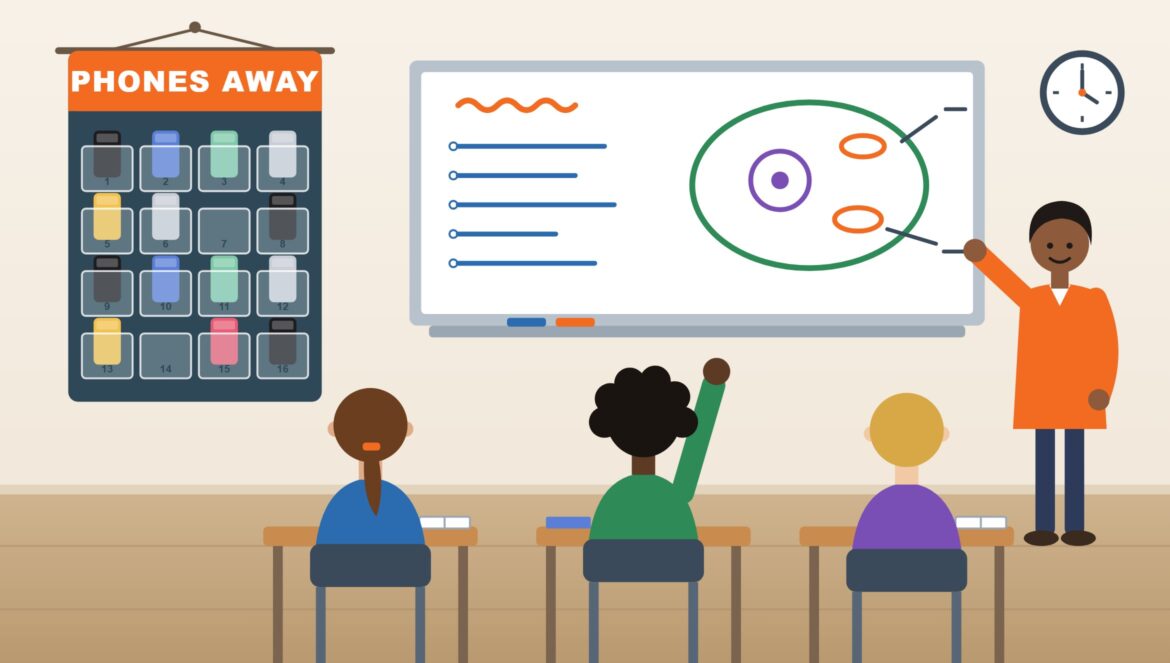
A classroom where students stored phones in a numbered Phones Away pocket chart as the teacher points to the board
EducatorsK-12 TeachersedLeadersHot Topics - controversialK-12

Saying ‘No’ to Cell Phones in the Classroom: Statewide Bans Take Hold for 2025-26

by EdCircuit Staff October 2, 2025
written by EdCircuit Staff 7 minutes read

When students went back to school this fall, most of them walked into a building with a phone rule written into state law. A year ago that was true in only a handful of states. Now, according to Education Week’s tracker, 31 states either have cell phone limits in place or are putting them in place for the 2025-26 or 2026-27 school year. Some see these bans as heavy-handed. The reasons behind them are worth understanding, though, because the decision now sits with every principal, teacher and parent who has to make one work. This piece looks at why so many states are saying ‘no’ to phones during the school day, what the research does and does not show, and what makes a school-wide ban hold.

Where the States Stand This Fall

Four states set a single statewide rule that every school follows, and the rest require districts to write their own policy within limits the state sets. A few of the rules that took effect for this school year:

  1. New York: Since September 2025, every K-12 public school must restrict smartphones from the first bell to the last, under a plan each district wrote for its own buildings (Governor of New York).
  2. Texas: House Bill 1481, signed June 20, 2025, requires every district and open-enrollment charter school to adopt a policy on student use of personal communication devices during the school day.
  3. Florida: The state that started the trend in 2023 went further with House Bill 1105, approved May 30, 2025. Elementary and middle school students may not use phones at all during the school day, high school students may not use them during class, and six counties are piloting a full-day ban in high school.
  4. Louisiana, South Carolina and Utah: Along with Florida, these are the states with one statewide policy that all schools follow (Education Week).
  5. Virginia: Governor Glenn Youngkin’s 2024 executive order directed schools to go cell phone-free, and districts have had a full year of it.

Other states, Delaware and Pennsylvania among them, offer money to districts that adopt a ban rather than requiring one. Whatever the state law says, your own district’s policy is the one that governs your classroom, so read it.

Why More States Are Saying ‘No’ to Cell Phones in the Classroom

Phones are part of daily life, so it is no surprise they came into the classroom with students. Teachers have been saying for years what that costs. In a Pew Research Center survey taken in fall 2023, 72% of high school teachers called students being distracted by phones a major problem in their classroom, compared with 33% of middle school teachers and 6% of elementary school teachers. Here are the reasons states and schools give most often.

1. The Distraction Factor

Notifications, messages and social media pull attention away from the lesson, and the pull does not stop when the phone is face down. In the “Brain Drain” study, researchers at the University of Texas at Austin found that the mere presence of one’s own smartphone reduced available cognitive capacity, even when the phone was turned off. A later review of the studies that followed confirmed the effect while finding it small, strongest for memory. A phone in a locker or a pouch is a phone that is not competing with the lesson.

2. Promoting Face-to-Face Interaction

Without phones, the minutes between tasks, the lunch table and the hallway go back to being places where students talk to each other. Lab partners have to negotiate, groups have to discuss, and the quiet student gets drawn into a conversation rather than a screen. These are skills students build only by practicing them, and a phone-free day gives them hours more practice.

3. Reducing Cyberbullying During the School Day

A phone in the hand during school makes it easy to photograph a classmate, post it and share it before the period ends. Taking phones out of the school day does not end online cruelty, but it removes the school building as the place where the picture is taken and the post goes up, and it takes the instant audience out of the room.

4. Improving Academic Performance

Every minute a student spends checking a phone is a minute of instruction missed. Schools adopt bans expecting focus, and with it learning, to improve. The evidence on test scores is still coming in. A study of 30 schools in England, published in February 2025, found that students in restrictive schools used their phones about 30 minutes less during the school day, but found no difference in grades, sleep or mental wellbeing, partly because students made up the time after school. A ban is a start, not the whole answer.

5. Teaching Responsibility and Self-Control

Learning when a phone belongs in your hand and when it does not is a skill. A clear rule, the same in every classroom, takes the daily negotiation off the teacher and gives students a routine to follow. Many students, once the habit is broken, say they are relieved not to have to keep checking.

6. Reducing Cheating

A phone gives a student the internet, a camera and every classmate’s number in one pocket. Sharing a photo of a test or looking up answers takes seconds. With phones stored away, teachers spend less time watching for devices and more time teaching, and students who do their own work are not at a disadvantage.

7. Improving Teacher-Student Relationships

Every time a teacher has to ask a student to put a phone away, the relationship takes a small hit. A school-wide rule moves enforcement from the individual teacher to the school, so class time can go back to teaching and the teacher is no longer the phone police.

8. Preparing Students for the Workplace

Most workplaces, laboratories and shops limit personal phone use, and in many of them a distracted worker is a safety risk. Practicing focus for a full school day prepares students for jobs where giving the task full attention is not optional.

Making a School-Wide Ban Work

A ban written on paper and a ban that holds are different things. Six in ten high school teachers whose schools had a phone policy told Pew that it was difficult to enforce. Schools that make a ban stick tend to do the same things:

  1. Store phones away from the student. A locker, a locked pouch or a numbered caddy at the classroom door works better than “keep it in your bag.”
  2. Write down the exceptions. Students with medical needs, disability accommodations or language needs may need a device, and Texas’s law, like most, provides for them.
  3. Tell families how to reach their child. Parents worry about emergencies. Give them the front office number and explain how the school will reach them.
  4. Enforce the rule the same way in every room. A rule that applies in one classroom and not the next teaches students to wait it out.
  5. Plan for the first weeks. Expect pushback while habits change, and decide in advance how violations will be handled.

Conclusion

The move to take phones out of the school day has gone from a few states to most of the country in barely two years. The early evidence says a ban reliably reduces phone use at school, while its effects on grades and wellbeing are still being measured. That is a reason to run a ban well, not a reason to skip one. For educators, the job now is to make the rule clear, consistent and humane, and then to use the attention it gives back. A classroom where every student is present for the lesson is worth the effort.

Subscribe to edCircuit to stay up to date on all of our shows, podcasts, news, and thought leadership articles.
October 2, 2025 0 comments
0 FacebookTwitterPinterestLinkedinWhatsappCopy LinkEmail
Newer Posts
Older Posts

Participate

  • Contribute
  • Sponsor
  • Submit Release
  • Subscribe
  • Get Interviewed

We value your privacy

We use cookies to enhance your browsing experience, serve personalized ads or content, and analyze our traffic. By clicking "Accept All", you consent to our use of cookies.

Customize
  • Needed for the site to work: signing in, the cart, your consent choice. Always on.

    8 cookies
    • ss_consent 1 yearYour cookie choice on this site, so you are not asked again.
    • wordpress_logged_in_* 2 days, or 14 days with "remember me"Keeps you signed in as you move between pages.
    • wordpress_sec_* 2 days, or 14 days with "remember me"The secure half of your sign-in.
    • wordpress_test_cookie SessionChecks that your browser accepts cookies when you sign in.
    • wp-settings-* 1 yearYour display settings when signed in.
    • wp_woocommerce_session_* 2 daysYour shopping session: the cart and the checkout.
    • woocommerce_cart_hash SessionTells the site whether your cart has changed.
    • woocommerce_items_in_cart SessionWhether your cart holds anything.
  • Remembers choices you make, such as a language or a region, and supports features like live chat.

    1 cookie
    • woocommerce_recently_viewed SessionThe products you looked at, so the site can show them again.
  • Helps us understand how visitors use the site: which pages are read, and for how long.

    2 cookies
    • _ga 2 yearsGoogle Analytics: tells one visitor from another. Set only after you allow analytics.
    • _ga_* 2 yearsGoogle Analytics: keeps your session state. Set only after you allow analytics.
  • Measures how fast pages load so we can make them faster.

  • Used to show you content and offers that match your interests, on this site and elsewhere.

    1 cookie
    • sbjs_* SessionWooCommerce order attribution: where you came from, so a purchase can be credited to the campaign or site that sent you.

Your browser asks us not to sell or share your information (Global Privacy Control), so advertising cookies stay off.

Do not sell or share my personal information

Some cookies from other companies help show you offers on other sites. Tick the box and save your preference to opt out of that sharing; untick it to opt back in at any time.

Your browser sends Global Privacy Control, so this preference is set for you and cannot be changed here.

Sign In

Keep me signed in until I sign out

Forgot your password?

Password Recovery

A new password will be emailed to you.

Have received a new password? Login here

Shopping Cart

Close

No products in the cart.

Close
-
00:00
00:00

Queue

Update Required Flash plugin
-
00:00
00:00

Your cart (items: 0)

Products in cart

Product Details Total
Subtotal $0.00
Shipping and discounts calculated at checkout.
View cart
Go to checkout

Your shopping cart is empty

Return to shop

Notifications