
edCircuit
  • Start Here
    • Login
    • Register
    • Subscribe
    • Submit a Press release
    • Advertise or Sponsor
    • Contribute
    • Get Interviewed
  • On the Wire
  • EdTech
    • All EdTech
    • Online Learning
    • Hybrid and Remote Learning
    • Augmented and Virtual Reality
    • ESports
    • Gamification and Game-Based Learning
    • Digital Citizenship
    • EdTech Entrepreneurs
    • Market Trends
    • Future of Education
  • Artificial Intelligence
  • K-12 Education
    • All K-12
    • K-12 Teachers
    • Teaching Strategies
    • Special Education and IEPs
    • Dyslexia
    • Gifted and Advanced Learning
    • Early Childhood, Pre-K and Kindergarten
    • School Calendar
    • Tutoring and Homework Help
    • Attendance and Absenteeism
    • After-School Programs
    • School Counselors
    • Homeschooling
    • School Models
    • Teacher Retention
    • Parents
    • Students
    • STEM and STEAM Education
  • Teaching and Learning
    • Literacy and Reading
    • Math Education
    • Civics and History Education
    • Financial Literacy
    • Assessment and Testing
    • Curriculum and Instruction
    • Personalized Learning
    • Project-Based Learning
    • Social-Emotional Learning
    • Executive Function
    • Creativity
    • Diversity, Equity, Inclusion
  • Professional Development
    • All Professional Development
    • Educators
    • Administrators
    • edLeaders
  • Higher Education
    • All Higher Education
    • College Admissions
    • Career and Technical Education (CTE)
    • Graduation
    • FAFSA and Financial Aid
    • Student Loans
  • Cybersecurity
  • School Safety
    • All School Safety
    • Science and Lab Safety
    • School Design and Facilities
    • Bullying
    • Duty of Care and School Liability
  • Continuing Education
    • All Continuing Education
    • Online Certificate Programs
    • Teaching Jobs and Careers
    • Teacher Appreciation
  • Education Policy and Government
    • All Education Policy
    • Department of Education
    • School Choice
    • Global
    • Advocates
  • EDU Shows
    • All EDU Shows
    • Safer Ed
    • Mind the Gap
    • Education Industry Questions
    • CoffeEd
    • InFocus
    • InformED Report
  • EDU Podcasts
    • All EDU Podcasts
    • Author Chats
    • CoSN The Podcast
    • Education Today
    • Building the Bridge
    • Students Speak
  • Education Industry Guides and Reports
  • Archived Media
    • Future of School: The Podcast
    • Equity Everywhere
  • About edCircuit
  • Subscribe
edCircuit
  • LOGIN
Home Tags Posts tagged with "Headline"
Tag:

Headline

Follow
This if for posts to be in the featured/top section of site
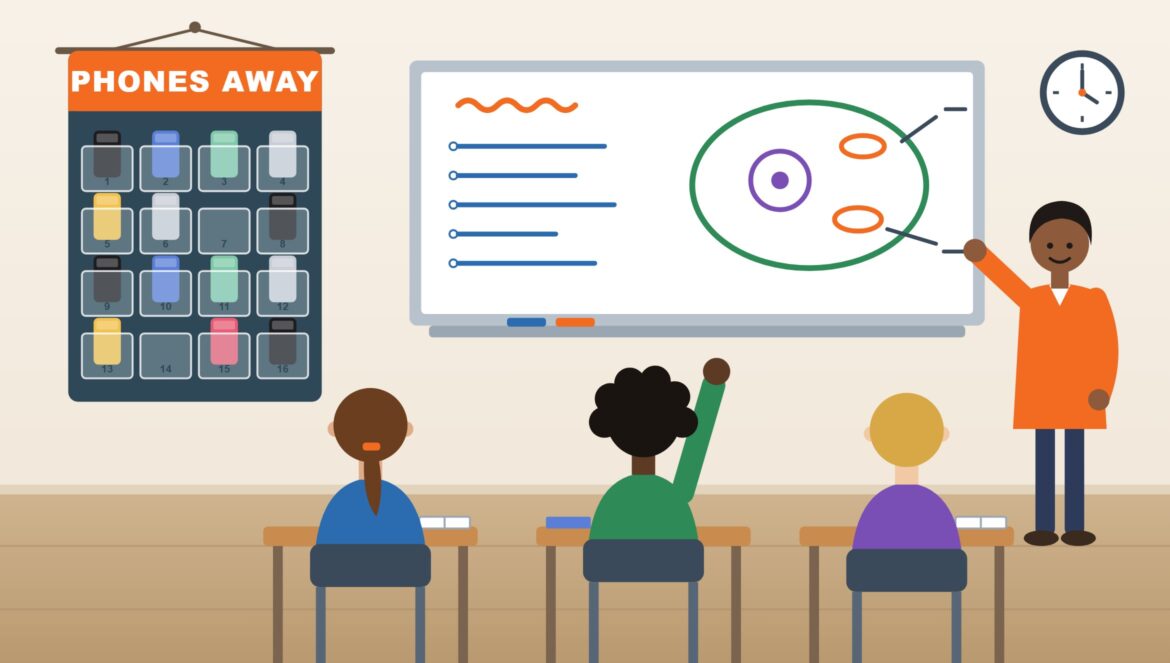
A classroom where students stored phones in a numbered Phones Away pocket chart as the teacher points to the board
EducatorsK-12 TeachersedLeadersHot Topics - controversialK-12

Saying ‘No’ to Cell Phones in the Classroom: Statewide Bans Take Hold for 2025-26

by EdCircuit Staff October 2, 2025
written by EdCircuit Staff 7 minutes read

When students went back to school this fall, most of them walked into a building with a phone rule written into state law. A year ago that was true in only a handful of states. Now, according to Education Week’s tracker, 31 states either have cell phone limits in place or are putting them in place for the 2025-26 or 2026-27 school year. Some see these bans as heavy-handed. The reasons behind them are worth understanding, though, because the decision now sits with every principal, teacher and parent who has to make one work. This piece looks at why so many states are saying ‘no’ to phones during the school day, what the research does and does not show, and what makes a school-wide ban hold.

Where the States Stand This Fall

Four states set a single statewide rule that every school follows, and the rest require districts to write their own policy within limits the state sets. A few of the rules that took effect for this school year:

  1. New York: Since September 2025, every K-12 public school must restrict smartphones from the first bell to the last, under a plan each district wrote for its own buildings (Governor of New York).
  2. Texas: House Bill 1481, signed June 20, 2025, requires every district and open-enrollment charter school to adopt a policy on student use of personal communication devices during the school day.
  3. Florida: The state that started the trend in 2023 went further with House Bill 1105, approved May 30, 2025. Elementary and middle school students may not use phones at all during the school day, high school students may not use them during class, and six counties are piloting a full-day ban in high school.
  4. Louisiana, South Carolina and Utah: Along with Florida, these are the states with one statewide policy that all schools follow (Education Week).
  5. Virginia: Governor Glenn Youngkin’s 2024 executive order directed schools to go cell phone-free, and districts have had a full year of it.

Other states, Delaware and Pennsylvania among them, offer money to districts that adopt a ban rather than requiring one. Whatever the state law says, your own district’s policy is the one that governs your classroom, so read it.

Why More States Are Saying ‘No’ to Cell Phones in the Classroom

Phones are part of daily life, so it is no surprise they came into the classroom with students. Teachers have been saying for years what that costs. In a Pew Research Center survey taken in fall 2023, 72% of high school teachers called students being distracted by phones a major problem in their classroom, compared with 33% of middle school teachers and 6% of elementary school teachers. Here are the reasons states and schools give most often.

1. The Distraction Factor

Notifications, messages and social media pull attention away from the lesson, and the pull does not stop when the phone is face down. In the “Brain Drain” study, researchers at the University of Texas at Austin found that the mere presence of one’s own smartphone reduced available cognitive capacity, even when the phone was turned off. A later review of the studies that followed confirmed the effect while finding it small, strongest for memory. A phone in a locker or a pouch is a phone that is not competing with the lesson.

2. Promoting Face-to-Face Interaction

Without phones, the minutes between tasks, the lunch table and the hallway go back to being places where students talk to each other. Lab partners have to negotiate, groups have to discuss, and the quiet student gets drawn into a conversation rather than a screen. These are skills students build only by practicing them, and a phone-free day gives them hours more practice.

3. Reducing Cyberbullying During the School Day

A phone in the hand during school makes it easy to photograph a classmate, post it and share it before the period ends. Taking phones out of the school day does not end online cruelty, but it removes the school building as the place where the picture is taken and the post goes up, and it takes the instant audience out of the room.

4. Improving Academic Performance

Every minute a student spends checking a phone is a minute of instruction missed. Schools adopt bans expecting focus, and with it learning, to improve. The evidence on test scores is still coming in. A study of 30 schools in England, published in February 2025, found that students in restrictive schools used their phones about 30 minutes less during the school day, but found no difference in grades, sleep or mental wellbeing, partly because students made up the time after school. A ban is a start, not the whole answer.

5. Teaching Responsibility and Self-Control

Learning when a phone belongs in your hand and when it does not is a skill. A clear rule, the same in every classroom, takes the daily negotiation off the teacher and gives students a routine to follow. Many students, once the habit is broken, say they are relieved not to have to keep checking.

6. Reducing Cheating

A phone gives a student the internet, a camera and every classmate’s number in one pocket. Sharing a photo of a test or looking up answers takes seconds. With phones stored away, teachers spend less time watching for devices and more time teaching, and students who do their own work are not at a disadvantage.

7. Improving Teacher-Student Relationships

Every time a teacher has to ask a student to put a phone away, the relationship takes a small hit. A school-wide rule moves enforcement from the individual teacher to the school, so class time can go back to teaching and the teacher is no longer the phone police.

8. Preparing Students for the Workplace

Most workplaces, laboratories and shops limit personal phone use, and in many of them a distracted worker is a safety risk. Practicing focus for a full school day prepares students for jobs where giving the task full attention is not optional.

Making a School-Wide Ban Work

A ban written on paper and a ban that holds are different things. Six in ten high school teachers whose schools had a phone policy told Pew that it was difficult to enforce. Schools that make a ban stick tend to do the same things:

  1. Store phones away from the student. A locker, a locked pouch or a numbered caddy at the classroom door works better than “keep it in your bag.”
  2. Write down the exceptions. Students with medical needs, disability accommodations or language needs may need a device, and Texas’s law, like most, provides for them.
  3. Tell families how to reach their child. Parents worry about emergencies. Give them the front office number and explain how the school will reach them.
  4. Enforce the rule the same way in every room. A rule that applies in one classroom and not the next teaches students to wait it out.
  5. Plan for the first weeks. Expect pushback while habits change, and decide in advance how violations will be handled.

Conclusion

The move to take phones out of the school day has gone from a few states to most of the country in barely two years. The early evidence says a ban reliably reduces phone use at school, while its effects on grades and wellbeing are still being measured. That is a reason to run a ban well, not a reason to skip one. For educators, the job now is to make the rule clear, consistent and humane, and then to use the attention it gives back. A classroom where every student is present for the lesson is worth the effort.

Subscribe to edCircuit to stay up to date on all of our shows, podcasts, news, and thought leadership articles.

October 2, 2025 0 comments
0 FacebookTwitterPinterestLinkedinWhatsappCopy LinkEmail
Five educators with laptops around a table while a presenter stands by a screen reading AI in Education
Artificial IntelligenceK-12EducatorsK-12 TeachersProfessional DevelopmentHot Topics - controversial

Teacher Professional Development in the Age of AI

by EdCircuit Staff October 2, 2025
written by EdCircuit Staff 5 minutes read

Artificial intelligence is moving into schools faster than most teacher professional development can keep up. Teachers are already using AI to plan lessons, adapt materials and draft feedback, often on their own. History offers a warning: when computers arrived in the 1980s and tablets in the 2010s, implementation often outran preparation. Teacher professional development has always been the hinge point. When training is practical, relevant and sustained, new technology improves teaching. When it lags, tools go unused or are misused, and with AI the risks of misuse, from errors and bias to student privacy, are harder to see.

Where teacher training on AI stands

Districts are moving, but unevenly. RAND’s American School District Panel found that 48 percent of districts had trained teachers on AI by fall 2024, up from 23 percent a year earlier, and another 26 percent planned to start during the 2024–25 school year. Low-poverty districts were further ahead than high-poverty ones. Guidance has not kept pace with use: in Gallup’s 2026 survey of public school teachers, only 18 percent said they received formal guidance on AI from their administrators, 48 percent received only informal guidance, and 34 percent received none for any of the tasks asked about.

Large organizations are also investing. In July 2025 the American Federation of Teachers announced a $23 million National Academy for AI Instruction with Microsoft, OpenAI and Anthropic, aiming to support 400,000 educators over five years.

Why AI needs a different kind of professional development

Earlier technology training was mostly about how to operate a device or program. AI is different because its output changes with every prompt and can be wrong in ways that look right. Professional development for AI therefore has to cover more than which buttons to press:

  • How the tools work. How generative AI produces text and images, and where errors are most likely.
  • Checking output. Recognizing when AI content is accurate and when it needs verification, especially for facts, citations and student-specific information.
  • Privacy and ethics. What student information may be entered into which tools, and how district privacy agreements apply.
  • Lesson and assessment design. Designing assignments where students do the thinking, and deciding when AI use is allowed.
  • Setting norms for students. Teachers modeling and explaining how AI should and should not be used.

The risks of teachers learning AI on their own

Teacher experimentation is valuable, but without shared guidance it creates problems:

  • Inconsistent rules. Students face different AI expectations in every class.
  • Privacy exposure. Well-meaning teachers may enter student information into tools the district has not approved.
  • Over-reliance. Teachers may hand too much planning or feedback to AI, weakening professional judgment.
  • Uneven experience for students. Teachers comfortable with technology move ahead while others hold back, so what students learn about AI depends on their schedule.

What effective teacher professional development looks like

Research on professional development in general points to what works. A 2022 meta-analysis of 104 randomized trials by Sims, Fletcher-Wood and colleagues found “qualified support” for the idea that professional development works better when it combines building teachers’ understanding, motivating clear goals, teaching specific techniques and embedding them in practice. Programs with all four had larger average effects, but only nine studies had that design, and the authors call for further research. For AI, districts are using several models that fit that pattern:

1. A district framework

Common expectations make training concrete: what teachers are encouraged to use AI for, such as planning support, and what stays off-limits, such as entering identifiable student data into unapproved tools.

2. Coaching in the classroom

Instructional coaches can plan lessons with teachers, model AI use and give feedback in real time, which connects training to daily teaching.

3. Short courses and credentials

Focused online courses in AI literacy or responsible use let teachers learn at their own pace. See AI Certification for Educators: What Counts in 2026.

4. Teacher learning communities

Groups of teachers who try the same tool, share lessons and compare results spread good practice across a school faster than top-down training alone.

5. Training in vendor contracts

When districts buy AI platforms, contracts should include training for teachers, not only licenses.

Barriers districts must plan for

  • Time. Teachers’ schedules are full. Training has to fit contracted hours, early-release days or paid summer time.
  • Funding. Sustained programs need a budget line, not only pilot money, and smaller districts often struggle most.
  • Trust. Some teachers worry about being replaced or about ethics. Good training takes those concerns seriously.

How other countries are approaching it

Some governments are building AI into national systems. Singapore’s Student Learning Space gives teachers AI tools that draft lesson resources and analyze student responses. South Korea planned to train all teachers for AI digital textbooks, with about $0.74 billion for teacher training over 2024–2026, the World Bank reported. In August 2025, however, Korea’s National Assembly downgraded the AI textbooks to optional “educational materials”, leaving adoption to each school. The reversal is a reminder that rollout plans can outpace teachers’ and families’ confidence. In the United States, AI training remains largely a district-by-district effort.

Priorities for district leaders

  • Superintendents: set district-wide AI literacy goals and fund training over several years.
  • Curriculum directors: build AI into curriculum planning rather than treating it as an add-on.
  • Technology directors: pair tool training with data privacy training.
  • School boards: make sure contracts include training, and ask for regular reports on progress.
  • Families: can ask how teachers are being prepared to use AI responsibly.

AI in schools will succeed or fail on how teachers use it, and teacher professional development is the bridge between what the tools can do and what happens in class. Districts that train teachers well can help them become leaders in responsible AI use. For the wider picture, see edCircuit’s guide to AI in education.

Related reading

  • AI Training for Teachers: Beyond Prompts and Tools
  • AI Lesson Planning: A Teacher’s Summer Guide
  • AI in Education: A Guide for Schools and Colleges

Subscribe to edCircuit to stay up to date on all of our shows, podcasts, news, and thought leadership articles.

October 2, 2025 0 comments
0 FacebookTwitterPinterestLinkedinWhatsappCopy LinkEmail
Yellow text reading Government Shutdown above red-and-white caution tape, with white text below saying How a Federal Shutdown Threatens Education, next to icons of a schoolhouse and a graduation cap with a book.
Hot Topics - controversialHigher EducationFAFSA and Financial Aid

When the Lights Go Dark: How a Federal Shutdown Threatens Education

by EdCircuit Staff October 1, 2025
written by EdCircuit Staff 5 minutes read

A federal government shutdown is not just a Washington spectacle, it has real consequences for public services, federal programs, and the institutions and people that depend on them. Education is no exception. When Washington halts its discretionary spending, many programs that support students, schools, and colleges fall into uncertain territory.

In this article, we explore how the 2025 shutdown (which began October 1) can affect:

  • K–12 systems, districts, and schools

  • Higher education, including research, student aid, and campus operations

  • The downstream effects for students, families, and state/local actors

  • Mitigations, contingencies, and policy lessons

Across all sections we distinguish short‑term (days to weeks) vs. medium/longer term impacts (if the shutdown drags on or recurs).

Why Education Is Vulnerable—But Also Somewhat Insulated

1. Federal Funding in Context

  • Federal spending makes up a small share of total K–12 budgets. Most comes from state and local sources.

  • But certain programs—Title I, IDEA, Head Start, school meals—are vital, especially in under-resourced communities.

  • Higher education is more exposed, relying heavily on federal research grants, student aid, and loan servicing.

2. How Funds Are Structured

  • Many education funds are forward-funded (authorized in one fiscal year, used in the next), buffering some impacts.

  • Mandatory programs like Pell Grants and federal student loans often continue through shutdowns due to carryover or entitlement status.

  • Discretionary programs, technical assistance, new grant awards, and oversight functions usually stop.

Impact on K–12 Education

Short-Term (First Few Weeks)

Federal Payments & Programs

  • Most existing federal education funds should keep flowing due to forward funding.

  • New grants, pilot programs, or competitions will be paused.

  • Programs like Head Start or child care block grants could see interruptions.

Nutrition and Early Childhood

  • Core school meal programs likely continue, but afterschool and nutrition programs could face delays.

  • Child care providers relying on federal grants may struggle to stay open if funding halts.

Oversight and Support

  • Civil rights investigations, compliance audits, and data reporting from the Department of Education may pause.

  • Technical assistance to schools will likely go dark until federal staff return.

District-Level Stress

  • Cash-flow gaps may emerge in districts that rely on federal reimbursements.

  • Some hiring or program launches could be delayed until the funding picture clears.

Longer-Term Risks (If Shutdown Drags On)

Equity Gaps Widen

  • Low-income districts more reliant on federal aid will be hit hardest.

  • Special education services could be underfunded or interrupted.

Delayed Innovation

  • Grant-dependent programs—STEM expansion, literacy initiatives, summer learning—may be shelved or cut.

  • Infrastructure upgrades or digital learning projects tied to federal funds could be postponed.

Planning Uncertainty

  • Superintendents and principals may adopt risk-averse strategies, holding back on investments or new initiatives.

  • State and local leaders may need to backfill funds or delay broader reforms.

Impact on Higher Education

Short-Term Effects

Student Aid & Services

  • Pell Grants and federal student loans (this link no longer available) should continue—for now.

  • But support services (e.g., loan forgiveness processing, FAFSA help lines) may be delayed due to furloughs.

Research Disruptions

  • New federal grants from NIH, NSF, DoD, and other agencies are suspended.

  • Peer reviews, awards, and payments may be paused.

  • Work-study funds could run out, affecting student employment.

Administrative Burden

  • Delays in reimbursements, compliance checks, or reporting will pile up.

  • Procurement, contracting, and grant administration may slow.

Longer-Term Risks

Chilling Effect on Research

  • Delays could stall academic publications, graduate research, and multi-year projects.

  • Institutions may become more risk-averse in planning new grant proposals.

Cash-Flow Crunch

  • Schools heavily dependent on federal dollars may face budget shortfalls.

  • Hiring freezes, deferred maintenance, and program cuts may follow.

Student Impact

  • Delays in aid disbursement could derail financial planning for students.

  • Graduate students, especially in STEM fields, may lose momentum or funding.

Regulatory Delays

  • Title IX enforcement, accreditation processes, and other oversight mechanisms may slow down or pause altogether.

  • Institutions may face uncertainty around compliance expectations.

Broader Ripple Effects

Students and Families

  • Families relying on federal supports—free meals, Head Start, FAFSA—may feel stress and confusion.

  • First-generation and low-income students are particularly vulnerable.

  • For families counting on Head Start or work-study checks, this isn’t a political stunt. It’s the difference between support and silence.

  • Uncertainty in funding can force students and parents to make hard, fast decisions—whether to delay school, take on debt, or seek alternatives.

Educators and Administrators

  • Morale may suffer as funding delays disrupt plans and force trade-offs.

  • Hiring and professional development may be delayed or deprioritized.

State and Local Government

  • Governors and legislatures may need to step in with emergency funds.

  • Some districts may push for local taxes or rainy-day spending to maintain services.

Innovation and Equity Work

  • Programs designed to close opportunity gaps may stall.

  • Data collection disruptions can hinder early detection of inequities.

What’s Less Likely to Be Affected

  • Local teacher salaries and district operations will likely continue in most areas.

  • School closures are not expected unless the shutdown is prolonged and compounded by state or local fiscal issues.

  • Already-awarded federal grants (for this fiscal year) should remain usable.

  • Core student aid programs have some insulation due to carryover funding.

Mitigations and Recommendations

Federal Action

  • Reclassify key education programs as essential or mandatory.

  • Streamline catch-up processes post-shutdown.

  • Improve transparency with districts and institutions.

For States and Districts

  • Prepare contingency budgets.

  • Communicate clearly with staff and families.

  • Prioritize programs that support vulnerable students.

For Higher Ed Leaders

  • Build reserves and forecast disruptions in grant flows.

  • Stagger research timelines and prepare for delayed reviews.

  • Support students reliant on federal work-study and aid.

For Families and Students

  • Stay in contact with schools and institutions.

  • Use local resources when federal ones go offline.

  • Advocate through school boards and state reps.

Conclusion

The 2025 federal shutdown is not just about politics, it directly threatens the functioning of American education. While the worst impacts may be avoided if the closure is short-lived, a prolonged standoff could disrupt programs, delay innovation, and widen inequality.

Education leaders, families, and institutions must act now to mitigate harm, maintain stability, and protect the most vulnerable students. And lawmakers must remember: while buildings stay open, the long-term damage to progress and equity could last well beyond the political headlines.

Subscribe to edCircuit to stay up to date on all of our shows, podcasts, news, and thought leadership articles.

October 1, 2025 0 comments
0 FacebookTwitterPinterestLinkedinWhatsappCopy LinkEmail
A group of focused young gamers wearing headsets sit at computers, cheering enthusiastically as they play together in a dark room with blue lighting.
Hot Topics - controversialESportsK-12

Leveling Up Education: How High School Esports Went from Lockdown Lifeline to College Pipeline

by EdCircuit Staff October 1, 2025
written by EdCircuit Staff 4 minutes read

When schools shut down in 2020, video games weren’t just a distraction; they were survival. Students logged on not to rack up kills or loot, but to hang out. The headset became the cafeteria table. The match lobby replaced the hallway.

Fast forward to 2025, and that digital lifeline has turned into something much bigger: varsity teams, dedicated esports arenas, and college scholarships worth tens of millions. What was once dismissed as “screen time” is now recognized as an academic and career pathway.

Those social ties endured long after classrooms reopened. Today, 85% of teens play video games, and many describe gaming as a primary way they build and maintain friendships.

During lockdown, gaming was how I still hung out with my friends,” said Alex, a high school junior from Maryland. “Now our esports team feels like the same thing, only in person, with jerseys and a coach.”

High School Esports: From Clubs to Arenas

In just a few years, scholastic esports has moved from niche hobby to mainstream program. More than 8,000 U.S. high schools now sponsor esports, and 20 state athletic associations formally sanction competition. What began as after-school clubs with a few laptops has evolved into varsity teams, pep rallies, and championship banners.

Schools are also rethinking their physical spaces. Districts are investing in purpose-built esports labs equipped with high-refresh PCs, ergonomic setups, casting booths, and livestream gear. These are not arcade corners, they’re multifunctional hubs that double as CTE classrooms during the day and esports arenas after school.

Walking into our new lab for the first time felt like stepping into a college facility,” said Maya, a senior who plans to study game design. “It makes us feel like our school believes in what we’re doing.”

The College Race: Get In or Get Left Behind

Colleges have taken notice. More than 300 North American institutions now field varsity esports teams, with scholarship dollars flowing, tens of millions annually across book stipends, partial tuition, and full rides. At Long Beach City College, a $2.3 million esports lab doubles as a production facility. The University of Kentucky has partnered with professional organizations to build a campus-wide esports program.

The message is clear: if a college doesn’t yet have an esports program, it’s behind the 8-ball. For many high-school students, a campus without visible esports infrastructure feels out of touch with their interests and aspirations.

I’m applying to colleges that have esports teams,” said Jordan, a rising senior. “If they don’t, it feels like they don’t get what students like me are into.”

More Than Games: Attendance, Belonging, and Skills

Emerging data shows the impact. In schools partnered with the North America Scholastic Esports Federation (NASEF), students in esports programs posted higher attendance—sometimes seven or more days per year compared to non-participants. That boost translates directly into stronger academic outcomes.

The benefits run deeper than grades. Esports provides belonging for students who may not connect with traditional sports. It teaches communication, leadership, and collaboration. And because programs often integrate broadcasting, IT support, and event management, students graduate with professional portfolios—stream reels, casting clips, and production credits—that connect directly to emerging industries.

Before esports, I never really joined clubs or sports,” said Devin, a sophomore. “Now I’m part of a team, I keep my grades up to stay eligible, and I’ve learned how to shoutcast matches.”

Shifting the Narrative: From “Screen Time” to “School Time”

Three forces have permanently changed how schools view video games:

  1. Social Glue in Crisis: During the pandemic, games kept students connected when nothing else could. That lesson stuck.

  2. Institutional Legitimacy: National leagues, state sanctioning, and nonprofit networks gave esports the same structures schools rely on for athletics.

  3. Visible College Pathways: Scholarships, dedicated arenas, and degree programs reframed esports as a gateway to higher education, not a distraction from it.

The Roadmap for Schools and Colleges

  • For high schools: Build spaces designed for both instruction and competition. Tie eligibility to academics. Integrate esports into CTE courses such as media production and IT. Pair the program with wellness initiatives to balance screen time with fitness and digital citizenship.

  • For colleges: Don’t wait for perfect funding. Even a modest but structured program sends a strong signal to prospective students. Esports now influences recruitment, retention, and branding—areas no institution can afford to ignore.

The New Normal

In 2020, students logged on to stay connected. In 2025, they log in to compete, earn scholarships, and launch careers. High schools are carving out spaces where gamers lead, and colleges are racing to catch up.

Esports isn’t a fad—it’s the new normal. The real question is whether your school is ready to play.

Play video: Quick look at the CIF Esports Initiative Championship Finals! (1 minute 3 seconds)1:03
Quick look at the CIF Esports Initiative Championship Finals!1 min 3 sNASEF on YouTube

NASEF – Quick look at the CIF Esports Initiative Championship Finals! (Play video)

Subscribe to edCircuit to stay up to date on all of our shows, podcasts, news, and thought leadership articles.

October 1, 2025 0 comments
0 FacebookTwitterPinterestLinkedinWhatsappCopy LinkEmail
Two white sensors on a beige wall, one showing temperature and humidity, in a lab room with a sink and ventilation duct
School SafetyArtificial IntelligenceScience and Lab SafetyK-12Hot Topics - controversial

Using Artificial Intelligence to Elevate Science Lab Safety

by EdCircuit Staff September 30, 2025
written by EdCircuit Staff 3 minutes read

Science labs carry real risks: chemicals, heat, glassware, poor ventilation and too many students in too little space. AI lab safety tools are often promoted as a way to make labs safer, by watching for missing goggles, tracking chemicals or monitoring the air. Some of this is already happening in schools, mostly through sensors and data rather than AI. Some is still in research labs. This article separates the two and explains how schools can use technology to support, not replace, a strong lab safety program.

What is real in schools today: air quality monitoring

The clearest example is indoor air quality monitoring. Since late 2021, Boston Public Schools has had sensors in more than 4,400 classrooms, paid for with $6.7 million in federal pandemic relief funds. They measure carbon dioxide, carbon monoxide, particulate matter, temperature and humidity every minute and feed a public dashboard. Boston University researchers, including Patricia Fabian, are using the data to study how classroom air affects students, and are developing an algorithm to detect air pollution events in real time, the Boston Globe reported in 2025.

These are data and sensor systems more than AI, and the Boston project has not yet reported effects on student attendance or achievement. But they show what is practical now: continuous measurement that alerts staff when ventilation is failing. For science labs, where fumes and poor air exchange are real hazards, that matters.

What is still research: AI that watches the lab

Computer vision systems that spot safety problems are being built for research labs, not classrooms. Chemist Eye, developed at the University of Liverpool for robotic “self-driving” chemistry labs, uses cameras and a vision-language model to watch for hazards and guide robots. In its tests, it reached 97 percent for spotting possible safety hazards and 95 percent for decision-making. That is promising, but it was tested in one automated research lab, and no K–12 school is documented as using a system like it for goggle detection or lab supervision.

Where AI could help school labs

With those limits in mind, there are reasonable places for schools to explore technology and AI:

  • Chemical inventory. Software that tracks quantities, storage locations and expiration dates can flag chemicals that are expired, stored incompatibly or no longer needed, a core part of chemical hygiene.
  • Ventilation and air quality. Sensors that alert staff when carbon dioxide rises or air exchange drops, as in Boston.
  • Training and simulation. Virtual practice of lab procedures and emergency responses before students handle real materials.
  • Compliance records. Tools that track safety training, equipment inspections and eyewash and fire extinguisher checks, and remind staff when they are due.
  • Occupancy. Scheduling data can show when lab classes exceed safe occupancy load for the room.

Technology does not replace the basics

The foundations of lab safety do not change: a written chemical hygiene plan, trained teachers, proper personal protective equipment, working eyewash stations and ventilation, safe class sizes, and a teacher who is present and paying attention. Duty of care sits with people, from the teacher in the room to the science department head and the administrators who set policy. A sensor or an AI system can add a layer of information, but it cannot supervise a lab.

How school leaders can pilot technology for lab safety

  • Start with a real problem, such as poor ventilation or an unreliable chemical inventory.
  • Pilot small, in one department or building, and set out what you will measure.
  • Train staff to act on alerts, so data leads to action rather than noise.
  • Check privacy before using any camera-based system in classrooms.
  • Compare before and after: incidents, near misses, air quality and staff time.

Technology can make good lab safety programs better. It cannot make up for one that is missing. For school leaders, lab safety training remains the place to start.

Related reading

  • Occupancy Load in STEAM Instructional Spaces
  • The Vital Role of High School Department Heads
  • AI in Education: Transforming the Modern Classroom

Subscribe to edCircuit to stay up to date on all of our shows, podcasts, news, and thought leadership articles.

September 30, 2025 0 comments
0 FacebookTwitterPinterestLinkedinWhatsappCopy LinkEmail
A man in a white lab coat stands in a classroom, reading a blue binder labeled Science Safety Manual, 9th Grade. A chalkboard and laboratory glassware are visible in the background.
Safer EdScience and Lab SafetyK-12

Understanding Potential Lab Activity Hazards and Risks: A Safer Ed Podcast

by EdCircuit Staff September 29, 2025
written by EdCircuit Staff 2 minutes read

Safer Science and Safer STEM labs are vibrant spaces where students explore, experiment, and discover. But as much as they inspire curiosity, they also introduce potential hazards if risks aren’t managed carefully. As discussed in our latest Safer Ed podcast, teachers are not only responsible for meeting learning objectives but also for safeguarding students, colleagues, and themselves from accidents that can range from minor mishaps to serious injuries.

Recognizing Red Flags

Some dangers are clear-cut. Outdated materials such as alcohol fuel burners, methanol, mercury thermometers, concentrated acids and bases, or specimens preserved in formaldehyde have no place in modern K–12 labs. Their risks far outweigh any instructional value. Similarly, activities involving biological samples, like collecting saliva, blood, or bacteria cultures—expose students to unnecessary pathogens and should be avoided.

Safer EdUnderstanding Potential Lab Activity Hazards and RisksSeptember 29, 2025 · 5 min 36 sPlay episode: Understanding Potential Lab Activity Hazards and Risks (5 minutes 36 seconds)0:00-5:36Follow on SpotifyApple

From Awareness to Action: The “AAA” Framework

Safety begins with awareness, spotting unlabeled containers, unsafe equipment, or aging supplies. However, awareness alone isn’t enough. The Safer Ed podcast highlights the “AAA” method: Hazard ANALYSIS, Risk ASSESSMENT, and Safety ACTION.

  • Hazard ANALYSIS: Identify potential hazards in the planned activity.

  • Risk ASSESSMENT: Determine what could realistically go wrong and the consequences.

  • Safety ACTION: Choose the best strategies to prevent accidents—engineering controls (like ventilation or eyewash stations), administrative controls (clear protocols and training), personal protective equipment, or even eliminating or substituting materials.

Six Intentional Practices for Prevention

The episode also outlines six intentional steps teachers can take to prevent accidents before they happen:

  1. Review Safety Data Sheets (SDS) for all chemicals.

  2. Inspect equipment and materials before use.

  3. Review procedures carefully, including waste management.

  4. Conduct a test run of new or unfamiliar experiments.

  5. Substitute safer alternatives whenever possible.

  6. Always weigh educational value against risk.

These practices aren’t extra work—they’re professional preparation. They help build confidence and ensure safety isn’t an afterthought in STEM instruction.

Building a Culture of Responsibility

Lab safety isn’t just about students. Teachers, paraprofessionals, and staff are also at risk if hazards are ignored. In fact, educators can face liability if unsafe practices lead to harm. Creating a culture where teachers intervene when they see unsafe activities and where safety is integrated into lesson design—protects everyone and models responsibility for students.

The Takeaway

Safer labs are productive labs. By recognizing hazards, assessing risks, and implementing thoughtful safety actions, teachers can balance exploration with protection. As the Safer Ed podcast reminds us, safety isn’t a barrier to learning—it’s part of the learning process itself.

Listen Now

Listen to Understanding Potential Lab Activity Hazards and Risks on the Safer Ed podcast at edcircuit.com or on your favorite podcast platform.

  • Apple Music
  • Amazon Music
  • iHeartRadio
  • Spotify 

Subscribe to edCircuit to stay up to date on all of our shows, podcasts, news, and thought leadership articles.
September 29, 2025 0 comments
1 FacebookTwitterPinterestLinkedinWhatsappCopy LinkEmail
Newer Posts
Older Posts

Participate

  • Contribute
  • Sponsor
  • Submit Release
  • Subscribe
  • Get Interviewed

We value your privacy

We use cookies to enhance your browsing experience, serve personalized ads or content, and analyze our traffic. By clicking "Accept All", you consent to our use of cookies.

Customize
  • Needed for the site to work: signing in, the cart, your consent choice. Always on.

    8 cookies
    • ss_consent 1 yearYour cookie choice on this site, so you are not asked again.
    • wordpress_logged_in_* 2 days, or 14 days with "remember me"Keeps you signed in as you move between pages.
    • wordpress_sec_* 2 days, or 14 days with "remember me"The secure half of your sign-in.
    • wordpress_test_cookie SessionChecks that your browser accepts cookies when you sign in.
    • wp-settings-* 1 yearYour display settings when signed in.
    • wp_woocommerce_session_* 2 daysYour shopping session: the cart and the checkout.
    • woocommerce_cart_hash SessionTells the site whether your cart has changed.
    • woocommerce_items_in_cart SessionWhether your cart holds anything.
  • Remembers choices you make, such as a language or a region, and supports features like live chat.

    1 cookie
    • woocommerce_recently_viewed SessionThe products you looked at, so the site can show them again.
  • Helps us understand how visitors use the site: which pages are read, and for how long.

    2 cookies
    • _ga 2 yearsGoogle Analytics: tells one visitor from another. Set only after you allow analytics.
    • _ga_* 2 yearsGoogle Analytics: keeps your session state. Set only after you allow analytics.
  • Measures how fast pages load so we can make them faster.

  • Used to show you content and offers that match your interests, on this site and elsewhere.

    1 cookie
    • sbjs_* SessionWooCommerce order attribution: where you came from, so a purchase can be credited to the campaign or site that sent you.

Your browser asks us not to sell or share your information (Global Privacy Control), so advertising cookies stay off.

Do not sell or share my personal information

Some cookies from other companies help show you offers on other sites. Tick the box and save your preference to opt out of that sharing; untick it to opt back in at any time.

Your browser sends Global Privacy Control, so this preference is set for you and cannot be changed here.

Sign In

Keep me signed in until I sign out

Forgot your password?

Password Recovery

A new password will be emailed to you.

Have received a new password? Login here

Shopping Cart

Close

No products in the cart.

Close
-
00:00
00:00

Queue

Update Required Flash plugin
-
00:00
00:00

Your cart (items: 0)

Products in cart

Product Details Total
Subtotal $0.00
Shipping and discounts calculated at checkout.
View cart
Go to checkout

Your shopping cart is empty

Return to shop

Notifications