edCircuit
  • Start Here
    • Login
    • Register
    • Subscribe
    • Submit a Press release
    • Advertise or Sponsor
    • Contribute
    • Get Interviewed
  • On the Wire
  • EdTech
    • All EdTech
    • Online Learning
    • Hybrid and Remote Learning
    • Augmented and Virtual Reality
    • ESports
    • Gamification and Game-Based Learning
    • Digital Citizenship
    • EdTech Entrepreneurs
    • Market Trends
    • Future of Education
  • Artificial Intelligence
  • K-12 Education
    • All K-12
    • K-12 Teachers
    • Teaching Strategies
    • Special Education and IEPs
    • Dyslexia
    • Gifted and Advanced Learning
    • Early Childhood, Pre-K and Kindergarten
    • School Calendar
    • Tutoring and Homework Help
    • Attendance and Absenteeism
    • After-School Programs
    • School Counselors
    • Homeschooling
    • School Models
    • Teacher Retention
    • Parents
    • Students
    • STEM and STEAM Education
  • Teaching and Learning
    • Literacy and Reading
    • Math Education
    • Civics and History Education
    • Financial Literacy
    • Assessment and Testing
    • Curriculum and Instruction
    • Personalized Learning
    • Project-Based Learning
    • Social-Emotional Learning
    • Executive Function
    • Creativity
    • Diversity, Equity, Inclusion
  • Professional Development
    • All Professional Development
    • Educators
    • Administrators
    • edLeaders
  • Higher Education
    • All Higher Education
    • College Admissions
    • Career and Technical Education (CTE)
    • Graduation
    • FAFSA and Financial Aid
    • Student Loans
  • Cybersecurity
  • School Safety
    • All School Safety
    • Science and Lab Safety
    • School Design and Facilities
    • Bullying
    • Duty of Care and School Liability
  • Continuing Education
    • All Continuing Education
    • Online Certificate Programs
    • Teaching Jobs and Careers
    • Teacher Appreciation
  • Education Policy and Government
    • All Education Policy
    • Department of Education
    • School Choice
    • Global
    • Advocates
  • EDU Shows
    • All EDU Shows
    • Safer Ed
    • Mind the Gap
    • Education Industry Questions
    • CoffeEd
    • InFocus
    • InformED Report
  • EDU Podcasts
    • All EDU Podcasts
    • Author Chats
    • CoSN The Podcast
    • Education Today
    • Building the Bridge
    • Students Speak
  • Education Industry Guides and Reports
  • Archived Media
    • Future of School: The Podcast
    • Equity Everywhere
  • About edCircuit
  • Subscribe
edCircuit
  • Sign in
Join Free
Home Tags Posts tagged with "social emotional learning"
Tag:

social emotional learning

Follow
Colorful street art mural with people walking in São Paulo, Brazil, de
Social-Emotional LearningCreativitySTEM and STEAM EducationK-12

5 Tips to Inspire Creativity and Hope

by Tamara Fyke October 7, 2021
written by Tamara Fyke 2 minutes read

I haven’t been watching the news much lately, but each time I tune in, I catch enough of the headlines to know that people are worried. In a world of fear, we need hope. Let’s look at 5 Tips to Inspire Creativity and Hope.

Did you know that the Renaissance, lasting from the end of the 14th century until the 1600s, was born out of similar desperation? The world had suffered from wars, climate changes, famines, and the Black Plague. The Plague killed an estimated 75 million people worldwide. The future looked bleak. However, out of the ashes arose Botticelli, Michaelangelo, da Vinci, and others, whose works, such as The Birth of Venus, David, and Mona Lisa, have influenced and inspired history for centuries.

Creativity breeds hope. Art provides a respite from the toils of daily life. The singer, the writer, the painter, the dancer, and the artist help us see the good in a world gone awry.

I wonder what artists will emerge from this current crisis. Whose voice will speak of what is true and beautiful? Maybe it will be one of your students. Maybe it will be you. Pick up your pen, your paintbrush, your guitar, whatever your instrument is, and create. Inspire hope.

Tips for Inspiring Creativity & Hope

Menu of Options – Provide a menu for projects students can do in ELA, Social Studies, and Science. Include photography, graphic arts, storytelling, and more in your menu.

Journaling – Dedicate at least 15 minutes daily for students to journal, whether prompted or not. Allow them to draw in their journals as well. Play classical music during this quiet time of reflection.

Maker Space – Offer at least one period each week for students to create without being graded. Fill the space with supplies, such as paints and canvas, beads and string, and more.

Showcase – Host an in-person or virtual showcase each week where students can share a project they are proud of or share a hidden talent, such as baking, singing, or dancing.

Listening Sessions – Open the conversation for students to use their voices about what creativity means or what creative projects can be done as a class or a school, such as a garden or mural. Ask questions to help them get organized and stay diligent.

Read more Social Emotional Learning Articles

October 7, 2021 0 comments
0 FacebookTwitterPinterestLinkedinWhatsappCopy LinkEmail
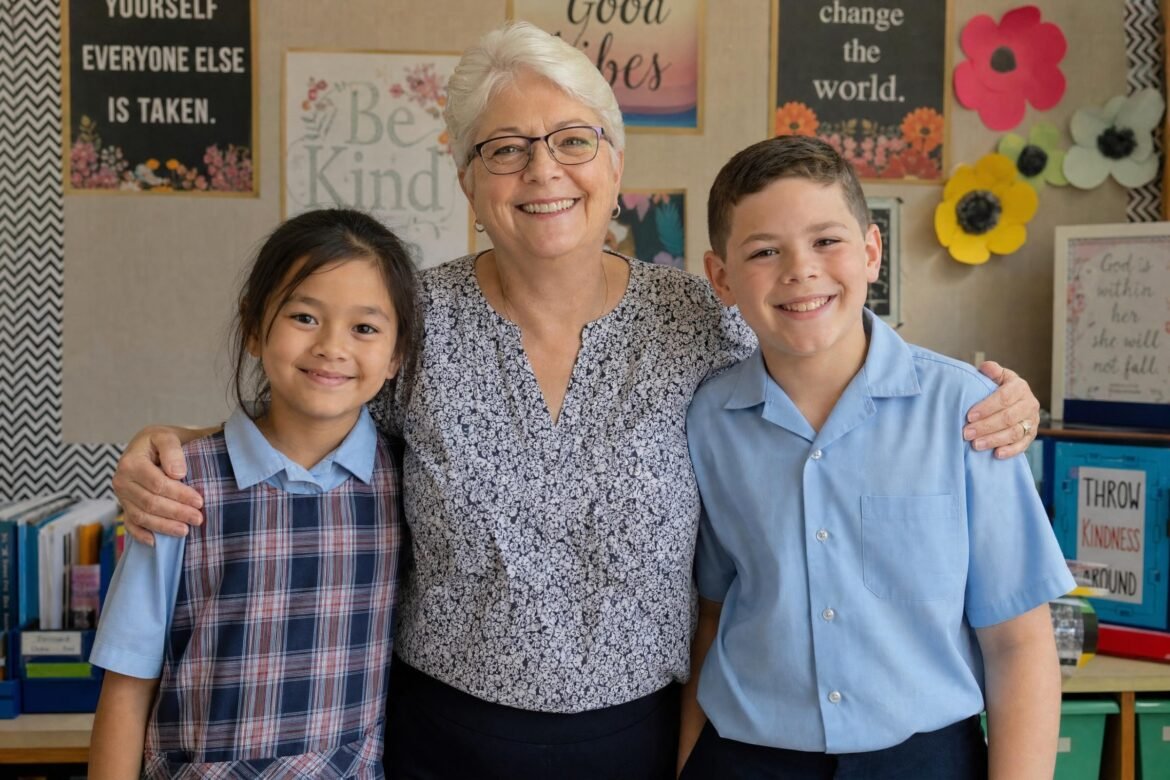
A smiling older woman with glasses standing between a young girl and a boy in a school shirt, arms around them, colorful classroom wall behind, warm indoor ligh
ParentsSocial-Emotional LearningSTEM and STEAM EducationK-12

SEL is Prevention and Intervention

by Tamara Fyke September 13, 2021
written by Tamara Fyke 4 minutes read

Now that students are back in school, there is a renewed focus on social-emotional learning. According to the Collaborative for Academic, Social, and Emotional Learning (CASEL), social-emotional learning encompasses five core competencies – Self-Awareness, Self-Management, Responsible Decision-Making, Relationship Skills, and Social Awareness. At the core, social-emotional learning is helping students identify what is going on in their minds and hearts, so they can use their hands to build up and not tear down. As caring adults, we are helping our children identify and articulate what they are thinking and feeling so they can make choices to do good for themselves, their friends, families, and communities, SEL is Prevention and Intervention.

Prevention Through a Community of Care

Social-emotional learning is both prevention and intervention. In the early 1990s, Hawkins & Catalano proposed the Communities that Care model (Hawkins & Catalano, 1992, 1995). A community of care includes providing a full circle of support to students and their families at home and school, which may mean a food pantry, laundry services, a clothes closet, English as second language classes, or GED opportunities at the school building. To help students succeed, we want to decrease risk factors, such as poverty and homelessness, and increase protective factors, such as healthy peer relationships and positive role models. 

To the degree that we are offering a proactive approach to community building by establishing a common language, fostering shared experiences, and offering support services – we are engaged in prevention work. Merriam-Webster’s Dictionary defines prevention as the act of preventing or hindering. By taking a preventative approach, we are combating chronic absenteeism, drug abuse, alcoholism, teen pregnancy, and violence by offering positive alternatives for how students use their time and talents. Organized sports and arts programs are prevention. As caring adults, we must infuse the conversation about values and decision-making into these learning activities. As caring adults, it is incumbent upon us to set the guardrails in place for student thought and behavior. Values such as kindness, cooperation, patience, perseverance, and more are tenets upon which we can all agree, regardless of race, nationality, socio-economic status, or gender orientation. These ideals are what make us human.

Intervention for Students Already Struggling

But what about our students who are already in trouble? Is it too late for them?

Absolutely not! Our students who may struggle academically, socially, or behaviorally are crying out for more support. Instead of labeling these students as problems, we need to see them as opportunities. They have the opportunity to change and grow, and we have the opportunity to learn and grow with them.

Intervention is “action taken to improve a situation “ (Oxford Dictionary). We as educators and parents often think that a student sent to the Alternative Learning Center or a pregnant student must be shamed into doing better. As researcher Brene’ Brown points out, shame makes us feel flawed and unworthy of love. Is it possible to use shame to help children improve their decision-making? What if we, as caring adults, choose instead to extend unconditional love while simultaneously upholding the values of Responsibility, Respect, Courage, Honesty, and more? What if we provide the space to listen to what is going on in the hearts and minds of our children, letting their voices be heard and engaging in dialogue with them to help redirect their thoughts and behaviors? Yes, this is a messier approach. It would be easier to say, “Do this because I told you so,” but would we be helping our students if we shuttered their process?

Engaging Students Rather Than Controlling Them

I believe wholeheartedly that part of the reason students feel our current education system is irrelevant derives from an expectation to listen silently rather than engage deeply with those they are to learn. Is this a problem with our students? Or is this an indication of our desire for control?

Educators and parents aim to guide and support the next generation. They know that we don’t have all the answers. All they have to do is look at their social media feeds for the latest news trending about climate change, racism, or COVID for evidence for their case against us. However, what if we work alongside them, exploring life stories, engaging in meaningful conversations, reflecting on our emotions and ideas, and collaborating to create solutions?

As Margaret Mead said, “Children must be taught how to think, not what to think.” That is the best prevention and intervention we can offer because that cultivates hope.

Subscribe to edCircuit to stay up to date on all of our shows, podcasts, news, and thought leadership articles.

September 13, 2021 0 comments
0 FacebookTwitterPinterestLinkedinWhatsappCopy LinkEmail
Assorted-color lockers
School CalendarK-12ParentsHybrid and Remote LearningSocial-Emotional LearningSTEM and STEAM Education

Dealing with Back to School Fears

by Tamara Fyke August 11, 2021
written by Tamara Fyke 9 minutes read

Tamara Fyke wrote this article in August 2021, as students returned to buildings after 18 months of distance or hybrid learning, and offered tips for welcoming them back. The section added below looks at back to school anxiety in 2026: how common anxiety is among children, how to tell ordinary nerves from a problem, and what families and schools can do in the first weeks.

Back-to-school time is usually a mix of nervousness and excitement. This year students may experience more anxiety than usual after 18 months of either distance or hybrid learning. To return to “normal,” we must watch and listen closely to the unspoken needs of children and their families for Back to School Fears.

COVID-19 has forever changed us and our way of life, including education. Let us first acknowledge that there is no return to “normal”. Our “normal” passed away in March 2020 when the world went into lockdown. What we are entering into now is the familiar. It is familiar to go to in-person school, complete with lunches in the cafeteria and crowds at sporting events. It is familiar to walk down the halls and see the full faces of students and teachers instead of just eyes and eyebrows. It is familiar to hear each other speak rather than try to decipher muffled voices. The familiar brings us comfort and confidence.

For some students and families, the pandemic has meant a slower pace of life. More time together equals family dinners and game nights. For others, the economic shutdown created greater instability, including hunger and homelessness. Job loss, which occurs across all sectors of society, is a significant risk factor for child abuse. The psychological impact can impact for years to come (Lawson, Piel, Simon, 2020).

The truth is that despite our best efforts to connect with children during their time away from school, we do not know the full extent of what they endured. We won’t know the mental or academic impact until they come back into the building. There are indications that suicidal ideation among youth has increased (Hill, 2020) and that students have experienced a three-month learning loss in math and one-and-a-half months in reading (McKinsey & Co, 2020). Additionally, disparities in access and achievement for students of color have been highlighted while simultaneously, abuse and harassment of Asian Americans have increased (U.S. Dept. of Education, 2021). We have all been living through multi-dimensional global trauma.

How do we help our students transition back to the familiar? Firstly, we must prepare ourselves. Not only do we equip ourselves with the resources needed to engage students in a nurturing and supportive environment, but we also must give ourselves time and space to recharge. Whether that means routine exercise, healthful eating, time with friends, and a creative project, we must be sure that our cup is full before heading back into the classroom. Likewise, self-care needs to be a part of our daily schedule. Remember, we can’t give what we don’t have.

Secondly, we must create time and space for connection with our students and their families. Education is the business of caring. Caring is showing concern for the well-being of others; taking the time to let others know they are important. This can happen by offering coffee to parents at drop-off and carving out time for a morning meeting with students. Creating opportunities for authentic connection and meaningful conversation requires intentionality. This goes far beyond purchasing a digital license to a curriculum. It means embracing systemic change to improve the culture and climate of the school community.

Lastly, after more than a year of isolation and screens, we must coach our students on how to build relationships with one another. There’s an age-old saying, “To have a friend, you must be a friend.” Let’s share with our students the basics of learning someone’s name, smiling, looking at people in the eye when we speak, inviting someone to sit with you at lunch, playing with others at recess, and asking about what they like to do out of school.

The pandemic experience gives us common ground. We are in this together. Let us, therefore, affirm the resilience of our students and their families and work to rebuild a safer, healthier, and more just future for all.

Here are some tips for helping students deal with their back-to-school fears

• Invite students and families to visit the building before school starts. – Host tours and meet-and-greets with principals, school counselors, and teachers.

• Talk with students and family members about the first-day experience. – Introduce them to the schedule and routine, so they know what to expect.

• Be open, respectful, and kind. – Welcome all students, families, faculty, and staff, including office staff, bus drivers, janitorial staff, administrators, and other parents.  Your leadership shows that each individual in the community is valuable.

Signs of anxiety, from Love in a Big World: increased sensitivity, worrying, nightmares, headaches or stomachaches, decreased appetite, restless and distracted, difficulty sleeping, refusing school, avoiding social situations, temper tantrums, seeking approval, fear of mistakes.

Sources:

Lawson, Monica et al. “Child Maltreatment during the COVID-19 Pandemic: Consequences of Parental Job Loss on Psychological and Physical Abuse Towards Children.” Child abuse & neglectvol. 110,Pt 2 (2020): 104709. doi:10.1016/j.chiabu.2020.104709

Ryan M. Hill et al., Suicide Ideation and Attempts in a Pediatric Emergency Department Before and During COVID-19, PEDIATRICS, at 3 (2020), https://pediatrics.aappublications.org/content/pediatrics/early/2020/12/15/peds.2020-029280.full.pdf.

Emma Dorn et al., COVID-19 and Learning Loss—Disparities Grow and Students Need Help, MCKINSEY & CO. (Dec. 8, 2020), 

https://www2.ed.gov/about/offices/list/ocr/docs/20210608-impacts-of-covid19.pdf

This article was originally published on the Learning Counsel with the title, “Helping Students Get Back in the Swing of Things”

Read more Social Emotional Articles

Back to school anxiety in 2026: how to tell ordinary nerves from a problem, and what helps

Back to school anxiety is common every year in August and September, and its causes in 2026 are broader than the return from closures that Tamara Fyke described above. Fyke’s advice to prepare adults first, build connection with students and families, and teach students how to make friends remains sound. This update adds what current health sources say about when worry is a normal part of a transition and when it needs more than a friendly welcome.

How common anxiety is among children

The Centers for Disease Control and Prevention reports, on its children’s mental health data page, that 11 percent of children aged 3 to 17 had a current, diagnosed anxiety problem in 2023 to 2024 data, with 10 percent of boys and 13 percent of girls. The page adds that diagnoses do not capture all childhood distress: some children have symptoms without meeting the criteria for a diagnosis, and others meet the criteria but are never diagnosed. In a classroom of twenty-five children, an 11 percent rate works out to between two and three children, and others may be carrying worry that an adult does not see.

Ordinary nerves and signs to act on

The CDC page Anxiety and Depression in Children describes the signs of anxiety as so many fears and worries that they interfere with school, home or play activities. Anxiety can also make children irritable and angry, and trouble sleeping, fatigue, headaches and stomachaches can accompany it, and some children keep their worries to themselves, so symptoms can be missed. A child who is nervous on the first morning and settled by the second week is having the ordinary experience Fyke describes. A child whose distress continues, grows or leads to missed days is showing a different pattern.

The CDC recommends that the first step be an evaluation by a health care provider, and it notes that the U.S. Preventive Services Task Force recommends anxiety screening for children aged 8 to 18. The same page says behavior therapy for anxiety may involve helping children cope with and manage symptoms, names cognitive behavioral therapy (CBT) as one form of therapy used to treat anxiety or depression, and links to Community Preventive Services Task Force recommendations on school-based CBT.

When worry turns into avoiding school

Some children do more than worry: they refuse or struggle to attend. In a September 2022 post, Jennifer Herren, a staff psychologist at the Pediatric Anxiety Research Center and clinical assistant professor at Brown University, wrote on the Brown University Health blog that school refusal is commonly linked to anxiety and fear-based conditions and can be triggered by transitions such as returning from a break, starting a new school, moving up a grade or returning after illness or remote learning. Avoidance brings short-term relief, which strengthens it over time.

Herren’s guidance for parents is to ask the child why school is being avoided instead of assuming the reason, to have a pediatrician rule out physical illness first, and to contact the school early, because the longer a child misses school, the harder the return becomes. For schools, the same post suggests arranging support for transitions, designating a counselor, social worker or other staff member the child can go to for breaks, and adjusting schoolwork through reduced workloads, extended deadlines or tutoring. The post describes gradual exposure in small steps, such as driving by the school one day, sitting in the parking lot another day and later walking through the school with an escort. This is a clinician’s practical account, not a controlled study, so a family should use it alongside advice from their own provider.

What a school can plan for the first weeks

  • Keep Fyke’s welcome steps and add a named adult. Building tours, a clear description of the first-day routine and visible kindness from every staff member help, and a single named adult for students who struggle gives families someone to call.
  • Watch the first absences. Two or three missed days in the first weeks may be an early sign of avoidance, and the advice to contact the school early applies to staff as well as parents. The edCircuit chronic absenteeism guide covers how schools track and respond to missed days.
  • Prepare a re-entry plan before it is needed. A short meeting with the student, family and one staff member to agree on a gradual return is easier to arrange in September than in November.
  • Teach the connection skills Fyke lists. Learning a name, inviting someone to sit together and asking about interests cost nothing, and the edCircuit social-emotional learning guide offers more ideas for routines that build belonging.

A student of any age who talks about wanting to die or to harm themselves should be taken seriously at once. In the United States, the 988 Suicide and Crisis Lifeline can be reached by call or text to 988 at any hour.

August 11, 2021 2 comments
0 FacebookTwitterPinterestLinkedinWhatsappCopy LinkEmail
Romantic silhouette of a couple holding hands by the beach at a serene
Social-Emotional LearningK-12

Measuring Choices Through the Standards of Love

by Tamara Fyke July 12, 2021
written by Tamara Fyke 5 minutes read

As an English major in college, I studied linguistics and quickly learned the limitations of our language. Unlike other cultures, English speakers often have one word to use for multiple applications. For example, Inuits have more than 30 words for “snow.” There are at least ten unique words or phrases for “dance” in Spanish, and the Greeks had eight words for “love.” Our shortage of English words leads to a lack of precision in describing feelings and experiences. It can also cause great confusion, which leads to misunderstanding. Let’s talk about L-O-V-E and Measuring Choices Through the Standards of Love.

Understanding Love

People have funny ideas about love. Some people think it’s all that hugging and kissing you see in the movies or on TV. Some people think it’s that butterfly feeling you get in the pit of your stomach when someone you think is cute smiles at you from across the room. Attraction and romance are part of love, but love is much more than a feeling. Love is a choice.

There are approximately 7,877,966,153 people in this world. And that number is increasing every day. These 8 billion people live in 195 countries and speak about 6500 languages. This is a big world, so big that it’s easy for us to feel small.

Maybe you feel small. A bit overwhelmed – a bit lost – even a bit angry. Angry because you think nobody listens to you or understands how you feel. That your ideas don’t matter. There’s nothing wrong with feeling mad if you don’t let it control you – as long as you don’t let that anger be the boss of your actions. Maybe you don’t feel angry. Perhaps you feel depressed. Did you know that depression is anger turned inward? 

Each one of us is wearing a pair of glasses that filter our view of the world. The anger and depression you feel because of feeling small, left out, like you cannot do anything right, and hopeless due to the pandemic cloud your vision. Then you can’t see hope, can’t see the future. 

So how do you get these glasses clean? You must find healthy ways to deal with the anger – ways that won’t hurt yourself or anybody else, such as journaling, praying, exercising, talking with a friend, seeing a counselor, painting, dancing, and playing sports.

Once your glasses are clean, you can see so you can make wise choices to do good for yourself and those around you. But how do we know the interest? The good is loving yourself and loving others, and you can measure your choices by the standards of love.

Courage: standing up for what is right

You are courageous when you talk things out with someone rather than ignoring them or resorting to violence.

Honesty: living the truth

You are honest when you speak and act truthfully – not telling even the most minor lie, doing your work, and following the game’s rules.

Kindness: treating others the way you want to be treated

You are kind when you reach out to someone who is usually excluded and invite them to participate in what you are doing. 

In every situation that you and I encounter, we have a choice to make about what we will say and what we will do. The option is the opportunity and power to make decisions, and every one of us has that power. 

You might be thinking, “But there are some things that I don’t have a choice about — the family not having enough money to make ends meet, a cousin getting killed by a drunk driver, a grandfather dying of cancer.” You’re right! Bad things happen. And we can’t stop them. Life isn’t fair. But we have a choice of how we’ll deal with those things. We can either get angry, feel sorry for ourselves, and waste our days on this earth. Or we can learn from the tough stuff – let those hardships strengthen us. It’s our choice – my choice – it’s your choice. Again, it comes back to the way you look at things. (Remember, those big glasses.) You can choose to survive – make it through one more day – or you can choose to thrive – to live life to the fullest. It all comes down to you!

You and I must measure our choices by the standards of love. Love is courage. Love is honesty. Love is kindness. This is Love In A Big World!

Although the choice is up to you, sometimes you will need help. Sometimes no matter what you do, you can’t get the dirt and smudge off your glasses. You need someone else to help you clean them off so you can see clearly. Some days I don’t feel like choosing to Love In A Big World. Some days I have a bad attitude day. Sometimes I don’t know where they come from – I roll out of bed, and there it is. On other days I know exactly what is going on. I look at this big world – this rough place filled with rugged people- and think, “This is too much for me. My life doesn’t matter. What good can I do? I’m just going to give up.” And I start feeling sorry for myself.

Then I stop and think. When I have a bad attitude, who am I thinking about? Myself. But who am I able to think about if I change my perspective? Other people. And I can change my attitude. That’s called self-control.

The good news is that in this big world, we are not alone. We have people to help us – to remind us to keep a good attitude and choose to love. We’ve got our friends, parents, and colleagues – our family!

Friends, let’s measure each choice by the standards of Courage, Honesty, and Kindness. Ask yourself, “Am I standing up for what is right? Am I living the truth? Am I treating others the way I want to be treated?” The daily choices you make about what you do and say form habits, and those habits become patterns for life. Model your life after great heroes who were courageous, honest, and kind – individuals who shaped the world through their choices, like Rev. Dr. Martin Luther King, Jr., Mahatma Gandhi, Eleanor Roosevelt, and Nelson Mandela. 

Subscribe to edCircuit to stay up to date on all of our shows, podcasts, news, and thought leadership articles.

July 12, 2021 0 comments
0 FacebookTwitterPinterestLinkedinWhatsappCopy LinkEmail
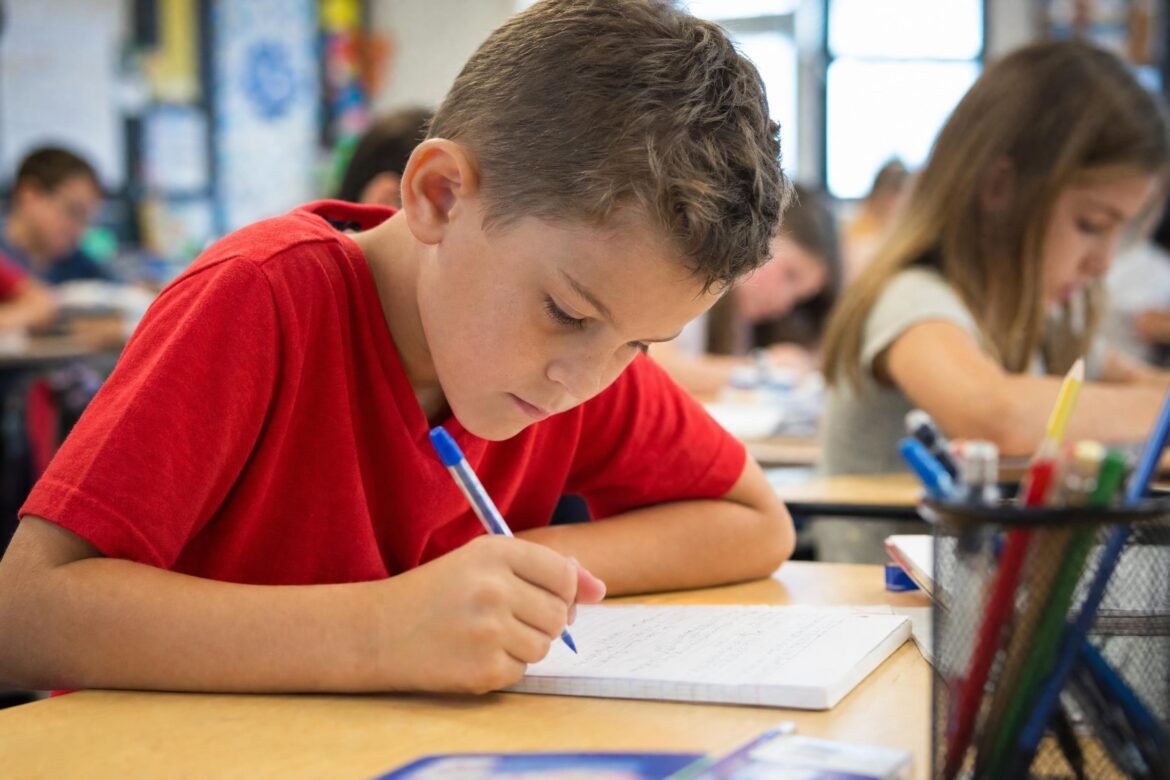
A young boy in a red shirt leaning over a desk writing carefully with a pen on paper in a bright classroom, other students blurred in the background
K-12Social-Emotional LearningSTEM and STEAM Education

Bouncing Back From Adversity Through Owning Our Story

by Tamara Fyke June 14, 2021
written by Tamara Fyke 7 minutes read

Tamara Fyke wrote this column in June 2021 as schools prepared to return to in-person learning after the pandemic, encouraging adults and children to name, frame, process and share their stories. The section below, added in 2026, adds what national guidance says about helping children process trauma and where qualified help fits.

Right now, students, families, and educators are breathing a sigh of relief. We made it through the pandemic. Many schools are planning on returning to in-person learning in the fall. It seems like we are returning to “normal.” But are we? Let’s talk about bouncing back from adversity through owning our story.

Whether we want to admit it or not, we are forever changed as individuals, organizations, and communities by COVID. We now realize our vulnerability to unseen plagues and adaptability to unpredictable circumstances. More than that, we have experienced our strength and resilience – the ability to bounce back despite adversity.

However, in our haste for the familiar, we could miss an important step – owning our story.

Each of us has a story to tell, not just about our struggles and victories during the global trauma but also about the myriad of challenges we have faced across our lifetime – adoption, divorce, learning differences, racism – you name it.

Yes, the first step is naming it. Name that big, bad, ugly thing that you have kept hidden. Speak it out loud to someone you trust. Let them hear it and hold you as you weep.

Then frame it. Put that trauma within the context of your life. What was the impact of that event? How did it change the way you see yourself? How did it impact the way you interact with others?

Process it. How do you feel about your story? Are you sad, angry, scared, embarrassed, or relieved? Whatever you feel is okay. Identifying your emotions brings release – freedom. The big, bad, ugly no longer controls you.

Remember that naming, framing, and processing can be ongoing for weeks, months, or years. Take your time. There is no rush. The goal is healing.

Next, share it. Whether you choose to write, speak, paint, draw, sing, or dance, let your story be heard. Chances are your story is similar to someone else’s, and giving voice to it will give them the courage to do their own work.

Our stories are powerful tools for building connections. When we own our story, we increase our capacity for compassion for the adults and children in our world. Instead of hiding behind the “shoulds” that provide a false sense of order, we can embrace the beautiful mess and discover we are not alone.

Collectively, we have lived in a state of trauma for the past 18 months. Now let the healing begin. Then and only then can we grow. I don’t want to return to “normal”; I want to live the extraordinary.

Tips for helping children own their story

  • Draw or write about the big, bad thing that happened.
  • Draw or write about what happened before and after the big, bad thing.
  • Draw or write how it makes you feel.
  • Share your story with a caring adult or friend with whom you feel safe.
  • Repeat as necessary.

Read more Social Emotional Articles

Helping children process trauma: what schools and families can do

The column above describes a four-step way for people to own their story: name it, frame it, process it and share it, with drawing and writing activities for children. Helping children process trauma is also the subject of long-standing guidance from the National Child Traumatic Stress Network (NCTSN), a network of academic and community centers created by Congress in 2000. Its Child Trauma Toolkit for Educators, published in October 2008 with funding from the federal Substance Abuse and Mental Health Services Administration, is written for teachers and is still a clear starting point. This section sets out what the toolkit advises, where it supports the column, and where adults should take care. It is general information, and a child who is struggling should be seen by a qualified professional.

What national guidance says schools can do

The toolkit states that one out of every four children attending school has been exposed to a traumatic event that can affect learning or behavior, and that trauma can show up as lower grades, more absences, and difficulty with concentration and memory. It also says that some children recover within a few weeks or months with support, while others need more help over a longer period. Its suggestions for educators include:

  • Keep usual routines, since a return to normal tells a child that life will go on and the child is safe.
  • Give children some choices where it is appropriate, because traumatic events often involve a loss of control.
  • Designate an adult who can offer extra support.
  • Provide a safe place and a set time for a child to talk about what happened, and give simple, realistic answers to the child’s questions.
  • Set clear limits with logical, not punitive, consequences, and remember that even very disruptive behavior can be driven by anxiety linked to trauma.
  • Prepare for reminders, such as anniversaries, and warn children before doing something out of the ordinary, such as turning off the lights.
  • Protect the child from classmates’ curiosity, and protect classmates from the details of the child’s experience.

Several of these match the column’s approach. A set time to talk, a caring adult and a calm routine are all part of the toolkit, as is the column’s point that healing takes time and has no fixed schedule. The final point on the toolkit’s list is a useful check on the “share it” step. Fyke encourages sharing a story as a way to connect with others, and the toolkit adds that a child should be protected from peers’ curiosity, so a teacher using the activities should make sharing optional, begin with a trusted adult and not require a child to read or show a drawing to the class.

Using drawing and writing activities carefully

The toolkit lists drawing the event repeatedly among the reactions that young children may show after trauma, and it notes that children cope by re-enacting what happened. Drawing and writing can therefore help a child express feelings, and they can also stir up distress. An adult using them can plan for that by letting the child stop at any time, staying nearby, and telling the school counselor beforehand when a child is known to have had a serious experience. These are practical judgments, not requirements stated in the toolkit.

When to seek professional help

The toolkit tells educators to give referrals for additional help when a child’s reactions are severe, such as intense hopelessness or fear, or last for a long time (it gives more than one month) and interfere with the child’s functioning. It adds that severity can be hard to judge, and that a child who appears to be fine, for example one who performs well academically, may be struggling, so educators should not wait to be certain before making a referral. The guide for parents in the same toolkit advises consulting a qualified mental health professional if a child’s distress continues for several weeks and asking the school for a referral. If a child appears to be in immediate danger, parents and teachers should contact emergency services and follow the school’s own crisis procedure.

What the research evidence can and cannot say

The popularity of the phrase trauma-informed schools can give the impression that the approach is proven. A 2019 systematic review in Campbell Systematic Reviews, by Brandy Maynard and colleagues, searched for rigorous studies of trauma-informed approaches in schools and, after screening 9,102 references, found none that met its standard, which required a randomized or quasi-experimental design. The authors concluded that there is not yet evidence to know whether the approach works, advised leaders to move cautiously and to evaluate as they go, and noted that schools can use programs with evidence for reducing trauma symptoms without waiting. They also asked schools to describe clearly what they do under the trauma-informed label. Newer reviews may have appeared since 2019, so leaders should check for them. For related work on children’s emotional skills, see edCircuit’s Social-Emotional Learning Guide.

June 14, 2021 0 comments
0 FacebookTwitterPinterestLinkedinWhatsappCopy LinkEmail
A silhouette of a man sits alone
Social-Emotional LearningCreativitySTEM and STEAM EducationK-12

5 Tips for Teaching Self-Awareness and Rethinking Priorities

by Tamara Fyke May 7, 2021
written by Tamara Fyke 3 minutes read

Given the trauma experienced through the pandemic, our society is more open to discussing mental health than ever. The topic is trending on Twitter regularly, is featured on morning shows weekly, and is the biggest concern in education for students and teachers alike. What do we do with this fresh revelation of the connection between body, mind, and heart? Let’s talk about 5 Tips for Teaching Self-Awareness and Rethinking Priorities.

As an educator and a mom, I have regularly asked my children and students this question: How’s your heart today? More often than not, they are taken by surprise. Sometimes they inquire with a puzzled look, “What do you mean?” Other times they dismiss me with a huff and a shrug, “Fine.” My goal in asking this is to spark reflection and conversation. More often than not, kids will ponder the question even if they don’t articulate a response. 

Self-awareness is knowing your strengths and weaknesses; knowing and understanding how you feel.

In 2015, Disney released a movie called Inside Out that chronicles the life of a young girl forced to move across the country with her parents depicting all of the emotions accompanying that type of big change. The main characters in the girl’s head are Joy, Fear, Anger, Disgust, and Sadness – the five core human emotions. As a result of this film, children, parents, and caregivers have a visual reference and a vocabulary to express their feelings. For younger children, Daniel Tiger’s Neighborhood has been a fun and engaging show that provides similar tools for dealing with anxiety and other emotions. No matter how old we are, when we can label what we are feeling, we can process it healthily rather than acting out dysregulated.

One of the most important things to communicate to children is that it is okay to feel how we feel. Feelings are guideposts. What we do with those feelings can be right or wrong. For example, it’s okay to feel angry because your parents are getting a divorce. It’s not okay to hurt yourself, destroy property, or hurt others when angry.

Emotions can seem overwhelming, and they can sometimes cloud our vision, keeping us from seeing the next best step. That’s why it’s imperative that we teach kids to identify what is going on in their heads and hearts so they can make wise choices about what they do and say.

Tips for teaching children about self-awareness

1. Prioritize connection. – Set aside regular time to talk with students about how they are doing. This can be during homeroom, advisory, or desk chats.

2. Offer an emotion wheel. – Provide a visual. Talk through what emotions look on our faces or feel in our bodies. 

3. Journal or draw. – Play some classical music and allow students to free write or draw for 15-20 minutes. Creativity provides a healthy outlet for big emotions.

4. Ask questions. – Whether in conversation or due to students sharing their creative work, dig deeper with questions, such as “Can you tell me more about that?”.

5. Listen. – Sometimes, the best thing is to be there without giving advice.

One of the gifts of the pandemic is that it has allowed us to slow down and re-think our priorities. Ensuring our students are healthy in body, mind, and spirit is preeminent.

  1. SmartBrief – How leaders create and sustain SEL
  2. Education Week – Movies That Can Teach the Teachers

Read more Social Emotional Articles

May 7, 2021 0 comments
0 FacebookTwitterPinterestLinkedinWhatsappCopy LinkEmail
Newer Posts
Older Posts

Participate

  • Contribute
  • Sponsor
  • Submit Release
  • Subscribe
  • Get Interviewed

We value your privacy

We use cookies to enhance your browsing experience, serve personalized ads or content, and analyze our traffic. By clicking "Accept All", you consent to our use of cookies.

Customize
  • Needed for the site to work: signing in, the cart, your consent choice. Always on.

    8 cookies
    • ss_consent 1 yearYour cookie choice on this site, so you are not asked again.
    • wordpress_logged_in_* 2 days, or 14 days with "remember me"Keeps you signed in as you move between pages.
    • wordpress_sec_* 2 days, or 14 days with "remember me"The secure half of your sign-in.
    • wordpress_test_cookie SessionChecks that your browser accepts cookies when you sign in.
    • wp-settings-* 1 yearYour display settings when signed in.
    • wp_woocommerce_session_* 2 daysYour shopping session: the cart and the checkout.
    • woocommerce_cart_hash SessionTells the site whether your cart has changed.
    • woocommerce_items_in_cart SessionWhether your cart holds anything.
  • Remembers choices you make, such as a language or a region, and supports features like live chat.

    1 cookie
    • woocommerce_recently_viewed SessionThe products you looked at, so the site can show them again.
  • Helps us understand how visitors use the site: which pages are read, and for how long.

    2 cookies
    • _ga 2 yearsGoogle Analytics: tells one visitor from another. Set only after you allow analytics.
    • _ga_* 2 yearsGoogle Analytics: keeps your session state. Set only after you allow analytics.
  • Measures how fast pages load so we can make them faster.

  • Used to show you content and offers that match your interests, on this site and elsewhere.

    1 cookie
    • sbjs_* SessionWooCommerce order attribution: where you came from, so a purchase can be credited to the campaign or site that sent you.

Your browser asks us not to sell or share your information (Global Privacy Control), so advertising cookies stay off.

Do not sell or share my personal information

Some cookies from other companies help show you offers on other sites. Tick the box and save your preference to opt out of that sharing; untick it to opt back in at any time.

Your browser sends Global Privacy Control, so this preference is set for you and cannot be changed here.

Sign In

Keep me signed in until I sign out

Forgot your password?

Password Recovery

A new password will be emailed to you.

Have received a new password? Login here

Shopping Cart

Close

No products in the cart.

Close
-
00:00
00:00

Queue

Update Required Flash plugin
-
00:00
00:00

Your cart (items: 0)

Products in cart

Product Details Total
Subtotal $0.00
Shipping and discounts calculated at checkout.
View cart
Go to checkout

Your shopping cart is empty

Return to shop

Notifications