 Betsy Hill
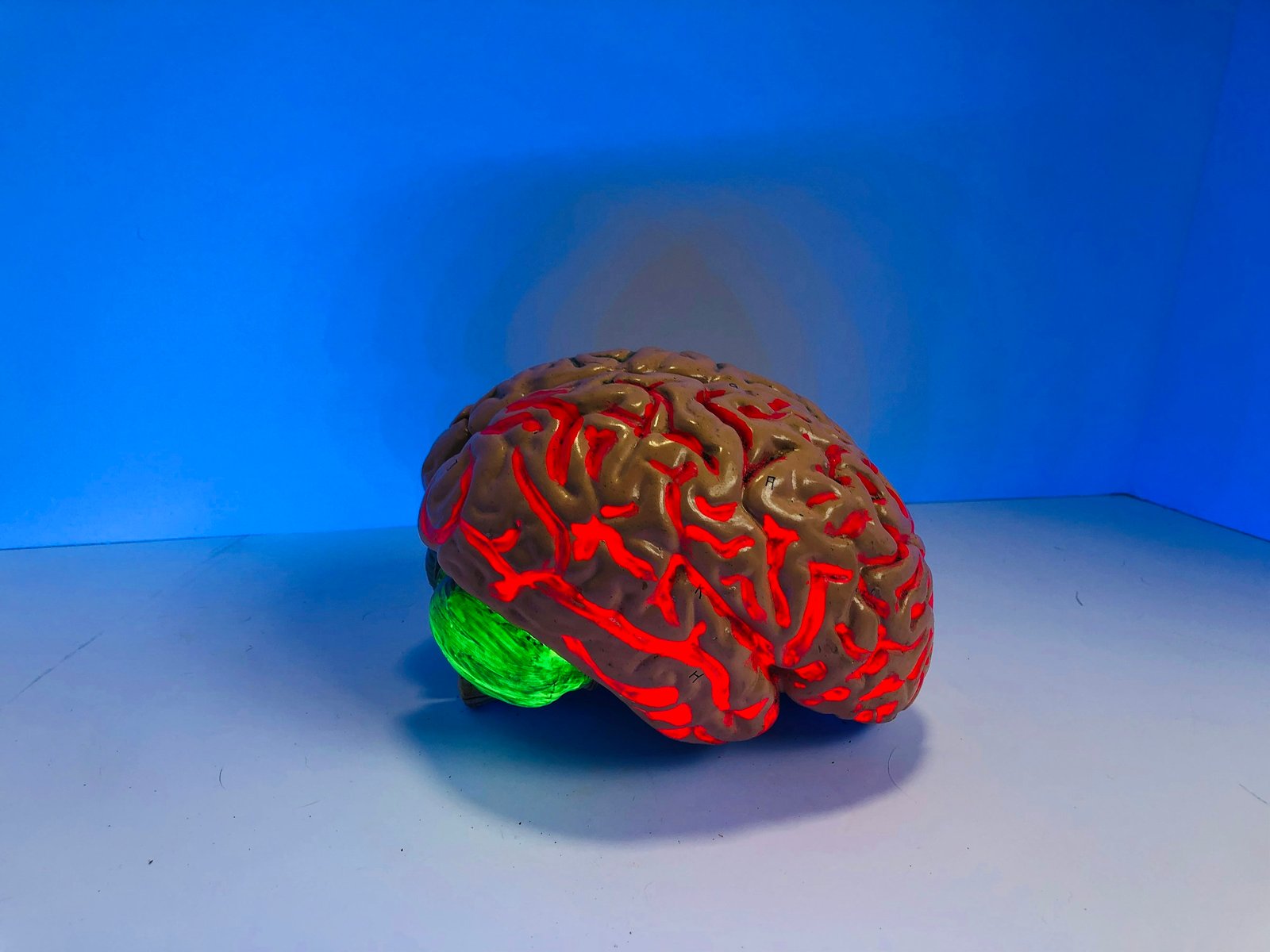
This 2019 article by Betsy Hill explains why skim reading and constant digital switching matter for learning, and why students should be taught how their brains work. A new section below, written in 2026, adds research on reading on paper and on screens, current findings on attention, and what teachers can do in class.
For good and bad, technology changes our brains. But then again, so does every experience we have. Our brains develop (throughout life) in interaction with our environment. As one neuroscientist puts it, our brains become what our brains do.
Skim Reading and Deep Reading
So what are our brains doing and becoming in the digital age? This field of research is booming and some of it raises concerns. When it comes to literacy, for example, Maryanne Wolf, in a recent article in The Guardian, explained that “skim reading” is replacing deep, analytical, reflective reading. Skim reading means that our brains scan for words and we don’t take the time to return to an earlier part of the text to refresh our recollection or rethink and reevaluate our take on the subject. There seems to be evidence that reading on a screen promotes this “light” version of reading.
But don’t we all do skim reading at times, even with a magazine, a newspaper, or a textbook? Can’t skim reading actually serve a useful purpose – like finding a specific piece of information we are looking for? A colleague of mine recalls being amazed when he got to college and someone explained to him that there are different ways to read. He had inferred from all the reading tasks he had been assigned over the years that the only “correct” way to read was to read every word. For him, skim reading was a new and extremely useful skill. In fact, the skill is so useful that people have been known to spend money to become better at it; it was called speed-reading.
That doesn’t mean that there is no longer any need for deep, careful, critically analytical reading. We don’t learn deeply from what we skim. We can learn deeply from what we spend mental effort on in the reading process.
Learning as a Biological Process
Here it is helpful to remember that learning is a biological process – the making and strengthening of connections among neurons in the brain into neural networks or maps. If we are looking for deep and enduring learning (rather than skimming for a football score), then we need to consider what makes for strong connections, because it is those strong connections that are easier to reactivate when we need to recall that information later. In order to create strong long-term memory (learning), our brains need to engage actively with the information and process it consciously in working memory. Hence, deep and enduring learning, when it comes from reading, will necessarily require focus, patience and effort and deep reading, not skimming.
If both skim reading and deep reading have value, however, shouldn’t we be teaching these skills to our students? Why should my colleague have had to wait until college to find out that there were different types of reading? Why should students not understand that their brains are processing in different ways when they read or otherwise interact with curriculum (and anything else in their lives) in different ways?
Focus, Flow and Digital Overload
One of the reasons for the current emphasis on digital literacy is that it is required for college and career readiness. The concerns about the impact of the digital age on our brains are being felt in the workplace as well. In fact, an August, 2018 article in Forbes held that the secret to success for CEOs in the digital age is to rewire their brains to help them cope with the overload of digital information. Trying to keep up with all the texts, emails, news feeds and other digital input with which we are bombarded often makes us feel overwhelmed (and, for some, can actually lead to clinical anxiety or depression). At the same time, we can’t avoid and, indeed rely on, technology. The advice in the Forbes article, based on neuroscience research, is simply this – to differentiate between two types of activities, in the same way, we differentiated above between skim reading and deep reading. First, the article advises, CEOs should schedule time (at least 20-30 minutes) of deep, thoughtful, unbroken work, and then follow that with checking email for 10 minutes. Giving our brains time to connect deeply with our work product and our thought processes provides an opportunity for “flow,” that feeling of being fully engaged and operating at a high level. Monitoring email is not conducive to flow.
If the advice is good enough for CEOs, isn’t it also something we should be teaching students?
Research suggests, for example, that the pressure to be constantly attending to all the messages we get on email and social media, makes us anxious. Research suggests that misplacing our smartphones induces a feeling of panic. And what happens to our ability to think and learn when we are in a state of panic? Cognition shuts down. Maybe managing panic and anxiety around digital technology is a 21st century skill.
Teaching Students How Their Brains Work
I have presented webinars over the last year on Nepris on brain development and student study habits. Nepris is a great resource, by the way; it allows teachers to bring experts in various fields into their classrooms (virtually) for their students to interact with.
In these webinars, students are eager to check out brain myths, to find out why they remember some things and not others, and what happens to their brains when they are anxious or upset, or when they don’t get enough sleep. One favorite exercise I do with them helps make the point that the Forbes article made to CEOs – that we are not very good at multitasking and that deep thinking and deep learning require focus.
You can try this for yourself. Time yourself as you do this. Write down the following:
Multitasking is a misnomer 1 2 3 4 5 6 7 8 9 10 11 12 13 14 15 16 17 18 19 20 21 22 23
Now do the same thing, timing yourself again, but this time, alternate between writing a letter and a number. That is, you write M 1 u 2 l 3 t 4 I 5 and so on.
Now, how did you feel the second time? Frustrated? Did you tend to make more mistakes? And it certainly took you longer. Students are good at drawing inferences from this experience.
As we learn about the implications of the digital age for our brains and those of our students, we can bemoan the fact that digital media are causing our students brains to develop with less capacity for and less patience for deep focus, complex thought, or we can teach them how their brains work and how to take advantage of their ability to adapt.
- ZME Science – Taking short breaks to reinforce memories is key to learning new skills or re-learning old ones
- The Atlantic – The Cognitive Biases Tricking Your Brain
- edCircuit – Cognitive Skills and Math
Deep reading in the digital age: what the research says and how teachers can respond
Deep reading in the digital age is the question of whether students can still give a text the slow, careful attention that learning from it requires, now that so much reading happens on screens among many interruptions. Betsy Hill raised the question in 2019, citing Maryanne Wolf’s concern that skim reading was replacing deep reading, and suggested that students be taught how their brains work. Research published since then gives teachers more to work with, and it also asks for caution about how far the claims can go.
What studies find about reading on paper and on screens
A post dated September 24, 2018, on the Learning & the Brain site reports on a meta-analysis comparing reading on paper with reading on screens, which it credits to Lalo Salmerón. The post, which is a secondary source, says the analysis covered several dozen studies with more than 170,000 participants. According to that summary, students generally understood and remembered more when reading on paper, the gap appeared in almost every case, and the post says the screen disadvantage has increased over the past 18 years. Age groups did not differ in how screens affected reading. Under time pressure, text length made no difference, so even short passages that did not need scrolling were harder to understand on screen. Screens held students back more with informational text than with narrative.
These findings come from a summary and not from the original paper, which could not be opened for this update, so a reader who needs exact figures should consult the paper itself. The summary also makes clear that the evidence is about comprehension of text under particular study conditions, not about whether every student is harmed by every screen. What it supports is a modest practical conclusion: for long or informational texts that students need to understand and remember, paper is a sound default, and students who read on screens may need explicit habits.
Skim reading and deep reading are both useful
As Hill points out above, skim reading has a legitimate use, such as finding a specific piece of information, and the task is to know which kind of reading a text calls for. A teacher can make that choice visible by naming the purpose before an assignment: skim this page to find the date, or read this passage slowly because you will be asked to explain the argument. The edCircuit science of reading guide covers how reading skills are taught more broadly. Students who are asked to read slowly can also be asked to do something with the text, such as underline claims, write a summary in their own words or pose a question, because deep reading depends on mental effort and not only on time.
Attention, interruptions and the multitasking exercise
Hill’s classroom exercise, in which students write a short phrase and a run of numbers and then repeat the task while alternating letters and numbers, shows that switching between tasks slows people down and leads to mistakes. Current research on attention supports the same point. In an interview published by the University of California in January 2024, Gloria Mark, professor emerita of informatics at UC Irvine, reported that Mark’s first study in 2003 found people focused on a single screen for an average of about 2.5 minutes, while studies from 2016 to 2020 found about 47 seconds, and that figure has held steady for about five years. The article’s introduction adds that recovering from an interruption can take almost half an hour, and Mark says that about half the time people interrupt themselves, often to check email, look something up or post on social media (University of California, How to sharpen your attention and meet your goals in 2024). These numbers describe how adults use screens, and the interview is a news report on Mark’s research and not the studies themselves, so they should not be applied directly to students.
Mark’s advice, as reported, is practical and fits a classroom: set goals and keep them visible, limit attention traps, schedule demanding work at the time of day when a person is most alert, build in breaks before exhaustion, and work on one thing at a time. A teacher can adapt these by setting a block of unbroken reading or writing, with devices closed and notifications off, followed by a short break. That matches the pattern Hill reports from a Forbes article on chief executives, in which a period of focused work is followed by a short check of email.
Students say these skills matter
Common Sense Media surveyed teens on their views of the skills they will need, and the results were released on August 18, 2026. Among the skills teens ranked most important for the future, 48 percent named reading complex information, 50 percent named fact-checking and critical thinking, and 55 percent named working with others (Common Sense Media, Teens in the AI Era). The same release reports that 39 percent of teens using AI for assignments feel they miss out on learning. The release does not state the sample size, and these are self-reports, but they show that students themselves see the link between reading and thinking.
Teaching students how their brains learn
The most direct response is the one Hill proposed: show students how attention, memory and learning work, then let them try the exercise and talk about what they noticed. A short lesson can cover two modes of reading, why switching tasks costs time and how a break differs from an interruption. Teachers can then agree with students on a few class routines, such as a silent reading block and a rule for when devices are put away. For related background, see edCircuit’s earlier piece, Cognitive Skills and Math.
Related reading
More on Executive Function