Barbara R. Blackburn wrote this 2018 guide to bringing science, technology, engineering, arts and math into every grade, from an apple corer in preschool to soap box derby cars in high school. Below it, a 2026 update adds what research and the Next Generation Science Standards say about STEAM activities for elementary students.
Recently, there has been a push in education to integrate science, technology, engineering, and math (STEM). Many high schools even have STEM academies. But it’s important to remember that incorporating these areas can happen at all grade levels, not just high school.
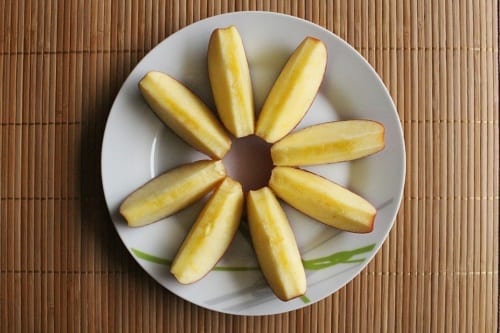
For example, in preschool and kindergarten, teachers combine snack time with a lesson on simple machines. Using an apple corer, the teacher cuts the apple. First, teachers can discuss the properties of the apple including the color inside and outside. Students can count the seeds, notice the stem, and then the teacher can share a book about how apples grow.
Next, the teacher can lead a discussion as to how the apple corer works, including the amount of pressure they must exert to cut through the apple. The teacher can ask what other tools are used to cut apples and can then explain that corers and knives are examples of wedges, one of the six simple machines.
Then, you can integrate math by asking, “How many pieces of apple are there? Is that enough for everyone at the table to have one piece? How many apples would we need to cut to allow everyone to have two pieces? You can also discuss the shapes of the pieces and introduce the idea of fractional parts of the whole apple.
Anne Jolley, in her blog on Middleweb, shares topics for middle school that can easily teach all areas of STEM. They are particularly motivating to students, because of their real-life connections.
Possible STEM Problems
Oil spills
Water pollution
Endangered species
Invention of a Band Instrument
Invention of an Electric Gamebox
Invention of a Confetti Launcher
Finally, a great idea for secondary classrooms is for students to create paper rockets. As NASA explains, “Few classroom topics generate as much excitement as rockets. The scientific, technological, engineering and mathematical foundations of rocketry provide exciting classroom opportunities for authentic hands-on, minds-on experimentation.” On their website, NASA provides a full lesson plan, including information on the history of rockets, how rockets work, and how to create a rocket race.
Science, Technology, Engineering, Arts and Math (STEAM)
A popular adaption of STEM is STEAM, which incorporates arts into the science, technology, engineering, and math curriculum. Proponents remind us that the arts can improve learning by enhancing the growth of cognitive, emotional, and psychomotor pathways in the brain. Inez Liftig believes combining science and the arts “also lets students see how both of these have been and still are quests to examine and explain the world around us… Students see that curiosity, creativity, imagination, and attention to detail are traits common to artists/writers and scientists.”
Let’s go back to the concept of the apple corer and simple machines we explored in the STEM section, and look at how the arts can be integrated. In kindergarten through fourth grade, students can look at pictures of simple machines and draw them, explaining what they think each part does. In grades five-eight, students can look at, analyze and discuss Leonardo da Vinci’s inventions, asking if they work, how they work, and why. They may choose one of his machines and copy it. Using their skills of observation, students can identify the parts that make the machine work and apply the appropriate scientific principles to explain how.
In high school, after viewing images of Rube Goldberg machines, students can design and build their own simplified machines. Then, they create an accompanying display, report, or presentation explaining the scientific applications of how the machine works.
Another way to incorporate the arts into any STEM lesson is through the use of a tableau, which is the creation of a living depiction of a topic. In small groups, students work together to decide how to best represent the concept as a tableau. They must focus not just on representing the concept but also pay attention to their poses, facial expressions, and gestures. Movement, dialogue, sound effects, and music are also allowed. As an added feature, one student can assume the role of reporter and interview members of the scene.
Soap Box Derby as a Project Example
A great STEM/STEAM example that is particularly engaging to students is a Soap Box Derby. You may remember these from your childhood or your own children may have participated in one, but today’s activities can be directed toward STEM and STEAM. For example, students are able to learn about friction and force of motion for science, they can use technology for design and simulations, engineering incorporates design, building, and testing the stock car, the design elements are enhanced through art skills, and math concepts such as measurement and speed are valuable.
One interesting concept is the idea that students who “think” in 3D perform better in math and science in later years. For primary and elementary teachers, giving students the opportunity to use basic engineering skills to build simple cars out of existing materials will prepare them for later, more complex work.
What I particularly like is that activities for a soap box derby also incorporate social-emotional learning skills such as responsible decision-making, self-management and relationship skills, which are also necessary career skills.
(Resource Tip)
Soap Box Derby has created curriculum materials (for a fee) that incorporate activities for STEM and STEAM. They also provide free videos and plans for building stock cars.
Conclusion
In order to truly prepare students for life after high school, we must teach connections among science, technology, engineering, math, and if possible, art. However, it is too late if we wait until high school to focus on these areas. Using practical strategies and hands-on learning will excite students of all ages, and increase their interest in STEM and STEAM.
STEAM activities for elementary students: what the research says and how to start
STEAM activities for elementary students add the arts to science, technology, engineering and math, and Barbara Blackburn’s examples above show the idea at several ages. Teachers and principals planning for the year often ask what evidence supports this approach and what a first step looks like. The evidence is smaller than the enthusiasm, and the useful answer for a school leader is to start with a clear learning goal in science or engineering and let the arts serve it.
What one study of upper elementary classrooms found
One study of arts and science in elementary schools that this update could open is a 2016 study by Lisa Brouillette and Nicole Graham in the Journal for Learning through the Arts. It followed students in grades 3 to 5 at 10 of 55 high-poverty elementary schools in a large California urban district. Students in the treatment schools received nine hour-long STEAM lessons in the 2011-2012 school year that combined dance, theatre and visual arts with physical science. They improved more on the district’s physical science benchmark assessments than students in a STEM-only comparison group, and students whose teachers were well trained moved from the 50th to the 63rd percentile.
The authors state their own limits. The design is quasi-experimental, so it cannot show cause as firmly as a randomized trial. Only one year of data was analyzed, the benchmark tests measured broad science content rather than the exact concepts the lessons taught, there was no pretest control for differences in student ability, and the fifth-grade sample was too small to detect meaningful change. A fair reading is that the study is encouraging for well-prepared teachers and short units, and that it is not proof that every STEAM program raises science scores. It is also from 2016, and this update did not find a newer study of comparable design.
What the standards ask of young children
The Next Generation Science Standards for kindergarten through grade 2 already include engineering design. Students are expected to ask questions and gather information about a situation people want to change, to develop a simple sketch, drawing or physical model showing how the shape of an object helps it function, and to analyze data from tests of two objects designed to solve the same problem. These expectations fit the activities in Blackburn’s article closely. Drawing simple machines and explaining what each part does is a sketch that shows how shape serves function, and comparing two cutting tools is a test of two objects built for the same job.
Starting points for a grade-level team
Choose one standard first. Pick the science or engineering expectation the unit must meet, then decide how drawing, movement or building will help students show it.
Keep the problem real and small. Blackburn’s apple corer, paper rockets and soap box cars all begin with an object students can handle and test.
Ask students to compare designs and explain what the test showed. This is the step that turns an art project into evidence of science learning.
Use the arts for explanation. A drawing with labels, a short tableau or a model with a spoken explanation lets students show understanding in more than one way, and it gives the teacher something to assess.
Plan teacher support. The 2016 study’s best results came with well-trained teachers, so a single workshop followed by shared planning time is a reasonable first investment.
Checking whether it worked
The 2016 study’s authors warn that their benchmark tests measured broad science content and not the exact concepts taught, which is a lesson for any school running its own units. A teacher can decide before the unit starts which idea students should be able to explain afterward, such as how the shape of a tool helps it do its job, and then look at the students’ drawings, models and spoken explanations for that idea. Comparing work from the start and the end of the unit, with the arts product used as evidence and not only as decoration, gives a more honest picture than a single test and costs little.
Teachers can plan units at the end of the school year or at the start of a new term. For wider context on science, technology, engineering and math across grades, see the edCircuit STEM education guide.
Barbara R. Blackburn, Ph.D., a Top 30 Global Guru, is a best-selling author of more than 30 books, including the bestseller Rigor is NOT a Four-Letter Word, Rigor for Students with Special Needs, Seven Strategies for School Improvement and the Rigor in the Remote Classroom. An internationally recognized expert in the areas of rigor, motivation and leadership, she regularly collaborates with schools and districts for on-site and online professional development. Barbara can be reached through her website: www.barbarablackburnonline.com.
Would you like to use an EdCircuit article as a resource. We encourage you to link back directly to the url of the article and give EdCircuit or the Author credit.




 Barbara R. Blackburn