


edCircuit
  • Start Here
    • Login
    • Register
    • Subscribe
    • Submit a Press release
    • Advertise or Sponsor
    • Contribute
    • Get Interviewed
  • On the Wire
  • EdTech
    • All EdTech
    • Online Learning
    • Hybrid and Remote Learning
    • Augmented and Virtual Reality
    • ESports
    • Gamification and Game-Based Learning
    • Digital Citizenship
    • EdTech Entrepreneurs
    • Market Trends
    • Future of Education
  • Artificial Intelligence
  • K-12 Education
    • All K-12
    • K-12 Teachers
    • Teaching Strategies
    • Special Education and IEPs
    • Dyslexia
    • Gifted and Advanced Learning
    • Early Childhood, Pre-K and Kindergarten
    • School Calendar
    • Tutoring and Homework Help
    • Attendance and Absenteeism
    • After-School Programs
    • School Counselors
    • Homeschooling
    • School Models
    • Teacher Retention
    • Parents
    • Students
    • STEM and STEAM Education
  • Teaching and Learning
    • Literacy and Reading
    • Math Education
    • Civics and History Education
    • Financial Literacy
    • Assessment and Testing
    • Curriculum and Instruction
    • Personalized Learning
    • Project-Based Learning
    • Social-Emotional Learning
    • Executive Function
    • Creativity
    • Diversity, Equity, Inclusion
  • Professional Development
    • All Professional Development
    • Educators
    • Administrators
    • edLeaders
  • Higher Education
    • All Higher Education
    • College Admissions
    • Career and Technical Education (CTE)
    • Graduation
    • FAFSA and Financial Aid
    • Student Loans
  • Cybersecurity
  • School Safety
    • All School Safety
    • Science and Lab Safety
    • School Design and Facilities
    • Bullying
    • Duty of Care and School Liability
  • Continuing Education
    • All Continuing Education
    • Online Certificate Programs
    • Teaching Jobs and Careers
    • Teacher Appreciation
  • Education Policy and Government
    • All Education Policy
    • Department of Education
    • School Choice
    • Global
    • Advocates
  • EDU Shows
    • All EDU Shows
    • Safer Ed
    • Mind the Gap
    • Education Industry Questions
    • CoffeEd
    • InFocus
    • InformED Report
  • EDU Podcasts
    • All EDU Podcasts
    • Author Chats
    • CoSN The Podcast
    • Education Today
    • Building the Bridge
    • Students Speak
  • Education Industry Guides and Reports
  • Archived Media
    • Future of School: The Podcast
    • Equity Everywhere
  • About edCircuit
  • Subscribe
edCircuit
  • LOGIN
Home Tags Posts tagged with "Headline"
Tag:

Headline

This if for posts to be in the featured/top section of site
A group of professionals in a meeting room discusses K–12 procurement data charts and graphs displayed on a large screen and laptops, with documents and notebooks on the table.
Market TrendsHot Topics - controversialK-12

K–12 Procurement Trends Over the Last 10 Years

by EdCircuit Staff March 16, 2026
written by EdCircuit Staff 6 minutes read

K–12 procurement trends over the last 10 years have quietly reshaped how districts spend, how vendors sell, and how leaders manage risk.

A decade ago, procurement was largely operational. It processed paperwork after decisions were made.

Today, it shapes the decisions.

For superintendents, curriculum directors, business offices, and school boards, purchasing choices now affect cybersecurity exposure, subscription costs, public transparency, and long-term instructional alignment.

For vendors, the relationship-driven sales process that once worked is no longer enough. The process is structured. It’s cross-functional. And it’s documented at every step.

Here’s what actually changed.

K–12 Procurement Is Fully Digital Now

Ten years ago, many districts were still managing bids through email chains and shared drives. Approval routing was manual. Vendor files were stored in cabinets or on disconnected systems.

Now, most districts operate inside e-procurement platforms tied directly to their finance systems.

That shift didn’t just make things faster. It changed behavior.

Every approval is timestamped. Every submission is logged. Every deviation from the process leaves a trail.

Informal purchasing is harder to justify. Side deals are easier to spot. And once something is in the system, it stays there.

For district leaders, this improves control. For vendors, it means the old shortcut of “just send me a quote” rarely works anymore.

Compliance Isn’t New — But Scrutiny Is

Procurement rules themselves haven’t radically changed. What’s changed is the visibility.

Public records requests are more common. Board members ask sharper questions. Media scrutiny is quicker. Federal reporting requirements, especially during the COVID-era funding, forced districts to tighten documentation practices.

Many business offices had to build new internal controls almost overnight.

Procurement now carries reputational weight. A loosely justified sole-source decision or vague contract language can escalate fast.

Ten years ago, a documentation gap might sit quietly in a file. Today, it shows up in an audit, a board meeting, or online.

That reality has changed how districts approach risk.

The Subscription Shift Changed Everything

The biggest structural shift in K–12 procurement over the last decade isn’t digital bidding.

It’s subscriptions.

Districts used to buy textbooks, hardware, and furniture. Large purchases were visible and finite.

Now they manage portfolios of recurring software contracts. Learning platforms. Assessment systems. Security tools. Data dashboards. Communication apps.

Instead of a one-time purchase, districts now manage renewals year after year.

And here’s the challenge.

At renewal time, many districts discover that a districtwide tool is used in only a handful of schools. Licenses auto-renew. Usage data isn’t reviewed. Contracts roll forward because no one wants disruption midyear.

That’s not a compliance problem. It’s a governance problem.

Procurement has shifted from buying products to managing ecosystems. That requires a different mindset.

Cooperative Purchasing Became a Strategy

Cooperative contracts used to be a convenience. Today, they’re part of the playbook.

Districts rely on cooperatives to move faster, especially when timelines are tight or internal capacity is stretched.

It reduces administrative lift. It accelerates large purchases. It helps maintain compliance.

But it isn’t a substitute for due diligence.

Smart districts still validate pricing, confirm alignment with local policy, and review performance expectations. The cooperative contract opens the door. It doesn’t close the deal.

Vendor Strategy in Modern K–12 Procurement

The K–12 procurement environment demands a different sales approach than it did 10 years ago.

Decision-Making Is Broader

Purchases now involve curriculum leaders, IT, business offices, legal counsel, superintendents, and often boards.

Vendors who rely on a single champion often stall late in the process. What feels like a done deal can unravel when legal review begins or when a board member asks about data privacy.

Successful vendors map influence early. They anticipate who will ask which questions. They treat procurement as a stakeholder, not an obstacle.

Procurement Literacy Matters

Sales teams need to understand fiscal calendars, bid thresholds, RFP scoring criteria, and board approval cycles.

Ignoring those details doesn’t just slow deals. It signals inexperience.

The vendors who understand how districts actually operate build trust faster.

Compliance Is Part of the Product

Clear data privacy language. Insurance documentation. Security certifications. Transparent renewal terms.

These aren’t attachments. They are part of the offering.

Vendors who anticipate IT and legal concerns reduce friction. Vendors who wait to address them create it.

Long-Term Value Beats Short-Term Price

District leaders are increasingly wary of aggressive first-year discounts paired with unpredictable renewals.

They want implementation support. Integration clarity. Renewal stability.

A lower sticker price means little if the long-term cost structure is unclear.

District Operations Have Shifted Internally

Many districts have centralized purchasing in response to audit pressure and technology sprawl.

Decentralized buying led to duplicate tools, inconsistent pricing, and security gaps.

Centralization improves visibility. It strengthens negotiating power. It reduces risk.

But it also creates tension.

Curriculum wants speed.
IT wants a security review.
Business offices want compliance.
Superintendents want results.
Boards want transparency.

Procurement leadership now sits in the middle of that tension. Managing it well is a leadership function, not just an administrative one.

What Districts Should Be Doing Now

The next phase of K–12 procurement isn’t about adding more rules. It’s about using the existing structure more strategically.

Tie Purchasing to Measurable Goals

Every major contract should connect to a district priority. Literacy gains. Math recovery. Career pathways. Operational efficiency.

If a tool can’t clearly connect to a goal, renewal should trigger discussion.

Review Vendors Annually

Renewals shouldn’t run on autopilot.

Districts should examine usage data, adoption levels, support responsiveness, and alignment with outcomes before approving continuation.

Too often, renewals are treated as administrative events. They should be strategic checkpoints.

Strengthen Data Governance

With expanded EdTech adoption, districts must maintain tight oversight of student data access and third-party integrations.

Cybersecurity is no longer an IT issue alone. It’s a governance issue that boards are increasingly aware of.

Train School-Level Leaders

Many compliance breakdowns start with good intentions at the school level.

Principals and department heads need clarity on purchasing thresholds, contract authority, and renewal processes.

Operational literacy reduces friction later.

The Real Shift

The most important change in K–12 procurement over the last 10 years isn’t digital systems or cooperative contracts.

It’s a mindset.

Procurement is no longer a back-office checkpoint. It influences financial sustainability, vendor partnerships, data security, and instructional direction.

Districts that treat it strategically move with more control and less waste.

Vendors who adapt to this environment build durable partnerships.

The structure is tighter. The scrutiny is higher. The expectations are clearer.

And that shift isn’t going away.

Subscribe to edCircuit to stay up to date on all of our shows, podcasts, news, and thought leadership articles.
March 16, 2026 0 comments
0 FacebookTwitterPinterestLinkedinWhatsappCopy LinkEmail
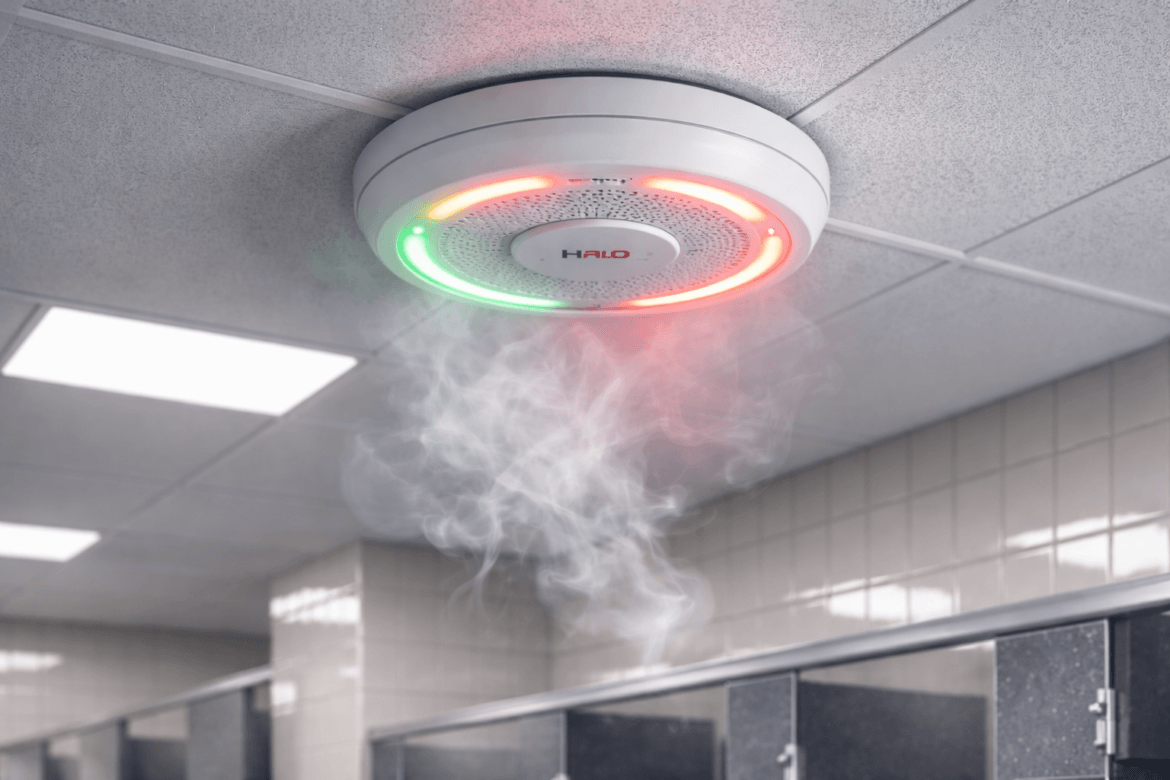
A ceiling-mounted HALO smoke detector with red and green indicator lights, similar to AI Vape Detectors in Schools Redefine Campus Safety, is activated by smoke in a tiled restroom.
School SafetyArtificial IntelligenceK-12Hot Topics - controversial

AI Vape Detectors in Schools Redefine Campus Safety

by EdCircuit Staff March 13, 2026
written by EdCircuit Staff 5 minutes read

AI vape detectors in schools are turning ceilings into real-time safety systems, closing long-standing supervision gaps while redefining how districts protect student health and privacy.

An assistant principal glances at a phone during third period.
A notification appears: elevated vape aerosol levels detected — second-floor east bathroom.

No cameras.
No audio.
No staff member is stationed outside the door.

But within seconds, the school knows:

  • where the incident is happening

  • how many students are inside

  • whether the space shows signs of unusual activity

That moment captures a growing national shift. AI is no longer confined to dashboards, learning platforms, or cybersecurity filters. It is moving into the physical infrastructure of schools — transforming air, space, and motion into actionable intelligence.

In Hillsborough County Public Schools, the large-scale deployment of AI-powered Halo environmental sensors in every high school bathroom represents one of the clearest examples yet of the intelligent campus becoming reality.

From blind spots to responsive environments

Bathrooms have always been one of the most difficult areas for schools to supervise.

They are also where many of today’s most persistent student safety and wellness challenges converge:

  • vaping and THC use

  • bullying and fights

  • class avoidance

  • vandalism

Traditional strategies — hall passes, periodic checks, locked access — have relied on adult availability and physical presence. In an era of staffing shortages and expanded safety expectations, that model is increasingly unsustainable.

Environmental AI changes the equation by shifting supervision from people to place.

Instead of assigning someone to monitor the space, the space itself becomes aware.

How the technology works — and why that matters

The sensors installed in Hillsborough County operate without cameras or microphones. They do not record conversations or capture images.

Instead, they analyze:

  • airborne chemical signatures linked to nicotine and THC

  • masking agents designed to hide vaping

  • air quality and particulate levels

  • humidity and temperature

  • occupancy counts

  • motion pattern anomalies

Over time, the system uses machine learning to understand what “normal” looks like in each specific room — how air flows, how long students typically stay, and how many people are usually present.

When those patterns change, administrators receive instant alerts with precise location data.

This distinction is critical. The technology is not identifying individuals — it is identifying environmental events.

That is why many districts view it as a privacy-conscious alternative to video surveillance in sensitive spaces.

Student health: the real driver behind adoption

While the technology is impressive, the primary motivation is not discipline — it is health.

Youth vaping remains one of the most difficult challenges facing middle and high schools. The speed at which nicotine addiction can develop, combined with the rise of THC use and synthetic products, has shifted the issue from rule enforcement to public health response.

With real-time detection, schools can:

  • intervene immediately

  • identify patterns of repeated use

  • connect students to counseling or support services faster

That moves the conversation from punishment to prevention — and aligns directly with whole-child and MTSS frameworks many districts are already building.

A new operational model for school leaders

For principals and district administrators, the impact goes far beyond bathrooms.

Real-time environmental alerts allow schools to:

  • respond faster to fights

  • reduce vandalism and property damage

  • monitor overcrowding

  • deploy staff more efficiently

Instead of assigning personnel to constantly check spaces, administrators can respond only when needed.

In a time of:

  • budget constraints

  • staffing shortages

  • increased safety expectations

That shift from routine supervision to targeted response is operationally significant.

The rise of the intelligent school campus

What is happening in Hillsborough County is part of a much larger transformation.

AI in K–12 is moving from software to infrastructure.

Districts are already implementing:

  • AI-powered weapons detection

  • smart access control systems

  • intelligent camera analytics

  • predictive cybersecurity monitoring

  • energy and air-quality optimization

Environmental vape detection fits into this broader ecosystem.

The result is the emergence of a responsive school building — one that senses risk, communicates in real time, and supports faster decision-making.

This is the intelligent campus model that higher education, healthcare, and corporate environments have been moving toward for years.

K–12 is now entering that phase.

The privacy paradox

Even without cameras or audio recording, these systems change how students experience space.

They know the environment is monitored.

That creates a new behavioral dynamic: awareness without direct surveillance.

For district leaders, the key questions are no longer whether to use AI, but:

  • What data is collected?

  • Who has access to it?

  • How long is it stored?

  • How is it used to support — not simply punish — students?

The success of these systems will depend on policy, transparency, and clear communication with families and students.

Turning incidents into actionable intelligence

One of the most powerful long-term impacts is not the alert itself — it is the data over time.

Districts can begin to see:

  • when incidents are most likely to occur

  • which locations need redesign or increased access

  • how scheduling affects behavior

  • where wellness interventions are most needed

That turns isolated discipline events into strategic planning insight.

A cultural shift for students

For today’s students, intelligent environments are becoming normal.

They already live in:

  • smart homes

  • AI-curated digital platforms

  • sensor-driven public spaces

Schools are now reflecting that same reality.

The lesson is not just behavioral — it is societal.

Students are learning what it means to exist in AI-enabled environments and how those systems are used to support safety and health.

Leadership implications for districts

For superintendents, CTOs, and facilities leaders, this is not a vaping solution.

It is an infrastructure decision.

It signals:

  • a move toward data-informed operations

  • integration of safety, health, and facilities systems

  • a new definition of supervision

And it raises a defining leadership question:

If the building can sense risk in real time, how should the human response change?

Conclusion: the ceiling is the new dashboard

The most important shift is not the detection of vape aerosols.

It is the transformation of the school building into a real-time partner in student safety.

For decades, supervision depended on line of sight.

Today, it depends on environmental awareness.

The ceiling is becoming a dashboard.
The air is becoming data.
The building is becoming responsive.

And in that transformation lies the future of K–12 campus safety — not as surveillance, but as intelligent, privacy-conscious care that allows schools to intervene earlier, support students faster, and design environments where harmful behaviors are harder to hide and easier to address.

Play video: Vaping detectors being installed in Hillsborough County High Schools (2 minutes 18 seconds)2:18
Vaping detectors being installed in Hillsborough County High Schools2 min 18 sWFLA News Channel 8 on YouTube

WFLA News Channel 8 – Vaping detectors are being installed in Hillsborough County High Schools (Play video)

Subscribe to edCircuit to stay up to date on all of our shows, podcasts, news, and thought leadership articles.

March 13, 2026 0 comments
0 FacebookTwitterPinterestLinkedinWhatsappCopy LinkEmail
A woman receives a District Recognition award in a classroom while smiling, surrounded by applauding adults and children, with an American flag in the background.
EducatorsHot Topics - controversialTeacher AppreciationK-12

District Recognition Elevates Educator Excellence

by EdCircuit Staff March 12, 2026
written by EdCircuit Staff 4 minutes read

District recognition programs, such as Teacher of the Year awards, strengthen educator morale, improve retention, and spotlight instructional excellence across the entire school community.

Picture this.

A teacher stays late to help a student who is on the verge of giving up. A colleague notices the extra effort. A principal sees the steady gains in student growth. Parents talk about how their child feels safe and challenged in that classroom.

Now imagine that educator being recognized by their peers. Their story shared districtwide. Their impact named out loud.

That moment does more than celebrate one person. It shapes culture.

Recognition builds identity

A plaque is not the point. Identity is.

When a district publicly honors its top instructors, it sends a clear message about what excellence looks like. It tells early-career teachers what is possible. It reminds veteran educators that their experience still matters. It shows instructional leaders that innovation and dedication are seen.

Recognition programs help districts:

  • Reinforce instructional priorities

  • Elevate teacher leadership

  • Strengthen professional pride

  • Create aspirational examples within schools

Culture is built by what we celebrate.

When recognition becomes part of a district’s rhythm, appreciation becomes part of its identity.

Recognition supports retention

Across the country, districts are working hard to recruit talented educators. Keeping them is just as important.

Compensation, resources, and support systems all matter. But feeling valued is a powerful factor in whether educators stay.

When teachers know their work is seen beyond their classroom walls, it changes how they experience their profession. Public recognition communicates trust. It communicates respect. It communicates that their effort has meaning.

Districts that actively celebrate their educators often see stronger morale and deeper engagement across campuses. Recognition is not a small gesture. It is a strategic investment in people.

Recognition builds community trust

Families want to know their schools are strong. School boards want tangible evidence of excellence. Students want role models.

Recognition programs provide all three.

When a district highlights its Teacher of the Year or honors exceptional staff, it tells a positive, authentic story about what is happening inside classrooms. It shows the community that excellence is not accidental. It is cultivated.

Celebrating educators publicly strengthens the district’s confidence and reinforces pride among students and families.

From district honor to national impact

District recognition can also open doors beyond local boundaries.

Programs such as the National Teacher of the Year (NTOY) initiative allow districts to elevate outstanding educators to the state and national level. The application process encourages deep reflection on instructional practice, leadership, and student impact.

For educators, it is an opportunity to grow as advocates and ambassadors.
For districts, it is a chance to showcase the quality of teaching happening within their schools.

Participating in national recognition programs signals that a district believes its educators are among the best and is willing to stand behind them.

Recognition is gratitude made visible

Every superintendent, principal, and school board member has said “thank you” to staff. Those words matter.

But highlighting an educator’s work among their peers is one of the strongest ways to express appreciation.

It says:

We see the late nights.
We see the creativity.
We see the commitment.

And when students watch their teachers honored, they absorb an important lesson. Dedication matters. Leadership matters. Service matters.

Recognition shapes not just staff culture, but student mindset.

A call to lead with celebration

If your district does not yet have a structured recognition program, this is the moment to create one.

If you already honor a Teacher of the Year, consider how to elevate it. Share nominee stories widely. Involve students in the celebration. Highlight finalists, not just winners. Connect your local honoree to state and national opportunities.

District leaders have many responsibilities competing for attention. Recognition may seem small compared to budgets and policy decisions.

It is not small.

It is one of the clearest signals a district can send about what it values.

When you honor your top instructors, you strengthen retention, inspire excellence, and build trust across your community.

Most importantly, you remind educators that their work changes lives.

And that is always worth celebrating.

Play video: Bay District Schools' honors top educators for their outstanding work (2 minutes 6 seconds)2:06
Bay District Schools' honors top educators for their outstanding work2 min 6 sWMBB News 13 on YouTube

WMBB News 13 – Bay District Schools’ honors top educators for their outstanding work (Play video)

Subscribe to edCircuit to stay up to date on all of our shows, podcasts, news, and thought leadership articles.

March 12, 2026 0 comments
0 FacebookTwitterPinterestLinkedinWhatsappCopy LinkEmail
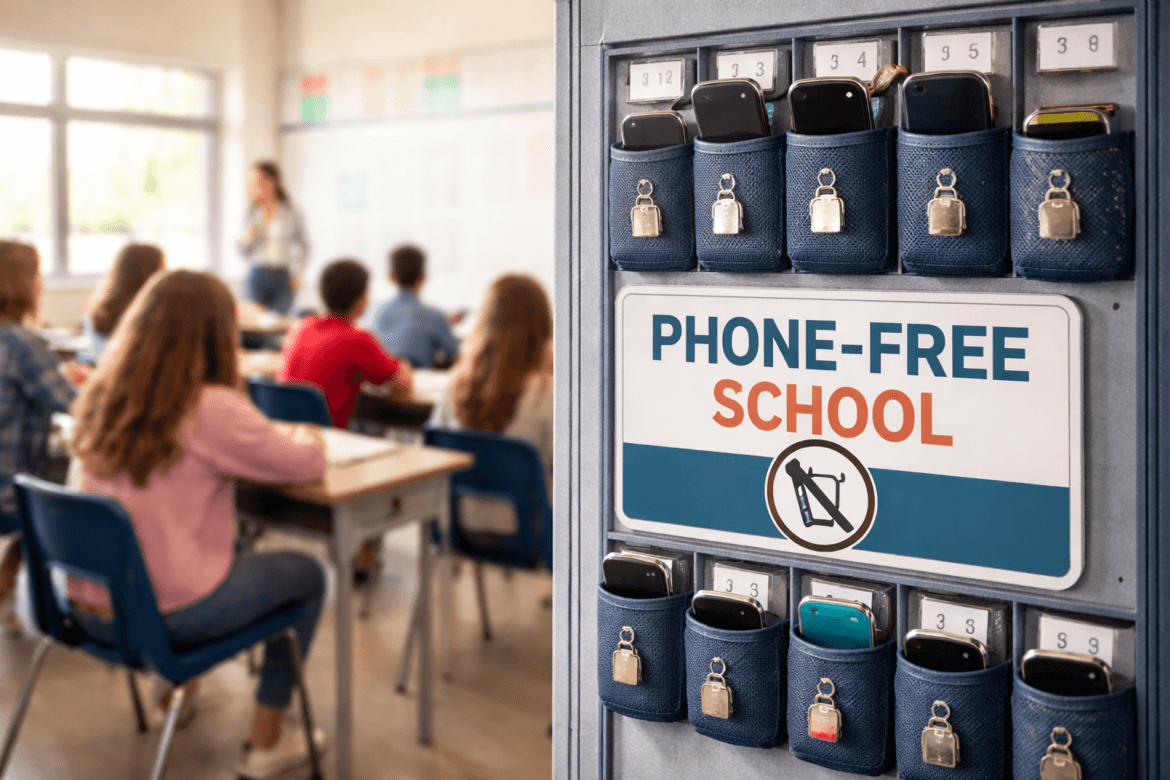
A sign reading Phone-Free Schools is displayed on a wall with locked phone pouches; students sit at desks in a classroom, engaging with their teacher at the front.
K-12EducatorsEducation Policy and GovernmentHot Topics - controversial

Phone-Free Schools and the Policy Turning Point

by EdCircuit Staff March 11, 2026
written by EdCircuit Staff 14 minutes read

Phone-free schools are moving from debate to policy, and the states taking the issue seriously are starting to make a clear distinction: restricting phones is not the same thing as removing them from the school day.

That is the central takeaway from the new Phone-Free Schools State Report Card, a national review of state laws and executive orders on student phone use in schools. The report looks at all 50 states and grades them against a model policy built around one simple idea: the less students can access their phones during the school day, the better the conditions for learning, attention, and school culture.

The report is part of the broader Distraction-Free Schools initiative, a policy effort focused on helping states and school systems reduce digital distractions in education. The initiative provides model legislation, research summaries, and implementation guidance for districts considering stronger phone policies. Rather than focusing only on banning devices, the project looks at how schools can create environments where student attention, peer interaction, and classroom instruction are less shaped by the constant pull of smartphones.

That sounds obvious. In practice, it is not.

For years, schools have tried to split the difference. Some banned phones during class but allowed them in the hallways. Some told students to keep them in backpacks. Others left the decision to individual teachers, turning phone enforcement into one more classroom battle. On paper, many of those approaches looked reasonable. In real schools, they often left the problem untouched.

This report helps explain why.

It argues that the strength of a phone policy is not just about whether a state says students cannot use phones. It is about when the restriction begins, when it ends, and whether the device is actually out of reach. That last point matters more than many policymakers seem to realize. A phone in a student’s backpack is still a phone in a student’s mind. It still vibrates. It still pulls attention. It still turns the teacher into the enforcer.

That is why the report’s highest standard is not simply a ban. It is bell-to-bell, inaccessible storage.

And right now, only North Dakota and Rhode Island meet it.

What the Report Actually Measures

One reason this report stands out is that it does more than count how many states have “done something” about phones. It examines whether those actions are likely to work.

State grades were based on laws or executive orders passed in 2024 or 2025 and measured against six criteria in the model bill. The report makes clear that policy strength begins with two basic questions. First, how much of the school day is covered? Second, where are the devices stored?

That framework produces four main categories.

At the top is bell-to-bell, inaccessible storage, the gold standard. Students are required to silence or turn off phones and store them securely from the first bell to dismissal. The report is unusually direct about why this matters. Stronger policies lead to better outcomes when students have less time with devices and less access to them during the day.

The next category is bell-to-bell, accessible storage. This is still far stronger than a classroom-only rule, but it leaves an opening. Students may be barred from using their phones all day, yet still keep them in a locker or backpack. That sounds manageable until you think about how teenagers actually interact with their devices. The phone is still there. The urge is still there. The teacher still has to police it.

Then there is class instructional time only, which the report treats as a meaningful but limited response. These policies acknowledge that phones interfere with learning, but they do not address the rest of the school day, where social pressure, distraction, and online conflict often build.

Last is policy required, no mandated elements, which is really another way of saying the state has recognized the issue without deciding how seriously to solve it. These laws require districts to have a policy, but they do not define what the policy must include. The result is predictable: uneven implementation, mixed expectations, and vastly different student experiences across districts.

The report also identifies states where bills failed, where no bill was introduced, and where legislation is still pending.

That matters because it shows this is not a settled issue. It is a live one.

What the State Map Reveals

The map is one of the most striking parts of the report because it shows both how far the movement has come and how far it still has to go.

Only two states, North Dakota and Rhode Island, earned an A for policies that require bell-to-bell inaccessible storage. That is a remarkably small number, given how much public discussion there has been around phone bans in schools. It tells us that while many leaders are talking about the problem, very few have passed policies strong enough to fully address it.

The largest group falls into the next tier: 17 states plus Washington, D.C., earned B grades for bell-to-bell restrictions with accessible storage. States in this category include Alabama, Arkansas, Florida, Georgia, Louisiana, Missouri, Nebraska, New Hampshire, New Jersey, New York, Ohio, Oklahoma, Oregon, South Carolina, Texas, Vermont, Virginia, and Washington, D.C.

This is real movement. It should not be dismissed. A full-day restriction is a serious policy change, and it signals that states are beginning to see phones as a schoolwide issue rather than a classroom annoyance.

But the difference between an A policy and a B policy matters. The report is blunt on this point: when devices remain accessible, students and teachers are not set up for success equally. Students with strong phone habits still have the urge to check them. Teachers still carry the burden of monitoring. The school may have restricted the rule, but it has not fully removed the friction.

Eight states landed in the class instructional time only category: Indiana, Iowa, Kentucky, Nevada, North Carolina, Tennessee, West Virginia, and Wisconsin. These laws protect lessons, at least in theory, but leave other parts of the school day untouched. The report notes that this overlooks both the cognitive interference caused by phones and the social and emotional harms that can spill over into the school day.

Nine states fell into the policy-required, no-mandated elements bucket: Alaska, Arizona, California, Colorado, Idaho, Maine, Minnesota, New Mexico, and Utah. These states have acknowledged the issue, but they have not defined a serious statewide response. That is often where policy starts to sound stronger than it is.

Four states saw bills fail: Connecticut, Maryland, Mississippi, and Wyoming. Two states, Montana and South Dakota, had no bills introduced. Eight states were marked incomplete because legislation was pending: Delaware, Hawaii, Illinois, Kansas, Massachusetts, Michigan, Pennsylvania, and Washington.

Put all of that together, and the picture becomes clear. The country is moving toward a tighter school phone policy. But most states are still in the middle of that shift, not at the end.

Why Stronger Policies Work Better

The report’s core argument is not ideological. It is practical.

The stricter the school cell phone policy, the better the odds that it will improve student focus and teacher morale. That is because phones are not just occasional distractions. They are designed to interrupt. A weak policy asks students to resist that pull over and over again while asking teachers to enforce a rule that is easy to break and hard to monitor.

A stronger policy changes the environment.

When a phone is secured and inaccessible, the burden shifts away from the individual teacher and becomes part of the school structure. There is less negotiation, less inconsistency, and less room for the quiet drift that happens when students check a screen between activities and carry that distraction into the next class.

That is one reason bell-to-bell policies are getting more attention. They do not just protect lecture time. They reshape the entire school day.

And that broader school-day impact matters. A class-period ban still allows lunchroom scrolling, hallway filming, social media conflict, and the mental residue of whatever students have just seen online. A stronger policy creates a break from all of that. It gives students hours of the day when they are not tethered to a device, not performing for a feed, and not managing the latest group chat drama while trying to learn algebra or participate in a seminar.

That is a very different kind of intervention.

What Is Working in Schools That Get Serious About It

One of the most compelling parts of this conversation is that the benefits of stronger phone policies do not stay abstract for long. Schools that implement them tend to describe changes that are visible almost immediately.

Teachers report fewer interruptions and less low-level conflict over phone use. Instead of repeatedly asking students to put their devices away, they can teach. That may sound small, but anyone who has spent time in a classroom knows how much energy is lost to constant redirection. A policy that reduces that friction is not a marginal improvement. It changes the feel of instruction.

Administrators often describe shifts in school culture as well. Students talk more during lunch. They interact more naturally between classes. In some schools, adults notice something they had almost forgotten to expect: eye contact, conversation, and unstructured social interaction that is not filtered through a screen.

The report also points to supporting evidence beyond the grading framework itself. The broader policy package tied to this work includes a growing body of implementation guidance and supporting research. A national survey of more than 20,000 educators suggests stricter cell phone policies are linked to fewer distractions and greater teacher satisfaction. School leaders have also shared low-cost implementation strategies and practical lessons from campuses that have already made the shift.

That matters because it pushes back on one of the most common objections, which is that only wealthy districts can enforce strong policies. The implementation materials suggest otherwise. High-cost tools like locking pouches are one option, but not the only one. Some schools use lockers. Some use structured collection systems. Some rely on simple, low-cost storage routines paired with clear expectations and consistent enforcement.

The point is not that there is only one model. The point is that strong implementation is possible when schools are serious about it.

What Is Not Working

The report is just as useful for showing where policy breaks down.

The most common failure is the half-measure dressed up as a solution.

A policy that bans phones during instructional time only may sound sensible, but it leaves the larger culture of phone dependence intact. Students can still use devices during passing periods, lunch, and other unstructured times. Online conflict still enters the building with them. Social media still shapes the emotional temperature of the day. And because students regain access repeatedly, the transition back into focused learning becomes harder.

The second failure is the lack of strong enforcement of accessible storage. This is better than a class-only ban, but it still leaves schools with the same basic vulnerability: if the phone can be reached, it will often be checked. That creates uneven enforcement, especially in large schools where consistency is hard to maintain from room to room and adult to adult.

The third failure is leaving everything to districts without clear statewide standards. In theory, local flexibility sounds wise. In practice, it often produces confusion. One district writes a serious policy. Another adopts vague language. One principal enforces it consistently. Another leaves it to teacher discretion. Students and families end up navigating different rules not because the evidence differs, but because leadership does.

And then there is the political failure: states that recognize the concern, introduce bills, and still do not pass anything. Those stalled efforts matter because they show how quickly momentum can get diluted once enforcement, parent pushback, emergency communication, and local control enter the conversation.

That does not mean the issue is overblown. It means solving it requires more than agreement that phones are a problem.

What Policymakers Still Get Wrong

The report also exposes a misunderstanding that continues to shape weaker state responses. Too many policymakers still treat student phone use as a behavioral problem rather than an environmental one.

If the issue is framed as behavior, the solution becomes student self-control and teacher enforcement. Students should know better. Teachers should manage their classrooms. Schools should encourage responsible use.

But if the issue is environmental, the response changes. The question becomes: what kind of school day are we creating, and what conditions make sustained attention possible?

The report clearly leans toward the second view. It suggests that school leaders should not build policy around the hope that students will resist a device engineered to capture their attention. They should build a policy around structures that make attention more likely in the first place.

That distinction is important for another reason. It shifts the conversation away from punishment and toward design. The enhanced 2026 model bill, referenced in the materials, maintains the same core principles while adding clearer guidance on enforcement and protections against exclusionary discipline. That suggests the movement is learning as it grows. The aim is not simply to ban phones. It is to build firm, workable, and fair policies.

The Bigger Story Behind the Report

This is not only about phones.

It is about whether schools are willing to draw clearer boundaries around attention in an era built on distraction. It is about whether educators can create parts of the day that are protected from the logic of constant connectivity. And it is about whether policymakers are ready to match public concern with policies that actually change school conditions.

That is why this report matters beyond the grades.

It gives education leaders a more honest language for talking about school smartphone policies. It shows that not all bans are equal. It clarifies why some approaches produce better results than others. And it offers a policy framework for states that are still trying to decide whether they want symbolic action or meaningful change.

For superintendents, principals, and school boards, the message is difficult to miss. If a district wants the benefits of a phone-free school day, it cannot rely on vague classroom rules and hope for the best. The policy has to be coherent. The storage has to be clear. The expectations have to be schoolwide. And the rationale has to be communicated well enough that families understand the goal is not control for its own sake, but a better learning environment.

For teachers, the report validates what many have been saying for years: phones are not a side issue. They shape attention, behavior, and classroom culture in ways schools can no longer afford to ignore.

For parents and students, the report raises a more uncomfortable but necessary question. Have we normalized a level of digital intrusion into the school day that no longer serves children particularly well?

That may be the hardest part of this conversation. Phone-free schools are often discussed as a policy fight. They are also a cultural correction.

Where the Movement Goes From Here

The national trend is unmistakable. More states are acting. More school leaders are willing to rethink the place of smartphones in schools. More evidence is being gathered. More implementation tools are becoming available.

But the next phase of this work will be defined by whether states are willing to move past partial measures.

The report shows a country in transition. The issue has clearly broken through. What has not yet happened is full alignment between what leaders say they want and the policies they are actually passing.

If the goal is fewer distractions, stronger teacher morale, healthier student relationships, and more focused classrooms, then the report leaves little ambiguity about the direction of travel. Bell-to-bell matters. Inaccessible storage matters. Clarity matters.

The states earning the highest marks are not simply the states that took action. They are the states that recognized a harder truth: a phone policy only works when it changes the conditions of the school day, not just the wording of the rule.

That is the real turning point.

And it is why this report deserves serious attention from anyone shaping the future of school policy.

Subscribe to edCircuit to stay up to date on all of our shows, podcasts, news, and thought leadership articles.
March 11, 2026 0 comments
0 FacebookTwitterPinterestLinkedinWhatsappCopy LinkEmail
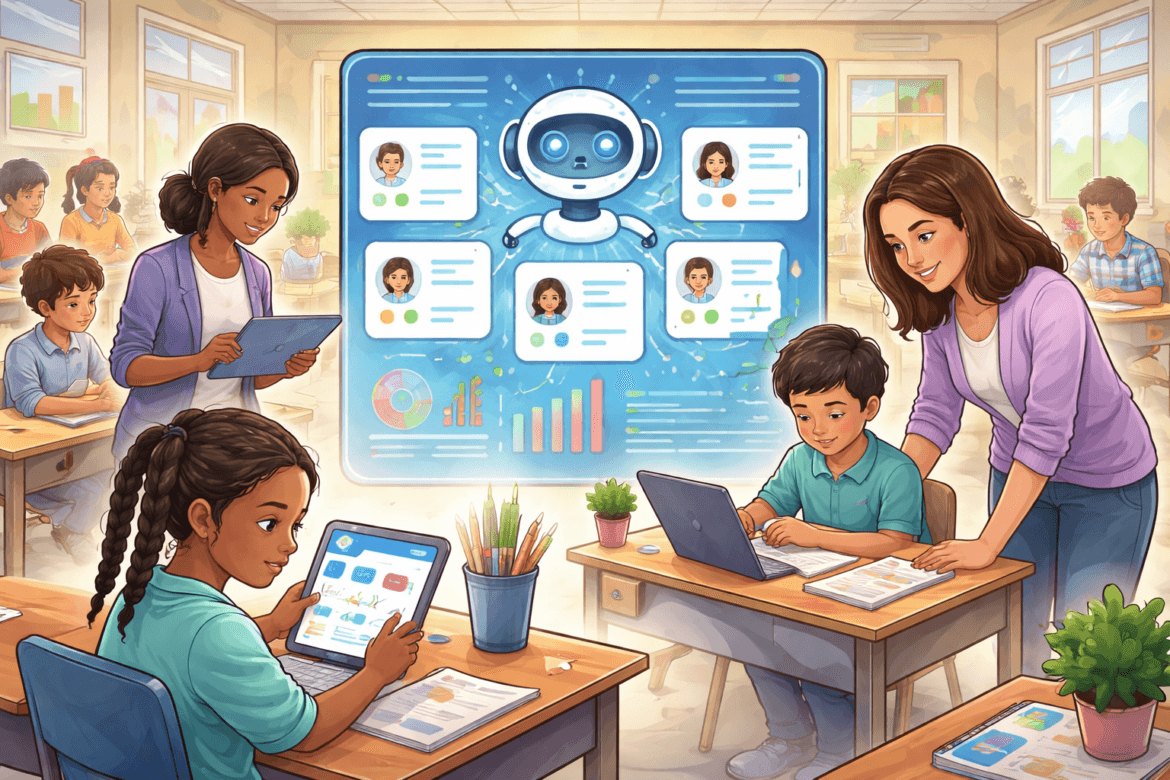
Students use tablets and laptops in a classroom as a large digital screen displays a robot and student profiles, while teachers assist with technology-based learning and AI student assessments.
Personalized LearningHot Topics - controversialArtificial IntelligenceK-12Literacy and ReadingAssessment and Testing

AI in Early Student Assessment and Intervention

by EdCircuit Staff March 11, 2026
written by EdCircuit Staff 6 minutes read

AI in early student assessment is transforming how schools interpret student performance, shifting test-taking from a static measurement tool into a dynamic system that drives early intervention, personalized instruction, and stronger collaboration with families.

For decades, assessments have largely functioned as checkpoints. Students took tests. Teachers reviewed scores. Schools compared proficiency levels. Interventions often followed weeks—or months—later.

Today, artificial intelligence is reshaping that process. Instead of treating assessment as an endpoint, AI allows districts to treat it as the beginning of a responsive, individualized learning strategy.

At the elementary and middle school levels, where foundational skills determine long-term academic success, that shift may be one of the most significant instructional developments of the past decade.

From Test Scores to Diagnostic Intelligence

Traditional assessments provide data. AI-enhanced systems provide insight.

When a second grader misses five reading comprehension questions, the raw score only tells part of the story. AI-driven platforms analyze deeper patterns: Did the student struggle with vocabulary-based questions? Inference-based prompts? Questions requiring working memory? Was there hesitation before selecting answers? Was accuracy inconsistent across similar standards?

Instead of simply labeling performance as “below grade level,” AI systems identify the root cause.

For teachers, this changes everything.

Rather than reteaching an entire comprehension unit to the whole class, an educator can target instruction toward specific subskills. A student who understands literal meaning but struggles with inference receives different support than a student who struggles with decoding fluency. The classroom remains cohesive, but instruction becomes surgical.

For special education coordinators and interventionists, this diagnostic precision supports more defensible and data-informed decisions. It reduces guesswork and allows early supports to be both proactive and targeted.

Why Early Identification Matters More Than Ever

The earlier a learning gap is identified, the greater the likelihood of closing it efficiently.

By third grade, reading proficiency becomes a predictor of future academic outcomes. By middle school, math confidence begins influencing course selection and long-term academic identity. Delayed identification of skill gaps can lead to frustration, disengagement, and widening disparities.

AI in early student assessment accelerates identification timelines.

Instead of waiting for end-of-year testing cycles, AI-powered benchmark assessments can flag subtle patterns in real time. A kindergarten literacy screener may detect early weaknesses in phonemic awareness. A fourth-grade math diagnostic may reveal conceptual misunderstandings of fraction magnitude long before state testing.

The key is timing.

When intervention begins early:

  • Instructional adjustments are smaller and more manageable

  • Students maintain confidence

  • Families receive support before concerns escalate

  • Schools reduce long-term remediation costs

This is not simply about efficiency. It is about preserving a student’s sense of capability during formative years.

What Personalized Instruction Looks Like in Practice

In forward-thinking districts, AI is not replacing teachers. It is equipping them with sharper tools.

Consider a fifth-grade classroom using an adaptive math assessment platform. After a benchmark test, the teacher’s dashboard does not simply display percentages. It displays skill clusters: number sense, proportional reasoning, multi-step problem solving, and vocabulary comprehension tied to word problems.

One student shows strong procedural accuracy but weak conceptual understanding. Another demonstrates strong conceptual reasoning but inconsistent calculation fluency.

The teacher responds differently to each.

Small groups are formed not by overall score, but by skill pattern. One group works through visual fraction models. Another engages in timed fluency practice. A third focuses on vocabulary embedded in applied word problems.

Instruction becomes differentiated without becoming chaotic.

At the same time, students working independently encounter adaptive practice modules that adjust difficulty in real time. If a student struggles, scaffolds appear. If a student excels, complexity increases. Learning remains within a productive challenge zone.

For administrators, this creates alignment between assessment, instruction, and intervention. Data is no longer siloed; it is actionable.

Supporting RTI and Special Education Pathways

For students receiving tiered intervention support, AI-enhanced assessment systems provide clearer tracking of growth.

Under traditional models, progress monitoring often required manual tracking and periodic reassessment. AI platforms now analyze micro-growth over shorter intervals to determine whether an intervention strategy is producing measurable gains.

If progress plateaus, teachers know sooner. If growth accelerates, support intensity can be adjusted appropriately.

For IEP teams, this precision strengthens documentation and defensibility. Growth data can be tied directly to targeted skills rather than generalized performance categories.

Equally important, AI can help prevent over-identification. Students who may simply need targeted skill reinforcement—rather than formal special education placement—can receive focused support earlier, reducing unnecessary labeling.

For families navigating intervention conversations, this level of specificity fosters transparency. Discussions move beyond “your child is struggling” to “your child needs support in this specific subskill, and here is how we are addressing it.”

Strengthening Family-School Partnerships

One quiet advantage of AI in early student assessment is improved communication.

Parents often receive assessment reports filled with unfamiliar terminology and percentile rankings. AI-generated summaries can translate performance into clear skill narratives: what the student is doing well, what needs strengthening, and how families can reinforce those skills at home.

In some districts, family dashboards now visualize growth trends across months, not just annual benchmarks. This allows parents to see momentum, not just snapshots.

When families understand the why behind intervention plans, they are more likely to reinforce strategies at home. That shared clarity reduces tension and increases partnership.

For school board members evaluating assessment investments, this transparency supports community trust.

Equity, Bias, and Responsible Implementation

AI systems are only as strong as their data and oversight.

District leaders must ensure that:

  • Training data reflects diverse student populations

  • Algorithms are routinely evaluated for bias

  • Data privacy safeguards are robust

  • Educators receive professional development on interpreting AI insights

AI should enhance equity, not automate disparities.

When implemented responsibly, AI in early student assessment can serve as an equity accelerator. Students who might otherwise be overlooked—quiet strugglers, English learners with emerging proficiency, or students masking difficulty with effort—can be identified earlier and supported appropriately.

But this requires intentional leadership.

Reframing the Purpose of Testing

Perhaps the most significant shift is philosophical.

For years, testing has been associated with accountability pressures and high-stakes evaluation. AI offers an opportunity to reframe assessment as a growth tool rather than a judgment tool.

When assessments are frequent, adaptive, and diagnostic, they become part of the learning process rather than interruptions to it.

Students see feedback sooner. Teachers adjust faster. Intervention begins earlier.

Instead of asking, “What score did this student earn?” schools can ask, “What does this student need next?”

That subtle shift transforms the culture around testing.

The Bigger Picture: Building Responsive Learning Systems

In 2026 and beyond, districts investing in AI-enhanced assessment are building more responsive systems.

Kindergarten literacy screening identifies phonological gaps within weeks.
Second-grade math diagnostics flag conceptual misunderstandings early.
Middle school benchmark assessments highlight patterns in executive function that influence academic performance.

Instruction adapts. Intervention tightens. Communication strengthens.

Most importantly, students receive help before struggle becomes identity.

The promise of AI in early student assessment is not about replacing human expertise. It is about amplifying it.

When used thoughtfully, AI equips educators with deeper insight, empowers families with clearer information, and ensures that early intervention becomes the norm rather than the exception.

For educators, advocates, administrators, special education coordinators, and school board members, the question is no longer whether AI will influence assessment.

The question is how intentionally schools will harness it to support every learner—early, precisely, and equitably.

Subscribe to edCircuit to stay up to date on all of our shows, podcasts, news, and thought leadership articles.
March 11, 2026 0 comments
0 FacebookTwitterPinterestLinkedinWhatsappCopy LinkEmail
A woman sits at a crowded desk with books and a laptop, looking stressed as digital icons for emails, tasks, and notifications—visualizing her cognitive load—swirl around her in a busy public space.
Hot Topics - controversialArtificial IntelligenceK-12Executive Function

Cognitive Load in Modern Teaching: A System Challenge

by EdCircuit Staff March 10, 2026
written by EdCircuit Staff 5 minutes read

Cognitive load in modern teaching is no longer an abstract theory—it is the lived reality of every classroom. In a single class period, a teacher may shift from delivering instruction to analyzing formative data, redirecting behavior, troubleshooting a digital platform, supporting a student in emotional distress, differentiating for multiple readiness levels, and documenting evidence of learning for accountability systems. None of these moments happen in isolation. They happen simultaneously, in real time, in front of students.

Ask any teacher what their brain feels like at 10:42 a.m.—that’s cognitive load.

This is not simply teaching.
This is high-level cognitive performance.

And in this moment in education, the schools that thrive will be the ones that recognize a fundamental truth: instructional improvement is directly tied to protecting educators’ cognitive capacity.

From delivering content to managing complexity

For decades, teaching was framed as content delivery supported by classroom management. Today, it is better understood as the continuous management of attention, decision-making, and mental workload.

Modern educators are simultaneously:

  • Learning designers

  • Data interpreters

  • Technology integrators

  • Differentiation specialists

  • Relationship builders

They are not just presenting knowledge. They are orchestrating complex learning environments.

This shift represents a profound evolution in professional practice. The defining expertise of today’s teacher is not only what they know—it is how they allocate their thinking in high-stakes, fast-moving instructional settings.

The cognitive architecture of the modern classroom

Cognitive Load Theory gives us a powerful lens for understanding why teaching feels different today—and why traditional improvement strategies often fall short.

Intrinsic load: the complexity of learning

This is the essential work of teaching and learning:

  • Guiding students through multistep problem-solving

  • Modeling analytical writing

  • Facilitating scientific investigation safely

  • Teaching students to evaluate information in an AI-driven world

This is where we want teachers to spend their mental energy.

Extraneous load: the system-created burden

This is where modern schooling has dramatically increased educators’ workload.

It includes:

  • Multiple disconnected platforms

  • Constant digital communication

  • Compliance documentation

  • Redundant data entry

  • Technology failures during instruction

These tasks consume working memory without improving student learning. When extraneous load increases, instructional precision decreases.

Germane load: the thinking that drives growth

This is the professional cognitive space required for:

  • Providing meaningful feedback

  • Designing responsive instruction

  • Building classroom culture

  • Creating relevance and engagement

This is the work that changes student outcomes—and it is the first thing lost when systems overwhelm educators.

The hidden reality: teachers as executive function managers

We often discuss student cognitive load, but the teacher’s cognitive load is the control center of the learning environment.

At any given moment, an educator is:

  • Monitoring the whole room while conferencing with one student

  • Adjusting pacing based on real-time understanding

  • Anticipating misconceptions

  • Managing technology access

  • Making equity-based instructional decisions

That is not multitasking. That is advanced executive functioning under pressure.

When this load becomes unsustainable, we do not see a decline in effort—we see:

  • Decision fatigue

  • Slower feedback cycles

  • Reduced instructional clarity

  • Professional burnout

This is not a capacity issue.

This is a system design issue.

Technology: the great amplifier

Technology has expanded what is possible in teaching—but it has also multiplied the number of decisions educators must make.

Every tool introduces new cognitive questions:

  • Is this aligned to the learning goal?

  • Can every student access it?

  • What data does it generate?

  • How do I respond to that data instructionally?

When platforms are not interoperable or intentionally selected, technology becomes a cognitive tax rather than an instructional accelerator.

In coherent systems, technology reduces mental load.

In fragmented systems, it consumes it.

Personalization and the expanding mental workload

The promise of modern education is meeting every learner’s needs. The reality is that personalization, without systemic support, becomes one of the most cognitively demanding aspects of teaching.

Educators are expected to:

  • Differentiate in real time

  • Provide intervention and enrichment simultaneously

  • Monitor progress continuously

  • Support diverse learning plans

This requires constant analysis, planning, and execution within a single class period.

Personalization is not just a pedagogical shift.
It is a cognitive one.

AI as a cognitive capacity tool

One of the most important reframes for this moment is how we talk about artificial intelligence in schools.

AI is often positioned as a time-saving device.
Its real power is far more significant.

AI can:

  • Organize information

  • Generate instructional starting points

  • Support feedback cycles

  • Reduce routine cognitive tasks

This does not replace teachers. It protects their thinking, allowing them to focus on:

  • Relationships

  • Instructional decision-making

  • Deep learning design

In other words, it increases germane cognitive load by reducing extraneous load.

The leadership challenge: stop adding, start removing

For superintendents, district leaders, and school boards, this moment demands a shift in how we define improvement.

The most important question is no longer:

What should we add?

It is:

What can we remove so teachers can think more deeply about learning?

The systems that see measurable gains in student success will be those that:

  • Align curriculum, assessment, and technology

  • Eliminate redundant processes

  • Protect time for instructional thinking

  • Evaluate every initiative through a cognitive load lens

Because every new requirement—no matter how well intentioned—competes for the finite working memory of educators.

A new definition of instructional excellence

Great teaching in today’s classrooms is not defined by how much content is covered. It is defined by how effectively educators:

  • Prioritize attention

  • Make real-time decisions

  • Manage complexity

  • Build human connections that drive learning

That is cognitive expertise.
And it is one of the most sophisticated professional skill sets in our economy.

The future belongs to coherent systems

This is the system’s conversation that will define the next decade of education.

The districts that retain educators, accelerate student growth, and successfully integrate innovation will not be the ones with the most initiatives. They will be the ones with the most coherent instructional ecosystems.

They will understand that:

Reducing unnecessary cognitive load is not about making teaching easier.

It is about making powerful teaching possible.

The closing shift

For teachers, this recognition is validating. The exhaustion many feel is not a personal shortcoming—it is the result of working in environments that demand constant cognitive switching.

For leaders and policymakers, it is a call to action.

Every platform, mandate, and reporting structure must be examined through a single guiding question:

Does this protect or consume the cognitive capacity required for great teaching?

Because the future of learning will not be defined by the tools we adopt or the standards we write.

It will be defined by whether we create the conditions that give educators the mental space to do the work that matters most.

And the schools that get this right will not only improve outcomes.

They will redefine what is possible in modern teaching.

Subscribe to edCircuit to stay up to date on all of our shows, podcasts, news, and thought leadership articles.

March 10, 2026 0 comments
0 FacebookTwitterPinterestLinkedinWhatsappCopy LinkEmail
Newer Posts
Older Posts

Participate

  • Contribute
  • Sponsor
  • Submit Release
  • Subscribe
  • Get Interviewed

We value your privacy

We use cookies to enhance your browsing experience, serve personalized ads or content, and analyze our traffic. By clicking "Accept All", you consent to our use of cookies.

Customize
  • Needed for the site to work: signing in, the cart, your consent choice. Always on.

    8 cookies
    • ss_consent 1 yearYour cookie choice on this site, so you are not asked again.
    • wordpress_logged_in_* 2 days, or 14 days with "remember me"Keeps you signed in as you move between pages.
    • wordpress_sec_* 2 days, or 14 days with "remember me"The secure half of your sign-in.
    • wordpress_test_cookie SessionChecks that your browser accepts cookies when you sign in.
    • wp-settings-* 1 yearYour display settings when signed in.
    • wp_woocommerce_session_* 2 daysYour shopping session: the cart and the checkout.
    • woocommerce_cart_hash SessionTells the site whether your cart has changed.
    • woocommerce_items_in_cart SessionWhether your cart holds anything.
  • Remembers choices you make, such as a language or a region, and supports features like live chat.

    1 cookie
    • woocommerce_recently_viewed SessionThe products you looked at, so the site can show them again.
  • Helps us understand how visitors use the site: which pages are read, and for how long.

    2 cookies
    • _ga 2 yearsGoogle Analytics: tells one visitor from another. Set only after you allow analytics.
    • _ga_* 2 yearsGoogle Analytics: keeps your session state. Set only after you allow analytics.
  • Measures how fast pages load so we can make them faster.

  • Used to show you content and offers that match your interests, on this site and elsewhere.

    1 cookie
    • sbjs_* SessionWooCommerce order attribution: where you came from, so a purchase can be credited to the campaign or site that sent you.

Your browser asks us not to sell or share your information (Global Privacy Control), so advertising cookies stay off.

Do not sell or share my personal information

Some cookies from other companies help show you offers on other sites. Tick the box and save your preference to opt out of that sharing; untick it to opt back in at any time.

Your browser sends Global Privacy Control, so this preference is set for you and cannot be changed here.

Sign In

Keep me signed in until I sign out

Forgot your password?

Password Recovery

A new password will be emailed to you.

Have received a new password? Login here

Shopping Cart

Close

No products in the cart.

Close
-
00:00
00:00

Queue

Update Required Flash plugin
-
00:00
00:00

Your cart (items: 0)

Products in cart

Product Details Total
Subtotal $0.00
Shipping and discounts calculated at checkout.
View cart
Go to checkout

Your shopping cart is empty

Return to shop

Notifications