

edCircuit
  • Start Here
    • Login
    • Register
    • Subscribe
    • Submit a Press release
    • Advertise or Sponsor
    • Contribute
    • Get Interviewed
  • On the Wire
  • EdTech
    • All EdTech
    • Online Learning
    • Hybrid and Remote Learning
    • Augmented and Virtual Reality
    • ESports
    • Gamification and Game-Based Learning
    • Digital Citizenship
    • EdTech Entrepreneurs
    • Market Trends
    • Future of Education
  • Artificial Intelligence
  • K-12 Education
    • All K-12
    • K-12 Teachers
    • Teaching Strategies
    • Special Education and IEPs
    • Dyslexia
    • Gifted and Advanced Learning
    • Early Childhood, Pre-K and Kindergarten
    • School Calendar
    • Tutoring and Homework Help
    • Attendance and Absenteeism
    • After-School Programs
    • School Counselors
    • Homeschooling
    • School Models
    • Teacher Retention
    • Parents
    • Students
    • STEM and STEAM Education
  • Teaching and Learning
    • Literacy and Reading
    • Math Education
    • Civics and History Education
    • Financial Literacy
    • Assessment and Testing
    • Curriculum and Instruction
    • Personalized Learning
    • Project-Based Learning
    • Social-Emotional Learning
    • Executive Function
    • Creativity
    • Diversity, Equity, Inclusion
  • Professional Development
    • All Professional Development
    • Educators
    • Administrators
    • edLeaders
  • Higher Education
    • All Higher Education
    • College Admissions
    • Career and Technical Education (CTE)
    • Graduation
    • FAFSA and Financial Aid
    • Student Loans
  • Cybersecurity
  • School Safety
    • All School Safety
    • Science and Lab Safety
    • School Design and Facilities
    • Bullying
    • Duty of Care and School Liability
  • Continuing Education
    • All Continuing Education
    • Online Certificate Programs
    • Teaching Jobs and Careers
    • Teacher Appreciation
  • Education Policy and Government
    • All Education Policy
    • Department of Education
    • School Choice
    • Global
    • Advocates
  • EDU Shows
    • All EDU Shows
    • Safer Ed
    • Mind the Gap
    • Education Industry Questions
    • CoffeEd
    • InFocus
    • InformED Report
  • EDU Podcasts
    • All EDU Podcasts
    • Author Chats
    • CoSN The Podcast
    • Education Today
    • Building the Bridge
    • Students Speak
  • Education Industry Guides and Reports
  • Archived Media
    • Future of School: The Podcast
    • Equity Everywhere
  • About edCircuit
  • Subscribe
edCircuit
  • LOGIN
Home Tags Posts tagged with "Headline"
Tag:

Headline

This if for posts to be in the featured/top section of site
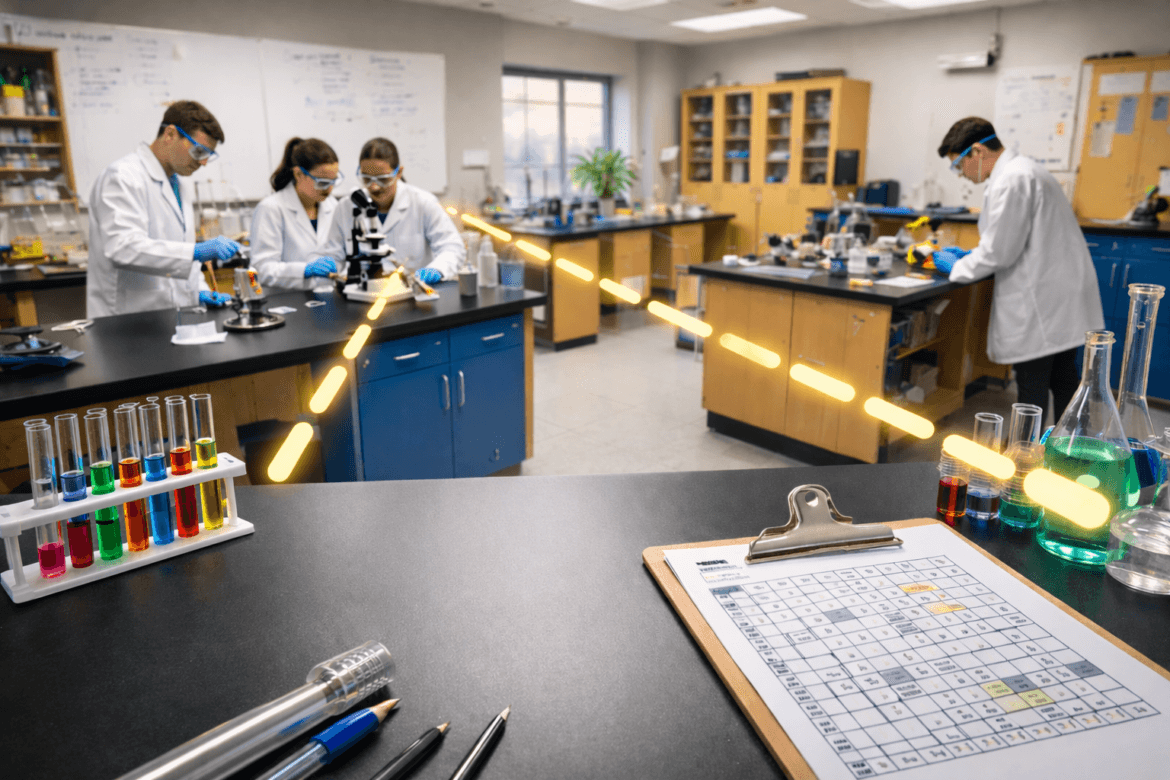
Five people in lab coats and goggles conduct experiments under Supervision by Design Prevents Classroom Incidents; a periodic table and test tubes with colored liquids are visible in the foreground.
Safer EdK-12

Supervision by Design Prevents Classroom Incidents

by EdCircuit Staff March 9, 2026
written by EdCircuit Staff 5 minutes read

Supervision by design determines whether teachers can actually see risks as they develop in real time.

A classroom can look perfectly safe before students arrive. Equipment is organized. Workstations are clear. Emergency stations are accessible. But the moment students enter, and movement begins, the room transforms—and the teacher’s ability to see what is happening everywhere can disappear.

Students gather around the equipment. Groups cluster near shared tools. Materials move between stations. Conversations happen in several places at once. Within minutes, visual barriers begin to form.

Nothing dramatic happens. No alarms sound. But in that moment, the safety system depends on one critical factor: whether the adult in the room can see what is happening before a small mistake becomes something larger.

That is the principle behind supervision by design.

This article accompanies the latest episode of the Safer Ed Podcast: Supervision by Design: Why Sightlines Prevent Incidents.
Safer EdSupervision by Design: Why Sightlines Prevent IncidentsMarch 9, 2026 · 11 min 58 sPlay episode: Supervision by Design: Why Sightlines Prevent Incidents (11 minutes 58 seconds)0:00-11:58Follow on SpotifyApple


The Visibility Problem Schools Rarely Recognize

When schools evaluate safety, they often focus on policies, procedures, and training. These elements are essential, but they rely on one condition that is frequently overlooked—visibility.

If educators cannot see an unsafe behavior beginning, they cannot intervene early enough to prevent it.

This challenge is especially important in active learning environments such as:

  • STEM laboratories

  • Career and Technical Education spaces

  • Engineering and Robotics classrooms

  • Makerspaces and Project-Based learning environments

These spaces involve tools, materials, and processes that require constant observation. When visibility is interrupted, supervision shifts from proactive prevention to reactive response.

And that shift often determines whether a near miss becomes an incident.

How Blind Spots Develop

Blind spots rarely appear intentional. They usually develop through routine decisions about storage and equipment placement.

Tall cabinets, stacked supplies, equipment carts, and shelving units are often positioned where space allows rather than where visibility is strongest. Over time, these objects create areas of the room that cannot be seen clearly from the teacher’s natural position.

In quiet walkthroughs, these obstacles may not seem significant.

But once students begin moving through the space, those same objects become barriers that interrupt sightlines across the room.

When that happens, the teacher’s awareness of certain areas depends on physically moving to inspect them.

Even brief gaps in visibility can create moments where mistakes go unnoticed.

Supervision Zones and Active Classrooms

In many modern classrooms, several activities occur at the same time.

One group may be conducting an experiment while another gathers supplies. A third group may be documenting results or cleaning equipment. In CTE spaces, students may operate tools in multiple locations simultaneously.

These environments create what safety professionals often call supervision zones—distinct areas of activity that require attention.

If those zones are arranged so the teacher can observe them from a central position, supervision becomes efficient and proactive.

If they are scattered across blind spots, the teacher must constantly move between areas simply to maintain awareness.

That constant movement creates brief moments where other zones fall outside supervision.

Supervision by design organizes these zones so they remain visible within a teacher’s line of sight.

Congestion Creates Hidden Risk

Even well-designed classrooms can lose visibility when congestion occurs.

Students naturally gather around certain areas:

  • supply cabinets

  • sinks and wash stations

  • shared tools

  • charging stations

  • demonstration areas

When these features are clustered together, groups of students form visual barriers that block the teacher’s view of nearby workstations.

Over time, these congestion points become predictable areas where supervision weakens.

Spreading these high-traffic features across the room helps maintain clear sightlines even when multiple students are present.

Why Walkthroughs Often Miss the Problem

Administrators frequently observe classrooms during walkthroughs, but those observations typically occur during calm periods of instruction.

Students are seated. Movement is minimal. The teacher is leading the lesson.

Under those conditions, supervision appears straightforward.

The real test of visibility occurs during the most active parts of learning:

  • lab setup

  • equipment use

  • collaborative work

  • transitions and cleanup

Observing classrooms during these moments reveals whether the environment supports supervision—or quietly undermines it.

Small Adjustments Can Restore Visibility

Improving supervision often requires far less change than people expect.

Simple adjustments can significantly improve sightlines:

  • lowering tall storage units

  • relocating equipment carts

  • repositioning workstations toward central visibility

  • redistributing supply locations

  • reducing clutter along walkways

These small design changes allow educators to monitor several areas of the room simultaneously.

When teachers no longer need to constantly reposition themselves to maintain awareness, supervision becomes more stable and effective.

Visibility Influences Behavior

Students quickly recognize whether adults can see what is happening in a classroom.

When visibility is clear, expectations are easier to enforce because students know their actions are observable.

But when blind spots exist, those areas can unintentionally become spaces where rules feel less enforced.

Visibility, therefore, shapes behavior just as strongly as policies or reminders.

Supervision by design helps align the environment with the expectations educators are trying to maintain.

Designing Classrooms for Awareness

Effective safety systems support the way people actually move and work within a space.

Rules and training matter, but they depend on awareness. Awareness depends on visibility.

When classrooms are designed with clear sightlines and intentional supervision zones, educators can recognize problems early and respond quickly.

That is the core idea behind supervision by design.

A Conversation Worth Sharing

For school leaders, the lesson is simple but powerful.

Supervision is not only a staffing responsibility.
It is a design decision.

When learning spaces allow teachers to see activity clearly, safety systems become stronger, interventions happen earlier, and complex learning environments operate more smoothly.

Because in active classrooms, safety does not begin with rules.

It begins with what adults can see.

Subscribe to edCircuit to stay up to date on all of our shows, podcasts, news, and thought leadership articles.

March 9, 2026 0 comments
0 FacebookTwitterPinterestLinkedinWhatsappCopy LinkEmail
A teacher hands a closed laptop to a student in a classroom, illustrating K–12 device repair models. The student, wearing a backpack, stands by a table with electronics and tools while other students work in the background.
EdTechHot Topics - controversialK-12

K–12 Device Repair Models That Scale and Support Students

by EdCircuit Staff March 9, 2026
written by EdCircuit Staff 5 minutes read

K–12 device repair and management starts long before a screen goes dark. It begins the moment a student receives a device and the expectations that come with it.

Part One: Setting the Foundation for Device Use and Care

Picture a familiar moment: a student approaches her teacher, holding a Chromebook that will not turn on. She has already tried powering it off and back on. Nothing happens. Her worry is immediate. Will she fall behind on assignments? Will her family be charged for repairs they cannot afford? Does this mean weeks without a device?

Most districts have seen some version of this moment. And it highlights an important reality: device repair is not just a technical issue. It is an access issue, an equity issue, and a sustainability issue.

Devices Are Instructional Tools, Not Extras

In a 1:1 environment, devices are no longer optional learning tools. They are how students access instruction, communicate with teachers, complete assessments, and use accessibility supports. When a device fails, learning stops unless the district has a plan in place.

That is why the first phase of any scalable repair model starts with clear expectations. Districts that manage this well usually define three things upfront:

  • How devices should be used and cared for

  • What counts as accidental damage versus misuse

  • What support students can expect when something goes wrong

Student and family agreements often outline these responsibilities in straightforward language. Many districts emphasize basic care: keeping food and liquids away, transporting devices safely, reporting issues early, and not attempting repairs at home.

These expectations are not about discipline. They are about shared responsibility.

Clarity Up Front Prevents Conflict Later

When expectations are unclear, device repairs quickly become emotional. Families feel surprised by fees. Teachers are unsure how to respond. IT teams are left making judgment calls that should already be covered by policy.

Clear onboarding materials help prevent that. Districts with strong programs revisit device care expectations each year, provide materials in multiple languages, and reinforce policies throughout the school year. When expectations are established early, repair conversations tend to be calmer and more consistent.

Equity Must Be Built Into the Policy

One clear lesson from district policies and national reporting is that repair models that rely heavily on family payments create inequity.

Not all damage is carelessness. Devices are used on buses, at kitchen tables, and in shared spaces. Students do not all have the same learning environments or storage options at home. Repair fees that seem reasonable on paper can still create real barriers.

Many districts address this by:

  • Offering optional or included protection plans

  • Capping repair costs per year

  • Waiving fees for accidental damage or financial hardship

  • Providing loaner devices immediately

These approaches protect instructional access while still encouraging responsible device use.

Part Two: When Devices Fail, and Learning Is on the Line

No matter how clear the expectations are, devices will break. Screens fail. Batteries wear down. Keyboards stop responding. The real test of a district’s device program is how it responds when that happens.

The Hidden Cost of Poor Repair Models

Without a scalable repair structure, districts often overload their internal teams. Technicians are pulled away from long-term planning to respond to urgent issues. Teachers become intermediaries. Administrators spend time resolving repair disputes instead of focusing on instruction.

As device programs grow, repair volume grows with them. A sustainable model plans for that reality instead of reacting to it.

Tiered Repair Support Reduces Downtime

Districts that handle repairs well usually rely on tiered support systems:

  1. Classroom-level triage
    Teachers identify issues and submit tickets quickly, without being expected to troubleshoot hardware.

  2. School-based support
    Trained staff or student tech teams handle simple fixes, such as charger or keyboard issues, or login issues.

  3. Centralized or vendor-supported repair

    More complex repairs are handled through district repair centers or certified partners.

This structure keeps devices moving through the system and prevents IT bottlenecks.

Defining Responsibility Without Assigning Blame

One of the most difficult questions districts face is who pays for repairs.

Clear policies separate:

  • Normal wear and tear

  • Accidental damage

  • Repeated or intentional misuse

Many districts absorb the cost of routine failures, recognizing that devices are part of the instructional infrastructure. Others use progressive accountability, in which repeated harm leads to conversations and support rather than immediate penalties.

Federal guidance around assistive technology also reinforces that students with disabilities must not lose access due to repair delays or costs. That makes loaner availability and fast turnaround essential.

Repair Time Matters as Much as Cost

From a student’s perspective, repair time matters more than almost anything else. A device gone for weeks might as well be gone for the rest of the term.

Districts that prioritize access focus on:

  • Same-day or next-day loaners

  • Clear repair timelines

  • Simple communication with families

This approach reduces anxiety and keeps students learning even when devices fail.

Why Scalable Repair Models Support Long-Term Programs

A well-designed repair program does more than fix broken devices. It:

  • Reduces staff burnout

  • Makes budgeting more predictable

  • Protects instructional time

  • Builds trust with families

  • Extends the life of district devices

When repair is treated as an afterthought, costs increase, and frustration builds. When it is planned, documented, and supported, 1:1 programs are more likely to last.

Bringing It All Together

Device management and repair in K–12 education is not about avoiding failure. It is about planning for it.

The student standing in front of her teacher with a blank screen should not have to worry about falling behind or creating a financial burden for her family. With clear expectations, equitable policies, and scalable repair systems, districts can turn moments of disruption into routine processes.

Devices will break. The question is whether the system around them is strong enough to support students when they do.

Subscribe to edCircuit to stay up to date on all of our shows, podcasts, news, and thought leadership articles.

March 9, 2026 0 comments
0 FacebookTwitterPinterestLinkedinWhatsappCopy LinkEmail
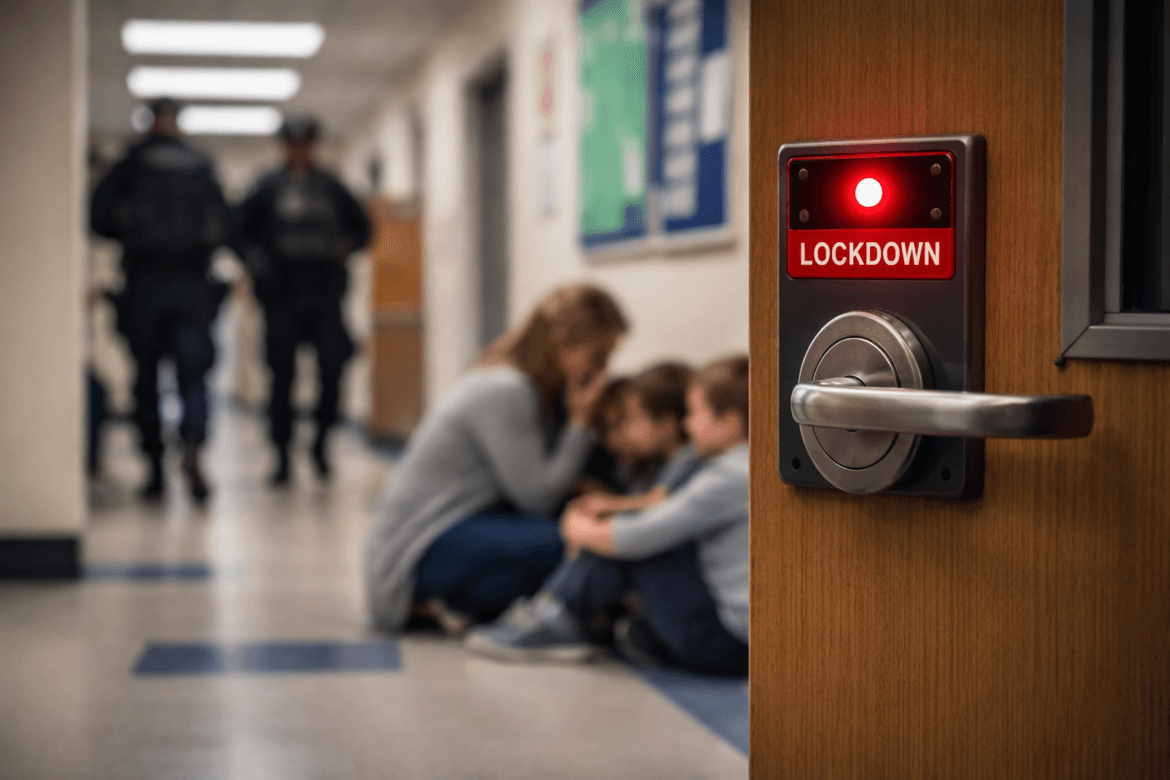
A door with a red lockdown light is in focus—a stark reminder of school lockdowns—as a woman and children sit together in the hallway while police officers stand watch in the background.
School SafetyK-12Duty of Care and School LiabilityHot Topics - controversial

School Lockdown: Duty of Care and Safety Protocols

by EdCircuit Staff March 6, 2026
written by EdCircuit Staff 14 minutes read

Student safety during school lockdowns depends on a sequence every staff member has practiced: a clear announcement, locked doors, lights off, everyone out of sight and silent, an accounting of every student, updates to families through official channels, and an all-clear followed, when needed, by reunification. The sections below set out each step of a school lockdown, how a lockdown differs from other emergency actions, and what teachers and families should do.

School lockdown procedures have become a central component of modern school safety planning as districts across the United States respond to rising threats, swatting incidents, and growing expectations around duty of care for students, teachers, and staff.

For school administrators, educators, law enforcement partners, and school boards, a lockdown is not simply an emergency response protocol—it is part of a district’s legal and ethical duty of care. That responsibility requires school leaders to prepare for potential threats, respond quickly when they arise, and ensure that students and staff remain safe inside the school building.

But the conversation surrounding lockdowns is evolving. Schools are now balancing three equally critical responsibilities: protecting physical safety, communicating clearly with families, and addressing the mental health impact of these events on students and staff.

For many communities, the most important question is no longer whether lockdown procedures exist. The real question is: How prepared is your district when a threat occurs?

What Constitutes a School Lockdown Threat?

School lockdown procedures are typically initiated when administrators believe there is a credible threat that could endanger individuals inside the building.

Threats that may trigger a lockdown can include:

  • A weapon reported on campus

  • An active shooter or violent individual

  • Police activity or a dangerous suspect in the surrounding area

  • A credible threat communicated online or by phone

  • Escalating violence or unsafe behavior inside the school

One type of incident that has grown more common in recent years is swatting—a malicious act in which someone falsely reports a violent event, such as a school shooting or bomb threat, to trigger an armed police response. These incidents force schools to initiate lockdowns while law enforcement verifies whether the threat is real.

Because the consequences of underreacting can be catastrophic, most districts follow a precautionary approach. If administrators believe there is even a possibility of danger, lockdown procedures are typically activated immediately while authorities investigate.

This rapid decision-making highlights the core principle behind school safety policies: protect first, confirm later.

Lockdown, Lockout, Shelter and Evacuate: What Each Means

A lockdown is one of several protective actions a school can call, and the words are not interchangeable. Federal planning guidance describes lockdown as the set of actions schools take to secure buildings and grounds “during incidents that pose an immediate threat of violence in or around the school” (Guide for Developing High-Quality School Emergency Operations Plans, U.S. Departments of Education, HHS, Homeland Security and Justice, FBI and FEMA, 2013). The same guide lists a lighter variation in which outdoor activities stop, doors are locked and visitors are closely monitored while classes continue; some districts call that lighter action a lockout.

ActionWhen it is usedWhat happens
LockdownA threat or hazard inside the building, or an immediate threat of violenceClassroom doors locked, lights off, occupants out of sight and silent; doors are not opened until responders or administrators unlock them
Lockout (Secure in the Standard Response Protocol)A threat or hazard outside the building, such as police activity nearbyEveryone brought inside, exterior doors locked; teaching continues indoors
Shelter (shelter in place)A hazard that makes staying indoors safer, such as a tornado or a chemical releaseStudents and staff move to designated rooms and follow the protective action for that hazard
EvacuateA need to move people from one place to another, such as a fireStudents and staff move to an announced location, on or off site, and are accounted for

Sources: lockdown, shelter-in-place and evacuation annexes in the 2013 federal guide linked above; the Standard Response Protocol of the “I Love U Guys” Foundation, which replaced the word Lockout with Secure in its 2021 edition because the two terms were being confused (The Standard Response Protocol). The School Safety guide explains the protocol in full.

What Happens During a School Lockdown?

While exact procedures vary by district, most school lockdowns follow similar steps to secure classrooms and limit movement throughout the building.

When a lockdown is announced, teachers and staff immediately begin securing their classrooms. Doors are locked, lights are often turned off, and students are moved away from windows and doors to remain out of sight.

Students who may be in hallways, restrooms, or common areas are quickly directed into the nearest secure classroom. Movement throughout the building stops entirely.

In classrooms, students are expected to remain quiet while teachers monitor the situation and, if possible, maintain communication with school leadership.

At the same time, school administrators contact law enforcement and begin coordinating with first responders. Police officers assess the situation, determine the nature of the threat, and work with school officials to decide when it is safe to lift the lockdown.

The lockdown remains in place until an official “all clear” is issued.

Many districts now support these procedures with additional security infrastructure, including controlled door access systems, surveillance cameras, and emergency notification technology designed to help administrators respond quickly during a crisis.

How Do Schools Handle Lockdowns? Step by Step

Schools handle lockdowns by following a written sequence that every staff member has practiced, so that no one has to decide what to do in the moment. Details vary by district and by state requirements, but the federal guide asks each school’s emergency operations plan to cover locking doors, the effect of the building’s windows and doors, what to do when the threat is inside, accounting for everyone, communication with families and reunification (2013 federal guide). A typical sequence follows.

  1. Announcement. The Standard Response Protocol advises that any student or staff member who sees a life-safety threat should be able to start a lockdown, in plain language rather than codes, with school administrators and local law enforcement notified at once. The Standard Response Protocol’s public address is “Lockdown! Locks, Lights, Out of Sight!”, repeated twice (SRP K12 Operational Guidance V4.2).
  2. Locks. Teachers gather any students in the hallway into the room if it is safe to do so, then lock the classroom door and any other access points. Exterior doors are normally already locked during the school day.
  3. Lights. Lights are turned off so the room appears unoccupied.
  4. Out of sight. Students move to a pre-identified area of the room that cannot be seen from the door’s window and stay silent. Phones are silenced.
  5. Accounting for students. The teacher takes attendance, notes any student who is missing and any extra student who has joined the room, and reports this by the method the plan specifies.
  6. Communication with families. The district sends updates through its official channels and asks families to stay where they are and wait for instructions.
  7. Clearing the building. Law enforcement clears the building, often one room at a time. Staff do not open the door to a knock or a voice; responders or administrators unlock it. The Foundation reports accounts of lockdowns lasting hours, including one in which clearing the classrooms took about an hour after the threat was resolved.
  8. All-clear and reunification. The lockdown ends only when an official all-clear is given. If the building is a crime scene or the event was serious, students may be moved to a reunification site where they are released only to authorized adults.

Communication: The First Battle Against Panic

One of the greatest challenges during a lockdown is not just managing the emergency—it is managing information.

Parents often learn about incidents through social media or student text messages before receiving official updates from the school district. Without clear communication, rumors and misinformation can spread quickly.

To address this challenge, districts increasingly rely on layered communication systems that include:

  • Emergency text alerts to parents and guardians

  • District notification apps

  • Automated phone calls and emails

  • Updates posted to district websites or social media channels

The challenge for administrators is balancing speed with accuracy. Sending information too quickly can lead to incomplete or incorrect updates. Waiting too long, however, can create confusion and anxiety for families.

Many districts now prepare pre-written emergency message templates and designate specific staff members responsible for crisis communications. This allows school leaders to provide timely updates while ensuring messages remain consistent and accurate.

Clear communication not only reassures families, but it also helps prevent panic from escalating during an already stressful situation.

The Mental Health Impact of Lockdowns

While lockdowns are designed to protect physical safety, research increasingly shows they can also leave a lasting emotional impact on students and educators.

Studies examining school lockdown experiences have linked these events to increased anxiety, stress, and heightened perceptions of danger among some students. Researchers have also found that students who already experience stress or mental health challenges may be particularly vulnerable to the emotional impact of lockdown situations.

This growing awareness has prompted many districts to rethink how lockdown drills are conducted.

Rather than using surprise drills or simulated violence, many schools are shifting toward trauma-informed safety training that prepares students and staff without causing unnecessary fear.

Schools are also expanding mental health support following lockdown events. This may include access to school counselors, classroom discussions led by teachers, or additional communication with families to help students process what occurred.

Experts emphasize that students should understand why safety procedures exist and how they help protect everyone inside the school community.

The Role of Teachers and Staff

Teachers and school staff are often the first line of response during a lockdown.

In the first moments of an incident, they must secure their classrooms, protect students, and maintain calm under pressure. For many students, the teacher’s emotional tone determines how they react.

When educators remain calm and confident, students are more likely to feel safe even in stressful situations.

Because of this responsibility, many districts now provide annual safety training for teachers and staff that includes crisis response planning, threat recognition, and communication strategies.

This preparation ensures that when a lockdown occurs, teachers are not improvising—they are following procedures they have practiced and understand.

Students Outside the Classroom, Students With Disabilities and Substitutes

A lockdown plan must work for the people who are not sitting in a classroom with their own teacher when it is called.

  • Students in hallways, restrooms, the cafeteria or outdoors. Students outside a classroom should go into the closest room with a door that can be secured. If they cannot get into a room, they are taught to get out of sight or, when the threat is nearby and there is no secure room, to move away from the building and go to a known location so they can be accounted for (SRP K12 Operational Guidance V4.2). Plans should name a staff member to check restrooms and other open areas when it is safe to do so.
  • Students with disabilities. The federal guide states that school emergency plans must comply with the Americans with Disabilities Act, must not separate individuals with disabilities from service animals and assistive devices, and must provide disability-related assistance during emergencies, including help with medications (2013 federal guide). In practice, each student who needs help to move, stay quiet or understand an announcement should have a named adult and a plan that is written down, practiced and shared with that student’s teachers and family.
  • Substitute teachers and visitors. The same guide states that substitute teachers must be trained on the plan and their role in it. A short lockdown card in every substitute folder, with the room’s safe area, the lock method and the reporting procedure, covers the essentials.
  • Specialist rooms. Gymnasiums, libraries, auditoriums and science labs have more doors, more windows and more students than a classroom; each needs its own secured area identified in advance.

What Students and Parents Should Know

While administrators and law enforcement ultimately make decisions during a lockdown, students and families also play an important role in school safety.

Students should understand the purpose of lockdown procedures and the importance of following the teacher’s instructions immediately during an emergency. Remaining quiet, staying out of sight, and avoiding unnecessary movement can be critical to keeping everyone safe.

Parents, meanwhile, should familiarize themselves with their district’s safety protocols and emergency communication systems.

During a lockdown, safety experts strongly advise parents not to rush to the school campus, as this can interfere with emergency responders and complicate the situation.

Instead, families should rely on official district updates and wait for guidance before attempting to retrieve students.

What Families Should and Should Not Do During a School Lockdown

During a school lockdown, the most useful thing a parent can do is stay away from the school and follow the district’s official updates. The Standard Response Protocol’s sample message to parents asks them to “stay where they are and remain available to receive updates and instructions” (SRP K12 Operational Guidance V4.2).

Families should:

  • Keep their contact details current with the school so emergency alerts reach them.
  • Follow the district’s official channels (text alerts, email, the district website or verified social media accounts) and treat other posts as unconfirmed.
  • Keep phone lines free for the school’s messages.
  • Tell the district at once if their child has left the building and contacted them, so the school can mark the child as safe.
  • Bring photo identification if they are asked to collect their child from a reunification site.

Families should not:

  • Drive to the school, which can interfere with emergency responders.
  • Repeatedly call a child whose phone could make noise in a room that must stay silent; a short text is better if contact is needed.
  • Share unverified information, photos or messages from inside the school on social media.

A Question Every School Community Should Ask

Every district has a lockdown policy written somewhere in its safety handbook.

But far fewer communities regularly revisit those plans with the people who must carry them out.

Do students understand what a lockdown means?

Do teachers feel confident securing their classrooms under pressure?

Do parents know where to get information during an emergency?

And perhaps most importantly, does the district have a plan to support students emotionally after a lockdown?

These questions are becoming increasingly important as schools recognize that safety planning must address both physical protection and emotional well-being.

After a Lockdown: Debrief, Counseling and Reunification

A lockdown is not over when the doors open. The federal guide’s recovery annex asks schools to plan who leads emotional recovery, where counseling and psychological first aid will be provided, how teachers will create a calm environment and share basic information about the incident, and how to meet the short- and long-term counseling needs of students, staff and families (2013 federal guide).

  • Reunification. When students cannot simply be dismissed, they are released only to authorized adults through a planned process. The federal guide’s family reunification annex asks schools to plan how families learn the process in advance, how staff verify that an adult is authorized to take custody of a student, and how to make sure students do not leave on their own.
  • Information for families. A follow-up message the same day states what happened, when the lockdown began and ended, and what support is available.
  • Support in classrooms. Teachers give students a short, factual account and time to ask questions, and refer any student who appears distressed to a counselor.
  • Staff debrief. Administrators, staff and responders review what worked and what did not: whether the announcement was heard everywhere, whether every door locked, whether every student was accounted for, and how long messages to families took. The federal guide recommends an after-action report that identifies gaps and documents lessons learned.
  • Plan changes. Findings are written into the emergency operations plan and the next round of training.

How schools should practice lockdowns, and what the research says about drills and student stress, is covered in the School Safety guide’s section on lockdown drills.

Preparing for the Future

School lockdown procedures are not simply about reacting to a crisis. They are about preparation, communication, and trust.

Across the country, districts are working to improve safety planning by strengthening partnerships with law enforcement, investing in better communication technology, redesigning lockdown drills to reduce trauma, and expanding mental health support for students and staff.

These improvements reflect a growing understanding that school safety is not defined by a single policy or drill. It is the result of continuous planning, training, and community awareness.

Because when students walk through school doors each morning, they expect a place of learning.

It is the responsibility of every district to ensure it is also a place of safety.

Play video: Focus at Four: What to Do When Your Child’s School Goes on Lockdown (5 minutes 54 seconds)5:54
Focus at Four: What to Do When Your Child’s School Goes on Lockdown5 min 54 sKBTX News on YouTube

KBTX News – Focus at Four: What to Do When Your Child’s School Goes on Lockdown (Play video)

Subscribe to edCircuit to stay up to date on all of our shows, podcasts, news, and thought leadership articles.

March 6, 2026 0 comments
0 FacebookTwitterPinterestLinkedinWhatsappCopy LinkEmail
A modern, open-plan workspace with groups of people collaborating, using laptops and tablets. This flexible and future-ready environment features tiered steps, shared tables, and a large window revealing a workshop area in the background.
Hot Topics - controversialSchool Design and FacilitiesK-12

Flexible and Future-Ready School Design for 2026

by EdCircuit Staff March 5, 2026
written by EdCircuit Staff 4 minutes read

Flexible and future-ready school design is taking center stage in 2026 as districts rethink how learning environments support modern instruction. Walk into a newly built or recently renovated school, and the difference is immediate. Instead of long hallways lined with identical classrooms, students gather on learning stairs, work in open collaboration areas, and move between flexible spaces designed for active, technology-driven learning.

As school buildings undergo new construction or major renovations, architecture is no longer just about housing classrooms. It is increasingly viewed as a strategic tool that shapes how students engage, how teachers instruct, and how schools adapt over time. District leaders are recognizing that the physical environment must evolve alongside instructional models.

Across the country, this has led to a move away from rigid, single-purpose rooms and toward adaptable spaces built for collaboration, career readiness, and long-term flexibility.

Why School Design Is Shifting

Traditional school buildings were designed for predictable schedules, quiet individual work, and teacher-centered instruction. While that model still has value, it no longer reflects how many students learn today.

Project-based learning, interdisciplinary instruction, career pathways, and expanded technology use require spaces that support movement, teamwork, and hands-on work. At the same time, districts are planning for longevity, knowing that buildings must remain functional for decades despite rapid changes in education and workforce demands.

Future-ready school design is less about following trends and more about creating environments that can adapt as instructional needs evolve.

Learning Stairs as Everyday Collaboration Spaces

One of the most visible elements of modern school architecture is the rise of learning stairs. These open, tiered seating areas are often located in central parts of a building and are designed for daily use rather than occasional assemblies.

Learning stairs support:

  • Group discussions and presentations

  • Informal collaboration and study

  • Community gatherings and school events

  • Flexible instruction outside traditional classrooms

Unlike auditoriums, learning stairs are intentionally informal and accessible. They encourage interaction, visibility, and shared ownership of space. For students, they feel less institutional. For educators, they provide new options for engaging larger groups without relying on fixed seating.

Specialized Labs for High-Demand Career Pathways

As career readiness becomes a core focus, flexible, future-ready school design increasingly includes specialized labs aligned with high-demand trades and industries.

These spaces often support:

  • Advanced manufacturing and robotics

  • Health sciences and medical pathways

  • Construction, welding, and skilled trades

  • Media production and digital design

Rather than resembling traditional classrooms, these labs are designed to mirror real-world work environments. Equipment, layouts, and safety features reflect industry standards, helping students build practical skills while still in school.

For districts, these labs also strengthen partnerships with local employers, community colleges, and workforce organizations, positioning schools as active contributors to regional economic development.

The Evolution of the Media Center

The role of the media center has changed dramatically in modern school design.

While books remain part of the space, flexible and future-ready school design prioritizes:

  • Technology access and device support

  • Collaborative work zones

  • Small-group project spaces

  • Multimedia creation and presentation areas

Quiet, individual study is no longer the sole purpose. Instead, media centers function as learning commons where students research, create, collaborate, and problem-solve together. This shift reflects how students access information today and how learning increasingly happens through shared inquiry.

Flexibility as a Core Design Principle

Adaptability is one of the defining features of future-ready schools.

Movable walls, modular furniture, and multi-use spaces allow rooms to change function throughout the day. A space used for direct instruction in the morning may support project teams in the afternoon and host community events in the evening.

This flexibility helps districts:

  • Adjust to changing instructional models

  • Respond to enrollment fluctuations

  • Launch new programs without major renovations

For school boards and superintendents, flexible design represents a long-term investment that reduces the need for costly updates as priorities shift.

What This Means for Educators and Students

For teachers and principals, flexible spaces can support more dynamic instruction when paired with clear expectations and professional development. Districts that succeed with modern design involve educators early in the planning process to ensure spaces enhance teaching rather than complicate it.

For students, these environments feel more connected to the real world. Learning takes place in spaces that resemble workplaces, studios, and collaborative hubs instead of rows of desks. That sense of relevance can increase engagement and ownership of learning.

Designing Schools for the Future

Flexible and future-ready school design reflects a broader shift in education toward adaptability, relevance, and student-centered learning. As districts plan for 2026 and beyond, the focus is no longer on whether school buildings should change, but on how intentionally they are designed to support evolving learning experiences.

When architecture aligns with instructional goals, school buildings become more than facilities. They become active participants in how students learn, collaborate, and prepare for life beyond graduation.

Subscribe to edCircuit to stay up to date on all of our shows, podcasts, news, and thought leadership articles.

March 5, 2026 0 comments
0 FacebookTwitterPinterestLinkedinWhatsappCopy LinkEmail
Student data privacy after graduation: a new graduate walks away from school at sunset as a glowing trail of their student records follows them out of the doors
K-12Hot Topics - controversialSchool Safety

Student Data Privacy: What Happens After Graduation?

by EdCircuit Staff March 4, 2026
written by EdCircuit Staff 6 minutes read

Student data privacy begins the moment a family enrolls a child in school, and it does not end on graduation day. Each year, districts ask families for home addresses, phone numbers, household details, emergency contacts, language needs, medical information and eligibility for services. Over thirteen years of school, those forms, along with grades, attendance, assessments, discipline and digital learning activity, build a detailed record of a young person’s life. Most families never ask what happens to that record once their child leaves.

What happens to student records after graduation depends on the record, the school district and the state. Some information is kept permanently, some is destroyed after a set number of years, and some sits with outside companies that schools hired along the way. This article explains what counts as student data, what happens to a student’s records and ID number after graduation, how long schools keep transcripts, and what districts should do to protect the information they hold.

What counts as student data?

Personally identifiable information, often shortened to PII, is any information that can identify a student directly or indirectly. In schools it covers far more than names and ID numbers. It includes birth dates and home addresses, state-issued student identifiers, parent and guardian contact information, attendance, discipline and academic records, special education documents and accommodation plans, health information shared with the school, and demographic data such as race, ethnicity and primary language.

What is FERPA?

The federal Family Educational Rights and Privacy Act, or FERPA, is the main federal law on student records. It protects students’ education records and gives parents the right to see them. Those rights move to the student at 18, or earlier if the student enrolls in college; FERPA calls that student an eligible student. Many states add their own student privacy laws on top of FERPA.

What happens to your student ID number when you graduate?

A graduate usually has two ID numbers, and they are handled differently. The district ID, the number on a student badge and in school accounts, stops being used when the student leaves. School email and learning accounts are switched off on a schedule the district sets; one Massachusetts district, for example, disables student accounts after graduation, typically in September, and lets graduates request a short reactivation to save their work. The records connected to that number are not deleted with the account.

The state student ID lasts longer. States assign each public school student a unique identifier and use it in statewide longitudinal data systems, which the federal government supports so states can follow students’ progress from early learning through school, college and work. The National Center for Education Statistics describes these as K–12 and P-20W data systems, meaning early learning through the workforce. Washington’s system, for instance, links records from all four sectors through a separate matching ID. A few states now set limits. Nevada’s 2025 law requires the state to move a student’s data, including the ID number, into an archive within a year of graduation, remove the personally identifying details, and destroy the archived data ten years after the student turns 22.

How long do high schools keep transcripts?

Usually, permanently. FERPA itself does not set a retention period: it does not require schools to keep records, and it does not require them to destroy records after graduation, according to the U.S. Department of Education’s Student Privacy Policy Office. Retention is set by state schedules and district policy. Texas’s schedule for school districts, for example, makes the high school academic record permanent, keeps the cumulative record for prekindergarten through eighth grade for five years after a student withdraws, and keeps special education records for five years after services end.

Special education files have an added rule. Under the federal Individuals with Disabilities Education Act, a school must tell parents when the information it collected is no longer needed to serve the child, and must destroy it if the parents ask. The school may still keep a permanent record of the student’s name, address and phone number, grades, attendance, classes attended, and the grade level and year completed.

Data kept too long is data at risk

A student who stays in one district from kindergarten through 12th grade may leave more than a decade of records behind. Information is added every year and rarely removed, and many districts have no routine review to decide whether older records are still needed. The Department of Education’s privacy office has advised that while transcripts may need to be kept indefinitely, much other information may no longer be needed once a student graduates. Every record kept past its use is one more record that can be exposed.

The risk is not theoretical. In December 2024, a hacker broke into PowerSchool, one of the most widely used student information systems, and later claimed to have taken records on more than 62 million students and 9.5 million teachers, TechCrunch reported; the company said it could not confirm a precise number. The 19-year-old responsible was sentenced to four years in prison in October 2025. A breach of that size reaches everyone whose records a system still holds, which is why retention decisions matter.

Third-party vendors and expanded access

Schools now rely on dozens of outside companies, from learning platforms to transportation software, and each one that receives student information becomes another place that information is stored. School photography is a common example that receives little attention. Photo companies collect students’ names, grades, schools and images every year, and a single company may hold a student’s pictures from kindergarten to graduation. Families are rarely told how long those images are kept or how they are protected, and districts do not always ask.

State laws are starting to close that gap. Utah’s 2026 law, which takes effect July 1, 2026, requires education technology vendors to return or delete all personally identifiable student data when a contract ends, without waiting for the school to ask. Districts remain responsible for student data even when an outside company handles it, so contracts should say what data the vendor may collect, how it is secured, who can see it, whether it is shared with subcontractors, how long it is kept, and what happens to it when the contract ends.

What districts should do now

Districts can earn families’ trust with a few concrete practices. Publish a plain-language privacy policy and a retention schedule that says how long each kind of record is kept. Review each year what data is collected and stop collecting what is not needed. Check vendors’ privacy practices before signing and again each year, and require deletion at the end of every contract. Give families a named contact for privacy questions.

Families have a role too. Parents can ask which companies hold their child’s data, request to see their child’s education records, and, for special education records, ask that information no longer needed be destroyed. Graduates should request copies of their transcripts and save their school-account work before their accounts close. Student data represents real children and families who trusted their schools with it, and that responsibility lasts well beyond graduation day.

Related reading

  • Student Data Privacy: What Schools Collect & Why It Matters
  • Personally Identifiable Information (PII) in Education Today
  • COPPA in Schools: What Educators Must Know
  • Cameras in Schools: Safety, Surveillance, and Privacy
  • School Bus Cameras and Student Privacy

Subscribe to edCircuit to stay up to date on all of our shows, podcasts, news, and thought leadership articles.
March 4, 2026 0 comments
0 FacebookTwitterPinterestLinkedinWhatsappCopy LinkEmail
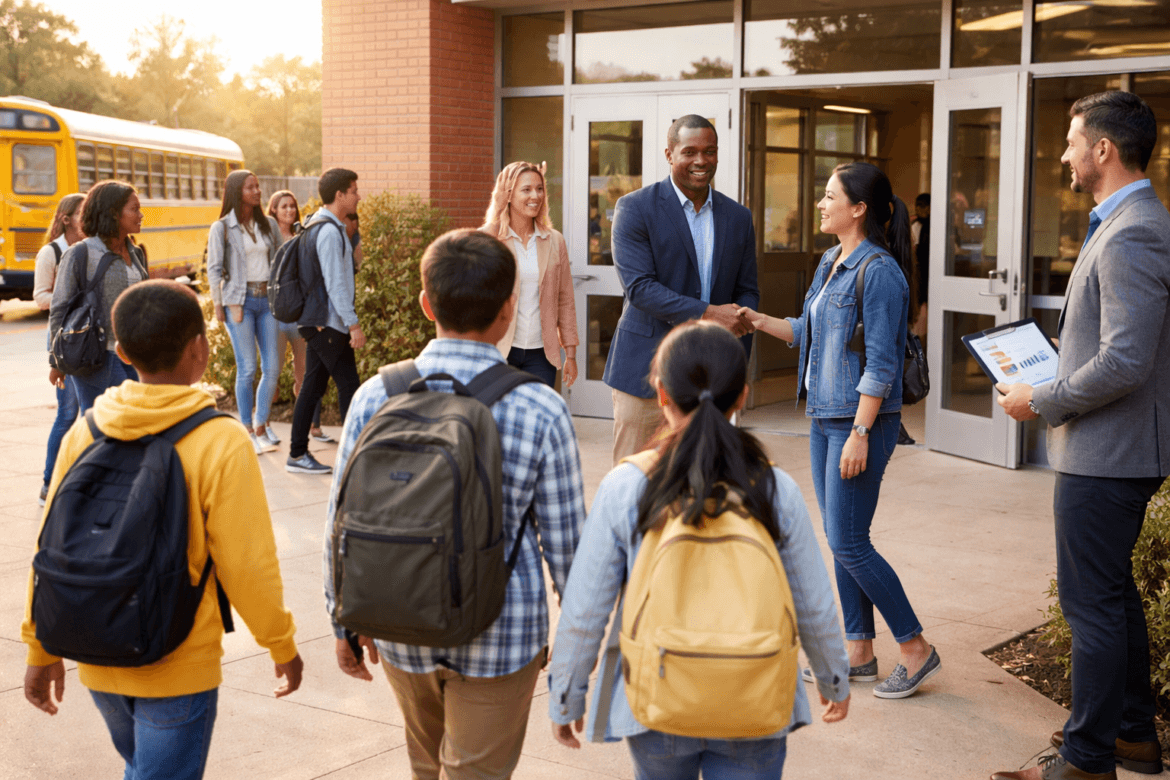
Students enter a school building as two adults shake hands outside the entrance, with a school bus and staff visible in the background, highlighting efforts toward addressing chronic absenteeism.
edLeadersHot Topics - controversialK-12Attendance and AbsenteeismEducatorsK-12 Teachers

Addressing Chronic Absenteeism: Six Key Elements Every School Leader Should Include in Their Plans

by Traci Davis March 3, 2026
written by Traci Davis 5 minutes read

Chronic absenteeism is, in my opinion, one of the most urgent challenges facing K-12 education in America today. Defined by the U.S. Department of Education as missing 10% or more of school days, chronic absenteeism emerged as a serious challenge during the COVID-19 pandemic. According to the American Enterprise Institute’s Return 2 Learn Tracker, chronic absenteeism surged nationwide from 15% before COVID-19 to 28% in 2022 and remains elevated at 24% in 2024.

As a former teacher, school administrator, and school superintendent, I have seen school districts try various strategies and approaches to fight chronic absenteeism. But to effectively address this urgent issue, school leaders need to look beyond just attendance policies and automated outreach technology.   

Rather, returning students to school, reengaging them in learning, and reconnecting them to opportunity requires strategic leadership, a coordination of school and community systems, and a commitment to building human connections with the chronically absent. During my career in K-12 education, I’ve seen what works and what does not in the fight to bring disengaged students back to school, and here are the six key elements I believe must be integrated into any school system’s effort to combat chronic absenteeism. 

Vision, Alignment and Data Use

1. Set a Clear Vision and Systemwide Alignment. Chronic absenteeism is not an operational concern. It is a human-centered issue that requires a human-centered solution. As such, school leaders should seek to frame attendance not in terms of data, but in terms of equity and student success. This requires setting clear goals aligned to strategic plans, communicating the urgency of the issue to stakeholders, and outlining clear expectations at every level of the school system. Then, district administrators, school principals, and community partners should align around shared goals and responsibilities for success and measurable outcomes.

Once this occurs, addressing the issue of chronic absenteeism becomes a collective responsibility of the community, and the district is positioned to maximize its response to the issue.

2. Use Data to Target Resources Strategically. All too frequently, I’ve seen school systems analyze attendance reports in a silo. It is important that a student’s attendance data be analyzed alongside their academic record, their grade level progression, behavioral record, and district demographic trends. This will help district leaders pinpoint where chronic absenteeism is undermining learning, and reveal attendance patterns and places of acute need.  This type of careful data review helps ensure targeted, equitable interventions that maximize resources.

Human-Centered Intervention and Community Partners

3. Adopt a Human-Centered Intervention Model. In my experience, chronic absenteeism is very rarely a question of motivation or truancy alone. I believe it is a symptom of a broken relationship between schools and families, combined with a set of complicated social, emotional, and environmental barriers that make daily attendance difficult. These human-centered challenges require human-centered solutions.

A powerful tool in repairing the broken relationships between families, students, and schools that is often at the root of chronic absenteeism is a home visit conducted by trained, culturally responsive community members. These visits can reset the family-school relationship, flipping it from one focused on enforcement to one predicated on partnership. When trusted members of the community meet families where they are, communicate in a family’s preferred language, and honor the cultural norms of the communities schools serve, productive partnerships can be built.

4. Leverage Community-Based Capacity. Home visits often uncover a web of interconnected issues such as housing instability, chronic health issues, transportation barriers, and unmet socio-emotional needs that prevent a student’s regular school attendance. School leaders should bring together relevant district departments with community providers of student services, transportation, healthcare, and housing to strategize ways of better supporting chronically absent students. By aligning their efforts, school systems and community organizations are better positioned to address the underlying issues preventing a student’s regular school attendance.

Accountability and Long-Term Sustainability

5. Ensure Accountability and Continuous Improvement. An important but often overlooked part of any systemic effort to address chronic absenteeism is monitoring and continuous improvement. It is important that school districts create systems for real-time reporting and outcome tracking. This will help identify patterns and trends as they emerge, which will in turn enable the district to pivot resources as appropriate.

It is also important to create a system to elevate the insights gleaned through your district’s personal outreach. Data will often not capture the nuance of these insights, yet they may provide information that will inform district policy, communications strategies, and services.  Leadership teams that integrate quantitative and qualitative data create smart feedback loops that translate the insights from individual interventions into systemwide learnings that can improve decision making.

6. Plan for Sustainability. To ensure the work to fight chronic absenteeism is sustainable, districts should align their efforts with allowable funding streams and larger district priorities. Federal, state, and local funding streams such as Title I, community school funds, and student support allocations can often be applied to efforts to support engagement, wraparound services, and family outreach when initiatives are framed as student success priorities. In addition, embedding attendance strategies within district improvement initiatives and long-term strategic plans help ensure efforts to reengage students in learning are not damaged by shifting priorities or short-term funding cycles.

Better data collection or a compliance-based approach alone will not solve the urgent issue of chronic absenteeism. Only through purpose-built strategies that prioritize human connections, strengthen relationships, align community resources, and remove barriers to student attendance will school districts be able to successfully address what is in my opinion the biggest issue facing K-12 education and our nation today. The work is complex and challenging, but at this time, I can think of no other more important mission.

Subscribe to edCircuit to stay up to date on all of our shows, podcasts, news, and thought leadership articles.

March 3, 2026 0 comments
0 FacebookTwitterPinterestLinkedinWhatsappCopy LinkEmail
Newer Posts
Older Posts

Participate

  • Contribute
  • Sponsor
  • Submit Release
  • Subscribe
  • Get Interviewed

We value your privacy

We use cookies to enhance your browsing experience, serve personalized ads or content, and analyze our traffic. By clicking "Accept All", you consent to our use of cookies.

Customize
  • Needed for the site to work: signing in, the cart, your consent choice. Always on.

    8 cookies
    • ss_consent 1 yearYour cookie choice on this site, so you are not asked again.
    • wordpress_logged_in_* 2 days, or 14 days with "remember me"Keeps you signed in as you move between pages.
    • wordpress_sec_* 2 days, or 14 days with "remember me"The secure half of your sign-in.
    • wordpress_test_cookie SessionChecks that your browser accepts cookies when you sign in.
    • wp-settings-* 1 yearYour display settings when signed in.
    • wp_woocommerce_session_* 2 daysYour shopping session: the cart and the checkout.
    • woocommerce_cart_hash SessionTells the site whether your cart has changed.
    • woocommerce_items_in_cart SessionWhether your cart holds anything.
  • Remembers choices you make, such as a language or a region, and supports features like live chat.

    1 cookie
    • woocommerce_recently_viewed SessionThe products you looked at, so the site can show them again.
  • Helps us understand how visitors use the site: which pages are read, and for how long.

    2 cookies
    • _ga 2 yearsGoogle Analytics: tells one visitor from another. Set only after you allow analytics.
    • _ga_* 2 yearsGoogle Analytics: keeps your session state. Set only after you allow analytics.
  • Measures how fast pages load so we can make them faster.

  • Used to show you content and offers that match your interests, on this site and elsewhere.

    1 cookie
    • sbjs_* SessionWooCommerce order attribution: where you came from, so a purchase can be credited to the campaign or site that sent you.

Your browser asks us not to sell or share your information (Global Privacy Control), so advertising cookies stay off.

Do not sell or share my personal information

Some cookies from other companies help show you offers on other sites. Tick the box and save your preference to opt out of that sharing; untick it to opt back in at any time.

Your browser sends Global Privacy Control, so this preference is set for you and cannot be changed here.

Sign In

Keep me signed in until I sign out

Forgot your password?

Password Recovery

A new password will be emailed to you.

Have received a new password? Login here

Shopping Cart

Close

No products in the cart.

Close
-
00:00
00:00

Queue

Update Required Flash plugin
-
00:00
00:00

Your cart (items: 0)

Products in cart

Product Details Total
Subtotal $0.00
Shipping and discounts calculated at checkout.
View cart
Go to checkout

Your shopping cart is empty

Return to shop

Notifications