


edCircuit
  • Start Here
    • Login
    • Register
    • Subscribe
    • Submit a Press release
    • Advertise or Sponsor
    • Contribute
    • Get Interviewed
  • On the Wire
  • EdTech
    • All EdTech
    • Online Learning
    • Hybrid and Remote Learning
    • Augmented and Virtual Reality
    • ESports
    • Gamification and Game-Based Learning
    • Digital Citizenship
    • EdTech Entrepreneurs
    • Market Trends
    • Future of Education
  • Artificial Intelligence
  • K-12 Education
    • All K-12
    • K-12 Teachers
    • Teaching Strategies
    • Special Education and IEPs
    • Dyslexia
    • Gifted and Advanced Learning
    • Early Childhood, Pre-K and Kindergarten
    • School Calendar
    • Tutoring and Homework Help
    • Attendance and Absenteeism
    • After-School Programs
    • School Counselors
    • Homeschooling
    • School Models
    • Teacher Retention
    • Parents
    • Students
    • STEM and STEAM Education
  • Teaching and Learning
    • Literacy and Reading
    • Math Education
    • Civics and History Education
    • Financial Literacy
    • Assessment and Testing
    • Curriculum and Instruction
    • Personalized Learning
    • Project-Based Learning
    • Social-Emotional Learning
    • Executive Function
    • Creativity
    • Diversity, Equity, Inclusion
  • Professional Development
    • All Professional Development
    • Educators
    • Administrators
    • edLeaders
  • Higher Education
    • All Higher Education
    • College Admissions
    • Career and Technical Education (CTE)
    • Graduation
    • FAFSA and Financial Aid
    • Student Loans
  • Cybersecurity
  • School Safety
    • All School Safety
    • Science and Lab Safety
    • School Design and Facilities
    • Bullying
    • Duty of Care and School Liability
  • Continuing Education
    • All Continuing Education
    • Online Certificate Programs
    • Teaching Jobs and Careers
    • Teacher Appreciation
  • Education Policy and Government
    • All Education Policy
    • Department of Education
    • School Choice
    • Global
    • Advocates
  • EDU Shows
    • All EDU Shows
    • Safer Ed
    • Mind the Gap
    • Education Industry Questions
    • CoffeEd
    • InFocus
    • InformED Report
  • EDU Podcasts
    • All EDU Podcasts
    • Author Chats
    • CoSN The Podcast
    • Education Today
    • Building the Bridge
    • Students Speak
  • Education Industry Guides and Reports
  • Archived Media
    • Future of School: The Podcast
    • Equity Everywhere
  • About edCircuit
  • Subscribe
edCircuit
  • LOGIN
Home Tags Posts tagged with "Headline"
Tag:

Headline

This if for posts to be in the featured/top section of site
A teacher helps three young students using tablets at a classroom table, integrating AI in K-5 Learning, while other children work in the background.
Hot Topics - controversialArtificial IntelligenceK-12Math Education

AI in K-5 Learning: Reading, Math & Problem Solving

by EdCircuit Staff February 11, 2026
written by EdCircuit Staff 5 minutes read

AI in K-5 classrooms is becoming part of everyday learning, and you can see it when you walk into almost any elementary classroom today. Students might be gathered on the rug for a read-aloud, working in small groups on math, or exploring a lesson on tablets or laptops. Increasingly, those digital tools are quietly shaping how young students learn while supporting teachers behind the scenes.

For K-5 students, AI isn’t about replacing teachers or speeding kids through content. It’s about support. It helps meet students where they are, gives teachers better insight into learning progress, and keeps students engaged — especially in reading, math, and problem solving. When used thoughtfully, AI gives teachers more time to do what matters most: build relationships and help kids grow.

Personalized Reading Support for Young Learners

Learning to read is deeply personal. Some students take off quickly, while others need repeated practice, encouragement, and reassurance. AI-powered reading tools can help by listening as students read aloud, identifying where they struggle, and offering immediate, gentle feedback.

In a real classroom, this might look like a second-grade teacher reviewing reading data before the school day starts. She notices three students are having trouble with the same phonics pattern. Instead of reteaching the lesson to the entire class, she pulls those students into a small group later that morning while the rest continue practicing independently with adaptive tools. No one feels singled out. Everyone keeps moving forward.

AI doesn’t teach kids to love reading — teachers do that. But it can make sure students get practice at the right level, at the right time, without waiting days or weeks for help.

Making Math More Approachable and Less Intimidating

Math anxiety can start early. For many students, one confusing lesson can snowball into frustration and self-doubt. AI-driven math platforms help break that cycle by adjusting in real time.

If a student struggles with subtraction, the system slows down, offers visuals, or revisits prerequisite skills. If another student masters a concept quickly, it introduces new challenges instead of holding them back. This kind of flexibility is hard to manage in a class of 20 or more students — especially without a teaching assistant.

AI tools can also help students think through math problems rather than guess. Step-by-step hints and guided reasoning encourage persistence and show students that mistakes are part of learning, not something to fear.

Problem Solving as a Skill, Not Just an Outcome

Problem solving goes beyond getting the “right answer.” In K-5 classrooms, it’s about learning how to think, test ideas, and try again. AI-supported tools often prompt students to explain their thinking, explore different approaches, or reflect on what worked and what didn’t.

This is especially powerful for students who might be hesitant to speak up in class. With AI, they can practice privately, build confidence, and then bring their ideas into group discussions. Teachers can see patterns in student thinking and adjust instruction to address misconceptions early.

Over time, students begin to see challenges as puzzles instead of roadblocks. That mindset shift matters.

Gamification: Why Engagement Comes First

At the elementary level, engagement isn’t optional — it’s foundational. If students aren’t interested, learning stalls. This is where gamification and game-based learning make a real difference.

Platforms like Minecraft Education show how structured play can support academic goals. In these environments, students build worlds, solve challenges, collaborate with classmates, and apply reading, math, and logic skills without always realizing they’re “doing school.”

For example, students might:

  • design structures using measurement and geometry

  • read and follow multi-step instructions

  • work together to solve in-game problems

  • explain their thinking to peers

Games naturally encourage experimentation and persistence. When students fail, they try again. That’s exactly the behavior educators want to foster in learning.

When AI and gamification work together, students stay engaged longer, practice more willingly, and approach challenges with curiosity instead of resistance.

Supporting Teachers When Help Is Limited

Many K-5 classrooms operate without a co-teacher or full-time instructional aide. Teachers juggle lesson planning, grading, behavior management, and individual student needs — often all at once. AI can help lighten that load.

AI tools assist teachers by:

  • tracking student progress automatically

  • identifying learning gaps early

  • suggesting differentiated activities

  • reducing time spent on routine tasks

Instead of spending hours sorting through data, teachers get clear, actionable insights. That time savings often goes right back to students — through small-group instruction, one-on-one check-ins, or simply being more present in the room.

AI doesn’t replace teacher judgment. It supports it.

Why the Human Element Still Matters Most

No matter how advanced technology becomes, it cannot replace trust, empathy, and connection. Young children learn best when they feel safe, understood, and encouraged. Teachers notice when a student is tired, frustrated, or proud of their progress — things AI cannot truly interpret.

Adults also help students make sense of technology. Teachers guide discussions, ask follow-up questions, and help students understand why an answer works. They model curiosity, kindness, and resilience in ways no tool can replicate.

AI works best when it gives teachers more space to do that human work — not less.

Finding the Right Balance

The most successful classrooms don’t use AI for everything. They use it intentionally.

When balanced well:

  • AI personalizes practice

  • gamification increases engagement

  • teachers gain insight and time

  • students build confidence and skills

Families also play a role. When parents understand how AI is being used — and why — it becomes a shared tool rather than a mystery. Transparency builds trust.

A Future Built on Partnership

AI is not a silver bullet for education. But in K-5 classrooms, it can be a powerful partner. It helps students practice reading, math, and problem-solving in ways that feel supportive and engaging. It helps teachers manage complexity and focus on relationships. And when paired with thoughtful instruction, it helps classrooms feel more responsive, not more robotic.

At the end of the day, children don’t learn from tools alone. They learn from people who care. AI simply helps those people do their jobs a little better — and that’s where its real value lies.

Subscribe to edCircuit to stay up to date on all of our shows, podcasts, news, and thought leadership articles.


February 11, 2026 0 comments
0 FacebookTwitterPinterestLinkedinWhatsappCopy LinkEmail
A smiling teenage girl in a mustard sweater reading an open green notebook, soft grey background
EducatorsK-12 TeachersProfessional DevelopmentHot Topics - controversialK-12Math EducationAssessment and Testing

Making Confident, Joyful Math Classrooms Come to Life

by Charline Brown & Sara Millas February 10, 2026
written by Charline Brown & Sara Millas 4 minutes read

When our students started saying, “Math is my favorite subject,” we knew something big had changed. Just a year earlier, many saw math as intimidating. But after implementing the Ongoing Assessment Project (OGAP) professional learning program, both teaching and learning took on a new energy—one grounded in research, reflection, and real-time evidence of student thinking.

At Mont Vernon Village School, we were proud of our hardworking students and dedicated teachers. But even with strong instruction, our math results weren’t where we wanted them to be. Too often, students could recall steps without understanding what those steps meant. We wanted classrooms where students reasoned through problems, made connections, and explained their thinking. That shift required more than a new curriculum—it required a new way of teaching and learning.

Moving Beyond Procedural Math Instruction

Before our professional learning program, math instruction was largely procedural. Teachers followed pacing guides and hoped that enough practice would lead to mastery. Students could compute accurately, but they struggled to explain why an answer was correct or apply a concept in a new context. It wasn’t for lack of effort—we just lacked tools to see beneath the surface and understand misconceptions.

The professional learning changed that. Through four days of intensive training and a full year of coaching and PLC support, we learned to view student work as a window into reasoning. Sessions built our understanding of learning progressions in key strands—additive reasoning, multiplicative reasoning, fractions, and proportionality—and helped us see how each concept builds on the next. Instead of teaching math as isolated skills, we began teaching it as a coherent journey.

For teachers, that transformation was energizing. We no longer saw mistakes as failures—they became evidence of student thinking. PLC conversations shifted from “Did they get it right?” to “What does their response tell us about understanding?” That subtle change transformed how we planned lessons and interventions. We started asking better questions—of ourselves and our students—and the answers deepened our instruction.

As coaches and teachers collaborated, the work became contagious. The professional learning gave us a shared language that unified how we talked about math across grade levels. Teachers brought examples of student work to meetings, analyzed misconceptions together, and strategized ways to move learning forward. The consistency built confidence—not just in teachers, but in students, who began recognizing that math made sense.

We also began seeing small but powerful shifts in student behavior. Students took more risks in problem-solving and became more willing to share their thinking. They challenged each other respectfully, using phrases like “I disagree because…” or “I solved it another way.” Our classrooms became spaces for exploration and dialogue rather than silent worksheets and right answers.

That shift didn’t happen by accident—it happened because teachers were learning, too. As educators, we rediscovered the joy of teaching math when we could see students reasoning and growing in real time. Our professional learning helped to make us diagnosticians of learning rather than deliverers of lessons. It gave us a process for identifying where a student is, determining why, and knowing what to do next.

Results in Student Performance and Confidence

The results speak for themselves. SAS summative results confirm what we see daily. Student math performance shows a clear upward trajectory, with more than half meeting or exceeding state growth targets for the first time in three years. Benchmark assessments mirror that trend, highlighting measurable improvement in conceptual understanding and problem-solving. Teachers report stronger student engagement, higher confidence, and greater perseverance.

For us, those numbers aren’t just statistics—they represent real children learning to think differently about math. We see students approaching problems with curiosity rather than anxiety. They explain their reasoning and find joy in tackling complex questions. When fifth-graders start saying math is their favorite subject—and they truly mean it—it’s the most meaningful kind of progress.

Sustaining and Expanding the Approach

The success of our professional learning isn’t limited to one classroom. Because it’s a professional learning program rather than a curriculum, its impact multiplies over time. Each new teacher who participates joins a growing community of practice that sustains improvement. As our district expands this approach, we’re building a stronger, more coherent approach to math instruction for every student.

OGAP’s research base gives us confidence that this work is worth continuing. The program is grounded in mathematics education research funded by the National Science Foundation and validated nationally with an ESSA Tier I: Strong Evidence rating—the highest federal standard for demonstrating measurable impact. Knowing our local results align with national evidence reinforces what we’ve seen firsthand: when teachers learn differently, students think differently.

For district and school leaders seeking to improve math outcomes, our experience offers a clear takeaway: invest in your teachers. Give them time, training, and trust to study how students learn math. Provide a research-grounded framework and watch both teaching and learning transform. Professional learning that helps teachers see into student reasoning creates ripple effects far beyond one classroom or one year. It builds a system where every student has a chance to succeed—and even fall in love with math.

Subscribe to edCircuit to stay up to date on all of our shows, podcasts, news, and thought leadership articles.
February 10, 2026 0 comments
0 FacebookTwitterPinterestLinkedinWhatsappCopy LinkEmail
Three emerging edtech leaders collaborate around a laptop, with one person holding a tablet and a small robotic device visible on the table in front of them.
COSNedLeadersEdTechHot Topics - controversialK-12

Supporting and Empowering Emerging Tech Leaders Through CoSN

by Victoria Thompson February 10, 2026
written by Victoria Thompson 5 minutes read

In today’s rapidly evolving educational landscape, technology is no longer a support function—it’s a strategic driver of learning, equity, and innovation. As schools and districts embrace digital transformation, a new wave of emerging technology leaders is rising to meet the challenge: tech teacher leads, technology coaches, instructional coaches, and IT leadership. These professionals are uniquely positioned to shape the future of education, but they need the right tools, networks, and guidance to thrive.

Enter CoSN—the Consortium for School Networking. For over three decades, CoSN has been the premier professional association for K–12 EdTech leaders, offering resources, advocacy, and community to support the strategic use of technology in education. Yet, many emerging leaders are unaware of the depth and breadth of what CoSN offers. Thinking about my time as a technology lead, I didn’t even know that my state chapter of CoSN existed, let alone that CoSN as an organization existed. It was never mentioned in meetings or conversations about professional development. When I went to my leadership, they also did not know that CoSN existed. I was familiar with some local technology organizations and networking opportunities, but did not know about this expansive, national network. If I had known earlier about CoSN, I would have absolutely been involved, and this is a sentiment I hear across the board from emerging technology leaders, given that these roles can form a powerful coalition for change. CoSN helps bridge the gap between pedagogy and technology, making digital learning meaningful, secure, and equitable.

Through advocacy, trusted frameworks, professional learning, research, and peer communities, CoSN helps school leaders innovate responsibly, align technology with teaching, and create secure, future-ready learning environments that improve outcomes for every student across diverse districts and learning contexts. If you’re interested in bringing CoSN to emerging leaders, begin with its mission: empowering educational leaders to leverage technology for learning. CoSN isn’t just about devices and networks—it’s about leadership, vision, and transformation. From there, here are some steps that I’ve found to be helpful.

Step 1: Highlight CoSN’s Impact

Framing CoSN as a leadership organization—not just a tech or IT group—helps emerging tech leaders see themselves as part of a broader movement. From advocacy for federal and state policies that support EdTech funding, to research and frameworks that help guide strategic planning, to professional development that helps build leadership capacity across roles, CoSN is much more than just an organization for people who are tech-minded. I’ve found that by highlighting the impact that CoSN has on both a state and federal level, emerging tech leaders see themselves as part of a community that advocates for change, versus just being part of a group.

Step 2: Showcase CoSN’s Signature Resources

In education, we are often what I refer to as “resource-strapped,” meaning that at times we lack quality resources to share with our colleagues. CoSN offers a treasure trove of resources that are especially valuable to those new to edtech leadership; there is an entire section on their website for education and events. Here are a few standout offerings that I’ve shared with emerging technology leaders:

  • K-12 Technology Leadership Framework: Even if someone isn’t a CIO or a CTO, this framework provides a roadmap for developing strategic, operational, and leadership competencies. It’s a great tool for self-assessment and growth, and if someone is interested in becoming a CIO or CTO, it’s a wonderful resource.
  • Digital Equity Dashboard: Emerging leaders often work directly with underserved communities. CoSN’s digital equity dashboard helps districts measure and address gaps in access, connectivity, and digital learning.
  • Cybersecurity for the K–12 Community: With rising threats, IT leaders and coaches alike need to understand best practices. CoSN’s cybersecurity resources include toolkits, webinars, and policy templates.
  • EdTech Leadership Surveys and Reports: These provide insights into national trends, challenges, and innovations—perfect for grounding local, district, and organizational decisions in a broader context.

Step 3: Connection to the Community

One of CoSN’s greatest strengths is its vibrant, supportive community. CoSN strengthens the community for emerging technology leaders by connecting them with mentors, peers, and thought leaders. Through cohorts, events, and collaborative learning, members share challenges, build confidence, exchange practical strategies, and gain a supportive professional network that accelerates growth, leadership skills, and meaningful impact in schools and districts nationwide.

Emerging leaders often feel isolated, especially if they’re the only tech coach or IT manager in their building, district, or organization. CoSN offers connections through avenues such as their member forums, their state chapters, and their annual conference (which happened last year in Seattle, WA, and will be in Chicago, IL, on April 13-15, 2026).

Encourage emerging leaders to attend a chapter meeting or join a forum. Once they experience the camaraderie and expertise, they’ll be hooked! For more information, check out an article that I’ve written about how CoSN provides an inclusive community in education.

Step 4: Promote Professional Learning Opportunities

CoSN’s professional development isn’t just for seasoned CTOs. It’s designed to grow leaders at every stage. Encourage emerging tech leaders to explore these offerings as part of their career development plans. Options include:

  • Certified Education Technology Leader (CETL®) Program: This is a rigorous certification that validates strategic leadership skills in educational technology. Even if someone is not quite ready to pursue it, learning about CETL® sets a powerful goal for being a certified technology leader.
  • Courses and Workshops: CoSN’s online facilitated courses and workshops are designed to provide a rich, interactive learning experience for K-12 edTech leaders nationwide. Covering topics like data privacy, AI in education, and digital transformation, CoSN offers webinars and professional development for its community.
  • Resource Library: If you happen to miss an opportunity, never fear–CoSN offers an extensive resource library that showcases various materials for emerging technology leaders, such as panels and webinars.

Subscribe to edCircuit to stay up to date on all of our shows, podcasts, news, and thought leadership articles.

February 10, 2026 0 comments
0 FacebookTwitterPinterestLinkedinWhatsappCopy LinkEmail
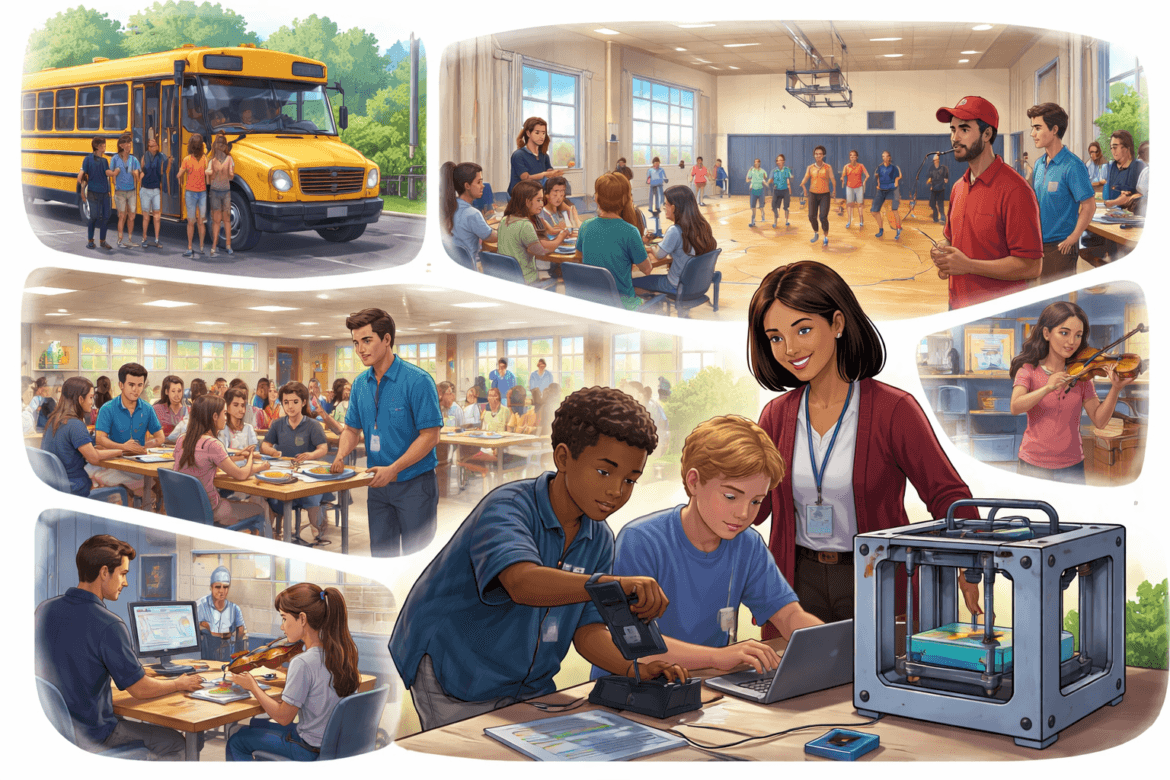
Students participate in various school activities, where staff uphold their duty of care—from arriving by bus and eating lunch to gym class, playing music, working with a teacher, using a drill, and operating a 3D printer.
School SafetyK-12Duty of Care and School LiabilityHot Topics - controversial

School Duty of Care: A District-Wide Responsibility

by EdCircuit Staff February 9, 2026
written by EdCircuit Staff 5 minutes read

School duty of care is rarely questioned when things are running smoothly. It becomes visible only after an incident, when someone asks who was responsible, who was supervising, and what should have been done differently. Those questions almost always reveal the same problem: duty of care was treated as limited, temporary, or someone else’s job.

In reality, school duty of care is continuous. It begins before students step onto campus and extends through every space, transition, and activity they encounter throughout the day. When schools view duty of care as fragmented, students are left vulnerable in the moments that receive the least attention.

Understanding duty of care across the entire building and district is not just about compliance. It is about recognizing how students actually move through a school day and ensuring safety follows them at every step.

Before the school day officially begins

For many students, school starts on the bus or in a drop-off lane. These early moments are busy, loud, and fast-paced, yet they are often assumed to manage themselves. Duty of care begins here.

Transportation supervision includes more than getting students from one place to another. It involves safe loading and unloading procedures, monitoring student behavior, and clear communication between drivers, schools, and families. Once students arrive, responsibility does not simply hand off without intention.

Parking lots, sidewalks, and entry points are active spaces where accidents are most likely to occur. Without visible adult supervision and clear routines, these areas quickly become blind spots. Duty of care requires schools to think about where students are before the first bell and who is accountable during those moments.

Inside the building, responsibility follows movement

Once inside the building, duty of care does not stay in one room. It moves with students.

Hallways during passing periods are often treated as neutral space, but they are anything but. Crowded corridors, rushing students, and limited time create conditions where injuries, conflicts, and unsafe behavior can happen quickly if adults are not present.

Lunchrooms present another layer of responsibility. Beyond behavior management, duty of care includes food safety, allergy awareness, supervision during large gatherings, and the ability to respond quickly when something goes wrong. These spaces combine high volume with limited time, making proactive oversight essential.

Classrooms, regardless of subject, also carry duty-of-care expectations. While some areas involve obvious physical risks, all learning spaces require thoughtful organization, clear procedures, and consistent supervision. Safety is not tied solely to subject matter; it is tied to how learning environments are managed.

Technology-rich spaces demand intentional planning

As schools expand access to technology, duty of care becomes more complex. Computer labs, makerspaces, and innovation rooms introduce risks tied to equipment use, electrical safety, and digital responsibility.

Tools such as 3D printers and robotics kits require training, supervision, and clearly defined procedures. Students working independently or after hours must still be monitored. Duty of care in these spaces is proactive, built into planning and access, not left to chance.

Ignoring these considerations does not promote innovation. It undermines it.

Athletics and physical activity extend beyond playtime

Physical education and athletics are often where duty of care is most visible, yet they are also where responsibility is most often misunderstood.

Duty of care begins before physical activity with preparation, equipment checks, and student readiness. It continues through instruction, monitoring, and injury prevention. It does not end when a game or practice is over.

Locker rooms, cooldown periods, post-event travel, and recovery time are all part of the obligation. Athletic trainers and coaches have a responsibility to protect student athletes before and after competition, not just during play. Unsupervised moments after events are frequently where injuries, misconduct, or emergencies occur.

These are not peripheral concerns. They are central to student safety.

After-school time is still school time

One of the most common gaps in duty of care occurs after the final bell. Students remain on campus for sports, music, clubs, tutoring, and independent academic work, often with fewer adults present and less structure.

A student practicing violin alone in a music room, a team using a locker room, or a student completing a project on specialized equipment are all still under school responsibility. Assuming students are “on their own” once classes end creates risk.

Duty of care after school requires clear expectations about supervision, access to spaces, and adult responsibility. Schools must decide who is monitoring students, which areas are open, and how long students may remain on campus. These decisions should be intentional, not assumed.

Duty of care belongs to the district, not a department

Perhaps the most damaging misconception is the belief that duty of care belongs only to certain roles. Science teachers, physical education staff, or administrators are often seen as carrying the responsibility, while others assume they are exempt.

Duty of care is a district-wide issue. It requires coordination across teachers, administrators, support staff, coaches, transportation teams, and leadership. Policies must align. Training must be consistent. Supervision must be planned.

When duty of care is shared and understood, gaps close. When it is siloed, students are left exposed.

Why this understanding matters

Failure to fully understand duty of care leads to preventable harm, legal exposure, and loss of trust. More importantly, it undermines the learning environment itself.

Students learn best when they feel safe. Families trust schools to protect their children throughout the entire day, not just during instruction. Educators deserve clarity about their responsibilities so safety does not become an afterthought.

School duty of care is not a checklist. It is a mindset that recognizes every space, every transition, and every adult matters.

When schools adopt this mindset, they move from reacting to incidents to preventing them. That shift changes everything.

Subscribe to edCircuit to stay up to date on all of our shows, podcasts, news, and thought leadership articles.

February 9, 2026 0 comments
0 FacebookTwitterPinterestLinkedinWhatsappCopy LinkEmail
A digital illustration honoring African American pioneers whose work shaped education and technology.
edLeadersHot Topics - controversialK-12

African American Ed Tech Pioneers Who Changed Learning

by EdCircuit Staff February 6, 2026
written by EdCircuit Staff 5 minutes read

This Black History Month, we honor African American ed tech pioneers whose work transformed education, broadened access, and reshaped how technology supports learning.

Black History Month is both a celebration and a reminder. It is a time to honor achievement while recognizing the barriers that made those achievements harder to reach. In education technology, African American innovators have consistently pushed learning forward, often without recognition, resources, or support. Their ideas changed classrooms, influenced how students collaborate, and opened doors for learners who were once left out of the conversation.

Ed tech is not just about tools. It is about access, equity, and the belief that knowledge should be available to everyone. The pioneers below embodied that belief long before “digital equity” became a common phrase. Their work continues to shape how students learn, how teachers teach, and how communities imagine the future of education.

Roy Clay Sr.

Roy Clay Sr. is widely regarded as one of the earliest architects of the modern tech industry. As a computer scientist and executive at Hewlett-Packard, he helped develop systems that improved data accuracy and reliability when computers were still new and misunderstood.

Beyond his technical contributions, Clay played a critical role as a mentor and advocate. He believed that access to computing knowledge could change lives, especially for communities that had been historically excluded from technology careers. By creating pathways for Black engineers and technologists, he quietly influenced the diversity of today’s tech and education workforce.

In the context of ed tech, Clay’s legacy lives on in every effort to make technical education more inclusive and more human-centered.

Katherine Johnson

Katherine Johnson’s name is synonymous with brilliance, precision, and perseverance. Her mathematical calculations were essential to NASA’s most historic space missions, including the first U.S. human spaceflights.

But Johnson’s influence extends far beyond aerospace. Her story has become a cornerstone of STEM education (this link no longer available), inspiring students to see mathematics as both powerful and personal. Educators across the country use her work to show that excellence in math is not defined by background, gender, or race.

In ed tech spaces, Johnson’s legacy reminds us that technology is only as strong as the thinking behind it. Her life continues to motivate curriculum designers, teachers, and students to aim higher and trust their intellect.

Clarence Ellis

Clarence Ellis was a visionary who saw the future of collaboration before most people understood what that meant. As the first African American to earn a PhD in computer science, Ellis went on to help invent groupware, technology that allows people to work together digitally.

Today, collaborative tools are central to education. Shared documents, online discussions, virtual classrooms, and project-based learning environments all trace their roots back to ideas Ellis helped develop.

His work transformed learning from a solitary experience into a shared one. In doing so, he helped redefine education as a collective process where ideas grow stronger through connection.

Mark Dean

Mark Dean helped bring computers out of isolated labs and into everyday life. As an engineer at IBM, he played a key role in developing the personal computer, including the systems that allow devices to connect with printers, keyboards, and other hardware.

For education, this shift was monumental. Personal computers made it possible for schools to integrate technology directly into classrooms, lesson plans, and student projects. Learning became more interactive, creative, and adaptable.

Dean’s work reminds us that accessibility matters. When technology becomes easier to use and more affordable, education becomes more inclusive by design.

Kimberly Bryant

Kimberly Bryant represents a new generation of ed tech leadership rooted in community and purpose. After noticing the lack of diversity in tech spaces, she founded Black Girls Code to introduce young girls of color to programming, robotics, and digital creation.

What makes Bryant’s work especially powerful is its focus on confidence as much as skill. Black Girls Code creates learning environments where students feel seen, supported, and capable. That emotional foundation is often missing from traditional tech education.

Through her leadership, Bryant reshaped how educators think about access, representation, and long-term impact in ed tech.

Frederick McKinley Jones

Frederick McKinley Jones was a prolific inventor whose work saved lives and transformed industries. While best known for inventing refrigeration systems, Jones held more than 60 patents and was largely self-taught.

His story is frequently used in STEM education to highlight curiosity, resilience, and problem-solving. Jones demonstrated that learning does not always follow a traditional path and that innovation often begins with real-world challenges.

In ed tech, his legacy reinforces the value of hands-on learning and applied knowledge, both essential to preparing students for the future.

The Broader Impact on Education Technology

These pioneers did more than invent tools or write code. They changed how education evolves. Their work supports online learning platforms, collaborative classrooms, data-driven instruction, and inclusive STEM initiatives.

Just as importantly, their stories challenge narrow narratives about who belongs in technology. Representation shapes aspiration. When students see innovators who look like them, learning becomes personal, and possibility feels closer.

For educators, ed tech leaders, and institutions, honoring these pioneers is also a call to action. Equity in education technology requires intentional design, sustained investment, and leadership that reflects the diversity of learners themselves.

Celebrating Black History Month With Purpose

Black History Month is not only about reflection. It is about momentum. The innovators highlighted here laid foundations that today’s educators and technologists continue to build upon.

As we celebrate African American ed tech pioneers, we also celebrate the students they continue to inspire. Their stories remind us that progress in education comes from courage, creativity, and an unwavering belief in the power of learning.

The future of ed tech is still being written. Thanks to these pioneers, it is already richer, more inclusive, and full of promise.

Subscribe to edCircuit to stay up to date on all of our shows, podcasts, news, and thought leadership articles.

February 6, 2026 0 comments
0 FacebookTwitterPinterestLinkedinWhatsappCopy LinkEmail
A group of people standing outside a building, discussing strategies from the District Communications Playbook.
edLeadersEducatorsHot Topics - controversialK-12

The 2026 District Communications Playbook: 7 Moves Every K–12 Leader Should Make to Strengthen Family Connections

by Dr. Chad Stevens February 5, 2026
written by Dr. Chad Stevens 4 minutes read

District communications has entered a new era. Simply sending information is no longer enough to meet the moment. Families are juggling work, activities, and a constant stream of notifications—and school messages are competing for attention in an already crowded landscape.

Decades of research reinforce why this matters. National research consistently finds that students with engaged families are more likely to earn higher grades, attend school regularly, demonstrate stronger social-emotional skills, and graduate on time. Studies have also shown that effective family engagement can double the likelihood of students achieving academic success compared to peers whose families are less engaged.

Families who feel informed and connected report higher levels of trust in their schools and greater confidence in school leadership; an especially critical factor during times of change, budget uncertainty, or crisis.

Across the country, district and communications leaders are rethinking how they connect with families and communities. The goal is no longer volume. It’s trust, clarity, and engagement.

Based on conversations with district leaders nationwide, here are seven practical moves to consider as you strengthen connections with families and communities.

1. Shift from broadcasting to building trust

Family engagement research makes one point clear: trust is foundational. When families trust their school system, they are more likely to engage, respond to outreach, and support student learning at home.

In an age of misinformation and social media noise, families need to know exactly where to go for accurate, timely information. Trust is built when districts communicate consistently and clearly, and when families believe the information they receive is reliable.

Ask yourself: If a parent has a question or concern, do they know exactly where to turn first?

2. Streamline tools to reduce family fatigue

Family engagement surveys consistently show that parents are more likely to disengage when communication feels overwhelming or repetitive.

Over the past decade, districts have adopted more communication tools than ever. While well-intentioned, this can lead to fragmented experiences for families—emails, texts, robocalls, apps, and websites all competing for attention.

Streamlining tools and clarifying their purpose reduces fatigue and increases the likelihood that messages are read and acted on.

3. Create a clear communication structure

One effective way to organize communication is by thinking in tiers: district-level communication, school-level communication, and classroom-level communication.

This structure minimizes duplication and helps ensure families receive the right information at the right level.

4. Establish predictable communication rhythms

Families are more likely to engage when they know when to expect information.

Predictability reduces stress, builds confidence, and reassures families that nothing important will be missed.

5. Personalize messages as much as possible

The closer communication gets to the classroom, the more personal it should be.

Personalized, relevant messages, especially at the classroom level, are far more likely to be read, understood, and acted on than broad announcements.

6. Balance visibility with engagement

Visibility alone doesn’t guarantee connection. Families may receive a message without truly absorbing it.

High-impact communication invites families in rather than simply pushing information out.

As a guiding principle: it’s not about how many messages you send, it’s about whether families feel included and invited to engage.

7. Make strategic choices in a tighter budget environment

With budgets under pressure, districts are being forced to make difficult decisions about which tools and practices to keep.

This moment calls for strategic abandonment, letting go of what no longer delivers value and investing in approaches that deliver a clear return on education by strengthening family engagement and supporting student success.

Some districts are finding that consolidating communication efforts into fewer, more effective systems, such as ClassDojo for Districts, can support both engagement goals and financial realities.

Looking ahead: Communication as a leadership strategy

For superintendents and communications leaders, district communication is no longer an operational task; it’s a leadership strategy.

The strongest districts treat communication as a shared responsibility between district leadership and communications teams, aligning vision with execution.

When districts streamline tools, establish predictable communication structures, and prioritize engagement over volume, they don’t just inform families, they invite them into partnership.

The districts that will lead in 2026 and beyond are those that recognize communication as a core driver of trust, community confidence, and student success, and invest in it with the same intentionality as any other strategic priority.

Subscribe to edCircuit to stay up to date on all of our shows, podcasts, news, and thought leadership articles.

February 5, 2026 0 comments
0 FacebookTwitterPinterestLinkedinWhatsappCopy LinkEmail
Newer Posts
Older Posts

Participate

  • Contribute
  • Sponsor
  • Submit Release
  • Subscribe
  • Get Interviewed

We value your privacy

We use cookies to enhance your browsing experience, serve personalized ads or content, and analyze our traffic. By clicking "Accept All", you consent to our use of cookies.

Customize
  • Needed for the site to work: signing in, the cart, your consent choice. Always on.

    8 cookies
    • ss_consent 1 yearYour cookie choice on this site, so you are not asked again.
    • wordpress_logged_in_* 2 days, or 14 days with "remember me"Keeps you signed in as you move between pages.
    • wordpress_sec_* 2 days, or 14 days with "remember me"The secure half of your sign-in.
    • wordpress_test_cookie SessionChecks that your browser accepts cookies when you sign in.
    • wp-settings-* 1 yearYour display settings when signed in.
    • wp_woocommerce_session_* 2 daysYour shopping session: the cart and the checkout.
    • woocommerce_cart_hash SessionTells the site whether your cart has changed.
    • woocommerce_items_in_cart SessionWhether your cart holds anything.
  • Remembers choices you make, such as a language or a region, and supports features like live chat.

    1 cookie
    • woocommerce_recently_viewed SessionThe products you looked at, so the site can show them again.
  • Helps us understand how visitors use the site: which pages are read, and for how long.

    2 cookies
    • _ga 2 yearsGoogle Analytics: tells one visitor from another. Set only after you allow analytics.
    • _ga_* 2 yearsGoogle Analytics: keeps your session state. Set only after you allow analytics.
  • Measures how fast pages load so we can make them faster.

  • Used to show you content and offers that match your interests, on this site and elsewhere.

    1 cookie
    • sbjs_* SessionWooCommerce order attribution: where you came from, so a purchase can be credited to the campaign or site that sent you.

Your browser asks us not to sell or share your information (Global Privacy Control), so advertising cookies stay off.

Do not sell or share my personal information

Some cookies from other companies help show you offers on other sites. Tick the box and save your preference to opt out of that sharing; untick it to opt back in at any time.

Your browser sends Global Privacy Control, so this preference is set for you and cannot be changed here.

Sign In

Keep me signed in until I sign out

Forgot your password?

Password Recovery

A new password will be emailed to you.

Have received a new password? Login here

Shopping Cart

Close

No products in the cart.

Close
-
00:00
00:00

Queue

Update Required Flash plugin
-
00:00
00:00

Your cart (items: 0)

Products in cart

Product Details Total
Subtotal $0.00
Shipping and discounts calculated at checkout.
View cart
Go to checkout

Your shopping cart is empty

Return to shop

Notifications