

edCircuit
  • Start Here
    • Login
    • Register
    • Subscribe
    • Submit a Press release
    • Advertise or Sponsor
    • Contribute
    • Get Interviewed
  • On the Wire
  • EdTech
    • All EdTech
    • Online Learning
    • Hybrid and Remote Learning
    • Augmented and Virtual Reality
    • ESports
    • Gamification and Game-Based Learning
    • Digital Citizenship
    • EdTech Entrepreneurs
    • Market Trends
    • Future of Education
  • Artificial Intelligence
  • K-12 Education
    • All K-12
    • K-12 Teachers
    • Teaching Strategies
    • Special Education and IEPs
    • Dyslexia
    • Gifted and Advanced Learning
    • Early Childhood, Pre-K and Kindergarten
    • School Calendar
    • Tutoring and Homework Help
    • Attendance and Absenteeism
    • After-School Programs
    • School Counselors
    • Homeschooling
    • School Models
    • Teacher Retention
    • Parents
    • Students
    • STEM and STEAM Education
  • Teaching and Learning
    • Literacy and Reading
    • Math Education
    • Civics and History Education
    • Financial Literacy
    • Assessment and Testing
    • Curriculum and Instruction
    • Personalized Learning
    • Project-Based Learning
    • Social-Emotional Learning
    • Executive Function
    • Creativity
    • Diversity, Equity, Inclusion
  • Professional Development
    • All Professional Development
    • Educators
    • Administrators
    • edLeaders
  • Higher Education
    • All Higher Education
    • College Admissions
    • Career and Technical Education (CTE)
    • Graduation
    • FAFSA and Financial Aid
    • Student Loans
  • Cybersecurity
  • School Safety
    • All School Safety
    • Science and Lab Safety
    • School Design and Facilities
    • Bullying
    • Duty of Care and School Liability
  • Continuing Education
    • All Continuing Education
    • Online Certificate Programs
    • Teaching Jobs and Careers
    • Teacher Appreciation
  • Education Policy and Government
    • All Education Policy
    • Department of Education
    • School Choice
    • Global
    • Advocates
  • EDU Shows
    • All EDU Shows
    • Safer Ed
    • Mind the Gap
    • Education Industry Questions
    • CoffeEd
    • InFocus
    • InformED Report
  • EDU Podcasts
    • All EDU Podcasts
    • Author Chats
    • CoSN The Podcast
    • Education Today
    • Building the Bridge
    • Students Speak
  • Education Industry Guides and Reports
  • Archived Media
    • Future of School: The Podcast
    • Equity Everywhere
  • About edCircuit
  • Subscribe
edCircuit
  • LOGIN
Home Tags Posts tagged with "Headline"
Tag:

Headline

This if for posts to be in the featured/top section of site
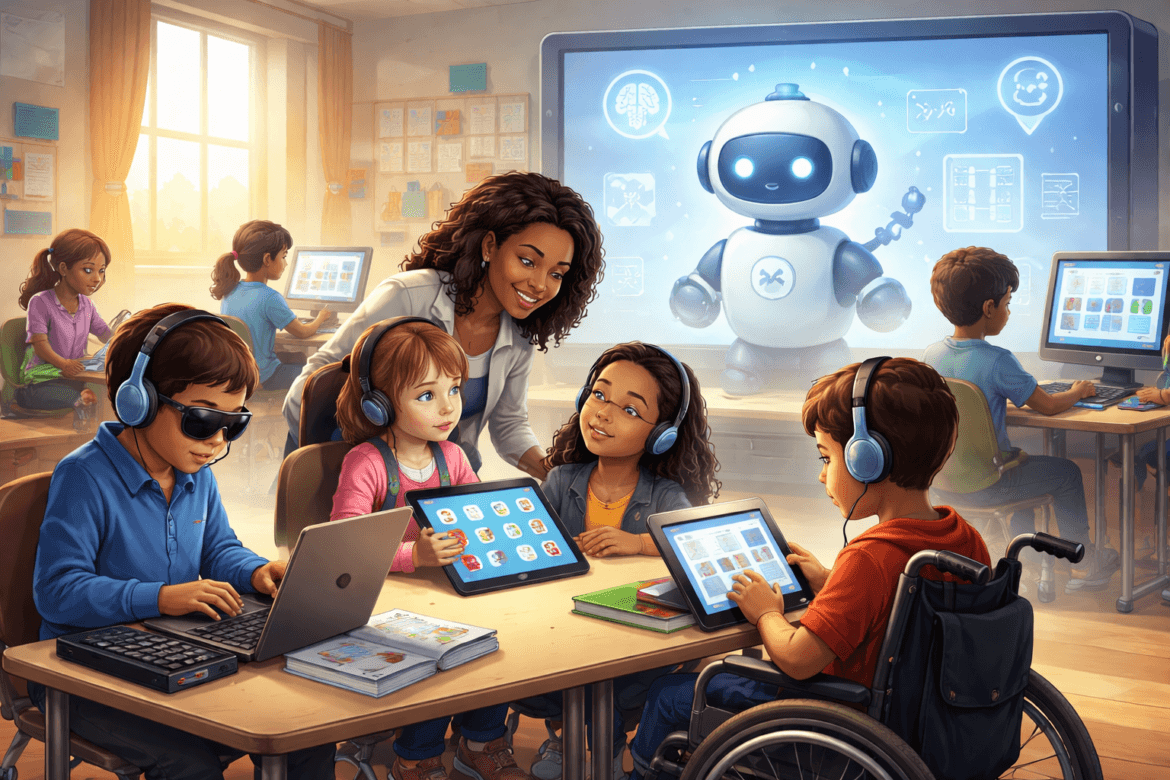
A diverse group of children uses tablets and laptops in a classroom, exploring AI and Accessibility, with a teacher and a large robot displayed on a digital screen in the background.
Hot Topics - controversialCoSN The PodcastArtificial IntelligenceSpecial Education and IEPsK-12

AI and Accessibility in K-12 Education: A Turning Point

by EdCircuit Staff February 5, 2026
written by EdCircuit Staff 7 minutes read

AI and accessibility in K-12 education are no longer future-facing ideas or pilot projects confined to innovation teams. They are shaping classrooms, procurement decisions, and compliance timelines right now.

As generative AI tools move rapidly into schools, district leaders face a defining question: Will these technologies meaningfully improve access for students with disabilities, or will they unintentionally deepen existing gaps? According to the 2024 Blaschke Report, the answer depends far less on the tools themselves and far more on how intentionally districts design, govern, and deploy them.

For superintendents, principals, CTOs, and special education leaders, this is no longer a theoretical discussion. Decisions about AI and accessibility are happening amid budget pressures, staffing shortages, and looming compliance deadlines. The margin for error is shrinking.

Why This Moment Matters

Generative AI represents a significant shift from earlier educational technologies. Unlike predictive tools that analyze or automate narrow tasks, generative AI can create text, images, audio, and instructional materials on demand. That capability has fueled rapid adoption across K-12 systems.

The growth has been striking. AI-related patents increased by more than 60 percent between 2021 and 2022, and by mid-2023, more than 60 percent of teachers reported experimenting with generative AI tools. What once felt optional now feels inevitable.

For accessibility, this matters deeply. Generative AI can quickly adjust reading levels, summarize dense content, translate materials, generate visual supports, and produce alternative formats. Tasks that once required hours of specialized work—or were never completed at all—can now happen in seconds.

But the Blaschke Report is clear: personalization is only as effective as the assumptions behind it. Without accessibility-first design grounded in Universal Design for Learning, AI can just as easily scale exclusion as inclusion.

Accessibility Is More Than Devices

Too often, digital equity conversations stop at device distribution. The report challenges that framing.

The digital access divide goes far beyond hardware. It includes assistive technology availability, educator training, accessible platform design, reliable connectivity, and inclusive learning environments. Common failures persist across districts: inaccessible PDFs, missing alt text, videos without captions, and learning platforms that do not work with screen readers.

When AI tools are layered on top of inaccessible systems, inequity compounds. An AI-powered tutoring platform cannot help a student who cannot navigate the interface. A content generator cannot fix materials that were never accessible to begin with.

Accessibility must be proactive, not reactive. Waiting to address barriers after implementation is no longer sufficient.

Where AI Is Expanding Access Today

The promise of AI becomes tangible when districts focus on targeted, human-led use cases rather than broad mandates.

In Oregon, assistive technology consultant Bruce Alter supports a student with cerebral palsy whose speech is understood by only a few people. Using an AI-enhanced augmentative and alternative communication system, the tool learns her speech patterns and converts them into clear audio. The result is not just academic participation, but meaningful social connection.

Alter has also developed a language-model-powered worksheet generator. Teachers enter a student’s grade level, math operation, and personal interests. The system produces customized materials and an answer key, significantly reducing preparation time while preserving instructional relevance.

In Kansas, assistive technology facilitator Tara Bachmann uses AI image-generation tools with autistic students. Students type-written prompts and instantly receive visual representations. For learners who need concrete visual structure, this immediate feedback can make abstract concepts accessible. The teacher remains central. AI handles the time-intensive work.

Another example comes from NWEA’s accessible math initiative. Traditional screen readers present equations line by line, overwhelming working memory for blind students. Their prototype uses a process-driven math model that allows students to explore equations in segments. This reduces cognitive load and supports strategic problem-solving. It is accessibility by design, not accommodation after the fact.

Supporting Educators Without Replacing Them

Special education teachers face some of the most demanding workloads in K-12 education. IEP development, documentation, the creation of adapted materials, and coordination with families and specialists consume enormous amounts of time.

AI can help relieve that pressure. Tools can rewrite text at lower reading levels, summarize evaluation notes, generate visual supports, and organize documentation. For educators, this means fewer hours spent on clerical work and more time devoted to instruction and student relationships.

The report is explicit, however: AI cannot replace professional judgment. The “I” in IEP stands for individualized. AI may support the process, but it cannot set goals, make placement decisions, or fully understand the complexity of a child’s needs.

Used responsibly, AI strengthens human-led special education. Used carelessly, it undermines it.

Risks Leaders Cannot Ignore

The risks of AI are not abstract or hypothetical.

Algorithmic bias remains a serious concern. AI systems trained on non-inclusive datasets may misinterpret dyslexic writing, penalize non-standard grammar, or misunderstand students with speech differences. These errors can influence grading, placement, and long-term opportunity.

Data privacy presents an equally urgent challenge. Some AI tools store prompts indefinitely or use them for model training. Usage patterns can allow systems to infer disability status, raising concerns about student reidentification. Districts must treat AI governance as an extension of their existing privacy, cybersecurity, and civil rights responsibilities.

Ignoring these risks does not make them disappear. It shifts the burden to students.

Choosing the Right AI Path

The report highlights a practical framework from education strategist Adam Garry that helps districts align AI adoption with capacity and risk tolerance.

At the first level are general large language models from vendors such as Google and Microsoft. These tools typically include strong privacy protections and are well-suited for summarization and content generation.

The second level involves small language models customized for district-specific tasks, such as assistive technology workflows or IEP support activities. These offer greater control while maintaining vendor safeguards.

The third level is open-source AI, which provides maximum customization and data control but requires significant technical expertise and infrastructure.

Districts are not expected to climb all three levels. The goal is alignment with instructional needs, staffing capacity, and risk tolerance.

Policy, Compliance, and the Clock

Updated ADA Title II regulations will require fully accessible digital resources by 2026 for large districts and 2027 for smaller ones. This includes learning management systems, classroom applications, assessments, and district communication tools.

Leaders should act now. Essential steps include conducting a full inventory of digital tools, requiring Accessibility Conformance Reports from vendors, aligning procurement with WCAG 2.1 standards, strengthening contract language, and conducting annual accessibility reviews.

Federal guidance and executive action on AI reinforce these obligations, emphasizing non-discrimination, fairness, and protections for vulnerable populations.

A Roadmap for Responsible Implementation

In the short term, districts should focus on leadership training, accessibility audits, and clear AI use guidelines. In the medium term, they should pilot tools with staff before students, integrate AI into assistive technology supports, and expand professional learning across roles. Long-term success depends on universal access, transparent governance, and ongoing community communication.

One district model highlighted in the report is Hinsdale Township High School District 86, where AI tools are vetted for privacy and accessibility before classroom pilots. Teachers collect evidence of student impact, and tools that do not demonstrate value are not scaled.

The Opportunity Ahead

AI’s potential to expand access for students with disabilities is extraordinary. When paired with strong policy, inclusive design, and educator expertise, it can remove barriers that have persisted for decades.

But AI is not neutral. Without intentional leadership, it can reinforce bias and erode trust.

For K-12 leaders, the message is clear: accessibility must be the foundation, not the afterthought. The decisions made now will shape learning opportunities for years, and districts will not get a second chance to do this right.

To explore the full findings and implementation guidance, districts can review the 2024 Blaschke Report, developed in collaboration with the Consortium for School Networking and CAST .

This article draws from a recent Consortium for School Networking podcast episode exploring AI and accessibility in K–12 education. The discussion features real-world examples, leadership perspectives, and practical considerations for districts navigating responsible AI adoption.

Listen to the full episode to hear how these ideas are playing out in schools right now.
The CoSN PodcastAI & Accessibility in EducationJanuary 20, 2026 · 8 min 58 sPlay episode: AI & Accessibility in Education (8 minutes 58 seconds)0:00-8:58Follow on SpotifyApple

Sources

Pérez Perez, F. (2024). AI and Accessibility in Education. Consortium for School Networking & CAST.

Subscribe to edCircuit to stay up to date on all of our shows, podcasts, news, and thought leadership articles.


February 5, 2026 0 comments
0 FacebookTwitterPinterestLinkedinWhatsappCopy LinkEmail
School counselor appreciation week: students and parents meet with teachers and counselors in a bright school office
EducatorsHot Topics - controversialK-12School CalendarSchool Counselors

School Counselor Appreciation Week 2026

by EdCircuit Staff February 4, 2026
written by EdCircuit Staff 4 minutes read

Updated October 2026 with the 2027 dates and theme.

School Counselor Appreciation Week, officially called National School Counseling Week, recognizes the role school counselors play in student success, academically, socially and emotionally, and gives schools a chance to thank professionals whose influence often goes unseen. In 2027 it runs February 1–5, with the theme “School Counselors Make History,” marking the American School Counselor Association’s 75th year.

When is School Counselor Appreciation Week 2027?

National School Counseling Week 2027 is February 1–5, 2027, according to the American School Counselor Association (ASCA), which sponsors it. The week is always held during the first full week of February. ASCA offers free downloadable resources and promotional items for schools planning a celebration.

Many people search for a “school counselor appreciation day.” ASCA’s observance is a full week rather than a single day, so schools often choose one day of the week for a schoolwide thank-you.

What school counselors do every day

Academic guidance and planning

School counselors help students build academic plans, choose courses that fit their strengths and set goals toward graduation and life after high school. They look at academic data, coordinate interventions and work with teachers and families to spot learning barriers early.

Mental health and emotional well-being

For many students, a school counselor is the first trusted adult they turn to when stress, anxiety, grief or social pressure feels overwhelming. Counselors provide safe, confidential spaces to process emotions and learn coping, conflict-resolution and self-advocacy skills.

College and career readiness

From exploring career interests to navigating college applications, counselors help students plan for life after high school. They run financial aid workshops, scholarship searches and application help, and for first-generation college applicants they often translate a complex system of forms, deadlines and pathways.

Crisis response and prevention

When crises arise, from personal emergencies to schoolwide incidents, counselors step in with trained support, coordinate with families and administrators, and connect students to outside mental health resources when needed.

Equity and access

Counselors work to make sure every student has access to advanced coursework, activities and postsecondary planning, particularly students who have been underserved.

Why school counselors deserve appreciation

Counselors carry large caseloads. ASCA recommends 250 students per school counselor, but the national ratio was 372 to 1 in the 2024–25 school year. Much of the work happens quietly: the lunch-period check-ins, the emergency schedule changes, the hard conversations in small offices, the late afternoons spent calling families or writing recommendation letters. National School Counseling Week exists to make that work visible.

School Counselor Appreciation Week ideas

Recognition does not have to be elaborate to be meaningful. Schools can:

  • Highlight counselors in announcements, newsletters and social media, using the 2027 theme, “School Counselors Make History.”
  • Invite students to write notes or record short videos about how a counselor helped them.
  • Ask principals and district leaders to thank counselors publicly, or present a school board proclamation.
  • Recognize counselor-teacher collaboration at a staff meeting.
  • Host a breakfast or lunch, or partner with local businesses for small gestures of thanks.
  • Give counselors protected time that week, free from testing coordination or lunch duty, to focus on students.

The goal is not only celebration but awareness. When communities understand what counselors do, they are better equipped to support them year-round.

Frequently asked questions

When is School Counselor Appreciation Week 2027? February 1–5, 2027. The official name is National School Counseling Week.

What is the 2027 National School Counseling Week theme? “School Counselors Make History,” marking ASCA’s 75th year.

Is there a School Counselor Appreciation Day? ASCA’s observance is a full week. Many schools pick one day during the week for a special thank-you.

Who sponsors National School Counseling Week? The American School Counselor Association. It is always the first full week of February.

A week of thanks, a year of recognition

School counselors do far more than manage schedules or testing logistics. They are listeners, planners, mental health supporters, advocates and steady guides through some of a student’s most vulnerable moments. School Counselor Appreciation Week 2027 is a reminder to say thank you, not only in February but every day.

Subscribe to edCircuit to stay up to date on all of our shows, podcasts, news, and thought leadership articles.
February 4, 2026 0 comments
0 FacebookTwitterPinterestLinkedinWhatsappCopy LinkEmail
A teacher introduces AI in the Classroom by showing a robot on a tablet to diverse students. Other children use tablets, while a whiteboard displays AI and technology icons. Sunlight streams through the window.
Artificial IntelligenceEducatorsHot Topics - controversialK-12K-12 Teachers

AI in the Classroom: How Teachers Can Lead Responsibly

by EdCircuit Staff February 4, 2026
written by EdCircuit Staff 5 minutes read

AI in the classroom is no longer a future concept—it is a present reality. Students encounter AI-powered tools through search engines, writing platforms, study aids, and creative software long before schools formally introduce them. For many students, the classroom becomes their first guided experience with artificial intelligence. That reality places teachers in a pivotal role—not as gatekeepers or enforcers, but as mentors who shape how AI is understood, used, and trusted.

AI can assist teachers in meaningful ways, from lesson design to differentiated support. But it cannot—and should not—replace the professional judgment, relationships, and instructional expertise that define effective teaching. When used intentionally, AI becomes a support system rather than a substitute. The difference lies in how educators frame it, model it, and integrate it into everyday learning.

AI as a Teaching Assistant, Not a Replacement

One of the most important messages teachers can communicate is straightforward: AI is a tool, not a teacher. It can generate ideas, rephrase explanations, or organize information—but it cannot understand context, emotion, or student growth in the way an educator can.

Teachers remain responsible for interpreting student needs, making instructional decisions, evaluating learning with nuance, and building classroom culture. AI may accelerate certain tasks, but it cannot replicate professional judgment or human connection.

When educators position AI alongside familiar tools—such as calculators, spell-checkers, or reference materials—students learn to see it as one input among many, not an authority or shortcut. This framing is especially important for students encountering AI for the first time, who may otherwise assume AI-generated responses are always accurate or complete.

How AI Can Assist Teachers Day to Day

For many educators, AI’s greatest value lies in reducing time spent on repetitive or administrative work, allowing more focus on instruction, feedback, and relationships.

Lesson Planning Support

AI can help brainstorm lesson outlines, generate discussion questions, or suggest alternative explanations for challenging concepts. Teachers remain the editors, selecting what aligns with standards, students, and instructional goals.

Differentiation and Accessibility

Teachers can use AI to adjust reading levels, reword instructions, or provide multiple examples for diverse learners. This supports accessibility without requiring educators to recreate materials from scratch.

Formative Assessment and Feedback

AI can assist in drafting rubrics, suggesting feedback language, or identifying trends in student responses. The teacher still evaluates learning and determines next steps.

Time Management and Communication

From organizing instructional materials to drafting family communication, AI can reduce behind-the-scenes workload that often contributes to burnout.

In every case, AI supports professional expertise rather than replacing it.

Teachers as the First Model of Responsible AI Use

For many students, the classroom is the first place they are shown how to use AI responsibly. That makes teachers the most influential voice in shaping AI habits—not warning banners, filters, or detection tools.

When educators model responsible AI use, they demonstrate how to write thoughtful prompts, evaluate AI-generated responses, identify errors or missing context, and treat AI output as a draft rather than a finished product.

For example, a teacher might show students an AI-generated explanation and then walk through how they revised it—correcting inaccuracies, improving clarity, and aligning it to learning goals. That moment reinforces critical thinking while making AI use transparent and intentional.

Teaching Students to Think With AI, Not Around It

A productive shift in classrooms is moving from “Can students use AI?” to “How should students think alongside AI?”

Teachers can guide students to ask better questions instead of copying answers, compare AI output with trusted sources, identify bias or oversimplification, and reflect on how AI influenced their thinking.

These practices align naturally with instructional goals such as analysis, evaluation, and metacognition. AI becomes a tool for deeper learning—not a shortcut around it.

Framing AI use as a literacy skill also helps. Just as students learn how to research, cite sources, and evaluate online information, they must learn how to interpret and contextualize AI-generated content.

Why Districts Still Need an AI Handbook

While classroom practice should not feel like a policy exercise, clarity matters. Teachers benefit when districts provide an AI handbook that outlines shared expectations, definitions, and guardrails.

A well-designed AI handbook supports educators by clarifying acceptable classroom use, establishing consistent language across grade levels, reducing uncertainty, and reinforcing responsible use without fear-based messaging.

This guidance is not about restriction—it is about alignment. When districts provide clear reference points, teachers can focus on instruction rather than interpretation.

Addressing Common Teacher Concerns

Concerns about originality, overreliance, or academic integrity are valid. But avoidance rarely prepares students for the reality they already face.

Teachers who address AI openly can design assignments that emphasize process and reflection, ask students to explain how they used AI, require revisions that demonstrate understanding, and use discussion to unpack the strengths and limitations of AI-generated work.

These approaches reinforce learning while acknowledging that AI is already part of students’ lives.

Keeping Humans at the Center of Learning

Teaching is inherently relational. AI cannot replace encouragement, curiosity, empathy, or mentorship. It cannot read the room, build trust, or respond to a student’s emotional needs.

When teachers lead AI integration thoughtfully, they send a powerful message: technology exists to support human learning—not replace it.

Students don’t just learn with AI in these classrooms. They learn how to use it responsibly, ethically, and reflectively—skills that extend far beyond school.

A Positive Path Forward

AI in the classroom does not diminish the role of educators—it elevates it. Teachers are the guides who help students navigate powerful tools with care, context, and purpose.

When used intentionally, AI enhances instruction, supports teachers, and prepares students for a future where critical thinking matters more than automation. The most effective classrooms will not be driven by algorithms, but by educators who ensure that humanity, judgment, and learning always come first.

Subscribe to edCircuit to stay up to date on all of our shows, podcasts, news, and thought leadership articles.

February 4, 2026 0 comments
0 FacebookTwitterPinterestLinkedinWhatsappCopy LinkEmail
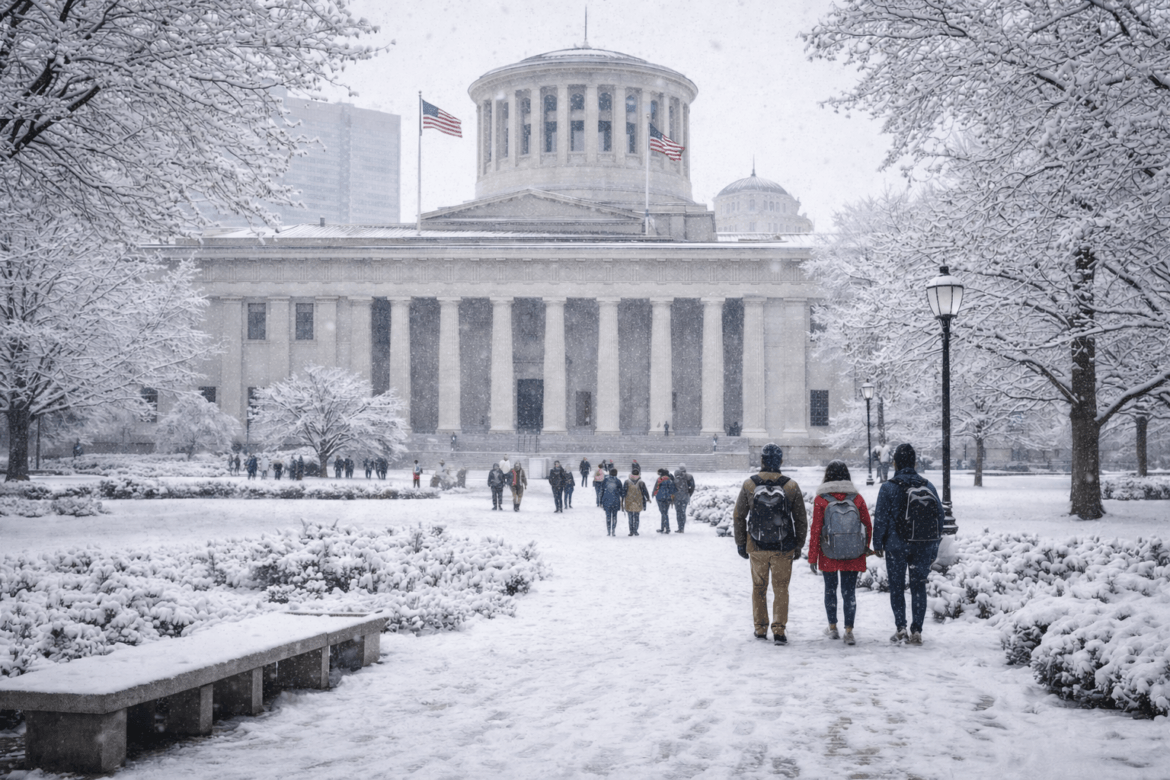
A group of people walking in the snow with the Ohio Statehouse in the background, as discussions around Ohio Senate Bill 1 Is Reshaping Higher Education continue to unfold.
Hot Topics - controversialHigher Education

Ohio Senate Bill 1 Is Reshaping Higher Education

by EdCircuit Staff February 3, 2026
written by EdCircuit Staff 5 minutes read

Ohio Senate Bill 1 is no longer an abstract policy debate. It is now actively reshaping how public colleges and universities in Ohio operate, what they teach, and which programs are allowed to exist.

Ohio Senate Bill 1, signed into law on March 28, 2025, imposes new restrictions on academic programs and diversity initiatives at public institutions. The law applies to all 14 public universities and 22 community colleges in the state, affecting every one of Ohio’s 36 public higher education institutions.

Supporters describe the legislation as a long-overdue correction, aimed at cutting costs and curbing what they see as ideological excess on campus. Critics argue it represents one of the most sweeping state interventions into higher education governance in decades. What is undeniable is that Ohio colleges are already being forced to make concrete, and in some cases irreversible, decisions.

Why Ohio Senate Bill 1 Was Introduced

Lawmakers behind Ohio Senate Bill 1 have consistently framed the bill around accountability and neutrality.

On the academic side, they argue that programs graduating only a handful of students year after year represent poor use of taxpayer dollars, particularly as statewide enrollment declines. Setting a minimum graduation threshold, they say, ensures institutions prioritize degrees with clear demand and measurable outcomes.

On the cultural side, sponsors contend that DEI programs promote political viewpoints rather than equal treatment, describing them as forms of institutional discrimination. The law defines certain concepts as “controversial beliefs” and restricts how public colleges can promote or require them.

Together, these arguments position SB 1 as both a financial reform and an ideological reset. Critics counter that the bill’s definitions are broad, its metrics are blunt, and its assumptions about how universities function are deeply flawed.

What the Law Requires Colleges to Do

Ohio Senate Bill 1 introduces two mandates that are driving immediate change.

First, undergraduate academic programs that average fewer than five graduates annually over three years must be eliminated. Institutions can apply to the Ohio Department of Education for waivers to retain programs they believe are essential, but final authority rests with the state.

Second, colleges must dismantle or significantly revise DEI offices, programming, and mandatory training. Student support services can continue only if they are reframed to comply with the law’s restrictions.

The legislation also affects the curriculum. Public institutions are reviewing required courses in American government and U.S. history to ensure compliance with the bill’s standards.

What Is Happening Now on Campuses

The impact of Ohio Senate Bill 1 is already visible.

At Ohio University, administrators have suspended multiple undergraduate programs that did not meet the graduation threshold. Other departments are undergoing internal reviews as faculty wait to learn whether their degrees will survive.

At Ohio State University, leaders have taken a different approach. Rather than immediately eliminating programs, the university has requested waivers for roughly a dozen low-producing undergraduate offerings. Administrators argue these programs serve critical academic, cultural, or workforce roles that cannot be measured solely by enrollment counts.

Community colleges face similar pressures, often with fewer resources and smaller student populations. Degrees that serve niche industries or regional needs are among the most vulnerable, even when they align with local workforce demands.

Meanwhile, DEI offices across the state have been closed, restructured, or renamed. Faculty and staff describe uncertainty about what language is permissible and how student support can continue under the new framework.

Why the Waiver Process Matters

The waiver provision may become the most consequential element of Ohio Senate Bill 1.

While waivers offer flexibility in theory, they also shift authority from campuses to state officials. Programs that once survived based on academic judgment must now be defended using criteria defined outside the institution.

Departments do not know whether waivers will be routinely approved or selectively granted. That uncertainty affects long-term planning, faculty recruitment, and student advising. Even programs that receive temporary approval remain under pressure, knowing that future data reviews could lead to elimination.

Critics argue the waiver system effectively places academic priorities under political review. Supporters respond that public institutions should be accountable to the state that funds them.

What This Means for Students and Faculty

For students, Ohio Senate Bill 1 narrows choice.

Small, interdisciplinary, and emerging fields are often the first to fall below graduation thresholds, even when they provide pathways to graduate study or public service careers. Students currently enrolled in affected programs may face teach-out plans or be forced to change majors midstream.

Faculty face heightened insecurity. Program eliminations can lead to reduced course offerings, departmental contraction, or job losses. Restrictions on DEI initiatives also affect research agendas, classroom discussions, and campus climate.

The law’s vague language around controversial beliefs has raised concerns about self-censorship, with some faculty avoiding certain topics to reduce risk.

Is Ohio Acting Alone?

Ohio is not an outlier, but it is moving further than most.

States such as Florida and Texas have enacted laws restricting DEI offices and diversity training at public colleges. Kentucky lawmakers have advanced proposals that reduce tenure protections and expand legislative oversight of universities.

What sets Ohio Senate Bill 1 apart is its scope. Few states have combined DEI restrictions with a statutory mandate to eliminate academic programs based on a fixed graduation metric. By embedding those requirements directly in law, Ohio shifts academic decision-making away from campuses and into the state’s hands.

Higher education leaders nationwide are watching closely. If Ohio’s approach proceeds without legal or operational fallout, it may become a model. If it leads to instability, enrollment declines, or faculty departures, it may serve as a warning.

What Comes Next

The full impact of Ohio Senate Bill 1 will take years to measure.

Key questions remain unresolved: How often will waivers be approved? Which programs will disappear permanently? How will students respond as choices narrow and campus climates change?

For now, Ohio’s public colleges are operating in a period of accelerated adjustment. Academic offerings are being evaluated through a narrow numerical lens. DEI work is being dismantled or redefined. Faculty and administrators are navigating a new balance of authority between campuses and the state.

Ohio Senate Bill 1 is more than a budgetary or cultural reform. It is a signal that the relationship between public universities and state government is shifting, and that higher education’s future may be shaped as much by legislation as by scholarship.

Subscribe to edCircuit to stay up to date on all of our shows, podcasts, news, and thought leadership articles.

February 3, 2026 0 comments
0 FacebookTwitterPinterestLinkedinWhatsappCopy LinkEmail
A teacher promotes media literacy in schools by helping two students with an assignment at a library table, using a laptop and printed papers.
Digital CitizenshipK-12Hot Topics - controversial

Media Literacy in Schools and the Evolving Librarian Role

by EdCircuit Staff February 3, 2026
written by EdCircuit Staff 6 minutes read

Media literacy in schools is no longer an occasional lesson or an optional unit tucked into a research project. For middle and high school students, it is a daily necessity.

Students encounter information constantly. News alerts, videos, memes, influencer content, and headlines appear side by side on their screens. The speed and volume make it difficult to pause, question, or verify what they see. For many students, credibility is judged by popularity or familiarity rather than evidence.

This shift has pushed school librarians into a central instructional role. They are no longer simply supporting literacy. They are teaching students how to survive in an information-saturated world.

A Moment That Plays Out in Libraries Everywhere

In a middle school library, a group of students gathers around a table during a research period. One student confidently shares a video they found online, insisting it proves their point. Another student isn’t convinced but can’t explain why.

The librarian doesn’t correct them. Instead, they ask a few questions:
Who made the video?
Where did the information come from?
What might be missing?

The conversation slows. Students start to notice details they had ignored. By the end of the period, they aren’t just finishing an assignment. They’re thinking differently about information itself.

This kind of moment now defines the modern school library.

The Librarian’s Role Has Expanded Beyond Recognition

For years, librarians were viewed primarily as keepers of books and managers of quiet spaces. That perception no longer reflects reality, especially at the secondary level.

Today’s middle and high school librarians:

  • Teach students how to evaluate sources

  • Guide research and inquiry

  • Address misinformation and bias

  • Support ethical use of media

  • Integrate digital literacy into the curriculum

Their work sits at the intersection of reading, research, technology, and critical thinking. As information formats expanded, so did the librarian’s responsibilities.

This evolution didn’t happen overnight. It grew out of necessity.

Why Middle and High School Is the Critical Window

Middle and high school students are forming habits that will follow them into adulthood.

At this stage, students:

  • Develop independent opinions

  • Encounter political and social narratives

  • Engage deeply with social media

  • Complete more complex research tasks

Without guidance, many rely on surface-level signals to judge credibility. Media literacy instruction gives them tools to go deeper.

Librarians teach students to ask:

  • Who created this and for what purpose?

  • What evidence supports the claim?

  • What voices are missing?

  • How might algorithms influence what I see?

These questions become habits, not checklists.

Librarians as Instructional Partners, Not Support Staff

One of the most significant changes in the librarian’s role is the increased emphasis on collaboration.

In effective schools, librarians are embedded in instruction. They co-plan with teachers, align lessons with curriculum goals, and reinforce media literacy across subjects.

This work often includes:

  • Partnering with English teachers on research skills

  • Supporting social studies discussions around sources

  • Helping science classes evaluate data and claims

  • Working with technology teachers on digital citizenship

When librarians are included early in planning, media literacy becomes part of learning rather than an add-on.

Teaching Media Literacy Without Telling Students What to Think

Media literacy instruction takes place in a complex environment.

Librarians often navigate:

  • Politically charged topics

  • Community concerns about bias

  • Rapidly shifting platforms

  • Pressure to remain neutral

The most effective approach focuses on process rather than conclusions. Librarians emphasize evaluating information, not which opinions students should hold.

This distinction matters. It builds trust and keeps the focus on critical thinking rather than ideology.

Technology Fluency Is Now Essential

To teach media literacy effectively, librarians must be comfortable with technology.

Modern librarians work with:

  • Digital databases and archives

  • News aggregators

  • Media creation tools

  • Learning management systems

  • Emerging technologies like AI-driven search

They also help students understand how technology shapes information. Algorithms, personalization, and monetization influence what students see. Librarians make those systems visible and understandable.

This technical knowledge is now part of the job description.

What It Takes to Be a Librarian Today

The skill set required to be a school librarian has expanded significantly.

Today’s librarians need:

  • Instructional expertise

  • Deep understanding of information literacy

  • Comfort with digital tools

  • Strong communication skills

  • Flexibility and continuous learning

Professional standards from organizations like the American Association of School Librarians reflect this shift, emphasizing inquiry, inclusion, and critical engagement with information.

Librarians are often informal leaders within their schools, advocating for access, equity, and thoughtful use of information.

Libraries as Active Learning Spaces

The physical and virtual library has evolved as well.

Middle and high school libraries now function as:

  • Collaboration hubs

  • Research centers

  • Media creation spaces

  • Safe environments for inquiry

Quiet still exists, but engagement defines the space. Students come to research, create, question, and explore. Librarians design these environments intentionally to support learning.

Why This Work Matters More Than Ever

The consequences of weak media literacy are visible everywhere. Misinformation spreads quickly. Polarization deepens. Students graduate into a world where information is abundant, but trust is fragile.

Schools cannot address this challenge without librarians.

When librarians are supported and integrated into instruction, students leave school better prepared to navigate information responsibly. When they are overlooked, a critical opportunity is lost.

Media Literacy in Every Subject

Larry Jacobs made the case for teaching media literacy across the whole school in a 2017 column for edCircuit. He wrote that schools tend to treat it as the work of three areas, English, social studies and the school library, and answered: “Nope, it’s everywhere.”

His examples reached well past the news. Music, film and art can create a false impression, he noted, pointing to the propaganda films made in Germany in the 1930s. In science, he described predatory journals that publish unchecked research for a fee. In mathematics, he pointed to a computer-generated paper of buzzwords that a journal had accepted. For background he interviewed Frank Baker, who runs the Media Literacy Clearinghouse; as Jacobs reported it, Baker’s view is that the subject is largely about propaganda, and that propaganda runs well beyond words and websites.

Jacobs also urged teachers to let students learn by doing. He cited high school journalists in Pittsburg, Kansas, who researched their newly hired principal and found discrepancies in her education credentials. His conclusion fits the work librarians do today: students need “the healthy skepticism and skills of discernment they will need to separate the wheat from the chaff.”

Looking Ahead

Media literacy in schools will continue to grow in importance, especially as technology evolves.

For middle and high school librarians, the role will continue to expand. Their work shapes how students engage with information long after graduation.

The modern librarian is no longer just a resource manager. They are a guide, an educator, and a steady voice in a noisy information landscape.

That role has never been more essential.

Related: Digital Literacy – Support from Librarians

Subscribe to edCircuit to stay up to date on all of our shows, podcasts, news, and thought leadership articles.

February 3, 2026 0 comments
0 FacebookTwitterPinterestLinkedinWhatsappCopy LinkEmail
Three professionals stand next to a safety shower, with one woman pointing at it while two men take notes and observe—a practical demonstration of Safety Audits That Matter in Active Classrooms.
Safer EdScience and Lab SafetyK-12

Safety Audits That Matter in Active Classrooms

by EdCircuit Staff February 2, 2026
written by EdCircuit Staff 5 minutes read

Safety Audits often reassure districts that buildings meet code requirements—but those same spaces can struggle once students, equipment, and time pressure enter the room.

Modern STEM classrooms are busy by design. Robotics kits spread across tables. Power strips appear for new devices. Students cluster around shared workstations. Cleanup routines compress into minutes before the bell. Teachers juggle supervision, materials, and movement simultaneously.

Most days, nothing goes wrong.

Those quiet moments—when a student hesitates in a crowded aisle, when backpacks narrow exits, when a cart drifts in front of a sink—are near misses. And they reveal what traditional audits frequently overlook: how rooms function under real instructional conditions.

That gap between compliance and lived experience is the focus of the latest episode of the Safer Ed Podcast, Safety Audits That Matter: Looking Beyond the Checklist.

Safer EdSafety Audits That Matter: Looking Beyond the ChecklistFebruary 2, 2026 · 4 min 7 sPlay episode: Safety Audits That Matter: Looking Beyond the Checklist (4 minutes 7 seconds)0:00-4:07Follow on SpotifyApple

Why Compliance Alone Isn’t Enough

Regulatory inspections and safety checklists exist for good reason. Fire extinguishers, ventilation systems, eyewash stations, chemical storage protocols, and emergency shutoffs are essential. Documentation protects districts and creates consistency.

But compliance captures a moment in time.

Operational risk unfolds dynamically. It emerges during transitions. It accumulates across class periods. It shows up when the new curriculum arrives faster than infrastructure changes.

A room can pass inspection at 7:30 a.m. and struggle by the third period.

Effective safety programs recognize that compliance is the floor—not the ceiling.

Paper Safety vs. Operational Safety

One way safety leaders frame this tension is by distinguishing between two realities.

Paper safety lives in reports, binders, and databases.

Operational safety lives in movement—students queuing for sinks, carts parked temporarily near exits, equipment staged for the next class, electrical loads stretched to support new technology.

Near misses almost always belong to that second category.

Blocked pathways during cleanup. Crowded prep rooms. Temporary solutions that quietly become permanent. These conditions rarely violate policy on paper, but they erode safety margins over time.

Audits that focus only on static conditions miss where real strain accumulates.

Why Walkthrough Timing Changes Everything

Many safety walkthroughs occur before school, after dismissal, or during vacant periods.

Those moments matter, but they are not when risk is highest.

To understand how spaces actually perform, leaders need to observe rooms in use:

  • during lab setup

  • mid-lesson

  • while students transition between activities

  • during cleanup

  • in the minutes between classes

These are the stress tests.

Congestion patterns appear. Supervision challenges surface. Storage limitations become visible. The mismatch between room design and instructional needs is becoming harder to ignore.

The Power of Interdisciplinary Audit Teams

Strong Safety Audits rarely rely on a single lens.

Facilities staff understand electrical loads, ventilation, and square footage. Instructional leaders face challenges with lesson flow and supervision. Safety officers evaluate code and documentation.

When those perspectives operate separately, blind spots persist.

When they walk through rooms together, conversations change.

Congestion becomes both a scheduling issue and a layout issue. Device purchases spark infrastructure discussions. Hybrid spaces raise questions about PPE expectations and supervision ratios.

Instead of debating whose job a problem belongs to, teams start examining how systems interact.

That shift—from siloed oversight to shared analysis—is where prevention accelerates.

Letting Near-Miss Data Guide Where to Look

The most effective audit programs do not rely solely on calendars.

They follow patterns.

Repeated teacher comments about one doorway. Custodial notes about carts blocking exits. Multiple classes rerouted near the same sink. Temporary power solutions reappearing week after week.

These are early structural warnings.

High-functioning districts log near misses, review them regularly, and let those trends guide where walkthrough teams focus next. Over time, what once felt anecdotal becomes unmistakably systemic.

The Spaces Schools Most Often Overlook

Even experienced teams miss certain environments.

Prep rooms quietly accumulate decades of equipment. Storage closets become overflow warehouses. Hybrid rooms shift identities multiple times a day—lab one period, makerspace the next, testing site after lunch.

Transition zones deserve special scrutiny. Many incidents occur not during calm instruction but when movement spikes and attention divides.

Audits that never witness those moments capture only part of the risk picture.

From Findings to Action

Audit programs stall when observations stop at the report stage.

Strong systems connect findings to:

  • named owners

  • response timelines

  • funding channels

  • communication back to staff

That feedback loop is cultural as much as operational. When teachers see layouts adjusted or schedules modified because concerns were raised, reporting increases. When nothing changes, silence spreads.

Safety culture grows when people believe speaking up leads to improvement.

When Audit Data Reaches the Boardroom

Near-miss trends and walkthrough findings become most powerful when they shape planning conversations.

Instead of vague concerns, leaders present evidence:

  • frequency of congestion events

  • repeated electrical overloads

  • supervision gaps during cleanup

  • storage shortfalls across multiple rooms

Those patterns justify renovations, electrical upgrades, storage redesigns, and staffing adjustments as preventive investments rather than reactive expenses.

They also protect innovation. When infrastructure evolves alongside curriculum, districts can expand STEM programming without quietly accumulating risk.

A Practical Tool for Evaluating Space

One common thread across many audit findings is simple overcrowding.

Class size, furniture placement, equipment storage, and room layout all intersect with safety. To help schools evaluate that intersection, Science Safety offers a free Occupancy Load Calculator that allows educators and administrators to assess how many people a space can safely support.

The tool is available here:
https://sciencesafety.com/free-occupancy-load-calculator-tool/

Used alongside walkthrough observations, it can help districts move from intuition to evidence-based decisions about scheduling and space use.

Listen to the Full Episode

This topic is explored in depth in the Safer Ed Podcast episode Safety Audits That Matter: Looking Beyond the Checklist, available now on edCircuit and major podcast platforms.

Subscribe to edCircuit to stay up to date on all of our shows, podcasts, news, and thought leadership articles.

February 2, 2026 0 comments
0 FacebookTwitterPinterestLinkedinWhatsappCopy LinkEmail
Newer Posts
Older Posts

Participate

  • Contribute
  • Sponsor
  • Submit Release
  • Subscribe
  • Get Interviewed

We value your privacy

We use cookies to enhance your browsing experience, serve personalized ads or content, and analyze our traffic. By clicking "Accept All", you consent to our use of cookies.

Customize
  • Needed for the site to work: signing in, the cart, your consent choice. Always on.

    8 cookies
    • ss_consent 1 yearYour cookie choice on this site, so you are not asked again.
    • wordpress_logged_in_* 2 days, or 14 days with "remember me"Keeps you signed in as you move between pages.
    • wordpress_sec_* 2 days, or 14 days with "remember me"The secure half of your sign-in.
    • wordpress_test_cookie SessionChecks that your browser accepts cookies when you sign in.
    • wp-settings-* 1 yearYour display settings when signed in.
    • wp_woocommerce_session_* 2 daysYour shopping session: the cart and the checkout.
    • woocommerce_cart_hash SessionTells the site whether your cart has changed.
    • woocommerce_items_in_cart SessionWhether your cart holds anything.
  • Remembers choices you make, such as a language or a region, and supports features like live chat.

    1 cookie
    • woocommerce_recently_viewed SessionThe products you looked at, so the site can show them again.
  • Helps us understand how visitors use the site: which pages are read, and for how long.

    2 cookies
    • _ga 2 yearsGoogle Analytics: tells one visitor from another. Set only after you allow analytics.
    • _ga_* 2 yearsGoogle Analytics: keeps your session state. Set only after you allow analytics.
  • Measures how fast pages load so we can make them faster.

  • Used to show you content and offers that match your interests, on this site and elsewhere.

    1 cookie
    • sbjs_* SessionWooCommerce order attribution: where you came from, so a purchase can be credited to the campaign or site that sent you.

Your browser asks us not to sell or share your information (Global Privacy Control), so advertising cookies stay off.

Do not sell or share my personal information

Some cookies from other companies help show you offers on other sites. Tick the box and save your preference to opt out of that sharing; untick it to opt back in at any time.

Your browser sends Global Privacy Control, so this preference is set for you and cannot be changed here.

Sign In

Keep me signed in until I sign out

Forgot your password?

Password Recovery

A new password will be emailed to you.

Have received a new password? Login here

Shopping Cart

Close

No products in the cart.

Close
-
00:00
00:00

Queue

Update Required Flash plugin
-
00:00
00:00

Your cart (items: 0)

Products in cart

Product Details Total
Subtotal $0.00
Shipping and discounts calculated at checkout.
View cart
Go to checkout

Your shopping cart is empty

Return to shop

Notifications