edCircuit
  • Start Here
    • Login
    • Register
    • Subscribe
    • Submit a Press release
    • Advertise or Sponsor
    • Contribute
    • Get Interviewed
  • On The Wire
  • K-12 Education
    • All K-12
    • K-12 Teachers
    • Teaching Strategies
    • Special Education and IEPs
    • Dyslexia
    • Gifted and Advanced Learning
    • Early Childhood, Pre-K and Kindergarten
    • School Calendar
    • Tutoring and Homework Help
    • Attendance and Absenteeism
    • After-School Programs
    • School Counselors
    • Homeschooling
    • School Models
    • Teacher Retention
    • Parents
    • Students
  • Teaching and Learning
    • Literacy and Reading
    • Math Education
    • Civics and History Education
    • Financial Literacy
    • Assessment and Testing
    • Curriculum and Instruction
    • Personalized Learning
    • Project-Based Learning
    • Social-Emotional Learning
    • Executive Function
    • Creativity
    • Diversity, Equity, Inclusion
  • Professional Development
    • All Professional Development
    • Educators
    • Administrators
    • edLeaders
  • Higher Education
    • All Higher Education
    • College Admissions
    • Career and Technical Education (CTE)
    • Graduation
    • FAFSA and Financial Aid
    • Student Loans
  • Artificial Intelligence
  • Cybersecurity
  • School Safety
    • All School Safety
    • Science and Lab Safety
    • School Design and Facilities
    • Bullying
    • Duty of Care and School Liability
  • Continuing Education
    • All Continuing Education
    • Online Certificate Programs
    • Teaching Jobs and Careers
    • Teacher Appreciation
  • Education Policy and Government
    • All Education Policy
    • Department of Education
    • School Choice
    • Global
    • Advocates
  • EdTech
    • All EdTech
    • Online Learning
    • Hybrid and Remote Learning
    • Augmented and Virtual Reality
    • ESports
    • Gamification and Game-Based Learning
    • Digital Citizenship
    • EdTech Entrepreneurs
    • Market Trends
    • Future of Education
  • STEM and STEAM Education
  • Media
    • EDU Shows
    • EDU Podcasts
    • Education Industry Guides and Reports
  • About edCircuit
Saturday, October 17 2026 - Welcome
  • LOGIN
Home Tags Posts tagged with "Headline"
Tag:

Headline

This if for posts to be in the featured/top section of site
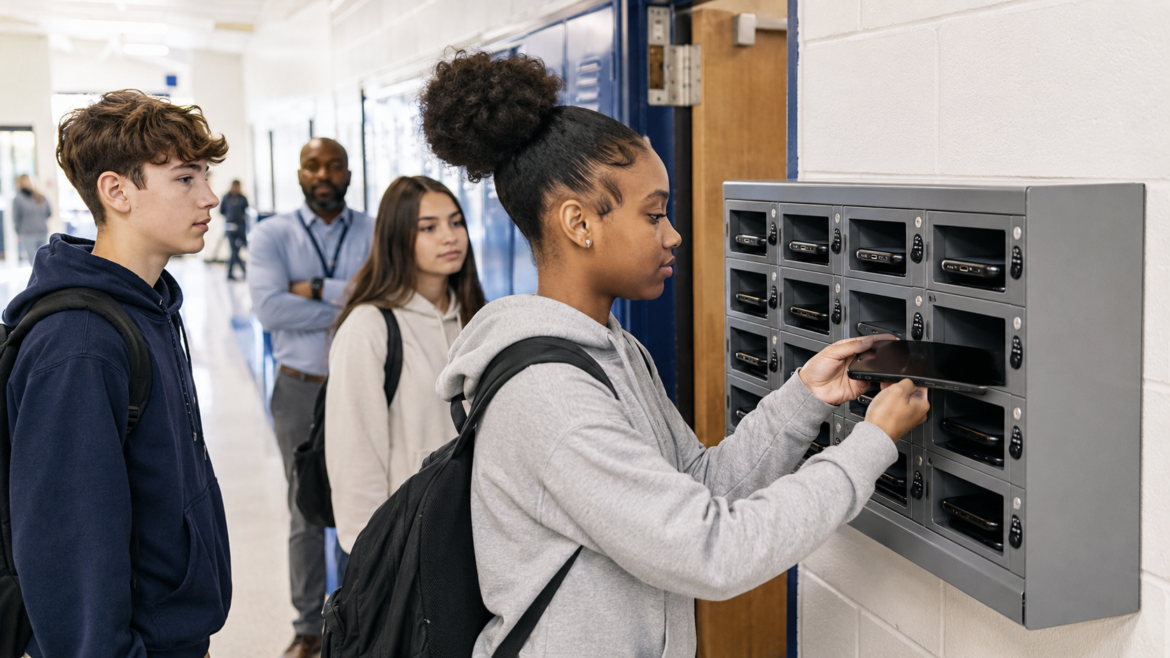
Girl in a gray hoodie inserts a tablet into a wall-mounted, multi-slot mailbox in a school hallway while two classmates watch
Hot Topics - controversialSchool SafetyK-12

School Cell Phone Bans: Where the Devices Go

by EdCircuit Staff September 29, 2026
written by EdCircuit Staff 10 minutes read

School cell phone bans are moving from policy debate to daily practice. For states and districts beginning the 2026–27 school year with new restrictions, passing a rule was only the first step. Now schools must decide where hundreds—or thousands—of phones will go each morning, who will be responsible for them, and how students can reach a device when access is truly necessary.

Those decisions are producing very different versions of a “phone-free” school day.

A phone powered off inside a backpack remains within reach. A phone locked in a pouch stays with the student but cannot be opened without an unlocking device. A phone placed in a locker, classroom pocket, or centralized storage cage shifts some degree of responsibility to the school.

The distinction may determine whether a policy becomes part of the school routine or creates a new source of confusion and conflict.

The national debate has shifted toward implementation

As of July 2026, the National Conference of State Legislatures reported that 42 states, Washington, D.C., and Puerto Rico had enacted legislation related to cell phone use in schools. Some states restrict phones only during instruction. Others require devices to remain inaccessible from the opening bell through dismissal.

More states may soon join them. Washington Gov. Bob Ferguson announced an “Away for the Day” proposal in June that would require personal smart devices to remain unavailable throughout the school day beginning in September 2027. State officials plan to consult with students, educators and families about enforcement, exceptions, district support and emergency communication before releasing the full proposal.

That work is important because the language used in state law shapes what districts can do locally. A requirement that phones remain “out of sight” gives schools more flexibility than a requirement that they be stored away from the student in an inaccessible location.

What does “put away” actually mean?

Wicomico County Public Schools in Maryland is implementing a “Bell to Bell, No Cell” rule. Students may use personal devices before the first bell and after dismissal, but not during instruction, lunch, passing periods, shuttle-bus transportation or other school-day activities. Phones and other covered devices must be powered off or silenced and stored out of sight.

Wisconsin law requires districts to restrict phones during instructional time, allowing for a less restrictive local approach. Appleton Area School District required middle school students to keep phones in lockers last year. High school students may keep a powered-off phone in a backpack or on their person during class, then use it in hallways and at lunch. District leaders told WSAW that they will monitor the rollout and make adjustments if needed.

Kansas has chosen a stricter standard. HB 2299 requires devices to be turned off and securely stored away from the student in an inaccessible location throughout the school day, including recess, lunch and passing periods. Students may leave their devices at home or in a vehicle.

New York makes a similar distinction. State guidance says an ordinary backpack is not sufficient because the student retains continuous access. A locker can comply, but only if the school prevents students from accessing it for an unauthorized purpose. New York City Public Schools allows schools to use assigned lockers, shared lockers, individual pouches or another secure system.

Together, these policies expose the central question behind phone storage: Is the district trying to stop visible use, or remove the opportunity for use?

Keeping the phone with the student

The simplest and least expensive approach is to let students retain possession while requiring devices to remain powered off and out of sight.

Spokane Public Schools has used that model since the 2024–25 school year. Elementary and middle schools are phone-free throughout the day, while high schools restrict phones during class. Students keep their devices, but they must remain out of sight during restricted times.

This approach avoids a morning collection process and limits the school’s responsibility for personal property. It also depends heavily on students following the rule and adults enforcing it consistently. A phone inside a backpack can still be checked in a restroom, hallway, or under a desk.

Traditional lockers create more separation without requiring the school to collect every phone. Appleton used lockers for its middle school students. In Kansas, Piper Unified School District permits locker storage, while Basehor-Linwood purchased lockers specifically for phones.

Lockers are a logical option in buildings where every student has one and access can be limited. They are less useful when students do not regularly use lockers, combinations are forgotten or students can visit them throughout the day without supervision. Schools also need procedures for late arrivals, early dismissals and students leaving campus for career and technical education or college-credit courses.

When the school controls the storage

Some schools collect devices in the classroom. At Neenah High School in Wisconsin, every classroom has a phone pocket with an assigned slot for each student. The routine makes compliance easy to see, but students must move their phones from room to room throughout the day. That makes the system better suited to an instructional-time restriction than a bell-to-bell ban.

Oakland Unified School District is using classroom lockboxes for elementary students. Phones are placed in the box at the beginning of the day and returned after dismissal. The system removes access, but it also requires schools to identify devices and manage early dismissals, approved use, and end-of-day distribution.

At Wyandotte High School in Kansas, students place phones in a supervised storage cage in the morning and retrieve them after school. Central storage creates the greatest physical separation, but it also turns arrival and dismissal into a daily logistics operation. Staff must match devices to students, prevent long lines, and respond when a phone is reported missing or damaged.

There is also the question of responsibility. Kansas addressed it directly in HB 2299 by stating that schools and their employees or agents are not liable for damage to or storage of devices brought to school. Districts in other states cannot assume they have the same protection. Their policies must account for state law, insurance coverage, and procedures for documenting confiscated or centrally stored phones.

Locking pouches split the difference

Locking pouches allow students to keep possession of their phones without being able to use them. A student powers off the device, places it inside an assigned pouch, and carries the pouch until authorized staff or a magnetic station unlocks it.

Oakland is using pouches for middle and high school students. School-level procedures show how much planning sits behind the routine. Students who forget a pouch may have to leave their phone in an office lockbox. Lost or damaged pouches can require replacement, temporary storage and additional follow-up.

Pouches reduce the school’s custody of personal property, but they introduce other costs. Districts must purchase, assign and track them, replace damaged equipment and install enough unlocking stations to avoid a dismissal bottleneck. Staff also need a way to open a pouch immediately when a student has approved access or a genuine emergency.

New York allocated $13.5 million for storage solutions, acknowledging that local flexibility does not eliminate the cost of implementation.

Could geofencing replace physical storage?

Massachusetts lawmakers are considering another option. Under legislation debated in August, districts could use secure storage bags, geofencing technology that limits device operation on school grounds or an alternative plan approved by the state. The proposal would cover classrooms, lunch and hallway transitions.

Geofencing could reduce the need to collect devices, but it raises a different set of questions. Districts would have to define which functions are disabled, which devices and operating systems are covered, how approved exceptions are activated and what happens when the technology fails. Because the phone remains physically with the student, schools would also need to determine whether the system meets the state’s intended standard for inaccessibility.

Access is the real test of a phone-free policy

A district cannot simply announce that exceptions will be allowed. It needs a process that works without requiring a student to explain a private medical condition in front of classmates or wait through a lengthy approval during an urgent situation.

Calvert County Public Schools, which is moving ahead of Maryland’s 2027–28 implementation deadline, identifies four exceptions: a documented IEP or Section 504 accommodation, a documented health need, language translation when school-issued technology is insufficient and principal-approved caregiving responsibilities. Calvert’s policy also eliminates the lunch-period access previously available to high school students.

Richmond Public Schools requires approved access to be documented in an IEP, Section 504 plan, individualized health care plan or language support plan. Its district guidance explains that diabetes monitoring and assistive technology may require individualized arrangements.

Kansas goes further by allowing medical or educational-plan access only when the personal device is the intervention of last resort and no reasonable alternative is available.

Whatever standard a district adopts, staff need to know who approves access, how they will be notified and who can retrieve a stored phone or open a pouch. The procedure must also work during testing, field trips, evacuations and classes held in another building.

Families need a reliable way to reach students

For many parents, the most difficult part of a phone ban is losing direct access during an emergency or a last-minute transportation, work or caregiving change.

Richmond directs parents to contact the main office or use email and ClassDojo. Students can request designated phones in the counselor’s office, nurse’s office, main office and other locations. During a schoolwide emergency, the district communicates through automated calls and texts, email, its website and social media.

Oakland advises families to call the school for urgent contact and uses ParentSquare for broader communication. New York requires schools to provide a way for parents to reach students when necessary, while New York City schools must give families at least one direct school phone number.

These alternatives will build confidence only if they work. Office lines must be staffed, voicemail must be monitored and family contact information must remain current. Messages should be delivered quickly and in the languages families use. Schools also need accessible phones for students and a backup communication method when power or internet service is interrupted.

Policy boundaries should be just as clear. Richmond permits phones on school buses under defined conditions, while Wicomico includes shuttle-bus transportation in its restriction. Families should not have to guess whether a student can use a phone while waiting for a bus, attending an after-school activity or traveling to an off-campus program.

The details will determine whether the policy works

Before the first day of implementation, every district should be able to answer a short list of questions:

  • Is the policy limited to instructional time, or does it restrict access all day?
  • Which devices are covered, including watches, earbuds, tablets and smart glasses?
  • Where will devices be stored, and does that location meet state requirements?
  • Who is responsible when a device is lost, damaged or confiscated?
  • How will late arrivals, early dismissals and off-campus programs be handled?
  • How will students receive approved medical, disability, translation or caregiving access?
  • How will families and students communicate during routine changes and emergencies?
  • Can arrival and dismissal operate without long lines or lost instructional time?

Early reports offer reasons for optimism. Neenah leaders say classroom phone pockets have improved engagement and student discussions. Richmond’s April 2026 update reported better focus, improved engagement and fewer bullying incidents and hostile group chats. Spokane reported a 36% decline in lunchtime behavior referrals and an approximately 22% drop in failure-to-cooperate cases during 2024–25.

Those reports do not prove that one storage method caused the changes. Spokane, for example, introduced its phone policy alongside an initiative encouraging students to participate in clubs, sports and other in-person activities. Districts will need longer-term data on achievement, attendance, behavior, mental health and disciplinary patterns.

The next stage of school cell phone bans will not be defined only by how many states pass laws. It will be defined by what happens when students arrive each morning: where the phone goes, who is responsible for it, when it can be accessed, and whether everyone understands the process.

The policy may begin with a vote. Its success will depend on the routine schools build around it.

Subscribe to edCircuit to stay up to date on all of our shows, podcasts, news, and thought leadership articles.

September 29, 2026 0 comments
0 FacebookTwitterPinterestLinkedinWhatsappCopy LinkEmail
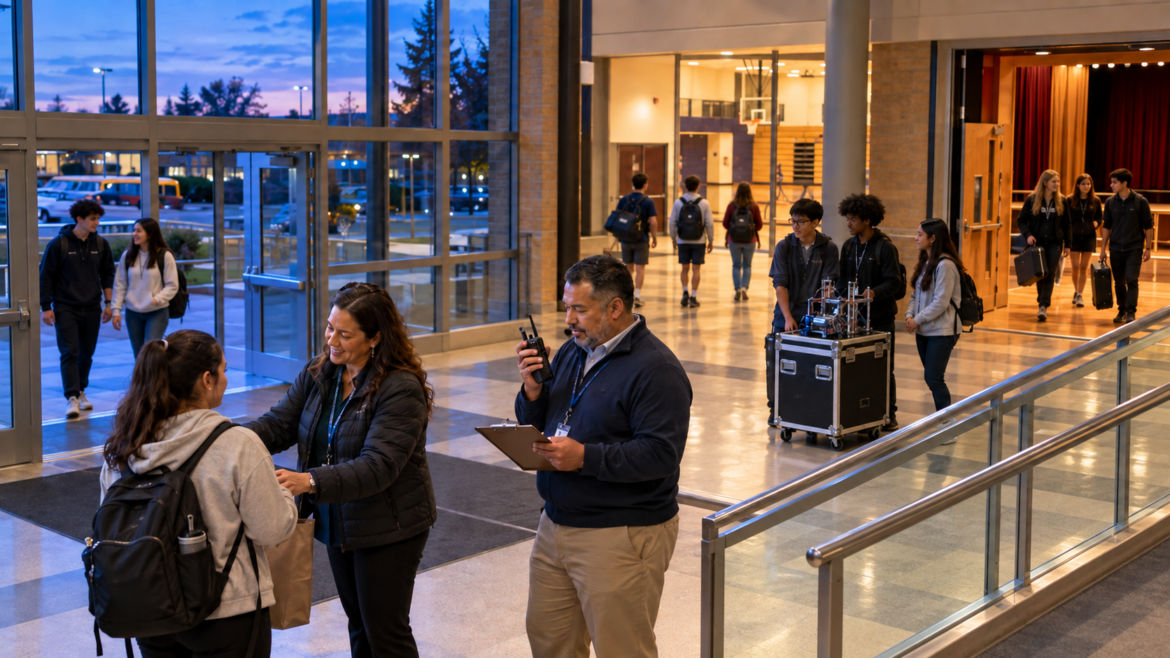
Staff member with clipboard and walkie-talkie greeting a student at a campus lobby entrance.
After-School ProgramsK-12Safer EdSchool Safety

After-Hours School Safety: Who Is Responsible?

by EdCircuit Staff September 28, 2026
written by EdCircuit Staff 6 minutes read

After-hours school safety begins with a basic question: Who is in charge when the regular school day ends but students remain?

During the school day, most buildings operate within a familiar structure. Administrators and support personnel are available, the main office is staffed, and teachers generally know where to find help.

By early evening, much of that structure may be gone.

A basketball practice is underway in the gym. The robotics team is working in a lab. Students are rehearsing in the auditorium, while tutoring continues in another part of the building. Then the power goes out.

The outage is only part of the problem. Do the adults who remain know who has authority? Can they account for every student? Which entrances are open? How will they communicate if the usual systems are unavailable?

That is the focus of the latest episode of the Safer Ed Podcast, “After the Final Bell: Who Is Responsible When School Stays Open?” The episode examines a reality that can be easy to overlook: The final bell changes staffing, but it does not end the school’s duty of care.

After Hours Is a Different Operating Condition

After-school programs are often treated as extensions of the regular day. Yet many of the systems supporting the school day are no longer fully available.

The principal may have left, the nurse’s office may be closed, and only part of the building may be occupied. Programs may operate independently while personal phones replace school communication systems and emergency supplies remain secured elsewhere.

After-hours safety is not the regular school-day plan with fewer people. It is a different operating condition that needs a practical plan of its own.

Identify Who Has Authority

Every activity needs an adult responsible for its students. The campus also needs someone with authority to coordinate a building-wide response when several programs are taking place at once.

Those roles are not interchangeable. A coach can supervise a team, and a theater director can manage a rehearsal. But if a fire alarm activates, severe weather approaches, or the building loses power, someone must be ready to make decisions for the campus.

Before activities begin, adults should know:

  • Who is serving as the after-hours site leader

  • Who takes over if that person is unavailable

  • Who can delay dismissal, relocate groups, evacuate the building, or contact emergency services

  • How directions will reach every occupied area

“Everyone is responsible” may sound collaborative, but it does not establish authority. When something changes quickly, unclear leadership creates delay.

Account for Who Remains—and How They Leave

After the final bell, the school population changes constantly. Some students leave immediately. Others report to practices, tutoring, rehearsals, clubs, or detention. They may move between programs, leave early, or wait for transportation after an activity ends.

Each program needs an accurate roster. The campus also needs a reliable way to determine which groups are still present and where they are located.

A head count can show that a number is wrong. An updated roster identifies who is missing. That distinction matters when a student changes activities or leaves with an authorized adult.

Dismissal deserves the same attention as arrival. Students may leave with parents, board an activity bus, drive themselves, walk home, or wait for a late ride. When plans change, staff need to know who can approve the change, how the receiving adult will be identified, and where the release will be documented.

Responsibility does not transfer because someone assumes a student has gone home. It transfers when the handoff is communicated and confirmed.

Reconsider Building Access and Communication

A locked building is not automatically a secure building.

After hours, doors may be propped open for families or performers, students may wait near side entrances, and community groups may share the campus. An entrance that is convenient for one program can create an accountability problem for everyone else.

The after-hours plan should identify which entrances will be used, who will monitor them, how visitors will be directed, and what happens when a student needs to reenter the building.

Staff members also need to know whether announcements reach every occupied space and what backup is available when the intercom is not.

Personal cell phones may be part of that plan, but they should not be the entire plan. Batteries die. Reception varies. During an emergency, the person with the contact list may already be helping a student.

What matters is having a dependable way for activity leaders, the site leader, families, and emergency responders to exchange accurate information.

Plan for Medical and Individual Needs

Students do not leave their medical, mobility, sensory, communication, or behavioral needs behind when the school day ends.

The people and resources supporting those needs, however, may be different. The nurse may not be present. Medication or emergency equipment may be stored elsewhere. A substitute coach or volunteer may not know a student’s established response plan.

Information must remain protected and limited to those who need it. At the same time, the adult responsible for a student must know how to access authorized medication or emergency supplies, contact help, and follow the appropriate plan.

Accessibility also includes evacuation routes, restrooms, transportation, communication, and reunification. Those needs must be considered before the activity begins—not improvised during an emergency.

Keep the Plan Short Enough to Use

The difference between confusion and coordination is rarely a larger binder.

A one-page after-hours safety sheet can be more useful than a lengthy plan no one can locate. It could include:

  • The site leader, backup, and emergency contacts

  • Active programs, locations, adult leaders, and current rosters

  • Building entrances and occupied areas

  • Primary and backup communication methods

  • Medical, accessibility, evacuation, and reunification information

Adults also need a short, direct orientation. Who is in charge? How do they call for help? Where should their group go? What happens if the normal dismissal or transportation plan changes?

The plan can then be tested through brief tabletop discussions. Consider a power outage, severe weather, an unclaimed student, or a site leader who suddenly has to leave. Brief discussions can expose gaps before an emergency.

The Final Bell Does Not End Responsibility

After-school activities give students opportunities to build skills, relationships, confidence, and belonging. Thoughtful safety planning protects those experiences without making them feel restrictive.

The central lesson is simple: The final bell changes who is in the building. It does not change the responsibility to protect the students who remain.

Before the next practice, meeting, rehearsal, or event, school leaders should ask whether every student can be accounted for, every adult knows who is in charge, and every occupied area can reach help.

Those answers reveal whether after-hours safety is part of the school’s working system—or merely an assumption.

Safer Ed is sponsored by Science Safety and produced in partnership with edCircuit.

To learn more about how duty of care follows students across school settings, explore the free Duty of Care learning module from Science Safety.

Subscribe to edCircuit to stay up to date on all of our shows, podcasts, news, and thought leadership articles.

September 28, 2026 0 comments
0 FacebookTwitterPinterestLinkedinWhatsappCopy LinkEmail
AI and student learning measured: analytics charts drawn in glowing blue light on a classroom blackboard
Artificial IntelligenceHot Topics - controversialK-12

AI and Student Learning: How Schools Should Measure It

by EdCircuit Staff September 28, 2026
written by EdCircuit Staff 10 minutes read

AI and student learning are supposed to be the focus of the school board presentation.

Instead, the first slides show how many accounts have been activated, how often the new platform is used, and how many lessons, quizzes, summaries, and tutoring sessions it has generated. Another slide estimates that teachers have saved hundreds of hours.

The numbers look impressive.

Then a board member asks the question that is missing from the presentation:

“Are students learning more?”

The room goes quiet.

The district knows how many people logged in and which features they used. It may even know how much time teachers believe they saved. What it cannot clearly explain is whether students understand more, think more deeply, work more independently, or receive stronger instruction because the technology is there.

That is the measurement problem schools now face.

AI activity is easy to count. Educational value is harder to establish.

As districts move from experimentation to long-term implementation, enthusiasm must be matched by evidence. The central question cannot be whether AI is being used. It must be whether the technology is improving teaching and learning—and at what cost.

Start With the Question, Not the Dashboard

Usage data has a natural appeal. It is immediate, precise, and easy to place in a report.

A district can count active users, prompts, completed tutoring sessions, and minutes spent on a platform. Those numbers help leaders understand whether accounts work, whether training reached the intended staff, and whether people are using the features the district purchased.

They do not demonstrate learning.

A student can complete fifty tutoring sessions without mastering the targeted skill. A teacher can generate dozens of lesson plans that still require significant correction. A writing assistant can produce more polished essays while students become less capable of drafting independently.

According to National Center for Education Statistics data released in 2025, 73 percent of public schools reported that at least some teachers were using AI for lesson planning, administration, instructional materials, assessments, grading, or feedback. Yet only 38 percent of school leaders agreed that integrating AI would lead to better educational outcomes for students.

That gap matters. Schools are already using the technology, but its educational value remains unsettled.

A 2026 resource from Regional Educational Laboratory Central similarly notes that research has not established which teacher uses of AI translate into improved student learning outcomes.

Districts should not interpret that uncertainty as a reason to avoid every AI tool. They should treat it as a reason to define success before implementation.

Suppose a district adopts an AI tutoring system for middle school mathematics. “Improving math” is too broad to evaluate. Leaders need to identify which students will use the tool, which skills it is expected to strengthen, how teachers will use the information, and what improvement should be visible.

Will students solve more multistep problems correctly? Can they explain their reasoning? Will they retain the skill after the tutoring support is removed? Can they apply what they learned to an unfamiliar problem?

Those questions point toward evidence of learning. Account activations do not.

Without clear goals, success is easily redefined after the fact. A platform purchased to improve achievement may later be defended because students enjoyed using it. A tool intended to save time may be called successful because it produced more materials.

Enjoyment and productivity may be worthwhile. They are not interchangeable with learning.

Efficiency Matters—But So Does What Students Can Do

Teacher time is valuable.

If AI can reduce repetitive administrative work, provide a usable first draft, or make routine communication more efficient, districts should measure that benefit. Time returned to instruction, feedback, collaboration, or individual student support has real value.

But a tool that saves a teacher twenty minutes has not automatically improved a student’s education.

Leaders need to understand what happened during those twenty minutes. Did the teacher provide more feedback? Meet with a struggling student? Strengthen the lesson? Or did the time disappear into correcting errors the AI introduced elsewhere?

Efficiency measurements should include time added as well as time saved.

A quiz may be generated in five minutes but require twenty minutes of fact-checking and revision. A counselor may receive a faster summary of student information but need additional time to verify what was omitted. A translated family message may appear instantly, yet someone still needs to confirm that it is accurate and appropriate.

During a pilot, participating educators can track a small sample of tasks before and after using the tool. How long did the work take? How much correction was required? Was the final result stronger, weaker, or essentially the same?

The same care is needed when examining student work.

AI can improve the appearance of an assignment without strengthening the thinking behind it. An essay may sound more polished. A science response may use advanced vocabulary. A presentation may be better organized. None of those changes proves that the student understands more.

For AI-supported writing, teachers might compare a student’s ability to plan, draft, revise, and explain key choices. An independent writing sample can reveal whether those skills transfer when the technology is unavailable.

For an AI tutor, districts should look beyond performance inside the platform. Can students solve a new problem during class? Can they explain why the solution works? Do they remember the skill several weeks later?

Student independence deserves attention. If performance improves only when the tool is present, the system may be supporting completion rather than durable learning. That support may still have value, but schools should be honest about what it accomplishes.

Ask Who Benefits

A districtwide average can hide very different experiences.

An AI platform might improve outcomes overall while producing weaker results for English learners, students with disabilities, students using certain dialects, or children whose backgrounds are poorly represented in its training data.

Access may create another divide. Students with reliable devices, strong internet connections, and quiet places to work can use a platform differently from classmates who have access only during school hours. Students who already know how to ask detailed questions may receive stronger responses than those who need more guidance.

Districts should review participation, achievement, error reports, accessibility concerns, and teacher overrides across relevant student groups while protecting individual privacy.

They should also ask whether the tool expands opportunity or simply serves students who were already succeeding.

Imagine an AI-supported advising platform that increases the number of students receiving college and career information. That sounds promising. But are first-generation students receiving the same quality of recommendations? Are students with disabilities being directed toward a narrower set of options? Can multilingual families understand and question the guidance?

The average outcome will not answer those questions.

Neither will a vendor dashboard. Teachers, students, and families must be part of the evaluation.

A teacher may notice that a platform performs well in one subject but repeatedly generates inaccurate material in another. Students may report that an AI tutor gives away answers too quickly, making it easy to avoid productive struggle. Families may be uncomfortable with how a system describes or classifies their child.

Those experiences are evidence.

The NIST AI Risk Management Framework’s measurement guidance emphasizes that AI benefits and risks emerge from the interaction between technology, people, and the context in which a system is used. NIST recommends testing whether systems function as claimed, tracking errors and negative effects, comparing performance before and after deployment, and involving users in evaluation.

For schools, that means looking inside classrooms rather than relying entirely on platform analytics.

Measure Value and Harm at the Same Time

No single number can capture the educational impact of AI.

A useful district evaluation brings together several kinds of evidence: student performance, the quality of student reasoning, ability to complete independent tasks, teacher workload, differences among student groups, reported errors, accessibility concerns, privacy incidents, and feedback from the people using the system.

The evidence should also be compared with a meaningful starting point. What happened before the platform was introduced? What happens in similar classrooms that are not using it? Could an existing intervention address the same need at a lower cost or with less risk?

Perfect research conditions are rarely available in a school district. Thoughtful comparisons are still possible.

A limited pilot across several classrooms can provide useful information when the goal is clearly defined and starting conditions are documented. The district is not trying to publish a national study. It is trying to make a responsible local decision.

The review should begin early.

During the first month, leaders can focus on access, technical problems, training needs, privacy questions, and whether the tool functions as promised. After several months, they can examine teacher workload, student participation, output quality, accessibility, and early evidence of learning.

By the end of a semester or school year, the district should be able to compare academic outcomes, student independence, equity, cost, teacher practice, and unintended consequences with the original goals.

Harms and near misses belong in that review.

Did the platform produce inaccurate instructional content? Were students incorrectly flagged for misconduct? Did teachers enter information that should not have been shared? Were inaccessible materials generated? Did the system underestimate certain students and recommend lower-level work?

A teacher who catches a dangerous science error before a lesson has identified a weakness worth documenting. So has a counselor who finds that an automated summary omitted important context.

The NIST guidance on managing AI risk recommends continued monitoring because a system’s performance can change after deployment. It also calls for feedback, incident response, appeals, overrides, and the ability to discontinue systems that exceed an organization’s tolerance for risk.

Approval should begin the monitoring process, not end it.

Let the Evidence Change the Decision

An evaluation has little value if the district has already decided to renew the contract.

Leaders should determine in advance what would justify expansion, what would require modification, and what would cause the district to stop using the system.

Some tools will deserve broader use. Others may work only in certain subjects or grade levels. A district might retain one feature, disable another, strengthen its training, or revise the rules governing student use.

Sometimes the evidence will show that the platform should be removed.

Ending a pilot is not a failure when the pilot was designed to answer a question. Continuing an ineffective system because the district has already invested money and time is the more expensive mistake.

School boards and communities deserve an honest account of what was learned. Leaders should explain why the tool was introduced, who used it, which outcomes were examined, what improved, what did not, and what concerns emerged. Limitations in the evidence should be acknowledged rather than hidden behind early statistics.

The U.S. Department of Education’s guidance on AI in schools emphasizes responsible adoption, privacy, and engagement with affected stakeholders, especially parents.

Transparent evaluation is part of that responsibility.

Families do not need to be told that a platform is transformational. They need to understand what it does, why the district uses it, what evidence supports that use, how students are protected, and how concerns can be raised.

Teachers should see that their feedback influenced the decision. Students should understand how the technology affects their learning and what they can do when something goes wrong.

Trust grows when districts are willing to discuss uncertainty rather than hide it behind a dashboard.

Measure What Matters

AI may help educators work more efficiently, give students faster feedback, broaden access to support, and create learning experiences that were previously difficult to provide.

Those possibilities are worth exploring.

They are not self-proving.

A tool should earn its place in a school by serving a clearly defined educational purpose, producing benefits that can be observed, and operating within boundaries the community understands.

The school board presentation should include more than accounts activated, prompts submitted, and hours reportedly saved.

It should show what students understand now that they did not understand before.

The number of times a tool is used tells a district whether it has been adopted.

It does not tell leaders whether it deserves to remain.

Subscribe to edCircuit to stay up to date on all of our shows, podcasts, news, and thought leadership articles.


Editor’s note: edCircuit is vendor-neutral and does not endorse products or services. Any mention of a specific solution is included for contextual and informational purposes only.

September 28, 2026 0 comments
0 FacebookTwitterPinterestLinkedinWhatsappCopy LinkEmail
Two men at a brick doorstep exchange a small parcel; one hands it to the other inside an open door, with a Concentric Educational Solutions logo in the corner.
Hot Topics - controversialSponsored ArticleK-12

How Home Visits Grew Into Concentric360

by Molly Hebert Loyd September 25, 2026
written by Molly Hebert Loyd 4 minutes read

Long before there was a platform, there was a knock on a door. In the early days of Concentric Educational Solutions, trained advocates went house to house in Baltimore, sat down with families, and asked what was keeping a child out of school. Our founder started the organization because too many children were slipping between the systems that were supposed to serve them, and meeting families where they lived was the most direct way to find them.

That approach worked because it treated a student as a person in a situation rather than a problem with a number attached. Home visits became the center of our work because they were the most reliable way to find the students who needed help, and each visit was the start of something larger.

What has changed is the technology. Tools that can capture, organize, and act on what families share have caught up with the depth of those conversations. That shift is what led an organization built on showing up in person to launch a software platform.

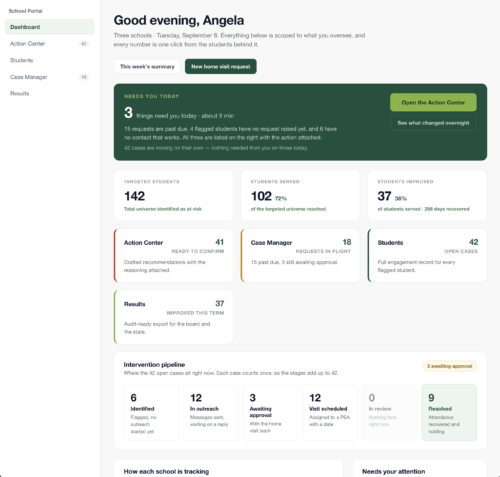
Dashboard view of Action Center: left navigation, header 'Action Center', and the Daily action queue with a 16-count indicator and a green 'Today’s queue' card.] ,

Concentric360 Action Center


What technology makes possible

Every home visit produces valuable information. A family might share what’s affecting attendance, who the right adult to contact is, what kind of support would help most, and what a student hopes to do next. Today’s technology lets us do far more with that knowledge. Advocates can capture a conversation with the family’s consent and stay fully focused on the people in front of them. What they learn can move straight into a student’s record and shape the next step. And insights gathered across many visits can show a community where needs are concentrated and which supports are making a difference.

Technology also makes it possible to share that knowledge with the partners best positioned to act on it. What a family shares might point to help from a city agency, a community health provider, or a workforce program. With the right platform, school leaders, municipal officials, and workforce boards can work from the same understanding of a young person’s needs and coordinate support together.

Concentric360 Dashboard

What we built

Concentric360, which launched this fall, brings those capabilities together. It gives school systems, municipalities, workforce boards, and community organizations one shared way to understand why young people are disconnecting and to act on it together.

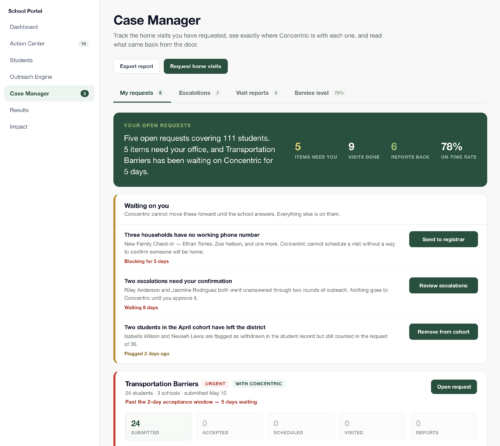
The platform takes on the coordination behind every visit. The Outreach Engine reaches families early with automated, multilingual text and email messages, and when a family needs more than a message, it escalates the case to a home visit. Case Manager assigns a Professional Student Advocate based on location, language, and caseload, tracks progress, and reviews the quality of each visit’s documentation before it goes into a report. The Field Engagement App gives advocates an easy way to capture what they learn during a visit, so they can give families their full attention.

It also gives partners a common place to work. The Action Center holds a single record for each young person, recommends a next step along with its reasoning, and leaves the decision with a person. The Community Support Hub connects families to services that help clear the path forward, including health, transportation, and family engagement support. The Digital Workforce Center carries the work past graduation, connecting young people to career exploration, internships, apprenticeships, and skills training.

Districts and communities don’t have to adopt all of it at once. Some start with a single module, like outreach or case management, and add more as they see results and as their budgets allow.

What stays the same

As we built, we held onto one commitment above all. The platform had to strengthen the relationships at the heart of our model. So it is designed around the same principles that have guided our work from the beginning.

Concentric360 Case Manager

Professional Student Advocates are there to support families. Families decide whether a visit is recorded, and they receive the same support either way. Student data is FERPA-aligned, access-controlled, and never sold. And while the platform surfaces patterns and suggests next steps, every recommendation is reviewed by a person before it becomes an action.

The advocate at the door is still where it all begins. Technology gives that advocate, and everyone working alongside them, more ways to turn what they learn into lasting support for a young person.

To see what Concentric360 could look like for your district or community, talk with the Concentric team or learn more about Concentric360.

Subscribe to edCircuit to stay up to date on all of our shows, podcasts, news, and thought leadership articles.

September 25, 2026 0 comments
0 FacebookTwitterPinterestLinkedinWhatsappCopy LinkEmail
Evening view of a glass-walled gym with people working out, next to a crowded football stadium under bright lights.
Hot Topics - controversialK-12

High School Athletics Arms Race: Who Pays?

by EdCircuit Staff September 25, 2026
written by EdCircuit Staff 10 minutes read

The high school athletics arms race is easy to see on a Friday night. The video board flashes. Music rolls through a stadium packed with thousands of fans. Players leave a college-style locker room, run beneath the lights and take a field surrounded by media booths, premium seating and enough production equipment to make the game feel like a televised event.

The bigger change, however, may be happening before the gates open.

Inside some high schools, athletes now train in expansive weight rooms, recover in hydrotherapy pools, receive treatment in sports-medicine suites and refuel at nutrition stations. Indoor turf fields eliminate weather cancellations. Film rooms and branded hallways sell the identity of the program before an athlete reaches the field. Some of these facilities rival—and occasionally surpass—those found at Division III and smaller Division I colleges.

The teenagers are still playing high school sports. The surroundings say: This is serious. This is where athletes come to compete.

That message has pushed facilities beyond their traditional role. They are now part training center, part community gathering place, and part recruiting and enrollment showcase. The result is a difficult question for school communities: Are these projects responsible investments in health, safety and participation, or signs of a competition that only the wealthiest districts and donor networks can win?

Bigger Than Some College Stadiums

The college comparison is not an exaggeration. Allen ISD’s Eagle Stadium in Texas seats 18,000 spectators. Brown Field at Division I Valparaiso University seats 5,000, while Bailey Memorial Stadium at Division I Presbyterian College seats 6,500. Many Division III venues are smaller still.

Seating capacity alone does not determine the value or extravagance of a project. A district stadium used by several high schools is different from a single-campus facility, and published costs may include parking, roads, utilities, or community event space. Still, the numbers show how far the top end of high school athletics has moved.

Public projectReported costHow it was financed and used
Allen ISD Eagle Stadium$59.6 millionIncluded in a voter-approved 2009 bond package; 18,000 seats and primarily associated with the district’s single large high school at the time.
Katy ISD Legacy StadiumAbout $72 millionBuilt through the district’s 2014 bond program; shared by eight high schools when it opened, along with soccer, band and other events.
McKinney ISD Stadium and Community Event CenterAbout $70 millionFunded through bond money approved in 2000 and 2016; built for three district high schools and includes a rentable event center.
Prosper ISD proposed second stadium$94 millionPart of a separate 2023 athletics proposition; voters rejected it while approving the other three propositions in the district’s bond package.

These are original project figures, not inflation-adjusted totals, and they are not clean side-by-side comparisons. Katy’s venue opened as a shared stadium for eight high schools, while McKinney’s project included a community event center. Scope matters as much as the headline price.

So does age. In 2025, Spring Branch ISD voters approved three athletic-facility propositions totaling $558.6 million across high schools and central venues; the district said the targeted facilities averaged 58 years old. In May 2026, Lufkin ISD voters approved $42 million for a replacement stadium intended to replace a field more than 50 years old.

Old facilities develop real problems, from inaccessible seating and outdated electrical systems to fields that no longer support the number of students using them. The hard decisions begin when necessary replacement grows into a list of premium features.

The Competition Is About More Than Football

Facilities send a message, and school leaders know families are paying attention.

A polished athletic complex appears in social media videos, campus tours, and enrollment materials. It can help retain a successful coach and convince families that student-athletes will receive serious training and care. At private schools and in communities with open-enrollment options, that impression can influence where a family chooses to go.

This is not limited to football. A field house can serve lacrosse, soccer, baseball, softball, track, cheer, marching band, and physical education. A quality strength program can support nearly every sport. An athletic-training room can improve injury care for hundreds of students.

Competitive pressure can turn useful improvements into a cycle. One school opens an indoor facility. A rival announces a larger weight room. Another adds a recovery center or video board. What began as an upgrade becomes the new expectation.

Schools unable to keep pace feel that pressure too. Their athletes may be just as talented and their coaches just as committed, yet worn equipment and limited training space can make the program appear less serious. Facilities can shape participation, coaching stability and public perception—even when they say little about the education students receive.

Public-School Projects: The Taxpayer Has a Vote

Public districts commonly finance major construction through voter-approved bonds. In Texas, where many of the best-known stadium projects are located, the school property-tax system separates daily maintenance-and-operations funding from the interest-and-sinking tax used to repay facility debt. The Texas Education Agency explains that the two revenue streams serve different purposes.

That distinction matters. Bond proceeds generally cannot be moved into the annual account that pays teacher salaries, so the familiar claim that a stadium’s construction dollars could simply have been handed to teachers is usually misleading.

The debt is not free, however. Taxpayers authorize repayment of principal and interest over time. A district may issue bonds without increasing the current tax rate as older debt retires or property values rise, but the obligation remains. Leaders must also consider public confidence when the district later needs money for roofs, buses, classrooms, or security.

Recent votes show that communities do make distinctions. Texas requires certain specialized facilities, including large stadium projects, to appear separately on the ballot. In 2023, Prosper ISD voters approved funding for schools, technology and a performing arts center while rejecting the proposition that included a proposed $94 million stadium.

Public schools also supplement tax dollars with booster-club gifts, education foundations, corporate sponsorships and naming-rights agreements. PlainsCapital Bank agreed to pay Lubbock ISD $3 million over 10 years for stadium naming rights. Academy Sports + Outdoors agreed to pay Katy ISD $2.5 million over 10 years for naming rights to its student-activities complex.

Those agreements produce revenue, but they also place commercial branding inside a public-school experience. Communities should know what a sponsor receives and whether the money pays for construction, maintenance or broader student programs.

Private Schools: Donors Can Change the Timeline

Private schools use a different playbook. They do not ask local voters to approve a school bond. Athletic projects are more likely to move through capital campaigns, major gifts, naming opportunities, reserves or borrowing supported by tuition and fundraising.

That model can move quickly when the right donor steps forward.

Bishop Gorman High School in Las Vegas opened a 41,000-square-foot athletic training center with an 11,500-square-foot weight room, indoor sprint track, hydrotherapy, treatment areas and film space. School officials said donations paid for the facility, although they did not publicly disclose the cost.

In 2025, The Bolles School in Jacksonville announced a $6 million gift toward a $12 million athletic performance center. Its plans include a weight room, hydrotherapy, indoor and covered turf, recovery space and a “Nutrition Zone.”

In Ohio, Padua Franciscan High School launched a $16 million capital campaign covering athletics, performing arts and other priorities. The school reports raising $11.2 million, with $8 million designated for a new athletic center and another $3 million pavilion identified as an additional opportunity.

Private funding removes the direct burden from taxpayers, but not questions about priorities or access. It also creates a transparency difference: public bond costs and repayment structures are usually visible; private donor terms and total project costs may not be.

The private model depends on the giving power of alumni and supporters. One major gift can transform a campus. A school a few miles away may have no comparable path, regardless of need.

A Training Room Is Not a Luxury Suite

It is easy to see a large price and dismiss the entire project as excess. That misses the legitimate student benefits inside many modern facilities.

Athletic trainers need adequate space to evaluate injuries and protect student health. Strength rooms need safe equipment and qualified supervision. Indoor practice areas reduce exposure to lightning, extreme heat and dangerous field conditions. Nutrition stations can help students who leave class and practice for hours without a proper meal.

The amenities can outrun the operating plan. Hydrotherapy equipment needs trained oversight. Nutrition stations must be stocked. Bigger buildings bring utility, insurance and staffing costs long after the ribbon-cutting photos disappear.

Access matters just as much. If a new performance center is marketed as a schoolwide facility, girls’ teams, lower-profile sports, physical-education classes and students with disabilities should be able to use it—not simply fit around the schedule of one prominent program.

When Booster Wealth Becomes an Equity Issue

The arms race can create gaps within the same school system. One booster club may finance equipment, uniforms and facility improvements while another struggles to cover transportation or basic gear.

Public schools cannot hand responsibility for equity to their donors. The U.S. Government Accountability Office notes that booster-club support counts when schools evaluate equal treatment under Title IX. A gift designated for one team does not erase the district’s obligation to provide equitable athletic opportunities and treatment.

Leaders should also look beyond the boys’ and girls’ comparison. Who receives prime practice times? Which students can reach the facility after school? Can band, physical education, youth programs and community groups use it? A shared complex busy throughout the week offers a stronger public return than a showcase built around a handful of home football games.

The Questions Behind the Rendering

Communities do not have to choose between athletics and academics. School sports build belonging, discipline and community identity. Safe fields, sound strength training and appropriate medical care are part of a responsible program.

But an impressive rendering is not a financial plan. Before approving a stadium, field house or performance center, a school should be able to explain:

  1. What the published price includes—and what it leaves out.
  2. How many schools, teams, classes and community groups will use the facility.
  3. What the debt, staffing, utilities, food and maintenance will cost over time.
  4. How access and equity will be protected when private gifts favor one program.
  5. What safety or participation problem the project solves, and whether renovation or shared use could solve it for less.

High school athletics has changed, and many aging facilities need to change with it. The issue is not whether athletes deserve good places to train and compete. They do.

The issue is what happens when “good” is measured by the stadium down the road, the private school across town or the latest college-style complex circulating on social media.

The strongest athletic facility is not the one that looks most like a college campus. It is the one a school can afford to operate, every student can benefit from, and the community can still defend years after the Friday-night lights come on.

Subscribe to edCircuit to stay up to date on all of our shows, podcasts, news, and thought leadership articles.

September 25, 2026 0 comments
0 FacebookTwitterPinterestLinkedinWhatsappCopy LinkEmail
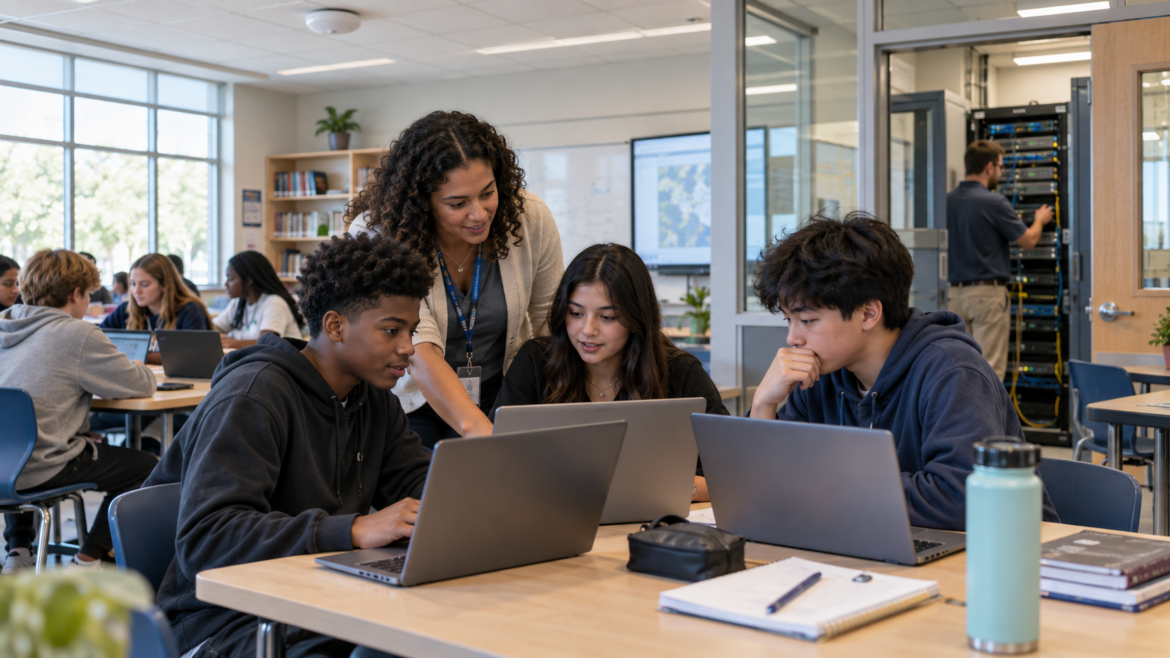
Teacher helping three students at a table with laptops in a modern classroom setting, light-filled space seeded with greenery and shelves in background
Education Policy and GovernmentHot Topics - controversialK-12

E-Rate at a Crossroads: What Schools Need to Know

by EdCircuit Staff September 24, 2026
written by EdCircuit Staff 6 minutes read

E-Rate helps schools and libraries pay for the internet service and network infrastructure that students and staff use every day.

When that infrastructure works, few people think about it. Teachers open digital resources, students take online assessments, families receive school messages, and staff access student information systems. Everyone expects the connection to be available.

Behind that routine access are significant costs for internet service, routers, switches, wireless access points, cabling, maintenance, and upgrades. For nearly three decades, E-Rate has helped schools and libraries manage those expenses. The Federal Communications Commission is now conducting a broad review of the program that could change how that support is provided.

The FCC has not decided to end E-Rate, and no final changes have been adopted. However, the agency is asking fundamental questions about the program’s future. That makes the current public comment period important for the people who understand how school networks are used and what they cost.

What E-Rate Does

E-Rate is the common name for the Schools and Libraries Universal Service Support Program. The FCC oversees the program, while the Universal Service Administrative Company manages its day-to-day administration.

Eligible K–12 schools, school districts, libraries, and consortia can receive discounts ranging from 20% to 90% on approved services. Discount levels are based largely on economic need and whether an applicant serves an urban or rural community. Schools and libraries are still responsible for part of the cost.

USAC divides eligible support into two main categories:

  • Category One covers connectivity to schools and libraries, including internet access and data transmission services.
  • Category Two covers connectivity within buildings, including eligible routers, switches, wireless access points, cabling, maintenance, and managed internal broadband services.

E-Rate does not pay for every technology a school uses. Student laptops and instructional software, for example, are generally outside the program. E-Rate supports the network those devices and programs need in order to function.

Being Connected Is Not the Same as Being Finished

The FCC is asking whether E-Rate has largely fulfilled its original mission now that broadband is widely available in schools and libraries. Availability, however, does not settle the questions of cost, capacity, or reliability.

School networks carry much more traffic than they did when E-Rate began in the 1990s. One-to-one devices, cloud-based platforms, online assessments, accessibility tools, video, family communication, and administrative systems all depend on them. A school may have an internet connection and still lack the bandwidth or internal infrastructure needed to serve every classroom reliably.

Those needs also change. Enrollment shifts, more devices come online, equipment reaches the end of its useful life, and new instructional and security demands emerge. Connectivity is not a one-time purchase.

If E-Rate support is reduced, the bill does not go away. More of it moves to state and local budgets. Districts may then have to weigh network costs against staffing, transportation, facilities, instructional programs, and other priorities. Schools in communities with few providers or limited local revenue may have even fewer options.

What the FCC Is Considering

The FCC’s Notice of Proposed Rulemaking asks whether E-Rate should be narrowed, restructured, limited, or potentially sunset. It also seeks public input on several related issues:

  • Whether support should be targeted more narrowly to rural or higher-need communities
  • Whether the services and equipment eligible for discounts should change
  • Whether the current method for calculating discounts remains appropriate
  • Whether concerns about screen time and parental involvement should affect E-Rate policy
  • Whether the FCC should change its interpretation of the Children’s Internet Protection Act
  • How program oversight, competitive bidding, and administration could be improved

These are questions, not settled policies. Comments from school districts, libraries, educators, families, and community members will become part of the record the FCC reviews before deciding what comes next.

E-Rate and Digital Safety

Although E-Rate is primarily a connectivity program, it also intersects with student internet safety. Schools receiving certain types of E-Rate support must comply with the Children’s Internet Protection Act. That includes maintaining an internet safety policy and using technology protection measures to block or filter specific categories of visual content.

CoSN’s CIRCUITS brief, Closing the Digital Safety Gap: E-Rate and the Evolution of School Filtering, explains why school-managed networks and devices can provide protections that personal devices using cellular service do not. Districts can apply filtering, monitoring, and local policy across the systems they manage.

Filtering is only one part of internet safety. No filter will catch every risk, and a technical tool cannot replace digital citizenship, adult supervision, clear expectations, family communication, or a response when students try to bypass safeguards. Beyond federal requirements, decisions about what content to block remain local and may differ by community, grade level, and school board policy.

Two CoSN Podcasts About E-Rate

The CoSN Podcast, produced and distributed in partnership with edCircuit, recently examined E-Rate from two perspectives:

  • Why E-Rate Still Matters: The Case for Action explains the FCC review, why widespread broadband access does not eliminate affordability concerns, and how local voices can participate in the proceeding.
  • Closing the Digital Safety Gap: E-Rate and the Evolution of School Filtering examines CIPA, school filtering, managed devices, personal cellular access, and the need for a layered approach to digital safety.

The episodes offer a useful introduction to both the policy debate and the safety responsibilities connected to school networks.

What School Leaders Can Do Now

Initial comments are due October 13, 2026. Reply comments are due November 12, 2026. Initial comments allow individuals and organizations to share their experiences and recommendations. Reply comments allow participants to respond to issues raised during the initial comment period.

A comment does not have to be long to be useful. School and district leaders can explain:

  • Their E-Rate discount and the costs it helps cover
  • Which instructional and operational systems depend on reliable connectivity
  • How many internet providers serve their community and whether affordable alternatives exist
  • What network upgrades will be needed over the next several years
  • Which local programs or services could be affected if more connectivity costs shift to the district
  • How the district addresses filtering, accessibility, student safety, and concerns about screen time

FCC comments become part of the public record. Submissions should not include confidential information about students, staff, security systems, or network configurations.

Take Action

  • Visit the Save Our E-Rate campaign
  • Contact elected officials through CoSN’s Action Center
  • Submit comments through the FCC

The fact that most schools are connected today is evidence of progress. It does not answer how they will afford the bandwidth, equipment, and maintenance they will need tomorrow.

Before the FCC makes decisions about E-Rate’s future, school and library leaders have an opportunity to explain what the program supports in their communities and what proposed changes could mean for their budgets, classrooms, and students. Those local experiences should be part of the record.

Subscribe to edCircuit to stay up to date on all of our shows, podcasts, news, and thought leadership articles.

September 24, 2026 0 comments
0 FacebookTwitterPinterestLinkedinWhatsappCopy LinkEmail
Newer Posts
Older Posts

Participate

  • Contribute
  • Sponsor
  • Submit Release
  • Subscribe
  • Get Interviewed

We value your privacy

We use cookies to enhance your browsing experience, serve personalized ads or content, and analyze our traffic. By clicking "Accept All", you consent to our use of cookies.

Customize
  • Needed for the site to work: signing in, the cart, your consent choice. Always on.

    8 cookies
    • ss_consent 1 yearYour cookie choice on this site, so you are not asked again.
    • wordpress_logged_in_* 2 days, or 14 days with "remember me"Keeps you signed in as you move between pages.
    • wordpress_sec_* 2 days, or 14 days with "remember me"The secure half of your sign-in.
    • wordpress_test_cookie SessionChecks that your browser accepts cookies when you sign in.
    • wp-settings-* 1 yearYour display settings when signed in.
    • wp_woocommerce_session_* 2 daysYour shopping session: the cart and the checkout.
    • woocommerce_cart_hash SessionTells the site whether your cart has changed.
    • woocommerce_items_in_cart SessionWhether your cart holds anything.
  • Remembers choices you make, such as a language or a region, and supports features like live chat.

    1 cookie
    • woocommerce_recently_viewed SessionThe products you looked at, so the site can show them again.
  • Helps us understand how visitors use the site: which pages are read, and for how long.

    2 cookies
    • _ga 2 yearsGoogle Analytics: tells one visitor from another. Set only after you allow analytics.
    • _ga_* 2 yearsGoogle Analytics: keeps your session state. Set only after you allow analytics.
  • Measures how fast pages load so we can make them faster.

  • Used to show you content and offers that match your interests, on this site and elsewhere.

    1 cookie
    • sbjs_* SessionWooCommerce order attribution: where you came from, so a purchase can be credited to the campaign or site that sent you.

Your browser asks us not to sell or share your information (Global Privacy Control), so advertising cookies stay off.

Do not sell or share my personal information

Some cookies from other companies help show you offers on other sites. Tick the box and save your preference to opt out of that sharing; untick it to opt back in at any time.

Your browser sends Global Privacy Control, so this preference is set for you and cannot be changed here.

Sign In

Keep me signed in until I sign out

Forgot your password?

Password Recovery

A new password will be emailed to you.

Have received a new password? Login here

Shopping Cart

Close

No products in the cart.

Close
-
00:00
00:00

Queue

Update Required Flash plugin
-
00:00
00:00

Your cart (items: 0)

Products in cart

Product Details Total
Subtotal $0.00
Shipping and discounts calculated at checkout.
View cart
Go to checkout

Your shopping cart is empty

Return to shop

Notifications