

edCircuit
  • Start Here
    • Login
    • Register
    • Subscribe
    • Submit a Press release
    • Advertise or Sponsor
    • Contribute
    • Get Interviewed
  • On the Wire
  • EdTech
    • All EdTech
    • Online Learning
    • Hybrid and Remote Learning
    • Augmented and Virtual Reality
    • ESports
    • Gamification and Game-Based Learning
    • Digital Citizenship
    • EdTech Entrepreneurs
    • Market Trends
    • Future of Education
  • Artificial Intelligence
  • K-12 Education
    • All K-12
    • K-12 Teachers
    • Teaching Strategies
    • Special Education and IEPs
    • Dyslexia
    • Gifted and Advanced Learning
    • Early Childhood, Pre-K and Kindergarten
    • School Calendar
    • Tutoring and Homework Help
    • Attendance and Absenteeism
    • After-School Programs
    • School Counselors
    • Homeschooling
    • School Models
    • Teacher Retention
    • Parents
    • Students
    • STEM and STEAM Education
  • Teaching and Learning
    • Literacy and Reading
    • Math Education
    • Civics and History Education
    • Financial Literacy
    • Assessment and Testing
    • Curriculum and Instruction
    • Personalized Learning
    • Project-Based Learning
    • Social-Emotional Learning
    • Executive Function
    • Creativity
    • Diversity, Equity, Inclusion
  • Professional Development
    • All Professional Development
    • Educators
    • Administrators
    • edLeaders
  • Higher Education
    • All Higher Education
    • College Admissions
    • Career and Technical Education (CTE)
    • Graduation
    • FAFSA and Financial Aid
    • Student Loans
  • Cybersecurity
  • School Safety
    • All School Safety
    • Science and Lab Safety
    • School Design and Facilities
    • Bullying
    • Duty of Care and School Liability
  • Continuing Education
    • All Continuing Education
    • Online Certificate Programs
    • Teaching Jobs and Careers
    • Teacher Appreciation
  • Education Policy and Government
    • All Education Policy
    • Department of Education
    • School Choice
    • Global
    • Advocates
  • EDU Shows
    • All EDU Shows
    • Safer Ed
    • Mind the Gap
    • Education Industry Questions
    • CoffeEd
    • InFocus
    • InformED Report
  • EDU Podcasts
    • All EDU Podcasts
    • Author Chats
    • CoSN The Podcast
    • Education Today
    • Building the Bridge
    • Students Speak
  • Education Industry Guides and Reports
  • Archived Media
    • Future of School: The Podcast
    • Equity Everywhere
  • About edCircuit
  • Subscribe
edCircuit
  • LOGIN
Home Tags Posts tagged with "Headline"
Tag:

Headline

This if for posts to be in the featured/top section of site
A puzzled teenage student resting his head on his hand at a laptop, an open book and alphabet letter cards on the desk
Special Education and IEPsDyslexiaK-12Continuing EducationLiteracy and ReadingExecutive FunctionHot Topics - controversialArtificial Intelligence

AI for the Neurodiverse Classroom: How AI Tools Help Students With ADHD and Dyslexia

by Alexey Pokatilo November 27, 2025
written by Alexey Pokatilo 4 minutes read

The rise of artificial intelligence is rapidly transforming how we think about education. Modern AI tools can now adapt to individual learning styles, helping students plan their work, stay focused, and reduce anxiety. This is especially valuable for people with learning differences such as ADHD or dyslexia.

According to the U.S. Centers for Disease Control and Prevention (CDC), about 11.7 percent of U.S. children ages 3 to 17 had a current ADHD diagnosis in 2024. The Yale Center for Dyslexia & Creativity says dyslexia affects 20 percent of the population; the International Dyslexia Association estimates more cautiously that perhaps as many as 15 to 20 percent of people have some of the symptoms of dyslexia.

With numbers like these, it’s no surprise that interest in studying ADHD and dyslexia is on the rise. Scientists are digging deeper into how the brain processes information, what mechanisms shape focus and reading, and how new technologies can help people manage these differences.

ADHD and Dyslexia Share Common Genes

​​Recent research, including large-scale genome-wide studies (GWAS), increasingly shows that what’s inherited isn’t a specific disorder, but a predisposition to certain brain characteristics. In other words, there’s no single “dyslexia gene” or “ADHD gene.” Instead, there’s a whole network of genetic variants that influence how a person processes information, focuses, remembers, and learns.

Scientists have found that many of these genes are involved in several cognitive functions at once – things like attention, speech and language processing, reaction speed, and working memory. That’s why the same biological mechanism can show up differently in different people: for some, it might lead to reading difficulties (dyslexia). For others, problems with focus (ADHD) and in some cases, both at the same time. This overlap helps explain why these two conditions so often occur together.

Computational Models Are Helping Us Understand How the Brain Works

In recent years, scientists have increasingly turned to computational approaches, using mathematical and computer models to better understand how the brain processes information and why some people struggle with attention or reading.

This shift allows researchers to move beyond simply describing symptoms and instead focus on the specific cognitive mechanisms behind them, like reaction speed, the ability to recognize patterns from experience, or how well someone can stay focused on repetitive tasks.

With these tools, scientists can now identify unique brain activity patterns linked to dyslexia, ADHD, and their overlap. For instance, models show that people with dyslexia tend to process visual and auditory information more slowly and have trouble automating reading skills. Those with ADHD, meanwhile, often show fluctuations in attention and a different response to rewards. Combining these insights makes it possible to design more personalized learning and support strategies.

The downside? These methods are still being tested. Researchers are currently validating them on real clinical samples to make sure they work outside the lab. But the potential is huge: in the future, such models could help doctors spot learning differences early on and tailor education to each child’s unique needs.

Beyond Medication: Behavioral Programs That Help People with ADHD and Dyslexia

Research shows that, alongside medication, there are also non-drug approaches that can make a real difference for people with ADHD and dyslexia. For ADHD, these include behavioral therapy, parent training, executive function exercises, and even neurostimulation techniques.

According to researchers, these methods can improve attention, impulse control, and behavior, though results vary from person to person. Their effects are often less consistent or long-lasting than those of medication, but they can still be an important part of treatment.

When it comes to dyslexia, studies focus mainly on phonological training and targeted reading practice. These methods strengthen skills like recognizing sounds and words, improving reading fluency and comprehension and they’ve been proven to deliver steady, reliable results.

Gamification: A Key to Managing ADHD and Dyslexia

Recent studies increasingly point to digital and gamified tools as an effective way to support children and teens with ADHD and dyslexia.

Meta-analyses from the past few years show that these programs really work. Participants often see improvements in focus, working memory, and emotional stability. Games that require quick reactions, planning or sustained attention tend to be especially effective. They turn therapy into something that feels more like play, boosting motivation and engagement along the way.

AI-powered tools can take this even further by analyzing written language, spotting common errors, adapting exercises to a user’s pace, and offering personalized feedback. If a child struggles to recognize sounds or read words quickly, the system adjusts the rhythm and format of the tasks. For people with dyslexia, that means more accessible reading through text-to-speech features, word highlighting, and phonological support.

For those living with ADHD, these technologies help structure learning, break large projects into manageable steps, and gently maintain focus. All while easing the anxiety that often comes with making mistakes.

Researchers emphasize that these tools don’t replace teachers. They enhance the learning experience, making it more flexible and inclusive. By adapting to each person’s real cognitive profile, they help close the gap between students who process information in different ways.

Subscribe to edCircuit to stay up to date on all of our shows, podcasts, news, and thought leadership articles.

November 27, 2025 0 comments
0 FacebookTwitterPinterestLinkedinWhatsappCopy LinkEmail
Four pieces of vintage luggage sit on a train station platform at sunset, with Trains and Automobiles—and even hints of Planes—invoking a sense of nostalgic travel adventures in the golden light.
EdTechHot Topics - controversial

Planes, Trains and Automobiles in 2025: Technology’s Twist

by EdCircuit Staff November 27, 2025
written by EdCircuit Staff 4 minutes read

Few holiday movies capture the chaos of Thanksgiving travel like Planes, Trains and Automobiles — Steve Martin as uptight Neal Page, John Candy as lovable, chatty Del Griffith, and a cross-country journey stuffed with airport lines, rental car catastrophes, broken trains, burned cars, and the very best ’80s travel frustration.

But imagine this movie unfolding today—in a world where:

  • Social media documents everything

  • Uber and Lyft have replaced half the taxi industry

  • Airlines send delay alerts to your smartwatch

  • AI predicts flight cancellations

  • Self-driving cars pick you up without a human behind the wheel

  • And nobody travels without Google Maps, TripIt, or at least five group chats for moral support

Suddenly, Neal and Del’s misadventures (Play video) look less like a disaster and more like a high-tech, algorithmically optimized Thanksgiving road trip.

Let’s revisit the film—38 years later—and laugh at how wildly different things would be in 2025.

1. Flight Delayed? In 1987: Panic. In 2025: Your Phone Knew Two Hours Ago

In the original movie, Neal discovers his flight is delayed the same way everyone did in 1981987—by staring hopelessly at an airport monitor with three working pixels.

Today?

  • AI-powered systems predict delays before the airline even announces them.

  • Travel apps send you route alternatives instantly.

  • Social media erupts with “ORD meltdown ????????????” posts.

Neal would have known the storm was coming before he even left his office. His phone would have warned him:

“Your flight is now likely to be canceled. Alternate routes available.”

Instead of sprinting through O’Hare, he might’ve simply rebooked from his Uber.

2. The Taxi Fiasco? Today It’s “Your Uber Is 2 Minutes Away”

One of the film’s most iconic scenes: Neal fights with a New York cab driver for a taxi that Del accidentally stole first (Play video).

In 2025, they’d both be staring at their phones, watching two tiny cars inch toward them on a map.

Even better?
They might’ve ended up in the same UberPool, awkwardly sitting side by side while the algorithm tries to be helpful:

UberPool shared ride detected. Estimated savings: $8.57.

Comedy gold.

And much safer than getting punched into the side of a car.

3. No More Lost Rental Cars—Just “Your Vehicle Is in Row 42B”

In the movie, Neal wanders across a frozen parking lot looking for a rental car that doesn’t exist… and delivers one of the greatest PG-13 meltdowns ever filmed.

With today’s tech?

  • No shuttle needed—cars drive themselves to the terminal for pickup.

  • If there was a problem, the app would show a big “No car assigned” flag instantly.

  • And customer service AI bots would offer him a voucher before he said a word.

Neal would still be mad…
but at least a chatbot would apologize to him in real time (“I’m sorry you feel this way, Neal.”)

4. Instead of Setting a Car on Fire, You Just Call Roadside Assistance

The flaming rental car is a top-five comedy moment in the film.

But cars in 2025 are smarter:

  • They detect engine failure

  • They self-report crashes

  • They send diagnostics to your phone

  • And they politely refuse to function before something catastrophic happens

The only way Neal and Del could set a car ablaze today is if they asked an AI image generator to produce one.

5. Social Media Would Turn Their Trip Into a Viral Thanksgiving Saga

Imagine Thanksgiving TikTok in 2025 documenting this trip:

  • Neal posting “Day 2 of trying to get home. Send help.”

  • Del livestreaming from a bus station, cheerful as ever

  • A trending hashtag: #FindNealAndDel

  • Families following the journey like it’s a Hallmark miniseries

By the time they reach Chicago, millions would be rooting for them.

Airlines would DM them apology vouchers.

Some brand would sponsor their reunion.

Delta would film a commercial about resilience.

6. Self-Driving Cars Would Have Saved the Entire Third Act

Once the car rental fails, the train fails, and the bus fails, the duo hitch rides, walk, and crawl toward Chicago.

In 2025?

A self-driving car would show up, say nothing, and just take them across the Midwest in peace.

No arguments.

No misdirections.

No burned cars.

Just five hours of Neal trying not to fall asleep while Del hums show tunes.

Beautiful.

7. The Heart Still Matters—Technology Doesn’t Replace Connection

Despite the tech glow-up, the soul of Planes, Trains and Automobiles remains unchanged:

  • Two strangers learning about each other

  • Compassion beating frustration

  • Friendship emerging from chaos

  • And a surprising, emotional final twist reminding us that holidays are about people, not convenience

Technology could make the trip smoother, faster, or algorithmically optimized…
But it could never replace the emotional punch that John Candy brings to the final scenes.

Even in 2025, Neal and Del would still end the movie around the dinner table—phones put away, grateful for the unexpected friendship forged along the way.

And that’s the Thanksgiving message that never gets old.

Happy Thanksgiving from edCircuit


Play video: PLANES, TRAINS AND AUTOMOBILES | Official Trailer | Paramount Movies (1 minute 4 seconds)1:04
PLANES, TRAINS AND AUTOMOBILES | Official Trailer | Paramount Movies1 min 4 sParamount Movies on YouTube

Paramount Movies – PLANES, TRAINS AND AUTOMOBILES | Official Trailer (Play video)


Subscribe to edCircuit to stay up to date on all of our shows, podcasts, news, and thought leadership articles.

November 27, 2025 0 comments
0 FacebookTwitterPinterestLinkedinWhatsappCopy LinkEmail
A family gathers around a dinner table set with a roast turkey, side dishes, and candles. An older man talks cheerfully to a young woman using a tablet, while others smile and enjoy the warm, festive atmosphere.
Hot Topics - controversialArtificial IntelligenceHigher Education

Grandpa, Gravy, and Generative AI: How One Thanksgiving Turned Into a College Search

by EdCircuit Staff November 26, 2025
written by EdCircuit Staff 4 minutes read

Thanksgiving tables across the country often come with familiar traditions: passing the mashed potatoes, debating football calls, and diplomatically avoiding political landmines.
But this year, in one lively household, something different happened.

A Thanksgiving Not About Politics, Football, or Pie—But AI

A high-school junior named Ella found herself on the receiving end of an unexpected suggestion from her grandfather—better known in the family for crossword puzzles and stories about “the good old days” than for emerging technology.

As the turkey hit the table, Grandpa leaned over and whispered, “Have you tried using AI to help with your college search?”

Just like that, the entire family conversation shifted—away from the usual topics and toward something refreshingly hopeful: Ella’s future, her dreams, and how AI could help her navigate one of the biggest decisions of her life.

How Grandpa Accidentally Became the Tech Guru of the Family

Grandpa didn’t mean to steal the spotlight. He had simply read an article about how AI tools can help students explore colleges based on their interests, preferred campus size, location, academic goals, tuition needs, and even personality.

When he mentioned it, forks stopped mid-air.

Ella’s parents perked up. Her uncles chimed in. Her cousins reached for their phones.

Soon, the family tablet was passed around like the gravy boat.

Instead of watching football, the living room TV was casting feeds of virtual campus tours, scholarship search engines, and AI-generated college comparison charts.

And Ella? She looked like someone who had just discovered a superpower.

Why AI Makes the College Search Less Stressful—and More Exciting

Today’s students are overwhelmed by:

  • Thousands of colleges

  • Complicated application requirements

  • Rising costs

  • Scholarship deadlines

  • Majors that didn’t even exist ten years ago

  • Family pressure (loving, but still…)

AI doesn’t make the decision for them—but it simplifies the noise.

Modern AI tools can:

Match interests to majors

Whether a student loves robotics, creative writing, marine biology, or entrepreneurship, AI can surface programs that align with real passions.

Suggest colleges based on student fit—not prestige

Instead of relying on old rankings or glossy brochures, students can filter for things that genuinely matter: class size, campus culture, diversity, research opportunities, majors, sports, arts, and location preferences.

Compare tuition, housing, and financial aid options

AI can break down cost-of-attendance data, scholarships, grants, and out-of-state vs. in-state differences in clear, personalized ways.

Build college lists in seconds

Students who feel “behind” suddenly feel empowered.

Help parents stay involved—in a healthy way

It creates a shared starting point for discussions rather than pressure from every direction.

In Ella’s case, AI uncovered colleges she had never heard of—small, creative-leaning campuses with strong environmental science programs that aligned with her interests.

Her mom cried.
Her dad took notes.
Grandpa pretended he knew this would happen all along.

A Family Conversation Worth Having—And One Many Households Share

For families with high-school juniors and seniors, college planning becomes a near-constant topic from October through April.

At some dinner tables, that means stress.
At others, it means excitement.
At most, it means questions—lots and lots of questions.

But the Thanksgiving moment with Ella’s family shows what happens when we add:

  • Curiosity

  • Technology

  • A dash of humor

  • And a surprising suggestion from the most unlikely relative

Instead of tension or overwhelm, the conversation turned hopeful.
Instead of debates, the family collaborated. Instead of fear about the future, Ella felt supported and informed.

That’s the real magic of technology when used well:
It brings people together, not apart.

Why AI Might Become Your Next Thanksgiving Tradition

Here’s the unexpected lesson from that dinner table:

AI isn’t replacing guidance counselors, parents, or real-world experience.
It’s elevating the conversation.

It helps students articulate what they want.
It helps families understand what’s possible.
And sometimes, it gives a grandfather the perfect opportunity to shine.

This Thanksgiving, some families will argue about politics.
Some will debate football scores.
Some will fall asleep after dessert.

But more and more will do what Ella’s family did:

✅ Talk about the future
✅ Explore colleges together
✅ Use AI to make the search smarter—and a little more fun

Because when technology becomes a tool for connection, even a holiday dinner can spark a breakthrough.

Subscribe to edCircuit to stay up to date on all of our shows, podcasts, news, and thought leadership articles.

November 26, 2025 0 comments
0 FacebookTwitterPinterestLinkedinWhatsappCopy LinkEmail
Several international flags, including those of China, the UK, and India, are displayed in front of a brick academic building, with the text INTERNATIONAL NO-MORE: THE DECLINING INTERNATIONAL STUDENT POPULATION.
GlobalHot Topics - controversialHigher EducationCollege Admissions

The Decline of International Students in Higher Education

by EdCircuit Staff November 25, 2025
written by EdCircuit Staff 6 minutes read

International students have long been essential to the identity, economy, and academic rigor of schools and universities around the world. Yet today, the pipeline is thinning. In the U.S., U.K., Canada, Australia, and parts of Europe, higher education institutions are reporting stagnating or falling international enrollment numbers. Meanwhile, some secondary schools that once catered to globally mobile families are feeling the shift too.

This is not just a blip—it’s a sustained decline with far-reaching implications.

Section 1: By the Numbers – The Decline in Context

  • In the U.S., new international student enrollment fell by over 40% during the 2020–2021 academic year. This steep decline was largely driven by the COVID-19 pandemic, which disrupted travel, closed embassies, and pushed most instruction online. Compounding this, policies under President Trump created an environment seen by many as unwelcoming to international students, through travel bans, visa restrictions, and threats to rescind student visas for those taking online classes. While some recovery followed, the rebound has not fully returned to pre-2019 levels as of 2025.

  • Australia saw international student numbers fall from 956,000 in 2019 to 570,000 in 2022.

  • The U.K. experienced a post-pandemic surge due to changes in visa policy, but numbers have begun to drop again in 2024 due to stricter dependent visa rules.

The decline is most evident at the undergraduate level and in non-STEM fields, though graduate programs are beginning to feel the pressure too. At the high school level, international boarding schools in North America and Europe are seeing enrollment shrink or plateau.

Section 2: What’s Driving the Drop?

  1. Visa and Immigration Policy: Shifts in government policy play a major role. From reduced work rights post-graduation to increased scrutiny of student visa applications, barriers are going up.

    U.S. Policy Shifts: Trump vs. Biden (and the Return of Trump in 2025)

    Under the Trump administration (2017–2021), international student policy was marked by restriction and unpredictability. Key changes included:

    • A 2017 travel ban affecting students from several Muslim-majority countries

    • Tightened H-1B visa rules and increased denials

    • A proposed rule to limit student visa duration to fixed terms

    • Threats in 2020 to revoke visas for students whose courses moved fully online due to the pandemic

    These policies led to a decline in enrollment and a perception that the U.S. was no longer a welcoming destination.

    During President Biden’s term (2021–2025), there was a notable shift:

    • The travel ban was rescinded

    • DHS guidance allowed international students to maintain visa status with hybrid or online learning

    • The Optional Practical Training (OPT) program, critical for international STEM graduates, remained intact and stable

    Biden’s administration emphasized inclusivity and global engagement, which helped stabilize enrollment temporarily. However, it was not enough to fully reverse the longer-term trends.

    With President Trump returning to the office, the policy climate has again shifted. Early signals suggest a renewed emphasis on immigration restrictions, tighter visa scrutiny, and a rollback of some Biden-era provisions. This new phase has already begun to influence perception abroad, with concerns over long-term stability and access resurfacing for prospective international students.

    Contrast with Other Countries:

    • Canada maintained post-graduation work rights but introduced caps on international enrollment in some provinces due to housing pressures.

    • In Australia, international student numbers dropped from around 756,700 in 2019 to about 619,000 by the end of 2022, representing a decline of approximately 18%.

    • The U.K. expanded post-study work visas in 2021 but scaled back dependent visas in 2024, prompting a shift in student demographics.

    • Germany and the Netherlands remain relatively open but are hitting capacity constraints in housing and services.

  2. Cost of Education and Living: Inflation, rising tuition, and housing shortages make studying abroad less financially viable for many families.

  3. Geopolitical Tensions: Strained relations between major sending and receiving countries (e.g., China-U.S., India-Canada) have introduced risk and uncertainty.

  4. Post-Pandemic Effects: Remote learning devalued the traditional on-campus experience. Many students are rethinking whether studying abroad is worth the cost.

  5. Increased Competition: More countries are developing their domestic education sectors or attracting students with lower-cost, high-quality programs (e.g., Germany, Netherlands, UAE).

  6. Safety and Social Climate: Perceptions of racism, violence, or instability in destination countries weigh heavily in decision-making.

Section 3: Impact on Higher Education Institutions

  • Revenue Shortfalls: International students often pay full tuition and subsidize domestic students. Their absence leaves financial holes, especially for mid-tier and private institutions.

  • Academic Diversity: Fewer global perspectives in classrooms weaken the intellectual ecosystem.

  • Research and Innovation: International graduate students, especially in STEM, are a backbone of lab research. Their decline impacts output and innovation.

  • Enrollment Strategy Shifts: Universities are rethinking recruitment, increasing outreach to domestic underrepresented groups or exploring transnational education.

Section 4: Impact on Domestic Students

  • Reduced Campus Services: Budget shortfalls lead to cuts in programs, services, or faculty hiring.

  • Fewer Opportunities for Cultural Exchange: International students broaden peer learning and expose domestic students to global networks.

  • Increased Competition at Home: As fewer students study abroad, domestic institutions may face enrollment surges, especially in top-tier programs.

Section 5: What About High Schools?

International K–12 education has also felt the tremors:

  • Boarding schools report drops in Chinese and Middle Eastern enrollment.

  • Some private schools are shifting marketing to target expat families already abroad.

  • Curriculum and extracurricular diversity may decline without international voices.

The ripple effects are not just academic. For rural or suburban private schools, international students often kept dorms full and programs funded.

Section 6: Looking Ahead – Strategies for 2025 and Beyond

As institutions brace for continued uncertainty, here are key strategies education leaders are considering:

  • Diversify Recruitment Markets: Instead of over-relying on a few countries like China or India, schools are expanding outreach to Africa, Southeast Asia, Latin America, and Central Asia to build more resilient pipelines.

  • Strengthen Domestic Enrollment: By expanding access, affordability, and outreach to underserved domestic populations, institutions can stabilize enrollment even as international numbers fluctuate.

  • Invest in Online and Hybrid Models: Online pathways, dual degrees, and hybrid programs offer global access without requiring full relocation—making programs more affordable and flexible.

  • Establish Satellite and Partner Campuses Abroad: U.S., U.K., and Australian universities are increasing partnerships with institutions in other countries to deliver education where students are.

  • Enhance Student Support Services: From visa guidance and housing help to inclusion and mental health programs, building a reputation for care and safety is key to attracting and retaining students.

  • Advocate Collectively for Policy Change: Universities and consortia are lobbying governments to protect OPT, streamline visa processing, and recognize international education as a national asset.

Conclusion: A Turning Point for International Education

The decline in international student enrollment isn’t a temporary trend—it’s a turning point. Education leaders, policymakers, and institutions must now adapt to a more competitive, fragmented, and cautious global education market. Whether this challenge becomes a crisis or a catalyst will depend on the choices made today.

Related: International Struggle: How Higher Education is Broken But Desperately Needed

Subscribe to edCircuit to stay up to date on all of our shows, podcasts, news, and thought leadership articles.
November 25, 2025 0 comments
0 FacebookTwitterPinterestLinkedinWhatsappCopy LinkEmail
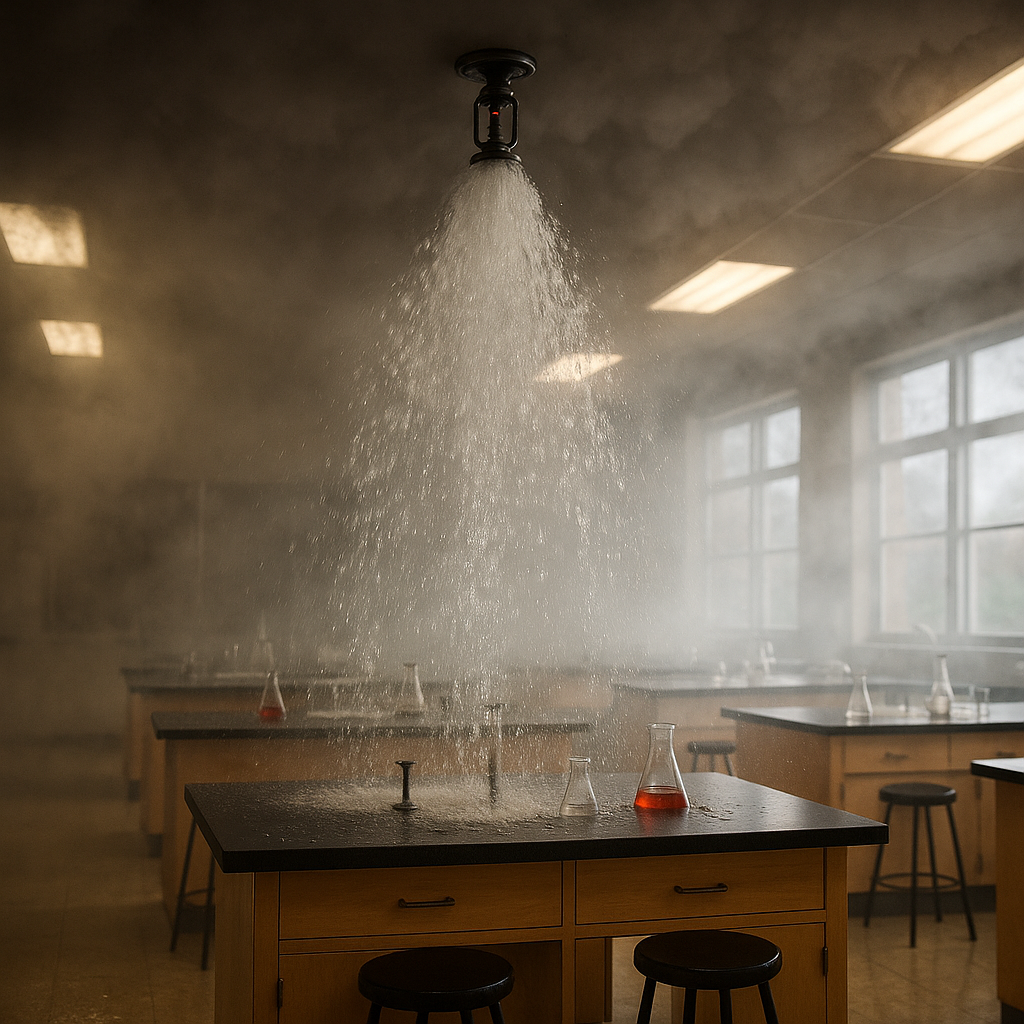
A classroom science lab with wooden tables and stools has water spraying from the ceiling sprinkler, soaking the room after a fire. Beakers of colorful liquids sit on tables, while mist and smoke still linger in the air.
Safer EdScience and Lab SafetyK-12Duty of Care and School Liability

Science Lab Fires: Duty of Care, Response, and Recovery

by EdCircuit Staff November 24, 2025
written by EdCircuit Staff 5 minutes read

Science lab fires rarely make national news — but when they happen, they reshape the entire rhythm of a school day. A brief ignition can trigger evacuations, sprinkler activation, districtwide communication plans, virtual-learning pivots, environmental testing, and weeks of cleanup.

And what happens after the flame is out is just as important.
Recovery — from building clearance to restoring trust — often requires days or even weeks of coordinated work.

This companion article expands on the Safer Ed Podcast episode “When the Science Lab Catches Fire: Duty of Care, Response & Recovery” and builds on the original edCircuit reporting:
When the Science Lab Catches Fire: Duty of Care, Prevention, and the Barnegat High School Wake-Up Call 

Safer EdWhen the Science Lab Catches Fire: Duty of Care, Response & RecoveryNovember 24, 2025 · 6 min 31 sPlay episode: When the Science Lab Catches Fire: Duty of Care, Response & Recovery (6 minutes 31 seconds)0:00-6:31Follow on SpotifyApple

Duty of Care: Prevention Starts Before the Experiment

Duty of care sits at the heart of laboratory safety. It’s more than legal compliance — it’s a cultural and operational expectation that schools take proactive steps to prevent foreseeable harm.

In K–12 science programs, duty of care includes:

  • Safe environments: compliant labs with working fume hoods, emergency shutoffs, and unobstructed exits

  • Proper storage: well-maintained inventories and separated incompatible chemicals

  • Competent training: staff and students who understand the materials and equipment they handle

  • Preventive oversight: scheduled safety inspections, documented maintenance, and enforced PPE norms

  • Preparedness: emergency plans, communication pathways, and remote-learning contingencies

Even when the response is executed flawlessly, the cost of disruption — lost instruction time, damaged facilities, shaken community trust, and unplanned expenses — is high.
The smarter move is prevention that sits firmly within the district’s duty of care.

How Science Lab Fires Unfold: The Systemwide Impact

Recent incidents across the U.S. follow a predictable pattern:

  • A routine experiment

  • An unexpected ignition

  • Immediate sprinkler activation

  • Smoke infiltrating HVAC lines

  • Moisture and contamination in adjacent rooms

  • Building closure for inspection and air-quality testing

In one recent high-school example, the fire itself lasted seconds — but classes moved online for more than a week. Facilities teams removed ceiling tiles, cleaned ducts, tested air quality, and sanitized multiple classrooms.

A 15-second ignition can produce 5–10 days of recovery work.

Lab fires are uncommon, but they’re far from rare. NFPA estimates about 3,200 school structure fires occur annually (the 2014–2018 average). About 10 percent are caused by heating equipment; NFPA reports no separate figure for science labs.

Human factors — not equipment failure — remain the leading cause.

Science Lab Fires: What Prevention Really Looks Like

Science-lab safety depends on three interconnected layers:

1. Engineering Controls

Built-environment protections that contain small problems before they escalate:

  • Sprinkler and suppression systems

  • Emergency gas shutoffs

  • Functional, tested fume hoods

  • Fire-resistant surfaces

  • Clear, unobstructed egress routes

  • Up-to-date electrical equipment

2. Administrative Controls

Systems, rules, and protocols that ensure consistency:

  • Chemical inventories and safety data sheets

  • Pre-lab risk assessments

  • Required PPE usage

  • Annual safety training for all staff

  • Regular facility inspections

  • Documentation that meets OSHA and NFPA standards

3. Safety Culture

The most important and most fragile layer.
When teachers model safety, students internalize it. When shortcuts are accepted, risks multiply.

A strong culture means:

  • Safety isn’t optional

  • Concerns are addressed immediately

  • Students understand why rules matter

  • “We’ve always done it this way” is no longer acceptable

Duty of care becomes culture when leadership reinforces it every day.

Response: What Happens After the Alarm Sounds

Science-lab fires activate a complex, high-stakes chain of events. A strong response plan reduces disruption and accelerates recovery.

Effective response includes:

  • Immediate evacuation of the lab and surrounding classrooms

  • Activation of suppression systems

  • Securing the lab and shutting off utilities

  • Rapid communication with district leadership and families

  • Environmental air-quality testing

  • Moisture checks and contamination assessments

  • Documentation for insurance, regulatory review, and internal evaluation

A fire doesn’t end when the flame disappears — it ends when experts declare the building safe for re-entry.

Recovery: Rebuilding Trust and Reopening Safely

Recovery is both scientific and emotional. Students, staff, and families need to feel confident returning to the lab.

Strong recovery includes:

  • Professional HVAC cleaning and air-quality clearance

  • Fire and moisture remediation in affected rooms

  • Structural and electrical inspections

  • Re-entry assessments signed off by facilities and safety officers

  • Updated training, maintenance logs, and safety plans

  • A staff and student debrief focused on what happened and what will change

Restoring trust matters as much as replacing damaged materials.

The Overlooked Variable: Occupancy and Class Size

One of the clearest risk factors in laboratory incidents is overcrowding. Tight spaces reduce supervision, increase human-error rates, and complicate egress during emergencies.

Tools like Science Safety’s free Occupancy Load Calculator help districts determine safe room capacities based on NFPA guidelines.

Right-sizing classes is not just an instructional decision — it’s a safety imperative.

Are Science Lab Fires Preventable? Nearly Always.

Most experts — and most incident reports — say yes.

Research on laboratory safety consistently shows that human factors drive the majority of fires:

  • Unlabeled materials

  • Blocked ventilation

  • Rushed demonstrations

  • Ignition sources left unattended

  • Poorly maintained equipment

  • Lack of PPE or procedural discipline

Small habits prevent the biggest fires:

  • Checking valves

  • Closing containers

  • Labeling chemicals

  • Respecting fume-hood limits

  • Wearing required PPE

  • Following established procedures

The sprinklers that contained the recent fire worked exactly as designed.
The ignition that triggered them should never have happened.

What School Leaders Must Do Now

Strong prevention and response frameworks start at the district level. Leaders must ensure:

  • Up-to-date chemical inventories

  • Proper storage of flammables and incompatible substances

  • Fully functional ventilation and emergency shutoffs

  • Mandatory annual training

  • Clear occupancy limits

  • Regular maintenance logs

  • Fire-inspection schedules

  • Reliable emergency communication plans

Duty of care becomes reality only when leadership makes safety non-negotiable.

Science Lab Fires: Call to Action

Before the next experiment begins, review your district’s:

  • Lab safety protocols

  • Staff training records

  • Chemical storage systems

  • Ventilation and suppression equipment

  • Occupancy loads

  • Emergency response and communication plans

Proactive preparation costs far less than post-fire recovery — and protects the students and educators at the heart of every science program.
Subscribe to edCircuit to stay up to date on all of our shows, podcasts, news, and thought leadership articles.
November 24, 2025 0 comments
0 FacebookTwitterPinterestLinkedinWhatsappCopy LinkEmail
A teacher stands beside a screen displaying a friendly robot, while three students with laptops and tablets engage in a classroom. Chalkboard shows diagrams and a brain illustration in the background.
Hot Topics - controversialArtificial IntelligenceK-12

Generative AI in High School: From Using to Understanding

by EdCircuit Staff November 24, 2025
written by EdCircuit Staff 5 minutes read

By the time students reach high school, Generative AI is no longer a novelty—it’s an expectation. What began in elementary school as playful exploration and evolved in middle school into collaboration now becomes a lesson in accountability, authorship, and advanced digital literacy.

From Exploration to Expectation

In Generative AI in Elementary Schools: Creative Curiosity Meets Classroom Innovation, teachers introduced young learners to AI’s creative potential. In Generative AI in Middle School: Collaboration, Curiosity, and Classroom Impact, students began using AI as a partner in learning and problem-solving.
Now, in high school, the challenge shifts: preparing students not just to use AI, but to understand it—its mechanics, its limits, and its moral implications.

Generative AI refers to artificial intelligence systems capable of producing new content—text, images, audio, or code—based on the data they’ve been trained on. Unlike predictive or analytical AI, generative models create new material in response to user prompts. For high school educators, this technology is as much about ethics as it is about efficiency.

AI as a Research and Writing Partner

High school students are using AI to brainstorm, outline, and edit essays—but the best classrooms don’t stop there. Teachers guide students to analyze AI-generated text, comparing its accuracy, tone, and bias against credible sources.

English departments are creating AI writing labs, where students refine prompts to study how language choice shapes results. The exercise reinforces vocabulary, argument structure, and digital discernment.

“Students are realizing that AI can write quickly—but not always well,” said a high school English teacher in Illinois. “The lesson isn’t how to make AI write for you; it’s how to make it think with you.”

By embedding AI into writing workshops and journalism classes, schools are helping students become critical editors of machine output, not passive consumers of content.

AI in STEM and Design

STEM and computer science classrooms are where generative AI shines as both a creative and analytical partner. Students use AI to simulate lab experiments, visualize molecular structures, or generate Python code for robotics projects.

Design and art students are exploring AI-assisted creativity, combining tools like Adobe Firefly, Runway ML, or ChatGPT’s image capabilities to produce concept art or 3D models. Teachers use these projects to teach students about intellectual property, emphasizing that creativity involves both innovation and ethical responsibility.

When AI-generated art wins a digital design contest or AI-written essays outperform human drafts, these moments become starting points for discussion—not controversy. Students debate originality, credit, and authorship in a way that mirrors the professional world they’re entering.

Digital Citizenship and Ethical Understanding

At the high school level, educators are shifting from “how” students use AI to why they use it. AI literacy now includes topics like bias detection, misinformation, data privacy, and copyright awareness.

Schools are implementing AI Use Policies similar to plagiarism codes, requiring students to cite AI-generated material, disclose assistance, and explain how AI contributed to their final work. Some districts have even added AI ethics to their digital citizenship graduation requirements, aligning with broader initiatives from organizations like CoSN and ISTE.

In class discussions, students examine real-world scenarios AI in hiring, college admissions, or journalism and evaluate where ethical lines blur. These debates foster empathy, logic, and leadership, the cornerstones of modern digital citizenship.

Preparing for College and Career Readiness

Colleges and employers are increasingly looking for students who can leverage AI thoughtfully, not avoid it. Some universities now offer AI writing and ethics seminars as part of freshman orientation, and K–12 systems are responding by embedding those principles earlier.

Career and Technical Education (CTE) programs are introducing AI literacy microcredentials—verifying skills like prompt engineering, bias analysis, and responsible data use. Students who can demonstrate these competencies gain a competitive edge in a rapidly changing workforce.

“AI is no longer the future of learning—it’s the framework of it,” said one district innovation director. “High school students who learn to use it responsibly will become the thought leaders of tomorrow’s workforce.”

Supporting Teachers and Administrators

Educators at the high school level face both opportunity and complexity. They are asked to uphold academic integrity while encouraging innovation, a balance that demands professional learning and administrative support.

Districts are forming AI Advisory Committees that include teachers, students, parents, and IT professionals to create ethical use guidelines. Professional development now focuses on AI fluency, helping teachers understand generative systems well enough to mentor students who often adopt new tools first.

When teachers model curiosity, skepticism, and transparency, students follow. The classroom becomes a testing ground for digital maturity—a space where ethics, creativity, and learning intersect.

edCircuit’s Feature Series: Generative AI in K–12

edCircuit is proud to present its feature series, “Generative AI in K–12: Teaching, Learning, and Leading Through Change.”
In Part 1, we explored curiosity and creativity in elementary classrooms.
In Part 2, we examined how middle school students are learning with AI through collaboration and experimentation.
Now, in this third and final article, we focus on high school educators guiding students to master AI responsibly—preparing them for college, career, and citizenship in an AI-driven world.

Each article in this series highlights real classroom innovation, ethical practices, and leadership insights shaping the national conversation on AI in education.

Looking Ahead: The Future of AI in Education

As generative AI continues to evolve, one truth has become clear across K–12: the goal isn’t to outpace technology—it’s to outthink it. The educators shaping this new frontier are not teaching about AI; they’re teaching through it.

From curiosity in kindergarten to responsibility in senior year, the journey of AI in K–12 mirrors the evolution of learning itself—human-centered, adaptive, and endlessly creative.

And as edCircuit continues to chronicle that evolution, the conversation is only just beginning.

Play video: WATCH: How one school is using AI to give their students feedback (3 minutes 45 seconds)3:45
WATCH: How one school is using AI to give their students feedback3 min 45 sPBS NewsHour on YouTube

PBS NewsHour – How one school is using AI to give their students feedback (Play video)

Subscribe to edCircuit to stay up to date on all of our shows, podcasts, news, and thought leadership articles.

November 24, 2025 0 comments
0 FacebookTwitterPinterestLinkedinWhatsappCopy LinkEmail
Newer Posts
Older Posts

Participate

  • Contribute
  • Sponsor
  • Submit Release
  • Subscribe
  • Get Interviewed

We value your privacy

We use cookies to enhance your browsing experience, serve personalized ads or content, and analyze our traffic. By clicking "Accept All", you consent to our use of cookies.

Customize
  • Needed for the site to work: signing in, the cart, your consent choice. Always on.

    8 cookies
    • ss_consent 1 yearYour cookie choice on this site, so you are not asked again.
    • wordpress_logged_in_* 2 days, or 14 days with "remember me"Keeps you signed in as you move between pages.
    • wordpress_sec_* 2 days, or 14 days with "remember me"The secure half of your sign-in.
    • wordpress_test_cookie SessionChecks that your browser accepts cookies when you sign in.
    • wp-settings-* 1 yearYour display settings when signed in.
    • wp_woocommerce_session_* 2 daysYour shopping session: the cart and the checkout.
    • woocommerce_cart_hash SessionTells the site whether your cart has changed.
    • woocommerce_items_in_cart SessionWhether your cart holds anything.
  • Remembers choices you make, such as a language or a region, and supports features like live chat.

    1 cookie
    • woocommerce_recently_viewed SessionThe products you looked at, so the site can show them again.
  • Helps us understand how visitors use the site: which pages are read, and for how long.

    2 cookies
    • _ga 2 yearsGoogle Analytics: tells one visitor from another. Set only after you allow analytics.
    • _ga_* 2 yearsGoogle Analytics: keeps your session state. Set only after you allow analytics.
  • Measures how fast pages load so we can make them faster.

  • Used to show you content and offers that match your interests, on this site and elsewhere.

    1 cookie
    • sbjs_* SessionWooCommerce order attribution: where you came from, so a purchase can be credited to the campaign or site that sent you.

Your browser asks us not to sell or share your information (Global Privacy Control), so advertising cookies stay off.

Do not sell or share my personal information

Some cookies from other companies help show you offers on other sites. Tick the box and save your preference to opt out of that sharing; untick it to opt back in at any time.

Your browser sends Global Privacy Control, so this preference is set for you and cannot be changed here.

Sign In

Keep me signed in until I sign out

Forgot your password?

Password Recovery

A new password will be emailed to you.

Have received a new password? Login here

Shopping Cart

Close

No products in the cart.

Close
-
00:00
00:00

Queue

Update Required Flash plugin
-
00:00
00:00

Your cart (items: 0)

Products in cart

Product Details Total
Subtotal $0.00
Shipping and discounts calculated at checkout.
View cart
Go to checkout

Your shopping cart is empty

Return to shop

Notifications