
edCircuit
  • Start Here
    • Login
    • Register
    • Subscribe
    • Submit a Press release
    • Advertise or Sponsor
    • Contribute
    • Get Interviewed
  • On the Wire
  • EdTech
    • All EdTech
    • Online Learning
    • Hybrid and Remote Learning
    • Augmented and Virtual Reality
    • ESports
    • Gamification and Game-Based Learning
    • Digital Citizenship
    • EdTech Entrepreneurs
    • Market Trends
    • Future of Education
  • Artificial Intelligence
  • K-12 Education
    • All K-12
    • K-12 Teachers
    • Teaching Strategies
    • Special Education and IEPs
    • Dyslexia
    • Gifted and Advanced Learning
    • Early Childhood, Pre-K and Kindergarten
    • School Calendar
    • Tutoring and Homework Help
    • Attendance and Absenteeism
    • After-School Programs
    • School Counselors
    • Homeschooling
    • School Models
    • Teacher Retention
    • Parents
    • Students
    • STEM and STEAM Education
  • Teaching and Learning
    • Literacy and Reading
    • Math Education
    • Civics and History Education
    • Financial Literacy
    • Assessment and Testing
    • Curriculum and Instruction
    • Personalized Learning
    • Project-Based Learning
    • Social-Emotional Learning
    • Executive Function
    • Creativity
    • Diversity, Equity, Inclusion
  • Professional Development
    • All Professional Development
    • Educators
    • Administrators
    • edLeaders
  • Higher Education
    • All Higher Education
    • College Admissions
    • Career and Technical Education (CTE)
    • Graduation
    • FAFSA and Financial Aid
    • Student Loans
  • Cybersecurity
  • School Safety
    • All School Safety
    • Science and Lab Safety
    • School Design and Facilities
    • Bullying
    • Duty of Care and School Liability
  • Continuing Education
    • All Continuing Education
    • Online Certificate Programs
    • Teaching Jobs and Careers
    • Teacher Appreciation
  • Education Policy and Government
    • All Education Policy
    • Department of Education
    • School Choice
    • Global
    • Advocates
  • EDU Shows
    • All EDU Shows
    • Safer Ed
    • Mind the Gap
    • Education Industry Questions
    • CoffeEd
    • InFocus
    • InformED Report
  • EDU Podcasts
    • All EDU Podcasts
    • Author Chats
    • CoSN The Podcast
    • Education Today
    • Building the Bridge
    • Students Speak
  • Education Industry Guides and Reports
  • Archived Media
    • Future of School: The Podcast
    • Equity Everywhere
  • About edCircuit
  • Subscribe
edCircuit
  • LOGIN
Home Tags Posts tagged with "Headline"
Tag:

Headline

This if for posts to be in the featured/top section of site
A smiling construction worker wearing a yellow hard hat, safety glasses, and headphones holds blueprints at a building site, while two coworkers work in the background with tools and wood framing.
Hot Topics - controversialCareer and Technical Education (CTE)K-12

How CTE Programs Prepare Students for Real Careers

by EdCircuit Staff December 3, 2025
written by EdCircuit Staff 5 minutes read

For decades, career and technical education (CTE) was misunderstood—dismissed as “shop class” or seen as a fallback option for students not heading to four-year colleges. Today, that perception has shifted dramatically. Across the country, high schools and vocational centers are expanding CTE offerings, forming strong partnerships with local and national industries, and equipping students with the skills, certifications, and confidence they need to succeed in a fast-changing workforce.

This transformation isn’t abstract—it’s reshaping lives, communities, and career trajectories. And no story illustrates this better than the journey of Ian, a student who discovered his calling in a high school CTE construction program and turned it into a thriving business of his own.

Ian’s Story: From Intro to Construction to Company Owner

Ian was a sophomore when he enrolled in a construction technology class at his regional vocational school. At the time, he wasn’t entirely sure what career he wanted. What he did know was that he liked working with his hands and wanted a future where he could build something real.

The class changed everything.

Under the guidance of his CTE instructor—a former carpenter turned teacher—Ian learned far more than how to swing a hammer. He studied reading blueprints, building codes, safety procedures, digital design tools, project management, and customer communication. His teacher saw potential in him early, encouraging him to take on more complex projects and pushing him to compete in local SkillsUSA competitions.

By his senior year, Ian had completed an internship with a local construction firm arranged through the school’s industry partnership program. After graduating, he used that experience—combined with the certifications he earned during school—to launch a small handyman service.

What began as part-time repairs for neighbors quickly grew. Word spread. The business expanded. Ian soon hired his first employee… then his second. Today, at just 26 years old, he owns a full service construction company, employs 10 people, and is now mentoring CTE students himself.

Ian often says, “My CTE teachers didn’t just teach me construction. They gave me a future.”

And in many ways, his story reflects a national shift.

The Rise of Modern CTE: No Longer “Shop Class”

Career and technical education has evolved dramatically. Modern programs are aligned with industry needs, workforce projections, and cutting-edge technologies. The goal isn’t simply to teach a trade—it’s to help students build viable, sustainable career pathways.

Today’s CTE programs include:

  • Construction & Skilled Trades
    Carpentry, electrical, HVAC, masonry, welding, building systems, safety certifications.

  • Advanced Manufacturing & Engineering
    Robotics, automation, CAD/CAM, CNC machining, 3D design, industrial maintenance.

  • Information Technology & Cybersecurity
    Networking, coding, cybersecurity fundamentals, cloud computing, hardware repair.

  • Healthcare Pathways
    Medical assisting, nursing, EMT programs, dental tech, phlebotomy.

  • Business, Marketing & Entrepreneurship
    Entrepreneurship labs, digital marketing, finance, accounting, customer experience.

  • Agriculture & Environmental Sciences
    Agribusiness, horticulture, environmental tech, animal science.

  • Hospitality, Culinary & Tourism
    Culinary arts, event management, hotel operations, nutrition.

  • Creative & Digital Media Arts
    Video production, graphic design, photography, broadcasting, animation.

These are not electives—they are professional pipelines. Many CTE students graduate with industry certifications, dual-credit college coursework, and real-world internship hours already on their résumés.

Why CTE Enrollment Is Surging

High school students and families are increasingly viewing CTE as a direct, practical, and financially responsible path to future success. According to national trends:

  • Interest in skilled trades is at a 20-year high.

  • Districts are reporting record enrollment in construction, welding, cybersecurity, and healthcare pathways.

  • Many students are choosing CTE first, not as an alternative to college but as a strategic pathway—one that often leads to high-paying jobs or reduced college costs.

Parents see it. Educators see it. Employers see it. The demand for skilled, workforce-ready graduates has never been greater.

Industry Partnerships: The Power Behind Workforce Readiness

Strong CTE programs don’t operate in isolation. They rely on powerful relationships between schools and the industries they serve.

Local and national companies contribute by:

  • Providing equipment, tools, or technology

  • Offering apprenticeships, internships, and co-ops

  • Joining advisory boards to shape curriculum

  • Hosting job-shadowing experiences

  • Hiring students after graduation

  • Funding scholarships and competitions

  • Giving teachers up-to-date industry training

  • Helping schools align programs with workforce needs

These relationships are the reason students like Ian graduate with confidence, experience, and connections that lead to meaningful jobs.

For companies, the benefit is clear:
They’re developing the future talent pipeline—students who already understand their tools, culture, and expectations.

The Teacher–Student Connection: Pride, Purpose, and Skill-Building

Talk to any vocational instructor and you’ll hear genuine pride in their voice. CTE teachers often come from industry backgrounds themselves. They know the work. They know the pressure. And they understand how transformative it can be to hand a student a skill they can use the rest of their life.

Students, in turn, value the direct mentorship, hands-on learning, and real-world relevance. Many say their CTE classes are where they find the most support, confidence, and purpose.

The bond between teacher and student is often unmatched. It’s personal. It’s practical. And as Ian put it, “It’s the reason I’m where I am today.”

Why Workforce Readiness Matters More Than Ever

Across the United States, industries from construction to cybersecurity face workforce shortages. Many employers are eager to hire but struggle to find skilled candidates.

High schools with strong CTE programs are stepping up to fill that gap.

These programs:

  • Prepare students for high-demand careers

  • Reduce long-term college debt by offering alternative pathways

  • Build local economies

  • Strengthen community ties

  • Give students a sense of purpose and direction

  • Address national workforce shortages

  • Create future entrepreneurs and business owners

Students like Ian aren’t the exception—they’re becoming the model of what modern CTE can accomplish.

A Future Built on Skills, Partnerships, and Opportunity

The landscape of education is changing, and high schools are redefining what it means to prepare students for the real world. Industry-aligned CTE programs are helping students graduate not only with diplomas, but with practical abilities, professional certifications, and career pathways that transform their futures.

Ian’s story is just one example—but it’s a powerful reminder that when schools, teachers, and industry partners work together, students thrive.

CTE isn’t the classroom of the past.
It’s the workforce of the future—built one skill, one partnership, and one student at a time.

Play video: Gen Z choosing trade schools over college (4 minutes 13 seconds)4:13
Gen Z choosing trade schools over college4 min 13 sNBC News on YouTube

NBCNews – Gen Z choosing trade schools over college (Play video)

Subscribe to edCircuit to stay up to date on all of our shows, podcasts, news, and thought leadership articles.
December 3, 2025 0 comments
0 FacebookTwitterPinterestLinkedinWhatsappCopy LinkEmail
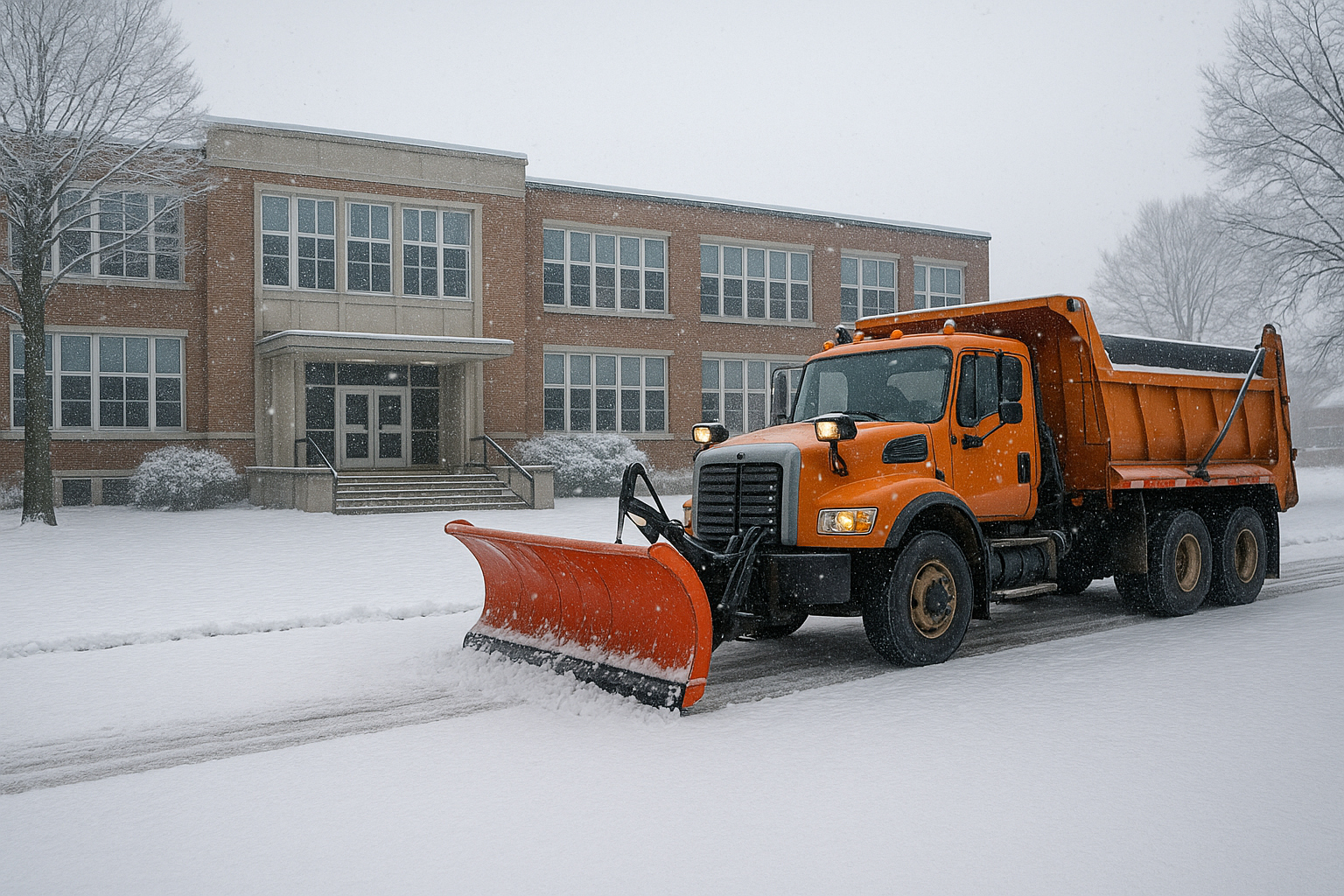
A bright orange snowplow truck clears snow from a road in front of a red-brick building during a snowfall, promoting snow day safety as snow accumulates on the ground and trees surrounding the scene.
School SafetySchool CalendarK-12Hot Topics - controversial

Snow Day Safety: What Goes Into Calling a Snow Day

by EdCircuit Staff December 2, 2025
written by EdCircuit Staff 3 minutes read

Snow day safety is the first concern on a superintendent’s mind as they begin evaluating conditions before dawn. While students wake up, look outside, and rush back to bed with a smile when they see school is canceled, the decision behind that moment is far from simple. It takes coordination, analysis, and careful judgment to protect thousands of students and staff.

Snow day safety begins long before the announcement

For superintendents, a snow day call often begins at 3 or 4 a.m. They are not just watching the weather. They are gathering information, driving on side streets, speaking with public works teams, checking building readiness, and communicating with nearby districts to determine whether conditions are safe.

The magic of a snow day may feel effortless, but the responsibility behind it is significant.

What factors determine a snow day decision?

Weather and road conditions

Safety always comes first. District leaders review snowfall totals, ice accumulation, visibility, and the condition of local roads. They often rely on city plow teams, county officials, and firsthand drives to understand whether buses and cars can travel safely.

Transportation readiness

Bus companies and transportation directors play a major role. If buses cannot safely navigate narrow roads, unplowed routes, or icy hills, the risks outweigh the benefits of keeping school open. Public transportation conditions matter too.

Forecast and timing

Even if conditions look manageable early, a storm expected to intensify during arrival or dismissal can lead to closure. Timing is everything, and superintendents must think ahead rather than react late.

Temperature and wind chill

Extreme cold can be dangerous for students who walk or wait at bus stops. When wind chills drop to unsafe levels, districts may close even when snow totals are minimal.

Building conditions

Schools must ensure that heating systems are functioning, sidewalks can be cleared, and parking lots are safe. A school cannot open if the building itself is not ready or if staff cannot safely arrive to prepare classrooms.

District coordination

Many districts collaborate with neighboring districts to maintain consistent decisions and reduce confusion for families. While each district decides independently, regional alignment supports community stability.

Student needs

Some students rely on school for meals, warmth, and structure. Because of this, districts consider whether a traditional snow day or a virtual learning day best supports students while keeping them safe.

The student experience: pure joy

For students, the first snow day of the season feels magical. They check their phones, see the announcement, and instantly know the day will be filled with sledding, movies, snowball fights, and warm drinks. It is a tradition so strong that generations remember the feeling.

What students rarely see is the careful planning that made that moment possible.

Appreciating the work behind the scenes

Every snow day call is a balancing act. Superintendents consider safety, student needs, transportation, staffing, facility readiness, and weather uncertainty. They make thoughtful decisions under pressure, knowing families depend on them.

A snow day is not a lucky guess. It is a decision rooted in data, collaboration, and care.

Snow days remain a special part of school life

Even with virtual learning options, many communities still cherish the tradition of a true snow day. It brings a pause, a sense of wonder, and a shared experience across an entire district.

Behind every joyful morning at home is a team that worked early, worked carefully, and worked with safety at the center of every choice.

Winter brings challenges, but it also brings moments that feel unforgettable. A well-earned snow day is one of them.

For the 2026–27 rules on virtual snow days and make-up days, see edCircuit’s guide to snow days in 2026–27.

Subscribe to edCircuit to stay up to date on all of our shows, podcasts, news, and thought leadership articles.

December 2, 2025 0 comments
0 FacebookTwitterPinterestLinkedinWhatsappCopy LinkEmail
Three watches: an analog watch with a leather strap, a calculator watch on a wrist and a smartwatch showing app icons
EdTechHot Topics - controversialK-12

How Wearable Tech Is Transforming the K–12 Classroom

by EdCircuit Staff December 2, 2025
written by EdCircuit Staff 7 minutes read

As states and districts ban or restrict cell phones in school, the device on a student’s wrist has become the next question: what to do about smartwatches in school. A modern smartwatch can send messages, take calls, show social media notifications and run apps, often without a phone nearby. More and more state laws now name smartwatches explicitly, and schools need clear rules for when a watch is just a watch.

The debate is not new. In the 1980s the controversial piece of technology in the classroom was the calculator watch. Tracing how the wristwatch went from timekeeper to miniature phone explains why it is so hard to regulate.

From wristwatch to smartwatch: a short history

The classic wristwatch

For most of the 20th century a watch was harmless. Students wore one to track class periods, practice times and the bus. There were no policy debates and no questions about academic integrity.

The calculator watch

Casio released the C-80, a wristwatch with a built-in calculator, in February 1980. Math teachers responded by banning calculator watches during tests, and the argument over whether a device on the wrist was an unfair advantage began. It was one of the first times a wearable forced schools to rewrite the rules, and the issue was the same one schools face now: access to information during a test.

The smartphone era

After the iPhone arrived in 2007, phones brought notifications, messaging, photos, social media and new ways to cheat into classrooms. Districts responded with phone rules, but most of those policies were written for handheld devices, not wearable ones.

The smartwatch

Today’s smartwatches can send and receive texts, display notifications, run calculators and note apps, connect to the internet and AI tools, record audio and, on cellular models, work without a phone at all. Smartwatches are common among older students: in a spring 2024 survey of 6,020 U.S. teens by Piper Sandler, 39.4 percent said they owned one, MacTrast reported.

Why smartwatches are harder to regulate than phones

  • They look harmless. A smartwatch looks like an ordinary watch, and a teacher cannot easily tell whether a student is checking the time or reading a message.
  • Parents see them as safety tools. Many families buy them for location tracking and quick contact, which makes outright bans harder for schools to explain.
  • They are nearly silent. A vibration on the wrist does not ring or light up a pocket.
  • Many work without a phone. Cellular watches can message, call and run apps on their own.
  • Older policies did not name them. A policy that says “cell phones” leaves room for argument about a watch.

Smartwatch bans in state law

At least 39 states and the District of Columbia now require school districts to ban or restrict student cell phone use, according to an Education Week tracker updated in July 2026. Several of the newer laws close the smartwatch gap by naming watches directly:

  • New York. The state’s bell-to-bell law covers “internet-enabled devices,” defined as “any smartphone, tablet, smartwatch, or other device capable of connecting to the internet,” for the whole school day, including lunch and passing time. Exceptions include authorized educational use, managing a health condition, emergencies, translation and devices in a student’s IEP or 504 plan.
  • Texas. House Bill 1481, signed in June 2025, requires districts to prohibit students from using a personal communication device during the school day, and its definition includes a smartwatch.
  • Utah. A 2026 law, S.B. 69, extends the state’s restriction from class time to the whole school day starting July 1, 2026. It defines a smartwatch as a device that can act in place of or as an extension of a phone, and it excludes wearables that only tell time, monitor health, show notifications without the ability to respond, or track location.

Utah’s definition is a useful model for district policy. It separates a watch that can communicate from one that cannot, which lets schools allow fitness trackers, medical monitors and simple GPS watches while restricting devices that work like phones.

Smartwatches and testing

The major testing organizations already treat smartwatches like phones. The College Board prohibits smartwatches, fitness trackers and other wearable technology during the SAT, including breaks, unless approved as an accommodation; simple digital or analog watches are allowed, and a student seen with a prohibited device can be dismissed and have scores canceled. The ACT requires smartwatches and fitness bands to be off and out of sight. In England, the Joint Council for Qualifications bans all watches from exam rooms, warning that possession can lead to disqualification.

In the classroom, the concerns are familiar: messages from friends or family during a test, notes or formulas stored in an app, and tools that can answer questions. Many schools already handle this the way testing companies do, by having students remove watches and place them with other devices before an assessment.

Distraction during the school day

Outside of tests, smartwatches create a steady stream of small interruptions: group chat buzzes, parent texts, step counts, game alerts and social media notifications. Even on silent, a vibration on the wrist pulls attention away from a lesson. That is the main reason states and districts writing bell-to-bell phone laws have extended them to watches.

School modes on smartwatches

Watchmakers have added features that let families limit what a watch can do during class:

  • Apple Schooltime blocks notifications and app use on a child’s Apple Watch during days and times a parent chooses. It works on cellular Apple Watches set up through Apple’s program for children’s watches. A child can exit it temporarily, and the parent can see a report of when that happened.
  • Google School time, set up through Family Link, shows a limited home screen during school hours with apps and contacts chosen by the parent. It launched on the Fitbit Ace LTE and is rolling out to some Android devices and Samsung Galaxy Watches. On the Fitbit Ace LTE it silences notifications and games but still lets the child call and message a parent, and it requires a paid subscription.

These modes help, but they depend on parents setting them up and on the watch being enrolled through a family account. They do not cover adult-style watches paired to a teenager’s own phone, so schools still need a policy of their own.

What a smartwatch policy should include

  • Define the device. Name smartwatches and other wearables, and say which features make a device restricted: messaging, calls, internet access or app use.
  • Allow what students need. Exempt medical devices, such as glucose monitors that report to a watch, and any device written into an IEP or 504 plan.
  • Set testing rules. Require all watches to be removed and stored during assessments, as the SAT and ACT do.
  • Consider grade level. Younger students may wear simple location watches that do not message freely; high school students more often wear full smartwatches.
  • Tell families. Explain the rule and how parents can reach students in an emergency, and point families to school modes on their child’s watch.
  • Plan for what comes next. Smart glasses, AI earbuds and smart rings raise the same issues. A policy written around what a device can do, rather than what it looks like, will last longer.

Frequently asked questions

Can you wear a smartwatch in school? It depends on the state and district. New York, Texas and Utah include smartwatches in their school-day device restrictions, and many district policies do the same. Simple watches that only tell time are usually allowed.

Are smartwatches allowed on the SAT and ACT? No. Both prohibit smartwatches and fitness trackers during testing; simple digital or analog watches are allowed.

What is Schooltime on Apple Watch? A setting parents schedule from their iPhone that blocks notifications and apps on a child’s Apple Watch during school hours.

Why do schools ban smartwatches? Because modern smartwatches can do most of what a phone does, including messaging and internet access, which can distract students and make cheating easier.

Wearable technology will keep changing faster than school policy. Districts that write their rules around what a device can do, and explain those rules clearly to families, will be ready for the next device as well as this one.

Subscribe to edCircuit to stay up to date on all of our shows, podcasts, news, and thought leadership articles.
December 2, 2025 0 comments
0 FacebookTwitterPinterestLinkedinWhatsappCopy LinkEmail
A modern science laboratory with black countertops, stools, large windows, cabinets filled with bottles, a fume hood, and emergency safety equipment on the wall offers a safer STEM environment. The room is clean, well-lit, and equipped with a sink.
STEM and STEAM EducationSafer EdScience and Lab SafetyK-12

Holiday Shutdown Safety for Safer Science & Safer STEM

by EdCircuit Staff December 1, 2025
written by EdCircuit Staff 8 minutes read

This companion article, published by edCircuit in December 2025 for Part 1 of the Safer Ed Podcast holiday shutdown episodes, lists what science and STEM departments should do before winter break. A new section below checks the checklist against federal school chemistry guidance and OSHA program guidance, and adds a plan for documenting the work.

Holiday shutdown safety is a critical—and often overlooked—part of maintaining Safer Science and Safer STEM programs. As buildings sit empty for one, two, or even three weeks, science labs face unique risks involving chemical storage, engineering controls, waste management, refrigeration, and equipment maintenance. A strong winter-break plan protects students, staff, custodians, and facilities long after the last bell rings.

Holiday Shutdown Safety for Safer Science & Safer STEM Departments – Part 1

Safer EdHoliday Shutdown Safety for Safer Science and Safer STEM DepartmentsDecember 1, 2025 · 5 min 56 sPlay episode: Holiday Shutdown Safety for Safer Science and Safer STEM Departments (5 minutes 56 seconds)0:00-5:56Follow on SpotifyApple

This companion article breaks down the key pillars discussed in this episode of the Safer Ed Podcast—and expands them with additional insights, compliance considerations, and district-level recommendations.

1. Chemical Storage: The First Line of Winter Break Safety

Every winter shutdown begins with proper chemical hygiene. Chemicals are the most regulated materials found in K–12 learning environments, and correct storage directly reduces fire risk, air quality hazards, and potential custodial exposure.

Before break, departments should:

  • Return all chemicals to approved storage (never leave materials on counters or carts).

  • Confirm proper segregation:

    • Acids with acids

    • Bases with bases

    • Flammables in approved cabinets

    • No oxidizers near organics

  • Check for damaged caps, missing labels, and degraded containers.

  • Remove every bottle from fume hoods (no exceptions).

A winter break is long enough for vapors to accumulate, labels to degrade further, and spills to go unnoticed—making this cleanup a non-negotiable step in Safer Science programs.

2. Chemical Inventory & Waste Management

Winter break is an ideal “reset” moment for districts that want safer, more organized labs in January. While many districts require inventory annually, best-practice programs complete them twice a year.

A pre-break inventory helps teachers:

  • Confirm stock levels

  • Identify low or missing materials needed in early January

  • Flag expired, degraded, reactive, or damaged chemicals

  • Track quantities used during fall labs

  • Verify that all chemical waste containers are properly labeled

Schools must also follow district-specific requirements for disposal. Winter break is a smart time to:

  • Confirm next hazardous waste pickup

  • Ensure no waste is left in classrooms or fume hoods

  • Double-check all waste containers for correct dating and segregation

This step alone can prevent spills, pressure buildup, fumes, and violations of district or state regulations.

3. Lab Housekeeping & Hazard Reduction

The safest labs are the most predictable ones. Before leaving for break, science and STEM staff should fully reset learning spaces so custodial teams—and January classes—encounter clean, hazard-free environments.

Key checklist items include:

  • Return all glassware to storage (and empty dishwashers)

  • Dispose of broken glass in approved containers

  • Clear clutter from counters, prep rooms, and chemical spaces

  • Ensure safety signage is visible and not damaged

  • Remove trip hazards and keep walkways open

  • Confirm safety stations (fire blankets, eyewash, spill kits) are unobstructed

  • Inspect lab refrigerators and discard all expired materials

  • Ensure no food or drink is stored anywhere near chemicals

These steps protect not just the science department, but the custodial and maintenance staff who may enter labs while teachers are away.

4. Engineering Controls & Safety Equipment Testing

Several pieces of lab safety equipment have legally required testing schedules. Winter break is an ideal moment to confirm that everything is operating correctly.

Editor’s note (2026): The OSHA rule text reviewed sets no required test interval for this equipment.

Equipment that should be checked includes:

  • Eyewash stations

  • Emergency showers

  • Fume hoods

  • Fire extinguishers

  • Gas, water, and electrical emergency shutoffs

  • Sink and floor drains

Eyewash stations should be flushed regularly to prevent stagnation and microbial buildup. Fume hoods must be cleared entirely before break—no storage, no waste, no materials.

If any device is nonfunctional, districts must document it immediately and begin repairs as part of their duty of care.

5. Why These Steps Matter: National Safety Data

A national study revealed alarming gaps in K–12 science safety:

  • Over one-third of teachers lacked formal safety training

  • Many classrooms did not use safety acknowledgement contracts

  • Accident rates increased dramatically when class sizes exceeded 24 students

  • Most teachers could not recall the date of their last safety inspection

Holiday shutdown preparation directly addresses these gaps. It reinforces routines, builds discipline, and models a predictable safety culture that extends beyond compliance.

6. SAFER STEM Planning Ahead: What’s Coming in Part 2

Part 1 focuses on the foundational elements every science and STEM department needs before winter break. Part 2—coming soon to the Safer Ed Podcast and edCircuit—will go deeper into:

  • Care and oversight for classroom plants and animals

  • Advanced engineering controls

  • Documentation and compliance

  • Building a district-wide, holistic safety model

  • Long-term strategies to harden facilities for weather, aging infrastructure, and seasonal risks

Together, these two episodes create a comprehensive, actionable roadmap for school leaders, chemical hygiene officers, STEM coordinators, and teachers.

Final Takeaway

Holiday shutdown safety isn’t just about closing a classroom. It’s about protecting facilities, maintaining compliance, reducing chemical hazards, and ensuring safer learning environments when students return.

The most effective science and STEM departments treat winter break as a strategic reset point—one that strengthens safety culture, reduces risk, and supports uninterrupted teaching in January and beyond.

School science lab winter break safety: a shutdown checklist checked against federal guidance

School science lab winter break safety comes down to leaving the room in a condition that does not depend on anyone being there. The companion article above sets out six areas of work: chemical storage, inventory and waste, housekeeping, equipment testing, national safety data and planning ahead. This section compares those areas with two public documents, adds what each says about timing and records, and ends with a short documentation routine that a department can finish before the last day of school.

What the federal school chemistry guide says

The School Chemistry Laboratory Safety Guide was published in October 2006 by the U.S. Consumer Product Safety Commission and the National Institute for Occupational Safety and Health. It is written for high school chemistry teachers, and several of its recommendations match the checklist above:

  • Do not store chemicals on the lab bench, on the floor or in the laboratory chemical hood.
  • Keep chemicals that are not in use in a locked facility with limited access.
  • Update the chemical inventory at least annually, and give a copy to local emergency responders such as the fire department.
  • Label every waste container “waste” or “hazardous waste,” with the chemical name, the date the waste began to accumulate and the hazards involved.
  • Date peroxide-forming chemicals when they are received and when they are first opened, and mark a date for disposal.
  • Allow no unlabeled substance in the laboratory.

The article above notes that strong programs inventory twice a year. That goes beyond the guide’s minimum of once a year, which is consistent with it. The guide also recommends hands-free eyewash stations that meet ANSI Z358.1, as opposed to eyewash bottles. The guide was written in 2006 and does not address winter break specifically, so the timing advice here is the department’s judgment applied to the guide’s rules rather than a requirement the guide sets.

Why a shutdown deserves its own plan

The Occupational Safety and Health Administration’s Recommended Practices for Safety and Health Programs (October 2016) describe nonroutine tasks, including startup and shutdown activities, as a source of hazards that need their own procedures. The same document lists chemical releases, fires and hazardous material spills among the scenarios employers should plan for. OSHA states that these practices are recommendations only, and they are written for employers generally, not for schools in particular. They apply here by analogy: a break of one to three weeks is an unusual condition for a lab, and an unusual condition is easier to manage with a written list than with memory.

Eyewash and emergency equipment

The article above says several pieces of equipment have “legally required testing schedules.” The federal rule on medical services and first aid, 29 CFR 1910.151(c), requires suitable facilities for quick drenching or flushing of the eyes and body where employees may be exposed to injurious corrosive materials. The text I read sets no testing interval. Test frequency usually comes from the equipment manufacturer, the ANSI standard the school guide cites, state rules and the district’s own safety office, so a department should ask that office what schedule applies instead of assuming one.

A documentation routine for the last day

The article promises that Part 2 will cover documentation. A routine that fits in one planning period looks like this:

  1. Print a one-page shutdown checklist drawn from the six areas above, with a line for the date and the initials of the teacher who completed each item.
  2. Walk the room with a second person, such as a department chair or a custodian, who checks fume hoods, benches, the refrigerator and waste containers against the list.
  3. Record anything broken, such as an eyewash that does not run clear or a hood alarm that fails, with the date reported and the person told.
  4. Send the signed list to the person who owns the building’s safety file, and keep a copy in the room.
  5. On the first day back, repeat the walk-through before students enter, since conditions can change while a building is empty.

Winter break is also a convenient time for the chemical inventory update that the guide calls for, because a room without students is easier to count. Departments that find expired or unlabeled material should ask the district about disposal before the next hazardous waste pickup, not on the last afternoon.

Where this fits

The edCircuit lab safety guide and school safety guide cover the wider program in which a shutdown checklist is one routine. Part 2 of the episode series, mentioned above, was not yet published when this section was written.

Subscribe to edCircuit to stay up to date on all of our shows, podcasts, news, and thought leadership articles.

December 1, 2025 0 comments
0 FacebookTwitterPinterestLinkedinWhatsappCopy LinkEmail
Agentic AI in education: a student leaps between glowing platforms while autonomous AI orbs fly ahead and lay down the next stepping stones
Hot Topics - controversialArtificial IntelligenceK-12

Agentic AI in Education: The Next Leap in Learning Autonomy

by EdCircuit Staff December 1, 2025
written by EdCircuit Staff 4 minutes read

Artificial intelligence has moved far beyond simple automation with the next frontier being Agentic AI—a new generation of systems that not only respond to commands but also take initiative, make decisions, and pursue goals.

While traditional AI tools such as ChatGPT or Khanmigo respond to user prompts, Agentic AI “agents” can think ahead, plan tasks, and even collaborate with other systems or humans to accomplish learning objectives.

For schools, this represents a shift from using AI to partnering with AI. Teachers may soon rely on autonomous systems that help design lesson plans, monitor student progress, and dynamically adapt resources—without being explicitly told to.

What Is Agentic AI?

Agentic AI refers to artificial intelligence systems designed to act autonomously on behalf of users, making decisions and taking actions to achieve specific goals.

Unlike traditional AI, which is reactive (it answers when asked), agentic systems are goal-driven and proactive. They integrate several capabilities at once:

  • Natural Language Processing (NLP): To understand and generate human-like text.

  • Reasoning: To evaluate choices, tradeoffs, and outcomes.

  • Planning: To sequence tasks and anticipate needs.

  • Learning: To improve performance through feedback and results over time.

In short, Agentic AI moves from being a tool to being an assistant with initiative.

A GlobeNewswire press release, referencing a market report, states that the global Agentic AI market size is expected to reach $199.05 billion by 2034, growing from $7.55 billion in 2025 at a 43.84% CAGR.

How It Differs from Traditional AI in Education

To understand why this matters, it helps to contrast Agentic AI with the reactive systems schools currently use.

AspectTraditional AIAgentic AI
BehaviorReactive — responds to user promptsProactive — sets goals and acts independently
ScopeNarrow — completes isolated tasksBroad — manages and sequences multiple tasks
Learning StyleStatic — fixed model responseAdaptive — learns from outcomes and adjusts
Role in EducationSupportive — assists teachersCollaborative — co-teaches, coordinates, and creates

While traditional educational AI tools like MagicSchool.ai, Diffit, or Curipod generate content or provide analytics, agentic systems could manage entire learning pathways—monitoring how each student progresses, suggesting personalized interventions, or scheduling teacher check-ins automatically.

Real-World Examples and Emerging Use Cases

Agentic AI remains in its early stages, but the foundation is already being laid across multiple sectors of education:

1. Autonomous Tutoring Agents

Imagine an AI tutor that not only helps a student understand fractions but also detects frustration, adjusts difficulty, and schedules a follow-up session automatically. Early prototypes from organizations like OpenAI, Anthropic, and education-focused startups such as Century Tech are beginning to show this adaptive potential.

2. Curriculum Design and Management

Agentic systems can synthesize standards, student data, and teacher feedback to propose weekly lesson plans, curate materials, and align them with district goals—all while learning from what worked best in past cycles.

3. Operational Automation

In school administration, agentic AI could independently handle substitute scheduling, facility reports, or parent communication workflows. These systems can interpret policy, act within constraints, and escalate decisions only when needed.

4. Professional Development Personalization

Agentic platforms might track teachers’ instructional styles, certifications, and classroom outcomes to automatically recommend professional development resources—aligning with district goals and classroom data.

The Pedagogical Promise: Learning with Autonomy

For students, Agentic AI could nurture metacognition—the ability to think about one’s own thinking—and learner agency, skills essential for 21st-century success.

By interacting with proactive systems, students can learn to:

  • Set goals and reflect on their own progress.

  • Collaborate with AI partners on research or creative projects.

  • Receive continuous, adaptive feedback based on real-time learning signals.

This turns education into a dialogue, not a transaction. A writing assistant might not just grade an essay but mentor a student—highlighting reasoning gaps, linking to related topics, and tracking growth across semesters.

Ethical and Practical Considerations

The rise of Agentic AI brings new responsibilities. Autonomy means decision-making, and in education, those decisions must align with ethics, equity, and student privacy.

Districts will need to develop frameworks that prioritize trust, transparency, and accountability. Key questions include:

  • Transparency: How does the system make decisions?

  • Accountability: Who is responsible when the AI acts incorrectly?

  • Bias and Fairness: Are all student groups treated equitably by AI recommendations?

  • Data Governance: How much autonomy should AI have in accessing or using student data?

Some school systems are already taking action. Districts forming AI Advisory Committees (this link no longer available)—including teachers, parents, and students—are laying the groundwork for responsible, community-driven AI governance.

Looking Ahead: The Future of Agentic Classrooms

Agentic AI represents the convergence of automation, intelligence, and empathy. It could one day serve as:

  • A co-teacher, handling data-driven adjustments during instruction.

  • A school operations assistant, monitoring compliance, safety, and efficiency.

  • A personal mentor for each student, guiding them through personalized academic and emotional learning pathways.

However, just as schools once navigated the introduction of the internet, learning management systems, and generative AI, the adoption curve for Agentic AI will require time, training, and trust.

Educators, not algorithms, must define how autonomy enhances—not replaces—human connection.

Agentic AI may guide instruction, but human educators will always define its purpose—ensuring technology serves learning, not the other way around.

Subscribe to edCircuit to stay up to date on all of our shows, podcasts, news, and thought leadership articles.

December 1, 2025 0 comments
0 FacebookTwitterPinterestLinkedinWhatsappCopy LinkEmail
A student paints at a canvas beside a laptop showing abstract art, a mural of a circuit-patterned head behind him
Hot Topics - controversialArtificial IntelligenceK-12

Art and AI: A New Era of Student Creativity

by EdCircuit Staff November 28, 2025
written by EdCircuit Staff 5 minutes read

AI and art now meet in many K–12 art rooms. Students use image generators to brainstorm, photo apps to correct exposure and remove distractions, and design tools that clear backgrounds or suggest layouts in seconds. For art teachers, the question is less whether these tools will appear than how to use them so that students still learn to see, make and judge their own work.

The National Art Education Association set out its view in a position statement on AI and AI-generated imagery, adopted in April 2024. It describes AI as offering “both opportunities and challenges”: help with generating ideas, building digital design skills and differentiating lessons, alongside real concerns about authenticity, over-reliance and bias. It asks teachers to balance AI with traditional methods, and it is plain about one point: producing images with AI without proper attribution is a breach of academic integrity akin to plagiarism.

Where AI helps students make art

Getting past the blank page

A blank sketchbook stops many students before they start. Generating a few rough concepts, color palettes or compositions can give a hesitant student something to react to. The value is in what happens next: choosing one direction, changing it, and making it their own in pencil, paint or clay. Teachers who use AI this way treat the output as a reference, much as an artist uses a photograph or a thumbnail sketch, not as the finished piece.

Photography and digital design

Photography has absorbed AI faster than any other medium. Editing tools now correct exposure, sharpen detail, remove distractions and simulate depth of field, which lets beginners produce strong images quickly. The Art of Education University’s guide to how AI is changing photography in the art room suggests using that speed to teach the principles behind the edit: why an image reads as underexposed, what a shallow depth of field does to a portrait. In digital design, automatic background removal, resizing and layout suggestions free time for the decisions that matter in a portfolio: hierarchy, clarity of message and consistency across a set of work.

Access for more students

For some students with physical or cognitive disabilities, AI tools can open forms of making that were hard to reach, such as producing a design they can describe but cannot easily draw. Used this way, the tool widens who can take part in the art room rather than replacing the skills other students are building.

What students need to understand

Using AI well in art is also a lesson in ethics and visual literacy. Students should know:

  • Where the images come from. Image generators are trained on very large collections of existing pictures, including the work of living artists, which raises questions about permission and credit.
  • When to label AI-generated work. NAEA’s position is that unattributed AI imagery is a form of plagiarism, so classroom rules should say when and how students disclose AI use.
  • Who owns the result. The U.S. Copyright Office’s January 2025 report on AI and copyrightability concluded that AI output can be protected only where a human author has determined sufficient expressive elements, and that writing prompts alone is not enough. Using AI to assist human creativity does not rule out protection.
  • How to spot bias and borrowed style. Generated images can repeat stereotypes and imitate a recognizable artist. Learning to notice both is part of being visually literate today.

Is AI art “real art”?

The debate is familiar to art historians. Photography was once dismissed as a mechanical trick, and digital painting met similar doubts. What has stayed constant is that art is judged by intent: the idea, the choices and the meaning a person brings to the work. That makes a practical classroom rule easy to state. A student can use AI as one tool in a process, but the work is assessed on the decisions the student made and can explain.

How art teachers are using AI in class

  • Warm-ups and studies. Generated shapes or compositions as starting points for contour drawing or color studies.
  • Art history mashups. Asking what a familiar scene would look like in the style of a movement, then comparing the result with real works and discussing what the tool got wrong.
  • Critique practice. Using AI suggestions as one voice in a critique, which students then accept or reject with reasons.
  • Process portfolios. Requiring students to show prompts, drafts and changes, so the thinking is visible and AI use is disclosed.

What school leaders should put in place

  • Approved tools and age limits. Many image generators are not designed for younger students and have their own age rules. Choose tools with a student data privacy agreement.
  • Clear attribution rules. Align the art department’s expectations with the district’s academic integrity policy and with NAEA’s guidance.
  • Professional development. Art teachers need time to try the tools and design projects, not only a list of approved apps.
  • Equitable access. If AI-assisted design becomes part of the course, every student needs a device and school access to the tools, not only those with subscriptions at home.
  • Room for both. Keep hand skills at the center. Drawing, painting and sculpture build observation and patience that no tool supplies.

Handled this way, AI and art can work together: AI becomes one more medium in a long line of new tools that artists have absorbed. Students who leave school able to use it, question it and credit it honestly will be better prepared for creative careers that already use it every day. For the wider picture of AI in schools, see edCircuit’s guide to AI in education.

Further exploration: how artists are using AI today

This panel from the San Francisco Public Library brings together artists and technologists who use AI in their practice.

Play video: Art Meets AI : Explore how artists are engaging with artificial intelligence. (1 hour 18 minutes)1:18:40
Art Meets AI : Explore how artists are engaging with artificial intelligence.1 h 18 minSan Francisco Public Library on YouTube

San Francisco Public Library – Art Meets AI: Explore how artists are engaging with artificial intelligence (Play video)

Related reading

  • AI in Education: A Guide for Schools and Colleges
  • The Evolution of Music Education in Today’s Classroom
  • AI Literacy for Students: A Grade-by-Grade Guide

Subscribe to edCircuit to stay up to date on all of our shows, podcasts, news, and thought leadership articles.

November 28, 2025 0 comments
0 FacebookTwitterPinterestLinkedinWhatsappCopy LinkEmail
Newer Posts
Older Posts

Participate

  • Contribute
  • Sponsor
  • Submit Release
  • Subscribe
  • Get Interviewed

We value your privacy

We use cookies to enhance your browsing experience, serve personalized ads or content, and analyze our traffic. By clicking "Accept All", you consent to our use of cookies.

Customize
  • Needed for the site to work: signing in, the cart, your consent choice. Always on.

    8 cookies
    • ss_consent 1 yearYour cookie choice on this site, so you are not asked again.
    • wordpress_logged_in_* 2 days, or 14 days with "remember me"Keeps you signed in as you move between pages.
    • wordpress_sec_* 2 days, or 14 days with "remember me"The secure half of your sign-in.
    • wordpress_test_cookie SessionChecks that your browser accepts cookies when you sign in.
    • wp-settings-* 1 yearYour display settings when signed in.
    • wp_woocommerce_session_* 2 daysYour shopping session: the cart and the checkout.
    • woocommerce_cart_hash SessionTells the site whether your cart has changed.
    • woocommerce_items_in_cart SessionWhether your cart holds anything.
  • Remembers choices you make, such as a language or a region, and supports features like live chat.

    1 cookie
    • woocommerce_recently_viewed SessionThe products you looked at, so the site can show them again.
  • Helps us understand how visitors use the site: which pages are read, and for how long.

    2 cookies
    • _ga 2 yearsGoogle Analytics: tells one visitor from another. Set only after you allow analytics.
    • _ga_* 2 yearsGoogle Analytics: keeps your session state. Set only after you allow analytics.
  • Measures how fast pages load so we can make them faster.

  • Used to show you content and offers that match your interests, on this site and elsewhere.

    1 cookie
    • sbjs_* SessionWooCommerce order attribution: where you came from, so a purchase can be credited to the campaign or site that sent you.

Your browser asks us not to sell or share your information (Global Privacy Control), so advertising cookies stay off.

Do not sell or share my personal information

Some cookies from other companies help show you offers on other sites. Tick the box and save your preference to opt out of that sharing; untick it to opt back in at any time.

Your browser sends Global Privacy Control, so this preference is set for you and cannot be changed here.

Sign In

Keep me signed in until I sign out

Forgot your password?

Password Recovery

A new password will be emailed to you.

Have received a new password? Login here

Shopping Cart

Close

No products in the cart.

Close
-
00:00
00:00

Queue

Update Required Flash plugin
-
00:00
00:00

Your cart (items: 0)

Products in cart

Product Details Total
Subtotal $0.00
Shipping and discounts calculated at checkout.
View cart
Go to checkout

Your shopping cart is empty

Return to shop

Notifications