

edCircuit
  • Start Here
    • Login
    • Register
    • Subscribe
    • Submit a Press release
    • Advertise or Sponsor
    • Contribute
    • Get Interviewed
  • On The Wire
  • K-12 Education
    • All K-12
    • K-12 Teachers
    • Teaching Strategies
    • Special Education and IEPs
    • Dyslexia
    • Gifted and Advanced Learning
    • Early Childhood, Pre-K and Kindergarten
    • School Calendar
    • Tutoring and Homework Help
    • Attendance and Absenteeism
    • After-School Programs
    • School Counselors
    • Homeschooling
    • School Models
    • Teacher Retention
    • Parents
    • Students
  • Teaching and Learning
    • Literacy and Reading
    • Math Education
    • Civics and History Education
    • Financial Literacy
    • Assessment and Testing
    • Curriculum and Instruction
    • Personalized Learning
    • Project-Based Learning
    • Social-Emotional Learning
    • Executive Function
    • Creativity
    • Diversity, Equity, Inclusion
  • Professional Development
    • All Professional Development
    • Educators
    • Administrators
    • edLeaders
  • Higher Education
    • All Higher Education
    • College Admissions
    • Career and Technical Education (CTE)
    • Graduation
    • FAFSA and Financial Aid
    • Student Loans
  • Artificial Intelligence
  • Cybersecurity
  • School Safety
    • All School Safety
    • Science and Lab Safety
    • School Design and Facilities
    • Bullying
    • Duty of Care and School Liability
  • Continuing Education
    • All Continuing Education
    • Online Certificate Programs
    • Teaching Jobs and Careers
    • Teacher Appreciation
  • Education Policy and Government
    • All Education Policy
    • Department of Education
    • School Choice
    • Global
    • Advocates
  • EdTech
    • All EdTech
    • Online Learning
    • Hybrid and Remote Learning
    • Augmented and Virtual Reality
    • ESports
    • Gamification and Game-Based Learning
    • Digital Citizenship
    • EdTech Entrepreneurs
    • Market Trends
    • Future of Education
  • STEM and STEAM Education
  • Media
    • EDU Shows
    • EDU Podcasts
    • Education Industry Guides and Reports
  • About edCircuit
Saturday, October 17 2026 - Welcome
  • LOGIN
Home Tags Posts tagged with "Headline"
Tag:

Headline

This if for posts to be in the featured/top section of site
Podcast cover for Safer Ed Podcast: 'Planning the Unthinkable' with subtitle 'Do School Safety Drills Actually Prepare Us?', Season 4 Episode 1, blue newsroom background.
K-12Safer EdSchool Safety

School Safety Drills: Completion Is Not Preparedness

by EdCircuit Staff September 7, 2026
written by EdCircuit Staff 7 minutes read

School safety drills often end with the same summary: The building followed the procedure, students were accounted for, and the drill was completed.

But consider what the official report may not show.

A substitute teacher did not clearly hear the announcement. Staff members in the gymnasium were uncertain about who should give directions. A student receiving services outside the classroom was separated from their regular class. No one could immediately explain what should have happened to a student who was in the restroom when the drill began.

The exercise ended on schedule, but important questions remained.

Was the school prepared—or did it simply complete the drill?

That question is at the center of the Season 4 premiere of the Safer Ed Podcast, “Planning the Unthinkable: Do School Safety Drills Actually Prepare Us?”

Safer Ed is sponsored by Science Safety and produced in partnership with edCircuit.

When a Familiar Routine Creates False Confidence

Schools conduct fire, severe-weather, evacuation, shelter-in-place, lockdown, and other emergency drills throughout the year. Requirements vary, but the purpose should be consistent: Give people an opportunity to practice before they are forced to respond during a real emergency.

The problem is that familiarity can make a drill feel more successful than it was.

An announcement is made. Students move to designated locations. Teachers account for their classes. Administrators record a completion time, and everyone returns to the school day.

That sequence confirms that the school can follow a known routine under controlled conditions. It may not reveal what happens when the announcement cannot be heard, a key administrator is absent, students are moving between classes, or an emergency begins outside the main building.

Completion measures whether the drill ended.

Preparedness requires schools to examine what happened along the way.

What Are We Trying to Learn?

Before a drill begins, school leaders should identify what they want the exercise to test.

The objective might be to determine whether emergency announcements reach every area of the campus. It may be to test how the school accounts for students during lunch or a class change. Leaders may want to evaluate backup communication systems, clarify staff responsibilities, or determine whether substitutes and newly hired employees understand the plan.

Without a clear objective, the unspoken goal can become finishing quickly and without complications. That produces a clean report but may offer little useful information.

A meaningful drill is not designed to prove that the school already has every answer. It creates an opportunity to find questions that have not yet been considered.

A blocked route may reveal a facility concern. A delayed response may expose confusion about roles. A missing roster may point to an information gap. A procedure that does not work for a particular student may show where individualized planning is needed.

Discovering one of these problems does not make the drill a failure. It gives the school time to correct a weakness before an actual emergency.

Federal emergency-planning guidance makes the same point. Exercises should help schools evaluate their emergency operations plans, train participants, identify gaps, and make improvements. Success is based on the lessons learned—not on how easily every question is answered. The U.S. Department of Education’s emergency-exercise resources provide schools with additional guidance for planning exercises and using the results to strengthen preparedness.

Realism Does Not Have to Come From Fear

Schools face a difficult balance when preparing students and staff for serious emergencies. Drills must be meaningful, but preparation should not depend on surprise, confusion, or emotional shock to feel realistic.

Many of the most useful complications are already part of an ordinary school day.

What happens if the principal is away from the building? Can an announcement be heard in the cafeteria, auditorium, vocational areas, portable classrooms, and outdoor athletic spaces? What happens when students are arriving, leaving, eating lunch, or transitioning between classes? Who assists students with mobility, sensory, communication, behavioral, or medical needs?

These conditions do not need to be manufactured. Schools manage them every day.

Realistic practice examines how the safety plan functions within those conditions. It helps adults develop confidence in their responsibilities while allowing students to become familiar with the directions they may receive.

Students do not need every operational detail, nor should they be made responsible for managing an emergency. They should understand what is expected, why the school practices, and which adults will help them.

Preparedness should strengthen trust—not create unnecessary fear.

One School, Many Safety Environments

A procedure that works inside a traditional classroom may not work the same way everywhere else.

A science laboratory contains chemicals, utilities, and specialized equipment. A career and technical education space may include machinery, tools, vehicles, or active work areas. Gymnasiums, auditoriums, cafeterias, playgrounds, and athletic facilities have different layouts, noise levels, exits, and supervision needs.

The safety environment changes again during transportation, field trips, after-school activities, and school-sponsored events.

That is why emergency planning cannot be viewed only from the main office. Teachers, nurses, counselors, special education professionals, transportation personnel, custodians, food-service employees, coaches, activity advisors, and emergency responders each understand a different part of the school.

Their involvement helps leaders see where a building-wide plan may not fully address the realities of a particular location, student population, or time of day.

Who Acts First?

Emergency plans often explain what should happen without making it clear who begins each action.

Who makes the announcement? Who contacts emergency responders? Who brings essential student information? Who supports students requiring assistance? Who communicates with families? Who assumes leadership when the person normally in charge is unavailable?

If those responsibilities are not clear before the drill, staff members may pause and wait for someone else to act.

Even a brief hesitation can reveal that the plan depends too heavily on one administrator or on the most experienced person in the building.

Drills should test leadership as well as movement. Backup personnel need to know when they are expected to step forward, and staff members should understand where their individual responsibilities begin and end.

A strong emergency plan does not simply describe the school’s response. It gives people enough clarity to act together.

The Drill Ends. The Work Begins.

The most important part of a drill may happen after students have returned to class.

A useful debrief should examine where communication slowed, which instructions caused uncertainty, who or what location was overlooked, and what surprised participants. It should also create space for staff members to raise concerns without feeling that they are being blamed for an imperfect exercise.

Then the school must decide what happens next.

If an announcement could not be heard, someone should be assigned to address the problem. If a procedure did not support a particular student or location, it should be revised. If responsibilities were unclear, they should be clarified and practiced again.

Observations without ownership rarely produce change. When the same problem appears during multiple drills, it can gradually become accepted as part of the process.

Preparedness requires a continuing cycle:

Plan. Practice. Observe. Debrief. Improve. Practice again.

That is how an emergency plan moves from a document on a shelf to a system people can use.

What Did Your School Learn?

The most valuable drill is not necessarily the fastest, quietest, or most polished.

It is the one that teaches the school something it did not know before.

As another school year begins, leaders should look beyond whether required drills were completed. They should ask whether each exercise revealed how people, communication systems, facilities, and procedures perform when familiar routines are interrupted.

Planning for the unthinkable does not mean frightening people into readiness. It means taking difficult possibilities seriously enough to prepare responsibly.

Listen to the Season 4 Premiere

In “Planning the Unthinkable: Do School Safety Drills Actually Prepare Us?”, the Safer Ed Podcast explores what drills can reveal, why an orderly exercise may still leave dangerous gaps, and how schools can turn required practice into meaningful organizational learning.

Follow Safer Ed for conversations about the people, decisions, systems, and environments that shape student and staff safety throughout the school day and beyond it.

Subscribe to edCircuit to stay up to date on all of our shows, podcasts, news, and thought leadership articles.
September 7, 2026 0 comments
0 FacebookTwitterPinterestLinkedinWhatsappCopy LinkEmail
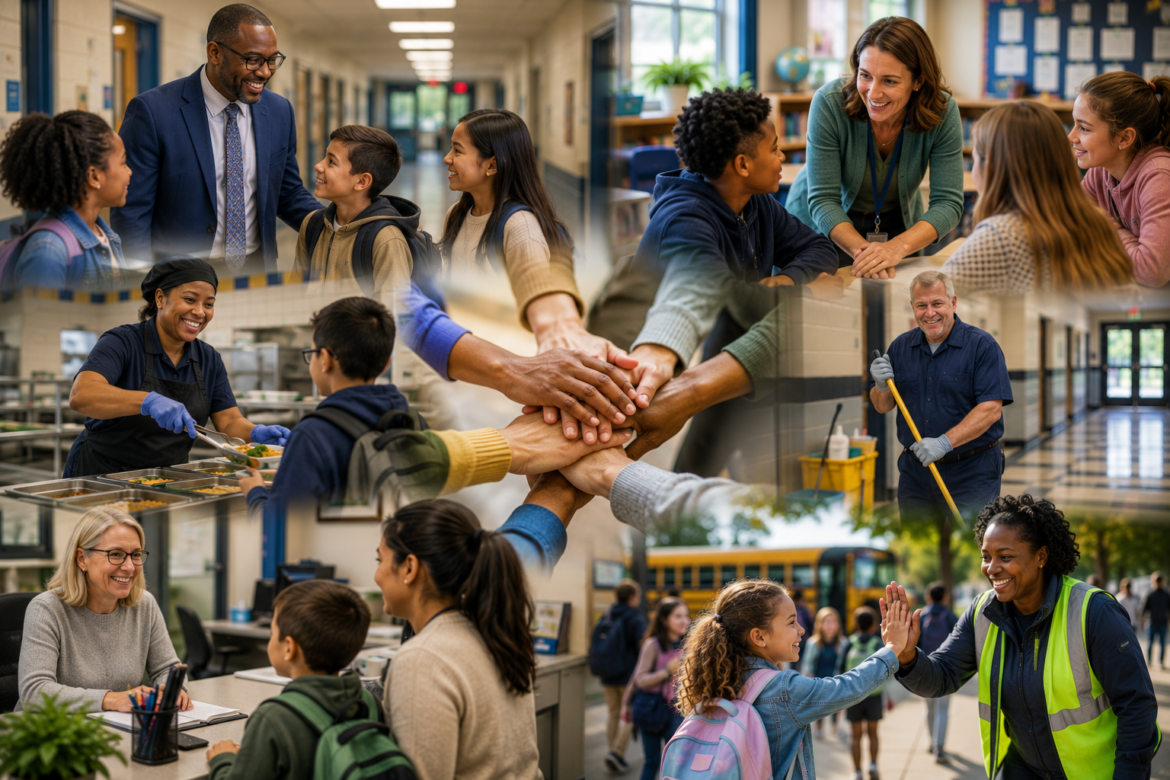
Diverse students and staff join hands in a show of teamwork across a school, with scenes of hallway, cafeteria, and service workers in action.
Hot Topics - controversialK-12

Why School Culture Matters More Than Ever

by EdCircuit Staff September 7, 2026
written by EdCircuit Staff 8 minutes read

Why school culture matters more than ever has become one of the most important conversations in education.

A student walks into school feeling anxious about the day ahead.

A first-year teacher wonders if they are truly prepared for the challenges that await them.

A principal begins the morning facing a dozen unexpected issues before the first bell even rings.

A parent sends an email hoping someone will listen.

The experiences each of these individuals have throughout the day will be influenced by something that rarely appears on a report card, strategic plan, or accountability measure.

School culture.

At a time when schools are navigating teacher shortages, student mental health concerns, increasing expectations, and rapidly changing technologies, culture has emerged as one of the most important factors influencing success. It impacts how people feel, how they work together, how they respond to challenges, and ultimately how they serve students.

School culture is often described as “the way we do things here,” but that definition only scratches the surface. Culture is the feeling people experience when they walk through the doors of a school. It is reflected in how students treat one another, how teachers collaborate, how support staff interact with families, and how leaders respond during both successes and setbacks.

It is not found in posters hanging on walls.

It is found in people.

Every school has a culture.

The question is whether that culture is being intentionally built or unintentionally created.

Culture Is More Than Climate

While the terms are often used interchangeably, culture and climate are not the same thing.

Climate reflects how people feel in a particular moment. Culture reflects the beliefs, values, and behaviors that endure over time. A school may experience a positive climate because of a successful event, a championship season, or an exciting initiative. Culture, however, is deeper. It remains when challenges arise and difficult decisions must be made.

Strong cultures create stability during uncertain times. They help schools navigate leadership transitions, staffing changes, budget constraints, and unexpected obstacles. When people share a common purpose and trust one another, they are more likely to work together to solve problems rather than allowing challenges to divide them.

The strongest schools understand that culture cannot be addressed during a single professional development session or staff meeting.

It must be nurtured every day.

You Can Feel Culture Before You Can Measure It

One of the most interesting aspects of culture is that people often experience it before they can describe it.

Visitors know within minutes whether a school feels welcoming.

Students notice whether adults greet them in the hallway.

Families observe how they are treated when they enter the front office.

Teachers pay attention to how colleagues interact and whether collaboration feels genuine.

Support staff notice whether their contributions are respected and valued.

These observations may seem small, but together they create powerful impressions.

Culture becomes visible through behaviors long before it appears in survey results, improvement plans, or strategic goals. It can be seen in smiles, conversations, relationships, and daily interactions.

People may not always be able to define culture.

But they can certainly feel it.

Relationships Are the Real Curriculum

At the heart of every positive school culture are relationships.

Students learn best when they feel connected to the adults around them. Teachers perform at their highest levels when they feel supported by colleagues and leaders. Families become stronger partners when they trust the people educating their children.

Relationships create belonging.

Belonging creates engagement.

A student who feels valued is more likely to participate, attend regularly, and persevere through challenges. A teacher who feels connected to their colleagues is more likely to remain in the profession and contribute to the school community. A family that feels welcomed is more likely to engage with the school and support student success.

Technology, curriculum, facilities, and resources all matter.

But relationships remain the foundation upon which everything else is built.

In many ways, relationships are the real curriculum.

Leadership Sets the Tone

Principals play a critical role in shaping culture because they influence the environment in which teachers, students, and staff work every day.

The most effective school leaders understand that culture is built through consistency rather than slogans. It is created through visibility, communication, trust, and the willingness to listen. Teachers and staff pay close attention to how leaders respond to challenges, celebrate successes, and support people during difficult moments.

Strong leaders recognize that culture cannot be mandated.

It must be modeled.

The way a principal treats teachers often becomes the way teachers treat students. The way administrators collaborate with staff frequently becomes the standard for collaboration throughout the building.

Leadership matters because people pay attention to what leaders do far more than what leaders say.

Teachers Are Culture Builders

Teachers influence school culture every day through their interactions with students and colleagues.

A welcoming classroom, a positive attitude, a willingness to collaborate, and a commitment to helping students succeed all contribute to the broader culture of the school. Students may interact with dozens of adults throughout the year, but few relationships influence their experience more than those developed with their teachers.

Educators also shape the experiences of one another. Schools where teachers share ideas, celebrate successes, and support colleagues during difficult times tend to foster stronger cultures than those where individuals operate in isolation.

Great cultures are rarely created by a single leader.

They are built collectively by educators who believe in a shared purpose.

Support Staff Help Define the Experience

Some of the most important contributors to school culture work outside traditional classrooms.

Support staff members often become the first faces students and families encounter each day. Office professionals welcome visitors, bus drivers greet students, cafeteria employees create connections, custodians maintain safe and welcoming environments, and paraprofessionals provide critical support for student success.

These interactions may seem small, but they accumulate over time and shape how people feel about a school.

Many support staff members become the institutional memory of a building, carrying traditions, stories, and relationships across generations. Their contributions help transform schools from organizations into communities.

Culture is everyone’s responsibility.

And support staff often help define it more than people realize.

Students Want to Belong

Students may not use the phrase “school culture,” but they understand it.

They know whether they feel welcome.

They know whether adults care about them.

They know whether their voices matter.

Students thrive in environments where they feel safe, respected, and valued. Schools that actively seek student input and create opportunities for meaningful engagement often experience stronger connections and better outcomes.

Belonging is not a bonus feature of education.

It is a fundamental human need.

When schools create cultures where students feel seen, heard, and valued, academic success often follows.

Families Strengthen School Communities

Culture does not stop at the school doors.

Families play an essential role in shaping school communities and reinforcing the values schools hope to promote. When parents and guardians feel welcomed and respected, partnerships become stronger and communication becomes more effective.

Trust between schools and families is built over time through consistent actions. It grows when schools communicate openly, listen actively, and demonstrate a genuine commitment to student success.

The strongest school cultures recognize that education is a partnership.

Students benefit most when schools and families work together toward common goals.

Culture Impacts Retention

One of the most overlooked benefits of a strong school culture is its impact on retaining talented educators and staff.

Teachers stay where they feel valued.

Support staff remain where they feel respected.

Leaders thrive where they feel supported.

While compensation, benefits, and professional growth opportunities matter, culture often determines whether people choose to stay when challenges arise.

Schools with strong cultures create environments where people feel connected to something larger than themselves. They foster relationships that help educators navigate difficult days and celebrate meaningful successes.

In many ways, culture has become a school’s greatest competitive advantage.

Great Schools Are Built on Purpose

Academic achievement matters.

Student growth matters.

Innovation matters.

But none of these things happen in isolation.

They happen because people come together around a shared purpose and commit to creating environments where students and educators can thrive.

Long after students forget a lesson, they remember how a school made them feel.

Long after teachers leave a building, they remember whether they felt valued.

Long after families move on, they remember whether they felt welcomed.

Schools will continue to face new challenges, evolving expectations, and changing technologies. Yet one truth remains constant.

People want to belong.

Students want to belong.

Teachers want to belong.

Families want to belong.

Support staff want to belong.

Leaders want to belong.

The strongest school cultures understand this simple reality and intentionally create environments where every person feels valued, respected, and connected to a shared purpose.

Because when culture is strong, people thrive.

And when people thrive, everything else becomes possible.

Play video: 4 Tried-and-True Ways Principals Can Strengthen School Culture (3 minutes 12 seconds)3:12
4 Tried-and-True Ways Principals Can Strengthen School Culture3 min 12 sEdutopia on YouTube

Edutopia – 4 Tried-and-True Ways Principals Can Strengthen School Culture (Play video)

Subscribe to edCircuit to stay up to date on all of our shows, podcasts, news, and thought leadership articles.
September 7, 2026 0 comments
0 FacebookTwitterPinterestLinkedinWhatsappCopy LinkEmail
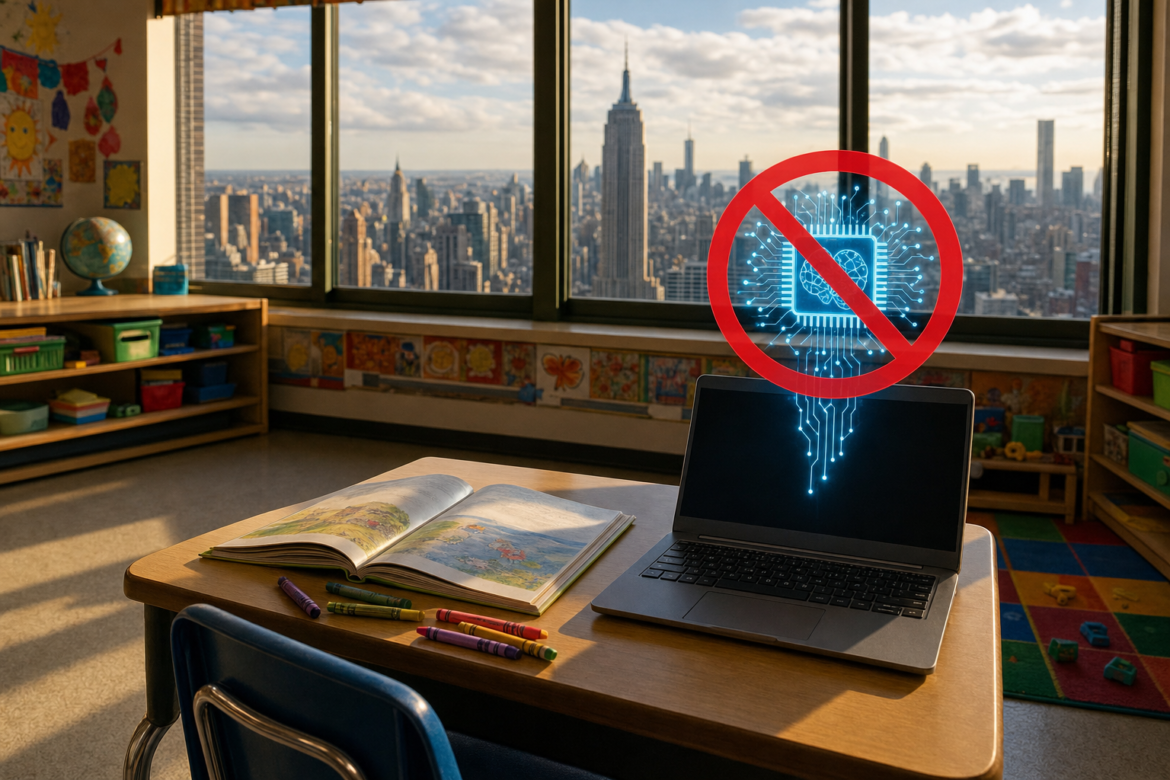
New York City schools ban AI through grade 8: a glowing AI chip crossed out by a red circle-and-slash above a child's classroom desk with the city skyline behind
K-12Hot Topics - controversialArtificial Intelligence

New York City Schools Ban AI Through Grade 8

by EdCircuit Staff September 4, 2026
written by EdCircuit Staff 9 minutes read

New York City schools ban AI for students through eighth grade this year, and the effects may be visible in some of the most ordinary classroom moments.

A third grader may spend less time working alone on a laptop. A middle school student will not be able to use a school-provided, student-facing chatbot for help finishing an assignment. Teachers may continue using approved AI tools to plan lessons, but decisions about grades, behavior, placement, and promotion will remain in human hands.

The changes follow a September 2 announcement from Mayor Zohran Mamdani and Schools Chancellor Kamar H. Samuels. For the 2026–27 school year, New York City Public Schools will place a one-year moratorium on student-facing generative artificial intelligence in grades 2-K through 8.

Nearly 600,000 students—about two-thirds of the district’s enrollment—will be affected.

The headline is a ban. The policy itself is more revealing. New York City is separating AI use by age, purpose, and level of supervision while giving the nation’s largest school district a year to decide which technologies actually belong in its classrooms.

What the New York City AI Policy Changes

The moratorium applies specifically to student-facing generative AI: software that responds to prompts by producing text, images, audio, feedback, or other content. According to the official New York City Public Schools guidance, those features will not be available to students through eighth grade.

Companion chatbots are prohibited across all grade levels. Approved exceptions remain for assistive technology, multilingual learners, and career-readiness programs that require students to develop AI-related workplace skills.

High school students will follow a different path. Every student in grades 9–12 will complete two 45-minute AI literacy modules covering how the technology works, privacy, bias, appropriate school use, and its possible effect on careers. A smaller group may use AI through one of five centrally approved pilots: Quill, Edia, Brisk Teaching, Playlab, and Intel AI-Ready Schools.

Those pilots may reach no more than 50,000 students, approximately 5% of the city’s public school population. Students may participate in only one pilot, and use must take place under the supervision of a trained educator.

Teachers and staff may continue using approved AI for lesson planning and operational work. The district draws a firm boundary around high-stakes uses: AI may not grade students, monitor behavior, or make decisions about placement, promotion, graduation, or other student outcomes. Special education documents, counseling, crisis intervention, and therapeutic services remain the work of qualified professionals.

The Bigger Story May Be Screen Time

The AI announcement arrived with another major change. New York City is also limiting how much time younger students spend individually using laptops and tablets during the school day.

One-to-one screen use will be restricted for students in 2-K through second grade. The district recommends no more than 30 minutes per day for grades 3–5 and no more than 45 minutes for grades 6–8.

This does not mean every screen will disappear. Teachers may still use computers, tablets, and interactive displays for group instruction. The guidance includes exceptions for assessments, remote learning, e-books, coding, robotics, simulations, and accessibility tools.

The target is the routine habit of placing every student in front of an individual device, even when a book, conversation, experiment, handwritten response, or teacher-led lesson may work better.

That is a meaningful change in direction. For years, school technology conversations focused on whether students had enough access. Now districts are being pushed to examine what students are doing with that access and what may be lost while their attention is directed toward a screen.

Recent U.S. Department of Education guidance asks schools to apply a basic test to education technology: What learning problem does the tool solve? Who should use it? For how long? What evidence demonstrates that it improves learning?

New York City is applying those questions across an enormous and complicated school system.

Why Younger Students Are the Focus

Generative AI can produce an answer long before a child has developed the knowledge needed to judge whether that answer is accurate, useful, or even appropriate.

That matters because learning is often found in the struggle that comes before an answer. A student sounds out an unfamiliar word. Another crosses out the first sentence of a paragraph and tries again. A class debates two possible explanations for a science result. A teacher notices confusion on a student’s face and asks a different question.

None of those moments is especially efficient. All of them matter.

When a chatbot repeatedly enters that space, the completed assignment may look stronger while revealing less about what the student understands. Younger students are particularly vulnerable because they are still building the reading, writing, reasoning, communication, and self-regulation skills that AI can appear to perform for them.

There are other concerns as well: inaccurate responses, algorithmic bias, student privacy, and AI features quietly appearing inside programs that schools already use. A familiar tutoring or curriculum platform can change after it has been purchased, leaving teachers and families unaware that a generative tool has entered the experience.

City officials said they are disabling AI features in 38 existing programs, although they have not released the complete list. Chalkbeat reported that important questions remain about how acceptable AI will be defined, how products will be evaluated, and how the rules will be enforced across approximately 1,600 schools.

A Ban That Still Makes Room for AI Literacy

New York City’s approach acknowledges a reality that schools cannot ignore: high school graduates will enter colleges, training programs, and workplaces where AI is already present.

That helps explain why the city is not extending the full moratorium through grade 12. Older students will receive structured instruction before they are expected to use AI independently. The pilots also give the district a chance to observe specific tools in limited settings instead of opening access across every classroom at once.

The city has been here before. New York blocked ChatGPT on school networks and devices in January 2023, then reversed the decision several months later as educators began exploring the technology’s potential.

The 2023 conversation was dominated by cheating and whether schools could keep ChatGPT out. The 2026 policy reaches further. It considers developmental readiness, screen time, accessibility, privacy, vendor accountability, instructional evidence, and the role of teachers in an AI-shaped world.

That evolution may be the most important part of the story. The central question is no longer simply whether students should use AI. It is what students should already know—and what skills they should already possess—before they do.

The Hard Part Starts Now

The announcement came only days before students were scheduled to return, giving principals and teachers little time to identify affected products or adjust lessons. United Federation of Teachers President Michael Mulgrew supported the screen-time limits but said questions remain about safeguards in products purchased by the district, according to the Associated Press.

Some advocates wanted a two-year moratorium and tighter limits on the high school pilots. Other critics worry that broad restrictions could remove useful tools or leave students less prepared for a changing economy.

The city is forming a Technology in Schools Coalition made up of students, educators, parents, union representatives, advocates, elected officials, and experts. Its work over the coming year will matter more than the announcement itself.

The coalition will need to determine which products contain student-facing AI, what evidence vendors must provide, how teachers will receive clear and timely guidance, and how the district will measure the results. A change in policy is easy to document. A change in student attention, participation, skill development, or academic performance is much harder to prove.

What Other Districts Should Ask

Other school systems do not need to adopt New York City’s moratorium to learn from it. They should, however, take a harder look at the AI already inside their classrooms.

Start with the inventory. Which tutoring platforms, learning management systems, search tools, writing programs, and curriculum products now include generative features? Were those features present when the product was approved? Can they be disabled?

Then look at age and purpose. A kindergartner using an AI reading companion, an eighth grader asking a chatbot to explain an equation, and a senior examining bias in an AI-generated response are not having the same educational experience. One districtwide rule cannot account for every developmental stage or instructional goal.

Districts should also identify decisions that must remain human. An algorithm may organize information or help prepare materials. It should not become the unaccountable voice behind a grade, disciplinary judgment, special education decision, or graduation outcome.

Finally, schools should teach students how to question AI before asking them to rely on it. Students need to know that a confident response can be wrong, that an answer may carry hidden bias, that sources can be missing or invented, and that every convenient tool has a data trail.

Has AI Earned Its Place in the Classroom?

New York City’s decision will be watched far beyond the five boroughs. The district is attempting something difficult: reducing unnecessary technology use without denying that students will need to understand AI.

There will be confusion. Some useful tools may be caught in the moratorium. Some schools may struggle to apply the rules consistently. A single year may not produce all the evidence city leaders want.

Still, the pause forces a question that school systems too often ask only after purchasing and deploying new technology: Does this help students learn better?

Availability is not evidence. Novelty is not a learning outcome. A polished response generated in seconds is not proof that a child understands the idea behind it.

For the next year, New York City’s policy is designed to give its youngest students more time to read, write, talk, build, question, and work through problems with teachers and classmates. Its high school students will begin learning where AI is useful, where it fails, and why they remain responsible for the thinking.

That is more than an AI ban. It is a decision to make technology earn its place in the classroom.

Watch: New York City’s New School AI Policy

Watch the video below for more on New York City’s decision to restrict student-facing generative AI through eighth grade.

Play video: Mamdani announces ban on AI for young students in NYC public schools (3 minutes 47 seconds)3:47

Mamdani announces ban on AI for young students in NYC public schools3 min 47 sNBC News on YouTube

Mamdani announces ban on AI for young students in NYC public schools (Play video) – NBC News

Subscribe to edCircuit to stay up to date on all of our shows, podcasts, news, and thought leadership articles.

September 4, 2026 0 comments
0 FacebookTwitterPinterestLinkedinWhatsappCopy LinkEmail
AI deepfakes as a school safety threat: a glitching hacked face looms over a school at night while phones showing the same face spread outward
Artificial IntelligenceBullyingCybersecurityDigital CitizenshipHot Topics - controversialK-12School Safety

AI Deepfakes: The New School Safety Threat

by EdCircuit Staff September 4, 2026
written by EdCircuit Staff 14 minutes read

AI deepfakes can turn an ordinary school morning into a crisis before the first bell rings. A principal arrives to learn that a fabricated video involving a teacher has circulated through student group chats overnight. A student refuses to come to school after classmates share an AI-generated explicit image bearing her face. Families begin calling the district about an alarming audio recording attributed to the superintendent, while administrators scramble to determine whether the voice is authentic.

None of the content is real, yet every person affected must deal with real consequences.

Classes are disrupted. Investigations begin. Students gather in hallways to discuss what they have seen. Screenshots move from one platform to another. Employees face questions about conduct that never occurred, while targeted students are forced to defend themselves against images they never created.

Deepfakes have quickly moved beyond the worlds of entertainment, political misinformation, and online scams. They are entering middle and high schools, where easily accessible artificial intelligence tools can be used to humiliate classmates, impersonate educators, spread false information, and create sexually explicit images without the subject’s knowledge or consent.

This is not simply another violation of a school device policy. It is a rapidly developing school safety issue involving cybersecurity, cyberbullying, student mental health, sexual harassment, privacy, public trust, and crisis communication.

Deepfakes Give Cyberbullying a Powerful New Weapon

Cyberbullying has long included cruel messages, rumors, embarrassing photographs, fake social media accounts, and deliberate social exclusion. Deepfake technology adds something more dangerous: the ability to manufacture convincing visual or audio evidence of an event that never happened.

A deepfake is an image, video, or audio recording created or manipulated with artificial intelligence to imitate a real person. It can place someone’s face into a fabricated scene, recreate a person’s voice, or make someone appear to say or do something that never occurred.

Although synthetic media has existed for years, generative AI has dramatically lowered the technical barrier. Creating a convincing fabrication once required editing experience, specialized software, and significant time. Today, a student may need little more than a publicly available photograph and access to an inexpensive or free AI-powered app.

The ease of creation is part of what makes the threat so difficult for schools to contain. A student acting impulsively may create an image in seconds without fully considering the emotional, disciplinary, or legal consequences. What begins as an attempt to embarrass one classmate can quickly become a schoolwide crisis when the content is shared through group messages, anonymous accounts, social media platforms, or gaming communities.

The problem is already appearing in schools. A nationally representative RAND survey of K–12 principals found that 13 percent reported bullying incidents involving AI-generated deepfakes during the 2023–24 or 2024–25 school years.

Incidents were significantly more common in secondary schools. Twenty percent of middle school principals and 22 percent of high school principals said their schools had experienced bullying involving AI-generated images, fabricated photographs, deepfakes, or false online identities.

That means approximately one in five middle and high schools represented in the survey had already encountered this emerging form of digital victimization.

Students Can Be Targeted Without Sharing Anything Explicit

Some of the most disturbing school-related cases involve “nudify” tools, which use artificial intelligence to transform an ordinary photograph into a fabricated nude or sexually explicit image.

A student does not have to send an intimate photograph to become a victim. A yearbook portrait, athletic photograph, social media post, or picture taken in a school hallway can be enough to create exploitative content. The image may then be circulated among classmates, posted to an anonymous account, or used to threaten and control the person depicted.

The National Center for Missing & Exploited Children has warned that generative AI is being used to create exploitative imagery involving children. The organization identifies peer victimization—including the creation and circulation of AI-generated nude or sexually explicit content among classmates—as a growing child safety concern.

Girls have been disproportionately targeted in many reported incidents, although any student can become a victim. The targeted student may not learn that an image exists until a friend sends a screenshot or rumors begin circulating at school.

The discovery can create an immediate sense of panic and helplessness. Even when classmates know an image has been fabricated, they may continue sharing it for attention, entertainment, or cruelty. Other students may believe it is authentic. The victim is then placed in the painful position of repeatedly explaining that the image is not real while knowing that peers have viewed, saved, discussed, and possibly redistributed it.

The resulting harm can extend throughout a student’s life at school. A targeted student may avoid classrooms, lunch periods, athletics, extracurricular activities, or social events. Attendance and academic performance may decline. Some students experience anxiety, depression, humiliation, isolation, or fear that the image will resurface during college admissions, employment searches, or future relationships.

Describing the content as artificial should never be used to minimize the experience of the person depicted. The technology may have fabricated the image, but it cannot erase the invasion of privacy, loss of control, reputational damage, and psychological distress that follow.

Deepfakes Are Expanding the Danger of Sextortion

Deepfake technology also increases the threat of sextortion, in which an offender uses sexual content or the threat of exposure to demand money, additional images, or other forms of compliance.

Traditionally, sextortion schemes have often begun when a young person sends an intimate photograph to someone they believe they can trust. With generative AI, an offender may not need an authentic image. A fabricated but convincing picture can create enough fear and shame to manipulate the victim.

An offender could take a photograph from a student’s social media account, alter it, and threaten to send the result to parents, classmates, teammates, teachers, or college recruiters. The student may comply because the potential consequences feel immediate, regardless of whether the content is authentic.

Young people can be particularly vulnerable to this form of coercion. A student who fears punishment or public embarrassment may send money, provide additional content, or attempt to handle the situation alone rather than approaching an adult.

That isolation gives the offender more control. School communities must make it clear that students who are threatened or exploited will receive help rather than blame. They should be encouraged to stop communicating with the offender, avoid sending money or additional images, preserve available evidence, and contact a trusted adult immediately.

The FBI identifies sextortion as a serious crime and urges students, families, educators, and caregivers to understand the warning signs. Deepfakes complicate the threat because students can now be exploited using content they never created or shared.

Educators Can Face Fabricated Allegations

Students are not the only people at risk. Teachers, principals, coaches, superintendents, and school board members can also become deepfake targets.

A student can manipulate a teacher’s photograph to create an inappropriate image. AI-generated audio can make it sound as though a coach threatened a player or a principal made a discriminatory statement. A fabricated video can falsely depict an employee engaging in misconduct.

Such content can be especially damaging in a school environment, where leaders must respond quickly to credible allegations involving student or employee safety. Even when a video or recording is eventually proven false, the accusation may spread much faster than the correction.

An employee could be removed from the classroom while the district investigates. Families may demand immediate answers. The content may be reposted by people outside the school community who have no knowledge of its origin. The employee may receive threats or become publicly associated with conduct that never occurred.

District leaders face a difficult responsibility in these situations. They must take serious allegations seriously while avoiding the assumption that a convincing recording is authentic. That requires urgency, careful verification, due process, clear communication, and an understanding that manipulated media can be used as a weapon against both students and employees.

The administrative burden can also be significant. School leaders may need to preserve evidence, interview students, determine where the content originated, contact families, involve legal counsel, coordinate with law enforcement, respond to media inquiries, and support the targeted employee. All of that work occurs while rumors continue spreading and the normal operation of the school is disrupted.

Social Media Can Turn One Fabrication Into a Community Crisis

Deepfake technology creates the content, but social media supplies the distribution system.

An altered image can move from one student’s phone to hundreds of devices before administrators know it exists. Even if the original post is removed, screenshots and saved copies can continue circulating through group texts, direct messages, gaming platforms, private accounts, and temporary social media stories.

School communities are particularly vulnerable because students recognize the people, uniforms, classrooms, and locations depicted. A fabrication does not have to be perfect to cause harm. It only needs to look believable long enough for people to react.

The pressure to share shocking content also works against careful verification. Some students repost deepfakes because they assume the content is authentic. Others know it is false but share it because they find it funny, dramatic, or socially valuable. Every new share expands the audience and makes removal more difficult.

Schools must therefore confront more than whether students can identify synthetic media. They must also examine the behavior that follows discovery. Will students forward the content, confront the targeted person, or add humiliating comments? Or will they refuse to share it, report it to a trusted adult, and support the person being targeted?

Deepfake education cannot stop at teaching students how to detect a manipulated image. It must also teach consent, empathy, ethical decision-making, responsible reporting, and the consequences of participating in digital harm.

Deepfakes Are Also a Cybersecurity Threat

School cybersecurity efforts have traditionally focused on ransomware, phishing, stolen credentials, data breaches, and network security. Those dangers remain, but deepfakes introduce another critical vulnerability: an attack on identity and institutional trust.

A cloned voice could impersonate a superintendent and direct an employee to release confidential information. A fraudulent video could falsely announce a school closing, emergency, threat, or policy change. An attacker might imitate a principal, parent, vendor, or technology administrator to make a request appear legitimate.

Deepfakes become even more convincing when combined with information gathered from district websites, public meeting recordings, staff directories, social media accounts, or compromised email addresses. A message arriving from a familiar account may appear trustworthy even when its audio or video attachment has been fabricated.

This creates challenges that cannot be solved by installing a single detection tool. Schools must consider identity verification, account protection, communication protocols, employee training, social media management, digital evidence, crisis response, and the amount of personal information they publish online.

Commercial detection tools can help flag suspicious content, but they have limitations. As generative technology improves, older visual warnings—such as unnatural facial movements, distorted hands, irregular blinking, or mismatched lighting—become less reliable.

Schools need verification procedures that examine the source, context, account history, and original file rather than relying entirely on visual inspection or one automated detector. When a message involves money, private information, emergency directions, or an unusual request, employees should confirm it through a separate, trusted communication channel.

The Legal Landscape Is Beginning to Catch Up

Federal and state laws are evolving in response to AI-generated exploitation.

The federal TAKE IT DOWN Act addresses the nonconsensual online publication of intimate visual depictions, including AI-generated deepfakes. Covered online platforms must provide a process for requesting the removal of qualifying content and known identical copies within 48 hours of receiving a valid request. The Federal Trade Commission began enforcing those platform requirements in May 2026.

Deepfake incidents may also create responsibilities under Title IX. The U.S. Department of Education’s Office for Civil Rights has identified the nonconsensual sharing of intimate images—whether real, altered, or created through AI—as conduct that may constitute online or digital sexual harassment, depending on the circumstances.

State laws are also changing. Illinois, for example, expanded its definition of school cyberbullying for the 2026–27 school year to include the electronic distribution of certain AI-generated digital replicas. Other states have updated or introduced laws involving synthetic sexual content, impersonation, harassment, privacy, and child exploitation.

Legal obligations will differ according to the jurisdiction and details of an incident. Schools may need to consider Title IX procedures, mandatory reporting requirements, student discipline, law enforcement notification, evidence preservation, privacy protections, and the rights of both victims and accused individuals. Districts should work with legal counsel to clarify these obligations before facing an active crisis.

Schools Are Taking Action, but Important Gaps Remain

The RAND findings show that many schools take deepfake incidents seriously once they occur. Among the schools that reported an incident, 79 percent took disciplinary action and 66 percent referred the matter to law enforcement. Forty-seven percent provided training or education to students and employees.

However, only 23 percent reported updating their technology-misuse policies to include specific language about AI.

That gap suggests many schools are responding with policies written before students could easily fabricate another person’s face or voice. Existing bullying, harassment, sexual misconduct, and acceptable-use rules may apply, but vague language can create confusion about what is prohibited and how an incident should be handled.

Some districts are beginning to specifically prohibit the use of AI to impersonate, exploit, harass, threaten, or falsely represent another person. Others are establishing anonymous reporting options, incorporating synthetic media into digital citizenship instruction, reviewing how student photographs are published, and preparing coordinated response procedures.

The work cannot belong exclusively to the technology department. IT leaders may help secure accounts, analyze files, preserve evidence, and work with platform providers, but a deepfake incident can also require administrators, counselors, communications teams, Title IX coordinators, school resource officers, legal counsel, teachers, and families.

A fragmented response creates delays and increases the likelihood that the victim will have to repeat the story to multiple adults. A coordinated response helps the school protect the targeted person while investigating the conduct, limiting additional distribution, and communicating accurate information.

Deepfakes Threaten the Trust Schools Depend On

The deepest long-term danger may not be a single fabricated image. It may be the gradual erosion of confidence in everything students, educators, and families see and hear.

When any photograph can be altered, any voice can be cloned, and any video can be fabricated, authentic evidence may also become easier to dismiss. A student confronted with a real recording may claim it was generated by AI. A legitimate safety announcement may be questioned. A genuine report of misconduct could be treated with suspicion.

Schools must teach students to evaluate digital content without encouraging automatic disbelief. Healthy skepticism means asking who created the content, where it first appeared, whether trusted sources have confirmed it, and whether the person sharing it benefits from creating outrage or confusion.

It also means recognizing that verification is only part of responsible behavior. Students do not need to determine with absolute certainty whether humiliating or explicit content is authentic before deciding not to share it. Protecting another person’s dignity should not depend on successfully completing a digital investigation.

School Safety Now Extends Beyond the School Building

The boundary between online conduct and school life has largely disappeared. A deepfake created on a personal device at home can affect attendance, relationships, classroom behavior, athletic teams, employee reputations, and student mental health the next morning.

Schools cannot control every private account, app, or device. They can create a culture in which students understand the seriousness of fabricating another person’s identity, know how to report harmful content, and trust that adults will respond without blaming the victim.

Families must be part of that culture. They do not need to become deepfake detection experts, but they should understand that a child can be targeted without ever sending an explicit image. They must be prepared to listen calmly, preserve available evidence, contact the school, report the content, and reassure the child that seeking help was the right decision.

Artificial intelligence continues to offer valuable opportunities for creativity, accessibility, communication, and learning. Recognizing its potential does not require schools to ignore how easily the same technology can be weaponized.

The next era of school safety will involve more than protecting buildings, networks, and devices. It will require schools to protect the identities, dignity, well-being, and trust of the people inside them.

Part One of a Two-Part Series

Part Two will examine how districts can update policies, train employees, educate students, work with families, preserve evidence, and build an effective response plan before a deepfake crisis occurs.

Subscribe to edCircuit to stay up to date on all of our shows, podcasts, news, and thought leadership articles.

September 4, 2026 0 comments
0 FacebookTwitterPinterestLinkedinWhatsappCopy LinkEmail
Team of professionals collaborating around a table with laptops and documents, discussing data in a conference room with a large dashboard on the screen behind them
Hot Topics - controversialK-12

Measuring Technology Impact in Schools

by EdCircuit Staff September 3, 2026
written by EdCircuit Staff 7 minutes read

Measuring technology impact in schools has become increasingly important as district leaders face growing expectations around accountability, strategic planning, and the effective use of limited resources. While schools have access to more data than ever before, determining which metrics truly matter remains one of the biggest challenges facing educational leaders.

Technology departments can generate enormous amounts of information. Application usage reports, device inventories, help desk tickets, uptime statistics, cybersecurity logs, and analytics dashboards provide valuable insights into operations. Yet the availability of data does not automatically translate into understanding. In many districts, leaders are discovering that having more information is not the same as having more clarity.

Schools are not investing in technology simply to increase login counts or produce attractive dashboards. They are investing in tools and systems that support learning, improve operations, strengthen communication, and create opportunities for students and educators. Measuring those outcomes requires more than collecting numbers. It requires thoughtful leadership and a clear understanding of what success actually looks like.

The Challenge Isn’t a Lack of Data

School systems have never had more information at their disposal. Modern platforms make it possible to track nearly everything. Leaders can monitor application usage, network uptime, device inventories, cybersecurity incidents, and countless other operational metrics. The sheer volume of information available today would have been unimaginable just a decade ago.

But more information does not necessarily lead to better decisions.

One of the biggest challenges facing educational leaders is determining which data points deserve attention and which merely create noise. Technology teams can become overwhelmed by dashboards and reports while losing sight of the larger purpose behind their work. It is entirely possible to have sophisticated analytics and still struggle to answer a simple question:

Are we measuring the things that truly matter?

That question forces leaders to move beyond operational statistics and focus on outcomes. After all, a district’s mission is not to maximize application usage or produce impressive reports. Its mission is to support students, empower educators, and strengthen the organization as a whole.

Activity Does Not Always Equal Impact

Modern analytics have created a temptation to equate activity with success. If usage rates are high, leaders may assume an initiative is working. If help desk requests decline, they may conclude that systems are performing better. Yet numbers without context can be misleading.

Consider application usage. High login rates may indicate strong adoption, but they do not necessarily mean students are learning more effectively. Likewise, lower help desk ticket volumes might reflect improved reliability, or they may signal that users have become frustrated and stopped reporting problems. An increase in support requests after implementing a new platform might actually represent healthy engagement as teachers and staff actively learn new tools.

The challenge is that metrics rarely tell the whole story. They require interpretation and context. Effective leaders understand that numbers alone cannot explain outcomes. Data must always be viewed through the lens of teaching, learning, and organizational priorities.

Ultimately, the goal is not to collect the most data. The goal is to understand what the data reveals and how it connects to the experiences of students and educators.

Success Should Be Defined Before Implementation

One of the most valuable disciplines technology leaders can develop is establishing clear definitions of success before an initiative ever begins.

Too often, organizations implement new systems and only afterward begin discussing how results should be measured. By that point, expectations may be unclear, and stakeholders may hold different assumptions about what the investment was intended to accomplish. This lack of alignment can make even successful projects difficult to evaluate.

Strong leaders approach the process differently. Before moving forward, they ask important questions:

  • What problem are we trying to solve?
  • What outcomes do we expect to achieve?
  • How will we know whether we succeeded?
  • Which metrics matter most?
  • How does this initiative align with district priorities?

These conversations create clarity and establish realistic expectations. More importantly, they provide a framework for evaluating progress after implementation.

For example, a district introducing a new communication platform might be tempted to measure success through parent logins or message counts. Those statistics provide useful information, but they may not capture the larger goal. If the objective is stronger family engagement, leaders may also need to examine parent satisfaction, response rates, and the quality of communication between schools and families.

Defining success early helps ensure that measurement remains connected to purpose.

Some of the Most Meaningful Metrics Are Invisible

Not every important outcome can be captured by a dashboard.

In fact, some of the most valuable benefits technology provides are difficult to quantify because they are experienced rather than observed.

Consider network reliability. Teachers and students rarely think about infrastructure when everything works as expected. Yet every minute of downtime represents lost instructional time. Reliable systems allow educators to focus on teaching instead of troubleshooting. They create continuity during assessments and reduce disruptions that can negatively affect learning. The absence of problems often represents tremendous value, even if that value is largely invisible.

Cybersecurity provides another example. Success in cybersecurity often means nothing happened. There was no ransomware attack, no data breach, and no interruption to instruction. Those outcomes may never appear in a headline or an annual report, but they reflect significant value for the district and the community it serves.

Sometimes the greatest impact comes from the problems that never occur. Effective leaders recognize that prevention and resilience deserve just as much attention as visible accomplishments.

Leading Indicators and Lagging Indicators Tell Different Stories

Technology initiatives often require patience because meaningful change rarely happens overnight.

Leading indicators provide early signs that an initiative is moving in the right direction. Professional development participation, teacher confidence, staff engagement, and adoption rates can offer valuable insights during the early stages of implementation. These measures help leaders understand whether momentum is building.

Lagging indicators, however, take much longer to emerge. Student achievement, graduation rates, college readiness, and long-term outcomes may not become visible for months or even years. Those measures are often influenced by many variables beyond technology itself.

Understanding the distinction between leading and lagging indicators helps leaders maintain realistic expectations. District transformation is rarely instantaneous. Sustainable change unfolds over time, and effective leaders recognize that meaningful progress often requires patience, persistence, and continuous evaluation.

Balancing short-term indicators with long-term outcomes creates a more complete picture of impact.

Dashboards Cannot Replace Stories

Technology leaders frequently rely on dashboards and reports to communicate results. While those tools provide valuable evidence, they rarely create understanding by themselves.

People connect with experiences.

Teachers remember how a platform simplified their workflow. Parents recognize improvements in communication. Board members understand how reliable infrastructure protects instructional time during state assessments. Stories provide context that raw numbers often cannot.

Consider two ways of describing a network upgrade.

One approach highlights improved uptime percentages and reduced latency. Another explains that teachers experienced fewer interruptions, students maintained access to digital resources, and assessments proceeded without disruption. Both statements describe the same outcome, but one connects the technical achievement to a meaningful experience.

Data establishes credibility, but stories create understanding.

The most effective leaders know how to combine both. They use metrics to provide evidence and stories to illustrate impact. Together, those elements help stakeholders see how technology investments support students, educators, and district goals.

Measuring What Matters Requires Leadership

At its core, measuring technology impact in schools is not a technical exercise.

It is a leadership exercise.

Effective measurement requires clarity, communication, and the discipline to focus on outcomes rather than activities. Leaders must resist the temptation to chase vanity metrics and instead concentrate on indicators that align with district priorities and community expectations.

As artificial intelligence, advanced analytics, and increasingly sophisticated platforms continue to evolve, districts will have access to more information than ever before. Yet the central challenge facing leaders is unlikely to change. Success will not be determined by who collects the most data, but by who understands which data matters and how those measurements connect to the larger mission of the organization.

Because measuring technology impact in schools is not ultimately about dashboards or reports.

It is about understanding whether technology is helping students, supporting educators, and advancing the work of the district.

And those are outcomes worth measuring.

Subscribe to edCircuit to stay up to date on all of our shows, podcasts, news, and thought leadership articles.

September 3, 2026 0 comments
0 FacebookTwitterPinterestLinkedinWhatsappCopy LinkEmail
A woman and a teenage student meet with a school staff member at a round table near a school hallway
K-12Attendance and AbsenteeismHot Topics - controversial

Ohio School Attendance Law Shifts Focus to Support

by EdCircuit Staff September 2, 2026
written by EdCircuit Staff 8 minutes read

The Ohio school attendance law is changing not only when families hear from their school, but what is supposed to happen after that first call or letter.

For families, the first visible change may be a notice arriving sooner than expected. A student who has missed about a week and a half of school could trigger one even when every absence was excused. It may feel punitive, but it is intended to begin a conversation before more instructional time disappears.

That concern is already showing up in Ohio homes. Shenika Johnson, a Garfield Heights mother of four, told Spectrum News that two of her children regularly see specialists. The new rules have her thinking more carefully about when appointments are scheduled and how much school they may miss.

Her situation gets to the difficult part of the policy. Necessary absences remain necessary. A child with the flu should stay home, and a medical appointment does not become misconduct because it counts toward chronic absence. The law simply requires schools to notice the accumulating time and respond before the pattern becomes harder to reverse.

Why Ohio changed its approach

Chronic absenteeism remains one of the most stubborn problems facing Ohio schools. According to the Ohio Department of Education and Workforce’s 2026 attendance guide, more than 25% of Ohio students were chronically absent during the 2024–25 school year.

Those absences are not always consecutive or dramatic. Two days missed in September, another appointment in October, several sick days during the winter, and a few late arrivals can quietly accumulate. Ohio notes that missing only two or three days per month can place a student on track to become chronically absent.

The concern is not simply a number on a report card. Regularly missing instruction can weaken early literacy, create academic gaps and increase the risk that a student will not graduate.

What the new law requires

The changes were included in House Bill 96, Ohio’s 2025 state budget. The revised statute took effect Sept. 30, 2025, and required districts to adopt updated local policies by Aug. 1, 2026. That makes the 2026–27 school year the first full year many families will see the new approach in action.

Under Ohio Revised Code Section 3321.191, a student is chronically absent after missing at least 10% of the minimum instructional hours required for the school year. Excused, medically excused, and unexcused time all contribute to that calculation. Hours lost to tardiness, early dismissal, or leaving school for part of the day can also add up.

Schools cannot wait until a student reaches the 10% mark to make contact. A district’s policy must require family notification no later than when a student has missed 5% of the minimum instructional hours. The state estimates that threshold at approximately 45 to 50 hours, or about 7.5 to 8.5 school days, depending on the student’s grade and school schedule.

Each district’s policy must also:

  • identify strategies that prevent chronic absence;
  • establish increasingly intensive tiers of intervention;
  • provide resources that address the reasons students are missing school;
  • use one or more absence intervention teams to work with students and families;
  • involve families, juvenile courts and appropriate state or local agencies in policy development; and
  • prohibit suspending or expelling a student because of attendance.

In practice, the policy asks schools to notice the pattern sooner, find out what is causing it and match the response to the student’s needs.

“Ohio’s school attendance rules have changed” (Play video) 

Play video: Ohio’s school attendance rules have changed: What parents need to know (1 minute 50 seconds)1:50

Ohio’s school attendance rules have changed: What parents need to know1 min 50 sWKYC Channel 3 on YouTube

How many days of school can you miss in Ohio?

There is no single number of days, because Ohio counts hours rather than days, and each district sets its own policy within the state law. Three thresholds matter. A district must contact the family once a student has missed 5 percent of the year’s minimum instructional hours, which the state estimates at about 45 to 50 hours, or roughly 7.5 to 8.5 school days. A student becomes chronically absent at 10 percent, about 15 to 17 school days in a typical year, whether the absences were excused or not. Unexcused absences are counted separately for truancy: 30 consecutive hours, 42 hours in one month or 72 hours in a school year make a student habitually truant.

Chronic absence is not the same as truancy

This is the part families—and sometimes schools—can easily misunderstand.

Chronic absenteeism measures all missed instructional time, regardless of the reason. Truancy applies only to absences without a legitimate excuse. A child who is home with a documented illness is not automatically truant, even though those missed hours still count toward chronic absence.

Ohio’s habitual-truancy thresholds remain based on unexcused time: 30 consecutive hours, 42 hours in one month, or 72 hours in one school year. When a student reaches one of those thresholds, a juvenile-court complaint is still possible. The district must file if the student and family are not making satisfactory progress, or if progress stops.

Ohio has therefore not eliminated enforcement. It has placed a broader support system in front of it. Court remains available for habitual truancy, but chronic-absence work is designed to begin well before a family reaches that point.

What support should look like

A form letter can satisfy a notification requirement. It cannot fix unreliable transportation, untreated anxiety, unstable housing, bullying, chronic illness, or a teenager’s need to care for a younger sibling.

Whether the change matters will depend on what happens after the letter arrives.

At the universal level, districts can provide clear information, recognize improvement instead of demanding perfect attendance, and connect every student with an adult at school. Targeted support may include mentoring, counseling, academic recovery, or help accessing health and transportation services. Students facing the most serious barriers may need coordinated case management.

Schools should also examine their own practices. A bus route that routinely runs late, a school climate that leaves a student feeling unsafe, or a discipline policy that pushes students out of class can contribute to the same attendance number as a family vacation. The response should not be identical.

Ohio’s law gives districts room to define their local systems, but that flexibility carries responsibility. Families should receive understandable communication—not threatening legal language. Attendance teams need current data and a consistent way to document why students are absent. Staff also need community partners when the problem is larger than the school can solve alone.

Other states are moving in the same direction

Ohio is not acting alone. Across the country, lawmakers are separating chronic absence from truancy and pushing schools to respond sooner.

One of the clearest comparisons is New Mexico’s Attendance for Success Act. Enacted in 2019, it replaced a largely compliance-driven law with prevention, early intervention and intensive support. Schools must use broad attendance strategies for all students and provide more individualized help as absences increase.

Washington’s attendance rules take a similar approach. Districts monitor excused and unexcused absences, contact families through multiple methods and use increasingly targeted school and community resources. Both states begin with the idea that an attendance number should prompt questions before it prompts consequences.

More recent laws show how quickly the issue has moved onto state agendas. In 2025, Georgia enacted Senate Bill 123, requiring attendance review teams in districts with chronic-absence rates of at least 10% and at individual schools reaching 15%. Indiana’s Senate Enrolled Act 482 defined chronic absence, called for better data and intervention resources, and limited punitive discipline based solely on attendance.

The movement continued in 2026. Mississippi’s Senate Bill 2103 requires tiered interventions for students at risk of chronic absence and funds additional attendance officers. Vermont’s Act 122 emphasizes preventive, restorative and assistance-based measures before legal action.

The details vary, and several states still retain strong enforcement provisions. But the direction is clear: more lawmakers are treating chronic absence as an early warning about something happening in a student’s life, not simply as defiance.

The real test begins now

Ohio has changed when schools must act and what their policies must contain. It has not removed the barriers that keep students from attending.

Families should expect earlier calls and letters, but they should also expect schools to listen. District leaders should examine whether their new policies create genuine paths to health care, transportation, mentoring, academic recovery and family support. School boards should ask not only how many notices were sent, but how many students returned to regular attendance and why.

Ohio’s law can count every hour a student misses. Its success will depend on whether schools use those hours to understand what is happening in a child’s life and help that student return. That is much harder than sending a letter, but it is also where the real work begins.

Subscribe to edCircuit to stay up to date on all of our shows, podcasts, news, and thought leadership articles.

September 2, 2026 0 comments
0 FacebookTwitterPinterestLinkedinWhatsappCopy LinkEmail
Newer Posts
Older Posts

Participate

  • Contribute
  • Sponsor
  • Submit Release
  • Subscribe
  • Get Interviewed

We value your privacy

We use cookies to enhance your browsing experience, serve personalized ads or content, and analyze our traffic. By clicking "Accept All", you consent to our use of cookies.

Customize
  • Needed for the site to work: signing in, the cart, your consent choice. Always on.

    8 cookies
    • ss_consent 1 yearYour cookie choice on this site, so you are not asked again.
    • wordpress_logged_in_* 2 days, or 14 days with "remember me"Keeps you signed in as you move between pages.
    • wordpress_sec_* 2 days, or 14 days with "remember me"The secure half of your sign-in.
    • wordpress_test_cookie SessionChecks that your browser accepts cookies when you sign in.
    • wp-settings-* 1 yearYour display settings when signed in.
    • wp_woocommerce_session_* 2 daysYour shopping session: the cart and the checkout.
    • woocommerce_cart_hash SessionTells the site whether your cart has changed.
    • woocommerce_items_in_cart SessionWhether your cart holds anything.
  • Remembers choices you make, such as a language or a region, and supports features like live chat.

    1 cookie
    • woocommerce_recently_viewed SessionThe products you looked at, so the site can show them again.
  • Helps us understand how visitors use the site: which pages are read, and for how long.

    2 cookies
    • _ga 2 yearsGoogle Analytics: tells one visitor from another. Set only after you allow analytics.
    • _ga_* 2 yearsGoogle Analytics: keeps your session state. Set only after you allow analytics.
  • Measures how fast pages load so we can make them faster.

  • Used to show you content and offers that match your interests, on this site and elsewhere.

    1 cookie
    • sbjs_* SessionWooCommerce order attribution: where you came from, so a purchase can be credited to the campaign or site that sent you.

Your browser asks us not to sell or share your information (Global Privacy Control), so advertising cookies stay off.

Do not sell or share my personal information

Some cookies from other companies help show you offers on other sites. Tick the box and save your preference to opt out of that sharing; untick it to opt back in at any time.

Your browser sends Global Privacy Control, so this preference is set for you and cannot be changed here.

Sign In

Keep me signed in until I sign out

Forgot your password?

Password Recovery

A new password will be emailed to you.

Have received a new password? Login here

Shopping Cart

Close

No products in the cart.

Close
-
00:00
00:00

Queue

Update Required Flash plugin
-
00:00
00:00

Your cart (items: 0)

Products in cart

Product Details Total
Subtotal $0.00
Shipping and discounts calculated at checkout.
View cart
Go to checkout

Your shopping cart is empty

Return to shop

Notifications