
edCircuit
  • Start Here
    • Login
    • Register
    • Subscribe
    • Submit a Press release
    • Advertise or Sponsor
    • Contribute
    • Get Interviewed
  • On The Wire
  • K-12 Education
    • All K-12
    • K-12 Teachers
    • Teaching Strategies
    • Special Education and IEPs
    • Dyslexia
    • Gifted and Advanced Learning
    • Early Childhood, Pre-K and Kindergarten
    • School Calendar
    • Tutoring and Homework Help
    • Attendance and Absenteeism
    • After-School Programs
    • School Counselors
    • Homeschooling
    • School Models
    • Teacher Retention
    • Parents
    • Students
  • Teaching and Learning
    • Literacy and Reading
    • Math Education
    • Civics and History Education
    • Financial Literacy
    • Assessment and Testing
    • Curriculum and Instruction
    • Personalized Learning
    • Project-Based Learning
    • Social-Emotional Learning
    • Executive Function
    • Creativity
    • Diversity, Equity, Inclusion
  • Professional Development
    • All Professional Development
    • Educators
    • Administrators
    • edLeaders
  • Higher Education
    • All Higher Education
    • College Admissions
    • Career and Technical Education (CTE)
    • Graduation
    • FAFSA and Financial Aid
    • Student Loans
  • Artificial Intelligence
  • Cybersecurity
  • School Safety
    • All School Safety
    • Science and Lab Safety
    • School Design and Facilities
    • Bullying
    • Duty of Care and School Liability
  • Continuing Education
    • All Continuing Education
    • Online Certificate Programs
    • Teaching Jobs and Careers
    • Teacher Appreciation
  • Education Policy and Government
    • All Education Policy
    • Department of Education
    • School Choice
    • Global
    • Advocates
  • EdTech
    • All EdTech
    • Online Learning
    • Hybrid and Remote Learning
    • Augmented and Virtual Reality
    • ESports
    • Gamification and Game-Based Learning
    • Digital Citizenship
    • EdTech Entrepreneurs
    • Market Trends
    • Future of Education
  • STEM and STEAM Education
  • Media
    • EDU Shows
    • EDU Podcasts
    • Education Industry Guides and Reports
  • About edCircuit
Saturday, October 17 2026 - Welcome
  • LOGIN
Home Tags Posts tagged with "Headline"
Tag:

Headline

This if for posts to be in the featured/top section of site
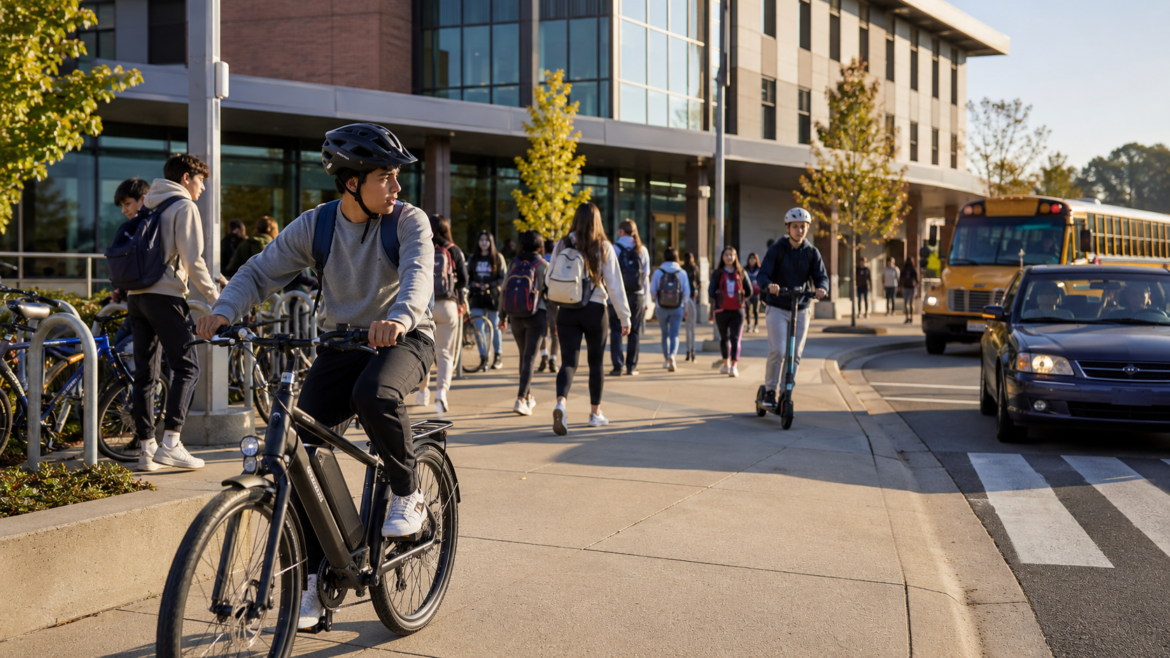
Young man wearing a helmet rides an electric bike along a campus sidewalk with students and a bus in the background.
Hot Topics - controversialSchool SafetyK-12

E-Bike Safety Is the New School Commute Challenge

by EdCircuit Staff September 2, 2026
written by EdCircuit Staff 8 minutes read

E-bike safety is becoming a new back-to-school responsibility for districts as more students ride electric bikes and scooters to class.

Consider the morning arrival line. Buses are turning into the lot. Parents are pulling away from the curb. Students are crossing between cars, and staff members are trying to keep traffic moving.

Then a student on a nearly silent electric bike enters the same space at 20 miles per hour.

It may look like a bicycle, but it does not always move like one. Its speed, weight and acceleration give drivers and pedestrians less time to react. That is why e-bikes and e-scooters are beginning to force a conversation that many school districts have not yet had.

Which devices are allowed? How old should a student be before riding one to school? Can the bike be operated on campus, or must it be walked? Where should it be stored? What happens when a student arrives on a modified device capable of traveling far faster than a traditional bicycle?

These questions belong in district transportation and safety planning now—not after a serious accident.

The Appeal Is Easy to Understand

For students, an e-bike can mean independence. It can make a longer commute manageable, provide transportation to after-school activities, and give families another option when bus service or a parent ride is unavailable.

Schools may benefit, too. Every student who safely rides instead of arriving in a car potentially removes one vehicle from an already crowded drop-off lane.

The concern is not simply that these devices have motors. It is that a young rider can reach the speed of an experienced adult cyclist without having the same balance, judgment or understanding of traffic.

Some students ride without helmets, carry passengers or move unpredictably between sidewalks and streets. Others use phones or wear headphones while riding. A growing number are operating electric motorcycles or modified devices that are marketed and described as e-bikes even though they may not meet the legal definition.

That distinction matters. A legal low-speed e-bike and a 35-mile-per-hour electric motorcycle should not be treated as the same vehicle simply because both have pedals and are parked near a bicycle rack.

Doctors Are Seeing More Serious Injuries

Trauma doctors in Central California told ABC30 that they are treating young riders for traumatic brain injuries, facial injuries, broken bones and internal bleeding. The report followed the death of a 15-year-old student who crashed an e-scooter while leaving football practice.

The latest national report from the U.S. Consumer Product Safety Commission, covering 2017 through 2023, estimated 448,600 emergency-department visits involving e-bikes, e-scooters and hoverboards.

Annual micromobility-related emergency visits increased from approximately 34,000 in 2017 to 87,800 in 2023. The CPSC found that e-bike injuries increased nearly tenfold during that period. Motor-vehicle collisions and loss-of-control incidents were among the leading hazards associated with e-bike and e-scooter deaths.

Those numbers extend well beyond school-age riders, but the trend is difficult for districts to ignore when the devices are becoming part of the daily student commute.

Most States Have Laws—But the Rules Differ

It would not be accurate to say that many states have no laws governing e-bikes. Most states regulate them through specific e-bike legislation or existing laws covering bicycles, motorized bicycles, mopeds and similar vehicles.

By the end of 2024, PeopleForBikes reported that 43 states recognized some version of the common three-class system:

  • Class 1: Pedal assistance that stops at 20 miles per hour
  • Class 2: Throttle-powered operation that stops providing assistance at 20 miles per hour
  • Class 3: Pedal assistance that stops at 28 miles per hour

The problem is consistency.

Federal law addresses the manufacturing and consumer-product definition of a low-speed electric bicycle. States and local communities determine where it may be ridden, how old an operator must be, whether helmets are required, and whether the device belongs on a street, sidewalk, bike path, or trail.

E-scooters may fall under a different section of state law. Local governments may also establish restrictions that go beyond statewide requirements. Devices exceeding the power or assisted-speed limits for e-bikes may legally be considered mopeds, motorcycles, or another type of motor vehicle.

A student and parent may believe a device is legal because it was purchased as an “e-bike.” That label alone does not settle the question.

School districts must understand their state and local rules, but they also need policies for their own property. Something that may be operated legally on a neighborhood street is not automatically appropriate for a crowded school sidewalk or bus loop.

Districts Are Beginning to Respond

Orange County Public Schools in Florida is implementing one of the clearest K–12 responses. Beginning after Labor Day, students must have a learner’s permit or driver’s license before riding an approved e-bike or e-scooter to school. They must also obtain a permit from their school.

That effectively prevents elementary and middle school students from bringing the devices to campus. The district is emphasizing family communication before moving into progressive discipline, according to ClickOrlando.

A News 6 report (Play video) shows how the new rules are affecting Central Florida families while local police help parents distinguish legal e-bikes from faster electric motorcycles.

Play video: New ride rules: Central Florida students face e-bike, e-scooter changes this school year (1 minute 43 seconds)1:43

New ride rules: Central Florida students face e-bike, e-scooter changes this school year1 min 43 sWKMG News 6 ClickOrlando on YouTube

Individual high schools are translating the district policy into specific arrival instructions. Windermere High School, for example, requires approved devices to be walked once they reach campus and stored in designated locations. Modified e-bikes, Class 3 devices, and electric motorcycles are prohibited. Students may not charge batteries or bring detached batteries into school.

Fairfield Public Schools in Connecticut adopted a similarly firm policy. Its district notice prohibits students under 16 without a valid driver’s license from bringing motorized devices onto school grounds. Approved riders are limited to roadways and designated parking areas. Sidewalks, athletic fields, playgrounds and grassy areas are off-limits.

These districts are not waiting for families to interpret a patchwork of traffic laws. They are telling students exactly what is permitted once they reach school property.

A Policy Should Match the Campus

Not every district will conclude that a ban is necessary. A high school with protected bike lanes, secure storage and a separate entrance for riders faces a different situation from an elementary campus where every bicycle must cross the bus loop.

The review should begin with what is actually happening. Administrators need to know how many students are arriving on electric devices, where they enter the property, and whether they are mixing with buses, cars or large groups of students on foot.

From there, a district should answer several practical questions:

  • Which types and classes of devices are permitted?
  • Is there a minimum rider age or license requirement?
  • Must students register the device and display a decal?
  • Where must riders dismount and walk?
  • Are helmets and single-rider operation required?
  • Where will devices and batteries be stored?
  • Are charging and detached batteries prohibited?
  • How will modified or higher-powered devices be identified?
  • What accommodations are available for students with disabilities?
  • What happens when a student violates the policy?

The district should also decide how the rules apply after the final bell. Students may arrive for practices, games, rehearsals, and evening events when the normal traffic plan is no longer in place.

Local police, fire officials, legal counsel, and the district’s insurance carrier should be part of the review. A police department can explain traffic laws and enforcement limitations. Fire officials can help evaluate battery storage and charging risks. School leaders can identify where pedestrian conflicts are already occurring.

The Ride to School Still Matters

A campus policy only controls school property. It does not protect a student during the ride from home.

Families need to know the device’s classification, assisted-speed limit and manufacturer age recommendation before handing over the keys or charger. Students should be able to brake quickly, signal, ride with traffic and recognize that drivers may not see a small, quiet device approaching an intersection.

A helmet should be part of every ride. Passengers should not be carried on a device designed for one person. Phones, headphones and unpredictable movement between sidewalks and streets add risk to a trip that already requires a young rider’s full attention.

Schools can reinforce those habits through permit programs, safety sessions and partnerships with police departments, hospitals and local bicycle organizations. Fresno Unified, for example, worked with the Fresno State Transportation Institute and the Fresno County Bicycle Coalition to offer students a summer bike academy focused on safe riding and injury prevention.

Electric bikes are not going away, nor should every one of them be treated as a threat. For many students, they are affordable, efficient and dependable transportation.

But schools cannot continue treating a 28-mile-per-hour electric device as if it were simply another bicycle at the rack.

The school commute has changed. District safety plans need to change with it.

Subscribe to edCircuit to stay up to date on all of our shows, podcasts, news, and thought leadership articles.


September 2, 2026 0 comments
0 FacebookTwitterPinterestLinkedinWhatsappCopy LinkEmail
A collage of diverse people working on laptops and notebooks around a central smiling woman, connected by circular icons representing teamwork and learning (charts, books, user, badge, idea, group).
EducatorsK-12 TeachersProfessional DevelopmentHot Topics - controversialArticle SeriesK-12Personalized Learning

Teacher In-Service Is No Longer One Size Fits All

by EdCircuit Staff September 1, 2026
written by EdCircuit Staff 7 minutes read

Teacher in-service once operated on a simple assumption: if every educator received the same information, everyone would benefit equally.

It was a practical approach. Gather everyone in the same room, deliver the same presentations, distribute the same materials, and ensure every employee leaves with a common understanding of district priorities. Whether someone was a first-year kindergarten teacher, a veteran chemistry instructor, a school counselor, or a high school principal, they often spent the day participating in the same professional development.

For decades, this model served schools well. It created consistency, helped communicate expectations, and reinforced district initiatives before the school year began.

Today, however, districts are embracing a very different philosophy.

Professional learning is no longer defined by giving every educator the same experience. Instead, schools are increasingly recognizing that the most effective teacher in-service reflects the needs of the individual learner.

Ironically, one of the biggest transformations in professional learning has come from applying the same instructional philosophy teachers have used with students for years.

Differentiation is no longer just for the classroom.

It is becoming the future of teacher in-service.

Every Educator Brings Different Needs

Imagine the first morning of in-service.

Emily is beginning her first year as a third-grade teacher. She is excited but understandably nervous. She wants practical strategies for classroom management, lesson planning, family communication, and building relationships with students.

Across the auditorium sits Marcus, a veteran high school physics teacher with more than twenty years of experience. Classroom management is second nature to him. Instead, he is looking for professional learning focused on artificial intelligence, updated laboratory safety procedures, new STEM resources, and emerging instructional technologies.

Down the row is Sarah, an assistant principal. Her priorities include instructional leadership, educator evaluations, school safety, staff coaching, and strengthening school culture.

Should all three spend six hours attending the exact same presentations?

Probably not.

Each educator is preparing for a different year, facing different responsibilities, and pursuing different professional goals.

Yet for decades, teacher in-service frequently treated them the same.

Schools are increasingly recognizing that professional learning should reflect those differences rather than ignore them.

Differentiation Isn’t Just for Students

Walk into almost any classroom today, and you’ll find teachers differentiating instruction.

Some students need additional support.

Others need enrichment.

Some learn best through hands-on activities.

Others thrive through independent exploration or collaborative discussion.

Teachers adjust instruction because they understand that every student learns differently.

Professional learning is beginning to embrace that same philosophy.

Educators also have different experiences, strengths, certifications, interests, and career aspirations. Providing identical professional development for every employee simply because it is easier to organize no longer reflects what we know about effective learning.

The shift toward personalized teacher in-service represents more than a technological advancement.

It represents a change in educational thinking.

Schools are beginning to recognize that adult learners deserve the same thoughtful approach to learning that educators provide to students every day.

Technology Makes Personalization Possible

Not long ago, individualized professional learning for hundreds—or even thousands—of employees would have required an enormous amount of manual planning.

Today, technology has changed that equation.

Modern learning management systems can automatically assign required training based on an educator’s role, certification, grade level, or department. Professional learning platforms recommend courses aligned with district initiatives, while digital dashboards help administrators monitor progress and identify additional support when needed.

Artificial intelligence is beginning to take personalization even further.

Imagine logging into your district’s professional learning platform.

Instead of searching through hundreds of available courses, the system immediately recommends learning opportunities based on your position, completed certifications, previous professional development, district priorities, and long-term career goals.

A first-year teacher receives mentoring resources and classroom management strategies.

A science educator is presented with updated laboratory safety guidance and STEM innovations.

An instructional coach discovers leadership resources and collaborative facilitation tools.

Rather than asking educators to search for learning opportunities, technology increasingly brings relevant learning directly to them.

Professional learning becomes proactive instead of reactive.

Teachers Want Learning That Matters

One of the biggest misconceptions surrounding professional development is that teachers dislike it.

Most educators value opportunities to grow professionally.

What they often dislike is spending valuable time participating in learning that has little connection to their daily responsibilities.

Teachers consistently say they want professional learning that is practical, relevant, immediately applicable, and respectful of their experience.

A veteran educator rarely needs the same foundational training as someone entering the profession for the first time.

Likewise, an elementary art teacher and a district technology director should not necessarily follow identical professional learning pathways.

Personalization acknowledges that educators are professionals.

It respects their expertise while providing opportunities to continue growing in meaningful ways.

When learning feels relevant, participation becomes engagement.

Beyond Compliance

Compliance training will always remain an important part of teacher in-service.

Schools have legal and ethical responsibilities to ensure educators understand topics such as student safety, mandatory reporting, cybersecurity awareness, student data privacy, accessibility requirements, emergency procedures, and workplace policies.

Those responsibilities are not changing.

What is changing is the conversation surrounding professional learning.

Districts are increasingly investing in instructional coaching, artificial intelligence, digital citizenship, culturally responsive teaching, educator wellness, leadership development, innovation, and collaborative learning communities.

Professional learning is expanding beyond asking one simple question:

“Did everyone complete the required training?”

Instead, districts are beginning to ask something much more meaningful:

“What learning will help this educator become even more effective?”

That subtle change represents one of the most significant philosophical shifts in teacher in-service over the past decade.

Personalization Doesn’t Mean More Work

For some district leaders, personalized professional learning may sound overwhelming.

How can one district create different learning experiences for hundreds or thousands of educators?

Technology is making that challenge far more manageable than it once was.

Professional learning platforms now automate course assignments, certification tracking, reminders, progress monitoring, transcript management, and reporting.

Rather than creating additional work for administrators, many systems simplify it.

District leaders gain better visibility into professional learning across the organization while educators receive experiences that better reflect their individual responsibilities.

Personalization has become scalable.

Data Is Supporting Better Decisions

Modern districts have access to professional learning data that simply did not exist a decade ago.

Certification records.

Evaluation feedback.

Professional growth plans.

Completed learning pathways.

District priorities.

School improvement goals.

Instead of using that information solely for accountability, schools are increasingly using it to provide better support.

A principal may receive leadership coaching based on district initiatives.

A science department can automatically receive updated laboratory safety training before new equipment arrives.

Teachers implementing artificial intelligence tools may receive additional professional learning as new resources become available.

Professional learning becomes an ongoing conversation instead of an annual event.

Personalized Doesn’t Mean Isolated

Some worry that individualized learning could reduce collaboration among educators.

In reality, personalization often strengthens it.

When teachers participate in learning that directly supports their work, they return to grade-level meetings, department discussions, and professional learning communities with new ideas to share.

One teacher introduces an innovative instructional strategy.

Another shares insights from leadership coaching.

A technology integration specialist demonstrates a new classroom tool.

A counselor contributes updated mental health resources.

Collectively, the organization becomes stronger because individuals continue growing in different ways.

Shared learning remains important.

Personalized learning simply ensures everyone has something valuable to contribute.

Looking Ahead

The future of teacher in-service will almost certainly become even more personalized.

Artificial intelligence, learning analytics, adaptive learning platforms, competency-based professional development, and digital coaching are making individualized learning easier to deliver than ever before.

Technology is certainly driving much of this transformation.

But the greatest lesson extends beyond technology itself.

Education has finally begun applying to educators the same instructional principles teachers have successfully used with students for decades.

Every learner is different.

Every educator is different as well.

The future of teacher in-service will not be measured by how many people attend the same presentation.

It will be measured by how effectively schools help every educator learn, grow, and succeed in ways that matter most to their students.

That may be the most meaningful evolution of professional learning yet.


The Future of Professional Learning Series

Part 1: Teacher In-Service Has Changed

Part 2: Teacher In-Service Beyond the Auditorium

Part 3: Teacher In-Service Is No Longer One Size Fits All (Current Article)

Coming Next: Teacher In-Service Meets Microlearning — exploring why districts are replacing marathon workshops with short, focused learning experiences that fit naturally into the modern school day.

Subscribe to edCircuit to stay up to date on all of our shows, podcasts, news, and thought leadership articles.

September 1, 2026 0 comments
0 FacebookTwitterPinterestLinkedinWhatsappCopy LinkEmail
Young woman in a denim jacket looks at her phone, circled by floating social media thumbnails and icons with a campus backdrop.
Hot Topics - controversialDigital CitizenshipK-12

Digital Footprint: Why Schools Must Teach It Now

by EdCircuit Staff August 31, 2026
written by EdCircuit Staff 14 minutes read

A digital footprint is the trail of information a person leaves online: what they post, share and comment on, and the data that apps, websites, games and devices collect about them in the background. Every child today builds one long before they understand what the phrase means. A first-grader’s tablet game, a middle schooler’s group chat, a high schooler’s gaming clip posted to a public server: each of these actions leaves a trace. That trace rarely disappears. It compounds, year after year, into a record that colleges, employers, coaches, and even future acquaintances can find with a simple search. For superintendents, principals, curriculum directors, CTOs, IT leaders, teachers, parents, and school board members, the decision in front of them is how quickly, and how well, to teach it.

The scale is large. In the Pew Research Center’s survey of 1,458 U.S. teens aged 13 to 17, conducted from September 25 to October 9, 2025 and published that December, four in ten said they are online almost constantly, and 21 percent said they are on TikTok almost constantly. The footprint often starts before the child is old enough to post: a 2018 report by the Children’s Commissioner for England, Who knows what about me?, estimated that parents had posted 1,300 photos and videos of a child to social media by age 13, and that children themselves post about 26 times a day, nearly 70,000 posts by age 18. The same report called on schools to start teaching pupils why personal information is worth guarding.

A Generation Growing Up in Public

Previous generations made mistakes in relative privacy. A poor decision at a party, an unkind comment, an embarrassing moment, these lived on in memory, maybe in a photograph tucked in a drawer. They rarely lived on in a searchable, shareable, permanent format. Today’s students do not have that luxury. Social media platforms, gaming communities, group texts, and livestreaming apps have turned adolescence into a documented, broadcastable experience.

That shift changes how identity is formed and how it is judged by others. A 14-year-old’s comment on a gaming platform, a 16-year-old’s photo posted in a moment of poor judgment, a 12-year-old’s participation in a group chat that turns cruel, all of it can resurface years later, often at the worst possible moment.

Society has not fully reckoned with what it means to raise a generation whose missteps, jokes, and unfiltered thoughts may be preserved indefinitely on servers they will never control. Schools are uniquely positioned, and arguably obligated, to help students understand this reality before it shapes their futures in ways they never intended.

What is a digital footprint?

A digital footprint includes obvious things like social media posts, comments, and photos, but also less visible traces: search histories, app permissions, location data, gaming chat logs, in-game purchases, and metadata attached to shared files. There are two categories worth teaching explicitly:

  • Active footprints: content students intentionally post, share, or comment on, such as a TikTok video, an Instagram story, or a message in a Discord server tied to a game they play.
  • Passive footprints: data collected without deliberate posting, including cookies, location tracking, app usage patterns, and behavioral data gathered by gaming platforms and social apps.

A third part is easy to miss: what other people post. A parent’s photos, a friend’s tag, a team’s roster page or a classmate’s screenshot all become part of a student’s record without the student doing anything. Students cannot control all of it, which is one reason the lesson should cover how they treat other people’s footprints as well as their own.

Types of digital footprint, with examples

TypeExamples from a student’s dayWho can usually see itWhat a student can do
ActivePosts, comments, videos, usernames, profile photos, game livestreams, reviewsFriends, followers, anyone the settings allow, and anyone who takes a screenshotThink before posting, check privacy settings, delete old accounts they no longer use
PassiveSearch history, location data, cookies, app usage, IP addresses, purchasesThe companies that collect it, their advertising and analytics partners, and data brokersTurn off location sharing, limit app permissions, read what an app collects before signing up
Created by othersPhotos posted by family, tags by friends, school and team websites, news storiesWhoever the poster shares it with, often the publicAsk before tagging others, ask others to remove a post, tell a trusted adult when something harmful appears

Most digital citizenship conversations in schools focus narrowly on “don’t post mean things” or “watch out for strangers online.” Those warnings are well intended, but they barely scratch the surface. The deeper lesson is about permanence, searchability, and consequence.

What is a positive digital footprint?

Teaching students about their footprint should not be only a list of warnings. A positive digital footprint is a record that shows what a student can do and how they treat others: a portfolio of school projects, a science fair entry, published writing, volunteer or club work, and respectful conversation online. For older students the absence of any record can also count against them. In the same 2018 CareerBuilder survey discussed below, 47 percent of employers said they were less likely to invite a candidate to interview if they could not find the person online.

What counts as positive depends on age. For young children, the goal is a small footprint and an adult deciding what is shared. In middle school, students can start sorting their own actions into helpful and risky ones. In high school, students can begin to build a public record on purpose, with a teacher or counselor helping them decide what belongs in it.

Why Gaming Platforms Deserve Equal Attention

Much of the digital citizenship conversation in K-12 education centers on social media. Gaming platforms, though, represent an enormous and often overlooked piece of a student’s digital footprint. Platforms like Roblox, Fortnite, Minecraft servers, Discord, and Twitch involve voice chat, text chat, user-generated content, and public profiles, all of which can be recorded, screenshotted, or archived.

Students often behave differently in gaming spaces than in classroom-monitored environments, partly because these spaces feel less formal. A comment made in the heat of a competitive match, a username chosen as a joke, a livestream clip capturing an unfiltered reaction: all can become part of a searchable history. CTOs and IT directors evaluating school technology policies should treat gaming platforms with the same seriousness as social media when designing digital citizenship curricula and acceptable use policies.

The Consequences Are Documented

It is easy for a 13-year-old to dismiss warnings about “the future.” Adolescents are wired to focus on the present, and abstract consequences years down the road can feel unreal. This is exactly why schools need to make the stakes concrete, and there is a public record to draw on.

College admissions. In 2017, Harvard rescinded the admission offers of at least ten incoming students after learning they had traded racist and sexually offensive Facebook messages in a group chat. The consequences are not limited to recent posts, either: in 2019, Harvard revoked an offer from a student who had used racial slurs in a document two years earlier, illustrating how far back a resurfaced post can reach. A 2017 Inside Higher Ed survey of admissions directors found that 4 percent of independent colleges had revoked acceptances or rejected applicants over social media posts at least four times in the prior two years, and 14 percent had done so at least once.

How often admissions offices look is a separate question, and the answer has moved over time. In Kaplan Test Prep’s 2018 survey, 29 percent of admissions officers said they check applicants’ social media, down from 40 percent in 2015. In Kaplan’s most recent survey, of 205 admissions officers at selective colleges between August and December 2023, 67 percent said applicants’ social media is “fair game” but 28 percent said they had actually looked. Most applicants will never be checked; the ones who are cannot know in advance.

Employment. The screening does not stop at graduation. A 2018 CareerBuilder survey conducted by the Harris Poll of 1,012 hiring and human resources managers found that 70 percent of employers use social networking sites to research job candidates. Among those who do, 57 percent reported finding content that caused them not to hire a candidate. The monitoring continues after hiring, too: 48 percent said they use social networking sites to research current employees.

These figures are several years old, and practice varies widely from one college or employer to the next. They still give education leaders something concrete to translate into a picture a student can hold in mind.

A Shared Responsibility Across the School Community

Addressing digital footprint education effectively requires coordination across every level of a school system, not a single assembly or a one-off lesson.

Superintendents and school boards set the tone by treating digital citizenship as a core competency. Policy language should explicitly name digital footprint education as part of the district’s technology and curriculum strategy, with measurable goals tied to student outcomes.

Curriculum directors should embed digital footprint concepts across grade levels, not confine them to a single technology class. Frameworks already exist to build from. The ISTE Standards for Students include a Digital Citizen standard whose first indicator, titled Digital Footprint, asks students to manage their digital identity and understand the lasting effect of their online behavior on themselves and others. Common Sense Education’s Digital Literacy & Well-Being curriculum offers more than 170 free lessons from kindergarten through 12th grade, with Digital Footprint as one of its six core topics. It replaces the organization’s older Digital Citizenship curriculum, which that page says will be archived in December 2026, so districts using the older lessons should plan the move. Districts do not need to build this from scratch; they need to adopt, adapt, and commit to it consistently.

Teachers are on the front lines and need practical, age-appropriate language, not abstract warnings. “If a college admissions officer searched your name in four years, what would they find?” lands harder than a generic reminder to “be careful online.”

CTOs and IT directors model responsible data practices at the infrastructure level, including vetting third-party edtech tools for their own data collection practices. The school’s own apps add to the passive footprint. In Internet Safety Labs’ 2022 study of 1,357 apps recommended or required by a national sample of 663 schools, 96 percent shared children’s personal information with third parties, 78 percent of the time with advertising and analytics companies. Students learn as much from what a school system does with their data as from what it says in a classroom lesson.

Parents need to be brought in as partners, not bystanders. Many underestimate how much time their children spend on gaming platforms with social components, and schools can offer practical guidance on setting boundaries and keeping the conversation ongoing at home. AI chatbots are a newer part of the same conversation, since what a student types into one can be stored and, on some services, used to train the system.

Education policy experts help translate classroom-level efforts into sustainable, scalable frameworks, ensuring digital citizenship standards stay consistent and evidence-based as platforms and behaviors evolve.

Digital footprint classroom activities by grade

Ready-made lessons exist for every grade band, and most take one class period or less.

  • Kindergarten to grade 2: Code.org’s Your Digital Footprint lesson, written with Common Sense Education, runs about an hour. Students act as detectives following two trails of cards laid on the floor, gathering what two animal characters posted about themselves without asking their parents, then discuss what is safe to share. Common Sense’s kindergarten lesson What Is a Digital Footprint? covers the term itself through a short video and a dilemma discussion.
  • Grades 3 to 5: In Common Sense’s 20-minute grade 3 lesson Our Digital Footprints, students look at examples of online actions and decide which leave a positive footprint and which are risky. The sorting works well as a class discussion because students rarely agree on every example.
  • Middle school: Common Sense’s grade 8 lessons Life in Public and Viral Posts & Online Reputations use dilemma discussions to ask how students can share online while staying true to themselves, and how their actions affect other people’s reputations. Pairing these with a review of the privacy settings on one app students actually use makes the passive footprint concrete.
  • High school: Students can search their own names, review what is public on each account they hold, and decide what to keep, delete or add. A useful prompt is to imagine how a post would read to an admissions officer or hiring manager five years from now. Students who are ready can start a positive record on purpose, such as an online portfolio of their best work.

Self-search exercises need care. They should be done privately, about the student only, never about classmates. Some students will find something posted about them by someone else, including content that was harmful when it was made, and a counselor should know the exercise is happening. Students without reliable home internet access can do the work at school. edCircuit’s AI Deepfakes: The New School Safety Threat covers how schools respond when a fake image of a student is made and shared.

Moving From Awareness to Action

Awareness alone is not enough. Districts serious about this issue should consider concrete steps:

  1. Integrate digital footprint education starting in elementary school, using age-appropriate language about permanence and audience, well before students have their own social media accounts.
  2. Adopt an existing framework rather than building one from scratch. ISTE’s Digital Citizen standard and Common Sense Education’s free K-12 Digital Literacy & Well-Being curriculum are both tested starting points.
  3. Update acceptable use policies to explicitly reference gaming platforms and third-party apps, not just district-issued devices and networks.
  4. Run real-world exercises, such as having students search their own names or imagine how a post might read to a college admissions officer or hiring manager years later.
  5. Train teachers and counselors to recognize when digital footprint issues intersect with student well-being, since online reputational harm can contribute to anxiety and social exclusion.
  6. Review what the district’s own apps collect and share, and tell families in plain language.
  7. Communicate consistently with families, offering resources that help parents understand the platforms their children use and practical conversation starters.

Conclusion

The record is specific. Ten Harvard offers were rescinded over messages traded in a private chat. A slur written two years earlier cost another student a place. Seven in ten employers in the CareerBuilder survey look at candidates’ social media, and more than half of those have turned someone down over what they found. This is the world students are entering, whether schools prepare them for it or not.

Digital footprint education belongs beside financial literacy and civic education as a life skill rather than a niche technology topic. Students are building a lasting, searchable record of themselves years before they are equipped to understand what that record will cost or earn them. Schools cannot control which platforms exist or how fast they change. They can control whether a student turns 18 having been told, clearly and concretely, that the internet remembers, and having had the chance to build a record they are proud of.

Superintendents, teachers, curriculum leaders, CTOs, IT staff, parents, school board members, and policy experts each hold a piece of this responsibility. Aligned around a consistent, honest, age-appropriate approach, they give students something worth more than any single post: the ability to make informed choices today that protect the opportunities they will want tomorrow.

Related reading

  • AI for Students: A Parent’s Guide by Age
  • AI in Education: A Guide for Schools and Colleges
  • AI Literacy for Students: A Grade-by-Grade Guide
  • AI Rules for Schools: A Back-to-School Guide
  • AI Deepfakes: The New School Safety Threat

Subscribe to edCircuit to stay up to date on all of our shows, podcasts, news, and thought leadership articles.
August 31, 2026 0 comments
0 FacebookTwitterPinterestLinkedinWhatsappCopy LinkEmail
Four adults collaborate at a classroom table, looking at tablets and notes.
K-12 TeachersEdTechHot Topics - controversialK-12

Teacher Input in Edtech Adoption Drives Success

by EdCircuit Staff August 28, 2026
written by EdCircuit Staff 13 minutes read

Teacher input in edtech adoption can determine whether a new solution improves learning or becomes another expensive platform that educators quietly stop using.

Picture a familiar back-to-school scene. Teachers return in August ready to prepare classrooms, reconnect with colleagues, study student information, and plan for the opening weeks of instruction. Their schedules are already packed when they are told to bring their laptops to an afternoon training session.

A new digital platform is about to be introduced.

The demonstration is polished. The dashboard is colorful, the features appear intuitive, and the presenter explains how the solution will save time, personalize instruction, increase engagement, and provide better data. Teachers receive login information, watch someone move through a few screens, and are told that the platform will become an important part of the new school year.

Then students arrive.

Passwords fail. Class rosters do not sync. Teachers cannot remember how to access the feature they saw during training. Students open the wrong assignment, families have questions, and the help desk begins receiving requests. Within a few weeks, some teachers are using only the platform’s most basic function, while others have quietly returned to the tools and routines they know.

The problem may not be the technology itself. The problem is often how it was selected, introduced, and supported.

A Contract Does Not Create Classroom Adoption

A district can purchase a platform, activate thousands of accounts, and still never achieve meaningful adoption.

Purchasing provides access. Adoption happens when teachers understand why a solution was selected, feel confident using it, and can connect it to an authentic classroom need. Until that happens, the platform remains another icon on a screen.

This distinction has become increasingly important as digital tools touch nearly every part of the school day. The CoSN 2026 State of EdTech report describes nearly universal one-to-one device implementation across grade levels while also highlighting ongoing concerns involving artificial intelligence, cybersecurity, procurement, staffing, and screen time.

Schools are no longer deciding whether technology belongs in education. They are deciding which technology deserves a place in learning—and how to use it responsibly.

Those decisions cannot be made effectively through technical reviews and vendor demonstrations alone. Teachers understand the pace, complexity, and unpredictability of actual classrooms. They know how much time students need to log in, how easily directions can be misunderstood, which learners may need additional support, and whether a platform complements or competes with existing instruction.

Teacher feedback is not an obstacle to innovation. It is one of the best ways to determine whether an innovation can work.

Begin With the Problem, Not the Product

The most effective technology decisions begin with a clearly defined educational need.

Before comparing products, leaders need to understand what they are trying to improve. Are students waiting too long to receive feedback? Are teachers struggling to monitor progress across multiple systems? Does the district need stronger intervention tools, better family communication, more accessible instructional materials, or new opportunities for collaboration?

Without a defined problem, even an impressive solution can become technology searching for a purpose.

Teacher input can reveal whether the perceived problem is the actual problem. A district may believe educators need another assessment platform when teachers really need more time and support to interpret the data they already collect. Leaders may consider purchasing an engagement tool when students are actually struggling with complicated logins, inconsistent device access, or too many disconnected platforms.

Involving teachers early can also prevent duplication. Many schools already have tools with features that educators have never been trained to use. Before adding another platform, it is worth asking whether an existing solution can meet the need with better professional learning or a change in implementation.

This is not an argument against investing in new technology. It is an argument for making every investment purposeful.

Teacher Voice Needs to Be Broad and Honest

Teacher involvement cannot mean asking one enthusiastic technology user to attend a demonstration and speak for an entire district.

Classrooms vary dramatically across grade levels, subjects, programs, and student populations. A platform that works beautifully in a high school social studies classroom may not translate well to elementary literacy instruction. A tool that is easy for independent learners may create barriers for younger students or those who rely on assistive technology.

A useful review process includes educators with different responsibilities and different levels of technological comfort. Teachers who are cautious about new platforms can provide insight that confident early adopters may overlook. They often identify confusing directions, unnecessary steps, accessibility concerns, and training needs before those problems reach a larger rollout.

Teachers also need to know that honest criticism is welcome. If educators believe a platform will consume instructional time, duplicate an existing tool, or make a classroom routine more complicated, they should be able to say so without being labeled resistant to change.

The goal is not to find a product that every person immediately loves. The goal is to identify a solution that addresses a real need, works in realistic conditions, and provides enough value to justify the time and resources required to implement it.

Ask What Students Will Actually Do

Every edtech decision eventually reaches the same question: How will this improve the student learning experience?

It is easy to be impressed by a long list of features. It is more difficult—and more important—to picture what students will be doing when those features reach the classroom.

Will students use the platform to investigate, create, collaborate, practice, communicate, or demonstrate understanding? Will it provide useful feedback at the moment students need it? Will it help teachers recognize misconceptions earlier? Will students become more active participants in learning, or will they spend more time passively clicking through screens?

The 2024 National Educational Technology Plan identified a digital-use divide between passive technology use and more active opportunities for students to explore, create, and critically analyze information. It also identified a digital-design divide involving educators’ access to the professional learning needed to create effective technology-supported experiences. New Mexico’s summary of the plan provides a helpful overview of these access, design, and use priorities.

These questions are particularly important as communities express concerns about screen time. Adding technology does not automatically improve a lesson. In some situations, a digital platform can provide access, immediate feedback, creativity, or collaboration that would otherwise be difficult to achieve. In others, a conversation, physical model, hands-on investigation, book, or blank sheet of paper may remain the better instructional choice.

A successful implementation gives teachers the professional judgment to understand the difference.

Test the Platform in Real Classrooms

A vendor demonstration usually takes place under ideal conditions. Classrooms do not.

Students forget passwords. Devices have different settings. Wireless connections slow down. Lessons are interrupted. Some students finish early while others require additional directions. Teachers move between classes, responsibilities, and instructional priorities throughout the day.

A small pilot can reveal how a solution performs under those real conditions before it is introduced across an entire district.

During a pilot, teachers need enough time and support to use the platform in authentic lessons. Their feedback should explore more than whether they liked it. Did it save instructional time or consume it? Could students navigate the platform independently? Did the content align with the curriculum? Was the information it produced useful? Did the solution improve something meaningful, or did it simply change how an existing task was completed?

Student feedback can also reveal issues adults may miss. Students can explain where navigation becomes confusing, whether instructions are clear, how the platform compares with tools they already use, and whether it helps them understand their own learning.

A pilot that uncovers problems has not failed. It has done exactly what it was designed to do. The findings may lead to changes in training, configuration, timing, or expectations. They may also show that the platform is not the right fit.

It is far better to discover that before a long-term contract and districtwide launch.

Training Must Be More Than a Product Tour

One of the most common implementation mistakes is treating a demonstration as professional learning.

Teachers need more than a tour of menus and buttons. They need to understand the purpose of the platform, how it connects to instruction, when it is most useful, and what successful student use looks like.

Strong training begins with the reason behind the adoption. Instead of opening with a feature list, the session can begin with the classroom problem the district is trying to solve. Teachers can then see a complete lesson, workflow, or student experience demonstrating how the platform addresses that problem.

They also need time to practice. Educators should be able to enter a training environment, create an assignment, view it from a student’s perspective, examine sample results, and work through common difficulties. That kind of guided practice builds confidence in a way that watching someone else click through a presentation cannot.

Training is most useful when it reflects how different educators will use the solution. An elementary teacher, high school science teacher, intervention specialist, and school counselor may have very different reasons for entering the same platform. Relevant examples help teachers see the connection to their own work.

Most importantly, training cannot end before students arrive.

Research shared by the Institute of Education Sciences has found that technology adoption can remain limited without sustained, embedded professional learning. A Regional Educational Laboratory examination of technology use similarly emphasized the importance of ongoing support.

Teachers will develop their best questions after they begin using the solution with students. Follow-up sessions, short tutorials, coaching, planning time, office hours, and peer support give them somewhere to take those questions.

Comfort Grows Through Support and Time

Teachers do not need to master every feature before using a new platform. They do need enough confidence to begin, experiment, ask for help, and recover when something goes wrong.

That confidence rarely develops during a single afternoon session.

A phased rollout can be more effective than expecting educators to use every capability immediately. Teachers might begin with one high-value function, establish a routine, and then add more advanced applications as their comfort grows. Small successes create momentum.

Support also needs to address two different kinds of problems. Technical assistance can resolve login errors, device compatibility, and roster issues. Instructional support helps teachers determine when the platform adds value, how it fits into a lesson, and what to do with the information it provides.

Those responsibilities may involve different people, but teachers need a clear path to both.

Early adopters can become valuable mentors because they speak the language of the classroom. However, their leadership should be recognized rather than treated as an invisible extra duty. Providing release time, stipends, leadership opportunities, or formal recognition signals that implementation support is important work.

Look Beyond the Classroom Demonstration

Instructional value is essential, but it is not the only consideration.

A solution also needs to function within the district’s existing digital environment. Leaders need to examine how it handles single sign-on, rostering, student information, accessibility, technical support, and integration with current systems. A platform that requires teachers to manually enter students or repeatedly transfer information between systems can quickly lose support.

Privacy questions are equally important. What student information does the platform collect? Why is that information necessary? Who can access it? How long is it retained? Can it be used to train an artificial intelligence model? What happens to the data when the contract ends?

The U.S. Department of Education’s Student Privacy Policy Office provides resources concerning vendor responsibilities and the handling of personally identifiable student information. These protections need to be examined before students begin using a platform.

The total cost also extends beyond the subscription price. Implementation may require staff time, system integrations, additional training, new devices, upgraded infrastructure, or future add-on features. The revised Better Edtech Buying guide emphasizes educator participation and encourages a more comprehensive review of procurement and implementation.

A product can be exciting and still be the wrong fit. Responsible decision-making creates room for both possibilities.

Evaluate Whether the Solution Delivered

The evaluation process should not end once accounts are activated.

Several weeks into the school year, teachers may have a very different perspective than they had during the pilot or initial training. They now know how the platform performs during a busy school day. They know where students struggle, which features provide value, and which parts of the implementation need adjustment.

Districts can use that feedback to improve training, solve technical problems, clarify expectations, and share effective classroom examples. The same feedback should also inform renewal decisions.

Login totals alone do not prove that a platform is successful. A required tool can produce high usage without producing meaningful learning. Evaluation needs to return to the original purpose of the purchase. Did students receive better feedback? Did teachers gain useful information? Did the solution improve access, engagement, collaboration, or academic growth? Did it save time, or did it add another dashboard to monitor?

Tools that no longer serve a clear purpose should be reconsidered. Removing an ineffective or duplicative platform can be just as important as purchasing a new one. It reduces confusion, protects instructional time, and allows training resources to focus on solutions that provide genuine value.

Give Teachers a Meaningful Place in the Process

Teachers do not need to control every purchasing or technical decision. They may not agree on every platform, feature, or implementation strategy. But their involvement must be meaningful because they will ultimately turn the district’s investment into a student learning experience.

When teachers are included early, they can identify problems before contracts are signed. When they receive relevant training and continued support, they are more willing to experiment and more capable of using the platform beyond its most basic functions. When their feedback remains part of the process, implementation can improve throughout the year.

The strongest edtech adoption is not the one with the most impressive launch. It is the one that still provides value months later.

That success becomes visible in a very different back-to-school scene. A teacher enters the year understanding why the platform was selected. The login works. Students know where to go. The technology supports the lesson without becoming the lesson. When a problem arises, help is available. When the teacher discovers a better way to use the solution, there is an opportunity to share it.

Most importantly, the platform helps the teacher do something that matters for students.

Technology can open doors, expand access, provide timely information, and create new ways for students to learn. But it cannot accomplish those things through a contract or dashboard alone.

Teachers are the bridge between an edtech investment and its classroom impact. When their voices shape the decision, their professional learning is treated as a priority, and their experience guides the implementation, a new solution has a much better chance of becoming more than another platform. It can become a meaningful part of teaching and learning.

Subscribe to edCircuit to stay up to date on all of our shows, podcasts, news, and thought leadership articles.

August 28, 2026 0 comments
0 FacebookTwitterPinterestLinkedinWhatsappCopy LinkEmail
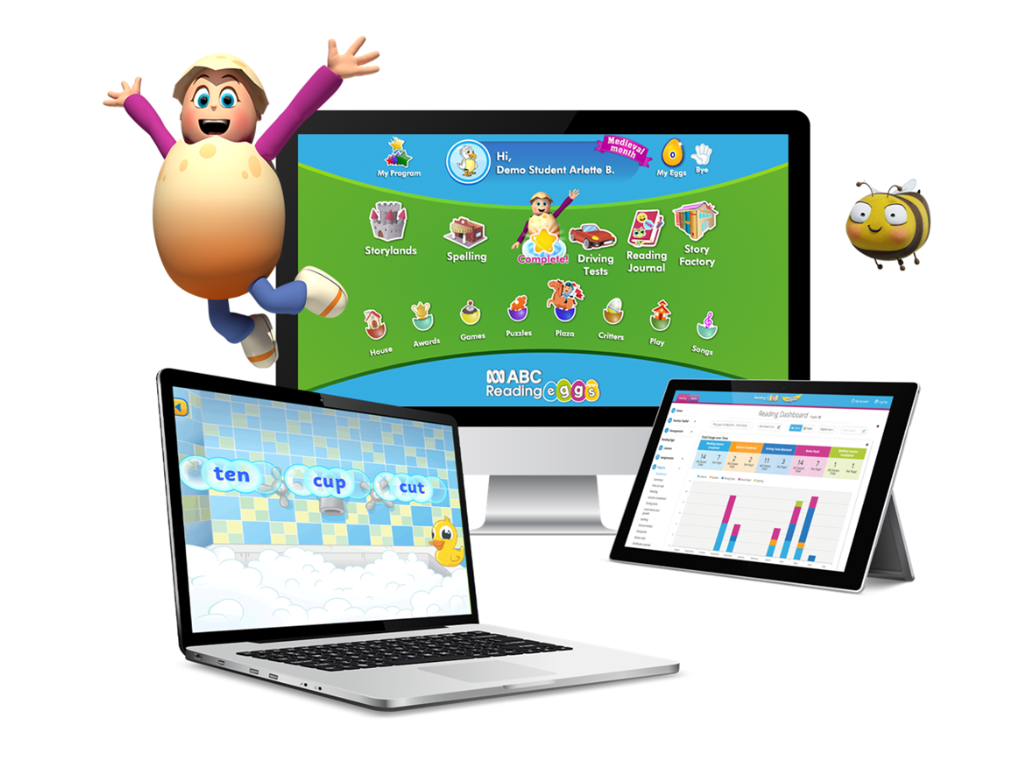
Educational software for kids shown on desktop monitor, laptop, and tablet with playful characters and colorful icons.
EducatorsK-12 TeachersedLeadersParentsHot Topics - controversialK-12Literacy and Reading

Walton County Teacher Finds a Districtwide Solution to Boosting Literacy Schools for Readers of All Levels

by Alyssa Reynolds August 27, 2026
written by Alyssa Reynolds 3 minutes read

After spending years as a first-grade teacher, Carla Sconiers became the Instructional Support Coordinator overseeing K-12 literacy instruction in Northwest Florida’s Walton County School District. These days, she bases her districtwide work on a simple truism that she has learned alongside ELA teachers around the country: “Not all students in a classroom are going to be on the same reading level.” 

To complicate matters for ELA teachers, “reading level” isn’t one skill. It’s composed of five pillars: phonemic awareness, phonics, vocabulary, fluency, and comprehension. A student might have a grade-level vocabulary but be performing below grade level when it comes to phonemic awareness. Traditionally, teachers have managed ELA classrooms by grouping students into reading levels, but with so many permutations and variations of skills, they can only group and regroup students so many times. For Sconiers, this is where a balance of technology and written materials become especially helpful. 

Getting Students Excited About Reading

For the past five years, Walton County has placed a strong emphasis on teaching foundational reading skills, especially in pre-K through second-grade classrooms. In the 2023-2024 school year, the district conducted a pilot of a program called Reading Eggs that they had been using for targeted intervention since 2020. Wider application of the program garnered an enthusiastic response from teachers and, importantly, students, who were charmed by what Sconiers calls its “fun” appearance. 

Sconiers, who was a classroom teacher at the time, remembers, “The students were so excited about the program.” The next year, Walton County adopted the program districtwide as part of its ongoing commitment to teaching the Science of Reading while also remaining mindful of screen time. 

Moving Between On-Screen and Off-Screen Learning

Having a curriculum that’s board-approved for K-12 classrooms has helped teachers looking for supplementary resources avoid the temptation of printing out what Sconiers calls “random worksheets from just anywhere,” which might not align with the district’s wider goals.

Instead, if a teacher is introducing their classroom to a certain vowel or consonant sound, they can access worksheets that are aligned to core instruction and don’t require them to open a browser. Having printed materials is essential for kindergarten teachers, who Sconiers sees using handwriting worksheets to teach students how to form letters. 

Having both printed and on-screen materials gives teachers a choice of how to teach each individual skill. They might have students use devices for independent reading, but hand out worksheets to teach skills that come to life more vibrantly on paper. The idea is not to reject technology but to use it when it is clearly the most effective pedagogical tool.

Reporting at the District, School, and Classroom Level

As with any districtwide implementation, a key to the success of Walton County’s literacy program is tracking progress and celebrating success. 

Sconiers’ team tracks usage of Reading Eggs at the district and campus level. During meetings with the principals, she makes a point of highlighting the schools that are making the most progress, which has created a sense of friendly competition among schools. 

At the classroom level, reading coaches pair their own day-to-day observations with data to identify which skills individual students are struggling with so they can provide support for each individual student.

The result of this coordinated, districtwide approach has been a consistent improvement in literacy scores. As Sconiers concludes, “Each year we are seeing an increase in proficiency for our ELA scores in all of the grade levels who utilize Reading Eggs. We would like to assume that some of that success has come from being able to use Reading Eggs as a support.”

Subscribe to edCircuit to stay up to date on all of our shows, podcasts, news, and thought leadership articles.

August 27, 2026 0 comments
0 FacebookTwitterPinterestLinkedinWhatsappCopy LinkEmail
AI in rural schools: a single line of glowing AI light runs along a fence across the prairie to a one-room rural schoolhouse at sunset
Hot Topics - controversialArtificial IntelligenceK-12

AI in Rural Schools: How Districts Can Get Started

by EdCircuit Staff August 27, 2026
written by EdCircuit Staff 5 minutes read

AI in rural schools is becoming a practical solution for districts facing growing pressure to do more with less—expanding access, supporting teachers, and improving outcomes despite limited resources.

In one rural district, a superintendent sits at a conference table reviewing next year’s staffing plan. A key position remains unfilled. Another teacher is covering multiple subjects outside their expertise. Course offerings are already limited, and expectations from families continue to rise.

The question is no longer whether change is needed.

The question is how to move forward—without overextending a system that is already stretched thin.

That’s where artificial intelligence is beginning to enter the conversation.

Not as a complete overhaul, but as a starting point.

Start with Teachers, Not Systems

For many rural leaders, the instinct is to begin with platforms, programs, or district-wide initiatives.

But the districts seeing real progress are starting somewhere else—teachers.

In classrooms across rural communities, educators are already testing small ways to use AI to support their daily work. In one district, a teacher uses AI to generate differentiated reading materials for students at different levels. In another, a math teacher builds practice sets that adapt based on student performance.

Before AI:
Teachers built everything from scratch, often late into the evening.

Now:
They start with a draft, refine it, and spend more time focusing on students.

This is where momentum begins.

Because when teachers see immediate value, adoption becomes organic—not forced.

Focus on Real Gaps, Not Broad Solutions

Once early success builds, the next step is not expansion—it is focus.

In many rural districts, the challenges are clear.

A principal may struggle to offer advanced coursework.
An intervention team may be stretched thin.
Teachers may be managing workloads that are not sustainable long-term.

AI becomes meaningful when it addresses these specific gaps.

In one district, leaders used AI-supported tools to expand access to coursework they could not staff. In another, they focused on personalized learning to support struggling readers.

Before AI:
Districts tried to stretch limited resources across too many needs.

Now:
They can target those needs with greater precision.

And in rural education, precision matters.

Pilot First, Then Build

There is a natural temptation to move quickly once something shows promise.

But in rural districts, where resources are limited and trust is critical, scaling too fast can backfire.

The districts making the most progress are taking a different approach.

They pilot.
One school.
One grade level.
One group of teachers.

They test what works, identify challenges, and adjust before expanding.

In one district, a single classroom pilot led to broader adoption after teachers shared their experiences. The credibility came from within—not from outside vendors or mandates.

Before AI:
New initiatives often required full commitment before results were clear.

Now:
Districts can build confidence before scaling.

Invest in Practical, Ongoing Training

Even the best tools will fall short without the right support.

And this is where many implementations struggle.

Teachers do not need abstract conversations about AI—they need practical guidance they can use immediately.

In districts seeing success, training is focused and ongoing.

Teachers learn:

  • How to use AI for lesson planning
  • How to differentiate instruction
  • How to evaluate outputs
  • How to use tools responsibly

In one rural district, teachers met regularly to share what was working and what wasn’t, building confidence together over time.

Before AI:
Professional learning was often limited by time, location, and access.

Now:
Support can be continuous, embedded, and responsive.

When teachers feel prepared, they are far more likely to integrate new tools effectively.

Communicate Early and Often

In rural communities, schools are deeply connected to families.

Change does not happen in isolation.

Parents want to understand what is happening in their children’s classrooms—especially when it involves new technology.

Districts that are succeeding with AI are making communication a priority from the beginning.

They explain:

  • What AI is and how it is being used
  • How student data is protected
  • How these tools support—not replace—teachers

In one district, early communication helped address concerns before they became barriers.

Before AI:
Technology decisions were often internal.

Now:
Community understanding is part of implementation.

And in rural districts, trust is everything.

Build for the Long Term

AI is not a one-time initiative.

It is a long-term shift.

Districts that approach it this way are seeing more sustainable results. They expand what works, continue to train staff, and refine their approach over time.

They are not chasing every new tool.

They are building systems that support their students and teachers.

Before AI:
Change often came in cycles—new programs, new priorities.

Now:
AI becomes part of the foundation, evolving alongside instruction.

The Reality Districts Are Facing

For rural schools, the pressure is real.

Teacher shortages are not easing.
Student needs are becoming more complex.
Expectations for college and career readiness continue to grow.

Waiting for perfect conditions is no longer an option.

The districts that move forward—carefully, thoughtfully, and intentionally—are the ones creating new opportunities for their students.

Not because they have more resources.

But because they are using what they have more effectively.

A Smarter Way to Start

Getting started with AI in rural schools does not require a massive investment or a full system overhaul.

It requires clarity and discipline.

Start with teachers.
Focus on real needs.
Pilot before expanding.
Support your people.
Communicate openly.
Build over time.

These are not just steps.

They are a strategy for moving forward in a system where every decision matters.

The Cost of Waiting

Across rural education, the conversation around AI is changing.

This is no longer about exploring possibilities.

It is about keeping pace.

Districts that delay risk falling further behind—not because they lack effort, but because the gap continues to widen as others move forward.

AI is not a quick fix.

But it is a tool that can help rural schools stay competitive, expand access, and better support the students they serve.

And for districts willing to start small and build intentionally, the path forward is already there.

The only question is whether they are ready to take the first step.

Subscribe to edCircuit to stay up to date on all of our shows, podcasts, news, and thought leadership articles.

August 27, 2026 0 comments
0 FacebookTwitterPinterestLinkedinWhatsappCopy LinkEmail
Newer Posts
Older Posts

Participate

  • Contribute
  • Sponsor
  • Submit Release
  • Subscribe
  • Get Interviewed

We value your privacy

We use cookies to enhance your browsing experience, serve personalized ads or content, and analyze our traffic. By clicking "Accept All", you consent to our use of cookies.

Customize
  • Needed for the site to work: signing in, the cart, your consent choice. Always on.

    8 cookies
    • ss_consent 1 yearYour cookie choice on this site, so you are not asked again.
    • wordpress_logged_in_* 2 days, or 14 days with "remember me"Keeps you signed in as you move between pages.
    • wordpress_sec_* 2 days, or 14 days with "remember me"The secure half of your sign-in.
    • wordpress_test_cookie SessionChecks that your browser accepts cookies when you sign in.
    • wp-settings-* 1 yearYour display settings when signed in.
    • wp_woocommerce_session_* 2 daysYour shopping session: the cart and the checkout.
    • woocommerce_cart_hash SessionTells the site whether your cart has changed.
    • woocommerce_items_in_cart SessionWhether your cart holds anything.
  • Remembers choices you make, such as a language or a region, and supports features like live chat.

    1 cookie
    • woocommerce_recently_viewed SessionThe products you looked at, so the site can show them again.
  • Helps us understand how visitors use the site: which pages are read, and for how long.

    2 cookies
    • _ga 2 yearsGoogle Analytics: tells one visitor from another. Set only after you allow analytics.
    • _ga_* 2 yearsGoogle Analytics: keeps your session state. Set only after you allow analytics.
  • Measures how fast pages load so we can make them faster.

  • Used to show you content and offers that match your interests, on this site and elsewhere.

    1 cookie
    • sbjs_* SessionWooCommerce order attribution: where you came from, so a purchase can be credited to the campaign or site that sent you.

Your browser asks us not to sell or share your information (Global Privacy Control), so advertising cookies stay off.

Do not sell or share my personal information

Some cookies from other companies help show you offers on other sites. Tick the box and save your preference to opt out of that sharing; untick it to opt back in at any time.

Your browser sends Global Privacy Control, so this preference is set for you and cannot be changed here.

Sign In

Keep me signed in until I sign out

Forgot your password?

Password Recovery

A new password will be emailed to you.

Have received a new password? Login here

Shopping Cart

Close

No products in the cart.

Close
-
00:00
00:00

Queue

Update Required Flash plugin
-
00:00
00:00

Your cart (items: 0)

Products in cart

Product Details Total
Subtotal $0.00
Shipping and discounts calculated at checkout.
View cart
Go to checkout

Your shopping cart is empty

Return to shop

Notifications