

edCircuit
  • Start Here
    • Login
    • Register
    • Subscribe
    • Submit a Press release
    • Advertise or Sponsor
    • Contribute
    • Get Interviewed
  • On The Wire
  • K-12 Education
    • All K-12
    • K-12 Teachers
    • Teaching Strategies
    • Special Education and IEPs
    • Dyslexia
    • Gifted and Advanced Learning
    • Early Childhood, Pre-K and Kindergarten
    • School Calendar
    • Tutoring and Homework Help
    • Attendance and Absenteeism
    • After-School Programs
    • School Counselors
    • Homeschooling
    • School Models
    • Teacher Retention
    • Parents
    • Students
  • Teaching and Learning
    • Literacy and Reading
    • Math Education
    • Civics and History Education
    • Financial Literacy
    • Assessment and Testing
    • Curriculum and Instruction
    • Personalized Learning
    • Project-Based Learning
    • Social-Emotional Learning
    • Executive Function
    • Creativity
    • Diversity, Equity, Inclusion
  • Professional Development
    • All Professional Development
    • Educators
    • Administrators
    • edLeaders
  • Higher Education
    • All Higher Education
    • College Admissions
    • Career and Technical Education (CTE)
    • Graduation
    • FAFSA and Financial Aid
    • Student Loans
  • Artificial Intelligence
  • Cybersecurity
  • School Safety
    • All School Safety
    • Science and Lab Safety
    • School Design and Facilities
    • Bullying
    • Duty of Care and School Liability
  • Continuing Education
    • All Continuing Education
    • Online Certificate Programs
    • Teaching Jobs and Careers
    • Teacher Appreciation
  • Education Policy and Government
    • All Education Policy
    • Department of Education
    • School Choice
    • Global
    • Advocates
  • EdTech
    • All EdTech
    • Online Learning
    • Hybrid and Remote Learning
    • Augmented and Virtual Reality
    • ESports
    • Gamification and Game-Based Learning
    • Digital Citizenship
    • EdTech Entrepreneurs
    • Market Trends
    • Future of Education
  • STEM and STEAM Education
  • Media
    • EDU Shows
    • EDU Podcasts
    • Education Industry Guides and Reports
  • About edCircuit
Saturday, October 17 2026 - Welcome
  • LOGIN
Home Tags Posts tagged with "Headline"
Tag:

Headline

This if for posts to be in the featured/top section of site
AI leadership in schools: a leader with a warm lantern guides a line of people along a path through a vast blue landscape of AI networks
Hot Topics - controversialArtificial IntelligenceK-12

AI Leadership Requires a Human Approach

by EdCircuit Staff September 14, 2026
written by EdCircuit Staff 6 minutes read

AI leadership has quickly become one of the most important responsibilities facing school districts as artificial intelligence reshapes how educators teach, leaders make decisions, and organizations operate. While much of the conversation surrounding AI focuses on tools, prompts, and productivity, the most significant questions facing schools are not technical.

They are human.

Questions surrounding artificial intelligence increasingly involve ethics, governance, trust, professional learning, and culture. District leaders must navigate uncertainty, balance competing perspectives, and ensure that innovation remains aligned with the needs of students and educators.

Artificial intelligence may be changing the tools schools use.

But it is also changing what leadership requires.

Artificial Intelligence Is a Leadership Challenge

The arrival of artificial intelligence has created extraordinary opportunities for education. AI tools have the potential to reduce administrative burdens, support personalized learning, improve communication, and help educators work more efficiently. New platforms continue to emerge, and capabilities evolve almost daily.

Yet implementing AI tools may prove to be one of the easier parts of the journey.

Determining how those tools should be used, establishing guardrails, addressing ethical concerns, and ensuring that innovation aligns with district priorities are far more complicated tasks. These questions require judgment, communication, and leadership.

In that sense, artificial intelligence is not simply a technology challenge.

It is a leadership challenge.

District leaders are being asked to make decisions involving privacy, responsible use, professional learning, and governance. They must determine how AI supports instructional priorities, strategic goals, and community expectations. Those decisions involve far more than selecting software.

Technology provides possibilities.

Leadership determines priorities.

And priorities ultimately determine impact.

People Want Guidance More Than Tools

Artificial intelligence has generated excitement, but it has also created uncertainty.

Teachers want practical examples and professional learning opportunities that help them understand how AI can enhance instruction and improve efficiency. Parents want reassurance that student information is protected and that human relationships remain central to learning. Boards seek transparency and accountability. Superintendents want alignment with strategic priorities and long-term goals.

Each group brings legitimate questions and concerns.

That diversity of perspectives highlights why AI leadership requires communication as much as technical expertise. Successful leaders recognize that different stakeholders define value differently and require different forms of support.

Teachers do not necessarily need another platform.

They need guidance.

Parents do not simply want technical explanations.

They want confidence.

Boards do not seek innovation for its own sake.

They seek responsible innovation.

Technology leaders increasingly find themselves serving as translators, helping diverse groups understand both the opportunities and the limitations of artificial intelligence. In many respects, leadership involves bringing those perspectives together and creating a shared understanding of what responsible innovation looks like.

Trust Matters More Than Ever

Artificial intelligence has amplified the importance of trust.

Communities want to know that student information is protected. Parents want confidence that schools are using AI responsibly. Teachers want reassurance that technology will support their work rather than replace it. Boards want transparency and accountability.

Those concerns are understandable.

Artificial intelligence introduces unfamiliar questions, and unfamiliarity naturally creates uncertainty. Trust helps organizations navigate that uncertainty.

People are more willing to embrace change when they believe leaders are acting thoughtfully and communicating openly. Transparency reduces anxiety and creates confidence that decisions are being made with the best interests of students and educators in mind.

Trust does not eliminate difficult conversations.

It makes those conversations possible.

As AI continues to evolve, the districts that invest in trust will be better positioned to explore innovation while maintaining community confidence.

Professional Learning Matters More Than Platforms

Artificial intelligence tools will change.

New applications will emerge. Existing platforms will evolve. Capabilities that seem groundbreaking today may become commonplace tomorrow.

What will matter most is not the platform itself.

It is the people using it.

Professional learning, curiosity, and a culture of continuous improvement will ultimately have a greater impact than any individual tool. Districts that encourage experimentation, collaboration, and thoughtful exploration are likely to be better prepared for the future than those that focus exclusively on selecting the “right” platform.

Strong learning cultures create resilience.

They help educators adapt to change and develop confidence in navigating emerging technologies. More importantly, they create environments where innovation can occur responsibly and thoughtfully.

A district with a strong learning culture will often outperform one with better tools but weaker collaboration and less professional support.

Technology changes quickly.

Human capacity creates sustainability.

And sustainable change depends upon people who are willing to learn.

Human Judgment Cannot Be Automated

Artificial intelligence can analyze information.

It can summarize documents.

It can generate content.

It can identify patterns and improve efficiency.

But some of the most important aspects of education remain deeply human.

AI cannot replace empathy.

It cannot understand context in the way educators do.

It cannot build trust.

It cannot assume responsibility.

And it cannot exercise wisdom.

Teachers understand when students need encouragement. Leaders recognize when communities need reassurance. Educators appreciate the nuances and complexities that shape decisions involving children and learning.

Those responsibilities require far more than information.

They require judgment.

Ironically, the rise of artificial intelligence may make distinctly human qualities even more valuable.

Empathy.

Collaboration.

Creativity.

Ethics.

Wisdom.

Relationships.

These qualities have always mattered in education.

Artificial intelligence has simply reminded us how essential they truly are.

Culture Will Matter More Than Technology

As districts continue exploring artificial intelligence, one factor may prove more important than any platform or application.

Culture.

Organizations that encourage curiosity, collaboration, transparency, and continuous learning will be better positioned to navigate change. Those environments create psychological safety and encourage thoughtful experimentation. They help educators learn together and adapt to emerging challenges.

Culture influences how innovation is embraced.

It shapes how people respond to uncertainty.

And it determines whether change becomes a source of anxiety or an opportunity for growth.

Technology may provide tools.

Culture determines how effectively those tools are used.

In the years ahead, districts with strong cultures of trust and learning are likely to outperform districts with superior technology but weaker organizational cultures.

Because innovation thrives where people feel supported, trusted, and empowered to learn.

The Future of AI Is Ultimately Human

Artificial intelligence will continue to evolve.

Platforms will change.

Capabilities will expand.

New opportunities and new questions will emerge.

Yet schools will still depend upon leaders who communicate clearly, build trust, exercise sound judgment, and place students at the center of every decision.

Because the future of artificial intelligence in education is not ultimately about machines.

It is about people.

And perhaps the greatest irony of the AI era is that as technology becomes more powerful, the qualities that make us human—empathy, wisdom, relationships, ethics, and trust—may become more valuable than ever.

Subscribe to edCircuit to stay up to date on all of our shows, podcasts, news, and thought leadership articles.
September 14, 2026 0 comments
0 FacebookTwitterPinterestLinkedinWhatsappCopy LinkEmail
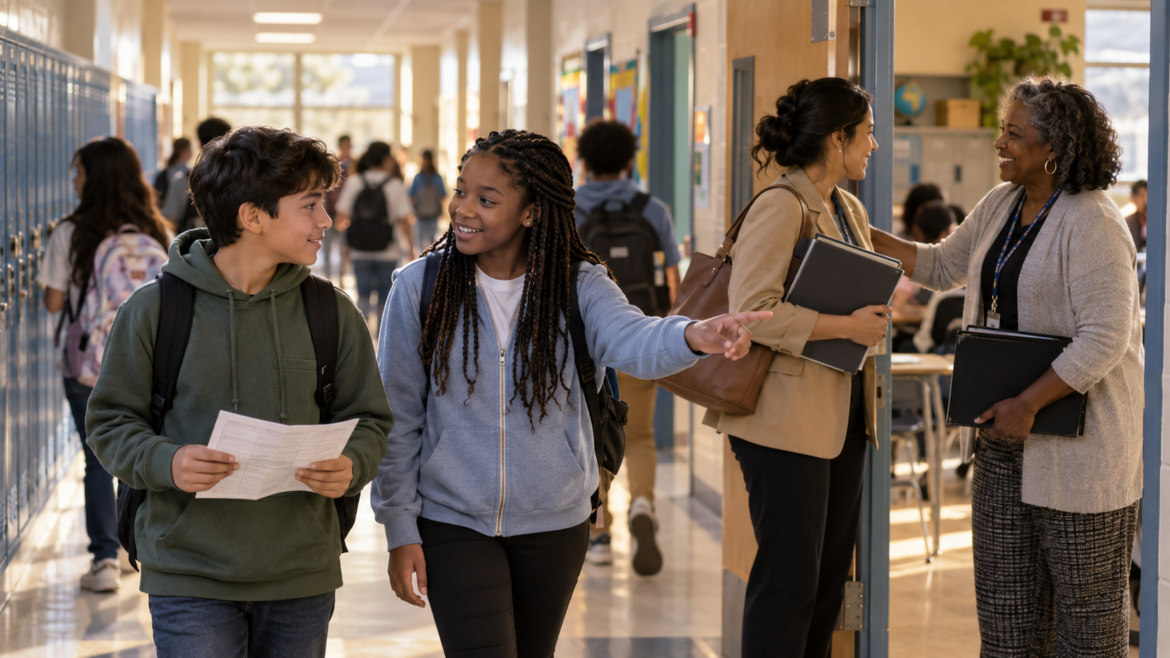
Two students walk and chat in a school hallway, smiling at each other as a teacher greets a student at the door holding folders and notebooks
EducatorsK-12 TeachersHot Topics - controversialK-12

Welcoming New Teachers and Students in the First Weeks

by EdCircuit Staff September 11, 2026
written by EdCircuit Staff 7 minutes read

Welcoming new teachers and students begins with recognizing that, on the first morning in an unfamiliar school, both may be asking the same quiet question: Will I belong here?

A new student may be standing in the main office holding a class schedule, trying to understand the layout of the building while wondering where to sit at lunch. Down the hall, a new teacher may be unlocking a classroom for the first time, reviewing names, lesson plans and expectations while hoping they are ready for everything the day may bring.

Their responsibilities are clearly different, but some of the emotions are not. Each is entering a community where relationships have already formed, routines are well established and many of the rules have never been written down.

The student is expected to learn. The teacher is expected to lead. Yet both are still trying to figure out where they fit.

A New Teacher Is Still Finding Their Way

New teachers often look more comfortable than they feel.

They arrive with credentials, training and carefully prepared lessons, but none of that completely removes the uncertainty of walking into a new school. The first few weeks bring a constant stream of decisions. There are students to understand, families to meet, systems to learn and classroom expectations to establish.

Even an experienced educator can feel like a beginner after changing schools. Every building has its own rhythm. Longtime staff members know which copier jams, where extra supplies are stored, how dismissal really works and whom to call when the classroom technology suddenly stops cooperating.

Those details may seem small, but they can determine whether a difficult day feels manageable or completely overwhelming.

Most schools make an effort to welcome teachers before the year begins. There may be an orientation, breakfast, staff shirt or welcome packet. Those gestures are appreciated, but the most meaningful support often comes later.

It happens when a colleague stops by after a challenging class and asks how things are going. It happens when someone shares a lesson, explains an unfamiliar procedure or invites the new teacher to sit with the group at lunch. It happens when an administrator makes it clear that asking questions is expected, especially during the first few months.

A new teacher does not need someone hovering over every decision. They need to know there is a person they can call before a small problem becomes a large one.

A New Student Notices Everything

New students are also learning far more than what appears on their schedules.

They are noticing where students gather before the bell, who talks to whom and which adults seem approachable. They are trying to remember room numbers, locker combinations and names while also worrying about making the wrong first impression.

Lunch can be particularly difficult. For everyone else, it may be a break in the school day. For a new student, it can feel like the most public part of it. Walking into a crowded cafeteria without knowing where to sit can make a few minutes feel much longer.

Adults naturally focus on schedules, academic records, devices and course placement when a student enrolls. Those details matter, but the student is also reading the emotional environment of the school.

Was someone expecting them when they arrived? Did a classmate make room at a table? Did a teacher notice when they seemed confused? Does the student know where to go if they need help?

A strong welcome does not require putting the student on display or asking them to introduce themselves repeatedly. In fact, that can make an already uncomfortable day even harder. A better approach is to create natural opportunities for connection.

A peer can walk with the student between classes. A counselor or trusted adult can check in after the first day and again the following week. Teachers can explain classroom routines quietly rather than assuming the student already understands them. Clubs, music, arts and athletics can also provide an early opportunity to meet people around a shared interest.

Starting somewhere new will always require courage. A welcoming school makes sure the student does not have to use all of that courage simply to get through the day unnoticed.

The Welcome Cannot End After the First Day

Schools are often very good at creating a welcoming first morning. There may be signs, music, student ambassadors, orientation sessions and introductions.

Then the regular school routine takes over.

By the second or third week, most people have moved on. The new teacher, however, may still be unsure about a procedure or reluctant to admit that a classroom routine is not working. The new student may know how to get from one class to another but still have no one to sit beside at a game or text about a homework assignment.

This is often when support matters most. The initial attention has faded, but the person may not yet feel fully connected.

A brief check-in can reveal a great deal:

What has gone better than you expected? What still feels confusing? Who have you connected with? Is there anything that would make tomorrow easier?

These questions work for adults and students because they leave room for an honest answer. They do not assume something is wrong, and they do not demand that everything already be going well.

Explain What Everyone Else Takes for Granted

Every school has hidden rules.

Some are practical: how to request supplies, where to go when a Chromebook stops working or what to do when a student misses an assignment. Others are social: where people gather, how staff members communicate and which school traditions carry special meaning.

People who have been in the building for years may no longer recognize how much knowledge they take for granted. To them, the routines feel obvious. To someone new, they are not.

Schools can remove many of these barriers by making information easy to find and providing a reliable person who can answer questions. More importantly, that person should continue checking in rather than waiting for the newcomer to ask for help.

Silence does not always mean understanding. Sometimes it means a student or teacher does not yet feel comfortable enough to admit they are confused.

Taking a moment to explain how something works is a small act of kindness. It does not lower expectations. It gives people a fair opportunity to meet them.

Pay Attention to the Small Wins

Progress during the first few weeks is not always dramatic.

A student remembers three names. A teacher changes part of a lesson and sees students respond. Someone joins a lunch table, attends a club meeting, contributes during class or enters the building with a little less hesitation than the day before.

These moments may not appear in a data report, but they matter.

When someone notices that progress, it gives the newcomer evidence that things are beginning to fall into place. A quick note from an administrator, an encouraging comment from a colleague or a teacher telling a student, “I’m glad you’re here,” can have more impact than the speaker realizes.

It tells the person that they are not simply occupying a desk or filling a position. They are becoming part of the school.

Belonging Makes Growth Possible

A welcoming school can still have high expectations. In fact, people are often more willing to meet those expectations when they feel supported, known and valued.

Students are more likely to participate when they are not spending the entire day wondering whether they fit in. Teachers are more willing to experiment, collaborate and improve when asking for help does not make them feel as though their abilities are being questioned.

That is why welcoming new teachers and students should not be treated as two completely separate efforts. Both reveal something important about the culture of a school. They show whether belonging is something newcomers are expected to earn on their own or something the community intentionally helps them build.

The first few weeks pass quickly, but the way people are treated during them can shape the rest of the year.

A student may remember the classmate who saved a seat. A teacher may remember the colleague who knocked on the classroom door at exactly the right moment. Neither gesture requires a new program, a large budget or a committee. It only requires someone to notice.

When a school notices the person standing at the edge of the room and makes space for them, the message is simple:

You are new, but you are not alone. You belong here.

Subscribe to edCircuit to stay up to date on all of our shows, podcasts, news, and thought leadership articles.

September 11, 2026 0 comments
0 FacebookTwitterPinterestLinkedinWhatsappCopy LinkEmail
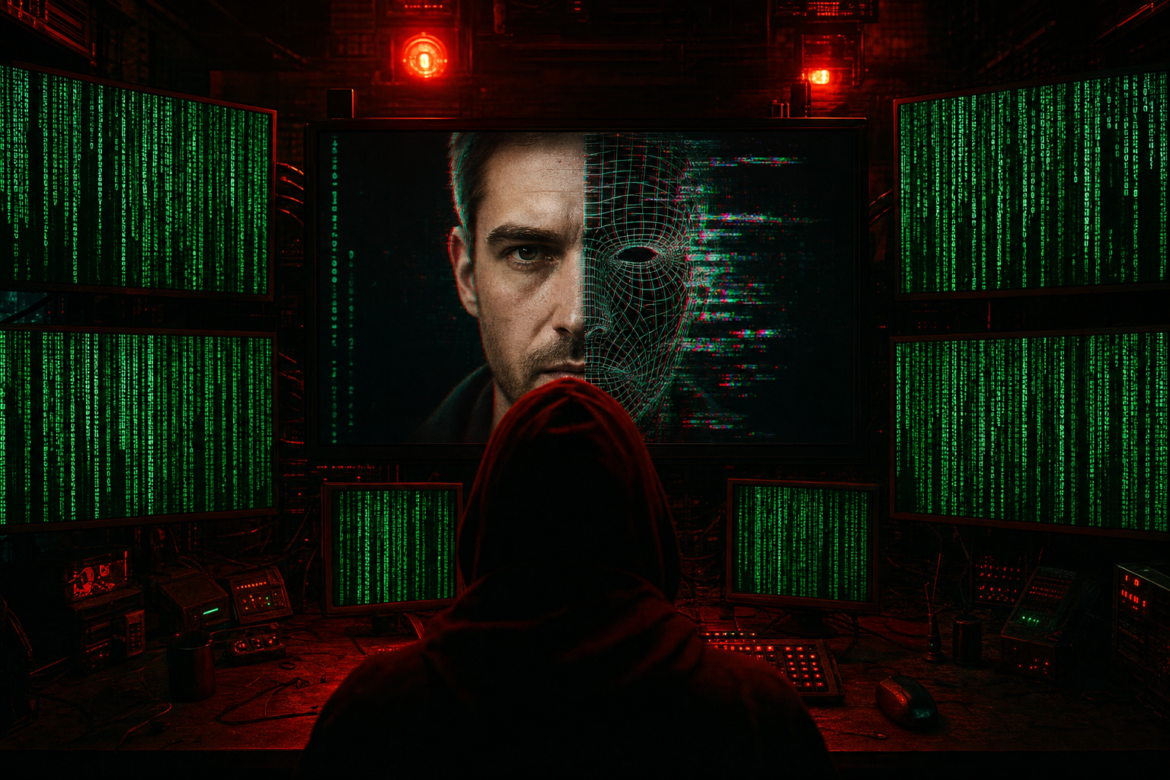
Deepfake response plan: a hooded figure faces hacking screens where a face is forged into a glitching wireframe mask under red alarm light
Hot Topics - controversialDigital CitizenshipCybersecurityArtificial IntelligenceK-12Bullying

AI Deepfake Response Plans for School Districts

by EdCircuit Staff September 11, 2026
written by EdCircuit Staff 17 minutes read

An AI deepfake response plan should be established before a fabricated image, video, or recording reaches a school community. Once synthetic content begins circulating, administrators will not have days to decide who should investigate, how evidence should be handled, or when families and law enforcement should become involved. Those decisions may need to be made within minutes.

A student may arrive in the office after discovering that classmates are sharing an AI-generated explicit image bearing her face. A teacher may learn that a fabricated audio recording is spreading through social media. A superintendent may be told that a false video announcing a school emergency has appeared on an anonymous account.

In each situation, the school must respond quickly without amplifying the content, damaging evidence, compromising an investigation, or causing additional harm to the person depicted.

That requires more than an acceptable-use policy written before generative AI became widely available. Districts need a coordinated plan involving administrators, technology leaders, counselors, communications professionals, Title IX coordinators, legal counsel, school safety personnel, and families.

How common are deepfakes in schools?

The best national figures come from surveys rather than counts of reported incidents, and they are large enough for districts to plan around. In a Center for Democracy & Technology survey published in September 2024, based on nationally representative samples of public high school students and of middle and high school teachers and parents, 39 percent of students said they had heard of nonconsensual intimate imagery depicting someone associated with their school during the 2023–24 school year, and 15 percent knew of AI-generated deepfake imagery of that kind. Among students who had heard of such deepfakes, 51 percent said girls were more likely to be depicted, compared with 14 percent who said boys were.

A Thorn study released in March 2025, based on an online survey of 1,200 young people aged 13 to 20 conducted in the fall of 2024, found that 1 in 17 said someone had created deepfake nudes of them, and 13 percent personally knew someone who had been targeted while under 18. Its findings on seeking help bear directly on a school’s plan: 48 percent of teen victims told a parent or guardian, compared with 72 percent of teens who expected they would, and victims were much less likely than other young people expected to report to the police or to the platform. The National Center for Missing & Exploited Children (NCMEC) reports that its Take It Down service received more than 130,000 submissions in 2025 seeking help to remove more than 273,000 explicit images and videos of people who were under 18 when they were made.

The same CDT survey suggests that many schools have concentrated on punishment rather than recovery. Seventy-one percent of teachers said students caught sharing deepfake intimate images had been referred to law enforcement, expelled, or suspended for more than three days, while only 5 percent said their school had given victims resources to have the images removed from social media or other platforms. A written response plan is where a district can correct that imbalance before it faces its first case.

Policies Must Specifically Address Deepfakes

Many districts already prohibit bullying, harassment, impersonation, threats, and inappropriate technology use. Those provisions may apply to deepfakes, but relying entirely on older language can create uncertainty.

Students and employees should not have to interpret whether “technology misuse” includes cloning someone’s voice, fabricating a video, or placing a classmate’s face into an explicit image.

District policies should specifically address synthetic media, digital replicas, AI-generated impersonation, and manipulated images, videos, and audio. They should prohibit creating, requesting, distributing, or threatening to distribute content that falsely depicts an identifiable person when the purpose or effect is to deceive, exploit, intimidate, harass, humiliate, or cause harm.

Policies should also address the use of AI to create sexually explicit content, impersonate school employees, obtain confidential information, fabricate evidence, or spread false safety announcements.

At the same time, districts should distinguish harmful impersonation from legitimate educational uses such as satire, art, historical simulations, and media literacy projects. Legal counsel should review the final language for alignment with state law, Title IX, student due process, school disciplinary authority, and First Amendment protections.

State Laws and Guidance on Deepfakes of Students

Federal law now sets a baseline. The TAKE IT DOWN Act, which became law on May 19, 2025, prohibits publishing nonconsensual intimate depictions of a person, whether real or computer-generated, including depictions of minors, and it gave covered platforms one year to set up a removal process. The removal section below explains how that process works for families.

States are adding obligations that fall directly on schools. In Illinois, Public Act 104-0338, signed in August 2025, amends the School Code so that, beginning with the 2026–27 school year, cyber-bullying includes posting or distributing an unauthorized digital replica of a person by electronic means when doing so creates any of the effects listed in the state’s definition of bullying. The law defines an unauthorized digital replica as one used without the consent of the person depicted. In Massachusetts, the Department of Elementary and Secondary Education issued statewide guidance in April 2026 reminding schools that creating an AI-generated nude image of a minor is a crime under a 2024 state law and must be promptly investigated. School and district leaders are expected to investigate reports consistent with state anti-bullying and anti-discrimination laws and federal Title IX requirements, and the guidance includes resources on mandated reporting in cases involving abuse or exploitation.

Because these laws differ from state to state and continue to change, districts should ask counsel to set out, in the plan itself, which state statutes apply to synthetic images of minors, whether the state’s anti-bullying law reaches digital replicas, and what reporting duties staff members carry. Agreements with local police deserve the same review. After New Jersey enacted its own deepfake law in 2025, the New Jersey Principals and Supervisors Association advised school leaders to revisit their memorandum of agreement with law enforcement and to add a step to investigations that considers whether audio, video, or images offered as evidence may themselves be fabricated.

Who Leads a Deepfake Response Plan?

A deepfake incident can affect nearly every part of district operations. Leaving the response entirely to the technology department or building principal can create delays and missed responsibilities.

Technology staff may need to preserve account information, inspect school-issued devices, secure compromised accounts, and contact platform providers. Administrators may investigate student conduct. Counselors may support the person targeted. A Title IX coordinator may need to evaluate whether digital sexual harassment procedures apply.

Communications staff may have to correct misinformation, while law enforcement may become involved when content includes threats, exploitation, stalking, extortion, or possible criminal conduct.

Before an incident occurs, districts should identify who will lead the response and who will serve as the backup. The plan should specify who contacts families, preserves evidence, coordinates with law enforcement, evaluates Title IX implications, and communicates with the school community.

The plan should also name a substitute for any case in which the usual lead is the person depicted, because deepfakes target teachers and administrators as well as students. One Australian girls’ school, St Dominic’s Priory College, wrote its plan so that the deputy principal leads when the principal is targeted, keeping the principal one step removed, according to EducationHQ’s June 2025 account of the plan.

Australia’s eSafety Commissioner sets out the same structure in its Guide to responding to image-based abuse involving AI deepfakes, part of the Toolkit for Schools it updated in March 2026. The guide asks schools to have a designated member of the leadership team manage each incident, to share information only on a need-to-know basis, and to keep the wellbeing of the students or staff targeted at the center of the response rather than the school’s reputation. For evidence, it advises collecting what police will need while avoiding unnecessary exposure to and storage of explicit material, by making a written description of the content and noting where it is located. Its reporting steps follow Australian law, so a U.S. district should map them onto its own state requirements and law enforcement agreements. (eSafety Commissioner, licensed under CC BY 4.0.)

During the first hour, the district’s priorities should be to protect the person targeted, limit additional exposure, preserve essential evidence, notify the appropriate leaders, and determine which legal, safety, or cybersecurity procedures must be activated.

Speed matters, but speed should not become panic. Schools should avoid making public accusations, promising that every copy will be removed, or announcing conclusions before the facts have been evaluated.

Center the Needs of the Victim

The first adult response can determine whether a targeted student continues seeking help or withdraws in fear and embarrassment.

A student reporting a humiliating or explicit deepfake should be taken to a private setting and connected with a trusted administrator, counselor, or trained employee. The adult should remain calm, listen without judgment, and reassure the student that reporting the incident was the right decision.

The first questions should focus on safety. Is the student being threatened or blackmailed? Has the image been distributed to classmates, family members, teammates, or others? Is the student afraid to attend school? Is there an immediate mental health concern?

Adults should avoid blaming questions about why the student posted a particular photograph or used a certain app. A yearbook portrait, athletic photograph, or ordinary social media image can be manipulated without the student doing anything wrong.

The National Center for Missing & Exploited Children recommends focusing on the harm the child is experiencing rather than beginning with an investigation into how the image was created.

Support may need to continue through counseling, schedule adjustments, assignment extensions, contact restrictions, or assistance managing rumors. If the incident could constitute digital sexual harassment, the Title IX coordinator should be involved promptly.

The U.S. Department of Education’s Office for Civil Rights identifies the nonconsensual sharing of intimate images—whether real, altered, or created with AI—as conduct that may constitute online or digital sexual harassment, depending on the circumstances.

Preserve Evidence Without Spreading the Content

Digital evidence can disappear quickly. Posts are deleted, temporary stories expire, usernames change, and students remove messages once they realize administrators are investigating.

Schools should document available URLs, usernames, account names, dates, timestamps, captions, threats, and the names of people who may have received the content. However, employees should consult legal counsel and law enforcement before downloading or copying explicit material involving minors.

Students should not be asked to forward an explicit image to a school email account or send it to another device for an administrator to examine. Every unnecessary transfer can further distribute the content and create additional legal and privacy concerns.

The NCMEC Take It Down service specifically warns people not to download or have someone send them a nude, partially nude, or sexually explicit image of a minor solely to submit it to the service. If the content is not already on the original device, families and schools should seek help through the NCMEC CyberTipline or law enforcement.

District procedures should explain how employees can document an incident without placing harmful files into ordinary email, cloud-storage, student information, or discipline systems. Access to preserved evidence should be limited to people with an official role in the investigation.

Know When an Incident Must Be Escalated

A harmless classroom parody and an AI-generated sexual image of a student are fundamentally different situations. Districts should establish escalation criteria based on the nature of the content, the ages of the people depicted, evidence of threats or extortion, the extent of distribution, and the possibility of criminal conduct.

Immediate escalation may be necessary when an incident involves explicit depictions of a minor, sextortion, demands for money, threats of violence, stalking, compromised accounts, stolen credentials, or impersonation used to obtain records or confidential information.

Employees should not be expected to make complex legal decisions independently. District leaders should establish reporting expectations with legal counsel, child-protection personnel, and local law enforcement before an incident.

The NCMEC CyberTipline accepts reports involving suspected online child sexual exploitation. When a child is in immediate danger, schools and families should contact emergency services or local law enforcement.

Involving law enforcement does not end the school’s responsibility. The district must continue supporting the student and addressing the educational and emotional impact while any external investigation proceeds.

Act Quickly to Remove Harmful Content

Removing a deepfake does not guarantee that every copy will disappear, but rapid reporting can reduce its reach. The platform’s reporting process should be used to report impersonation, harassment, child exploitation, or nonconsensual intimate imagery. Families and districts should preserve confirmation numbers, emails, dates, and screenshots documenting the removal request.

Under the federal TAKE IT DOWN Act, covered platforms have been required since May 19, 2026, to offer a process for requesting the removal of nonconsensual intimate images, including AI-generated deepfakes. After receiving a valid request, a platform must remove the image as soon as possible and no later than 48 hours, and must make reasonable efforts to identify and remove known identical copies.

If a covered platform does not remove the content, does not offer a reporting process, or has a process that does not work, the victim or an authorized person can report the platform through the Federal Trade Commission’s TakeItDown.ftc.gov process.

This is different from NCMEC’s Take It Down service, which is intended for nude, partially nude, or sexually explicit images involving someone who was under 18 when the content was created. The service generates a digital fingerprint, or hash, on the person’s device. Participating platforms can use the hash to identify matching files without the image itself being uploaded to NCMEC.

Neither process guarantees that every copy will disappear. Schools should be honest about those limitations while helping families document reports and pursue available removal options.

Respond to the Students Who Created or Shared It

Many deepfakes of students are made by other students, and the plan should say how the school will handle them. Discipline should follow the district’s code of conduct and ordinary due-process procedures, with legal counsel involved when the conduct may be a crime. Serious consequences may be warranted, but they do not by themselves meet the school’s obligations to the student who was harmed. In releasing its survey, CDT noted that imposing consequences on the perpetrator does not relieve a school of its responsibility to address sexual harassment under Title IX.

The response should also distinguish among the student who created an image, students who forwarded it, and students who received it and did nothing further. Australia’s eSafety Commissioner, in a June 2025 advisory on deepfakes in schools, advises the parents of a young person who created or shared a deepfake to stay calm, explain the emotional and legal consequences, and encourage accountability, such as deleting the content and reporting it so platforms can remove copies. The same approach suits a school’s conversation with that student and family. Where contact restrictions or schedule changes are needed, they should be arranged so that the burden falls on the student responsible rather than on the student who was targeted.

Communicate Without Amplifying the Deepfake

A deepfake involving one student may require limited, confidential communication. A fabricated emergency message or false video involving a district leader may demand a broader response.

Public communication should be accurate, restrained, and focused on safety. The district should not repost harmful content to demonstrate that it is false, describe explicit material unnecessarily, identify a targeted student, or speculate publicly about who created it.

The district may need to confirm that fabricated content is circulating, explain that it is not an authentic school communication, and direct the community to verified district channels.

Communication with the targeted family should be direct and personal. Families should know what the school has confirmed, what steps have been taken, what support is available, who will serve as their primary contact, and when they can expect another update.

Much of this can be prepared in advance. In the St Dominic’s plan described by EducationHQ, the principal checks a letter to the school community before any incident occurs, and the school aims to send a first message within two hours of identifying a crisis, confirming that the content is synthetic and asking people not to share it. Ongoing situations receive daily updates; a single incident receives one initial advisory followed by a summary of findings and actions. A district does not need to copy those intervals, but deciding them beforehand removes one set of decisions from the first, most pressured hours.

Prepare Employees, Students, and Families

Employee training should focus on action rather than unreliable visual clues. Staff members need to know whom to contact, what information to preserve, what not to download or forward, and when immediate escalation is necessary.

Students must understand that creating a deepfake of another person without permission is not harmless experimentation. Instruction should address consent, privacy, dignity, legal consequences, and the inability to control content after it is shared.

Schools should also teach “upstander” behavior. Students who receive harmful content can refuse to share it and report the situation to an adult. Forwarding, saving, or commenting on the image may deepen the victimization even if the recipient did not create it.

Families also need clear guidance about how deepfakes are created, where harmful content can be reported, and whom to contact within the district. Conversations at home should reassure children that they can ask for help without automatically facing blame or punishment.

Schools and families should review privacy settings and consider how student photographs are shared publicly. District websites, social media accounts, athletic pages, and promotional materials should use clear photo-consent practices and honor families that decline permission.

A plan should also be tested before it is needed. A short exercise in which the response team walks through a realistic case will show gaps in contact lists, evidence procedures, and reporting duties more reliably than a policy review. The Future of Privacy Forum’s deepfake infographic and readiness checklist for schools, published in March 2025, offers a starting structure, covering education and training, how existing technology, policies, and procedures apply, and when to involve legal counsel and law enforcement. After each real incident, the team should review what worked and revise the plan.

Preparedness Demonstrates Care

An effective AI deepfake response plan does more than describe prohibited conduct. It gives employees confidence, provides families with a clear point of contact, protects evidence, supports victims, coordinates investigations, and helps the district communicate without increasing the harm.

Most importantly, it tells students what will happen when they ask for help: their concern will be taken seriously. They will not be blamed for someone else’s decision to manipulate their identity. They will not be left alone to negotiate with an offender or chase harmful content across the internet.

Deepfakes may be powered by rapidly changing technology, but an effective school response rests on familiar foundations: preparation, communication, trusted relationships, sound policy, and a commitment to protecting every person’s dignity.

Part Two of a Two-Part Series. Part One is AI Deepfakes: The New School Safety Threat.

Related reading

  • AI Deepfakes: The New School Safety Threat
  • AI for Students: A Parent’s Guide by Age
  • AI in Education: A Guide for Schools and Colleges
  • AI Rules for Schools: A Back-to-School Guide
  • Digital Footprint: Why Schools Must Teach It Now

Subscribe to edCircuit to stay up to date on all of our shows, podcasts, news, and thought leadership articles.

September 11, 2026 0 comments
0 FacebookTwitterPinterestLinkedinWhatsappCopy LinkEmail
AI detection in schools: handwritten essay pages swept by a scanning beam under a detection gauge whose needle wavers in the middle
Hot Topics - controversialArtificial IntelligenceK-12Assessment and Testing

AI Detection in Schools: Rethinking Assessment

by EdCircuit Staff September 10, 2026
written by EdCircuit Staff 12 minutes read

AI detection in schools is being asked to solve a problem it cannot reliably solve: determine with certainty who or what produced a student’s work.

A teacher reads an essay that feels different from the student’s previous writing. The vocabulary is more advanced. The sentences are polished. The argument is unusually organized.

The teacher runs the essay through an AI-detection tool. The report indicates that a large portion may have been generated by artificial intelligence.

The student insists the work is original.

Now what?

A percentage on a screen can feel decisive, particularly when a teacher already has concerns. But the score is still a prediction based on patterns in the writing. It does not show the student’s notes, drafts, research, revisions, or conversations. It cannot recreate how the assignment was actually completed.

That does not mean schools should ignore AI-assisted cheating. Students who use a chatbot to complete work they were expected to do independently bypass the learning and misrepresent their abilities. Teachers then lose the information they need to provide useful feedback and plan instruction.

Academic integrity matters. So does a fair process for determining whether it has been violated.

A Detection Score Is a Clue, Not Proof

AI detectors examine language and estimate whether portions of a document resemble text produced by a generative AI system.

Products use different models, training data, thresholds, and methods. Some analyze how predictable the language appears. Others look for patterns in vocabulary, sentence structure, repetition, phrasing, or organization.

The result is a probability or percentage. It is not direct proof of authorship.

Human writing can contain the predictable language or formal structure that a detector associates with AI. Generated text can be revised, paraphrased, translated, or combined with student writing until it becomes harder to identify. A student may also use AI for brainstorming or feedback without placing generated sentences into the assignment.

Those situations are not the same, but a detector may struggle to distinguish among them.

The tool is trying to identify a writing process by looking only at the finished product. That is a difficult task, particularly when human and machine contributions may be mixed together.

This is where schools can get into trouble. A report that was designed to flag a possibility can quickly become the central evidence in a disciplinary decision.

Why AI Detection Is Different From Plagiarism Detection

Schools have years of experience using plagiarism reports. When a report identifies language that matches an article, website, book, or previously submitted paper, the teacher can open the source and compare it with the student’s work.

The educator can then decide whether the student quoted the source, paraphrased it, cited it incorrectly, or copied it without acknowledgment.

AI detection does not provide that same trail of evidence.

Generative AI creates a new sequence of words, so there may be no original passage to find. A detector instead identifies language patterns that it considers more likely to have been produced by a machine.

The report cannot reveal what the student typed into an AI tool, what response the tool produced, or how much of that response was used. It also cannot reliably determine whether the student generated an entire essay, requested organizational feedback, used a grammar feature with generative capabilities, or wrote independently.

Treating an AI score like a traditional plagiarism match gives it a level of certainty it does not possess.

The Technology Is Improving, but the Limits Remain

The discussion about AI detectors is often reduced to two positions: They work, or they do not.

The research is more complicated.

A 2026 study published in the International Journal for Educational Integrity tested four popular detectors on fully human, fully AI-generated, hybrid, and humanized AI texts. One tool performed better than the others, and researchers found fewer false positives than several earlier studies had reported.

That is meaningful progress. It also does not resolve the larger problem.

Performance differed across products and declined when the writing combined human and AI contributions or was altered to sound more human. The researchers concluded that detection tools may provide useful initial flags but should not serve as the sole evidence in high-stakes decisions.

Even Turnitin’s guidance states that an AI-writing score should not be used by itself as the basis for adverse action against a student.

Newer models may improve accuracy. They will also be chasing generative systems that continue to change. A detector validated against one model, language, writing style, or type of assignment may perform differently when those conditions change.

Schools need to understand that context before turning a score into a consequence.

The Fairness Problem

A false accusation can do real damage.

A student may lose credit, face disciplinary action, miss an academic opportunity, or have their honesty questioned by teachers and family members. Even when the allegation is eventually dismissed, rebuilding trust can take time.

Multilingual learners face particular concerns.

A Stanford-led study found that several AI detectors frequently misclassified writing by non-native English writers. More than 61% of the tested TOEFL essays were falsely classified as AI-generated by the detectors examined. According to Stanford’s summary of the research, systems that rely on predictable language patterns may penalize writers who use a more limited range of English vocabulary or sentence structures.

Detector technology has changed since that study, and newer research suggests that some products have reduced false positives. Schools still cannot assume that every student, language background, writing style, subject, or grade level will be evaluated equally.

Teachers also need to consider legitimate reasons why a student’s work may suddenly look different. The student may have received tutoring, used an approved editing tool, followed detailed feedback, worked with a family member, or spent far more time on the assignment than usual.

Improvement should not automatically become evidence of misconduct.

Ask a Better Question

When a submission raises concerns, “Did AI write this?” may not be the most useful starting point.

Teachers need to determine whether the student understands the material, can explain the reasoning, and followed the assignment’s expectations.

Suppose a ninth-grade student submits a literary analysis that is much more sophisticated than the outline completed in class. The teacher could ask the student to explain the thesis, locate supporting evidence in the text, and describe how the argument developed.

If the student can discuss the ideas, produce notes, and explain key revisions, the teacher has meaningful evidence of learning. If the student cannot explain basic claims or identify the sources used, that also matters.

Neither outcome should be decided by the detector alone.

The student is not required to prove innocence simply because the writing improved. Teachers are looking at the full body of evidence, just as they would with any other academic-integrity concern.

The strongest evidence comes from an assessment process that allows the teacher to see how the work develops.

Make Student Thinking Easier to See

Schools will not protect academic integrity by trying to make every assignment impossible for AI to complete. As the technology improves, that becomes an exhausting contest.

A more durable response is to design important assessments around visible thinking.

Some work can begin in class. Students might develop a thesis, solve the first problem, select evidence, outline an argument, interpret a source, or write an opening paragraph while the teacher is present. This provides an authentic sample without turning the entire assignment into a supervised examination.

Larger projects can include a few meaningful checkpoints: a topic proposal, source list, outline, early draft, peer review, or final reflection. These steps already support better teaching. They also provide context if questions arise later.

Version histories can help, but they require careful interpretation. A document that appears all at once may raise a question, yet students sometimes draft in another program, work offline, or paste material from their own notes. It is one piece of evidence, not a complete account.

Brief student explanations are particularly valuable. A teacher might ask why a source was selected, why a paragraph was moved, how a conclusion was reached, or what changed after feedback. A two-minute conference, written reflection, or short recorded explanation can reveal whether the student understands the work.

Assignments can also draw on classroom experiences that a generic chatbot would not know: a laboratory observation, local issue, specific class discussion, field experience, assigned data set, or decision made during the learning process.

None of these approaches makes an assignment “AI-proof.” They make genuine participation harder to fake and student thinking easier to recognize.

Clarify AI Expectations Before Students Begin

Many disputes arise because the teacher and student never had the same understanding of what was allowed.

One teacher may permit AI for brainstorming. Another may allow grammar feedback but prohibit rewriting. A third may require students to complete the assignment without generative AI.

Those expectations can all be reasonable. They must also be visible.

Assignments can use three simple labels:

  • AI-Free: Students complete the work without generative AI.
  • AI-Assisted: AI may support specified parts of the process, but students remain responsible for the ideas and final response.
  • AI-Integrated: Using, analyzing, or evaluating AI is part of the assignment.

Teachers may also need to clarify whether students can use translation support, predictive text, grammar assistants, citation tools, or tutoring platforms. Many familiar programs now contain generative features, and students may not recognize when they have crossed from basic editing into content generation.

Clear directions at the beginning prevent confusion at the end.

When AI is permitted, a short disclosure can document its role:

I used an AI tool to generate possible counterarguments and identify areas where my explanation was unclear. I selected the evidence, wrote the final response, and verified the cited information.

For a larger project, students might also retain relevant prompts or briefly describe what they accepted, changed, and rejected.

The requirement should remain reasonable. A student does not need to create pages of documentation for minor assistance. The amount of disclosure can match the importance of the assessment and the extent of AI involvement.

Build a Fair Review Process

Concerns will still arise, even with clear expectations and stronger assessment design. Schools need a consistent response that protects academic integrity without assuming guilt.

A teacher can begin by reviewing the assignment’s stated AI rules and comparing the submission with other classroom evidence. Notes, drafts, source lists, feedback, and version histories may provide helpful context.

The student should then have an opportunity to explain the content and describe how the work was completed. Teachers can ask specific questions rather than beginning with an accusation.

Language background, accommodations, legitimate editing assistance, tutoring, and changes in effort should also be considered. If a detector report is available, it can be included as one part of the review.

A serious consequence should require more than that report.

Schools also need a clear way for students and families to understand the evidence, respond to the concern, and appeal a decision when appropriate. Academic-integrity procedures built before generative AI may need updating, but the principles of notice, consistency, documentation, and fairness still apply.

Teachers should never ask a chatbot whether it produced a student’s paper. AI systems cannot reliably identify their own output, and their answer adds no dependable evidence.

When the available information remains uncertain, schools should be cautious about imposing a penalty that may be difficult to reverse.

Keep the Work Manageable for Teachers

Assessment redesign cannot become another large responsibility placed entirely on classroom teachers.

Requiring multiple drafts, individual conferences, oral defenses, and detailed documentation for every assignment would quickly become unmanageable.

School leaders and departments can identify which assessments deserve the strongest process evidence. A capstone, research paper, laboratory investigation, final project, or major writing assignment may justify several checkpoints. A daily practice activity probably does not.

Teachers need shared language, planning time, professional learning, and common procedures. Otherwise, each classroom develops a different enforcement system, and students encounter inconsistent expectations throughout the day.

A practical school-wide approach may begin with a small number of high-value assessments rather than trying to redesign everything at once.

Questions School Leaders Need to Ask

Before enabling an AI-detection product or changing academic-integrity procedures, leaders need more than a sales demonstration.

They should understand what the tool measures, what independent evidence supports it, and how performance changes across languages, subjects, grade levels, and writing styles.

They also need to decide:

  • Whether students and families will know the tool is being used
  • Who can view the reports
  • What additional evidence is required before a consequence
  • How students can respond or appeal
  • How teachers will be trained to interpret results
  • Whether student writing is retained or used to improve the vendor’s model
  • How often the district will review the product’s performance
  • Whether better assessment design could address the concern more effectively

Choosing a detection tool creates responsibilities that extend beyond purchasing software. It shapes how the school defines evidence, fairness, and student accountability.

Academic Integrity Requires More Than Detection

AI has made it easier for students to submit work that looks finished without completing the thinking behind it. Schools cannot pretend otherwise.

They also cannot rely on another algorithm to settle every question of authorship.

Academic integrity grows from clear expectations, worthwhile assignments, visible learning processes, honest disclosure, strong teacher-student relationships, and fair procedures when something does not add up.

A detection score may occasionally help a teacher identify work that deserves a closer look. The final judgment belongs to people who can examine the student, the assignment, the process, and the full context.

The future of assessment will not depend on whether schools can identify every sentence touched by AI. It will depend on whether educators can still determine what students understand, how they reached their conclusions, and whether the work reflects thinking they can genuinely call their own.

Subscribe to edCircuit to stay up to date on all of our shows, podcasts, news, and thought leadership articles.

September 10, 2026 0 comments
0 FacebookTwitterPinterestLinkedinWhatsappCopy LinkEmail
Back to school: two high school students talking in a hallway, one holding notebooks and the other using a laptop
Hot Topics - controversialSchool CalendarK-12

Back to School: 1996 vs. 2026

by EdCircuit Staff September 9, 2026
written by EdCircuit Staff 12 minutes read

Back to school in 1996 started in the school-supply aisle, where one decision could define your entire academic identity: Which Trapper Keeper were you going to carry?

The design mattered. Maybe you wanted bold geometric shapes, a favorite sports team, dolphins jumping through an ocean sunset, or something so unmistakably 1990s that it practically glowed. Whatever you chose, that Trapper Keeper was about to hold your whole school year together—at least until the folders ripped, the rings stopped closing, or unfinished worksheets began disappearing into its deepest corners.

Back to school in 2026 often begins before students enter the building. They check their schedules online, charge their laptops, log in to the district portal, and wait for the first assignments to appear in the learning management system.

Thirty years ago, most students carried their academic lives on their backs. Today, much of that life is stored in the cloud.

The tools have changed, the backpacks have become lighter, and the school day is far more connected. Yet the night before the first day still feels familiar. Students wonder who will be in their classes, whether they will like their teachers, where they will sit at lunch, and how difficult the year might be.

Same nerves. New equipment.

The Back-to-School Shopping List

A 1996 supply list was wonderfully straightforward: pencils, pens, loose-leaf paper, notebooks, folders, index cards, glue sticks, colored pencils, and perhaps a scientific calculator.

Then came the personal choices.

Should you get the box of 24 crayons or go for the 64-count with the built-in sharpener? Would you choose plain folders or spend a little more for ones featuring your favorite athlete or band? Did you need college-ruled or wide-ruled paper? Nobody seemed completely certain, but choosing incorrectly somehow felt like it could ruin the year.

There were also book covers to consider. Many students wrapped their textbooks in brown paper grocery bags, turning each one into a blank canvas for drawings, names, inside jokes, song lyrics, and jersey numbers. By the end of the year, the cover told a story of its own.

The 2026 list still includes traditional supplies, but it may also include earbuds, charging cables, styluses, protective laptop cases, portable batteries, and specific apps. Families are not only checking whether their child has enough pencils. They are checking internet access, device compatibility, account credentials, and whether last year’s charger has mysteriously vanished.

It probably has.

A calculator was once the most advanced piece of technology in many backpacks. Now, students may carry a device capable of opening a digital textbook, recording a presentation, joining a video conference, editing a movie, translating a paragraph, and solving an equation.

It can do almost everything—provided the student remembered to charge it.

Before the Cloud, There Was the Trapper Keeper

The Trapper Keeper deserves recognition as the original student dashboard.

It kept folders, class notes, homework, drawings, permission slips, and graded papers in one place. It did not send reminders or automatically save anything, but it also never required a software update.

Students developed their own organizational systems. Some labeled every folder and maintained them with impressive discipline. Others shoved papers wherever they fit and trusted that the correct worksheet would eventually reappear.

That second strategy was less effective.

In 2026, the Trapper Keeper’s job is usually performed by an LMS such as Canvas, Google Classroom, Blackboard, or Schoology. Students open a course and find assignments, readings, videos, announcements, rubrics, grades, and due dates. If they are absent, the day’s materials may already be waiting for them.

It is efficient, searchable, and available almost anywhere. It also creates a new version of an old problem.

The missing worksheet at the bottom of a backpack has become the assignment buried under three tabs, two announcements, four notifications, and a link labeled “Week 2 Resources.”

Students no longer have to ask, “Where did I put that paper?”

Now they ask, “Where did my teacher post it?”

The Backpack Workout

Students in 1996 did not need fitness trackers to know they had walked a lot. Their shoulders told them.

A typical backpack might contain a math textbook, a science book, a social studies book, an English novel, multiple notebooks, folders, pens, pencils, and a calculator. Add athletic gear or a musical instrument, and simply getting home became a strength-training session.

This made locker strategy essential. Students had a few minutes between classes to exchange books, talk with friends, remember the combination, spin past the correct number, try again, and still reach the next classroom before the bell.

Sometimes the locker opened immediately. Sometimes it sensed fear.

Today’s students may still carry plenty, but digital textbooks and cloud-based resources have reduced the need to transport an entire library. A laptop or tablet can hold materials for several subjects and provide access to work from nearly anywhere.

The tradeoff is that one forgotten device can affect the entire day. Leaving a science book at home was a problem. Leaving the laptop at home can mean losing access to notes, assignments, readings, presentations, and communication for every class.

The backpack is lighter. The charger is more important.

“What Was the Homework?”

In 1996, homework was written on the chalkboard, copied into a paper planner, announced by the teacher, or all three. Students were expected to pay attention and record it accurately.

If you forgot, there was no class page waiting online.

You called a friend’s house. First, you had to remember the phone number. Then you had to hope nobody in your family was using the phone. After that, you had to survive a brief conversation with your friend’s parent or sibling before finally asking, “What did we have for math?”

If your friend had also forgotten, the investigation continued.

In 2026, assignments can be posted online with directions, examples, links, videos, rubrics, and automated deadlines. Students may receive notifications when work is added, changed, graded, or nearly due. Parents can sometimes see the same information through a separate portal.

Turning in work has changed, too.

A student in 1996 handed a paper directly to the teacher or placed it in a tray. There was room for negotiation. Perhaps the assignment had been completed but left on the kitchen table. Perhaps the printer had failed. Perhaps the family dog had developed a sudden interest in American history.

The LMS is harder to charm. It knows whether the file arrived at 11:59 p.m. or 12:01 a.m.

Still, cloud-based work offers real advantages. Students can begin an essay at school, continue it at home, and open the latest version the next morning. Teachers can provide comments without waiting for another printed draft. Students who miss class can find materials without waiting to return.

The process is faster, but it is not always simpler. Instead of managing paper, students must manage files, formats, passwords, tabs, apps, and notifications. Digital organization is now a basic school skill.

When the Computer Lab Was a Destination

In 1996, students did not automatically expect to use a computer in every class. The computer lab was a specific place, and visiting it felt like an event.

Rows of desktop computers waited beneath bulky monitors. Students might practice keyboarding, work with educational software, conduct early internet searches, or type a final paper. Teachers reserved the room in advance, which meant everyone worked on the same task at the same time.

Saving the file required care. Students might use a floppy disk and hope it worked again later. A lost or corrupted disk could take an entire project with it.

Printing created its own drama. The printer could jam, run out of paper, or produce several pages of mysterious symbols just as class ended.

By 2026, many students have access to a device throughout the day. The computer is no longer a destination; it is part of the classroom. Students collaborate in shared documents, build multimedia presentations, run science simulations, produce videos, and receive feedback while their work is still in progress.

A ninth grader can now create something on a school laptop that would have required specialized equipment and considerable expense in 1996.

That is easy to take for granted, but it represents an extraordinary expansion of what students can make, explore, and share.

Research Meant Going Somewhere

Research in 1996 required movement.

Students went to the library, searched a card catalog, walked through the stacks, and hoped someone else had not checked out the book they needed. Encyclopedias provided a useful starting point, although the information might already be several years old.

Research papers grew from stacks of books, handwritten notes, photocopied articles, and index cards. One set of cards held quotations. Another held source information. Losing the wrong card could create a citation crisis the night before the paper was due.

The internet was beginning to enter homes and schools, but it was nothing like today’s searchable, always-available resource. Connecting could require a dial-up modem and a series of electronic sounds that everyone from the era can still hear in their head.

Students in 2026 face the opposite challenge. Information is everywhere.

They can search digital libraries, watch expert lectures, explore interactive maps, read historical documents, translate materials, and access updated resources in seconds. They can also encounter misinformation, sponsored content, deepfakes, fabricated sources, and confident explanations that are completely wrong.

Finding information used to be the hard part. Now, the hard part is deciding what deserves to be trusted.

Generative AI makes that responsibility even greater. Students may use AI to brainstorm, ask questions, clarify difficult concepts, or receive feedback. Schools are also setting rules about when AI is appropriate and how its use should be disclosed.

Teachers may review revision histories, ask students to explain their thinking, use plagiarism or AI-detection tools, and place greater emphasis on drafts and the creative process. AI detectors are not perfect, so a single score should never replace teacher judgment or a conversation with the student.

The 2026 student has access to more knowledge than the 1996 student could have imagined. Knowing what to do with it is the new assignment.

Your Friends Could Not Reach You All Day

For most students in 1996, the social world did not follow them home in a pocket.

Friends talked in the hallway, at lunch, on the bus, during practice, and over the family landline. Notes were folded into elaborate shapes and passed between classes. Weekend plans were made early because changing them later was not always easy.

If someone was late picking you up, you waited. If plans changed, you hoped the message reached everyone. If you wanted to talk privately, you stretched the phone cord as far as it would go and looked around the corner to make sure nobody was listening.

School rumors certainly existed, but they moved at human speed. An embarrassing moment might spread through the building, yet it was less likely to be recorded, posted, replayed, and shared beyond the community.

For students in 2026, school conversations continue after the final bell. Group chats can help classmates study, organize activities, celebrate accomplishments, and support one another. Social media gives students opportunities to connect with people who share their interests, even if those people live far away.

The difficult part is that school conflicts also travel home. A disagreement in the hallway can continue all evening through texts, posts, screenshots, and comments. Students do not always get the distance that previous generations received simply by leaving the building.

At the same time, today’s students are creating impressive online communities, businesses, campaigns, videos, podcasts, artwork, and social causes. They are not simply consuming technology. Many are using it to build something.

The adults who remember 1996 can help students understand when to step away. Today’s students can show adults how digital spaces can be used for creativity, connection, and change.

That seems like a worthwhile trade of knowledge.

Some Things Are Better Left in 1996

Nostalgia has a way of smoothing out the rough edges.

Yes, the Trapper Keeper was fun. Students had fewer notifications, more separation between school and home, and fewer reasons to compare their lives with hundreds of people online.

But not everything was better.

A student who missed class had fewer ways to catch up. Families often waited weeks for information about grades. Accessibility tools were limited. Students in small or rural communities had fewer opportunities to reach specialized courses, experts, and learning experiences outside their schools.

Today, a student can enlarge text, hear a document read aloud, translate instructions, access closed captions, meet with a class from another country, take a virtual course, or receive feedback without waiting for the next school day.

Technology has opened doors that were closed or difficult to reach in 1996.

The challenge is not to recreate the past. It is to carry forward what the past did well: face-to-face conversation, room to be bored, time away from school, and the understanding that not every moment needs to be documented.

What Would You Bring Back?

The best part of comparing 1996 and 2026 is not deciding which generation had the better school experience. It is starting a conversation about what each one can learn from the other.

Would today’s students enjoy a full day without notifications? Would the class of 1996 have loved instant access to assignments and grades? Would the Trapper Keeper still be popular if it included a laptop sleeve and built-in charger?

Probably.

For adults who went to school in 1996, the memories are worth sharing. Tell students about covering textbooks with grocery bags, waiting for photographs to be developed, calling a friend’s house, carrying a backpack that weighed nearly as much as you did, or spending an evening searching for one fact that now takes seconds to find.

Then ask students what school feels like in 2026. Ask what helps, what distracts, what creates pressure, and which technologies they would never want to lose.

The most meaningful part of school was never the textbook, the laptop, the floppy disk, or the cloud. It was the people. A teacher who made a student feel capable. A friend who saved a seat at lunch. A coach who pushed someone to keep going. A class that sparked an unexpected interest.

Those moments mattered in 1996, and they still matter in 2026.

The Trapper Keeper may have become an LMS, the computer lab may have moved into every classroom, and the folded note may have become a group chat. But the first day still arrives with the same mix of excitement and uncertainty.

New schedule. New teachers. New possibilities.

Some things never need an update.

Subscribe to edCircuit to stay up to date on all of our shows, podcasts, news, and thought leadership articles.

September 9, 2026 0 comments
0 FacebookTwitterPinterestLinkedinWhatsappCopy LinkEmail
Person in business attire facing a city skyline with a glowing network of icons (brain, lightbulb, graduation cap, cloud) representing innovation and connectivity.
Hot Topics - controversialK-12

K-12 Technology Leadership Is Evolving

by EdCircuit Staff September 8, 2026
written by EdCircuit Staff 4 minutes read

K-12 technology leadership is undergoing a profound transformation as artificial intelligence, cybersecurity, budget pressures, and rising expectations continue to reshape education. While technical expertise remains essential, the demands placed upon today’s leaders extend far beyond infrastructure, devices, and software systems.

Technology leaders are increasingly expected to serve as strategists, communicators, collaborators, and change agents. They are helping districts navigate uncertainty, evaluate emerging technologies, and align innovation with organizational priorities. In many respects, the role has evolved from managing systems to guiding organizations through continuous change.

That shift is redefining what effective leadership looks like.

And it is changing the skills districts will need in the years ahead.

Technical Expertise Remains Essential

Despite the evolution of the profession, technology fundamentals still matter.

Districts need leaders who understand infrastructure, cybersecurity, cloud environments, interoperability, and emerging technologies. Reliable systems remain the foundation upon which modern education depends. Networks must function. Devices must work. Sensitive information must be protected.

Those responsibilities have not disappeared.

But technical expertise alone is no longer enough.

The complexity of modern education requires leaders who can translate technical knowledge into organizational value. Increasingly, the most successful leaders are distinguished not only by what they know, but by how effectively they help others understand why those decisions matter.

Technology remains the foundation.

Leadership determines the impact.

Artificial Intelligence Has Accelerated the Transformation

Few developments have highlighted the changing nature of the profession more than artificial intelligence.

AI has introduced opportunities that extend far beyond productivity and automation. It has also created questions involving ethics, governance, privacy, professional learning, and responsible use. Those conversations are not merely technical.

They are leadership conversations.

Teachers want guidance and support. Parents want reassurance. Boards seek accountability and transparency. Superintendents need alignment with district priorities. Technology leaders increasingly find themselves bringing these perspectives together and helping organizations navigate unfamiliar territory.

Artificial intelligence has accelerated a shift that was already underway.

Technology leaders are no longer simply implementing tools.

They are helping shape the future of their organizations.

Communication Has Become a Leadership Skill

The stereotype of technology leaders working primarily behind the scenes no longer reflects reality.

Today’s leaders spend much of their time communicating with teachers, administrators, boards, families, and community partners. Their success depends on their ability to explain complex issues clearly and connect technology decisions to outcomes people understand.

Communication is no longer a soft skill.

It is a leadership skill.

Effective leaders help stakeholders understand why investments matter, how risks are being managed, and how innovation supports the district’s mission. They translate technical concepts into language that creates confidence and understanding.

In many districts, communication has become just as important as technical expertise.

Because people rarely support what they do not understand.

Relationships Matter More Than Ever

Leadership remains a people profession.

Technology simply provides the context.

Technology leaders collaborate with curriculum directors, finance departments, superintendents, teachers, boards, and families. They must balance competing priorities while maintaining a shared focus on students and organizational goals.

That responsibility requires empathy, collaboration, and trust.

Influence is not earned solely through expertise. It is earned through relationships. Stakeholders are more likely to embrace change when they trust the people leading it. Teachers are more willing to experiment with new approaches when they believe leaders understand classroom realities. Boards are more likely to support investments when they have confidence in the individuals presenting recommendations.

Relationships have become strategic assets.

And leaders who invest in those relationships create the conditions that make innovation possible.

Adaptability Will Define the Future

Technology changes quickly.

Leadership must adapt with it.

Artificial intelligence will continue to evolve. Cybersecurity threats will become more sophisticated. Budget pressures will persist. New platforms and expectations will emerge. District leaders will face challenges that are difficult to predict and impossible to solve with static plans.

As a result, adaptability may become one of the most important qualities future leaders possess.

Successful leaders will embrace continuous learning. They will remain curious, seek diverse perspectives, and demonstrate the flexibility necessary to respond to changing circumstances without losing sight of long-term goals.

The future belongs to leaders who can navigate uncertainty with confidence and clarity.

Trust Will Continue to Matter

Through all of these changes, one truth is unlikely to change.

Communities place their trust in people.

Not devices.

Not software.

Not dashboards.

People.

Families trust schools to protect information and provide opportunities. Boards trust leaders to make responsible decisions. Teachers trust that innovation will support rather than complicate their work.

That trust creates the foundation upon which every successful initiative depends.

Technology will evolve.

Trust will endure.

And leaders who communicate openly, build relationships, and demonstrate integrity will be best positioned to guide their organizations forward.

The Future of Technology Leadership Is Human

Artificial intelligence will become more powerful. Cyber threats will become more sophisticated. Expectations will continue to rise.

Yet the qualities that define effective leadership are unlikely to change.

Organizations will always need people who communicate clearly, build trust, collaborate effectively, and connect innovation to purpose. Those qualities are not replacing technical expertise.

They are complementing it.

Because the future of K-12 technology leadership will not belong solely to those who understand systems.

It will belong to those who understand people.

And that may be the most important evolution of all.

Subscribe to edCircuit to stay up to date on all of our shows, podcasts, news, and thought leadership articles.

September 8, 2026 0 comments
0 FacebookTwitterPinterestLinkedinWhatsappCopy LinkEmail
Newer Posts
Older Posts

Participate

  • Contribute
  • Sponsor
  • Submit Release
  • Subscribe
  • Get Interviewed

We value your privacy

We use cookies to enhance your browsing experience, serve personalized ads or content, and analyze our traffic. By clicking "Accept All", you consent to our use of cookies.

Customize
  • Needed for the site to work: signing in, the cart, your consent choice. Always on.

    8 cookies
    • ss_consent 1 yearYour cookie choice on this site, so you are not asked again.
    • wordpress_logged_in_* 2 days, or 14 days with "remember me"Keeps you signed in as you move between pages.
    • wordpress_sec_* 2 days, or 14 days with "remember me"The secure half of your sign-in.
    • wordpress_test_cookie SessionChecks that your browser accepts cookies when you sign in.
    • wp-settings-* 1 yearYour display settings when signed in.
    • wp_woocommerce_session_* 2 daysYour shopping session: the cart and the checkout.
    • woocommerce_cart_hash SessionTells the site whether your cart has changed.
    • woocommerce_items_in_cart SessionWhether your cart holds anything.
  • Remembers choices you make, such as a language or a region, and supports features like live chat.

    1 cookie
    • woocommerce_recently_viewed SessionThe products you looked at, so the site can show them again.
  • Helps us understand how visitors use the site: which pages are read, and for how long.

    2 cookies
    • _ga 2 yearsGoogle Analytics: tells one visitor from another. Set only after you allow analytics.
    • _ga_* 2 yearsGoogle Analytics: keeps your session state. Set only after you allow analytics.
  • Measures how fast pages load so we can make them faster.

  • Used to show you content and offers that match your interests, on this site and elsewhere.

    1 cookie
    • sbjs_* SessionWooCommerce order attribution: where you came from, so a purchase can be credited to the campaign or site that sent you.

Your browser asks us not to sell or share your information (Global Privacy Control), so advertising cookies stay off.

Do not sell or share my personal information

Some cookies from other companies help show you offers on other sites. Tick the box and save your preference to opt out of that sharing; untick it to opt back in at any time.

Your browser sends Global Privacy Control, so this preference is set for you and cannot be changed here.

Sign In

Keep me signed in until I sign out

Forgot your password?

Password Recovery

A new password will be emailed to you.

Have received a new password? Login here

Shopping Cart

Close

No products in the cart.

Close
-
00:00
00:00

Queue

Update Required Flash plugin
-
00:00
00:00

Your cart (items: 0)

Products in cart

Product Details Total
Subtotal $0.00
Shipping and discounts calculated at checkout.
View cart
Go to checkout

Your shopping cart is empty

Return to shop

Notifications