edcircuit
Promotional banner for Safer Ed: The School Safety Podcast, with students walking in a school hallway and a prominent Listen Now button.
Home Social-Emotional Learning Teaching Basic Social and Emotional Skills in the Classroom
3 minutes read

Teaching Basic Social and Emotional Skills in the Classroom

Bay District Schools staff describe teaching basic social and emotional skills that many young students in Panama City have not learned at home.

The Bay District Schools in Panama City, Florida has their work cut out for them.
Listen to this article (6 minutes 25 seconds)Listen to this article6 min 25 s · read by a computer voice

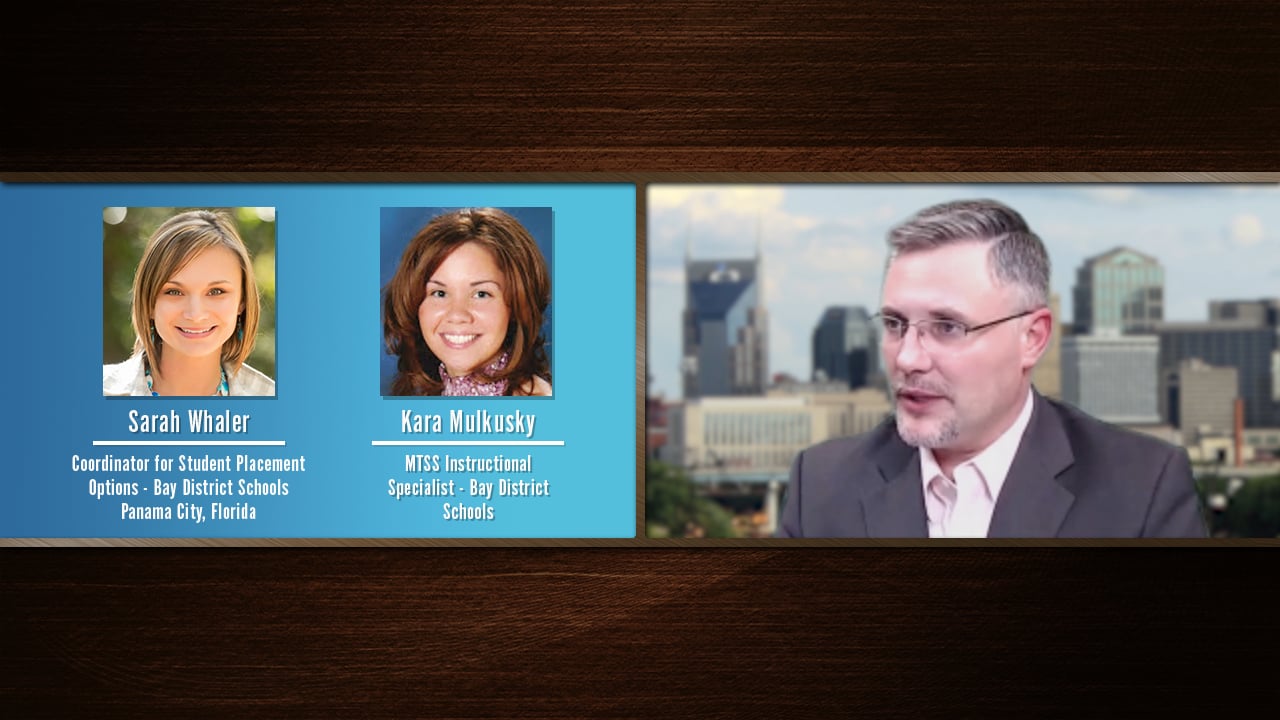
CoffeED: Sarah Whaler & Kara Mulkusky20 min 10 sedCircuit on Vimeo

Kids learning manners and social skills not taught at home A close up of a young child with light skin and short hair wearing a blue shirt looking directly at the camera with an angry expression and mouth open as if yellingThe Bay District Schools in Panama City, Florida have a PreK-12 student membership of 27,784 across 47 schools. The majority of students in the district come from homes on the lower end of the income scale, with nearly 57 percent of students qualifying for free and reduced lunch. It’s an environment where there are many social and emotional needs to be addressed.

Interestingly, the Bay District’s data suggests between grades K through 5, the overwhelming majority of disciplinary issues originate from kindergarten. Sarah Whaler, the Coordinator for Student Placement Options for the district, shares how previously there were expectations that kids would already be versed in “please” and “thank you” and have at least a rudimentary understanding of sharing and communication skills by the time they entered kindergarten. “The kids are lacking that now,” she adds.  “It’s something that we have to carve some time out into our educational day. It takes a lot of extra time, space, and patience to teach the kids the basic social and emotional skills.”

A crying child in a pink checkered dress is held within two large hands formed from words like calm curious loving and attentive in varied colors symbolizing supportive and caring protectionKara Mulkusky, the MTSS Instructional Specialist at Bay City Schools, takes it a step further. She sees an urgency in teaching kids the social and emotional skills needed to succeed far into their futures. “What are we doing to teach those students on a school-wide level,” she asks? “What are our expectations that we want our students to learn? How are we modeling those expectations for our students? And what are we doing to make sure that those positive behaviors are reinforced appropriately so that they’re maintained throughout life?”

MTSS (Multi-tiered System of Support) is designed to change the way schools support students with learning and behavior problems by systematically delivering a range of interventions based on demonstrated levels of need. Sarah and Kara see lots of discipline problems on a daily basis. They both believe in the restorative discipline approach, using the offending behaviors as a learning and healing tool for both the victim and the perpetrator. The old punitive approach of long-term suspensions left no room for healing or growth, and rarely left anything but resentment and unresolved anger in its wake.  

mirror oceanUsing restorative discipline, they ask students with behavioral issues, what happened? Why did it happen? What were you thinking? How can we fix it? They follow what they’ve termed the “R cubed factor” which represents recover, reflect, and return. Sarah adds, “The most critical factor is the second ‘R’ which is to reflect. It’s the reflection piece that includes all five restorative questions ending with ‘What can we do to repair the harm that’s been done? What can I do to make things right?’”

Sarah and Kara mention wanting to find a program that brought continuity, viability, and affordability. Suite 360 from Evolution Labs with the ISS360 content library of content for restorative justice not only came within budget but worked very effectively with the social and emotional component. It proved an intricate and viable part of the PROMISE Program. “If we can make this work and help spread this to other districts, it would be the most we could ask for,” Sarah says.

Further Reading

  1. Psychology Today – 5 Steps To Help Kids Learn To Control Their Emotions
  2. PBS – Seven Tips for Practicing Positive Discipline
  3. HuffPost – Searching Deep for the Triggers that Challenge Student Success


More on Social-Emotional Learning

  • : Author

    About Sarah Whaler: Sarah has been in the educational field for 15 years, 10 of which were in the classroom at the elementary level.

    View all posts
  • Kara is originally from Pennsylvania where she graduated from Bloomsburg University with a Bachelor’s of Science in Education with a dual major in Elementary Education and Special Education. She taught for 3 years in Clark County School District, Las Vegas, NV serving a middle school, special education, self-contained classroom for students with intellectual, emotional, and physical disabilities in grades 6-8.

    View all posts
Promotional banner for Safer Ed: The School Safety Podcast, with students walking in a school hallway and a prominent Listen Now button.

Join Thousands of Other Subscribers

This field is for validation purposes and should be left unchanged.

Participate in the COmmunity

Banner about closing the digital safety gap in school filtering, featuring Circuits and CoSN logos with a Read Now link to CoSN.org/cybersecurity

Use EdCircuit as a Resource

Would you like to use an EdCircuit article as a resource. We encourage you to link back directly to the url of the article and give EdCircuit or the Author credit.

MORE FROM EDCIRCUIT