
Tanner Higgin of Common Sense Education wrote in 2018 about turning students’ summer experiences into back to school projects. A new section after the column sets out what summer learning research has found since and how a teacher can combine skills review with Higgin’s activities.
Make the most of students’ summer experiences with back-to-school activity 
Every teacher preps for the summer slide, the three-month drain of some of last school year’s learning. In fact, you probably have some tried-and-true assessment and refresher strategies aimed at figuring out where your students are and how to get them up to speed. The summer slide is just one of the many challenges teachers tackle come back-to-school time.
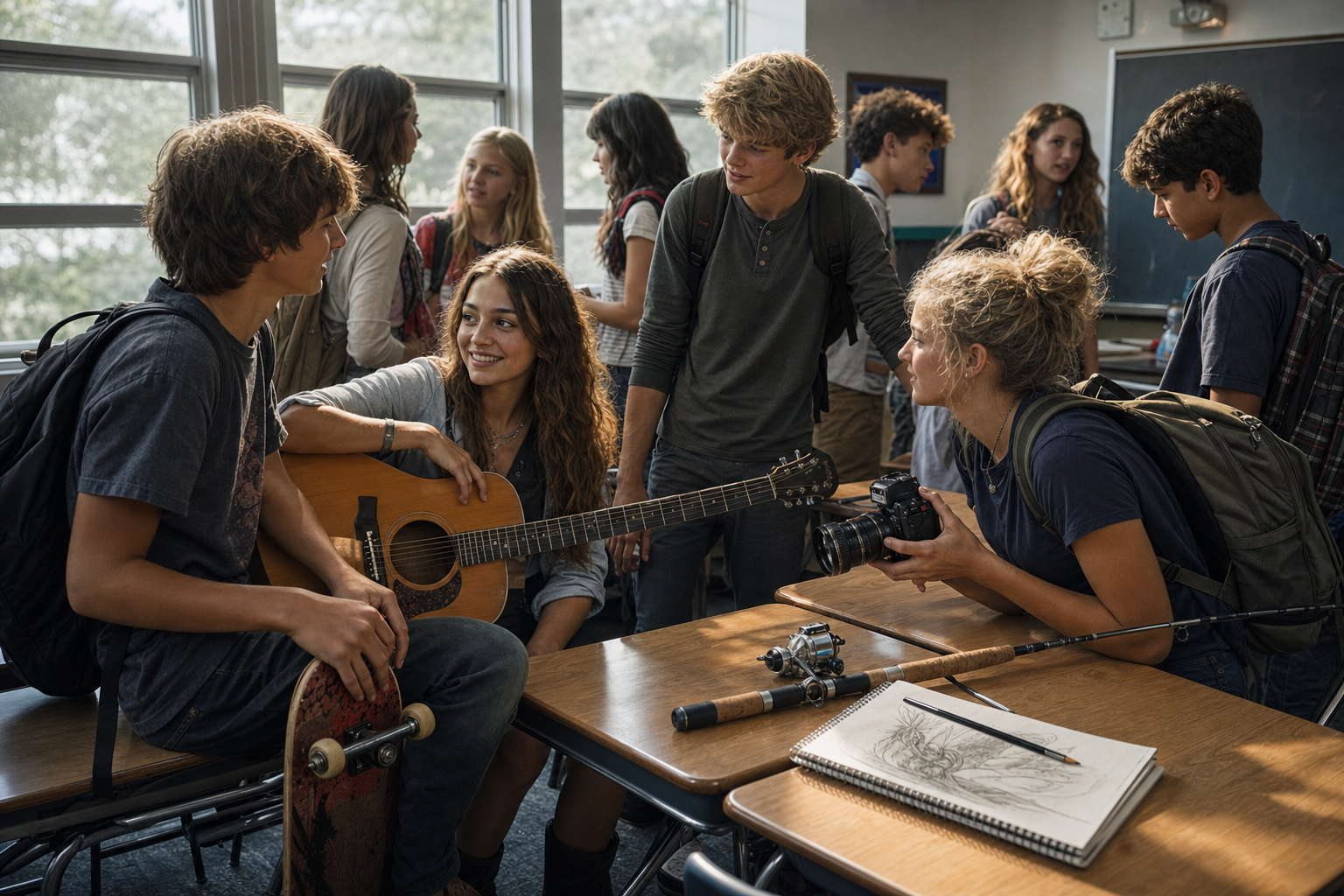
But is the summer slide really all that bad? I don’t think so; in fact, I think the summer slide can be pretty great. Think about it this way: Much of the stuff students are doing over the summer is full of informal, experiential, personally chosen learning — it just doesn’t look like school.
To embrace the summer slide and turn it into September success, all you need to do is think of it as interest-driven learning, not wasted time. Use what kids choose to do over the summer to find out what’ll engage your students during the semester.
To embrace the summer slide and turn it into September success, all you need to do is think of it as interest-driven learning, not wasted time.
Check out the below activity, which gets students to reflect on what they did over the summer and then design introductory projects that connect their experiences to your curriculum.
Mind Mapping: What’d You Do Over the Summer?

Once the mind maps are complete, work with students to attach learning outcomes. For instance, a student who watched a lot of movies may have learned something about herself or the world without fully realizing it; a student who just got a smartphone may have taken a picture he’s proud of or made a great joke on social media. In this phase, the important thing is to show students how learning is a part of everything they do.
Reflection: What Do You Still Want to Know?

Planning: How Do You Plan to Find Out More?
Students should now have the most important part of any project-based learning (PBL) experience: a driving question tied to their interests (and your curriculum). The challenge now is helping them see the projects through. There are a bunch of great tools to document, organize, and assess work. These tools -– from those built for learning such as Seesaw or Pathbrite to those not, such as Tackk and WordPress –- accomplish two essential goals of interest-driven PBL: 1). They put the focus on the formative process of learning over the summative end product, and 2). They allow students to share their work with a larger community. Get students up and going on one or a couple of these options, and set up a regular schedule to share progress, get feedback, and present their results.
These are, of course, just suggestions, and I admit they leave out a lot of the nitty-gritty details that make PBL challenging. I think the challenge is worth it, though. Digging into students’ interests right off the bat hooks students and shows them they’re in for a year of truly being in the driver’s seat. Most importantly, it flips the negative summer-slide rhetoric on its head, viewing students less as brains drained of knowledge and more as thriving gardens of experience.
“DSC_0118” by Doblin/Monitor. Used under CC BY-NC 2.0 license.
“Amelia works on a problem in Math HL (Hyderabad, India)” by THINK Global School. User under CC BY-NC-ND 2.0 license.
This piece originally appeared on Common Sense Education.

Back to school activities in 2026: using students’ summer experiences, and what the summer slide research says
Tanner Higgin’s 2018 column suggests a set of back to school activities that begin with what students did over the summer: a mind map of their experiences, a list of questions they still want to answer, and a plan for a project that connects those questions to the curriculum. Higgin treats the summer slide as a reason to value informal learning. This section adds what the research on summer learning loss has found since, which gives teachers a fuller basis for deciding how much of the first weeks to spend on review and how much on activities like Higgin’s. It also adjusts the tool suggestions, since several of the tools and the pages that described them have changed.
What the summer slide research shows
Megan Kuhfeld of NWEA analyzed MAP Growth results for 3.4 million students and reported in a 2019 Kappan article, summarized on NWEA’s research page, that summer learning loss is common but not inevitable. The students who lost the most were those who had made the largest gains during the school year. The findings also questioned common explanations such as access to summer programs and the length of the school year.
More recent NWEA work, reported by K-12 Dive in May 2026, used spring and fall 2023 testing data for students in kindergarten through eighth grade and a model of expected summer loss based on NWEA’s 2025 norms. The summer drop in math was significant, equal to roughly 10 to 30 percent of the learning expected in a typical school year. Average reading scores stayed nearly the same, so reading loss was much smaller. The researchers suggest that students may read outside school more often than they practice math, and that procedural math skills may fade faster. The estimates are model-based, individual results varied widely, and the researchers said they lack data on what students did over the summer, so they cannot explain why some students gain and others lose. A separate NWEA study found that a different test shows learning slowing, not dropping, after kindergarten and first grade, which means the size of the slide depends partly on the test used. NWEA’s own April 30, 2026 post by Megan Kuhfeld and Emily Morton gives the same math range and cautions that the estimates are sensitive to testing dates and analytic choices.
Reading Higgin’s idea alongside the research
Higgin argues that the summer slide can be pretty great because students spend summers on informal, personally chosen learning. The research does not contradict that point. It adds that students may also lose some procedural skill in math, which means a teacher can do both things in the first weeks: a short check of key skills, and an activity that draws on what students did. The idea that students bring knowledge from outside school is not tested in the studies above, which measured test scores, so Higgin’s claim about engagement rests on teaching experience and not on those data. For the longer discussion of the slide itself, see edCircuit’s piece on the summer slide.
Adapting the activities for different ages
- Early elementary grades: students draw or dictate three things they did and sort them into groups, and the teacher records the questions they ask.
- Upper elementary: students make a map of their summer, mark the experiences they would like to know more about, and write one question for each.
- Middle and high school: students list summer activities, jobs, travel, games, media and caregiving, then choose one and write a driving question for a short project linked to the course.
- Any grade: pair the activity with a brief, low-stakes check of skills that fade over the summer, such as math procedures, and use the results to plan review.
The sorting, questioning and planning steps in Higgin’s piece do not depend on any particular app, and paper, a whiteboard or a shared document can do the same work. The tool pages Higgin links on Common Sense Education should be treated with caution. Common Sense Education paused its edtech reviews in January 2026 and said the review content would be removed in February, so those links may no longer lead to the reviews described.
A simple sequence for the first week
- Day one or two: the mind map or list of summer experiences, shared in small groups.
- Day two or three: students turn experiences into questions, and the teacher marks which connect to the course.
- Day three or four: a short skills check, kept low-stakes and separate from grades.
- Day five: students choose a question for a first project and plan how to share their progress.
This keeps Higgin’s emphasis on student choice and on process over finished product, while keeping the review that the testing data suggest some students will need.
Further Reading
- eSchool News – ISTE 2018 emphasizes AI in classrooms
- Forbes – How Back-To-School Stress Is Different In 2018
- The Advocate – It’s back-to-school time: What would you tell your younger self, all these years later?
Related reading
More on Project-Based Learning