Safeguarding Students: Matt Harris and Nellie Pagán on Protection and Remote Learning
Matt Harris explains how training every adult around children can prevent abuse, and Nellie Pagán shares how she kept second graders and families connected remotely.


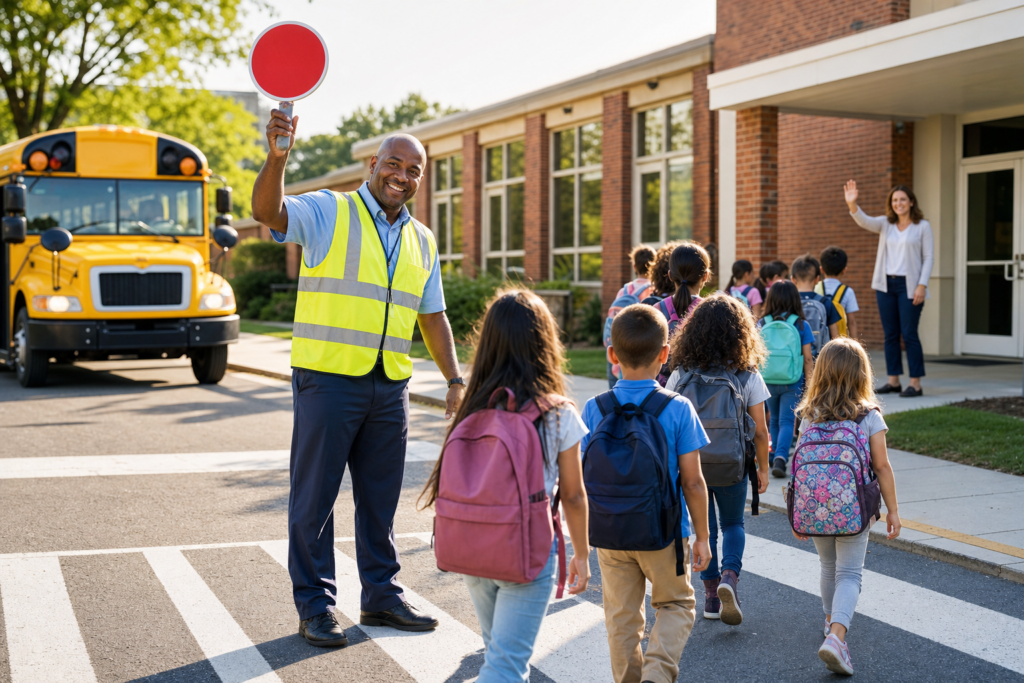
Matt Harris on safeguarding training for every adult who works around children, and Nellie Pagán on supporting second graders and families remotely.
The final episode of the first season of edCircuit’s Education Today podcast, presented by Soundtrap for Education, looked at two kinds of protection for children in the summer of 2020. Dr. Matt Harris, an international education technology consultant and former chair of ISTE, explained why he co-founded ChildSafeguarding.com to provide safeguarding training for every adult who works around children, so they can recognize and report signs of abuse. Nélida “Nellie” Pagán, a second grade teacher at P.S. 160, The Walt Disney Magnet STEAM School in the Bronx and a member of Curriculum Associates’ inaugural class of Extraordinary Educators, described how she kept young students and their families connected during remote learning.
 Education TodayS1E11 - Safeguarding Students From Risks to Their Well-Being and Their LearningPlay episode: S1E11 - Safeguarding Students From Risks to Their Well-Being and Their Learning (35 minutes 10 seconds)Follow on SpotifyApple
The adults who see but do not know what to do
Harris has lived and worked in Indonesia, Germany and Singapore. While he was working in Jakarta, two major child abuse cases involving a school came to light, and he saw a gap that education and technology could help close. In schools, after-school programs and many other places where children spend time, the adults who notice warning signs are often support staff, such as bus drivers, security guards and cleaners. Many do not know what to do with what they see, and some fear for their jobs. Research, he said, suggests these workers often see more than most.
The ChildSafeguarding.com course is designed for anyone, at any education or literacy level, in any language and any country. It teaches what to look for, how to report it and, above all, that each person is part of a team that protects children. “You are not alone,” the course tells participants. They are not asked to judge whether abuse is happening; that is the role of trained professionals. Their job is to report what concerned them, and to know that doing so will not cost them their job.
Protection is an action; safety is a destination
Working with a child protection expert who is a former British police officer, the team chose to talk about protection rather than safety. Safety, Harris said, is the destination everyone hopes to reach, but no bus driver or volunteer can guarantee it. Protection is a clear action each person can take.
He compared it to CPR. A person giving CPR is not saving a life on their own; they are buying time until someone with more expertise arrives. In the same way, the course asks adults to provide “child abuse CPR”: factual information that a child protection officer or designated safeguarding lead can act on. That means reporting only what they have seen or heard themselves, never rumors. Because they are not the ones deciding what happened, he said, they can report more safely and more accurately.
Safeguarding training beyond schools
The work began with schools, where children spend many hours surrounded by adults, but Harris saw the same need in youth sports, religious institutions, hotels, cruise ships and amusement parks. Preschools, schools in rural India and Kenya with boarding students, and insurance companies had all expressed interest. Insurers, he noted, wanted training that would lower risk in places where children gather. The course removes as many barriers as possible: a participant needs only a phone and a name, no diploma or prior online learning, and can take it in languages such as Spanish, Korean or Tagalog.
Questions parents can ask
As the father of young children, Harris said the work had shown him how vulnerable children are, and how much he relies on other adults he cannot choose. Many families have even fewer choices about the bus or after-school program their children use. Parents are often surprised to learn that a bus driver may never have had child abuse prevention training. He encouraged parents to ask their schools how they verify and train every adult around their children, because “background checks don’t do enough.”
A Data Insight on edtech spending
The episode’s Data Insight from The Learning Counsel noted that, despite news of budget shortfalls, seven consecutive years of revenue surpluses combined with CARES Act funds would lead to the largest education technology spend in K-12 history: close to 8 percent of a $715 billion K-12 market, or about $57 billion, compared with roughly 5 percent, or $36.2 billion, the year before.
Parents first, then students
Pagán had moved up with her class from first to second grade, and the class had used Google Classroom since first grade, so the students were ready for remote learning. What she learned quickly was that she needed to set aside time for parents first. That meant “digital literacy 101”: how to sign in and where to find assignments, through video conferences and short how-to videos. She recorded voice-overs on her slides so her students could hear her voice as they worked through the schedule.
Many of her families had two parents who were essential workers, and some children did their work with grandparents who were not comfortable with the technology. Pagán made herself accessible, and some parents had her cell phone number. She asked families to tell her when the workload was too heavy and scaled back week by week until the pace felt manageable. Her rule of thumb was to keep the tools simple: Google Classroom as the main platform and a small set of others, such as Padlet boards each week, so families knew the routine for where work went and how it would be graded.
Present and safe came first
Grading required a shift. At first, Pagán said, teachers were sometimes frustrated by work they knew did not reflect what students could do. Over time she became more explicit, using voice notes that repeated classroom math strategies, PDFs of those strategies for parents, and screencasts in an “I do, we do, you do” format so parents could see how lessons were broken down.
In the end, presence and safety mattered most. She described a student she rarely heard from because his father worked full time and his babysitter could not connect his tablet to Wi-Fi. When she saw him active in an online program, she knew he was engaged and safe. Grades drew heavily on what students had shown in the classroom before the closures, and the priority was making sure students who struggled would get extra support in September.
Advice for parents and teachers
As a parent herself, Pagán advised families of young children to have candid conversations about what school would feel like on return. Children might not be able to shake hands, hug, share toys or share snacks, and they needed to understand that these rules were for everyone’s safety.
For teachers, she called it “a season to really be nimble.” Everyday activities at home, from unpacking boxes to building things, can be connected to the skills students need. She found that letting students see her make mistakes, and hearing her voice in recorded notes, reassured both children and parents. Eventually, she said, she accepted that she could not follow a scripted curriculum during remote learning and focused on how to teach the same skills and standards in a new way.
Listen to the full conversation in the player above, or find every episode on the Education Today show page.
Subscribe to edCircuit to stay up to date on all of our shows, podcasts, news, and thought leadership articles.
Related reading
More on School Safety