

edCircuit
  • Start Here
    • Login
    • Register
    • Subscribe
    • Submit a Press release
    • Advertise or Sponsor
    • Contribute
    • Get Interviewed
  • On The Wire
  • EdTech
    • All EdTech
    • Online Learning
    • Hybrid and Remote Learning
    • Augmented and Virtual Reality
    • ESports
    • Gamification and Game-Based Learning
    • Digital Citizenship
    • EdTech Entrepreneurs
    • Market Trends
    • Future of Education
  • K-12 Education
    • All K-12
    • K-12 Teachers
    • Teaching Strategies
    • Special Education and IEPs
    • Dyslexia
    • Gifted and Advanced Learning
    • Early Childhood, Pre-K and Kindergarten
    • School Calendar
    • Tutoring and Homework Help
    • Attendance and Absenteeism
    • After-School Programs
    • School Counselors
    • Homeschooling
    • School Models
    • Teacher Retention
    • Parents
    • Students
    • STEM and STEAM Education
  • Teaching and Learning
    • Literacy and Reading
    • Math Education
    • Civics and History Education
    • Financial Literacy
    • Assessment and Testing
    • Curriculum and Instruction
    • Personalized Learning
    • Project-Based Learning
    • Social-Emotional Learning
    • Executive Function
    • Creativity
    • Diversity, Equity, Inclusion
  • Professional Development
    • All Professional Development
    • Educators
    • Administrators
    • edLeaders
  • Higher Education
    • All Higher Education
    • College Admissions
    • Career and Technical Education (CTE)
    • Graduation
    • FAFSA and Financial Aid
    • Student Loans
  • Artificial Intelligence
  • Cybersecurity
  • School Safety
    • All School Safety
    • Science and Lab Safety
    • School Design and Facilities
    • Bullying
    • Duty of Care and School Liability
  • Continuing Education
    • All Continuing Education
    • Online Certificate Programs
    • Teaching Jobs and Careers
    • Teacher Appreciation
  • Education Policy and Government
    • All Education Policy
    • Department of Education
    • School Choice
    • Global
    • Advocates
  • EDU Shows
    • All EDU Shows
    • Safer Ed
    • Mind the Gap
    • EdTech Questions
    • CoffeEd
    • InFocus
  • EDU Podcasts
    • All EDU Podcasts
    • Author Chats
    • CoSN The Podcast
    • Education Today
    • Building the Bridge
    • Students Speak
  • Education Industry Guides and Reports
  • Archived Media
    • Future of School: The Podcast
    • Equity Everywhere
  • About edCircuit
  • Subscribe
edCircuit
  • LOGIN
Home Tags Posts tagged with "Headline"
Tag:

Headline

This if for posts to be in the featured/top section of site
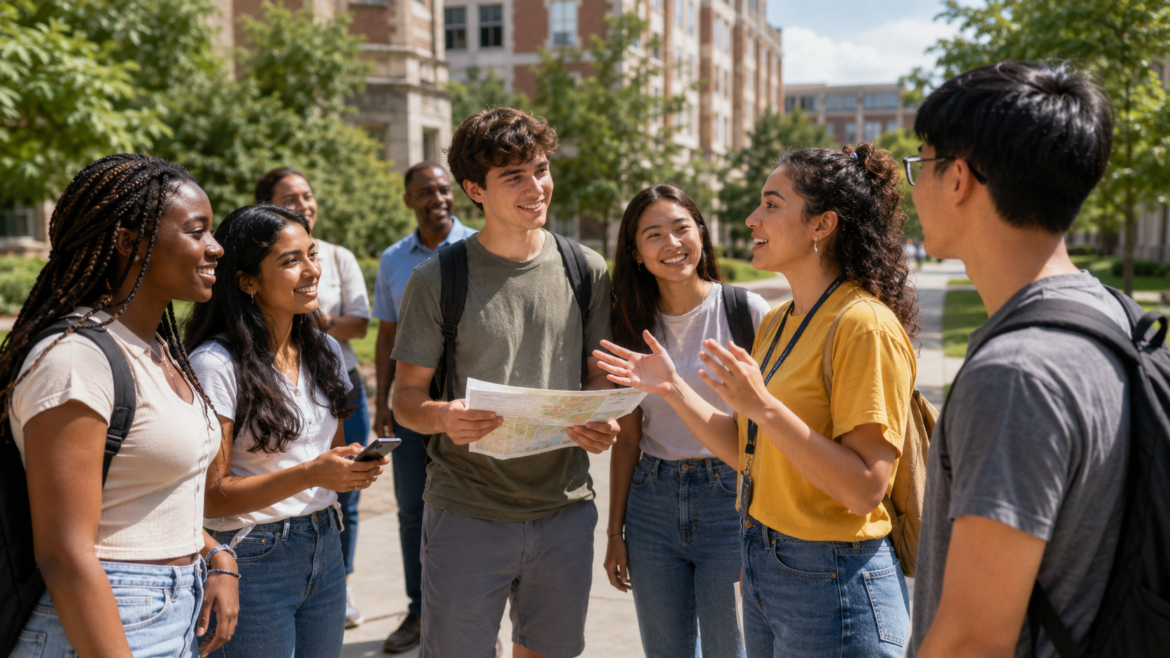
Diverse group of college students with backpacks standing outside on campus, smiling and looking at a map together.
Hot Topics - controversialHigher Education

College Orientation Sets Students Up for Success

by EdCircuit Staff July 21, 2026
written by EdCircuit Staff 14 minutes read

College orientation is often the moment when an accepted student begins to understand what becoming a college student will actually require.

Before orientation, college can still feel like an idea. Students have completed applications, compared financial aid offers, toured campuses, watched residence hall videos, selected roommates, and purchased sweatshirts bearing their new school’s name. They may know the mascot, the fight song, the football schedule, and the dimensions of their future dorm room.

Yet they may not know how to contact an academic adviser, where to find tutoring, how to change a class, what to do during a medical emergency, or whom to call when they feel overwhelmed.

Then orientation begins.

A student who arrived knowing little more than the name of a future roommate may leave with a first-semester schedule, a campus identification card, an adviser’s contact information, a clearer understanding of university expectations, and perhaps the phone number of another nervous freshman who also did not know anyone.

The campus may not feel small by the end of orientation, but it begins to feel navigable.

That transformation is why college orientation should not be dismissed as a long tour, a collection of icebreakers, or another summer requirement to complete before move-in. It is one of the first opportunities colleges have to replace uncertainty with direction and help students begin taking responsibility for their own academic and personal lives.

Orientation Is Where Admission Becomes Participation

An acceptance letter tells students they have earned a place at an institution. Orientation begins by teaching them how to participate in it.

College Board describes orientation as an opportunity for new students to become familiar with the campus, learn what the school offers, connect with classmates, select courses, attend academic sessions, and complete placement testing when required. Depending on the institution, orientation may last anywhere from a single day to a full week.

The schedule can feel overwhelming. Students may move from check-in to academic advising, campus tours, dining presentations, technology sessions, residence life discussions, safety information, student panels, and social activities within a matter of hours.

No one will remember every office, policy, deadline, or name introduced during that time.

Remembering everything is not the purpose.

The real value of orientation is helping students understand where to begin when questions arise. A freshman may not remember the exact location of the writing center, but now knows that one exists. A family may not retain every financial aid detail but understands which office can provide an answer. A student may forget an orientation leader’s name but remember that upper-level students are willing to help.

Those first points of familiarity can matter when the semester begins, and the student encounters a problem without a parent, teacher, or high school counselor standing nearby.

The Ohio State calls orientation a student’s ā€œfirst real tasteā€ of university life. Its 2026 first-year program includes learning what the university expects, scheduling first-semester classes, exploring an academic area, completing placement testing, and taking care of university business.

That description captures what orientation should accomplish. Students are not merely visiting the college again. They are beginning to function within it.

Learning the Campus Means Learning Its Systems

Finding classrooms is important, particularly on a large campus where a short break between classes may require a carefully planned route. However, orientation is about more than learning which sidewalk leads to the science building.

Students must also learn how the institution operates.

Where will professors post assignments? How does a student access university email? What platform is used to pay tuition? How are courses added or dropped? Where are Advanced Placement, dual-enrollment, or transfer credits recorded? What happens if a student becomes sick, misses an exam, needs an academic accommodation, or begins struggling in a class?

College Board recommends that students use orientation to ask about residence halls, food options, class changes, tuition payments, email setup, and policies for previously earned credit.

These may sound like routine administrative details, but they are part of college readiness. A student who knows how to reach an adviser or access the student portal is less likely to remain stuck when something goes wrong.

College requires a different kind of independence from high school. Professors may not issue repeated reminders about missing work. Advisers can provide guidance, but students must schedule and attend appointments. Parents may not be able to see grades, speak with instructors, or resolve account issues on a student’s behalf.

Orientation begins the transfer of that responsibility.

Course Registration Is More Than Choosing Times

For many freshmen, orientation is also when college becomes academically real.

Students may meet advisers, review placement results, examine degree requirements, discuss possible majors, and register for their first semester. Central Michigan University describes orientation as an introduction to college life that can include meeting professors, touring facilities, visiting support offices, receiving academic advising, and scheduling classes.

Students should participate actively in this process rather than allowing an adviser or parent to make every decision.

They need to understand why a course is being recommended, whether it satisfies a graduation requirement, and whether it is a prerequisite for another class. Students entering structured programs such as engineering, nursing, education, business, computer science, or health sciences may need to begin particular course sequences immediately.

Undecided students should not view orientation advising as less important. An adviser can help them select courses that meet broad requirements while also providing opportunities to explore different subjects and careers.

Students should also consider the realities of their schedules. An 8 am class may appear manageable during summer registration but become difficult for someone who routinely stays awake late. Long gaps between classes may benefit a commuter or a student who plans to work on campus, while another student may prefer to complete classes close together.

Athletics, employment, transportation, meals, laboratories, study time, and personal habits all matter.

The objective is not to create a flawless schedule. Most college schedules involve compromise. The goal is for students to understand the decisions being made and begin taking ownership of the outcome.

Orientation Makes an Unfamiliar Place Feel Possible

One of the most intimidating parts of beginning college is the belief that everyone else already knows what to do.

A student may look around orientation and see confident conversations, smiling families, and groups forming quickly. What that student cannot see is how many other freshmen are worried about finding friends, handling the coursework, living away from home, sharing a room, or choosing the right major.

Orientation brings those students together before the academic pressure of the semester begins.

A conversation during lunch, a campus tour, a residence hall session, or an academic meeting may produce the first familiar face a student sees on move-in day. Not every person met at orientation will become a close friend, but that is not the standard by which the experience should be judged.

Knowing one name can make a dining hall feel less lonely. Having one phone number can make attending a campus activity easier. Recognizing one person in a lecture hall can make a large university feel slightly smaller.

Central Michigan advises students to obtain contact information from at least one person they meet because orientation involves absorbing a large amount of information while navigating an unfamiliar environment.

Students should also pay attention when colleges introduce clubs, recreation, campus employment, cultural organizations, service opportunities, student government, faith communities, academic groups, and other activities.

Belonging does not always happen automatically. Sometimes it begins because a student hears the name of an organization during orientation and decides to attend its first meeting.

Support Services Matter Most When Students Find Them Early

Orientation presentations about tutoring, counseling, health care, accessibility services, financial aid, campus safety, and career development may not feel urgent to a student who has not yet attended a college class.

Then the semester begins.

A course may be more difficult than expected. Homesickness can appear after the energy of move-in fades. A medical issue may disrupt attendance. Financial pressure can affect concentration. A student who received accommodations throughout high school may discover that obtaining college support requires a new process and greater self-advocacy.

Orientation allows students to learn about these resources before they are in crisis.

Central Michigan recommends asking where students can obtain physical and mental health support, what they need to understand about financial aid, and how many courses they should complete to remain on track for graduation.

Colleges should present these offices as normal parts of student success rather than services used only after someone begins failing.

Tutoring is not an admission that a student does not belong. Counseling is not evidence that a student cannot handle college. Meeting with an adviser does not mean a student has made a mistake.

Successful students are not always the ones who encounter the fewest problems. Often, they are the ones who recognize a problem early and know where to take it.

Parents Must Begin Supporting Without Taking Over

Orientation can be emotional for parents and supporters.

They may arrive carrying years of memories: the first day of kindergarten, school concerts, athletic events, late-night homework, college visits, applications, acceptance letters, and graduation. Suddenly, they are watching their child walk into an advising session alone.

The instinct to remain involved is understandable. Parents want to confirm that the schedule is correct, the residence hall is safe, the meal plan is sufficient, and every deadline has been recorded.

However, orientation is also where families must begin practicing a different form of support.

Many colleges separate students from family members during portions of the program. While students register for classes, meet peers, and attend academic sessions, supporters may learn about financial aid, wellness, safety, communication, and the transition to college parenting. Central Michigan notes that families should expect to spend much of the day in separate programming before reconnecting afterward.

That separation is not intended to exclude families. It gives students room to practice.

A student who asks an adviser a question directly is developing self-advocacy. A student who introduces themselves without a parent beside them is beginning to build confidence. A student who takes a wrong turn, consults a map, and finds the correct building is learning that confusion can be solved.

Parents remain essential, but their role changes. Instead of making every call or sending every email, they can help students think through the next step.

After orientation, families may naturally ask whether the student registered for the right courses or found the residence hall.

An even more valuable question may be: ā€œWhat did you learn to handle on your own?ā€

Students Need to Arrive Prepared to Participate

Orientation is most valuable when students complete required work before arriving.

Institutions may ask students to activate email accounts, register through an online portal, submit immunization records, complete roommate questionnaires, take placement tests, send transcripts, or provide other documentation. College Board advises students to finish all required pre-orientation tasks and prepare questions for faculty and college officials.

Ohio State, for example, directs students entering in autumn 2026 to check their university email for orientation information and requires new students to participate in the full program.

Before orientation, students should review the curriculum for a possible major, collect information about AP, dual-enrollment, or transfer credits, and write down questions. Relying on memory during a busy day is rarely enough.

Practical preparation also matters. Summer orientation may involve extensive walking, long sessions, outdoor tours, and changing weather. Comfortable shoes, water, weather-appropriate clothing, necessary medication, a charged phone, and a simple note-taking method can make the experience more manageable.Ā 

Most importantly, students must be willing to engage.

A student does not need to become instantly outgoing or ask a question during every presentation. But orientation loses much of its value when students remain focused on their phones, avoid all conversations, or assume that every session will be irrelevant.

Attention is part of preparation.

The Questions That Matter Most

Students do not need to arrive with pages of questions, but they should leave with a clearer understanding of the people and systems that will shape their first semester.

Every freshman should know the name or office of an academic adviser, how to schedule an appointment, where assignments and grades will appear, and what to do if a course begins going poorly.

They should know how to access tutoring, health care, counseling, accessibility services, financial aid support, and campus safety. They should understand how to replace an identification card, report a technology problem, change a meal plan, or seek help during an emergency.

Questions for current students may be different. Where do people study when the library is crowded? How reliable is campus transportation? Which dining locations stay open late? What do freshmen often wish they had known during their first month? Which clubs make it easier to meet people?

Faculty can answer questions about major requirements, laboratories, internships, capstone projects, professional preparation, and the expectations students will encounter in college-level courses.

Central Michigan recommends directing questions to faculty, staff, and current students according to their different areas of experience.

Students should record the answers that matter. By the end of a long orientation day, even useful information can disappear beneath a flood of acronyms, names, directions, and deadlines.

High Schools Can Prepare Seniors for Orientation

The responsibility for orientation readiness does not belong only to colleges and families.

High school counselors, teachers, administrators, and college-access programs can help seniors understand what orientation will require before graduation. This is especially important for first-generation college students and others whose families may be less familiar with university processes.

Counselors can encourage students to review their expected college credits, practice writing a professional email, prepare questions for advisers, and learn the difference between high school supports and college self-advocacy.

Students who received accommodations in high school should understand that those services do not simply transfer automatically. They may need to contact the college’s accessibility office, submit documentation, and participate directly in the process.

Schools can also help seniors gather transcripts, health records, test information, dual-enrollment documentation, and other materials that may be required.

Perhaps most importantly, educators can begin directing questions back to students.

Instead of always communicating through a parent, a counselor might ask the student to send the email, schedule the appointment, or contact the college personally. These small acts help build the independence that orientation will soon demand.

College readiness is not complete when a student is admitted. It includes knowing how to enter a new system and begin advocating within it.

Skipping Orientation Can Create Avoidable Obstacles

Some students may believe orientation is unnecessary because they already toured the campus, live nearby, know other students attending, or can find most information online.

A campus tour and an orientation serve different purposes.

A tour helps a student decide whether the institution might be a good fit. Orientation teaches the student how to function there.

At many institutions, attendance is required because colleges use orientation to register students, complete placement requirements, introduce university systems, and prepare students for academic and residential life. College Board notes that even when attendance is optional, participating can help create a smoother transition.

The Ohio State requires all new students to participate and explains that its program has been designed to set students up for success. Students who miss scheduled sessions may need to attend another program.

Missing orientation can mean losing the opportunity to meet advisers, ask questions, register for courses, complete required tasks, and learn about support while many offices are gathered in one place.

Information overlooked during the summer often becomes the problem a student is urgently trying to solve during the first week of classes.

Orientation Is Where College Begins to Feel Real

Orientation cannot eliminate every concern a student has about college.

There may still be homesickness after move-in. The first exam may be harder than expected. Roommate relationships may require patience. Students may change majors, question career plans, or need more support than they anticipated.

Orientation cannot predict every challenge.

What it can provide is a starting point.

Students leave knowing more about where they will study, whom they can contact, what their institution expects, and how they might begin finding a place within the campus community.

For families, orientation may be the first unmistakable sign that a child is preparing to build a more independent life.

For students, it may be the first time college feels less like a distant achievement and more like a place they can successfully navigate.

The acceptance letter tells a student that a college has chosen them.

Orientation is where students begin learning how to choose their courses, their communities, their support systems, and ultimately their own way forward.

Subscribe to edCircuit to stay up to date on all of our shows, podcasts, news, and thought leadership articles.

July 21, 2026 0 comments
0 FacebookTwitterPinterestLinkedinWhatsappCopy LinkEmail
Group of students around a central smartphone displaying colorful education apps, with a glowing globe and science icons in the background.
Hot Topics - controversialK-12

How Cell Phones Have Changed Learning

by EdCircuit Staff July 20, 2026
written by EdCircuit Staff 9 minutes read

How cell phones have changed learning is one of the defining education stories of the past two decades. Twenty years ago, students carried textbooks, notebooks, and printed study guides. Today, they carry research libraries, cameras, calculators, translators, design studios, and increasingly AI tutors in their pockets.

What began as a communication device has evolved into a research tool, study companion, creative studio, collaboration platform, and personalized learning assistant.

For superintendents, administrators, teachers, school board members, parents, students, policymakers, and education technology leaders, the question is no longer whether cell phones influence education. Their impact is undeniable. The more important question is how schools can maximize their educational potential while minimizing the distractions and challenges they create.

Over the years, smartphones have changed where learning happens, when learning happens, how students prepare for exams, how they collaborate, and even what it means to be a teacher. Few technologies have reshaped education more completely.

For superintendents, administrators, teachers, school board members, parents, students, policymakers, and education technology leaders, the question is no longer whether cell phones influence education. Their impact is undeniable. The more important question is how schools can maximize their educational potential while minimizing the distractions and challenges they create.

Over the years, smartphones have changed where learning happens, when learning happens, how students prepare for exams, how they collaborate, and even what it means to be a teacher. Few technologies have reshaped education more completely.

From Textbooks and Libraries to Learning in Your Pocket

Two decades ago, learning looked very different.

Research often meant trips to the library. Students relied heavily on textbooks, handwritten notes, desktop computers, and printed reference materials. Access to tutoring and supplemental resources depended largely on geography, transportation, and family income.

The smartphone changed that reality.

Suddenly, information became portable. Students gained immediate access to articles, videos, calculators, dictionaries, translators, and educational resources from almost anywhere.

The impact extended far beyond convenience. Smartphones fundamentally changed expectations. Students no longer had to wait until they reached a classroom or computer lab to learn something new.

Access became immediate.

But access is not the same as understanding. As information became easier to obtain, schools increasingly shifted their focus toward critical thinking, digital literacy, and helping students transform information into knowledge.

The Smartphone Era Changed Studying

Perhaps nowhere has the impact of smartphones been more visible than in the way students study.

Studying is no longer tied to a desk or a specific time of day. Students review material on buses, between activities, and during short breaks throughout the day.

Mobile technology introduced flexibility into learning.

Students now use their phones to:

  • Create flashcards.
  • Organize assignments.
  • Set reminders.
  • Review notes.
  • Watch instructional videos.
  • Practice vocabulary.
  • Track progress.
  • Monitor deadlines.

The rise of mobile technology also encouraged microlearning, allowing students to study in shorter and more frequent sessions.

At the same time, smartphones introduced a new challenge. The device used for studying is also the device used for texting, gaming, and social media.

This paradox sits at the center of the smartphone conversation. The same device that supports learning can also compete for attention.

As a result, digital literacy increasingly includes self-regulation, focus, and healthy technology habits.

Exam Preparation Became More Personalized

Smartphones have dramatically changed how students prepare for assessments.

Practice tests, educational videos, note-sharing platforms, and adaptive learning tools have placed resources once available primarily through tutoring programs into the hands of millions of learners.

Students preparing for AP exams, state assessments, college entrance tests, and career certifications can access support whenever they need it.

Preparation has become more personalized.

Students can:

  • Take practice quizzes.
  • Receive immediate feedback.
  • Identify weak areas.
  • Review targeted explanations.
  • Repeat lessons at their own pace.

This shift has made learning more responsive and more individualized.

For many students, smartphones have expanded access to academic support. Yet the digital divide remains real. Device quality, internet access, and home learning environments continue to influence educational opportunity.

Access to technology does not automatically guarantee equitable learning experiences.

Learning Is No Longer Confined to School

One of the most profound changes brought about by smartphones is that learning is no longer confined to classrooms.

Students learn while traveling, working part-time jobs, participating in athletics, visiting museums, or watching educational videos at home.

Learning has become continuous.

Knowledge is available at virtually any time and in almost any place.

This shift accelerated during the pandemic, but it began years earlier. Smartphones helped blur the line between formal and informal learning.

As a result, schools are increasingly asking an important question:

If information is available everywhere, what experiences should schools provide that technology alone cannot?

The answer increasingly points toward collaboration, creativity, critical thinking, and human relationships.

Phones Have Become Creative Studios

One of the most overlooked aspects of smartphones is their role in creativity.

Much of the public discussion focuses on consumption, but smartphones have transformed students into creators.

Modern phones contain powerful cameras, microphones, editing tools, and design capabilities that previous generations could only access through expensive equipment.

Students now use smartphones to:

  • Create podcasts.
  • Produce documentaries.
  • Edit photographs and videos.
  • Design graphics.
  • Record interviews.
  • Build digital portfolios.
  • Capture scientific observations.
  • Produce music.
  • Create presentations.

In project-based learning environments, phones have become powerful tools for authentic work.

Students can investigate community problems, collect evidence, interview stakeholders, document prototypes, and present solutions using devices they already own.

Design Thinking and Innovation

Smartphones have also become tools for design and innovation.

Students use them to:

  • Sketch ideas.
  • Prototype products.
  • Gather user feedback.
  • Create logos.
  • Develop websites.
  • Document engineering projects.
  • Build portfolios.

For career and technical education programs, smartphones support media production, agriculture, health sciences, entrepreneurship, and business education.

In many ways, the phone has become the first design tool students reach for.

Phones Have Created a Generation of Content Creators

The smartphone era has produced a generation of filmmakers, photographers, podcasters, graphic designers, and entrepreneurs.

Students are learning storytelling, branding, communication, and digital production skills in ways that were unimaginable twenty years ago.

These creative experiences increasingly align with the skills demanded by colleges and employers.

Collaboration Has No Boundaries

Smartphones have changed collaboration.

Group work no longer ends when students leave the classroom.

Shared documents, messaging tools, learning platforms, and video conferencing allow students to communicate and work together regardless of location.

Collaboration has become more flexible and more connected.

Yet constant connectivity also introduces new challenges. Students often feel pressure to remain available around the clock.

As digital communication becomes central to learning, schools are recognizing that collaboration itself must be taught.

Communication, etiquette, academic integrity, and responsible participation have become essential skills.

AI Is Transforming Smartphones Into Personal Tutors

The latest evolution of mobile technology may be the most significant yet.

Artificial intelligence is transforming smartphones into personalized learning companions.

Students increasingly use AI-powered tools to:

  • Generate study guides.
  • Summarize readings.
  • Explain difficult concepts.
  • Practice foreign languages.
  • Brainstorm ideas.
  • Explore coding.
  • Create presentations.
  • Receive writing feedback.

For the first time, students have access to tools capable of adapting explanations and providing immediate support.

In many respects, AI is extending the educational potential of smartphones beyond access to information and into personalized learning.

Students now carry something previous generations never possessed: on-demand academic support.

At the same time, AI raises important questions about academic integrity, assessment, and critical thinking.

School leaders are increasingly recognizing that AI literacy may become as essential as digital literacy.

Understanding when and how to use AI responsibly will likely become one of the defining educational challenges of the coming decade.

Smartphones Changed the Role of Teachers

As smartphones expanded access to information, they also changed the role of educators.

Teachers are no longer simply providers of knowledge.

Instead, they increasingly serve as guides, coaches, mentors, and facilitators of learning.

Their responsibilities now include helping students:

  • Evaluate sources.
  • Think critically.
  • Verify information.
  • Use AI responsibly.
  • Manage distractions.
  • Collaborate effectively.
  • Create rather than simply consume.

This shift represents one of the most important transformations in modern education.

Technology has not made teachers less important.

If anything, it has made their expertise even more valuable.

Accessibility and Personalized Learning

For many students, smartphones have become essential learning supports.

Speech-to-text, translation tools, captions, reminders, and audio playback provide greater independence for students with disabilities, multilingual learners, and students who need organizational support.

These tools expand opportunities and increase accessibility.

As schools reconsider phone policies, these considerations remain important.

The same device viewed as a distraction for one student may be a critical support for another.

The Challenge of Attention

Despite their educational potential, smartphones also present significant challenges.

Social media, games, notifications, and entertainment constantly compete for students’ attention.

As a result, attention has become one of education’s most valuable resources.

This reality helps explain why many districts are reexamining their phone policies.

The issue is not whether smartphones belong in students’ lives. They already do.

The challenge is helping students develop the habits and self-regulation necessary to use powerful technologies wisely.

Why Phone Policies Are Becoming More Nuanced

The conversation around smartphones has evolved.

Rather than asking whether phones should exist in schools, many leaders are asking how and when they should support learning.

Districts across the country are experimenting with:

  • Bell-to-bell restrictions.
  • Phone pouches.
  • Teacher-directed instructional use.
  • Digital citizenship initiatives.
  • AI literacy programs.
  • Age-appropriate technology policies.

Successful approaches recognize that smartphones are neither inherently good nor inherently harmful.

Their impact depends largely on how they are used.

Looking Ahead

The smartphone may be the most influential learning technology since the internet itself.

Over the past two decades, cell phones have transformed studying, exam preparation, creativity, collaboration, accessibility, and access to knowledge. They have changed where learning occurs and expanded opportunities for students around the world.

Today, students carry research libraries, cameras, design studios, translators, calculators, and increasingly AI tutors in their pockets.

The challenge facing education leaders is not deciding whether smartphones belong in the learning ecosystem. That question has largely been answered.

The challenge is determining how schools can cultivate focus, responsibility, creativity, and digital wisdom in a world where powerful learning tools are always within reach.

The future of learning will not be defined by the presence of smartphones.

It will be defined by how effectively schools teach students to use them.

Subscribe to edCircuit to stay up to date on all of our shows, podcasts, news, and thought leadership articles.

July 20, 2026 0 comments
0 FacebookTwitterPinterestLinkedinWhatsappCopy LinkEmail
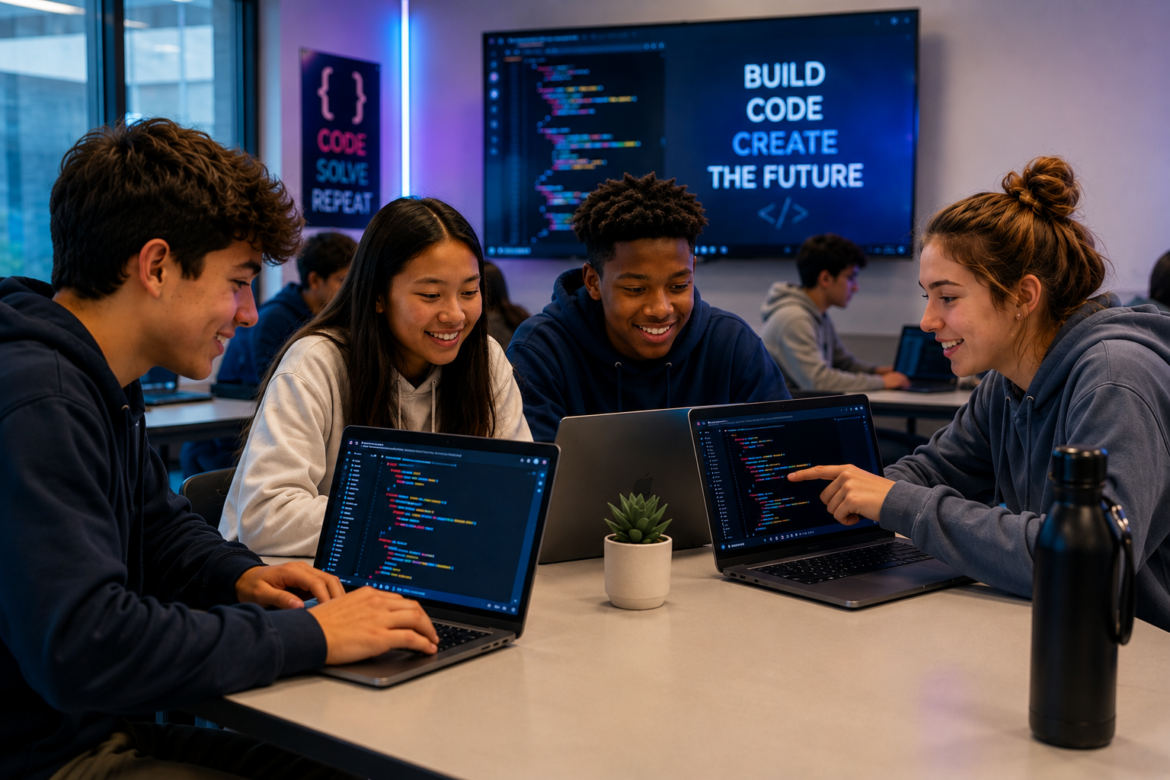
Group of four students collaborating at a table with laptops, coding together in a classroom; a large screen in the background displays code and the words 'BUILD CODE CREATE THE FUTURE'.
STEM and STEAM EducationK-12Hot Topics - controversial

Coding Clubs in Schools Build Future Innovators

by EdCircuit Staff July 17, 2026
written by EdCircuit Staff 9 minutes read

Coding clubs in schools are helping students develop programming skills, computational thinking, and artificial intelligence literacy while preparing them to become the creators, innovators, and problem-solvers of tomorrow’s digital economy.

A high school student launches an app that helps classmates organize assignments.

Another designs a website for a local nonprofit.

A group of students creates a game that attracts hundreds of downloads from friends and family.

A middle school student develops a chatbot that answers frequently asked questions about school events.

These are not stories from Silicon Valley startups.

They are examples of projects being created by students across America through coding clubs.

While previous generations grew up learning how to use technology, today’s students have an opportunity to learn how to build it.

That distinction matters.

As artificial intelligence, automation, cloud computing, and digital technologies continue transforming nearly every industry, coding clubs are becoming one of the most valuable opportunities schools can offer. They provide students with the skills to move beyond being consumers of technology and become creators of technology instead.

For educators, administrators, and parents looking to prepare students for a rapidly changing future, coding clubs represent much more than an after-school activity.

They represent a pathway to innovation.

From Consumers to Creators

Today’s students live in a digital world.

They communicate through apps.

They watch videos online.

They play games.

They use artificial intelligence tools.

They interact with technology from the moment they wake up until they go to bed.

Yet most students have little understanding of how those technologies are created.

Coding clubs change that.

Students begin learning that every application, website, game, software platform, and AI tool started as an idea.

Someone identified a problem.

Someone designed a solution.

Someone wrote the code.

That realization can be transformational.

Students stop seeing technology as something created by others and begin understanding that they have the ability to create technology themselves.

The confidence that comes from building something from nothing often becomes one of the most powerful outcomes of coding education.

A student who successfully develops a simple app or game begins to think differently about what is possible.

That confidence frequently extends into academics, leadership opportunities, and future career aspirations.

Coding Is Becoming a New Literacy

For generations, schools have focused on reading, writing, and mathematics as foundational skills.

Those subjects remain essential.

However, many educators now view computational thinking as another critical literacy for the modern world.

Students do not need to become software engineers to benefit from coding.

Just as not every student becomes a professional writer, understanding how digital systems operate provides value regardless of career choice.

Healthcare professionals rely on software systems.

Farmers use precision agriculture technologies.

Manufacturers operate automated equipment.

Financial institutions depend on data analytics.

Architects use advanced design software.

Scientists analyze enormous datasets.

Business leaders increasingly rely on artificial intelligence tools.

Technology touches nearly every profession.

Coding clubs help students understand the systems that are shaping the world around them.

Why Coding Matters in the Age of Artificial Intelligence

No conversation about education today is complete without discussing artificial intelligence.

AI is changing how people work, communicate, create content, conduct research, and solve problems.

Students are already using AI tools in their daily lives.

The challenge facing schools is ensuring students understand these technologies rather than simply interacting with them.

Coding clubs provide an ideal environment for that learning.

Students can explore machine learning concepts, automation, prompt engineering, data analysis, and AI ethics in ways that are both practical and engaging.

More importantly, they learn that AI is not magic.

It is technology designed and developed by people.

As AI becomes integrated into virtually every industry, students who understand how these systems work will possess a significant advantage.

Coding clubs help schools move beyond conversations about AI and into meaningful exploration of its possibilities and limitations.

Students Are Building Real Solutions

One misconception about coding clubs is that students spend their time memorizing programming syntax.

The reality is much more exciting.

Students build things.

They create mobile applications.

They design websites.

They develop games.

They automate repetitive tasks.

They build databases.

They create AI-powered tools.

They develop software that solves real-world problems.

Some students create solutions for challenges within their own schools.

Others develop projects focused on community needs.

Many discover that coding provides a creative outlet similar to art, music, or writing.

The computer simply becomes the canvas.

The ability to transform ideas into working solutions is one of the reasons coding clubs are so engaging for students.

The results are visible.

The impact is real.

The learning feels meaningful.

National Competitions and Organizations Support Student Success

Schools considering a coding club do not have to build a program from the ground up.

A strong network of organizations already exists to support educators and students.

Among the most influential is Code.org, which has helped expand computer science access for millions of students through free curriculum resources and educator support.

The Computer Science Teachers Association provides professional learning opportunities, networking, and resources for schools expanding computer science programs.

Students can participate in the Congressional App Challenge, where they develop applications and compete with peers across congressional districts.

Additional opportunities exist through the American Computer Science League, Technology Student Association, and SkillsUSA.

Hackathons, coding competitions, game design contests, and AI innovation challenges continue expanding nationwide.

Just as athletics provide opportunities for students to compete and grow, coding competitions create environments where students can showcase creativity, technical skill, and innovation.

Coding Clubs Create Entrepreneurs

Perhaps one of the most overlooked benefits of coding clubs is entrepreneurship.

A student with coding skills can build a business.

That possibility did not exist for previous generations in quite the same way.

Today’s students can create applications, websites, software tools, digital products, and AI solutions from virtually anywhere.

Many successful technology companies began with a simple idea and a willingness to solve a problem.

Coding clubs introduce students to that mindset.

They learn to identify challenges.

They learn to design solutions.

They learn to test, improve, and refine their work.

In many ways, coding clubs teach innovation as much as they teach programming.

Students begin seeing opportunities where others see obstacles.

That perspective can influence their futures long after they leave school.

Teachers Do Not Need to Be Expert Programmers

One of the biggest barriers preventing schools from starting coding clubs is a misconception.

Many educators believe they must be expert programmers before they can lead a coding club.

That simply is not true.

Across the country, successful coding clubs are being facilitated by teachers who began with little or no coding experience.

The advisor’s role is not necessarily to provide every answer.

The advisor’s role is to create opportunities.

Students often become researchers and problem-solvers themselves.

Online learning resources, tutorials, professional organizations, AI-assisted learning tools, and industry mentors make it easier than ever to support student learning.

Many clubs become environments where educators and students learn together.

That collaborative approach can be incredibly empowering.

The most important requirement is not technical expertise.

It is a willingness to help students explore.

Partnering With Local Businesses

One of the greatest opportunities for coding clubs lies in community partnerships.

Unlike some STEM activities that rely heavily on specialized industries, coding connects to nearly every sector of the economy.

Hospitals rely on software.

Banks depend on technology platforms.

Manufacturers use automation systems.

Insurance companies analyze data.

Universities conduct technology research.

Government agencies maintain digital infrastructure.

Technology touches everything.

That creates partnership opportunities for schools in almost every community.

Local organizations can provide guest speakers, mentorship opportunities, internships, project challenges, job-shadowing experiences, and sponsorship support.

Students gain exposure to real-world careers.

Employers gain opportunities to engage future talent.

Schools gain valuable community connections.

These partnerships often become some of the most meaningful aspects of a coding program.

Preparing Students for Careers That Do Not Yet Exist

Perhaps the most compelling reason to start a coding club is simple.

The future is difficult to predict.

Many of today’s students will eventually work in careers that have not yet been invented.

Schools cannot anticipate every future job title.

What they can do is help students develop skills that remain valuable regardless of how technology evolves.

Problem-solving.

Creativity.

Communication.

Adaptability.

Collaboration.

Innovation.

Computational thinking.

Coding clubs develop all of these qualities while helping students understand the technologies driving economic and societal change.

How the Coding Debate Looked in 2017

edCircuit covered the push for coding in schools in 2017, when many schools across the U.S. were holding Hour of Code events, setting aside 60 minutes for students to learn to write computer commands. In Rochester, Minnesota, 25 teams with 153 students built robots to compete in an event sponsored by IBM, meant to show students that coding can be fun.

The question then was whether coding should be mandatory. Some critics argued that the push served large technology companies looking for profit, early customers or tax breaks. edCircuit’s view at the time was that many new jobs involve using programs written by others rather than writing code, so students interested in how technology works should have every opportunity to learn it, while every student should have teachers skilled at bringing technology into the classroom. Coding clubs offer one answer to that debate: depth for the students who want it, without requiring it of everyone.

Building More Than Software

At first glance, coding clubs appear to focus on programming.

Look closer, however, and something much more important is happening.

Students are learning how to think.

They are learning how to create.

They are learning how to solve problems.

They are learning how to innovate.

They are learning how to turn ideas into reality.

Most importantly, they are learning that they can shape the future rather than simply react to it.

As schools continue searching for meaningful ways to prepare students for an increasingly digital world, coding clubs stand out as one of the most accessible, impactful, and future-focused opportunities available.

Students may join because they want to learn how to code.

What they often discover is something much larger.

They discover the power to create.

And in a world increasingly defined by technology, that may be one of the most important lessons a school can teach.

Play video: Inside a High School Coding Club (6 minutes 38 seconds)6:38
Inside a High School Coding Club6 min 38 sHack Club on YouTube

Hack Club – Inside a High School Coding Club (Play video)

Subscribe to edCircuit to stay up to date on all of our shows, podcasts, news, and thought leadership articles.
July 17, 2026 0 comments
0 FacebookTwitterPinterestLinkedinWhatsappCopy LinkEmail
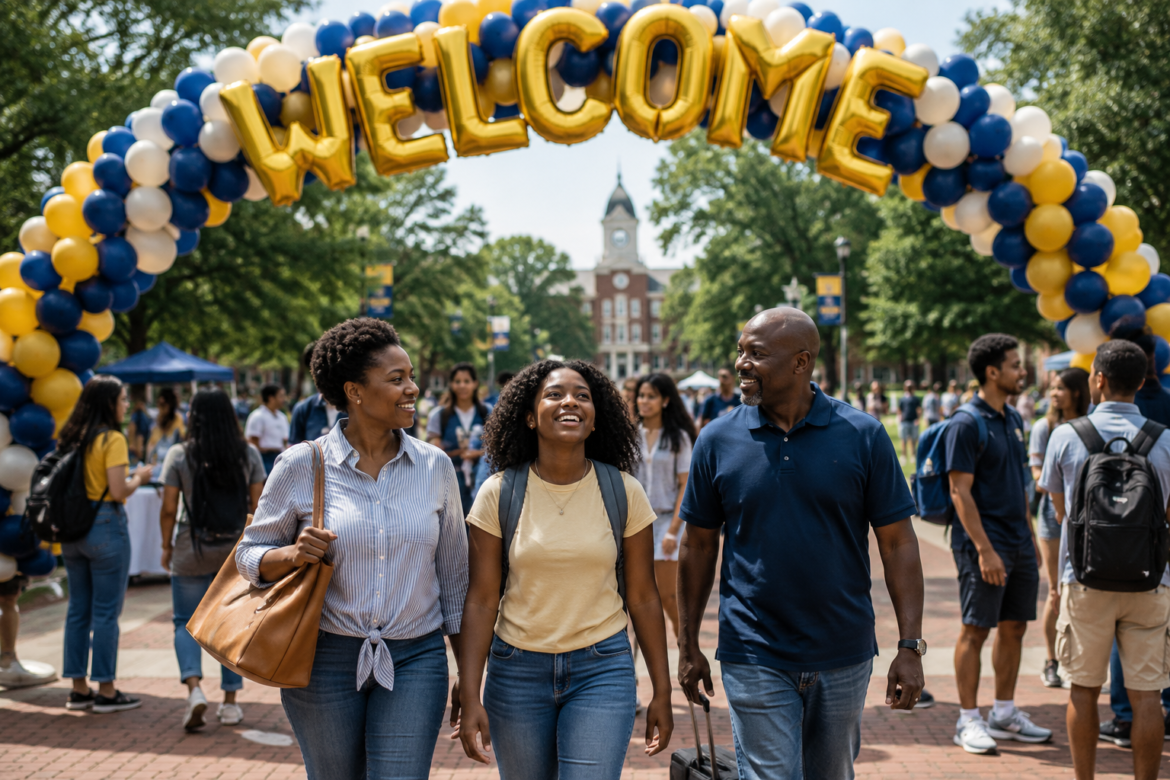
Three students smile and walk under a large gold-lettered 'WELCOME' balloon arch on a campus walkway.
Hot Topics - controversialHigher EducationCollege Admissions

Summer College Visits: A Guide for Families

by EdCircuit Staff July 16, 2026
written by EdCircuit Staff 7 minutes read

Summer college visits can be one of the most important experiences in the college search process. While websites, rankings, and brochures provide information, nothing replaces walking across a campus, speaking with students, and imagining what life might look like over the next four years.

Every summer, countless families pile into cars with snacks, playlists, and carefully planned schedules, setting off on road trips that may ultimately shape a student’s future. For teenagers, these visits often represent the first time they begin to picture themselves as adults. For parents, they serve as a reminder that the years have passed far too quickly.

Somewhere between the campus tours, bookstore stops, and conversations over lunch, families begin creating memories that will last long after college acceptance letters arrive.

Summer is also one of the best times to begin the search. Campuses are less crowded, schedules are more flexible, and students have the opportunity to explore schools without the pressures of homework, sports seasons, and standardized testing. More importantly, these visits transform the college search from something overwhelming into something exciting.

Finding the right college is not about selecting the biggest name. It is about finding a place where students can grow academically, socially, and personally.

Start with Yourself Before You Start with Colleges

Many students begin by asking, “Which schools should I visit?”

A better question might be, “What kind of experience am I looking for?”

Before creating a list of colleges, students should spend time considering their interests and priorities.

Questions worth discussing include:

  • What subjects excite me?
  • How far from home do I want to be?
  • Do I prefer a large campus or a smaller community?
  • What extracurricular opportunities matter most?
  • Am I interested in athletics, clubs, research, or leadership opportunities?
  • Do I want an urban, suburban, or rural setting?

Parents often remember preparing for college with typewriters, notebooks, and printed maps. Today’s students have access to AI tools, virtual tours, digital resources, and more educational pathways than ever before.

The search should focus less on prestige and more on fit.

Use Online Research Before You Visit

Long before stepping onto campus, students can learn a tremendous amount online.

College websites provide information about:

  • Academic programs.
  • Scholarship opportunities.
  • Career outcomes.
  • Residence halls.
  • Study abroad programs.
  • Student organizations.
  • Internship opportunities.

Students should also explore social media, YouTube campus tours, student newspapers, and LinkedIn profiles of alumni.

Looking at where graduates work can provide valuable insight into the strength of a school’s network and career preparation.

Rankings tell only part of the story. A school that ranks lower nationally may provide exceptional opportunities in a student’s intended field.

How AI Is Changing the College Search

Today’s students are searching for colleges differently from previous generations.

Artificial intelligence tools are helping students:

  • Compare schools.
  • Organize notes from visits.
  • Create travel itineraries.
  • Develop questions for admissions counselors.
  • Research majors and career paths.
  • Track application deadlines.
  • Identify scholarship opportunities.

AI should never replace personal experiences, but it can help families stay organized and make more informed decisions throughout the process.

Before You Leave Home

Preparation can make a college visit far more productive.

Students should:

  • Register for tours and open houses.
  • Schedule meetings with academic departments.
  • Contact coaches if interested in athletics.
  • Explore overnight visit opportunities.
  • Research scholarship programs.
  • Prepare questions for admissions staff.
  • Bring a notebook or note-taking app.
  • Wear comfortable shoes.

Families are often surprised by how much walking is involved.

Taking photographs and keeping notes after each visit can also be extremely valuable. After touring several campuses, many details begin to blend together.

Attend Open Houses and Information Sessions

Summer open houses offer far more than a simple walking tour.

Many events include:

  • Admissions presentations.
  • Financial aid sessions.
  • Faculty panels.
  • Student ambassadors.
  • Residence hall tours.
  • Academic department visits.
  • Dining hall experiences.
  • Opportunities to meet coaches and advisors.

These events help students experience the personality and culture of a campus.

Sometimes the answers students hear are just as important as the facilities they see.

Ask Questions That Matter

Students should not be afraid to ask questions.

Some of the most valuable include:

  • What do students do on weekends?
  • How easy is it to change majors?
  • What internship opportunities are available?
  • What support services exist for first-year students?
  • What percentage of students return for sophomore year?
  • What do students love most about this school?

That last question often produces the most authentic answers.

Pay Attention to the Little Things

Beautiful buildings and impressive recreation centers are easy to notice.

The details matter even more.

Observe:

  • Are students interacting with one another?
  • Does the campus feel welcoming?
  • Can you picture yourself living there?
  • Are classrooms active and modern?
  • Does the environment feel safe?
  • Are students engaged and happy?

Sometimes students immediately feel at home. Other times, a school that looked perfect online simply does not feel right.

That is perfectly normal.

Big Universities Offer Big Opportunities

Large universities provide experiences that are difficult to duplicate.

Students may find:

  • Hundreds of majors and minors.
  • Extensive alumni networks.
  • Major athletic traditions.
  • Research opportunities.
  • Diverse student populations.
  • Study abroad experiences.
  • Cutting-edge facilities.

For some students, the energy and excitement of a large campus are exactly what they are seeking.

Small Colleges Offer Big Advantages

One of the biggest mistakes families make is overlooking smaller institutions.

Smaller colleges frequently provide:

  • Lower student-to-faculty ratios.
  • Smaller class sizes.
  • Greater access to professors.
  • Earlier leadership opportunities.
  • Personalized mentoring.
  • Strong campus communities.

Students interested in athletics may also discover tremendous opportunities at Division II, Division III, NAIA, and smaller Division I institutions.

Meaningful playing time, close relationships with coaches, and leadership opportunities can create unforgettable experiences.

The right fit is not determined by enrollment numbers.

It is determined by where students feel challenged, supported, and inspired.

Don’t Forget Community Colleges and Alternative Pathways

College success does not always begin at a four-year university.

Community colleges provide affordable pathways that allow students to complete general education requirements before transferring to bachelor’s degree programs. Many states offer transfer agreements that make the transition seamless.

Career and technical programs, workforce certifications, and dual-enrollment opportunities are also creating new pathways to success.

Students should remember that there are many roads to achieving their goals.

Understand the Financial Side

Families should begin discussing finances early.

Important considerations include:

  • Merit scholarships.
  • Need-based aid.
  • Honors programs.
  • In-state versus out-of-state tuition.
  • Internship opportunities.
  • Career outcomes.
  • Return on investment.

The least expensive option is not always the best choice, and the most expensive option is not always the smartest investment.

Understanding the long-term value of an education is just as important as understanding its cost.

Build a Balanced List

Experts often recommend creating three categories:

Dream Schools

Highly competitive institutions that represent exciting possibilities.

Match Schools

Schools where a student’s academic profile aligns well with admitted students.

Likely Schools

Schools where admission is very probable and where the student would be happy attending.

Every school on the list should be a place where the student can see themselves succeeding.

No college should be included simply because others expect it.

Trust Your Feelings

Sometimes students arrive on a campus and immediately know.

Other times, a school that looked perfect on paper simply does not feel right.

That is okay.

The college search is not about impressing friends or chasing rankings. It is about finding a community where students can learn, grow, develop lifelong friendships, and prepare for the future.

Summer college visits are about far more than admissions brochures and rankings. They are road trips filled with conversations, hopes, and bittersweet reminders that childhood is giving way to independence. Somewhere between the campus tours, dining halls, and bookstore stops, students begin to see the future differently.

And for many families, those summer miles become memories they will cherish long after graduation day.

Subscribe to edCircuit to stay up to date on all of our shows, podcasts, news, and thought leadership articles.
July 16, 2026 0 comments
0 FacebookTwitterPinterestLinkedinWhatsappCopy LinkEmail
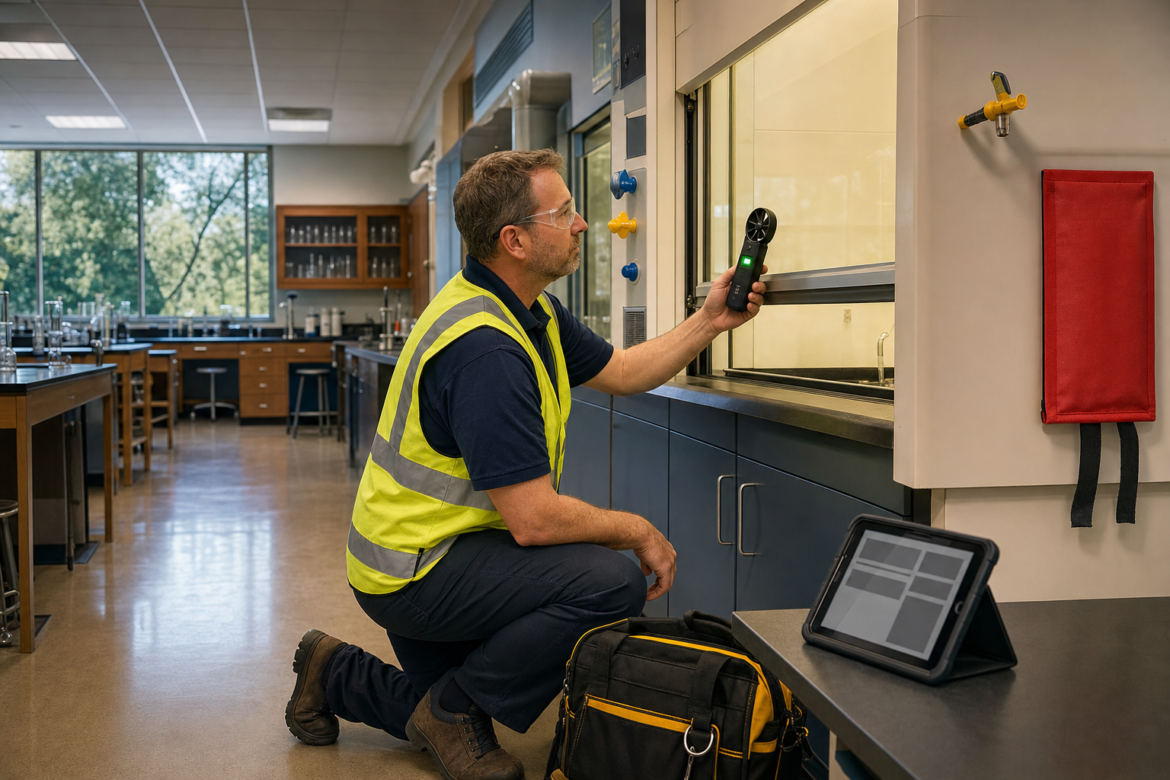
Physical safety inspections in science labs: a facilities inspector in a safety vest and glasses tests a fume hood airflow with a meter beside a gas shut-off valve and fire blanket
Hot Topics - controversialSchool SafetyScience SafetyScience and Lab SafetyK-12

Physical Safety Inspections in Science Labs

by EdCircuit Staff July 15, 2026
written by EdCircuit Staff 9 minutes read

Physical safety inspections are one of the most valuable tools schools have for creating safer science learning environments. A physical safety inspection of a science lab is a walk through the room itself, its equipment, exits, ventilation, utilities, storage and signage, to find the conditions that could hurt someone before they do. Many educators associate the term with compliance requirements, checklists or annual reviews, but an effective inspection is more than an audit: it looks at the laboratory through a lens focused entirely on prevention.

Every year, students walk into science classrooms expecting a safe place to learn, experiment and explore, where teachers demonstrate, students handle equipment and chemicals are used and stored. Most days pass without incident, and that is exactly the goal. The conditions that lead to accidents rarely appear overnight: equipment ages, storage areas become crowded, documentation becomes outdated and emergency equipment is overlooked, until small concerns accumulate into significant problems.

A physical safety inspection helps schools identify those concerns before they contribute to an injury, emergency or compliance issue, and the most effective inspections are about protecting people rather than finding fault. For how often each piece of equipment should be checked, and by whom, see edCircuit’s article on science lab safety inspections and their schedule.

What Does an Inspector Look For When Walking Into the Laboratory?

An inspector looks beyond appearances to whether the room would work in an emergency. When an experienced laboratory safety professional enters a science classroom for an annual inspection, everything may look good at first glance. The room is clean, student work is displayed on the walls, laboratory tables are organized, safety goggles are visible and chemical cabinets appear orderly. Many administrators would conclude the laboratory is in excellent condition.

A closer look often tells a different story. The eyewash station appears functional, but there is no evidence it has been tested recently, and boxes of classroom supplies partly obstruct access to it. The safety shower is operational, but reaching it quickly during an emergency could prove difficult. The fire extinguisher is mounted properly, but equipment stored nearby may slow access. Inside a chemical cabinet, acids and bases have gradually migrated next to one another over the course of several years. Nothing looks dangerous, yet every finding represents a potential weakness in the laboratory safety system. This is the true value of a physical inspection: it reveals the difference between looking safe and being safe.

Why Can Familiarity Be Dangerous?

Familiarity is dangerous because conditions that people see every day stop registering as hazards. Teachers spend years in the same classrooms, laboratory managers see the same storage areas every day, and facilities teams walk the same hallways repeatedly. Over time, conditions become normal. A partially blocked exit no longer attracts attention, an aging chemical container becomes part of the background, a damaged label seems insignificant, and a missing inspection tag is easily overlooked.

People adapt to their environments, and what once appeared unusual becomes routine. That is a primary reason annual inspections matter: an outside perspective identifies concerns that have become invisible to those working in the space every day, before those concerns create harm.

What Do Inspectors Often Discover?

Inspectors most often discover dozens of small issues that together increase risk, rather than one dramatic hazard, which surprises many educators. Typical findings include eyewash stations that have not been inspected, safety showers blocked by storage materials, fire extinguishers hidden behind equipment, compressed gas cylinders that are not properly secured, chemical containers with deteriorating labels, expired chemicals that should have been removed years ago, damaged goggles still being used by students, and emergency contact information that no longer reflects current personnel. Safety Data Sheet collections may not have been updated, and chemical inventories may no longer match the laboratory’s actual contents.

Individually, each issue may appear minor. Collectively, they tell a different story: they reveal opportunities for improvement and, more importantly, opportunities for prevention.

What Does a Physical Safety Inspection of a Science Lab Cover?

A physical safety inspection of a science lab covers the room and everything built into it, not only the equipment on the benches. A National Science Teaching Association (NSTA) list for school laboratories, preparation rooms and storerooms (Ken Roy, February 2020) gives a practical order for the walk-through:

  • Exits and egress: every means of egress clear and unobstructed, with exit signage, evacuation plans and emergency numbers posted.
  • Occupancy: a class no larger than the room was designed to hold. NSTA’s position statement on safety and school science instruction (revised April 2024) states that more than 24 students engaged in science activities cannot safely be supervised by one teacher, and asks teachers to report class sizes that violate occupancy load codes.
  • Ventilation: laboratories and preparation rooms under negative pressure relative to the corridors, and fume hoods operating properly with nothing stored on the hood’s work surface.
  • Utilities: ground fault circuit interrupter (GFCI) protection on laboratory, preparation room and storeroom circuits, and easily accessible master shutoffs for electricity, gas and water, each with signage.
  • Storage: compressed gas cylinders upright and secured, and hazardous chemicals labeled, dated and stored in areas with restricted access.
  • Signage and lighting: exits, shutoffs and emergency equipment clearly marked, and emergency lights or lighted exit signs tested at least once a month, which the same NSTA list notes the fire code requires.

Housekeeping ties these together: the NSTA list asks that trip hazards be removed, sprinkler clearance kept and access to emergency equipment left open. OSHA’s guidance to the Laboratory Standard adds that a laboratory should have an adequate number and placement of safety showers, eyewash units and fire extinguishers, so the inspection checks where equipment is, not only whether it exists.

Why Does Emergency Equipment Get So Much Attention?

Emergency equipment receives more attention than any other area of an inspection because it is designed for the moments nobody wants to experience and must work the first time it is needed. An eyewash station may sit unused for years, a safety shower may never be activated, and a fire extinguisher may remain untouched throughout its service life. Yet if an emergency occurs, these systems instantly become critical.

Inspections verify that emergency equipment is accessible, operational and ready. Can a student reach the eyewash station within seconds? Is the safety shower unobstructed? Can staff immediately access emergency shutoff controls? Are spill response materials available? Would emergency responders be able to navigate the laboratory efficiently? Washington State’s Department of Labor & Industries summarizes the reach requirement for emergency washing facilities as less than 10 seconds and no more than 50 feet away, with nothing blocking the way. These questions are not theoretical; they determine whether safety systems function as intended when every second matters.

What Hides Behind Closed Doors in Chemical Storage?

If emergency equipment represents the visible side of laboratory safety, chemical storage represents the hidden side, and some of the most significant inspection findings occur inside storage cabinets and preparation rooms. Inspectors often find chemicals untouched for decades: some past their useful life, some no longer used by the curriculum, and some inherited from previous instructors and stored without evaluation. Without routine review, even organized storage areas develop concerns as inventories grow more complex.

Physical inspections help schools answer four important questions: What chemicals do we have? Why do we have them? Are they stored appropriately? Do we still need them? The answers frequently reveal opportunities to reduce risk while simplifying laboratory management.

Why Do Chemical Hygiene Officers Matter?

Chemical hygiene officers matter because inspection findings lead to change only when someone is responsible for following them through. The most successful inspection programs rarely rely on a single annual visit; they are supported by individuals who champion safety throughout the year. In many schools, this responsibility belongs to a Chemical Hygiene Officer (CHO), science supervisor, laboratory manager or designated safety coordinator.

These individuals bridge inspections and daily operations: they monitor corrective actions, review inventories, coordinate training, track documentation, support compliance efforts and make sure findings lead to real improvements. Without someone guiding the process, even the best inspection becomes a forgotten report on a shelf. Safety improves when ownership exists, and the strongest programs treat inspections as part of an ongoing safety effort rather than isolated events.

Why Is Lab Safety a Leadership Issue?

Lab safety is a leadership issue because effective safety programs need support beyond the science teachers who are often assumed to own them. Principals, facilities personnel, risk managers, district administrators and school boards each play a role in creating safe laboratory environments. Leadership determines priorities, allocates resources and establishes expectations. When school leaders ask about inspections, corrective actions, training and laboratory conditions, safety becomes part of the organizational culture; when those conversations never occur, important issues can remain unresolved for years. One of the simplest questions a school leader can ask is also one of the most powerful:

“When was our last laboratory safety inspection?”

The answer often reveals far more than expected, because it shows whether inspections, follow-up and leadership attention are happening at all.

Why Is the Inspection Not the Goal?

The inspection is the starting point rather than the finish line, and its real value comes from what happens afterward. Many schools mistakenly treat the inspection as the end of the work. Findings must be addressed, equipment must be repaired, training must be conducted, documentation must be updated and storage systems must be improved. Every corrective action strengthens the laboratory environment and every improvement reduces risk. The inspection identifies the path forward, and progress occurs when schools follow that path.

How Do Schools Build a Culture of Continuous Improvement?

Schools build a culture of continuous improvement by evaluating their practices all the time rather than waiting for problems to force change. The strongest programs ask questions, seek feedback and treat inspections as opportunities to learn rather than obligations to endure, which turns safety from a compliance activity into a cultural value. Teachers become more engaged, administrators become better informed, students benefit from safer learning environments, and the laboratory becomes a place where innovation and safety support one another rather than compete for attention.

What Story Does a Science Laboratory Tell?

Every science laboratory tells the story of how well its safety is managed. The condition of its equipment, storage systems, emergency resources, documentation and facilities, together with whether each class fits the occupancy load the room can safely hold, reveals how effectively safety is being managed. The question is whether schools are willing to read that story before an incident writes the next chapter.

Physical safety inspections provide that opportunity. They let educators identify risks before injuries occur, correct deficiencies before emergencies arise and give students an environment where they can safely explore the wonder of science. Their true purpose is not to find problems but to protect people, because every student deserves a laboratory where curiosity is encouraged, discovery is celebrated and safety is never left to chance.

Play video: Laboratory Safety Inspection (10 minutes 48 seconds)10:48
Laboratory Safety Inspection10 min 48 sBelton New Tech @Waskow on YouTube

Belton New Tech @Waskow – Laboratory Safety Inspection (Play video)

Subscribe to edCircuit to stay up to date on all of our shows, podcasts, news, and thought leadership articles.

July 15, 2026 0 comments
0 FacebookTwitterPinterestLinkedinWhatsappCopy LinkEmail
Four smiling children of diverse backgrounds study a globe at a classroom desk, with flags, a soccer ball, a gold World Cup trophy, and a tablet showing a soccer field. Books are stacked labeled Geography, History, Culture, STEM, and Language, against a world map wall.
K-12Hot Topics - controversial

World Cup Education Opportunities Beyond the Game

by EdCircuit Staff July 14, 2026
written by EdCircuit Staff 6 minutes read

World Cup education opportunities extend far beyond the excitement on the pitch, offering schools and families meaningful ways to connect students with the people, places, cultures, and ideas that shape our increasingly interconnected world. As the United States, Canada, and Mexico welcome the world in 2026, the tournament presents a rare opportunity to transform one of the planet’s most celebrated sporting events into a powerful educational experience.

For billions of people, the FIFA World Cup represents passion, pride, and unforgettable moments. For educators, however, it represents something even greater: one of the world’s largest classrooms.

From geography and history to STEM, languages, culture, and global citizenship, the tournament provides authentic opportunities to engage students in learning that feels relevant, meaningful, and alive. At a time when educators are searching for ways to connect classroom instruction with real-world experiences, few events offer as many possibilities as the World Cup.

The World’s Biggest Sporting Event Becomes the World’s Biggest Classroom

Every four years, the World Cup brings together nations from every corner of the globe. Fans may focus on the matches, but educators can focus on something equally important—the stories behind the teams.

Students naturally become curious about countries they may have never studied before. They want to know where players come from, what languages they speak, what traditions they celebrate, and what makes their cultures unique.

That curiosity is powerful.

Research has long shown that students learn best when they are engaged and emotionally invested. The World Cup creates that engagement naturally. Learning no longer feels disconnected from the world around them. Instead, students begin to understand that geography, history, mathematics, science, and culture are all connected.

In many ways, the tournament transforms the entire world into a classroom.

Geography Comes Alive

Maps become more than decorations on the wall when students are cheering for teams from around the world.

The World Cup provides countless opportunities to explore continents, countries, capitals, populations, climates, and natural landmarks. Students can compare host cities, calculate distances traveled by teams, and investigate how geography influences culture and daily life.

Rather than memorizing locations, students begin asking questions.

Why are certain nations so passionate about soccer? How do climate and geography affect lifestyles? What similarities exist between countries separated by thousands of miles?

Those questions encourage exploration and critical thinking.

More importantly, they help students recognize the incredible diversity that exists across our planet while reinforcing the idea that people everywhere share common hopes, dreams, and experiences.

Mathematics With Real Meaning

For many students, mathematics becomes far more interesting when it is connected to something they enjoy.

Goals scored, possession percentages, player statistics, tournament brackets, rankings, and probabilities all provide opportunities for authentic mathematical learning.

Students can analyze scoring averages, graph team performance, calculate percentages, and make predictions throughout the tournament. Concepts such as probability, statistics, and data analysis suddenly become relevant because they are being applied to events unfolding in real time.

Instead of asking, “When will I ever use this?” students can immediately see the answer.

Real-world data creates real-world learning.

STEM Is Everywhere in the Beautiful Game

Behind every World Cup match lies an incredible story of science, engineering, and innovation.

Students can explore the physics behind ball movement and investigate how speed, force, and spin affect performance. They can examine the engineering and architecture required to construct modern stadiums capable of safely hosting tens of thousands of spectators.

Technology has transformed the game itself.

Goal-line technology, video assistant referees (VAR), wearable sensors, artificial intelligence, performance analytics, and advanced sports science are now central components of elite competition.

These innovations provide students with valuable insights into careers in engineering, computer science, robotics, sports medicine, and data analytics.

The World Cup reminds young people that STEM is not confined to laboratories or textbooks. It exists everywhere—even in the games they love.

Culture, Language, and Global Understanding

Perhaps no sporting event better illustrates the richness of human diversity than the World Cup.

Countries with different histories, traditions, and languages come together to celebrate a shared passion. For students, this provides a unique opportunity to expand their understanding of the world.

Teachers can introduce customs, music, food, holidays, and traditions associated with participating nations. Language classes can explore greetings and common phrases while helping students appreciate the importance of communication across cultures.

Schools might organize international festivals, classroom projects, or cultural celebrations that allow students to showcase countries participating in the tournament.

These experiences foster empathy, curiosity, and respect—qualities that are essential in a world that grows more connected each year.

History Through the Stories of Nations

Every team competing in the World Cup carries a history that extends far beyond soccer.

Students can examine the events, leaders, and movements that shaped nations throughout history. They can explore how sports have influenced societies, united communities, and even served as symbols of hope during difficult times.

History becomes more than dates and timelines.

It becomes the story of people.

Through the lens of the World Cup, students gain a deeper appreciation for the experiences that have shaped countries and cultures across generations.

Learning Doesn’t End When the Bell Rings

The educational opportunities created by the World Cup extend well beyond school walls.

Families can watch matches together and use them as springboards for meaningful conversations. Parents can encourage children to research countries before kickoff, prepare meals inspired by participating nations, or explore books, documentaries, and museums that bring global cultures to life.

Communities may host watch parties, cultural festivals, and public events that expose young people to experiences and perspectives beyond their immediate surroundings.

Some of the most meaningful learning experiences happen not in classrooms, but around dinner tables and in conversations shared between generations.

Preparing Students for a Global Future

Today’s students will inherit a world that demands collaboration, communication, and cultural understanding.

Success in the future workplace will require more than academic knowledge. Young people must learn to appreciate different perspectives, work alongside diverse communities, and understand how interconnected the world has become.

The World Cup offers an opportunity to develop those qualities.

For a few weeks, billions of people from different countries, cultures, and backgrounds come together around a common passion. They celebrate together, mourn together, and experience moments that transcend borders and languages.

That may be the tournament’s greatest lesson.

Understanding one another matters far more than understanding the score.

Beyond the Trophy

When the final whistle blows and a champion lifts the trophy, the memories will remain.

But perhaps the greatest legacy of the 2026 FIFA World Cup will not be measured in goals, championships, or highlight reels.

It may be found in a student discovering a new country.

In a classroom discussion about culture and history.

In a family exploring the world together.

And in young people, realizing that the differences that make humanity unique are also what bring us together.

Because the world’s most popular sport offers something far greater than competition.

It offers an opportunity to learn from one another—and that lesson extends far beyond the game.

Subscribe to edCircuit to stay up to date on all of our shows, podcasts, news, and thought leadership articles.

July 14, 2026 0 comments
0 FacebookTwitterPinterestLinkedinWhatsappCopy LinkEmail
Newer Posts
Older Posts

Participate

  • Contribute
  • Sponsor
  • Submit Release
  • Subscribe
  • Get Interviewed

We value your privacy

We use cookies to enhance your browsing experience, serve personalized ads or content, and analyze our traffic. By clicking "Accept All", you consent to our use of cookies.

Customize
  • Needed for the site to work: signing in, the cart, your consent choice. Always on.

    8 cookies
    • ss_consent 1 yearYour cookie choice on this site, so you are not asked again.
    • wordpress_logged_in_* 2 days, or 14 days with "remember me"Keeps you signed in as you move between pages.
    • wordpress_sec_* 2 days, or 14 days with "remember me"The secure half of your sign-in.
    • wordpress_test_cookie SessionChecks that your browser accepts cookies when you sign in.
    • wp-settings-* 1 yearYour display settings when signed in.
    • wp_woocommerce_session_* 2 daysYour shopping session: the cart and the checkout.
    • woocommerce_cart_hash SessionTells the site whether your cart has changed.
    • woocommerce_items_in_cart SessionWhether your cart holds anything.
  • Remembers choices you make, such as a language or a region, and supports features like live chat.

    1 cookie
    • woocommerce_recently_viewed SessionThe products you looked at, so the site can show them again.
  • Helps us understand how visitors use the site: which pages are read, and for how long.

    2 cookies
    • _ga 2 yearsGoogle Analytics: tells one visitor from another. Set only after you allow analytics.
    • _ga_* 2 yearsGoogle Analytics: keeps your session state. Set only after you allow analytics.
  • Measures how fast pages load so we can make them faster.

  • Used to show you content and offers that match your interests, on this site and elsewhere.

    1 cookie
    • sbjs_* SessionWooCommerce order attribution: where you came from, so a purchase can be credited to the campaign or site that sent you.

Your browser asks us not to sell or share your information (Global Privacy Control), so advertising cookies stay off.

Do not sell or share my personal information

Some cookies from other companies help show you offers on other sites. Tick the box and save your preference to opt out of that sharing; untick it to opt back in at any time.

Your browser sends Global Privacy Control, so this preference is set for you and cannot be changed here.

Sign In

Keep me signed in until I sign out

Forgot your password?

Password Recovery

A new password will be emailed to you.

Have received a new password? Login here

Shopping Cart

Close

No products in the cart.

Close
-
00:00
00:00

Queue

Update Required Flash plugin
-
00:00
00:00

Your cart (items: 0)

Products in cart

Product Details Total
Subtotal $0.00
Shipping and discounts calculated at checkout.
View cart
Go to checkout

Your shopping cart is empty

Return to shop

Notifications