
edCircuit
  • Start Here
    • Login
    • Register
    • Subscribe
    • Submit a Press release
    • Advertise or Sponsor
    • Contribute
    • Get Interviewed
  • On The Wire
  • EdTech
    • All EdTech
    • Online Learning
    • Hybrid and Remote Learning
    • Augmented and Virtual Reality
    • ESports
    • Gamification and Game-Based Learning
    • Digital Citizenship
    • EdTech Entrepreneurs
    • Market Trends
    • Future of Education
  • K-12 Education
    • All K-12
    • K-12 Teachers
    • Teaching Strategies
    • Special Education and IEPs
    • Dyslexia
    • Gifted and Advanced Learning
    • Early Childhood, Pre-K and Kindergarten
    • School Calendar
    • Tutoring and Homework Help
    • Attendance and Absenteeism
    • After-School Programs
    • School Counselors
    • Homeschooling
    • School Models
    • Teacher Retention
    • Parents
    • Students
    • STEM and STEAM Education
  • Teaching and Learning
    • Literacy and Reading
    • Math Education
    • Civics and History Education
    • Financial Literacy
    • Assessment and Testing
    • Curriculum and Instruction
    • Personalized Learning
    • Project-Based Learning
    • Social-Emotional Learning
    • Executive Function
    • Creativity
    • Diversity, Equity, Inclusion
  • Professional Development
    • All Professional Development
    • Educators
    • Administrators
    • edLeaders
  • Higher Education
    • All Higher Education
    • College Admissions
    • Career and Technical Education (CTE)
    • Graduation
    • FAFSA and Financial Aid
    • Student Loans
  • Artificial Intelligence
  • Cybersecurity
  • School Safety
    • All School Safety
    • Science and Lab Safety
    • School Design and Facilities
    • Bullying
    • Duty of Care and School Liability
  • Continuing Education
    • All Continuing Education
    • Online Certificate Programs
    • Teaching Jobs and Careers
    • Teacher Appreciation
  • Education Policy and Government
    • All Education Policy
    • Department of Education
    • School Choice
    • Global
    • Advocates
  • EDU Shows
    • All EDU Shows
    • Safer Ed
    • Mind the Gap
    • EdTech Questions
    • CoffeEd
    • InFocus
    • InformED Report
  • EDU Podcasts
    • All EDU Podcasts
    • Author Chats
    • CoSN The Podcast
    • Education Today
    • Building the Bridge
    • Students Speak
  • Education Industry Guides and Reports
  • Archived Media
    • Future of School: The Podcast
    • Equity Everywhere
  • About edCircuit
  • Subscribe
edCircuit
  • LOGIN
Home Tags Posts tagged with "Headline"
Tag:

Headline

This if for posts to be in the featured/top section of site
A judge's gavel, graduation cap, stacked books, diploma, and coins are arranged on a table—symbolizing student loan caps—with a courthouse and scales of justice in the background.
Hot Topics - controversialHigher EducationCollege AdmissionsStudent Loans

Student Loan Caps Trigger National Debate

by EdCircuit Staff May 21, 2026
written by EdCircuit Staff 7 minutes read

Student loan caps are quickly becoming one of the most consequential higher education policy debates of 2026, as states, universities, healthcare leaders, and students confront new questions about the future affordability of graduate education.

What began as a federal effort to address growing concerns over student debt has rapidly evolved into a nationwide legal and policy battle involving workforce development, educational access, and the rising cost of advanced degrees.

In recent weeks, a coalition of states filed lawsuits against the U.S. Department of Education over newly proposed restrictions that would place limits on federal borrowing for graduate and professional degree programs. The lawsuits argue the federal government exceeded its authority and could unintentionally create barriers for students pursuing careers in healthcare, education, law, counseling, and other professions that often require advanced degrees.

The issue is drawing attention far beyond the courtroom.

For colleges and universities, the debate raises concerns about enrollment, accessibility, and long-term program sustainability.
For students and families, it creates uncertainty around how graduate education may be financed in the future.
For states already struggling with shortages in nursing, mental health services, teaching, and educational leadership, the proposed limits are being viewed through the lens of workforce readiness.

And for policymakers, the lawsuits have become part of a much larger national conversation surrounding the role federal lending has played in shaping the modern higher education system.

The Proposed Loan Restrictions

At the center of the lawsuits are proposed federal limits tied to graduate and professional student borrowing programs.

Supporters of the restrictions argue that the changes are intended to reduce excessive debt accumulation and encourage greater accountability in higher education pricing. Critics, however, argue that the caps could significantly reduce access to advanced degree pathways for students without substantial personal or family financial resources.

Graduate education often comes with significant financial demands. Medical school, law school, counseling programs, doctoral studies, and healthcare certifications can require years of tuition payments, licensing expenses, residency requirements, internships, and unpaid clinical work.

For many students, federal student loans have historically served as the primary mechanism for accessing those opportunities.

The concern among critics is not simply about borrowing itself, but about what happens when access to borrowing changes before the underlying cost structure of graduate education changes with it.

Why States Are Suing

The lawsuits filed by states, including Washington, Michigan, Virginia, and New Jersey, collectively argue that the proposed loan caps could disrupt critical workforce pipelines and limit educational opportunity.

Several states specifically highlighted concerns surrounding healthcare staffing shortages, arguing that reducing access to graduate financing could discourage students from entering professions already facing nationwide demand.

Nursing programs, behavioral health pathways, occupational therapy programs, physician training tracks, and mental health counseling degrees were all referenced throughout various public statements and reporting connected to the lawsuits.

Education leaders are also closely watching the debate unfold.

Across K–12 education, advanced degrees are often required for leadership, specialized instructional roles, counseling certifications, school psychology positions, intervention services, curriculum leadership, and district administration.

At a time when many school systems are already facing shortages in special education, mental health support, and school leadership recruitment, some education observers worry the restrictions could add another layer of financial pressure for aspiring educators seeking advanced credentials.

Others argue the issue could disproportionately affect first-generation college students and middle-income families who may not qualify for large amounts of need-based aid but also lack the financial resources to independently fund graduate education.

Play video: Oregon AG sues Department of Education over limiting access to federal student loans (32 seconds)0:32
Oregon AG sues Department of Education over limiting access to federal student loans32 sKGW News on YouTube

KGW News – Oregon AG sues Department of Education over limiting access to federal student loans (Play video)

The Federal Perspective

Federal officials and supporters of the proposed restrictions argue that the conversation surrounding graduate student debt has been building for years.

Advocates for reform point to growing concerns that unlimited or high-cap federal lending may contribute to tuition inflation while leaving some graduates with unsustainable repayment burdens.

They also argue that institutions should be more accountable for program outcomes, particularly in cases where graduates accumulate large debt loads without sufficient earning potential to manage repayment responsibly.

Supporters of the policy frequently frame the restrictions as a broader effort to address long-term debt growth and encourage financial sustainability within higher education.

Some policymakers have argued that the current structure of graduate lending has allowed educational costs to rise too rapidly over time without adequate pressure to contain pricing.

The debate reflects a growing national divide over how higher education should be financed, who bears responsibility for rising tuition costs, and how access can be preserved without expanding long-term debt burdens.

A Debate Larger Than Student Loans

While the lawsuits focus on the legality of federal loan restrictions, the broader discussion extends into nearly every corner of higher education policy.

The United States continues to face ongoing conversations surrounding:

  • college affordability
  • workforce shortages
  • educational equity
  • student debt
  • healthcare staffing
  • teacher recruitment
  • graduate program accessibility

In many ways, the lawsuits have become a focal point where all of those issues intersect.

For years, colleges and universities have faced criticism over escalating tuition costs. At the same time, industries such as healthcare and education continue to rely heavily on workers whose careers require graduate-level credentials.

That creates a difficult balancing act.

Limiting borrowing may reduce future debt exposure for some students. But critics argue that restricting access without addressing the root causes of educational costs could shift financial barriers directly onto students and families.

The issue is especially complicated because many graduate students are not traditional undergraduate learners. Some are career changers. Others are teachers pursuing administrative licensure, nurses seeking advanced practice certifications, counselors completing supervised training hours, or working professionals attempting to move into higher-paying or higher-demand careers.

For many of those individuals, graduate education is directly connected to economic mobility and long-term career advancement.

Students Caught Between Cost and Opportunity

For current and future graduate students, the debate introduces a new level of uncertainty into an already expensive educational landscape.

A prospective nursing student considering advanced certification may now question how future financing could change before completing a multi-year program. A teacher pursuing principal licensure may wonder whether borrowing limitations could affect enrollment decisions. A student entering counseling or social work may face difficult choices about affordability versus career aspirations.

The uncertainty extends beyond tuition alone.

Graduate students often balance housing costs, childcare responsibilities, unpaid internships, transportation expenses, licensing exams, and reduced work schedules while completing their programs.

As a result, many education experts say the conversation surrounding graduate lending cannot be viewed solely through the lens of tuition bills or debt totals. It also involves questions about who can realistically afford to enter essential professions in the first place.

Potential Impact on Workforce Development

One of the strongest themes emerging from the lawsuits is concern over future workforce pipelines.

Healthcare systems across the country continue to report shortages involving nurses, therapists, behavioral health professionals, and physicians. Schools continue to face shortages in counselors, intervention specialists, psychologists, administrators, and specialized teaching roles.

Several state officials involved in the lawsuits argue that limiting graduate loan access could unintentionally slow efforts to address those shortages.

Others believe the lawsuits may intensify pressure on universities to reevaluate tuition pricing, program structure, and long-term affordability strategies.

Some analysts suggest the controversy could accelerate broader conversations around:

  • tuition reform
  • alternative credential pathways
  • employer-supported education programs
  • state scholarship expansion
  • income-based repayment models
  • workforce incentive programs

In that sense, the debate may ultimately reshape not only how graduate education is financed, but also how advanced workforce preparation is structured in the future.

What Happens Next

The lawsuits are expected to move through federal courts over the coming months, with legal arguments likely centered on administrative authority, federal education law, and rulemaking procedures.

Courts may ultimately determine whether the Department of Education acted within its legal authority when implementing the proposed restrictions and whether states can demonstrate measurable harm connected to the policy changes.

Regardless of the legal outcome, the debate surrounding student loan caps has already exposed broader tensions within higher education and workforce policy.

Questions surrounding affordability, access, accountability, and workforce preparation are unlikely to disappear anytime soon.

As states, universities, students, and policymakers continue to navigate the issue, the discussion may increasingly focus on a larger reality facing the nation: advanced degrees remain essential for many critical professions, but the path to obtaining them continues to grow more financially complex.

And while the courts may decide the legality of the policy itself, the larger national conversation about who can afford graduate education, and how the country prepares its future workforce, is only beginning.

Subscribe to edCircuit to stay up to date on all of our shows, podcasts, news, and thought leadership articles.

May 21, 2026 0 comments
0 FacebookTwitterPinterestLinkedinWhatsappCopy LinkEmail
A woman, among district leaders, leads a business meeting in a modern conference room, with five colleagues seated and a large digital screen displaying AI and data graphics behind her.
Hot Topics - controversialArtificial IntelligenceK-12

What District Leaders Must Do in the AI Era

by EdCircuit Staff May 21, 2026
written by EdCircuit Staff 6 minutes read

What district leaders must do in the AI era is no longer a theoretical question—it is an immediate leadership challenge unfolding across classrooms, central offices, and communities. Artificial intelligence is already changing how teachers plan, how students learn, how families engage, and how systems make decisions. The question is no longer whether AI will influence education. It already does. The real question is whether district leadership will shape that influence intentionally—or allow it to unfold without direction.

That distinction matters.

Because the system will move—with or without leadership.

The Moment District Leaders Are In

Education leaders are operating in a climate of simultaneous pressure. Teachers are experimenting with AI tools whether districts are ready or not. Students are using AI to brainstorm, write, summarize, and solve. Parents are asking how these tools affect learning, privacy, and fairness. Vendors are moving quickly. Policymakers are responding unevenly. And in the middle of it all, district leaders are being asked to make decisions without a stable playbook.

That reality can create two unhelpful responses.

The first is paralysis. Leaders hesitate, waiting for better guidance, clearer policy, or more certainty. The second is overreaction. Districts rush into adoption because they fear being seen as behind.

Neither approach is sustainable.

The districts that will lead well in this era are not the ones moving fastest or the ones resisting longest. They are the ones developing clarity—clarity about purpose, priorities, and what AI should and should not do inside their systems.

Stop Chasing Tools. Start Designing Systems.

One of the most common mistakes districts make with emerging technology is focusing too narrowly on tools. Which platform should we approve? Which chatbot is safest? Which product generates lesson plans best?

Those questions matter—but they are too small on their own.

Every tool decision is now a system decision.

AI does not remain neatly contained inside a single application. It influences curriculum, assessment, communication, professional learning, and data practices simultaneously. What appears to be a simple adoption decision quickly becomes a system-wide shift in expectations and workflows.

Leaders who start with products will constantly react. Leaders who start with systems will build coherence.

A strong district approach asks: How does AI fit within our instructional model? How does it align with existing systems? What expectations are we setting for staff and students? How does this support our mission rather than distract from it?

Define a Clear AI Strategy Before the System Defines One for You

Whether a district creates an AI strategy or not, one will emerge.

Without a strategy, consistency becomes impossible.

In the absence of clear direction, practices will vary across classrooms, schools, and departments. Teachers will experiment independently. Students will receive mixed expectations. Families will hear conflicting messages.

That is not intentional leadership—it is drift.

A clear AI strategy establishes purpose and boundaries. It answers foundational questions about where AI adds value, where limits exist, and how decisions will be made. It creates alignment across the system and signals that AI is being integrated thoughtfully—not reactively.

The districts earning trust right now are not necessarily the most advanced. They are the most intentional.

Invest in People Before You Invest in Scale

No system change succeeds without human confidence.

Districts often focus on scaling tools before building understanding. But meaningful adoption depends on whether educators feel prepared, supported, and confident in how AI fits into their work.

Teachers do not need more pressure—they need clarity and time.

They need to understand how AI changes instructional design, how to guide student use, and how to preserve authentic learning experiences. They need opportunities to experiment safely, reflect, and refine their practice.

Leaders and administrators need this support as well. They are being asked to evaluate, communicate, and lead through change while learning alongside their teams.

In the AI era, people are still the infrastructure.

Without investing in human capacity, scaling technology will only amplify inconsistency.

Build Governance Before Expansion

Governance is no longer optional—it is foundational.

Before expanding AI use, districts need clear structures that guide decision-making, protect data, and ensure alignment. Governance provides clarity on how tools are evaluated, how privacy is protected, how expectations are communicated, and how issues are addressed.

Without governance, systems fragment. Schools move in different directions. Teachers receive mixed guidance. Students experience inconsistency.

Strong governance does not slow innovation—it makes it sustainable.

It ensures that as systems evolve, they do so with coherence and accountability.

Simplify the System Instead of Adding to the Noise

District leaders should assume one thing: educators do not need more complexity.

Many systems are already layered with platforms, expectations, and initiatives. AI has the potential to reduce friction—but only if implemented intentionally.

Complex systems do not need more tools—they need more clarity.

Leaders must evaluate whether AI is simplifying work or adding to the noise. Does it reduce planning time? Does it improve feedback? Does it integrate into existing workflows? Or does it introduce new layers of expectation?

The most effective AI implementations will not feel like something new. They will feel like a better version of what already exists.

Keep Instruction at the Center

AI can accelerate work—but it cannot guarantee understanding.

This distinction is critical.

District leaders must ensure that instructional purpose remains at the center of all AI decisions. Technology should support learning, not redefine it without intention.

As AI tools generate content quickly, schools must remain focused on depth, rigor, and critical thinking. Faster work is not the same as better learning.

Strong districts continuously return to core questions: Does this improve student thinking? Does it strengthen teaching? Does it maintain high expectations? Does it support equity?

In effective systems, AI strategy and instructional strategy are inseparable.

Communicate Early, Clearly, and Repeatedly

In the absence of communication, assumptions take over.

AI introduces uncertainty for every stakeholder group. Teachers want clarity. Families want transparency. Students want to understand expectations. School boards want alignment.

Silence creates confusion.

District leaders must communicate not just decisions, but reasoning. They must explain how AI is being used, why it matters, and how it aligns with district priorities. This communication must be ongoing, not one-time.

Trust is built through clarity.

In the AI era, communication is not an accessory to leadership—it is a core responsibility.

Move With Intention, Not Urgency

Momentum without direction creates more problems than progress.

District leaders are under pressure to act quickly, but urgency alone does not create effective systems. The strongest districts are not those moving fastest—they are those moving with purpose.

They pilot thoughtfully. They learn from early implementation. They adjust before scaling. They balance innovation with sustainability.

The goal is not speed—it is alignment.

This requires discipline and clarity, especially in a rapidly changing environment.

Leadership Will Define the Outcome

Artificial intelligence will continue to reshape education. That much is certain.

What remains uncertain is whether that change leads to fragmentation or progress.

That outcome will not be determined by the tools alone.

It will be determined by leadership.

Whether leaders design systems before scaling them, invest in people before expecting transformation, simplify instead of accumulate, or communicate clearly and lead with intention.

This is the next test of district leadership.

And the leaders who meet it well will not just respond to AI—they will define how education evolves in the years ahead.

Subscribe to edCircuit to stay up to date on all of our shows, podcasts, news, and thought leadership articles.
May 21, 2026 0 comments
0 FacebookTwitterPinterestLinkedinWhatsappCopy LinkEmail
Firefighters and emergency personnel respond outside a building with a fire truck and ambulance present on a wet day, highlighting the importance of Lab Safety Lessons in preventing such emergencies.
Hot Topics - controversialK-12School SafetyScience and Lab Safety

Lab Safety Lessons From Fishers High School

by EdCircuit Staff May 20, 2026
written by EdCircuit Staff 7 minutes read

Lab safety is becoming one of the most important operational and instructional priorities in K–12 education. As science programs continue to expand through STEM initiatives, Advanced Placement coursework, engineering pathways, biotechnology labs, and hands-on learning experiences, schools are managing increasingly complex laboratory environments that require professional-level safety oversight.

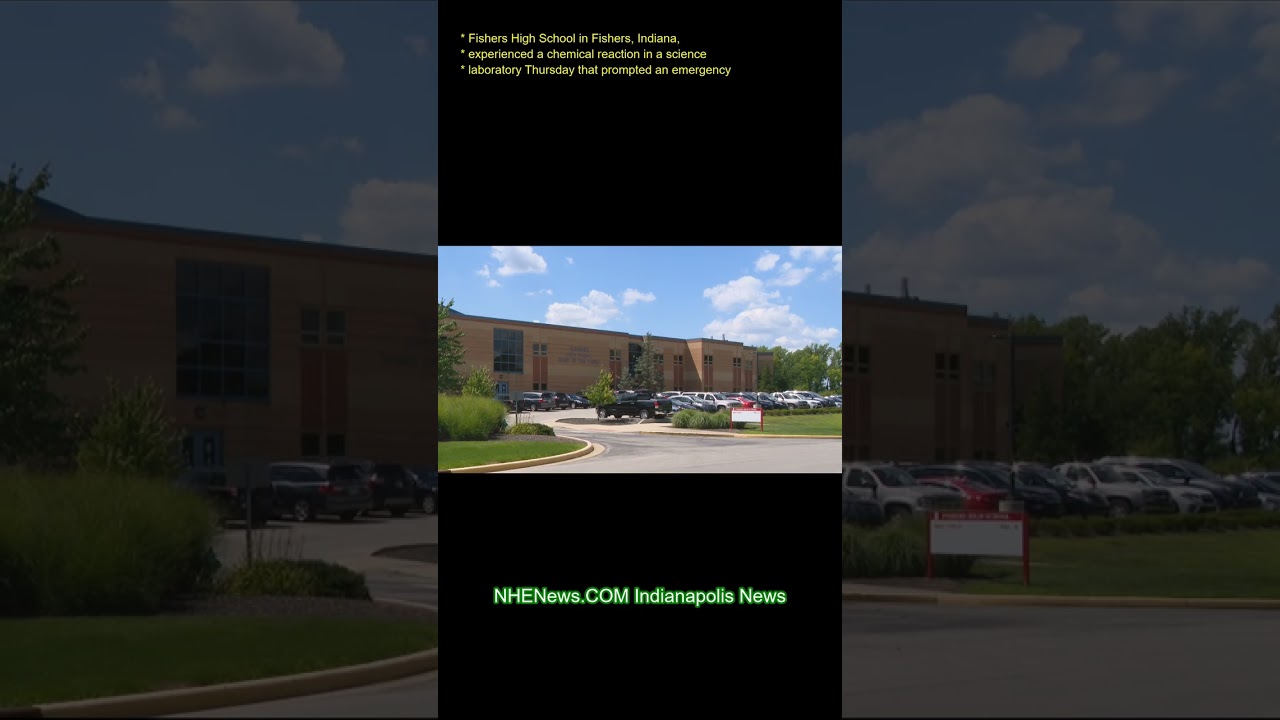
The recent chemical incident at Fishers High School in Indiana serves as another reminder that even experienced educators and well-run programs can face unexpected laboratory emergencies. According to multiple reports, a chemical reaction in a science lab prompted a significant response from local police, fire departments, and Indiana State Police after concerns emerged while materials were being prepared for an Advanced Placement chemistry project. Authorities later confirmed that the substance was safely destroyed and no injuries were reported.

The outcome could have been far worse.

That reality is exactly why districts must move beyond viewing lab safety as a compliance checklist and instead recognize it as a critical responsibility tied directly to student protection, staff wellbeing, operational readiness, and district liability management.

Play video: Fishers High School in Fishers, Indiana, experienced a chemical reaction in a science laboratory Thu (1 minute 4 seconds)1:04
Fishers High School in Fishers, Indiana, experienced a chemical reaction in a science laboratory Thu1 min 4 sIndianapolisToday on YouTube

IndianapolisToday – Fishers High School in Fishers, Indiana, experienced a chemical reaction in a science laboratory  (Play video)

The Growing Complexity of School Laboratories

Today’s school laboratories are far more advanced than many people realize.

Students regularly work with corrosive chemicals, heat-producing equipment, electrical systems, compressed gases, biological specimens, lasers, reactive compounds, and engineering tools that require careful supervision and strict safety controls. Many high school STEM and CTE environments now resemble scaled-down professional laboratories.

At the same time, districts are often balancing aging facilities, limited budgets, staffing shortages, and growing expectations around hands-on learning. Science educators are frequently responsible not only for instruction, but also for inventory management, chemical storage, waste disposal, laboratory preparation, safety documentation, and emergency planning.

That combination creates risk.

The Fishers High School incident appears to have been handled appropriately. Emergency personnel responded quickly, the substance was safely neutralized, and no injuries occurred. But incidents like this reveal how quickly a routine preparation activity can escalate into a multi-agency emergency response.

For district leaders, the key question should not simply be whether anyone was injured.

The better question is whether their systems are strong enough to prevent the next incident from happening.

Why Chemical Hygiene Officers Matter

One of the most overlooked positions in K–12 education is the Chemical Hygiene Officer, often referred to as a CHO.

In some districts, the role is assigned informally. In others, responsibilities are scattered across multiple staff members with no centralized oversight. Some schools may not even realize the position should exist.

Yet a properly trained Chemical Hygiene Officer plays a critical role in maintaining safe laboratory operations and supporting compliance with recognized laboratory safety standards and professional best practices.

A CHO typically helps oversee:

  • Chemical inventory management
  • Proper storage and segregation
  • Safety Data Sheet (SDS) organization
  • Hazard communication
  • Chemical disposal procedures
  • PPE compliance
  • Emergency preparedness
  • Laboratory inspections
  • Staff safety training
  • Incident documentation
  • Risk assessments
  • Ventilation awareness
  • Compliance procedures

Most importantly, the CHO creates accountability and consistency across a district’s science program.

Without centralized oversight, laboratory safety procedures can vary dramatically from classroom to classroom. Chemical inventories become outdated. Storage rooms become overcrowded. Expired or unstable chemicals remain on shelves. Safety training becomes inconsistent. Emergency planning becomes reactive instead of proactive.

Teaching chemistry and overseeing a chemical hygiene program are not the same responsibilities.

Science teachers already manage enormous instructional demands. Expecting them to independently oversee complex chemical hygiene systems without structured district support can create dangerous gaps.

Lab Safety Is About Trust

In many science classrooms, students walk into laboratories trusting that the environment around them is safe long before they fully understand the risks associated with chemicals, heat sources, reactive materials, or specialized equipment.

Families trust that schools have systems in place to protect their children.

Educators trust that equipment is functioning properly, chemicals are stored correctly, and emergency procedures are ready if something goes wrong.

That trust carries enormous responsibility.

Lab safety is not just about compliance documents or inspection checklists. It is about protecting students, educators, and school communities while creating environments where hands-on learning can occur safely and confidently.

The Importance of Treating Near Misses Seriously

One of the biggest mistakes organizations make is dismissing incidents that do not result in injuries.

In professional laboratory environments, near misses are treated as serious learning opportunities because they expose weaknesses before catastrophic outcomes occur.

The Fishers incident should be viewed through that lens.

The fact that nobody was injured does not reduce the importance of the event. Instead, it highlights why preparation, communication, emergency response coordination, and safety protocols matter.

Schools should use incidents like this to evaluate important questions:

  • Are chemical inventories updated regularly?
  • Are incompatible chemicals separated properly?
  • Are reactive substances clearly identified?
  • Are teachers trained on handling hazardous materials?
  • Is PPE consistently available and enforced?
  • Are ventilation systems functioning correctly?
  • Are emergency response procedures practiced regularly?
  • Is there a formally designated CHO?
  • Are laboratory inspections documented consistently?

These are not small operational details.

They are foundational components of a district’s duty of care.

Safety Culture Starts With Leadership

One of the strongest indicators of laboratory safety is not building age or district size.

It is culture.

Schools with strong safety cultures typically share several characteristics:

  • Leadership prioritizes safety conversations
  • Staff feel comfortable reporting concerns
  • Near misses are documented and reviewed
  • Safety training occurs regularly
  • Laboratory procedures are standardized
  • Safety equipment is inspected routinely
  • Chemical purchasing is monitored carefully
  • Roles and responsibilities are clearly defined

In weaker safety cultures, safety becomes informal and reactive. Procedures are passed down verbally. Documentation becomes inconsistent. Storage rooms become cluttered. Staff rely on memory instead of written protocols.

Over time, those vulnerabilities compound.

The challenge is that lab safety often receives widespread attention only after a public incident occurs. But the absence of headlines does not necessarily mean the absence of risk.

The Expanding Demands on Science Teachers

Science teachers today are being asked to balance more responsibilities than ever before.

In addition to delivering engaging instruction, many educators are managing larger class sizes, increased behavioral needs, evolving curriculum expectations, and growing pressure to provide innovative Safer STEM experiences.

At the same time, many are also expected to maintain laboratory inventories, organize storage areas, monitor safety equipment, prepare materials, and manage hazardous waste procedures.

That workload creates pressure points even for highly experienced educators.

This is another reason Chemical Hygiene Officers are so important.

A strong chemical hygiene program distributes responsibility across a system instead of placing the entire burden on classroom teachers alone.

It also creates opportunities for ongoing professional development so educators remain current on evolving lab safety standards, storage procedures, emergency response protocols, and best practices for handling hazardous materials.

Emergency Response Is Only One Layer of Safety

Public attention naturally focuses on emergency response during incidents like the one at Fishers High School. Fire trucks, police vehicles, evacuations, and hazmat responses are visible and dramatic.

But the most important lab safety work happens long before first responders arrive.

True lab safety is rooted in prevention.

It includes:

  • Careful experiment planning
  • Reviewing chemical compatibility
  • Evaluating risk levels
  • Inspecting storage conditions
  • Training staff regularly
  • Monitoring ventilation systems
  • Testing eyewash stations and safety showers
  • Maintaining accurate documentation
  • Practicing emergency response procedures
  • Building strong communication systems

When those systems are strong, schools reduce the likelihood of emergencies occurring in the first place.

The Liability Conversation Districts Cannot Ignore

There is also an important operational and legal reality districts must acknowledge.

If a serious laboratory incident occurs, investigators will likely examine safety documentation, training records, chemical inventories, inspection logs, emergency planning procedures, and oversight responsibilities.

Districts without clearly defined chemical hygiene programs may face difficult questions about how laboratory safety was being managed and monitored.

This is why many safety experts believe every district operating science laboratories should have a formally designated and properly trained Chemical Hygiene Officer overseeing safety systems and procedures.

The role is not simply about regulatory compliance.

It is about reducing preventable risk while strengthening the overall safety culture of a school district.

Moving From Reaction to Prevention

The Fishers High School incident ended without injuries, and that remains the most important outcome. But districts across the country should still pay close attention to what the incident represents.

Science education remains one of the most valuable parts of the student experience. Laboratory learning encourages curiosity, innovation, problem-solving, collaboration, and career exploration.

Schools should absolutely continue expanding hands-on STEM opportunities.

However, those opportunities must be supported by equally strong lab safety systems.

The future of STEM education depends not only on innovation but on responsibility.

That means investing in stronger safety cultures, improving laboratory oversight, supporting educators with ongoing training, and ensuring every district has qualified individuals overseeing chemical hygiene programs.

Because in modern science education, preparation is not just a best practice.

It is protection.

Subscribe to edCircuit to stay up to date on all of our shows, podcasts, news, and thought leadership articles.

May 20, 2026 0 comments
0 FacebookTwitterPinterestLinkedinWhatsappCopy LinkEmail
A young woman holding a folder speaks with a professional at a booth during a busy high school career fair. Other people visit tables and interact in the background.
StudentsHot Topics - controversialK-12

High School Career Fair Benefits That Matter

by EdCircuit Staff May 20, 2026
written by EdCircuit Staff 6 minutes read

High school career fair benefits are no longer optional—they are essential in a school system that is being asked to prepare students for a workforce that is evolving faster than curriculum can keep up. While schools continue to emphasize academic achievement, many still struggle to answer a fundamental question from students and families alike: What comes next?

A well-executed career fair doesn’t just attempt to answer that question—it brings the answer directly into the building.

The Gap Schools Can’t Ignore

Across the country, school districts are investing heavily in technology, curriculum, and assessment. Yet, there remains a persistent disconnect between what students learn and how they apply it beyond graduation.

Students are often told to “be ready,” but rarely shown what readiness actually looks like.

This is where career fairs become more than a calendar event—they become a strategic response to a real problem. Without exposure to careers, industries, and professionals, students are left to make life-altering decisions based on limited information. That gap is not just an inconvenience—it’s a risk.

A career fair closes that gap in a way few other initiatives can.

When the Gym Becomes the Real World

There is a moment at every well-run career fair that matters.

A student approaches a table—hesitant at first. Maybe it’s a local engineer, a healthcare professional, or a skilled tradesperson. The conversation starts simple:

“What do you do?”

Five minutes later, that same student is asking:

  • “What classes should I take?”
  • “Do I need college for this?”
  • “How did you get started?”

That shift—from curiosity to clarity—is the power of a career fair.

In that moment, the gymnasium stops being a school space and becomes something else entirely: a bridge between education and the real world.

Exposure That Changes Trajectories

For many students, especially those without built-in professional networks, career fairs provide their first meaningful exposure to the workforce.

This matters more than ever.

Today’s students are navigating:

  • Careers that didn’t exist a decade ago
  • Industries being reshaped by AI and automation
  • Multiple post-secondary pathways beyond traditional college

Without exposure, students default to what they know—or worse, what they think they know.

Career fairs expand that lens.

They introduce:

  • Skilled trades alongside four-year degree paths
  • Local opportunities alongside global industries
  • Emerging careers in technology, cybersecurity, and innovation

And perhaps most importantly, they show students that success is not one-size-fits-all.

Preparation Is Where the Real Value Lives

The most impactful career fairs don’t start the day the booths are set up—they start weeks before.

This is where schools have an opportunity to shift from passive participation to intentional preparation.

Resume Building: Telling Their Story

Many students believe they “don’t have anything to put on a resume.” That belief changes quickly when guided correctly.

Career fair preparation teaches students how to frame:

  • Athletics as teamwork and discipline
  • Clubs as leadership and collaboration
  • Volunteer work as initiative and service

It’s not just about building a resume—it’s about helping students recognize their own value.

Communication Skills: Learning to Show Up

In a digital world, face-to-face interaction is becoming less common—and more valuable.

Career fairs force students to step into that space.

They learn how to:

  • Introduce themselves with confidence
  • Ask meaningful questions
  • Engage in professional conversation

The first handshake may feel awkward. The second feels better. By the third, something shifts.

That growth is immediate—and lasting.

Professional Presence: Understanding First Impressions

For many students, this is the first time they think about how they present themselves in a professional setting.

What they wear, how they carry themselves, how they speak—it all matters.

And more importantly, they begin to understand why it matters.

This isn’t about enforcing a dress code—it’s about building awareness of professional environments and expectations.

Moving Beyond the “Walk and Collect” Model

Too many career fairs fall into the same trap: students walk around, collect brochures, and leave.

That’s not impact—that’s activity.

To truly deliver on the promise of a career fair, schools must be intentional.

That means:

  • Setting expectations before the event
  • Providing guiding questions for students
  • Requiring reflection afterward

Imagine a student leaving with:

  • Three meaningful conversations
  • One potential mentorship connection
  • A clearer understanding of their next step

That’s a different outcome entirely.

A Community Investment, Not Just a School Event

One of the most overlooked aspects of career fairs is their impact on the community.

When local businesses, organizations, and professionals step into a school, something important happens: education becomes a shared responsibility.

Employers gain insight into the future workforce.
Students gain access to real-world knowledge.
Schools gain partners.

These connections often extend beyond the event:

  • Internship opportunities
  • Job shadowing experiences
  • Mentorship programs

What starts as a conversation at a table can turn into a pathway after graduation.

Equity in Action

Career fairs are one of the most practical ways schools can address equity.

Not every student has:

  • A parent with a professional network
  • Access to career guidance outside of school
  • Exposure to diverse career paths

A career fair levels that playing field.

Every student walks into the same space. Every student has access to the same conversations. Every student has the opportunity to ask questions and build connections.

That access matters.

And for some students, it can be the moment that changes everything.

Aligning with a Changing Workforce

The workforce is not what it was five years ago—and it won’t be the same five years from now.

Employers are increasingly prioritizing:

  • Skills over degrees
  • Adaptability over specialization
  • Communication over technical knowledge alone

Career fairs provide a direct line between what schools are teaching and what employers actually need.

When students hear it directly from industry professionals, the message lands differently.

It becomes real.

The Risk of Not Doing It

Schools that do not prioritize career exposure are leaving students to navigate their future on their own.

That leads to:

  • Mismatched college choices
  • Unnecessary student debt
  • Workforce gaps
  • Disengaged learners

In a time when districts are being asked to prove outcomes, career readiness cannot be an afterthought.

It must be visible. It must be intentional. And it must be experienced.

The Bottom Line

A high school career fair is not about filling a gym with tables—it’s about filling students with direction.

It’s about helping them connect what they are learning today with where they can go tomorrow.

It’s about giving them the confidence to walk up, ask questions, and see themselves in a future they may not have imagined.

Because when students can see it, they can begin to believe it.

And when they believe it, they can pursue it.

That’s the real impact of a career fair—and that’s why it matters now more than ever.

Play video: College & Career Fair gives high school students chance to learn about post-grad opportunities (1 minute 7 seconds)1:07
College & Career Fair gives high school students chance to learn about post-grad opportunities1 min 7 sKCRG-TV9: Your Trusted Local News Source on YouTube

KCRG – TV9 – College & Career Fair gives high school students chance to learn about post-grad opportunities (Play video)

Subscribe to edCircuit to stay up to date on all of our shows, podcasts, news, and thought leadership articles.

May 20, 2026 0 comments
0 FacebookTwitterPinterestLinkedinWhatsappCopy LinkEmail
Five business professionals sit around a table in discussion, with laptops and notebooks displaying CoSN resources, while other groups converse in the background of a modern office space.
Hot Topics - controversialCOSNK-12

Inside the CoSN Conference Community

by Ellen Ullman May 19, 2026
written by Ellen Ullman 8 minutes read

Walk into the CoSN annual conference and one thing becomes immediately clear: This isn’t just another education technology event.

Yes, there are sessions. Yes, there are vendors. But ask attendees why they come—and why they return year after year—and the answers point somewhere deeper.

“It’s a family reunion,” says Melissa Dodd, chief business officer at Lafayette School District in California. “If I get to attend one conference a year, this is the one I choose.”

Across dozens of conversations with district leaders, nonprofit partners, and industry experts at CoSN2026 in Chicago this April, a consistent theme emerges: CoSN is about gaining perspective on leadership, strategy, and where K–12 education is headed next. 

A Community That Solves a Structural Challenge in Education Technology

K–12 technology leadership is isolating work. In many districts, the CTO or technology director is one of only a handful of people (or the only person) responsible for everything from infrastructure and cybersecurity to data privacy, device strategy, tools and platforms, and artificial intelligence. The breadth of responsibility is wide, and the pace of change is relentless. 

That isolation comes up repeatedly in conversations.

“It can be very lonely work,” says Dodd. “You need people you can call, ask questions, and learn from.”

The CoSN conference provides a way to address that isolation, not just during the event, but year-round. The relationships formed through sessions, shared meals, and informal hallway conversations often evolve into ongoing peer networks. Group chats, advisory committees, and professional collaborations extend well beyond the event itself. 

“This isn’t just networking,” says Beatriz Arnillas, vice president of fundraising and special projects for 1EdTech and a former CoSN committee co-chair. “We connect at CoSN and stay connected.” 

That distinction matters. In a field where decisions carry high stakes and limited margin for error, having trusted peers to turn to is essential. 

The Shift from IT Support to System-Level Leadership

If CoSN is anchored in community, it is also grounded in the understanding that the role of the K–12 tech leader has fundamentally changed. 

Historically, tech teams were seen as operational, responsible for keeping systems running, devices connected, and issues resolved. But over the past decade or so, that perception has shifted dramatically. 

“Before COVID, we thought technology was important,” says Sheryl Abshire, education technology specialist and former CTO. “During COVID, districts realized that the people leading tech needed a voice at the table.”

That shift has elevated the expectations placed on technology leaders. Today, they are helping shape instruction, equity, policy, and long-term strategy.

“You can’t stay in firefighting mode,” says Chris Stanley, senior education strategist at Barton Malow and former assistant superintendent in Michigan. “You need space to think at a higher level.”

The CoSN conference creates that space. By stepping away from day-to-day demands, leaders get to examine how their district is doing, how it compares to others, and where it needs to go next.

Just as important, the conference reinforces a shared definition of the role itself. Through frameworks, professional development, and peer dialogue, it helps align expectations for what effective technology leadership looks like in modern K–12 systems.

From AI to Screen Time: The Issues Defining the Moment

Across interviews, several key issues surfaced consistently, offering a snapshot of what’s currently shaping decision-making in districts nationwide.

Artificial Intelligence: Moving Beyond Experimentation.

Many districts are already in implementation mode, developing policies, piloting tools, and thinking through long-term implications.

But what stood out in conversations was a focus on intentionality. “How are people actually leveraging AI beyond the tools?” asks Amanda Lanicek, CTO of Springtown ISD in Texas. “That’s what I’m here to figure out.”

“The AI sessions at CoSN are more targeted on district leadership and policy vs. ‘shiny new tools,’” says Christine Fox, chief growth and innovation officer at CAST.

Leaders spoke about the need for governance frameworks, staff training, and student guidance. There’s also growing recognition that restricting these tools is not an effective approach. “We need to teach students how to use them responsibly,” says Joan Wade, executive director of AESA and recipient of the CoSN Partnerships That Matter Award, “not just take them away.” Wade was excited to visit CoSN’s AI Playground and see if it would be a good fit for AESA’s annual conference later this year. 

Cybersecurity: A Persistent and Evolving Threat.

If AI represents opportunity, cybersecurity remains a constant pressure. Districts continue to face increasingly sophisticated threats, and many leaders described cybersecurity as one of their most urgent responsibilities.

“Cyber is near and dear,” says Lanicek. “We’re all dealing with it and learning from each other.” 

Sessions focused on real-world incidents, lessons learned, and emerging threats were among the most attended, underscoring both the scale of the challenge and the value of shared knowledge.

Student Well-Being, Screen Time, and Responsible Technology Use.

Another issue gaining traction across districts is how schools should navigate student device use, particularly when it comes to mobile phones and screen time.

Attendees acknowledged that communities and school boards are increasingly grappling with concerns about student attention, distraction, and well-being. But many cautioned against oversimplifying the issue or treating all technology use the same way.

“SHLB [Schools Health & Libraries Broadband Coalition] understands that there’s a growing concern about adolescent use of personal mobile devices, but we also know that technology can be not just beneficial but transformative in educational settings,” says Joey Wender, executive director of SHLB. “We believe that issues of mobile phone usage should not be conflated with general screen time discussions.”

That distinction reflects a broader conversation happening across K–12 education: how to ensure technology remains focused on learning while also promoting healthy digital habits. For district leaders, that means thinking beyond blanket bans and instead creating thoughtful policies that help students understand when technology supports learning, when boundaries are necessary, and how to manage distractions responsibly.

Several leaders emphasized that these decisions are rarely one-size-fits-all. Districts are balancing instructional goals, student well-being, family expectations, and local community needs—all while preparing students for a world where digital fluency is increasingly essential.

Learning Happens Through People

One of the more subtle but important distinctions about CoSN is how attendees define “learning.”

While sessions and keynotes are valuable, many participants emphasized that the real insights often come from conversations.

“The topic isn’t as important as who’s presenting it,” says Will Brackett, technology director for Oak Park Elementary District 97 in Illinois. “I’ll go to a session just to hear from someone I’ve never met before to broaden my horizons.” 

This people-first approach changes how knowledge is exchanged. Instead of passively consuming information, attendees actively engage—asking questions, sharing experiences, and comparing approaches in real time.

It also contributes to a level of openness that can be harder to achieve at other conferences.

“One of the most powerful things about CoSN is that people go to sessions,” says Fox. “They’re engaged, they’re listening, they’re connecting.” 

Even vendors describe the conference as a chance to understand the real challenges districts are facing and to collaborate on solutions.

An Ecosystem, Not a Marketplace

Unlike many conferences where districts and solution providers operate in parallel, attendees describe a more integrated dynamic where different stakeholders actively work together.

“It’s not just companies sponsoring,” says AESA’s Wade. “They’re at the table co-designing solutions with tech directors. I don’t see that anywhere else.”

Nonprofits, state organizations, and advocacy groups also play a critical role, contributing perspectives on policy, funding, and equity. The result is a more holistic view of the challenges facing K–12 and a stronger foundation for addressing them. 

“At CoSN, I get to learn, meet new vendors, and connect with the vendors we already work with,” says Jon Garrett, coordinator of technology systems at Tippecanoe School Corporation in Indiana.

Looking Ahead: Preparing for What’s Next

For all the discussion of current challenges, the conference is ultimately focused on the future. Leaders come to solve immediate problems and to discuss emerging technologies, policy shifts, or new expectations around teaching and learning.

“You find people who’ve solved the problems you’re facing today,” says Kevin McMillian, IT administrator at Beaverton School District in Oregon, “and you also see what’s coming before it becomes a problem.” 

That dual perspective is one of the many reasons attendees return year after year. Because in a field defined by constant change, staying current isn’t enough. Leaders need to stay ahead, and they need a community with which to do it.

Or, as Abshire says, “CoSN is the place to prepare you for whatever you want your future to be. You can get it here!”

This article was originally published by Consortium for School Networking and has been republished with permission. Read the original article on CoSN: More Than a Conference: Inside the Community Powering K–12 Tech Leadership.
PUBLISHED: April 29, 2026

CoSN is vendor-neutral and does not endorse products or services. Any mention of a specific solution is for contextual purposes

Subscribe to edCircuit to stay up to date on all of our shows, podcasts, news, and thought leadership articles.

May 19, 2026 0 comments
1 FacebookTwitterPinterestLinkedinWhatsappCopy LinkEmail
A group of students sit around a table with laptops and papers, smiling and talking about AI Policy in Schools, while an adult stands nearby, also smiling.
Hot Topics - controversialArtificial IntelligenceK-12

AI Policy in Schools: Why Student Voice Matters Now

by EdCircuit Staff May 19, 2026
written by EdCircuit Staff 6 minutes read

AI policy in schools is no longer optional—it’s essential—and districts that fail to define it risk falling behind both technologically and instructionally.

The moment districts are already in

A student turns in an essay that feels different. The teacher suspects AI use but isn’t sure what’s allowed. The principal is asked to step in, but there’s no district guidance. The conversation stalls, not because people don’t care, but because no one has a shared framework to act on.

This isn’t a hypothetical. It’s happening in schools every day.

Artificial intelligence has moved from novelty to normal almost overnight. Students are using it to brainstorm, summarize, and problem-solve. Teachers are experimenting with it for lesson design and differentiation. Meanwhile, district leaders are trying to keep pace with something that evolves faster than traditional policy cycles.

Without a clear AI policy, districts don’t prevent use. They lose visibility, consistency, and trust.

Why an AI policy matters now

At its core, an AI policy is not about restriction. It’s about clarity.

Districts need a shared understanding of:

  • What responsible AI use looks like
  • Where the boundaries are
  • How decisions are made when issues arise

Done well, a policy protects student data, supports academic integrity, and creates room for innovation. It also reduces the burden on individual teachers who are otherwise left to make judgment calls in isolation.

Organizations like the National Education Association and district-focused groups have emphasized a balanced approach: policies should foster innovation while addressing safety, privacy, and equity. If the balance tips too far in either direction, the system breaks. Too loose, and risks increase. Too strict, and use goes underground.

The missing piece: student voice

Many districts are moving quickly to draft AI policies. Fewer are involving students in the process.

That’s a mistake.

Students are not just users of AI. They are often the most experienced users in the system. They know which tools are popular, how they’re being used, and where the gray areas are.

When students are excluded, policies tend to miss reality. They read well on paper but fail in practice.

When students are included, three things change.

Policies become grounded in real use
Students can describe how AI is actually being used in assignments, group work, and independent study. That insight helps districts write enforceable guidelines, not theoretical ones.

Buy-in increases across the system
Students are far more likely to follow expectations they helped shape. It shifts the tone from compliance to shared responsibility.

AI literacy becomes part of the process
Involving students creates space to discuss bias, authorship, data privacy, and ethical use. These are not side topics. They are core skills.

Some districts are starting to form student advisory groups or AI councils. Others include student representatives on broader technology committees. The structure matters less than the signal: student voice is not optional in decisions that directly affect them.

AI Policy in Schools: What happens when students are left out

It’s worth being clear about the downside.

When policies are written without student input:

  • Rules often feel disconnected from actual behavior
  • Enforcement becomes inconsistent across classrooms
  • Students find workarounds rather than engaging responsibly

In some cases, overly restrictive policies push AI use into private channels where educators have even less visibility. That creates more risk, not less.

For district leaders, this is not just a student issue. It’s a system design issue.

What a strong AI policy includes

A strong policy doesn’t try to predict every scenario. It focuses on clarity in key areas.

Clear definitions

Start by defining what AI means in your district context. This may include generative tools, adaptive platforms, and AI-enabled applications. Without this, confusion is inevitable.

Purpose and guiding principles

This section sets the tone. Effective policies emphasize:

  • AI as a support for learning, not a replacement
  • Equity in access and use
  • Transparency in how tools are used
  • Human oversight in grading and decision-making

This is where districts articulate their values.

Data privacy and security

This is one of the most critical areas.

Policies should clearly state:

  • No personally identifiable student information is entered into unapproved tools
  • All tools must meet privacy and compliance standards
  • There is a process for vetting new platforms

Technology leaders play a key role here, but expectations should be understood system-wide.

Academic integrity

Rather than blanket bans, strong policies define:

  • Acceptable uses, such as brainstorming or tutoring
  • Unacceptable uses, such as submitting AI-generated work as original
  • Expectations for disclosure

Some districts ask students to explain how AI supported their work. That approach encourages transparency without shutting down use.

Approved tools and flexibility

Not every tool should be allowed, but not every tool should be blocked either.

Districts should:

  • Maintain a list of approved tools
  • Create a clear pathway to evaluate new ones
  • Allow room for teacher judgment within guidelines

Overly rigid systems rarely work in fast-changing environments.

AI Policy in Schools: A practical path forward

Districts don’t need to start from scratch. A structured approach can make this manageable.

Build a cross-functional team

Include:

  • Teachers across grade levels
  • Administrators
  • IT and data privacy experts
  • Special education representatives
  • Students
  • Parents or community members

If students are missing, the perspective is incomplete.

Understand current use

Before writing policy, gather input:

  • What tools are already in use?
  • How are they being used?
  • Where are the concerns?

This step often reveals that AI adoption is already widespread.

Write for clarity, not complexity

Policies should be usable.

That means:

  • Plain language
  • Real examples
  • Short summaries for different audiences

If people can’t quickly understand the policy, they won’t follow it.

Pilot and refine

Start small. Test the policy in a few schools or departments. Use feedback to adjust before scaling.

Invest in professional learning

Teachers need time and support to adapt.

Training should focus on:

  • AI literacy
  • Classroom applications
  • Ethical considerations

Without this, even strong policies won’t translate into practice.

Commit to ongoing updates

AI is evolving quickly. Policies should be reviewed regularly, with input from both staff and students.

Watch: Why AI in education requires thoughtful policy

This video provides a helpful overview of how AI is shaping education and why districts need clear, intentional approaches to its use.

Play video: We Trust in Kids: Student Voices in AI (4 minutes 20 seconds)4:20
We Trust in Kids: Student Voices in AI4 min 20 sLEGO Education on YouTube

Common mistakes districts should avoid

Even well-designed efforts can fall short. A few patterns show up repeatedly.

Overly restrictive policies
When policies focus only on control, students adapt by hiding their use. That reduces transparency and increases risk.

Vague guidance
If expectations are unclear, implementation varies widely from classroom to classroom. That creates confusion for students and frustration for teachers.

Lack of student involvement
Policies without student input often miss how AI is actually used. That gap makes them harder to enforce.

Treating AI as temporary
This is not a short-term issue. Policies should reflect long-term integration, not quick fixes.

The leadership opportunity

For school boards, superintendents, CIOs, and principals, AI policy is not just a compliance task. It’s a leadership decision.

It’s an opportunity to:

  • Set a clear vision for responsible innovation
  • Build trust with staff, students, and families
  • Create consistency across schools
  • Prepare students for a world where AI is embedded in nearly every field

Most importantly, it’s a chance to model inclusive decision-making.

When students are part of the process, policies become more than rules. They become shared agreements.

AI Policy in Schools: Final thought

If districts don’t define how AI should be used, students will define it on their own.

The question is not whether AI belongs in schools. It already does.

The real question is whether leaders will shape its use with intention, clarity, and input from the people using it every day.

The strongest AI policies don’t just protect systems. They prepare students.

And they start by inviting those students into the conversation.

Subscribe to edCircuit to stay up to date on all of our shows, podcasts, news, and thought leadership articles.

May 19, 2026 0 comments
0 FacebookTwitterPinterestLinkedinWhatsappCopy LinkEmail
Newer Posts
Older Posts

Participate

  • Contribute
  • Sponsor
  • Submit Release
  • Subscribe
  • Get Interviewed

We value your privacy

We use cookies to enhance your browsing experience, serve personalized ads or content, and analyze our traffic. By clicking "Accept All", you consent to our use of cookies.

Customize
  • Needed for the site to work: signing in, the cart, your consent choice. Always on.

    8 cookies
    • ss_consent 1 yearYour cookie choice on this site, so you are not asked again.
    • wordpress_logged_in_* 2 days, or 14 days with "remember me"Keeps you signed in as you move between pages.
    • wordpress_sec_* 2 days, or 14 days with "remember me"The secure half of your sign-in.
    • wordpress_test_cookie SessionChecks that your browser accepts cookies when you sign in.
    • wp-settings-* 1 yearYour display settings when signed in.
    • wp_woocommerce_session_* 2 daysYour shopping session: the cart and the checkout.
    • woocommerce_cart_hash SessionTells the site whether your cart has changed.
    • woocommerce_items_in_cart SessionWhether your cart holds anything.
  • Remembers choices you make, such as a language or a region, and supports features like live chat.

    1 cookie
    • woocommerce_recently_viewed SessionThe products you looked at, so the site can show them again.
  • Helps us understand how visitors use the site: which pages are read, and for how long.

    2 cookies
    • _ga 2 yearsGoogle Analytics: tells one visitor from another. Set only after you allow analytics.
    • _ga_* 2 yearsGoogle Analytics: keeps your session state. Set only after you allow analytics.
  • Measures how fast pages load so we can make them faster.

  • Used to show you content and offers that match your interests, on this site and elsewhere.

    1 cookie
    • sbjs_* SessionWooCommerce order attribution: where you came from, so a purchase can be credited to the campaign or site that sent you.

Your browser asks us not to sell or share your information (Global Privacy Control), so advertising cookies stay off.

Do not sell or share my personal information

Some cookies from other companies help show you offers on other sites. Tick the box and save your preference to opt out of that sharing; untick it to opt back in at any time.

Your browser sends Global Privacy Control, so this preference is set for you and cannot be changed here.

Sign In

Keep me signed in until I sign out

Forgot your password?

Password Recovery

A new password will be emailed to you.

Have received a new password? Login here

Shopping Cart

Close

No products in the cart.

Close
-
00:00
00:00

Queue

Update Required Flash plugin
-
00:00
00:00

Your cart (items: 0)

Products in cart

Product Details Total
Subtotal $0.00
Shipping and discounts calculated at checkout.
View cart
Go to checkout

Your shopping cart is empty

Return to shop

Notifications