


edCircuit
  • Start Here
    • Login
    • Register
    • Subscribe
    • Submit a Press release
    • Advertise or Sponsor
    • Contribute
    • Get Interviewed
  • On The Wire
  • EdTech
    • All EdTech
    • Online Learning
    • Hybrid and Remote Learning
    • Augmented and Virtual Reality
    • ESports
    • Gamification and Game-Based Learning
    • Digital Citizenship
    • EdTech Entrepreneurs
    • Market Trends
    • Future of Education
  • K-12 Education
    • All K-12
    • K-12 Teachers
    • Teaching Strategies
    • Special Education and IEPs
    • Dyslexia
    • Gifted and Advanced Learning
    • Early Childhood, Pre-K and Kindergarten
    • School Calendar
    • Tutoring and Homework Help
    • Attendance and Absenteeism
    • After-School Programs
    • School Counselors
    • Homeschooling
    • School Models
    • Teacher Retention
    • Parents
    • Students
    • STEM and STEAM Education
  • Teaching and Learning
    • Literacy and Reading
    • Math Education
    • Civics and History Education
    • Financial Literacy
    • Assessment and Testing
    • Curriculum and Instruction
    • Personalized Learning
    • Project-Based Learning
    • Social-Emotional Learning
    • Executive Function
    • Creativity
    • Diversity, Equity, Inclusion
  • Professional Development
    • All Professional Development
    • Educators
    • Administrators
    • edLeaders
  • Higher Education
    • All Higher Education
    • College Admissions
    • Career and Technical Education (CTE)
    • Graduation
    • FAFSA and Financial Aid
    • Student Loans
  • Artificial Intelligence
  • Cybersecurity
  • School Safety
    • All School Safety
    • Science and Lab Safety
    • School Design and Facilities
    • Bullying
    • Duty of Care and School Liability
  • Continuing Education
    • All Continuing Education
    • Online Certificate Programs
    • Teaching Jobs and Careers
    • Teacher Appreciation
  • Education Policy and Government
    • All Education Policy
    • Department of Education
    • School Choice
    • Global
    • Advocates
  • EDU Shows
    • All EDU Shows
    • Safer Ed
    • Mind the Gap
    • EdTech Questions
    • CoffeEd
    • InFocus
    • InformED Report
  • EDU Podcasts
    • All EDU Podcasts
    • Author Chats
    • CoSN The Podcast
    • Education Today
    • Building the Bridge
    • Students Speak
  • Education Industry Guides and Reports
  • Archived Media
    • Future of School: The Podcast
    • Equity Everywhere
  • About edCircuit
  • Subscribe
edCircuit
  • LOGIN
Home Tags Posts tagged with "Headline"
Tag:

Headline

This if for posts to be in the featured/top section of site
A hand places the final puzzle piece into a puzzle, sunlight shining through in front of a modern brick building at sunrise—capturing lessons like those from What 15 Episodes Taught Us About School Safety.
School SafetySafer EdK-12

What 15 Episodes Taught Us About School Safety

by EdCircuit Staff April 27, 2026
written by EdCircuit Staff 4 minutes read

What 15 episodes taught us about school safety is this: safety isn’t defined by policies, procedures, or plans—it’s defined by what actually happens when those systems are tested.

After 15 episodes exploring school safety from every angle—near misses, communication breakdowns, hidden gaps, and decision-making under pressure—one thing is clear:

Safety systems don’t fail when they’re written—they fail when they’re tested.

Season 3 of the Safer Ed Podcast wasn’t built around theory. It was built around reality—how safety functions in active buildings, during unpredictable moments, and through the decisions made by educators every day.

And what we uncovered has major implications for school leaders, educators, and anyone responsible for creating safe learning environments.
Safer EdWhat We’ve Learned: The Reality of School Safety SystemsApril 27, 2026 · 8 min 45 sPlay episode: What We’ve Learned: The Reality of School Safety Systems (8 minutes 45 seconds)0:00-8:45Follow on SpotifyApple

Safety Is Not a Checklist—It’s a System Under Pressure

Across all 15 episodes, a consistent theme emerged:

Safety is not something you complete. It’s something you continuously manage.

Schools often approach safety as a checklist:

  • policies in place
  • drills completed
  • procedures documented

But real safety doesn’t live in documentation—it lives in execution.

And execution is where systems are tested.

When pressure is introduced—time constraints, unclear information, competing responsibilities—systems don’t operate the way they were designed on paper.

They adapt.

And that adaptation is where both strength and risk are revealed.

Near Misses Are the Signals Schools Can’t Afford to Ignore

One of the most important lessons from Season 3 is the value of near misses.

Near misses are often dismissed because nothing bad happened.

But that’s exactly why they matter.

They show us where a system didn’t fully hold—but wasn’t forced to prove it.

When these moments are ignored, they don’t disappear. They become normalized.

And over time, those normalized behaviors shape the environment more than the written system itself.

Systems Don’t Fail All at Once—They Drift

Another critical takeaway is that safety failures are rarely sudden.

They are gradual.

They develop through:

  • small assumptions
  • incomplete communication
  • unclear ownership
  • misaligned schedules
  • environments that haven’t kept up with evolving instruction

Each of these on its own may seem manageable.

But together, they create drift.

Drift doesn’t feel like failure—it feels like things are working.

And that’s what makes it dangerous.

Ownership Is the Difference Between Presence and Assumption

Throughout the season, one issue surfaced repeatedly: ownership.

When responsibility isn’t clearly defined, people assume someone else is handling it.

And assumption creates gaps.

These gaps are not always visible. They don’t interrupt the day. They don’t trigger immediate concern.

But they exist—and when a situation arises, they are exposed instantly.

Clear ownership ensures that systems are not just in place—but actively present.

Communication Doesn’t Break Down—It Becomes Incomplete

Communication is often viewed as a system that either exists or doesn’t.

But what Season 3 revealed is more nuanced.

Communication rarely disappears—it becomes incomplete.

Under pressure, messages become shorter. Details are lost. Urgency is interpreted differently.

What feels like communication does not always result in action.

And when communication requires interpretation instead of creating clarity, alignment breaks down.

The Hidden Gaps Are the Most Dangerous

Some of the most powerful insights from this season came from examining what doesn’t stand out.

After-hours activity. Student movement between spaces. Doors opened for convenience. Informal supervision.

None of these feel like problems.

That’s what makes them dangerous.

Because risk in schools is often not found in the obvious—it’s found in what has been accepted.

Decision-Making Under Pressure Defines Outcomes

The final major takeaway from Season 3 is this:

Systems don’t act—people do.

And people, under pressure, make decisions differently than they do in controlled environments.

They simplify.
They assume.
They prioritize speed over clarity.

Not because they are careless—but because they are responding to the conditions in front of them.

And those decisions—made in seconds—often determine the outcome.

This is where even strong systems can quietly step aside.

What This Means for Schools Moving Forward

If there is one takeaway from 15 episodes, it’s this:

Safety is not about having the right systems—it’s about ensuring those systems function under real conditions.

That requires a shift in thinking.

From: “Do we have a plan?”

To: “What actually happens when we’re tested?”

It requires leaders to:

  • examine real scenarios, not just procedures
  • evaluate how people respond under pressure
  • identify where assumptions replace clarity
  • recognize where systems are present—and where they are not

Listen to the Full Season

This article reflects insights from all 15 episodes of Season 3 of the Safer Ed Podcast, including the finale:

 “What We’ve Learned: The Reality of School Safety Systems”

If you’re responsible for safety in any capacity, this isn’t just a season worth listening to—it’s a perspective worth applying.

Final Thought

In every school, systems are in place.

But the question is whether those systems are present when it matters.

Because safety is not defined by preparation alone—it’s defined by what holds when everything else is uncertain.

Subscribe to edCircuit to stay up to date on all of our shows, podcasts, news, and thought leadership articles.

April 27, 2026 0 comments
0 FacebookTwitterPinterestLinkedinWhatsappCopy LinkEmail
Person seen from behind at a desk as groups collaborate around a glowing light bulb, symbolizing ideas and teamwork in a connected network. (informative)
ColumnistsHot Topics - controversialCompaniesK-12

Education Thought Leadership Starts With Your Voice

by EdCircuit Staff April 27, 2026
written by EdCircuit Staff 4 minutes read

Education thought leadership often begins with a quiet frustration that exists across classrooms, district offices, and leadership teams.

It lives in classrooms, district offices, leadership meetings, and in the moments after a long day when everything finally slows down.

It sounds like this:

  • “There has to be a better way to do this.”
  • “Why isn’t anyone talking about this?”
  • “I wish more people understood what’s actually happening.”

And yet… those thoughts often stay exactly where they started.

Unshared.
Unheard.
Unseen.

And here’s the reality—education is being shaped every single day… with or without your voice in it.

The Gap Between Experience and Influence

Every day, educators and leaders make decisions that shape the future of students.

They solve problems in real time.
They adapt. They innovate. They lead.

But there’s a disconnect that’s hard to ignore:

The people closest to the work are often the furthest from the conversation.

Instead, the narrative is driven by:

  • Headlines
  • Outside perspectives
  • Voices removed from day-to-day realities

And over time, that creates a gap—

Between what’s actually happening in schools…
and what the world believes is happening.

You Don’t Need a Platform—You Need Access

For years, the belief has been:

“If you want to share your voice, you need a platform.”

A blog.
A following.
A personal brand.

But that’s not what’s missing.

What’s missing is access to the right audience.

An audience that includes:

  • Superintendents
  • District leaders
  • Policy influencers
  • CIOs, CTOs, CAOs, CFOs
  • Principals and teachers

Because when the right people hear the right ideas—

that’s when change actually begins.

Why Most Voices Never Get Heard

It’s not a lack of ideas.

It’s not a lack of passion.

It usually comes down to three things:

“I don’t have time.”

The reality of education is demanding. Writing or publishing feels like something extra.

“I’m not a writer.”

There’s a belief your voice has to sound polished or perfect.

It doesn’t.

Clarity beats perfection every time.

“Where would I even share it?”

This is the real barrier.

Because even when the idea is there—
without a place for it to go, it never leaves your head.

What Happens When Voices Stay Silent

When the people doing the work don’t share their experiences:

  • Innovation slows
  • Misconceptions grow
  • Opportunities are missed
  • Decisions get made without full context

And over time, education starts to feel disconnected from the people inside it.

But when voices are shared—

That’s when things shift.

When One Idea Reaches the Right Person

Most people underestimate the impact of a single idea.

Not because it isn’t valuable—
but because they don’t realize who might see it.

One perspective… in the right place… can reach:

  • A superintendent rethinking strategy
  • A district leader searching for solutions
  • A policymaker shaping direction
  • An educator looking for something that works

That’s how conversations evolve.

That’s how change spreads.

You Already Have What Matters

You don’t need:

  • A massive following
  • A polished brand
  • A perfectly structured article

You already have:

  • Experience
  • Perspective
  • Insight

And right now, those are exactly the things education needs more of.

Real voices. Real experiences. Real ideas.

There’s a Shift Happening in Education

Education isn’t standing still.

AI is changing classrooms.
Technology is reshaping access.
Policies are evolving faster than ever.

And with all of that change comes a growing need for something simple—

Voices grounded in reality.

Not theory.
Not assumptions.
Not secondhand perspectives.

But people who are actually in it, every day.

So Where Does Your Voice Go?

That’s the question more educators and leaders are starting to ask.

Because having something to say is one thing.

Having a place where it actually matters—that’s everything.

Platforms like edCircuit are built for exactly this—

To give educators, leaders, and innovators a place where their voice doesn’t just exist…

It gets seen.
It gets shared.
And it reaches the people making decisions.

A Simple First Step

You don’t need to have everything figured out.

You don’t need the perfect topic.

You don’t need a long-term plan.

You just need to start.

Start with one idea.
One experience.
One perspective you believe others should hear.

Because the truth is—

The education conversation doesn’t move forward without voices like yours.

Final Thought

There are people right now:

Looking for answers.
Looking for ideas.
Looking for perspective.

And what they’re looking for…

might be something you’ve already experienced.

The difference isn’t in the idea.

It’s in whether you choose to share it.

Get Started with edCircuit (Free)

If you’re ready to take that first step, edCircuit makes it simple:

  • 👉 Subscribe to stay informed with weekly insights
  • 👉 Become a Contributor and share your voice
  • 👉 Register your Agency to amplify your clients
  • 👉 Register for a Business account to reach education decision-makers

Creating an account is completely free—and it opens the door to a platform built to elevate voices across education.

Start here

  • https://edcircuit.com/subscribe-to-edcircuit/
  • https://edcircuit.com/edcircuit-contributor/
  • https://edcircuit.com/registration-agency/
  • https://edcircuit.com/registration-business/

Subscribe to edCircuit to stay up to date on all of our shows, podcasts, news, and thought leadership articles.

April 27, 2026 0 comments
0 FacebookTwitterPinterestLinkedinWhatsappCopy LinkEmail
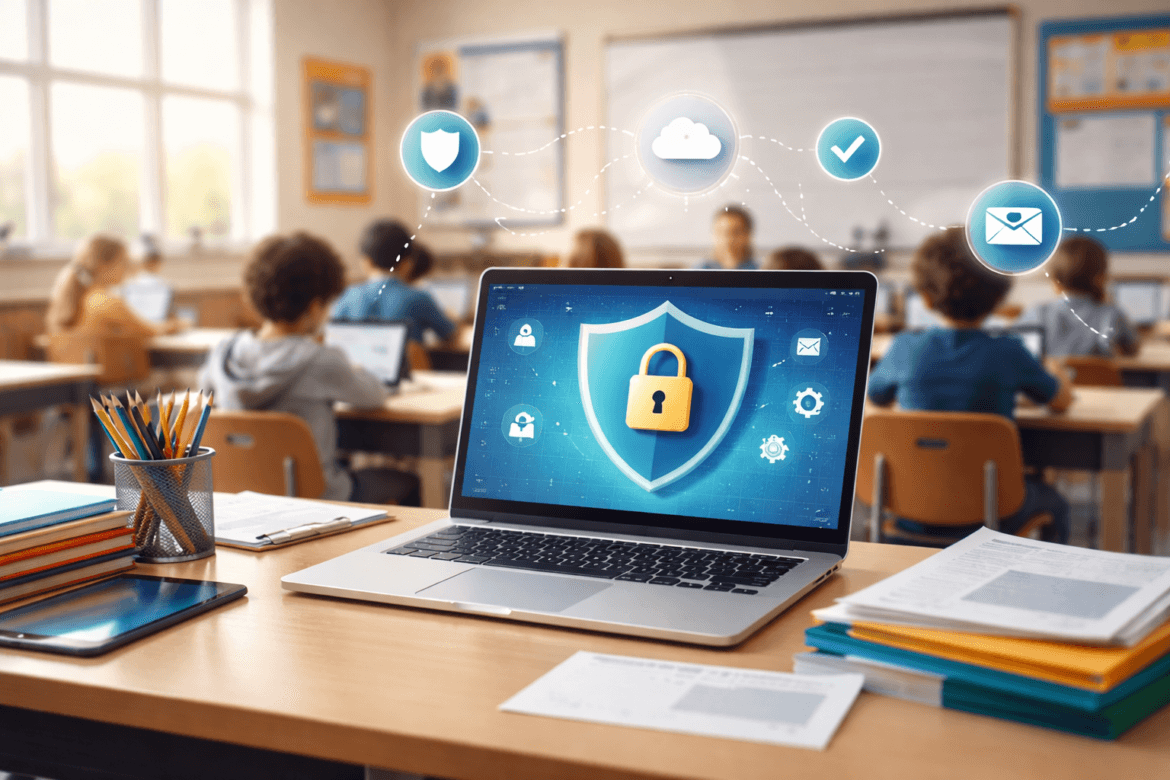
A laptop displaying a digital security shield and lock sits on a desk in a classroom, highlighting COPPA in schools, with students and a teacher in the background. Icons represent cloud, email, and security.
K-12Hot Topics - controversialSchool Safety

COPPA in Schools: What Educators Must Know

by EdCircuit Staff April 27, 2026
written by EdCircuit Staff 5 minutes read

COPPA in schools is reshaping how educators use technology, protect student data, and build trust with families. As digital tools become essential in classrooms, the responsibility to safeguard student information is immediate, visible, and increasingly enforced.

The Children’s Online Privacy Protection Act (COPPA) was created to protect the personal data of children under 13. In today’s school environment, its influence reaches far beyond that age threshold. It shapes how districts approve technology, how teachers use it, and how families decide whether to trust it.

This is not just compliance. It is accountability in a digital-first education system.

Why COPPA Matters in Education

At its core, COPPA requires organizations collecting data from children under 13 to provide transparency and obtain verifiable parental consent.

In schools, that translates into daily decisions:

  • What tools are allowed in the classroom

  • What student data is being collected

  • Whether that data is used strictly for educational purposes

  • How vendors store, share, or monetize information

Enforcement is no longer theoretical. Recent FTC actions have targeted major platforms for collecting children’s data without proper consent, resulting in significant financial penalties and mandated changes to how data is handled. Regulators are also signaling stronger expectations around age verification and data minimization. The FTC’s amended COPPA Rule, published April 22, 2025, took effect June 23, 2025, and most of its requirements carry a compliance date of April 22, 2026.

For schools, the message is clear: it is not enough to assume a tool is safe because it is labeled “educational.” Districts must understand how it actually handles student data.

What COPPA Means for Students and Families

For families, COPPA is about visibility and control.

Parents have the right to:

  • Know what data is collected from their children

  • Consent to or decline that collection

  • Request deletion of that data

In schools, however, consent often works differently. Districts can provide consent on behalf of parents when tools are used strictly for educational purposes.

That shifts responsibility to the institution.

If a school approves a tool, families are trusting that the decision was made carefully. If something goes wrong, that trust is hard to rebuild.

This is why transparency matters. Families are paying closer attention to student data privacy than ever before. Clear communication about what tools are used and why is now part of the job.

Elementary School: Maximum Protection, Minimal Margin for Error

At the elementary level, COPPA is most directly in play. Nearly all students are under 13, which means strict compliance is essential.

Students cannot meaningfully consent. Schools act on their behalf.

That raises the bar.

What this looks like in practice:

  • District-led approval of every digital tool

  • Formal review of vendor privacy policies and data practices

  • Clear documentation of how student data is used and protected

Teachers rely on apps for reading, math, and engagement. But even simple tools can collect names, emails, usage data, or behavioral insights.

Strong practices at this level:

  • Use only district-approved platforms

  • Avoid creating independent teacher accounts for student tools

  • Confirm vendors clearly state COPPA compliance

  • Notify families about the tools being used and why

At this stage, students are not managing their digital privacy. Adults are making those decisions for them. Mistakes here carry the highest risk.

Middle School: Complexity Increases

Middle school introduces complexity that many systems underestimate.

Some students are under 13. Others are not. Independence increases, but understanding of data privacy often does not.

Key challenges:

  • Mixed-age classrooms complicate compliance decisions

  • Students begin creating accounts and managing credentials

  • More collaboration tools and third-party platforms are introduced

This is where gaps tend to appear. A tool that is acceptable for a 13-year-old may not be compliant for a 12-year-old in the same classroom.

What effective schools do differently:

  • Set clear rules for account creation based on age

  • Continue centralized vetting of tools, regardless of student independence

  • Build digital privacy into digital citizenship instruction

Middle school is the shift point from protection alone to preparation.

Students should begin to understand:

  • What personal data is

  • Why it is collected

  • What risks come with sharing it

Handled well, this stage builds awareness. Handled poorly, it creates unmanaged risk.

High School: Shared Responsibility, Higher Stakes

By high school, most students are over 13, and COPPA’s direct requirements are less central. But the risk environment expands.

Students are using:

  • Advanced learning platforms

  • College and career tools

  • Third-party apps beyond school systems

They are also sharing more personal information, often without fully understanding the long-term impact.

The shift here is clear: responsibility becomes shared.

Schools must enforce strong data governance. Students must learn to make informed decisions.

What strong systems focus on:

  • Clear district-wide data privacy policies

  • Vendor accountability backed by formal agreements

  • Training for both staff and students

Graduating students should understand how their data is collected, used, and protected. That is now part of being prepared for life beyond school.

How Districts and Teachers Stay Compliant

Compliance is not a checklist. It is an operational system.

At the district level:

  • Maintain a vetted, continuously updated list of approved tools

  • Require data privacy agreements with all vendors

  • Assign clear ownership, often a data privacy or technology leader

  • Conduct regular audits to identify unapproved tools

At the school level:

  • Enforce consistent use of approved platforms

  • Support teachers with compliant alternatives

  • Communicate clearly with families about technology use

At the teacher level:

  • Use only approved tools, even when convenience is tempting

  • Avoid “click and agree” sign-ups that bypass review

  • Be intentional about what student data is entered into any system

One of the most common risks is not misuse. It is an informal adoption. A single unvetted app can expose student data without anyone realizing it.

The Bigger Picture: From Compliance to Leadership

COPPA enforcement is increasing. State-level student data privacy laws are expanding. New expectations around age verification and AI-driven tools are already emerging.

Schools that treat this as a checkbox will fall behind.

Schools that take it seriously will lead.

Leadership in this space looks like:

  • Transparency in how student data is used

  • Clear, consistent communication with families

  • Ongoing education for students about digital privacy

  • Real accountability for vendors

Student data privacy is no longer a back-office issue. It is central to how schools operate.

Final Thought

Every app, platform, and login in a classroom is a decision about student data.

COPPA sets the legal baseline. Trust sets the real standard.

Schools that act on that difference will not just stay compliant. They will earn lasting trust.

Subscribe to edCircuit to stay up to date on all of our shows, podcasts, news, and thought leadership articles.
April 27, 2026 0 comments
0 FacebookTwitterPinterestLinkedinWhatsappCopy LinkEmail
Children sit at outdoor tables working on science and reading activities as part of Summer Learning Programs, with a banner and adults supervising in the background.
After-School ProgramsEducatorsHot Topics - controversialSchool CalendarK-12

Why Summer Learning Programs Matter for Students

by EdCircuit Staff April 24, 2026
written by EdCircuit Staff 6 minutes read

Summer learning programs help students maintain academic progress, build new skills, and stay engaged during the months when school is not in session. While summer break offers students an important opportunity to rest and recharge, it can also lead to learning gaps if students are not regularly engaged in educational activities.

Schools and communities across the country recognize the importance of providing summer learning opportunities. Programs such as summer reading initiatives, enrichment camps, academic support programs, and STEM activities help students continue developing knowledge and skills while keeping learning engaging and enjoyable.

When schools and communities work together to provide meaningful summer learning experiences, students are more likely to return to the classroom confident, prepared, and ready to continue their academic journey.

Understanding Summer Learning Loss

One of the main reasons summer learning programs are important is the concept often referred to as summer learning loss. During the summer months, students who do not regularly practice academic skills may lose some of the progress they made during the school year, particularly in reading and mathematics.

Even small gaps in practice can make it more difficult for students to retain knowledge and maintain strong academic habits. When students return to school in the fall, teachers may need to spend time reviewing previous material before introducing new lessons.

Summer learning programs help address this challenge by providing structured opportunities for students to review concepts, strengthen skills, and continue learning in a supportive environment. These programs help ensure that students return to school ready to build upon the knowledge they gained during the previous school year.

Encouraging a Love of Reading

Reading is one of the most effective ways students can stay connected to learning during the summer months. Many schools and libraries promote summer reading programs that encourage students to explore new books, discover different topics, and build lifelong reading habits.

Summer reading programs often include book challenges, reading lists, and community events designed to motivate students to keep reading throughout the break. These initiatives help maintain reading comprehension skills while allowing students to discover stories and subjects that spark their curiosity.

Families also play an important role in encouraging reading at home. Setting aside time each day for reading, visiting local libraries, or participating in community reading challenges can help students stay engaged with learning during the summer.

Developing strong reading habits benefits students far beyond the classroom and supports long-term academic success.

Exploring Safer STEM and Hands-On Learning

Summer learning programs often give students opportunities to explore science, technology, engineering, and mathematics through hands-on experiences. Safer STEM-focused camps and workshops allow students to experiment, solve problems, and apply their knowledge in creative ways.

Students may participate in activities such as building simple machines, conducting science experiments, learning the basics of coding, or exploring robotics. Hands-on learning helps students develop critical thinking skills while making learning interactive and exciting.

For many students, summer STEM programs introduce new interests that can inspire future academic pathways and career goals. These experiences encourage curiosity and help students develop confidence in their abilities.

Supporting Students Who Need Additional Academic Help

Summer learning programs also provide valuable support for students who may benefit from additional academic reinforcement. Some students may need extra time to review key concepts or strengthen foundational skills before moving on to the next grade level.

Targeted summer programs allow educators to provide focused instruction in smaller group settings. These environments often make it easier for students to ask questions, practice important skills, and receive individualized support.

With the right support, students can return to school with improved confidence and a stronger understanding of important subjects.

These programs help ensure that all students have the opportunity to continue progressing academically.

Providing Enrichment and Creative Opportunities

Not all summer learning programs focus strictly on traditional academic subjects. Many districts offer enrichment activities that encourage creativity, exploration, and personal development.

Programs may include art workshops, music camps, theater programs, outdoor education experiences, or community service projects. These opportunities allow students to discover new talents and interests while remaining engaged in meaningful learning activities.

Enrichment programs also help students develop important life skills such as teamwork, communication, and creative problem-solving.

By offering a variety of summer learning opportunities, schools can create experiences that appeal to a wide range of student interests.

Strengthening Community Partnerships

Successful summer learning programs often involve partnerships between schools, libraries, community organizations, and local businesses. These collaborations expand the range of opportunities available to students and families.

Libraries frequently host reading challenges and literacy programs, while community organizations may offer camps focused on arts, sports, or science exploration. Colleges, nonprofits, and local businesses may also support educational programs and mentorship opportunities.

These partnerships strengthen the connection between schools and the communities they serve while creating a supportive network that encourages student learning throughout the summer.

When communities work together to support education, students benefit from a broader range of experiences and resources.

Helping Students Stay Connected and Engaged

Summer learning programs also help students remain socially connected. Many students enjoy seeing friends, working with mentors, and participating in group activities during the summer months.

These interactions help maintain a sense of belonging that supports both emotional well-being and academic motivation. Programs that combine learning with recreational activities create a balanced experience that supports both personal and academic growth.

Maintaining these connections can help students return to school feeling comfortable, confident, and ready to learn.

Preparing Students for the Next School Year

One of the most important benefits of summer learning programs is that they help students return to school ready to succeed. Students who remain engaged in educational activities during the summer are often better prepared to begin the new school year.

By reviewing key concepts, practicing skills, and exploring new interests, students maintain momentum in their learning journey.

Teachers also benefit when students return prepared and ready to continue learning. Strong summer learning programs help create a smoother transition into the next grade level and allow teachers to focus on introducing new concepts rather than revisiting old material.

Looking Ahead

Summer break is an important time for students to relax and recharge, but it can also be a time for exploration, creativity, and continued learning. Summer learning programs provide opportunities for students to stay engaged, strengthen academic skills, and discover new interests.

By encouraging reading, offering enrichment activities, supporting academic growth, and building community partnerships, schools help ensure that students remain connected to learning throughout the summer months.

When schools, families, and communities work together to support summer learning, students gain experiences that strengthen their academic foundation, spark curiosity, and prepare them for continued success in the school year ahead.

Subscribe to edCircuit to stay up to date on all of our shows, podcasts, news, and thought leadership articles.
April 24, 2026 0 comments
0 FacebookTwitterPinterestLinkedinWhatsappCopy LinkEmail
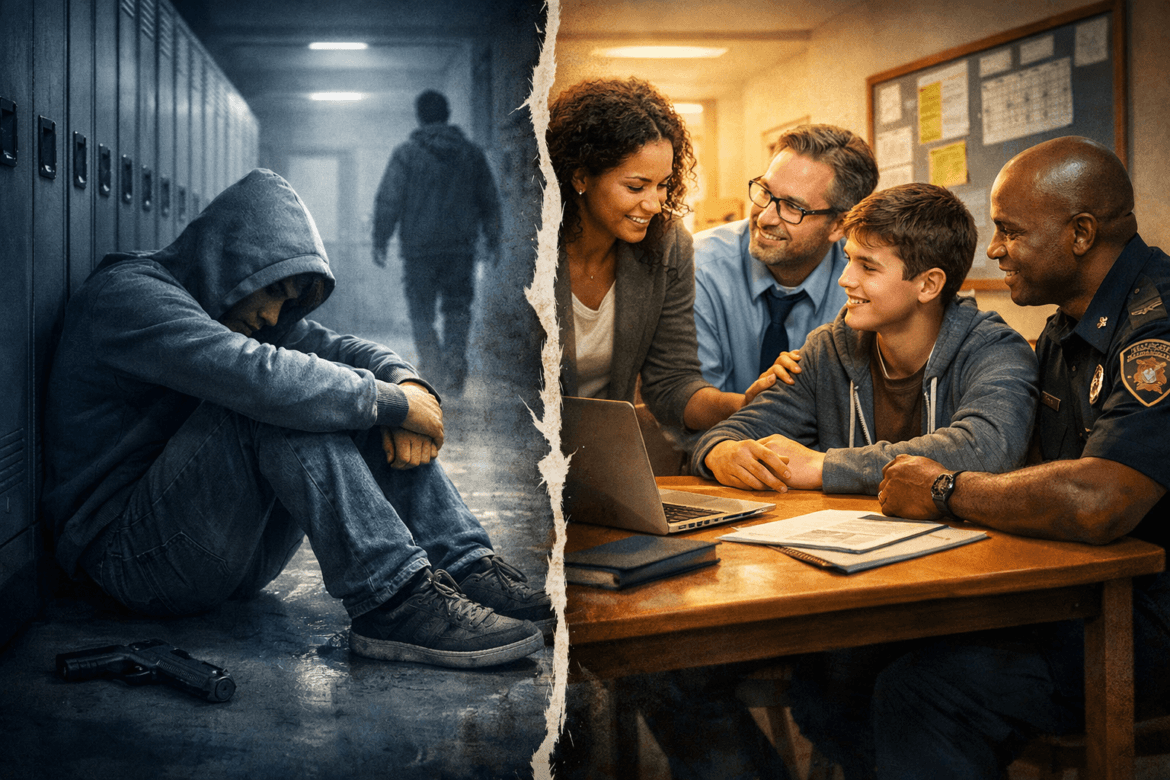
A split image shows a sad teenager sitting by lockers next to a gun on the left, and the same teen smiling with supportive adults at a table on the right, highlighting the impact of BTAM in Schools.
Duty of Care and School LiabilityHot Topics - controversialK-12School Safety

BTAM in Schools: From Compliance to Prevention

by EdCircuit Staff April 23, 2026
written by EdCircuit Staff 5 minutes read

Behavioral Threat Assessment and Management BTAM in schools is redefining school safety by shifting the focus from punishment and prediction to prevention, intervention, and connection.

A student mutters a threatening statement after being publicly embarrassed in class.

In a traditional system, the response is immediate: removal, suspension, investigation, and a growing sense of fear across the building.

In a BTAM system, the response is different. A multidisciplinary team gathers information. They discover the student has been the target of sustained bullying, has recently experienced a significant family disruption, and has withdrawn from every activity that once connected them to school. The statement was real, but the pathway forward is not discipline alone. It is support, monitoring, problem-solving, and safety planning.

That distinction is the future of school safety.

Why BTAM—and Why Now

District leaders are navigating a convergence of pressures:

  • increased student mental health needs

  • post-pandemic behavioral shifts

  • legislative mandates requiring threat assessment teams

  • growing expectations for documented duty of care

  • limited staffing and fragmented support systems

At the same time, research from the U.S. Secret Service and FBI continues to show that targeted violence is not impulsive. It is a process that develops over time—and one that can be interrupted.

BTAM provides the structure that districts have been missing: a repeatable, defensible, prevention-centered process that aligns safety, student services, MTSS, PBIS, and mental health into a single operational framework. This is why districts across the country are moving from isolated safety responses to systemwide BTAM implementation. For school systems ready to move from concept to practice, access to comprehensive Behavioral Threat Assessment and Management (BTAM) training and team development pathways is a critical first step in building internal capacity and ensuring the process is implemented with fidelity.
https://sciencesafety.com/product/behavioral-threat-assessment-and-management-btam/

BTAM in Schools: From Zero Tolerance to Prevention

For decades, school safety was defined by how quickly a student could be removed.

The research now tells a different story.

Exclusionary discipline often:

  • increases isolation,

  • intensifies grievance,

  • removes access to trusted adults,

  • and creates unsupervised time for planning.

National Threat Assessment Center findings show that many school attacks occurred shortly after a student returned from an absence or disciplinary removal.

Connection reduces risk. Isolation increases it.

BTAM replaces reaction with prevention by keeping students connected, supervised, and supported while actively managing risk.

Making a Threat vs. Posing a Threat

One of the most transformative principles in BTAM in schools is the distinction between:

a student who makes a threat

and
a student who poses a threat.

A significant percentage of threats are transient—impulsive, emotional, or situational.

Substantive threats, however, involve:

  • specific targets,

  • planning behaviors,

  • access to means,

  • escalating intent,

  • concerning context.

This is why BTAM is behavior-based and individualized, not driven by assumptions or profiles.

The Data Behind Every Decision

BTAM teams operate using a multimethod, multisource approach, gathering and corroborating:

  • academic and behavioral records

  • prior threat or suicide assessments

  • interviews with students, staff, and families

  • digital and social media behavior (when legally appropriate)

  • law enforcement and community agency information

These data answer the key investigative questions:

  • What are the person’s motives and goals?

  • Are they moving along the pathway to violence?

  • Do they have the capacity to act?

  • What stressors and protective factors are present?

There is no checklist that predicts violence.

There is only a structured process that guides the level of concern and the intensity of support.

The Pathway to Violence — and How Schools Interrupt It

Targeted violence follows a progression:

Ideation → Planning → Preparation → Implementation

Without intervention, individuals can move forward along this pathway.

BTAM exists to interrupt that movement by:

  • reducing access to means

  • addressing grievances

  • increasing supervision

  • strengthening relationships

  • connecting students to mental health and academic supports

The goal is not simply to stop a behavior.

The goal is to move a student off the pathway and back into stability and connection.

A Culture of Reporting Is a Prevention System

No threat assessment model works without information.

Effective BTAM in schools requires:

  • multiple confidential reporting pathways

  • explicit training on what to report and how

  • proportional responses that build trust

Students will not report if they believe it will automatically result in severe punishment for a peer.

They will report when they trust adults to respond with fairness, discretion, and support.

This requires cultural competence. In some communities, historical experiences with authority create real barriers to reporting. BTAM teams must build psychological safety, not just physical safety.

What This Means for District Leaders

For superintendents and cabinet-level teams, implementing BTAM in schools is not a program—it is a systems decision.

It means:

  • establishing trained multidisciplinary teams

  • aligning the process with MTSS and student services

  • defining confidential documentation and data protocols

  • creating clear partnerships with law enforcement through MOUs

  • training staff to distinguish transient from substantive threats

  • developing written intervention and case management plans

BTAM is not a single meeting.

It is an ongoing case management process until resolution.

Interventions That Reduce Risk

The most effective management plans:

  • build resiliency and protective factors

  • increase access to trusted adults

  • use existing MTSS and PBIS supports

  • connect families to community services

  • address environmental stressors such as bullying or discrimination

Disciplinary action, when necessary, must match the level of concern and always be paired with support.

Because removing a student from school does not eliminate risk—it often relocates it.

Documentation Is Prevention Work

Thorough, confidential documentation:

  • demonstrates good-faith action

  • ensures continuity when students transition

  • protects against negligence claims

  • allows districts to allocate resources strategically

BTAM documentation is not compliance paperwork.

It is the institutional memory of prevention.

More Than a Safety Protocol

When implemented with fidelity, BTAM in schools does more than prevent violence.

It:

  • strengthens mental health systems

  • improves school climate

  • increases student engagement

  • builds community trust

  • creates legally defensible decision-making

It shifts safety from a reaction…
to a relationship-driven, data-informed, prevention-centered system.

It turns:

“See something, say something.”
into
“See something, understand it, and support someone.”

And that is the future of school safety.

Subscribe to edCircuit to stay up to date on all of our shows, podcasts, news, and thought leadership articles.

April 23, 2026 0 comments
0 FacebookTwitterPinterestLinkedinWhatsappCopy LinkEmail
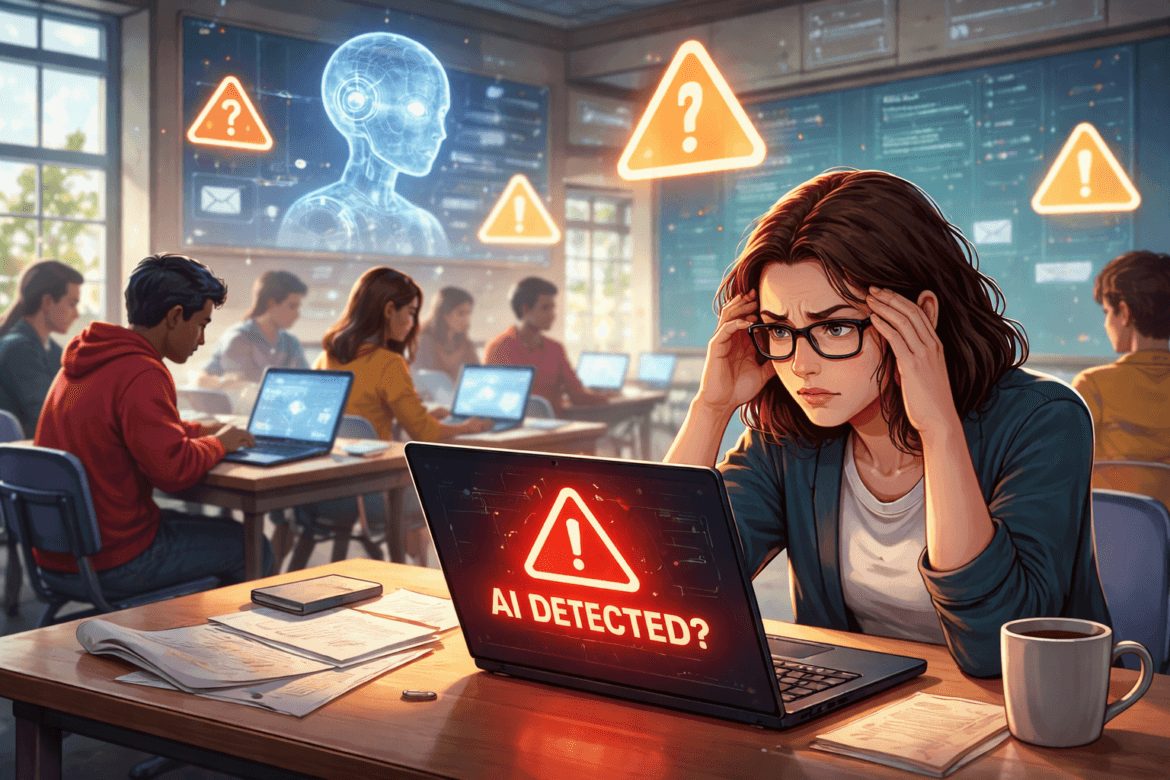
A student in a classroom looks stressed at her laptop, which displays an AI Detection alert, while others work on laptops and warning symbols appear on classroom screens.
Hot Topics - controversialArtificial IntelligenceK-12Assessment and Testing

AI Detection in Schools: Why Educators Are Moving On

by EdCircuit Staff April 22, 2026
written by EdCircuit Staff 6 minutes read

AI detection in schools has quickly become one of the most debated topics in education as teachers, administrators, and policymakers confront the rapid rise of generative AI tools. When artificial intelligence writing platforms first became widely accessible, many districts and universities turned to AI detection software to identify student work generated by these tools.

But only a few years into this experiment, a growing number of educators are questioning whether AI detection tools are the right solution—or whether the approach itself may be flawed.

Across K–12 and higher education, what some educators are now calling “AI detection fatigue” is emerging. Teachers report spending significant time investigating potential AI-generated work while increasingly recognizing that detection tools often provide uncertain or inconsistent results. As a result, the conversation around academic integrity is beginning to shift from policing AI use to teaching students how to use it responsibly.

The Rapid Rise of AI Detection Tools

When generative AI writing systems first gained popularity, schools were caught off guard. Students suddenly had access to tools capable of producing essays, summaries, explanations, and even coding assignments in seconds.

District leaders and universities quickly began searching for ways to identify when AI might be used improperly. Technology vendors responded by releasing a new category of software designed to detect whether text was written by a human or generated by AI.

These tools promised to analyze patterns such as sentence structure, vocabulary use, and probability models to determine whether writing might have been created by an artificial intelligence system. Within months, many educators began experimenting with AI detection platforms to maintain academic integrity.

At first, the idea seemed straightforward: if students were using AI improperly, schools could identify the work and address the issue.

In practice, however, the situation proved more complicated.

Why Teachers Are Losing Confidence in AI Detection

As detection tools became more widely used, many educators began noticing a troubling pattern: the results were often inconsistent.

Teachers reported that some tools flagged clearly human-written work as AI-generated, while other assignments that appeared heavily AI-assisted passed through undetected. Because generative AI systems continuously evolve, detection tools struggle to keep pace with the technology they are designed to identify.

This uncertainty creates a difficult situation for educators. Accusing a student of academic dishonesty is a serious matter, and many teachers are understandably hesitant to rely on software that cannot guarantee accurate results.

In some cases, educators have discovered that detection platforms produce probabilities rather than definitive answers. A report might suggest that text is “likely AI-generated,” but it rarely provides proof strong enough to support disciplinary action.

For teachers already balancing instruction, grading, and classroom management, investigating suspected AI use can become time-consuming and stressful.

The Problem of False Positives

One of the most widely discussed concerns about AI detection tools is the risk of false positives—situations where human-written work is incorrectly labeled as AI-generated.

Researchers and educators have observed that detection systems may be more likely to misidentify writing produced by:

  • English language learners

  • Students with more formulaic writing styles

  • Younger students who follow structured essay formats

  • Writers who rely on simpler vocabulary

In these situations, students may face accusations of academic dishonesty despite completing the work themselves.

This possibility has raised serious ethical questions. Schools must balance the desire to uphold academic integrity with the responsibility to avoid unfairly accusing students based on uncertain technology.

As a result, some institutions have begun discouraging or even prohibiting the use of AI detection software in disciplinary decisions.

Universities Are Beginning to Step Away

Higher education institutions were among the earliest adopters of AI detection tools. However, several universities have already begun reconsidering their reliance on them.

Some institutions have publicly acknowledged that detection software should not be used as definitive evidence of misconduct. Instead, instructors are encouraged to use their professional judgment, review writing processes, and speak with students directly when concerns arise.

These shifts are influencing conversations in K–12 education as well. School districts often look to higher education for guidance on academic policy, and the emerging skepticism toward AI detection is shaping how many districts approach the issue.

Rather than relying on software to determine whether AI was used, many educators are rethinking how assignments are designed.

From AI Policing to AI Literacy

As confidence in detection tools declines, educators are increasingly focusing on a different strategy: AI literacy.

Instead of attempting to eliminate AI from student work entirely, schools are beginning to teach students how to use these tools responsibly. This approach recognizes that artificial intelligence is likely to remain part of academic and professional environments for the foreseeable future.

AI literacy initiatives often emphasize:

  • Understanding how AI tools generate content

  • Recognizing limitations, biases, and inaccuracies

  • Properly citing AI assistance

  • Using AI as a brainstorming or support tool rather than a substitute for learning

By integrating these lessons into instruction, educators hope to prepare students to use AI ethically while still developing their own critical thinking and writing skills.

This shift represents a broader change in mindset: rather than treating AI as something that must always be detected and prevented, educators are exploring ways to guide students toward responsible use.

Rethinking Assignments in the AI Era

Another response to AI detection fatigue is a growing interest in redesigning assignments themselves.

Teachers are experimenting with strategies that make learning more visible and process-driven, including:

  • Draft-based writing assignments

  • In-class writing activities

  • Oral presentations or reflections

  • Project-based learning

  • Collaborative problem-solving tasks

These approaches emphasize the learning process rather than focusing solely on the final product. When teachers observe how students develop ideas and demonstrate understanding throughout the assignment, concerns about AI-generated content become less central.

Many educators believe this shift could ultimately strengthen learning by encouraging deeper engagement with material.

A New Chapter for Academic Integrity

The emergence of AI detection fatigue does not mean schools are abandoning academic integrity. Instead, it reflects an evolving understanding of how technology intersects with learning.

Artificial intelligence is likely to remain part of students’ academic and professional lives. The challenge for educators is not simply identifying when AI is used but helping students understand when and how its use is appropriate.

For teachers and school leaders, this requires a careful balance: maintaining high expectations for original work while acknowledging that new technologies are reshaping how information is created and shared.

The debate surrounding AI detection tools illustrates a larger truth about education in the digital age. Technologies often appear suddenly, but meaningful integration takes time, reflection, and thoughtful leadership.

As schools continue to adapt, the conversation may shift from simply detecting artificial intelligence to preparing students to use it responsibly.

In the long run, that shift may prove far more valuable than any detection tool.

Subscribe to edCircuit to stay up to date on all of our shows, podcasts, news, and thought leadership articles.

April 22, 2026 0 comments
0 FacebookTwitterPinterestLinkedinWhatsappCopy LinkEmail
Newer Posts
Older Posts

Participate

  • Contribute
  • Sponsor
  • Submit Release
  • Subscribe
  • Get Interviewed

We value your privacy

We use cookies to enhance your browsing experience, serve personalized ads or content, and analyze our traffic. By clicking "Accept All", you consent to our use of cookies.

Customize
  • Needed for the site to work: signing in, the cart, your consent choice. Always on.

    8 cookies
    • ss_consent 1 yearYour cookie choice on this site, so you are not asked again.
    • wordpress_logged_in_* 2 days, or 14 days with "remember me"Keeps you signed in as you move between pages.
    • wordpress_sec_* 2 days, or 14 days with "remember me"The secure half of your sign-in.
    • wordpress_test_cookie SessionChecks that your browser accepts cookies when you sign in.
    • wp-settings-* 1 yearYour display settings when signed in.
    • wp_woocommerce_session_* 2 daysYour shopping session: the cart and the checkout.
    • woocommerce_cart_hash SessionTells the site whether your cart has changed.
    • woocommerce_items_in_cart SessionWhether your cart holds anything.
  • Remembers choices you make, such as a language or a region, and supports features like live chat.

    1 cookie
    • woocommerce_recently_viewed SessionThe products you looked at, so the site can show them again.
  • Helps us understand how visitors use the site: which pages are read, and for how long.

    2 cookies
    • _ga 2 yearsGoogle Analytics: tells one visitor from another. Set only after you allow analytics.
    • _ga_* 2 yearsGoogle Analytics: keeps your session state. Set only after you allow analytics.
  • Measures how fast pages load so we can make them faster.

  • Used to show you content and offers that match your interests, on this site and elsewhere.

    1 cookie
    • sbjs_* SessionWooCommerce order attribution: where you came from, so a purchase can be credited to the campaign or site that sent you.

Your browser asks us not to sell or share your information (Global Privacy Control), so advertising cookies stay off.

Do not sell or share my personal information

Some cookies from other companies help show you offers on other sites. Tick the box and save your preference to opt out of that sharing; untick it to opt back in at any time.

Your browser sends Global Privacy Control, so this preference is set for you and cannot be changed here.

Sign In

Keep me signed in until I sign out

Forgot your password?

Password Recovery

A new password will be emailed to you.

Have received a new password? Login here

Shopping Cart

Close

No products in the cart.

Close
-
00:00
00:00

Queue

Update Required Flash plugin
-
00:00
00:00

Your cart (items: 0)

Products in cart

Product Details Total
Subtotal $0.00
Shipping and discounts calculated at checkout.
View cart
Go to checkout

Your shopping cart is empty

Return to shop

Notifications