

edCircuit
  • Start Here
    • Login
    • Register
    • Subscribe
    • Submit a Press release
    • Advertise or Sponsor
    • Contribute
    • Get Interviewed
  • On the Wire
  • EdTech
    • All EdTech
    • Online Learning
    • Hybrid and Remote Learning
    • Augmented and Virtual Reality
    • ESports
    • Gamification and Game-Based Learning
    • Digital Citizenship
    • EdTech Entrepreneurs
    • Market Trends
    • Future of Education
  • Artificial Intelligence
  • K-12 Education
    • All K-12
    • K-12 Teachers
    • Teaching Strategies
    • Special Education and IEPs
    • Dyslexia
    • Gifted and Advanced Learning
    • Early Childhood, Pre-K and Kindergarten
    • School Calendar
    • Tutoring and Homework Help
    • Attendance and Absenteeism
    • After-School Programs
    • School Counselors
    • Homeschooling
    • School Models
    • Teacher Retention
    • Parents
    • Students
    • STEM and STEAM Education
  • Teaching and Learning
    • Literacy and Reading
    • Math Education
    • Civics and History Education
    • Financial Literacy
    • Assessment and Testing
    • Curriculum and Instruction
    • Personalized Learning
    • Project-Based Learning
    • Social-Emotional Learning
    • Executive Function
    • Creativity
    • Diversity, Equity, Inclusion
  • Professional Development
    • All Professional Development
    • Educators
    • Administrators
    • edLeaders
  • Higher Education
    • All Higher Education
    • College Admissions
    • Career and Technical Education (CTE)
    • Graduation
    • FAFSA and Financial Aid
    • Student Loans
  • Cybersecurity
  • School Safety
    • All School Safety
    • Science and Lab Safety
    • School Design and Facilities
    • Bullying
    • Duty of Care and School Liability
  • Continuing Education
    • All Continuing Education
    • Online Certificate Programs
    • Teaching Jobs and Careers
    • Teacher Appreciation
  • Education Policy and Government
    • All Education Policy
    • Department of Education
    • School Choice
    • Global
    • Advocates
  • EDU Shows
    • All EDU Shows
    • Safer Ed
    • Mind the Gap
    • Education Industry Questions
    • CoffeEd
    • InFocus
    • InformED Report
  • EDU Podcasts
    • All EDU Podcasts
    • Author Chats
    • CoSN The Podcast
    • Education Today
    • Building the Bridge
    • Students Speak
  • Education Industry Guides and Reports
  • Archived Media
    • Future of School: The Podcast
    • Equity Everywhere
  • About edCircuit
  • Subscribe
edCircuit
  • LOGIN
Home Tags Posts tagged with "Headline"
Tag:

Headline

This if for posts to be in the featured/top section of site
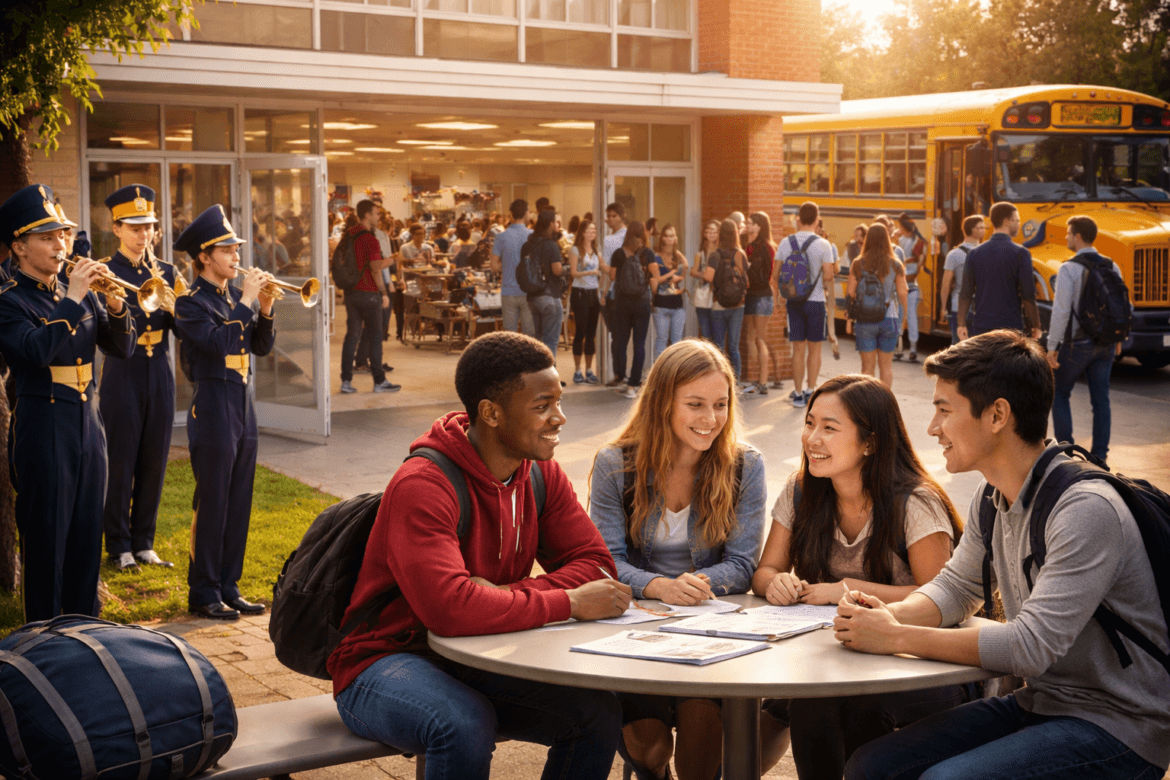
Four students sit around a table outside a school, highlighting the duty of care beyond the classroom, as a marching band plays nearby and a school bus and groups of people appear in the background.
After-School ProgramsHot Topics - controversialSchool SafetyK-12Duty of Care and School Liability

Duty of Care Beyond the Classroom

by EdCircuit Staff March 3, 2026
written by EdCircuit Staff 6 minutes read

Duty of care is often discussed in the context of classrooms and science labs. That focus makes sense. These are controlled environments where safety rules, supervision, and procedures are clearly defined. But duty of care does not end when a student leaves a lab bench or walks out of a classroom door. It follows students throughout the school day, across the campus, and in many cases, well beyond the school building and school hours.

A student’s school experience is not limited to academic instruction. It includes counseling services, extracurricular activities, athletics, performances, travel, and time spent on campus before and after the official school day. Duty of care applies across all of these settings, and understanding that broader responsibility is essential for protecting students and supporting staff.

At its most basic level, duty of care means that schools and school personnel have a responsibility to take reasonable steps to protect students from foreseeable harm. That responsibility exists wherever the school has authority, supervision, or awareness of student presence. When schools think narrowly about duty of care, gaps form. Those gaps are often where problems occur.

Duty of care throughout the school building

Inside the school building, duty of care extends far beyond instructional spaces. Hallways, cafeterias, libraries, and common areas are all places where students interact, move quickly, and sometimes test boundaries. These spaces require appropriate supervision and clear expectations, especially during transitions when incidents are more likely to occur.

Student support services are another critical area. Guidance counselors, for example, have a significant duty of care. Helping students select appropriate courses, manage academic workloads, and plan for graduation has real consequences. Poor scheduling decisions or missed warning signs can increase stress, limit opportunities, or place students at risk academically and emotionally.

Mental health support further highlights this responsibility. When counselors, social workers, or administrators become aware of student anxiety, depression, or other concerns, duty of care requires thoughtful follow-up and appropriate action. Ignoring or minimizing known issues can lead to foreseeable harm.

School nurses and health offices also operate squarely within duty of care. Managing injuries, administering medication, responding to illness, and knowing when to involve parents or emergency services are all part of that responsibility. Clear protocols and proper training matter because the consequences of mistakes in these settings can be serious.

Athletic facilities, including training rooms and gyms, deserve equal attention. Coaches and athletic staff are responsible for ensuring equipment is safe, students are properly supervised, injuries are addressed promptly, and return-to-play decisions are made carefully. Even though athletics are extracurricular, schools still organize, promote, and oversee these programs. That makes the duty of care unavoidable.

After-school activities and extended supervision

For many students, the school day does not end with the final bell. Theater rehearsals, robotics meetings, tutoring sessions, club activities, and athletic practices often keep students on campus well into the afternoon or evening. When these activities are school-sponsored or supervised by staff, the duty of care remains in effect.

This includes more than just being present. Schools must consider supervision ratios, access to secure spaces, emergency procedures, and transportation plans. If students are working late in a classroom or rehearsal space, someone needs to know they are there. Buildings should be appropriately secured, and students should not be left to navigate unsafe situations alone.

Even informal patterns matter. If a school knows students regularly arrive early or stay late due to bus schedules, practices, or academic needs, it may still have a responsibility to provide reasonable supervision. Duty of care often hinges on what is foreseeable, not just what is officially scheduled.

Off-campus activities and travel

Duty of care becomes more complex when students leave campus, but it does not disappear. Field trips, competitions, performances, and conferences all fall under the school’s responsibility when they are school-sponsored.

Consider a marching band traveling to a regional competition. Planning must include safe transportation, supervision during travel, appropriate lodging, clear behavior expectations, and emergency response plans. The same is true for a robotics team traveling out of state for a national event. Supervision does not stop when the day’s competition ends. It extends to meals, downtime, hotel stays, and transit between locations.

Athletic travel presents similar concerns. Coaches and staff are responsible not only for competition safety but also for student conduct, health needs, and supervision throughout the trip. Fatigue, unfamiliar environments, and medical issues are all foreseeable risks that require planning.

When schools rely on external providers, such as transportation companies or event venues, the duty of care includes making reasonable efforts to ensure those providers meet safety standards. While schools cannot control every variable off campus, they are expected to take steps that a reasonable organization would take under similar circumstances.

Before and after hours on school grounds

Duty of care does not always align neatly with the official school schedule. Students may arrive early for practices, rehearsals, or study sessions. Others may remain on campus waiting for transportation or participating in school-sponsored programs.

If a school is aware that students are present, it cannot simply look the other way. Reasonable supervision, clear policies, and staff awareness are essential during these times. Many incidents occur during less-structured periods, when expectations are unclear, or supervision is inconsistent.

Clear communication helps. Staff should know when students are expected to be on campus, which areas are open, and who is responsible for supervision. Students should know where they are allowed to be and what to do if they need help.

Preventing foreseeable harm beyond campus

One of the most challenging areas of duty of care involves situations that occur off campus but directly affect the school environment. Bullying, harassment, or threats may take place online or outside school hours, yet still create safety concerns during the school day or at school-sponsored events.

When schools are aware of credible risks, the duty of care requires reasonable action. This does not mean schools control students at all times. It does mean they cannot ignore known issues that could reasonably lead to harm. Addressing concerns early, documenting actions taken, and communicating with families can reduce risk and support student safety.

Why this broader view matters

Students do not experience school as a series of disconnected locations or time blocks. Their safety and well-being depend on consistent care across classrooms, activities, travel, and support services. A narrow view of duty of care leaves gaps that can undermine that safety.

A broader understanding encourages proactive planning rather than reactive responses. It supports staff by clarifying expectations and helps schools create environments where students can learn, participate, and grow safely.

Final thoughts

Duty of care is not confined to classrooms or science labs. It follows students through hallways, counseling offices, athletic fields, buses, auditoriums, and hotel corridors during school-sponsored travel. Recognizing this reality helps schools better protect students and staff and fulfill their responsibilities wherever learning and school life take place.

Subscribe to edCircuit to stay up to date on all of our shows, podcasts, news, and thought leadership articles.

March 3, 2026 0 comments
0 FacebookTwitterPinterestLinkedinWhatsappCopy LinkEmail
A classroom wall displays a master schedule with subjects for each period, promoting safety and organization; a large clock in the foreground shows the time as 1:59.
K-12Safer Ed

Master Schedule Safety: Time Is the Hidden Risk

by EdCircuit Staff March 2, 2026
written by EdCircuit Staff 4 minutes read

Master schedule safety is one of the most powerful—and least recognized—risk controls in a school.

Long before a lab activity begins, before PPE is distributed, before equipment is turned on, the bell schedule has already determined whether safe procedures will happen consistently or be forced into rushed workarounds.

Time controls movement.
Time controls supervision.
Time controls whether a space resets properly or carries the residue of the previous class into the next.

That is the central message of the newest episode of the Safer Ed Podcast, Scheduling Is a Safety System: How Time, Transitions, and Movement Shape Risk—and it reframes the master schedule as a daily safety document.

Safer EdScheduling Is a Safety System: How Time Shapes RiskMarch 2, 2026 · 22 min 37 sPlay episode: Scheduling Is a Safety System: How Time Shapes Risk (22 minutes 37 seconds)0:00-22:37Follow on SpotifyApple

The Most Dangerous Minutes in the School Day

Ask most educators when safety risk is highest and they will point to complex lab activities, power equipment, or chemical handling.

But in real schools, many near misses occur somewhere else entirely:

  • during passing periods

  • during shared-room transitions

  • during rushed cleanup

  • during early entry into spaces that are not reset

These are the moments when:

  • supervision is divided

  • expectations are unclear

  • pathways are congested

  • materials are still out

  • time pressure drives behavior

Nothing dramatic happens—until it does.

Because the system is operating with no margin for error.

Time Is Not Neutral

Schools traditionally treat the master schedule as an academic and logistical structure:

  • minutes of instruction

  • staffing

  • transportation

  • lunch periods

  • course sequencing

Safety is expected to fit inside that structure.

But in STEM labs, CTE programs, and active learning environments, time is not just a container—it is a control.

If a schedule allows five minutes for a safe shutdown, it becomes routine.

If a schedule allows two minutes, safety becomes dependent on speed, improvisation, and personal decision-making.

That is not a classroom issue.
That is a system design issue.

When Efficiency Reduces Resilience

Compressed transitions often appear efficient on paper. More classes fit into the day. More rooms are used continuously. Instructional minutes increase.

But efficiency without reset time creates strain:

  • cleanup is rushed

  • equipment is stored wherever there is space

  • emergency access narrows

  • teachers supervise two groups at once

  • students enter active work zones

Every day the system operates this way, the margin for error shrinks.

And when a system loses its margin, a single disruption can shut down instruction far longer than the minutes that were saved.

This is the paradox of time and safety:

Short-term efficiency can produce long-term instructional loss.

The Supervision Gap Leaders Don’t See

On a schedule, classes start and end at clear times.

In reality:

  • students arrive early

  • others leave late

  • hallways surge

  • rooms overlap

That creates a predictable condition where one adult is responsible for:

  • monitoring existing students

  • preparing the next lesson

  • preventing early entry

  • resetting equipment and materials

At that moment, supervision is diluted.

Not because the teacher is unprepared—but because the schedule requires simultaneous responsibilities that cannot be done safely at once.

Shared Spaces and the Accumulation Effect

Multi-use STEM and CTE rooms are a hallmark of modern schools.

Lab one period.
Makerspace is the next.
General instructions after that.

Flexibility increases access—but without a scheduled reset time, transformation never fully occurs.

Instead, materials accumulate:

  • carts parked in temporary locations

  • tools left at stations

  • storage pushed higher

  • power sources multiplied

The room remains “in use,” but it is no longer operating as designed.

Scheduling Is an Equity Issue

Not all programs receive the same time structures.

Some have:

  • longer blocks

  • protected transition time

  • consistent room assignments

Others run in:

  • compressed periods

  • shared spaces

  • back-to-back high-risk sequences

That means safety conditions vary—not because of staff commitment, but because of how time is allocated.

Master schedule safety is also about providing equitable operating conditions for every program and every student.

What Changes When Leaders See Time as a Safety Control

When time is treated as part of the safety system:

  • near misses are mapped to transition windows

  • high-risk activities are sequenced intentionally

  • reset time is protected

  • adult presence is aligned with movement patterns

  • shared spaces function as designed

Most importantly, teachers are no longer forced to choose between:

instructional pacing
and
safe shutdown.

Safe behavior becomes the natural outcome of the schedule—not an act of constant enforcement.

A Practical Starting Point for Districts

As schedules tighten and room use increases, understanding how many students can safely operate in a space becomes critical.

The Science Safety Occupancy Load Calculator provides a clear, immediate way to evaluate how:

  • class size

  • layout

  • program flow

  • storage density

intersect with supervision and emergency response.

It turns time, space, and movement into measurable planning data:

https://sciencesafety.com/free-occupancy-load-calculator-tool/

The Master Schedule Is a Safety Document

The safest schools are not the ones that react fastest.

They are the ones who design their daily rhythm so that safety procedures have time to take place without conflict.

Because every bell, every transition, and every reset window is shaping behavior—whether leaders intend it to or not.

Subscribe to edCircuit to stay up to date on all of our shows, podcasts, news, and thought leadership articles.

March 2, 2026 0 comments
0 FacebookTwitterPinterestLinkedinWhatsappCopy LinkEmail
Children play musical instruments, including saxophone, guitar, and drums, in a classroom as part of Music Education. Other students and a teacher are visible in the background. Music notes decorate the wall.
Hot Topics - controversialK-12

Why Music Education Matters More Than Ever in Our Schools

by EdCircuit Staff March 2, 2026
written by EdCircuit Staff 4 minutes read

Music education changes lives, and March is the perfect time to celebrate how school music programs inspire creativity, confidence, and connection for students everywhere.

Every March, schools across the country turn up the volume on something truly special: music education. From elementary classrooms buzzing with recorders to high school band rooms alive with rehearsals, this season shines a light on the essential role music plays in student growth and school culture.

Across the nation, this time of year aligns with Music In Our Schools Month®, a national observance led by the National Association for Music Education that highlights the value of music education in schools. For educators and students alike, March offers a meaningful moment to reflect on why music belongs at the heart of learning.

Why Music Belongs at the Heart of Education

Music education does far more than teach students how to read notes or play instruments. It helps shape how students think, collaborate, and express themselves.

Students who participate in music programs often develop:

  • Discipline and perseverance

  • Strong listening and teamwork skills

  • Confidence in performance and communication

  • Creative problem-solving abilities

For many students, the music room is where they feel most at home. It’s where they learn how to practice patience, work through challenges, and experience the reward of steady improvement.

Music also supports academic growth. Research continues to show connections between music education and improved outcomes in literacy, math, and social-emotional learning. But beyond the data, music teaches students something just as important: how to contribute to something bigger than themselves.

Why March Is a Meaningful Moment for Music Programs

March gives schools a reason to highlight the everyday work happening in music classrooms throughout the year.

During this time, schools often:

  • Share student performances and rehearsal moments

  • Highlight the journeys of young musicians

  • Celebrate music educators and program leaders

  • Encourage conversations about the value of arts education

A single concert represents weeks or months of practice, collaboration, and growth. March reminds families and communities that these performances don’t happen by accident. They happen because schools choose to support music education.

Recognizing the Educators Behind the Music

Music teachers are some of the most dedicated educators in any school building.

They arrive early to set up instruments.
They stay late for rehearsals and performances.
They support students through auditions, competitions, and pre-concert nerves.

Most importantly, they create environments where students feel safe to try, make mistakes, and grow.

For many students, a music teacher is the adult who first encourages them to take a risk or believe in their abilities. The lessons learned in music class often extend far beyond graduation, shaping how students approach challenges throughout their lives.

March is a perfect time to recognize the commitment, creativity, and care music educators bring to their schools every day.

Simple Ways Schools Can Celebrate Music in March

Celebrating music education doesn’t require elaborate events or big budgets. The most meaningful moments are often the simplest.

Schools can celebrate by:

Highlighting Student Musicians
Share short performances, photos, or stories on school websites or social media.

Opening Rehearsal Doors
Invite families, staff, or younger students to observe rehearsals or participate in interactive music experiences.

Connecting Music Across Subjects
Show how music ties into history, science, math, and language arts.

Encouraging Appreciation
Invite students and families to write thank-you notes or share stories about how music has impacted them.

Every program matters, whether it’s general music, band, choir, orchestra, or modern music courses. March is about celebrating all of it.

Music’s Impact Beyond the Classroom

School music programs don’t just benefit students. They strengthen entire communities.

Concerts bring families together. Performances become shared memories. Music programs help build school pride and create traditions that last for generations.

In many communities, school concerts are among the most well-attended events of the year. They remind us that music is a universal language and a powerful connector.

When schools invest in music education, they invest in culture, creativity, and community connection.

Looking Ahead: Supporting the Future of Music Education

Celebration is important, but so is continued support.

Music programs thrive when schools, families, and communities advocate for them through enrollment, funding, and awareness. As education continues to evolve, music education must remain a priority.

March offers momentum. It’s a chance to celebrate what exists today and to commit to protecting music education for future students.

Because every child deserves the chance to discover music.
Every school deserves a creative heartbeat.
And every community benefits when the arts are valued.

Music In Our Schools Month® is a registered trademark of the National Association for Music Education (NAfME). This article is for informational purposes only and is not affiliated with or endorsed by NAfME.

Subscribe to edCircuit to stay up to date on all of our shows, podcasts, news, and thought leadership articles.

March 2, 2026 0 comments
0 FacebookTwitterPinterestLinkedinWhatsappCopy LinkEmail
A teacher stands at the front of a classroom with students using laptops and smartphones, while a screen displays a padlock and digital security icons—a scene highlighting Social Media Education in High School Today.
BullyingDigital CitizenshipHot Topics - controversialK-12

Social Media Education in High School Today

by EdCircuit Staff February 27, 2026
written by EdCircuit Staff 3 minutes read

Social media education in high school has become a critical priority as districts confront cyberbullying, AI-generated deepfakes, and the reality that every post can follow students for life.

In high schools nationwide, social media no longer stays outside the building. Even in districts that restrict or ban phones during the school day, administrators acknowledge that devices resurface instantly when something goes wrong—a hallway argument, a disciplinary encounter, a prank that spirals.

Videos are posted before adults intervene. Screenshots circulate before investigations begin. Online narratives form while facts are still emerging.

That reality is driving a shift in district strategy. Schools are moving away from treating social media solely as a disciplinary concern and toward teaching it as a form of literacy—one connected to ethics, law, reputation, and civic participation.

When Digital Decisions Become Permanent

High school students use social platforms to explore identity, organize social lives, advocate for causes, and showcase accomplishments for college or careers. Yet many still assume posts disappear.

District programs increasingly challenge that assumption through classroom scenarios and advisory discussions: deleted posts that resurface years later, forwarded “private” messages, and altered clips shared without consent.

Educators emphasize four consistent truths:

  • Digital footprints accumulate.

  • Reposting is participation.

  • Context evaporates quickly.

  • Intent does not erase impact.

For many students, these conversations reframe social media from casual expression into something closer to a public record.

Cyberbullying in a 24/7 Environment

Cyberbullying remains one of the most persistent threats to student well-being. Unlike conflicts that fade when the bell rings, online harassment can escalate overnight and spread across platforms.

Instruction now expands students’ understanding of what bullying can look like digitally, from anonymous rumor pages and group-chat exclusion to coordinated comment attacks and humiliating videos.

District leaders report that some of the most effective approaches focus on bystanders. Students practice documenting incidents responsibly, avoiding amplification, and seeking adult help early.

Several systems have also adopted peer-led models, training students to facilitate conversations about digital behavior. Administrators note that these efforts resonate because they reflect real-world pressure rather than abstract warnings.

Deepfakes, AI, and the Erosion of Trust

Artificial intelligence has introduced new ethical dilemmas for adolescents. With little technical skill, students can now fabricate realistic audio, images, or videos of classmates or teachers.

Sometimes these creations begin as jokes. Other times, they become weapons.

High school curricula increasingly include lessons on how manipulated media is created, why consent matters, the emotional harm caused to victims, legal risks tied to harassment, and ways to verify authenticity.

Teachers connect these discussions to civics and media studies, emphasizing credibility and accountability in public spaces. In a world where “seeing is believing” no longer applies, students must learn to pause before sharing.

Phone Restrictions and Instant Publishing

Across the country, districts are tightening phone policies. While restrictions often improve classroom focus, leaders admit policies cannot eliminate impulsive posting during moments of conflict.

Students still record altercations. Partial clips circulate without context. Algorithms reward speed over accuracy.

As a result, districts are teaching privacy and recording rules, how filming that violates policy can distort events, and the difference between reporting for safety and broadcasting for attention.

The emphasis is judgment—helping students slow down when emotions run high and think before tapping “share.”

Embedding Social Media Education Across the Curriculum

Rather than relying on one-time assemblies, districts are weaving instruction into daily learning through advisory programs, health classes, English analysis of digital narratives, civics lessons on misinformation, and technology electives exploring AI.

This approach reinforces that online behavior is not separate from academic life—it is part of community participation.

Preparing Graduates for Life Beyond Campus

Ultimately, social media education in high school is about readiness.

Graduates carry digital histories into workplaces, universities, and civic spaces shaped by virality and algorithms. When schools teach students to verify information, communicate responsibly, and consider impact, they prepare them for adulthood in a connected world.

In a permanent digital environment, preparation is protection.

Subscribe to edCircuit to stay up to date on all of our shows, podcasts, news, and thought leadership articles.
February 27, 2026 0 comments
0 FacebookTwitterPinterestLinkedinWhatsappCopy LinkEmail
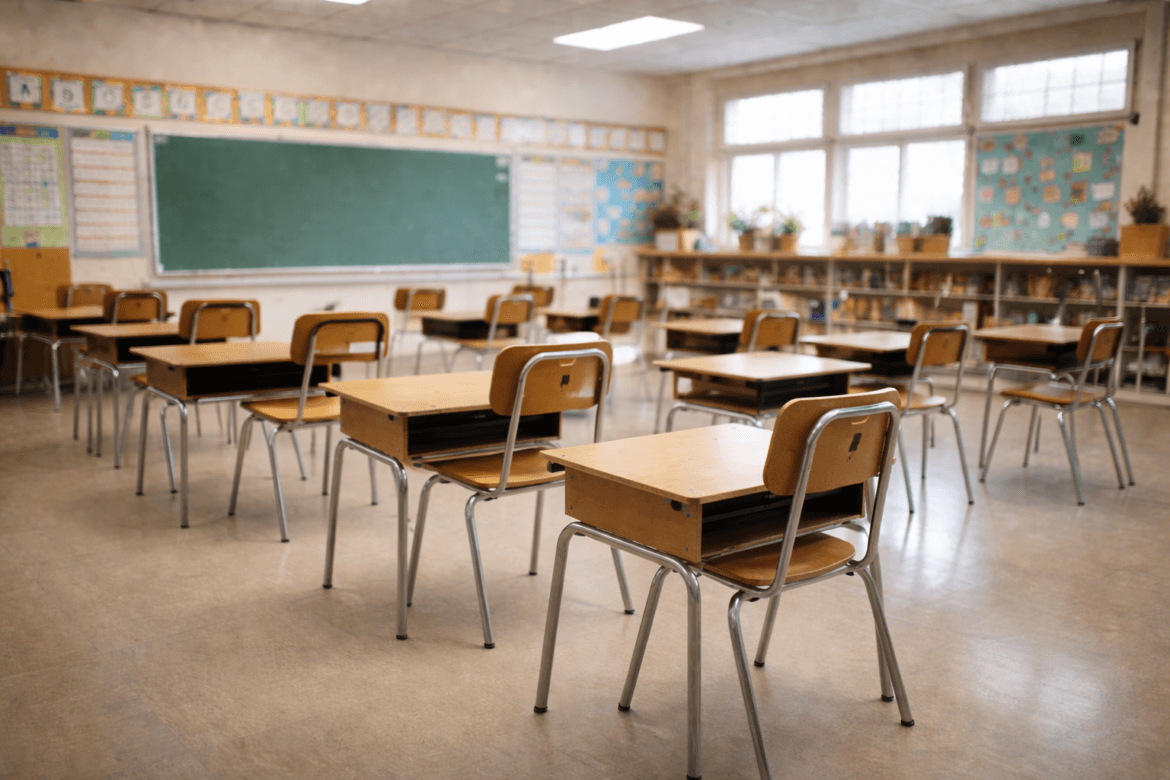
Rows of empty wooden desks and chairs in a bright classroom with a green chalkboard and posters on the walls
EducatorsAdministratorsHot Topics - controversialK-12

School District Layoffs Surge Nationwide

by EdCircuit Staff February 26, 2026
written by EdCircuit Staff 5 minutes read

Updated October 2026 with the layoffs districts approved through the spring and summer and the latest national employment data. This article was first published in February 2026.

School district layoffs reached a scale in 2026 that many education leaders had not seen in years. Districts confronted budget deficits, declining enrollment and the end of pandemic-era federal funding, and the result was thousands of teacher layoffs and staff cuts heading into the 2026–27 school year. “We haven’t seen this much mention of job reductions in 15 years,” Marguerite Roza, director of Georgetown University’s Edunomics Lab, told Bloomberg in June, as reported by Education Week.

How big are the cuts?

A Chalkbeat analysis in May 2026 found that more than half of the 50 largest U.S. school districts were planning or making cuts or facing a reported deficit, and nearly 30 of them cited declining enrollment. Seven of the 10 largest districts were looking to cut staff, Bloomberg reported. S&P Global found that about a third of the school districts it rates ran operating deficits in 2024, up from 17 percent in 2021.

The national employment numbers show the turn. Local government education employment, which is mostly public schools, stood at about 8.20 million in September 2026, roughly 29,000 lower than a year earlier and below its March 2026 peak, according to Bureau of Labor Statistics data.

Where the layoffs happened

The wave began with preliminary notices and board votes in February and widened through the spring and summer:

  • Chicago: The district laid off 760 teachers, 801 teacher aides and 162 central office staff in July and added five unpaid days to close a $732 million deficit.
  • Los Angeles: The board approved up to 657 layoffs in February in a 4–3 vote, mainly central office and administrative staff, facing an $877 million projected deficit.
  • Cleveland: The board approved 300 layoffs, including 146 teachers, in April alongside a plan to close or merge 29 schools.
  • Broward County, Fla.: The district cut 1,000 positions, 700 of them vacant and 300 through layoffs, and planned six school closures after losing nearly 40,000 students in a decade.
  • Anchorage: The board approved a budget with more than 500 staff cuts, including over 300 teachers, and the closure of three elementary schools to address a $90 million deficit.
  • Clark County, Nev., and Milwaukee: About 700 and more than 260 positions respectively, Bloomberg reported.
  • California: Antioch Unified approved about 300 layoffs to close a $30 million gap; Fresno Unified proposed cutting about 200 positions to address a $59 million deficit; and San Francisco Unified issued 42 preliminary notices just after a four-day teachers’ strike.

Preliminary notices are not final. In many districts, some notices are rescinded once retirements, resignations and final budgets are known, so the number of people who actually lose their jobs is usually lower than the first headlines.

What is driving the cuts?

Several pressures are converging:

  • Declining enrollment. In most states funding follows students, so fewer students means less money. Lower birth rates, migration and competition from charter schools and homeschooling all play a part.
  • The end of federal relief. Pandemic relief (ESSER) funds had to be committed by September 2024. Some districts used them for ongoing positions such as tutors, counselors and interventionists, and now must cover those costs or cut them.
  • Rising costs. Salary agreements, health care, pensions, transportation and special education services have all grown.
  • Structural deficits. Some districts spent more than they took in for years before relief money and enrollment changes exposed the gap.

Federal funding for the main K–12 programs stayed roughly level: Congress’s 2026 budget kept Title I, IDEA and other major programs near prior levels, rejecting proposed cuts. The pressure is mostly local and state.

How teacher layoffs are decided

Rules vary by state law and labor contract. Many districts lay off teachers largely by seniority, often called “last in, first out,” while others also weigh performance, certification area and program needs. Districts also choose which positions to cut first; Los Angeles and Broward, for example, cut mainly central office, administrative or vacant positions. Leaders should check how any method affects individual schools before applying it.

What this means for students

  • Larger classes are the most immediate effect when teaching positions are cut. See the challenges of overcrowded classrooms.
  • Fewer programs: electives, arts, music, some career and technical education pathways, tutoring and after-school programs are often first to shrink.
  • Less support: counseling and mental health roles added with relief funds are at risk, and cuts to aides can affect students with disabilities.
  • School closures mean new campuses, new routines and longer commutes for some families.

The impact on teachers who remain

Teachers who keep their jobs often face larger classes, reassignments to new grades or subjects, and months of uncertainty while preliminary notices are resolved. Morale suffers, and burnout risks rise. See Teacher Burnout: 10 Proven Ways to Prevent It.

What district leaders should do

  • Be transparent early about enrollment projections, budget assumptions and options, before notices go out.
  • Protect the classroom first: look at vacancies, central office, contracts and facilities before teaching positions.
  • Plan for multiple years, aligning staffing with enrollment trends rather than making one-year cuts that repeat.
  • Watch equity: check how cuts fall across schools and student groups.
  • Support remaining staff with clear assignments and realistic expectations.

School district layoffs in 2026 are not a one-year response to a temporary shock. In many communities they are a structural adjustment to fewer students and the end of extraordinary federal funding. How districts manage it will shape public education for years.

Play video: Layoffs loom days after SF school district agrees to $183 million deal to end teachers' strike (2 minutes 11 seconds)2:11
Layoffs loom days after SF school district agrees to $183 million deal to end teachers' strike2 min 11 sABC7 News Bay Area on YouTube

ABC7 News Bay Area – Layoffs loom days after SF school district agrees to $183 million deal to end teachers’ strike (Play video)

Related reading

  • Teacher Burnout: 10 Proven Ways to Prevent It
  • Why Teacher Aides Matter More Than Ever

Subscribe to edCircuit to stay up to date on all of our shows, podcasts, news, and thought leadership articles.

February 26, 2026 0 comments
0 FacebookTwitterPinterestLinkedinWhatsappCopy LinkEmail
Three students view data charts on a tablet in a classroom, while their teacher and digital graphics of graphs and icons highlight the role of AI financial literacy in schools.
Hot Topics - controversialArtificial IntelligenceK-12Financial Literacy

AI Financial Literacy in Schools: Smarter Money Education

by EdCircuit Staff February 25, 2026
written by EdCircuit Staff 6 minutes read

AI financial literacy in schools has become a central conversation for educators seeking to prepare students for an economy shaped by automation, digital banking, gig work, and rapidly changing career paths.

Over the last decade, states have expanded graduation requirements around personal finance, while districts have introduced stand-alone courses or embedded money lessons into math, economics, and career-technical education. Yet teachers continue to face a familiar challenge: financial literacy concepts—interest rates, credit scores, taxes, investing—often feel abstract to students who have not yet earned a paycheck or paid a bill.

Artificial intelligence is beginning to change that equation.

By turning static worksheets into personalized coaching systems, interactive simulations, and real-time decision models, AI tools are helping schools connect financial theory to everyday life. For students, that means experimenting with budgets, exploring career earnings, and seeing the long-term consequences of money choices before those decisions carry real-world stakes. For educators, it means new ways to differentiate instruction, analyze student understanding, and make personal finance relevant to every learner.

Why Financial Literacy Still Demands Urgency

Rising college costs, fluctuating housing markets, student-loan debt, and the growth of buy-now-pay-later platforms have made financial decision-making more complex than ever. Young adults are expected to evaluate credit offers, manage digital wallets, compare insurance plans, and plan for retirement decades earlier than previous generations.

Schools are responding, but implementation remains uneven. Some districts offer semester-long personal finance courses, while others squeeze money lessons into algebra units or economics electives. Teachers report limited instructional time, outdated curricula, and difficulty making scenarios resonate with students whose family experiences vary widely.

That is where AI shows particular promise.

Instead of relying solely on one-size-fits-all examples, adaptive systems can tailor lessons to a student’s age, career interests, and current understanding. A ninth grader can explore part-time wages and savings goals, while a senior can simulate apartment hunting, student-loan repayment, or employer retirement plans. The same platform can support remedial instruction for one learner and advanced investing strategies for another—without requiring separate lesson plans.

Turning Theory Into Practice With AI

One of the most compelling uses of AI in financial education is its ability to connect classroom concepts to daily life.

Students can use AI-powered budgeting tools to track hypothetical spending, allocate savings, and respond to unexpected expenses such as medical bills or car repairs. Systems analyze choices in real time, explain trade-offs, and prompt reflection: What happens if rent increases? How does paying only the minimum balance on a credit card affect total interest over five years?

Some platforms function as virtual “credit score coaches.” They break down the factors that influence credit history—payment timing, utilization ratios, credit history length, and account diversity—and allow students to experiment safely. A missed payment or maxed-out card becomes a teachable moment rather than a lifelong financial setback.

Career readiness is another emerging application. AI can link financial literacy lessons to projected earnings across industries, showing how education level, location, and job growth influence long-term income. Students compare offers, calculate benefits packages, model taxes, and calculate take-home pay. For career-technical programs, these tools help learners understand how apprenticeships, certifications, or union membership shape financial outcomes.

Simulations, Games, and Safe-to-Fail Environments

Interactive simulations may be the area where AI has the most immediate impact in the classroom.

Stock-market models allow students to manage virtual portfolios linked to real-world data, helping them learn about diversification, risk tolerance, compound growth, and market volatility. When inflation spikes or interest rates shift, the system automatically updates scenarios—turning current events into live instructional material.

Budgeting games aimed at middle school or early high school students introduce income, rent, utilities, transportation, and food costs through narrative-driven challenges. Learners earn virtual paychecks, face surprise expenses, and decide whether to save, invest, or splurge. AI systems adjust difficulty levels, offer hints, and analyze patterns in student decision-making.

Gamification layers—badges, levels, progress dashboards—can increase engagement and persistence, particularly for students who struggle with traditional lectures. Some platforms reward consistent participation, reflection prompts, or mastery of concepts such as interest calculations or debt management.

For teachers, these simulations provide a rare instructional advantage: data. Dashboards reveal where students overspend, misunderstand credit utilization, or consistently fail to save. That insight supports targeted mini-lessons, small-group interventions, or class-wide discussions about common pitfalls.

Personalization and Differentiation at Scale

Financial literacy classrooms include students with widely varying backgrounds—some already helping family members manage bills, others encountering banking terminology for the first time. AI systems can personalize pathways in ways paper curricula cannot.

Adaptive engines adjust pacing, vocabulary, and scenario complexity. English-language learners may receive simplified explanations or multilingual support. Advanced students can explore investing strategies, entrepreneurship, or tax optimization. Learners with disabilities can access audio narration, visual scaffolds, or step-by-step guidance.

AI tutoring systems also allow students to ask private, low-stakes questions: How does interest actually work? What is a Roth IRA? Why do lenders care about my payment history? Removing embarrassment from the learning process encourages curiosity and experimentation.

Supporting Teachers and Curriculum Leaders

For educators, AI does not replace instruction—it reshapes it.

Lesson-planning tools can align simulations with state standards, graduation requirements, or district pacing guides. Teachers can preview scenarios, customize variables, and embed reflective writing prompts or class discussions. Automated assessments analyze not only correct answers but reasoning patterns, highlighting misconceptions that traditional quizzes might miss.

District leaders exploring AI-powered financial literacy platforms are increasingly focused on interoperability and privacy. Integrations with learning-management systems streamline rostering and gradebook syncs, while transparent data policies help schools comply with student-privacy regulations. Professional development remains critical to ensure teachers understand both the pedagogical possibilities and the ethical considerations of AI-driven instruction.

Equity, Ethics, and Responsible Implementation

As AI expands in classrooms, equity and transparency must remain front and center.

Financial education tools should avoid reinforcing stereotypes about income, neighborhoods, or career prospects. Scenario libraries need diverse family structures, housing options, and employment paths so students can see themselves reflected in the material. Algorithms should be auditable and designed to explain—not obscure—how recommendations are generated.

Schools must also communicate clearly with families about what data is collected, how it is used, and how long it is stored. Opt-out policies, consent forms, and cybersecurity safeguards are becoming standard components of responsible adoption.

When implemented thoughtfully, AI can help close opportunity gaps rather than widen them by offering high-quality, personalized financial education to students who might otherwise receive only minimal exposure.

Preparing Students for a Complex Financial Future

Financial literacy has always been about more than balancing a checkbook. Today, it includes navigating digital payments, evaluating subscription services, understanding student-loan repayment options, planning for retirement, and making informed career choices in an AI-driven economy.

Artificial intelligence gives schools a powerful new lever: the ability to make lessons experiential, personalized, and directly tied to students’ futures. Through simulations, coaching tools, and career-linked modeling, AI helps learners practice decisions they will soon face—long before the consequences become real.

For districts revisiting personal finance curricula, the question is no longer whether technology belongs in these courses, but how intentionally it is deployed. When paired with skilled educators, strong privacy protections, and equity-focused design, AI may become one of the most effective tools schools have for preparing students to thrive financially in adulthood.

Subscribe to edCircuit to stay up to date on all of our shows, podcasts, news, and thought leadership articles.

February 25, 2026 0 comments
0 FacebookTwitterPinterestLinkedinWhatsappCopy LinkEmail
Newer Posts
Older Posts

Participate

  • Contribute
  • Sponsor
  • Submit Release
  • Subscribe
  • Get Interviewed

We value your privacy

We use cookies to enhance your browsing experience, serve personalized ads or content, and analyze our traffic. By clicking "Accept All", you consent to our use of cookies.

Customize
  • Needed for the site to work: signing in, the cart, your consent choice. Always on.

    8 cookies
    • ss_consent 1 yearYour cookie choice on this site, so you are not asked again.
    • wordpress_logged_in_* 2 days, or 14 days with "remember me"Keeps you signed in as you move between pages.
    • wordpress_sec_* 2 days, or 14 days with "remember me"The secure half of your sign-in.
    • wordpress_test_cookie SessionChecks that your browser accepts cookies when you sign in.
    • wp-settings-* 1 yearYour display settings when signed in.
    • wp_woocommerce_session_* 2 daysYour shopping session: the cart and the checkout.
    • woocommerce_cart_hash SessionTells the site whether your cart has changed.
    • woocommerce_items_in_cart SessionWhether your cart holds anything.
  • Remembers choices you make, such as a language or a region, and supports features like live chat.

    1 cookie
    • woocommerce_recently_viewed SessionThe products you looked at, so the site can show them again.
  • Helps us understand how visitors use the site: which pages are read, and for how long.

    2 cookies
    • _ga 2 yearsGoogle Analytics: tells one visitor from another. Set only after you allow analytics.
    • _ga_* 2 yearsGoogle Analytics: keeps your session state. Set only after you allow analytics.
  • Measures how fast pages load so we can make them faster.

  • Used to show you content and offers that match your interests, on this site and elsewhere.

    1 cookie
    • sbjs_* SessionWooCommerce order attribution: where you came from, so a purchase can be credited to the campaign or site that sent you.

Your browser asks us not to sell or share your information (Global Privacy Control), so advertising cookies stay off.

Do not sell or share my personal information

Some cookies from other companies help show you offers on other sites. Tick the box and save your preference to opt out of that sharing; untick it to opt back in at any time.

Your browser sends Global Privacy Control, so this preference is set for you and cannot be changed here.

Sign In

Keep me signed in until I sign out

Forgot your password?

Password Recovery

A new password will be emailed to you.

Have received a new password? Login here

Shopping Cart

Close

No products in the cart.

Close
-
00:00
00:00

Queue

Update Required Flash plugin
-
00:00
00:00

Your cart (items: 0)

Products in cart

Product Details Total
Subtotal $0.00
Shipping and discounts calculated at checkout.
View cart
Go to checkout

Your shopping cart is empty

Return to shop

Notifications