


edCircuit
  • Start Here
    • Login
    • Register
    • Subscribe
    • Submit a Press release
    • Advertise or Sponsor
    • Contribute
    • Get Interviewed
  • On The Wire
  • EdTech
    • All EdTech
    • Online Learning
    • Hybrid and Remote Learning
    • Augmented and Virtual Reality
    • ESports
    • Gamification and Game-Based Learning
    • Digital Citizenship
    • EdTech Entrepreneurs
    • Market Trends
    • Future of Education
  • K-12 Education
    • All K-12
    • K-12 Teachers
    • Teaching Strategies
    • Special Education and IEPs
    • Dyslexia
    • Gifted and Advanced Learning
    • Early Childhood, Pre-K and Kindergarten
    • School Calendar
    • Tutoring and Homework Help
    • Attendance and Absenteeism
    • After-School Programs
    • School Counselors
    • Homeschooling
    • School Models
    • Teacher Retention
    • Parents
    • Students
    • STEM and STEAM Education
  • Teaching and Learning
    • Literacy and Reading
    • Math Education
    • Civics and History Education
    • Financial Literacy
    • Assessment and Testing
    • Curriculum and Instruction
    • Personalized Learning
    • Project-Based Learning
    • Social-Emotional Learning
    • Executive Function
    • Creativity
    • Diversity, Equity, Inclusion
  • Professional Development
    • All Professional Development
    • Educators
    • Administrators
    • edLeaders
  • Higher Education
    • All Higher Education
    • College Admissions
    • Career and Technical Education (CTE)
    • Graduation
    • FAFSA and Financial Aid
    • Student Loans
  • Artificial Intelligence
  • Cybersecurity
  • School Safety
    • All School Safety
    • Science and Lab Safety
    • School Design and Facilities
    • Bullying
    • Duty of Care and School Liability
  • Continuing Education
    • All Continuing Education
    • Online Certificate Programs
    • Teaching Jobs and Careers
    • Teacher Appreciation
  • Education Policy and Government
    • All Education Policy
    • Department of Education
    • School Choice
    • Global
    • Advocates
  • EDU Shows
    • All EDU Shows
    • Safer Ed
    • Mind the Gap
    • EdTech Questions
    • CoffeEd
    • InFocus
    • InformED Report
  • EDU Podcasts
    • All EDU Podcasts
    • Author Chats
    • CoSN The Podcast
    • Education Today
    • Building the Bridge
    • Students Speak
  • Education Industry Guides and Reports
  • Archived Media
    • Future of School: The Podcast
    • Equity Everywhere
  • About edCircuit
  • Subscribe
edCircuit
  • LOGIN
Home Tags Posts tagged with "Headline"
Tag:

Headline

This if for posts to be in the featured/top section of site
Federal special education changes: teacher assisting a young boy in a wheelchair with a puzzle in a classroom
Hot Topics - controversialSpecial Education and IEPsK-12

How Federal Special Education Changes Affect Schools

by EdCircuit Staff June 25, 2026
written by EdCircuit Staff 8 minutes read

Special education changes are creating new questions for school districts across the country as the federal government restructures oversight responsibilities for students with disabilities. While much of the national conversation has centered on changes in Washington, the more important story is unfolding in classrooms, conference rooms, and district offices, where educators are preparing for another school year with one unwavering priority: ensuring every child continues to receive the services, support, and opportunities guaranteed under federal law.

This fall, thousands of families will gather around conference tables for Individualized Education Program (IEP) meetings. Parents will celebrate progress, ask difficult questions, and work alongside teachers to establish new goals for the months ahead. A first-grade student will continue speech therapy after making remarkable gains in communication. A middle school student with autism will rely on classroom routines and behavioral supports that provide confidence and consistency. A teenager with a learning disability will begin preparing for life after graduation through transition services designed to build independence and workplace skills.

None of those students will likely know that federal agencies are being reorganized.

Their parents will.

Their teachers certainly will.

Across the country, special education directors are entering the summer planning season with far more questions than answers. They are reviewing staffing plans, updating compliance calendars, preparing professional development, and communicating with families while simultaneously trying to understand how changing federal responsibilities could influence state guidance over the coming months. Few educators expect classrooms to look dramatically different when students return, but nearly everyone agrees that clear communication and thoughtful leadership will be essential during the transition.

A System Supporting More Students Than Ever

The timing of the federal restructuring is significant because it comes at a moment when special education is already facing tremendous pressure. School districts are serving growing numbers of students with increasingly diverse academic, behavioral, developmental, and mental health needs. Many educators describe today’s special education environment as more complex than it was even a decade ago.

Today’s services extend far beyond traditional classroom accommodations. A preschool student may receive speech-language therapy that helps them communicate with classmates for the first time. An occupational therapist may work with an elementary student to develop the fine motor skills necessary to write independently. A vision specialist may introduce assistive technology that allows a student with low vision to participate fully in classroom learning. High school students may receive transition services that prepare them for college, employment, or independent living after graduation. For many children, these individualized supports become the bridge that connects potential with opportunity.

Providing those services requires extraordinary coordination. General education teachers, intervention specialists, school psychologists, counselors, therapists, paraprofessionals, nurses, administrators, transportation departments, and families often work together as one team. That collaboration has always been the foundation of successful special education programs, and it remains unchanged regardless of how responsibilities are organized at the federal level.

Understanding What Has Changed—and What Hasn’t

The Department of Education’s June 16, 2026 interagency agreement with the Department of Health and Human Services, under which HHS helps administer special education programs at the direction of the Department’s Office of Special Education and Rehabilitative Services while the Department keeps its statutory responsibilities, has understandably generated headlines across the education community. Questions surrounding oversight, funding, compliance, and civil rights enforcement have become common topics of conversation among school leaders, advocacy organizations, and families.

Yet one of the most important messages can easily become lost amid those discussions.

The Individuals with Disabilities Education Act (IDEA) has not changed.

Students with disabilities continue to have the legal right to a Free Appropriate Public Education (FAPE) delivered in the Least Restrictive Environment (LRE). School districts remain responsible for identifying students who qualify for services, conducting evaluations, developing and implementing IEPs, providing accommodations and related services, monitoring student progress, and ensuring every procedural safeguard established under federal law is followed.

For educators, this distinction is critical. While the agencies responsible for oversight may evolve, the legal responsibilities districts have to students do not. Every IEP remains in effect. Every required service continues. Every student’s educational rights remain protected. That reassurance is perhaps the most important message schools can communicate to families preparing for another academic year.

Why District Leaders Are Watching Closely

Although students may never notice changes occurring within federal agencies, school administrators understand why these transitions matter.

Federal oversight influences far more than funding. Federal officials provide technical assistance, monitor state compliance, investigate civil rights complaints, collect nationwide data, publish guidance documents, and help state education agencies interpret complex legal requirements. Those resources eventually shape the information districts rely upon when making decisions affecting students every day.

That is why district leaders are asking thoughtful—not political—questions. How will technical assistance be provided during the transition? Will compliance monitoring remain consistent? Will complaint investigations follow existing timelines? How will state education agencies receive updated guidance? Will reporting requirements change over time?

These are practical questions that affect planning rather than philosophy. Superintendents and special education directors are not waiting for classrooms to change; they are working to ensure they do not.

Supporting Teachers Already Carrying Heavy Responsibilities

The current transition also arrives as districts continue confronting one of their greatest challenges: finding and retaining qualified special education professionals.

Across the country, intervention specialists remain in high demand. School psychologists often serve multiple buildings. Speech-language pathologists manage extensive caseloads. Occupational therapists travel between schools. Many districts continue struggling to recruit paraprofessionals despite their essential role in supporting students throughout the school day.

At the same time, expectations for educators continue growing. Special education teachers balance individualized instruction with extensive documentation, progress monitoring, family communication, collaboration meetings, compliance requirements, and increasingly complex student needs. Many entered the profession because they wanted to change lives, yet they often find themselves spending significant time completing paperwork necessary to meet legal requirements.

The current federal restructuring does not lessen those responsibilities. Instead, educators may find themselves answering additional questions from families while adapting to new guidance issued by their state education agencies. That reality makes professional learning, administrative support, and clear communication more important than ever.

Families Need Information More Than Headlines

For parents, navigating special education is rarely simple. Families spend years learning terminology, understanding evaluations, preparing for IEP meetings, advocating for appropriate services, and celebrating milestones that others may take for granted.

When headlines announce significant federal changes, it is understandable that many parents wonder whether those protections will remain intact.

School districts have an opportunity to respond with transparency rather than uncertainty. Families deserve timely communication that explains what is known, acknowledges what is still developing, and reinforces what has not changed. Parents are not asking for political commentary. They simply want confidence that when school begins, their child will continue receiving the services outlined in their IEP.

Districts that communicate early and often will likely strengthen trust during a period when many families are searching for reliable information.

Leadership Will Define the Year Ahead

Periods of uncertainty often reveal the importance of strong leadership. Successful districts are unlikely to be those reacting to every national headline. Instead, they will be the districts that continue focusing on students while monitoring official guidance from their state education agencies.

Superintendents can reassure their communities by emphasizing continuity and transparency. Special education directors can provide staff with timely updates and practical guidance. Principals can ensure inclusive school cultures remain strong while supporting teachers managing increasingly complex classrooms. School boards can reinforce the district’s commitment to students with disabilities while helping families understand that local responsibilities remain unchanged.

Technology leaders also play an increasingly important role. Digital IEP systems, assistive technology platforms, secure student data, accessibility tools, and compliance reporting have become essential components of modern special education programs. Maintaining those systems—and ensuring they continue supporting both educators and students—will remain a critical priority regardless of federal organizational changes.

Looking Beyond the Transition

Education has experienced significant change throughout its history. Standards have evolved. Technology has transformed classrooms. Student needs have grown more complex. Schools have continually adapted while remaining focused on helping children succeed.

The current restructuring represents another chapter in that ongoing evolution. Important questions remain, and additional guidance will almost certainly emerge in the months ahead. District leaders, educators, and families will continue monitoring developments carefully while adapting to new information as it becomes available.

Yet long after today’s headlines fade, educators will still gather around conference tables to write IEPs. Parents will still advocate tirelessly for their children. Therapists will continue celebrating milestones that many people never see. Teachers will continue discovering creative ways to help every learner succeed. Students with disabilities will continue walking through school doors each morning, believing the adults waiting inside are prepared to help them reach their potential.

Federal agencies may change.

Oversight may evolve.

Policies may continue to be refined.

But the promise at the heart of special education should remain exactly the same: every child deserves to be seen, supported, challenged, and given every opportunity to succeed. That promise has guided generations of educators, inspired countless families, and transformed millions of lives. It is a commitment that extends far beyond any single agency or administration, and one that schools across America will continue honoring every day.

Subscribe to edCircuit to stay up to date on all of our shows, podcasts, news, and thought leadership articles.

June 25, 2026 0 comments
0 FacebookTwitterPinterestLinkedinWhatsappCopy LinkEmail
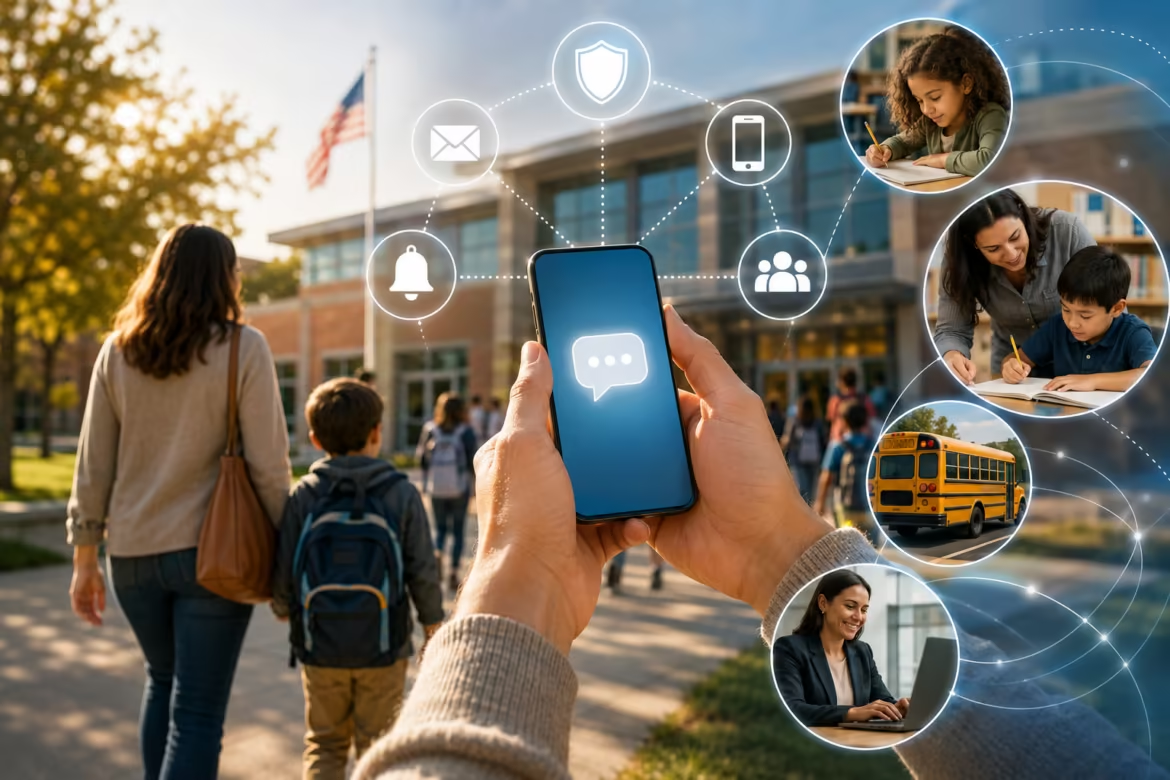
Hands hold a smartphone with a chat bubble; connected circular icons and school scenes (teacher, student, bus) around it.
Hot Topics - controversialK-12

School Communication: What Today’s Parents Expect

by EdCircuit Staff June 25, 2026
written by EdCircuit Staff 6 minutes read

School communication has never been more important—or more challenging—than it is today.

At 6:15 a.m., a parent receives a text message that school buses are running 20 minutes late because of heavy fog. Seconds later, the district app updates transportation information. By 6:20 a.m., the same message appears on the district’s social media channels and website.

For many families, this level of communication is no longer considered exceptional.

It is expected.

Today’s parents live in a world where they can track an Amazon package in real time, receive instant fraud alerts from their bank, monitor home security cameras from their phone, and receive updates about their favorite sports teams within seconds. Those experiences have fundamentally reshaped expectations about how organizations communicate.

Schools are no exception.

The modern parent expects timely updates, transparent leadership, meaningful engagement, and communication that is accessible from anywhere at any time. While academic achievement remains a primary focus, communication has increasingly become one of the most visible ways families judge the effectiveness of a school system.

In many communities, trust is built—or lost—not in the classroom, but through communication.

For school leaders, that reality carries enormous implications.

The New Communication Standard

Twenty years ago, school communication looked very different.

Parents checked backpacks for paper flyers. Monthly newsletters arrived in the mail. Parent-teacher conferences provided major academic updates. Phone calls were reserved for emergencies.

Communication was largely one-directional.

Schools delivered information.

Parents received it.

That model no longer matches how families consume information.

Today’s parents are connected 24 hours a day through smartphones, apps, text messaging, social media platforms, streaming services, and digital assistants. They are accustomed to immediate access to information and increasingly expect the same level of responsiveness from schools.

This shift is not about impatience.

It is about expectations.

When every other aspect of life provides real-time information, delayed communication from schools feels increasingly disconnected from reality.

The challenge for educators is not simply communicating more.

It is communicating in ways that align with how modern families live.

Parents Are Comparing Schools to Every Other Experience

One of the biggest mistakes schools can make is assuming families compare their communication efforts only to neighboring districts.

They do not.

Parents compare schools to every communication experience they have.

They compare school notifications to package tracking updates.

They compare district websites to online banking platforms.

They compare school apps to the apps they use daily.

They compare emergency notifications to weather alerts.

They compare communication responsiveness to customer service experiences.

Whether educators like it or not, schools are operating in an environment where communication standards are being set outside of education.

This reality does not mean schools should operate like corporations.

It does mean that families increasingly expect information to be accurate, timely, accessible, and easy to understand.

The districts that recognize this shift are often the ones building stronger relationships with their communities.

Communication Has Become a Leadership Issue

For many years, communication was often viewed as an operational function.

An administrative assistant sent newsletters.

A public relations department managed announcements.

Building principals handled parent concerns.

Today, communication has become a strategic leadership responsibility.

Superintendents, cabinet members, school boards, and district leaders increasingly recognize that communication influences nearly every major initiative.

Communication can determine community support for:

  • Bond issues and levies
  • School safety initiatives
  • Curriculum changes
  • Technology implementations
  • Boundary adjustments
  • Facility projects
  • Staffing decisions
  • Artificial intelligence policies

A lack of communication can quickly create confusion.

Poor communication can generate mistrust.

Delayed communication can fuel rumors.

In contrast, transparent communication often creates understanding—even when stakeholders disagree with a decision.

Families may not always support every action a district takes.

However, they are far more likely to respect decisions when leaders clearly explain the reasoning behind them.

Transparency Is the New Currency of Trust

Perhaps no expectation has changed more than the demand for transparency.

Parents want insight into how decisions are made.

They want to understand why policies are changing.

They want clarity regarding student safety, academic priorities, budgets, technology investments, and district goals.

This does not mean schools must share every internal discussion.

It does mean families increasingly expect honesty and openness.

The districts building the strongest community trust are often those that communicate proactively rather than reactively.

They explain decisions before controversy emerges.

They provide context rather than simply announcing outcomes.

They recognize that transparency builds credibility long before a crisis occurs.

Trust is rarely created during an emergency.

It is built through hundreds of smaller interactions over time.

School Safety Has Elevated Communication Expectations

School safety remains one of the most significant concerns for parents nationwide.

As a result, communication expectations around safety have increased dramatically.

Families want reassurance that schools are prepared.

They want to understand emergency procedures.

They want timely updates during incidents.

Most importantly, they want confidence that school leaders will communicate clearly when information matters most.

The most effective districts communicate about safety before incidents occur.

They explain emergency protocols.

They discuss reunification plans.

They share information about security upgrades.

They help families understand the systems already in place to protect students.

When a crisis occurs, communication is no longer being evaluated in isolation.

It is being measured against the trust built beforehand.

Artificial Intelligence Is Changing School Communication

The next major shift in school communication may already be underway.

Artificial intelligence is beginning to transform how districts connect with families.

AI-powered translation tools are helping schools communicate with multilingual communities more effectively.

Chatbots can answer common parent questions around the clock.

Communication platforms can personalize messages based on student schedules, grade levels, or family preferences.

AI tools can help school leaders identify communication gaps and better understand community engagement patterns.

For districts serving increasingly diverse populations, these capabilities offer significant opportunities.

However, they also create new responsibilities.

Parents will expect transparency about how AI is being used.

They will expect accuracy.

They will expect safeguards around privacy and data security.

The future of communication will likely combine technology and human relationships rather than replace one with the other.

Parents Still Value Human Connection

Despite advances in technology, one truth remains unchanged.

Parents want to know that educators care about their children.

No app can replace a teacher making a positive phone call home.

No automated notification can replace a principal greeting families at the front door.

No chatbot can fully replicate the trust built through authentic relationships.

Technology can improve efficiency.

Relationships create loyalty.

The strongest school communities understand that communication is not simply about delivering information.

It is about building connections.

The Future of School Communication

The conversation surrounding school communication is no longer about newsletters, websites, or social media posts.

It is about trust.

It is about engagement.

It is about relationships.

Parents today are asking schools to communicate in ways that reflect the world they live in—a world defined by immediacy, accessibility, transparency, and connection.

The districts that thrive in the years ahead will not necessarily be the ones with the most communication tools.

They will be the ones who communicate with clarity, consistency, and purpose.

Because the question is no longer whether schools communicate enough.

The question is whether schools communicate in ways that meet the expectations of modern families.

Parents have changed.

Technology has changed.

Expectations have changed.

School communication must evolve as well.

Subscribe to edCircuit to stay up to date on all of our shows, podcasts, news, and thought leadership articles.
June 25, 2026 0 comments
0 FacebookTwitterPinterestLinkedinWhatsappCopy LinkEmail
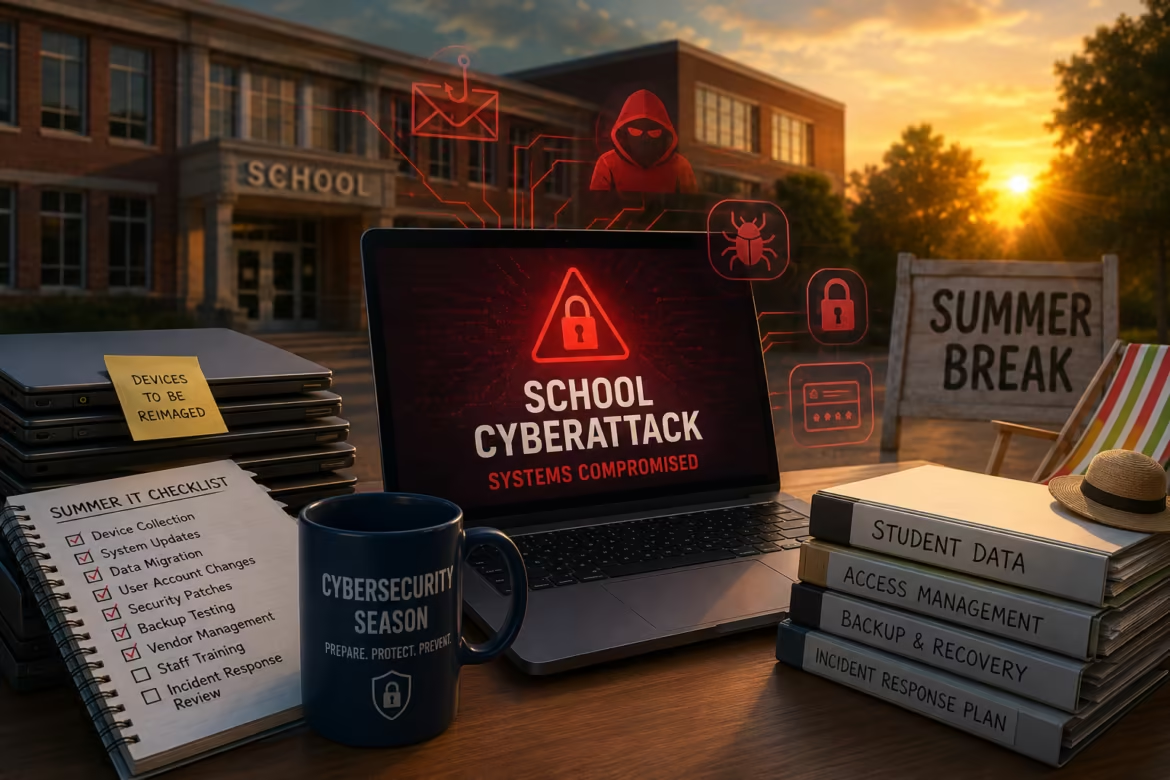
Laptop displaying 'School Cyberattack—Systems Compromised' with red warning icon amid a schoolyard setup, signaling a cyber threat to schools during break time.
K-12Hot Topics - controversialCybersecurity

School Cyberattacks Surge During Summer Break

by EdCircuit Staff June 24, 2026
written by EdCircuit Staff 8 minutes read

School cyberattacks are becoming one of the most significant operational threats facing K–12 districts, and summer break has emerged as one of the most vulnerable times of the year for school cybersecurity.

To most communities, summer break signals a well-deserved pause. Students head off to camps and vacations. Teachers recharge after another demanding year. School hallways become quiet.

Behind the scenes, however, district technology teams enter one of the busiest and most complex periods of the year.

Thousands of student devices are collected. Servers are upgraded. Software platforms are replaced. Accounts are archived. New staff members are onboarded. Security systems are updated. Data is migrated. Summer school programs continue operating. Construction projects introduce new technologies into buildings.

At the same time, cybercriminals are paying attention.

What many district leaders are beginning to recognize is that summer break has evolved into a prime opportunity for cyberattacks against schools. The combination of reduced staffing, major technology transitions, and delayed detection creates conditions that sophisticated attackers actively seek to exploit.

Summer is no longer simply a maintenance season.

It has become cybersecurity season.

School Cyberattacks Continue to Rise Nationwide

Over the last several years, schools have increasingly found themselves in the crosshairs of cybercriminals.

Unlike businesses that can absorb operational disruptions through alternative revenue streams, schools operate on strict academic calendars and depend heavily on technology to support learning, communication, transportation, payroll, and student services.

A successful cyberattack can impact:

  • Student Information Systems
  • Transportation scheduling
  • Payroll processing
  • Emergency notification systems
  • Learning management platforms
  • Human resources operations
  • Financial systems
  • Security cameras
  • Door access controls
  • Special education services

For cybercriminals, schools represent attractive targets because they possess large amounts of sensitive data while often operating under tight budgets and limited cybersecurity staffing.

What was once viewed as an IT issue has evolved into a leadership issue affecting every aspect of district operations.

The consequences of a cyberattack extend far beyond technology. They can disrupt instruction, delay school openings, damage community trust, and create significant financial burdens.

Why Summer Creates the Perfect Cybersecurity Storm

During the school year, school systems benefit from constant activity.

Teachers log into systems daily. Students access learning platforms throughout the day. Administrative staff monitor operations. Help desks receive immediate reports when something appears unusual.

Summer changes that environment completely.

Technology departments suddenly become responsible for dozens of critical projects simultaneously.

Districts often spend summer months:

  • Replacing student devices
  • Updating operating systems
  • Migrating data
  • Refreshing servers
  • Installing security patches
  • Deploying new software
  • Updating wireless networks
  • Integrating artificial intelligence tools
  • Reconfiguring user permissions
  • Preparing student schedules
  • Supporting summer learning programs

Every change introduces potential vulnerabilities.

Cybersecurity professionals frequently describe periods of major transition as periods of heightened risk. Summer represents exactly that scenario for schools.

Technology teams are essentially renovating the digital infrastructure of the district while simultaneously trying to keep every system secure.

Cybercriminals Understand School Calendars

Today’s cybercriminal organizations operate more like businesses than individual hackers.

They conduct research.

They identify vulnerabilities.

They understand organizational behavior.

And increasingly, they understand school calendars.

Attackers recognize that summer often means:

Reduced Monitoring

Many district employees are on vacation, working modified schedules, or transitioning between school years.

An unusual login attempt or suspicious system alert that might be noticed immediately in October could go undetected for days during July.

Delayed Response Times

A ransomware attack discovered during the school year often triggers an immediate district-wide response.

Summer staffing structures can create delays that give attackers additional time to move through systems.

Infrastructure Changes

Cybercriminals frequently target organizations during major technology upgrades because changes can create temporary security gaps.

New software implementations, cloud migrations, and network modifications all create opportunities if not properly secured.

Third-Party Vendor Access

Summer projects often require outside contractors, technology vendors, consultants, and construction teams to access systems and facilities.

Every additional connection creates another potential attack surface.

Summer Is When Districts Change Everything

One reason summer has become such a critical cybersecurity period is that nearly every major technology initiative happens during these months.

While classrooms sit empty, districts are often engaged in their largest operational projects of the year.

Technology leaders may be:

  • Replacing aging infrastructure
  • Implementing new cybersecurity solutions
  • Expanding cloud services
  • Deploying artificial intelligence platforms
  • Updating network architecture
  • Managing construction-related technology projects
  • Integrating new vendors
  • Rebuilding student account structures

The challenge is not simply completing these projects.

The challenge is completing them securely.

A single overlooked permission setting, unpatched device, or misconfigured cloud service can create vulnerabilities that remain hidden until students return.

The Hidden Cybersecurity Risks Inside Student Devices

Summer device collection is often viewed as a logistical challenge.

In reality, it is also a cybersecurity challenge.

When students return district-issued laptops, tablets, and hotspots, technology teams must do far more than inspect physical damage.

Each device may contain:

  • Saved passwords
  • Cached credentials
  • Browser cookies
  • Personal cloud accounts
  • Unauthorized software
  • Browser extensions
  • VPN applications
  • Malware
  • Phishing remnants
  • AI tools outside district policies

A device that appears physically perfect may still represent a significant security risk.

Technology teams must determine what information should be archived, deleted, retained, or transferred before devices are reissued.

Special education devices add another layer of complexity.

Many communication and accessibility devices contain individualized settings that support student learning. Districts must carefully preserve necessary configurations while ensuring sensitive information remains protected.

This process requires collaboration among technology teams, instructional leaders, compliance officers, and special education staff.

Summer School Keeps Systems Running

Many community members assume schools are largely inactive during summer.

That assumption is far from reality.

Districts continue supporting:

  • Summer school programs
  • Credit recovery courses
  • Athletic programs
  • Student camps
  • Extended school year services
  • Professional development
  • New staff onboarding

As a result, systems remain active while major infrastructure work occurs in the background.

Technology leaders must maintain reliable operations while simultaneously rebuilding portions of the district’s digital ecosystem.

The balancing act creates complexity that cybercriminals are eager to exploit.

Human Error Remains the Greatest Threat

Despite headlines focusing on sophisticated ransomware groups, many school cyberattacks still begin with remarkably simple mistakes.

A phishing email.

A reused password.

A fake invoice.

A compromised vendor account.

A fraudulent login request.

Summer can unintentionally increase these risks.

Temporary staff, seasonal workers, contractors, coaches, and newly hired employees may not be familiar with district cybersecurity expectations.

Meanwhile, technology teams often face aggressive timelines to complete projects before the first day of school.

Cybercriminals understand that stressed organizations are more likely to make mistakes.

That reality makes cybersecurity awareness training just as important as firewalls and endpoint protection.

Artificial Intelligence Is Changing the Threat Landscape

Artificial intelligence is creating both opportunities and challenges for school cybersecurity.

Districts increasingly use AI-powered tools to:

  • Detect network anomalies
  • Identify suspicious activity
  • Monitor login behavior
  • Analyze threat intelligence
  • Improve security operations

At the same time, attackers are leveraging AI to improve their own tactics.

Modern phishing emails can be professionally written and highly personalized.

Fake invoices can appear legitimate.

Impersonation attempts can mimic trusted administrators.

Fraudulent vendor communications can be nearly indistinguishable from authentic messages.

The emergence of AI-generated cyber threats means districts must prepare for attacks that are more convincing and harder to detect than ever before.

Cybersecurity and School Safety Are Converging

For years, districts treated cybersecurity and physical safety as separate responsibilities.

That distinction is disappearing.

Today’s schools rely on interconnected technologies that support:

  • Visitor management
  • Emergency communications
  • Security cameras
  • Door access systems
  • Transportation operations
  • Student accountability
  • Building monitoring

A successful cyberattack can affect far more than digital records.

It can impact the systems districts depend upon to keep students and staff safe.

As a result, many districts are incorporating cybersecurity planning into broader school safety and emergency preparedness strategies.

The conversation is no longer limited to IT departments.

It now includes superintendents, school boards, safety coordinators, principals, and community stakeholders.

What School Boards Should Be Asking This Summer

Cybersecurity has become a governance issue.

School boards increasingly play a critical role in helping districts understand and manage cyber risk.

As summer projects move forward, board members should be asking important questions:

  • Have district backups been tested recently?
  • Are critical systems protected by multi-factor authentication?
  • Do we have a current ransomware response plan?
  • Have we conducted a cybersecurity assessment this year?
  • How are vendors vetted and monitored?
  • What cybersecurity training have employees completed?
  • Does our cyber insurance coverage meet current needs?
  • How quickly could we restore operations after a major disruption?

These conversations help ensure cybersecurity remains a strategic priority rather than a reactive response.

Summer Is No Longer Downtime

For students, summer break represents freedom.

For educators, it provides an opportunity to rest, reflect, and prepare for another school year.

For district technology teams, however, summer has become one of the most important—and most vulnerable—periods of the year.

Behind the scenes, thousands of devices are collected and reimaged. Accounts are created and removed. Infrastructure is upgraded. Vendors access systems. Data is archived. Security controls are tested. New technologies are deployed.

At the same time, cybercriminals are actively searching for opportunities to exploit moments of transition.

The districts that thrive in today’s cybersecurity environment understand that summer is no longer simply a maintenance season.

It is cybersecurity season.

The work completed between June and August may never be visible to students or families, but it often determines how securely and successfully a district begins the school year.

When the first bell rings in the fall, the safest districts will not necessarily be the ones that worked the hardest during the summer.

They will be the ones who planned, protected, tested, and prepared for the threats they hoped would never come.

Subscribe to edCircuit to stay up to date on all of our shows, podcasts, news, and thought leadership articles.

June 24, 2026 0 comments
0 FacebookTwitterPinterestLinkedinWhatsappCopy LinkEmail
A man in a suit stands between a room of people working with servers and a group collaborating in an office, highlighting K-12 Technology Leadership with digital network icons overlaying the scene.
K-12EdTechHot Topics - controversial

K-12 Technology Leadership Is No Longer Just IT

by EdCircuit Staff June 23, 2026
written by EdCircuit Staff 8 minutes read

K-12 technology leadership has transformed dramatically over the last fifteen years. The district technology leader of 2026 looks very different from the technology director of 2010.

Fifteen years ago, many school districts viewed technology as a behind-the-scenes support function. Keep the network running. Maintain devices. Handle helpdesk tickets. Make sure state testing systems stayed online. Technology departments were often expected to solve problems quietly while the rest of the district focused on instruction and operations.

Today, district technology leaders are helping shape artificial intelligence policy, cybersecurity response planning, digital citizenship frameworks, instructional transformation initiatives, professional development systems, student data privacy strategies, and even district-wide communication plans. In many school systems, technology leaders are no longer simply managing infrastructure — they are helping guide district vision and leadership decisions at the highest levels.

The role has evolved because education itself has evolved.

Technology is no longer separate from teaching, learning, school safety, communication, operations, or community engagement. It now touches nearly every aspect of the modern educational experience. As a result, district technology leadership has become one of the most influential and complex leadership positions in K–12 education.

The Technology Director of 2010

In 2010, the typical district technology office looked very different from what it does today.

Most technology leaders focused heavily on operational reliability and infrastructure management. Their daily responsibilities often included:

  • Maintaining servers and network systems
  • Supporting classroom hardware
  • Managing email systems
  • Troubleshooting software problems
  • Supporting testing environments
  • Maintaining district websites
  • Managing projectors and interactive whiteboards
  • Handling helpdesk requests
  • Managing internet filtering and firewall systems

The work was critical, but the role was often reactive rather than strategic.

Something broke. The technology department fixed it.

At the time, many districts were still in the earlier phases of digital transformation. One-to-one device programs were far from universal. Cloud-based collaboration platforms were still emerging. Video conferencing tools were limited. Learning management systems were not deeply integrated into instruction. Artificial intelligence was not part of district planning conversations, and cybersecurity threats, while present, had not yet reached today’s level of sophistication.

Technology leaders were respected, but in many districts, they were not consistently viewed as executive-level strategic leaders.

In some school systems, technology departments operated separately from curriculum and instruction teams. Conversations surrounding teaching and learning were often disconnected from conversations about infrastructure and systems.

That separation no longer exists.

The Pandemic Accelerated the Transformation

While district technology leadership had already started evolving before 2020, the COVID-19 pandemic accelerated that transformation at a pace few school systems could have predicted.

Almost overnight, district technology teams became central to instructional continuity and operational stability.

Technology leaders suddenly became crisis managers, trainers, communicators, instructional support specialists, and strategic advisors all at once.

District technology departments found themselves responsible for:

  • Scaling remote learning systems district-wide
  • Deploying thousands of student devices
  • Expanding Wi-Fi and internet access
  • Supporting video conferencing platforms
  • Training educators on digital learning tools
  • Helping families navigate online systems
  • Protecting districts from rising cybersecurity threats
  • Supporting digital equity initiatives
  • Managing communication platforms during uncertainty

For many districts, the pandemic fundamentally changed how leadership teams viewed technology departments.

Technology was no longer simply operational support.

It was instruction.

It was access.

It was communication.

It was continuity.

Superintendents and school boards witnessed firsthand how essential district technology leadership had become. Technology departments were no longer supporting transformation from the sidelines — they were helping lead it in real time.

That perception shift continues to shape district leadership structures today.

AI Has Moved Technology Leaders Into the Spotlight

Artificial intelligence may be the clearest example of how dramatically the role has evolved.

In 2010, very few district technology leaders were discussing AI governance, generative AI guardrails, ethical AI frameworks, or student AI literacy.

In 2026, those conversations are happening daily.

District technology leaders are now helping districts answer questions such as:

  • Should students be allowed to use generative AI tools?
  • How should districts address academic integrity in the AI era?
  • What AI platforms are safe for student use?
  • How should districts evaluate vendor AI claims?
  • What protections should exist around student data privacy?
  • How should educators receive AI training?
  • What AI guardrails should districts establish?
  • How can AI improve operational efficiency while maintaining human connection?

These are not merely technical questions.

They are leadership questions involving ethics, policy development, instructional philosophy, communication, and community trust.

In many districts, technology leaders are now collaborating directly with curriculum departments, legal counsel, communications offices, school boards, and superintendents to create AI guidance that impacts entire school communities.

Districts are no longer asking technology leaders to simply install software.

They are asking them to help define the future of learning.

Cybersecurity Has Become a Leadership Priority

Cybersecurity has also fundamentally reshaped district technology leadership.

According to Consortium for School Networking’s (CoSN) 2026 U.S. State of EdTech report, cybersecurity continues to rank among the top priorities for district technology leaders as schools face growing concerns surrounding ransomware, phishing attacks, AI-related security risks, staffing shortages, and student data privacy. The report, based on feedback from more than 600 district technology leaders across 44 states, highlights how district technology leadership has expanded far beyond infrastructure management into strategic planning, governance, and operational leadership.

Fifteen years ago, many school districts approached cybersecurity primarily through antivirus software, basic filtering systems, and firewall protections.

Today, districts face significantly more sophisticated threats capable of disrupting learning, compromising student information, and impacting entire school operations.

Modern district technology leaders are now deeply involved in:

  • Incident response planning
  • Cybersecurity tabletop exercises
  • Vendor security reviews
  • Staff cybersecurity awareness training
  • Data governance and privacy policies
  • Multi-factor authentication implementation
  • Disaster recovery planning
  • Continuity of operations strategies

In some districts, technology leaders are coordinating directly with law enforcement agencies, emergency management teams, insurance providers, and state cybersecurity offices.

The role increasingly intersects with school safety and district risk management.

During a cyber incident, district technology leaders may help guide operational recovery, public messaging, family communication, and instructional continuity simultaneously.

That level of responsibility extends far beyond traditional technical support.

Technology Leaders Are Now Executive Leaders

One of the biggest shifts in the profession may be where technology leaders now sit within district leadership structures.

In many districts, chief technology officers and technology directors are participating in cabinet-level conversations surrounding:

  • Strategic planning
  • AI implementation
  • Budget development
  • School safety initiatives
  • Professional development
  • Community engagement
  • Data privacy
  • Long-term instructional transformation

Superintendents increasingly rely on technology leaders not only for technical expertise, but for leadership insight.

A superintendent preparing a district-wide AI rollout may depend on the technology leader to help shape implementation timelines, communication strategies, staff training, and cybersecurity protections.

A district responding to a ransomware attack may rely on technology leadership to coordinate operational recovery while maintaining trust with families and staff.

A board of education discussing student device expectations may look to technology leaders to explain digital citizenship practices, online safety concerns, and evolving AI challenges.

The position has become deeply interconnected with district-wide leadership and decision-making.

The Modern Technology Leader in Action

Imagine a district technology leader preparing for the start of the school year in 2026.

Their day may begin with a cybersecurity planning meeting reviewing phishing simulation data and discussing updated incident response protocols.

An hour later, they may lead an AI professional development session helping educators understand responsible classroom integration and academic integrity expectations.

By midday, they may review vendor privacy agreements, coordinate emergency communication systems with district safety teams, and prepare budget recommendations for an upcoming board meeting.

Later that afternoon, they may meet with principals to discuss instructional technology implementation before joining a superintendent cabinet meeting focused on long-term strategic planning.

That is not a support-only role.

That is executive leadership.

Human Leadership Matters More Than Ever

Ironically, as technology becomes more advanced, the human side of leadership has become even more important.

Modern district technology leaders spend significant time building relationships, communicating complex ideas clearly, and helping school communities navigate change.

Successful technology leaders today must effectively communicate with:

  • Teachers
  • Principals
  • Parents
  • Students
  • School boards
  • Superintendents
  • Community stakeholders

A technology leader may spend one part of the day discussing cybersecurity compliance requirements with administrators and another helping a teacher feel more comfortable integrating AI into classroom instruction.

The strongest technology leaders are often the ones who can bridge innovation and people.

They understand that successful technology implementation is rarely just about devices or software. It is about trust, communication, training, collaboration, and long-term cultural change within a district.

The Future of K–12 Technology Leadership

Looking ahead, the role will likely continue expanding.

Artificial intelligence, predictive analytics, immersive learning environments, advanced cybersecurity frameworks, digital credentialing systems, and data-driven decision-making tools will place even greater strategic demands on district technology leadership.

At the same time, districts will continue facing pressure surrounding:

  • Budget limitations
  • Staff shortages
  • Student data privacy concerns
  • Community trust
  • Digital fatigue and screen time balance
  • Equity and accessibility
  • Cybersecurity preparedness

Technology leaders will increasingly help districts answer not only what technology can do — but what technology should do.

That distinction matters.

The most effective district technology leaders of the future may not simply be the most technically skilled individuals. They may be the leaders who can balance innovation with ethics, efficiency with human connection, and rapid transformation with thoughtful implementation.

Technology Leadership Is Now Educational Leadership

The district technology leader of 2026 is no longer simply the person responsible for keeping systems online.

They are helping shape district vision, instructional transformation, cybersecurity readiness, AI governance, community communication, and long-term strategic planning.

Technology leadership in K–12 education has evolved from operational support into strategic educational leadership.

And the districts that thrive in the next decade may not simply be the ones with the best technology — but the ones with technology leaders capable of guiding people through change.

Subscribe to edCircuit to stay up to date on all of our shows, podcasts, news, and thought leadership articles.

June 23, 2026 0 comments
0 FacebookTwitterPinterestLinkedinWhatsappCopy LinkEmail
A man gives a presentation about artificial intelligence and AI Boot Camps for Educators to a group in a conference room, with a brain graphic on the screen and similar graphics on participants' laptops.
EducatorsHot Topics - controversialArtificial IntelligenceK-12Online Certificate Programs

AI Boot Camps for Educators: Worth the Investment?

by EdCircuit Staff June 22, 2026
written by EdCircuit Staff 8 minutes read

AI Boot Camps for educators are rapidly becoming a critical professional development opportunity for teachers and school leaders seeking to strengthen classroom innovation and prepare students for a technology-driven future.

Across K–12 and higher education, artificial intelligence is no longer viewed as a distant innovation. It is already influencing how teachers plan lessons, how students complete assignments, how administrators communicate, and how districts evaluate instructional tools. In many schools, AI has quietly become part of everyday operations before formal policies or training programs have fully caught up.

That reality is creating both excitement and anxiety.

Some educators see artificial intelligence as an opportunity to personalize learning, reduce repetitive tasks, improve accessibility, and support instructional creativity. Others worry about cheating, misinformation, overreliance on technology, student privacy, and the long-term impact AI could have on critical thinking and authentic learning experiences.

In the middle of that uncertainty, one thing has become increasingly clear: educators cannot afford to ignore AI.

That urgency has fueled the rapid growth of AI boot camps designed specifically for teachers, administrators, instructional coaches, technology leaders, librarians, curriculum specialists, and district decision-makers. These programs promise to help educators better understand artificial intelligence through immersive, hands-on learning experiences that move beyond theory and into practical application.

But are AI boot camps truly worth the investment of time, energy, and money?

The answer depends heavily on the quality of the program, the mindset educators bring into it, and the goals they hope to achieve.

Why AI Boot Camps Are Growing So Quickly

Education has experienced major technological shifts before. Schools adapted to the rise of the internet, digital whiteboards, learning management systems, online assessments, and one-to-one devices. But artificial intelligence feels different because of the speed at which it is evolving.

New AI tools appear almost weekly. Existing platforms are constantly updating. Students are experimenting with AI independently at home while schools are still debating policy language and classroom expectations.

Many educators feel like they are trying to catch up while the landscape changes around them in real time.

Traditional professional development often struggles to address emerging technology at that pace. A single conference session or short webinar may introduce the concept of AI, but many educators leave those experiences still unsure how the technology actually applies to their classrooms.

AI boot camps attempt to close that gap.

Instead of simply talking about AI, participants are often asked to actively use it:

  • Building prompts
  • Creating lessons
  • Testing AI-generated feedback
  • Designing assessments
  • Exploring accessibility supports
  • Evaluating bias and accuracy
  • Comparing AI tools
  • Discussing ethical classroom implementation
  • Developing policy ideas for schools and districts

That immersive structure allows educators to move from passive observers to active participants.

For many educators, the experience is not about becoming an AI expert overnight. It is about developing enough confidence to participate meaningfully in conversations that are already reshaping education.

The Fear Many Educators Are Afraid to Admit

One of the most important aspects of AI training is rarely discussed openly: fear.

Many teachers quietly worry that students already understand AI better than they do. Veteran educators sometimes fear that years of instructional expertise could suddenly feel outdated in a rapidly changing digital environment. Newer teachers may feel pressure to already have answers simply because they are younger or more connected to technology.

Administrators face a different kind of pressure. School leaders are increasingly expected to create AI guidelines, communicate with families, evaluate AI products, and support staff implementation — often before receiving substantial training themselves.

That uncertainty can create hesitation.

Some educators avoid AI entirely because they are worried about “getting it wrong.” Others feel overwhelmed by the amount of information circulating online. Some simply do not know where to begin.

A strong AI boot camp can help reduce that anxiety by replacing fear with familiarity.

When educators spend dedicated time experimenting with AI tools, they begin to better understand:

  • What AI can actually do
  • What AI cannot do well
  • Where human oversight is essential
  • How students are already using these tools
  • What responsible implementation looks like
  • Where ethical concerns deserve serious attention

That confidence matters because students are already entering classrooms with AI experience. In many cases, educators are no longer deciding whether students will encounter AI. They are deciding whether students will learn to use it responsibly.

The Pros of Taking an AI Boot Camp

Practical Classroom Applications

The strongest AI boot camps focus heavily on real-world classroom implementation.

Educators are often introduced to practical workflows that can immediately support teaching and learning, including:

  • Differentiating reading levels
  • Generating lesson outlines
  • Brainstorming project-based learning ideas
  • Creating study guides
  • Developing discussion questions
  • Supporting multilingual learners
  • Drafting parent communication
  • Simplifying administrative tasks
  • Building accessibility accommodations

For example, a middle school science teacher might learn how AI can help generate differentiated lab instructions for students reading at different levels. A history teacher may use AI to create primary-source discussion prompts or debate simulations. A special education teacher might explore ways AI can simplify informational text while preserving key concepts.

These examples help educators see AI not as a replacement for teaching, but as a support tool that can increase efficiency and flexibility.

Time Savings and Burnout Reduction

Teacher burnout continues to be one of the largest challenges facing education.

Many educators are balancing instructional demands, grading, parent communication, data reporting, curriculum planning, meetings, intervention support, and extracurricular responsibilities — often with limited time and shrinking resources.

AI cannot solve burnout on its own, but it can reduce some repetitive workload pressures when used responsibly.

Educators who attend AI boot camps often discover strategies that help streamline:

  • Lesson planning
  • Resource creation
  • Rubric development
  • Email drafting
  • Data organization
  • Student feedback preparation

Saving even 20 to 30 minutes per day can create meaningful breathing room for educators already operating under constant pressure.

Becoming a Resource for Colleagues

One of the biggest long-term benefits of AI training is leadership development.

Schools increasingly need trusted educators who can:

  • Help colleagues understand AI
  • Lead professional development sessions
  • Evaluate new AI tools critically
  • Participate in district planning
  • Support responsible student use
  • Explain AI concerns to families and communities

Educators who complete quality AI training programs often become internal leaders within their schools.

That leadership may lead to:

  • Technology committee involvement
  • Curriculum leadership opportunities
  • Conference presentations
  • Instructional coaching roles
  • Expanded administrative responsibilities

As AI adoption continues growing, schools will likely rely heavily on educators who can bridge the gap between technology and instruction.

The Cons of AI Boot Camps

Despite their benefits, AI boot camps are not perfect.

Information Overload

Artificial intelligence is an enormous topic, and some programs attempt to cover too much material too quickly.

Educators unfamiliar with AI terminology may become overwhelmed by discussions surrounding:

  • Prompt engineering
  • Machine learning
  • Hallucinations
  • Automation systems
  • Large language models
  • Multimodal AI
  • Bias detection
  • Data privacy frameworks

Without strong instructional design, participants can leave feeling mentally exhausted rather than empowered.

The best AI boot camps recognize that educators do not need to become software engineers. They need practical literacy that connects directly to teaching and learning.

Not Every Program Is High Quality

The popularity of AI has created an explosion of professional development opportunities — and not all are created equally.

Some boot camps rely heavily on hype and unrealistic promises instead of thoughtful educational strategy. Others focus too much on showcasing flashy tools while ignoring:

  • Student privacy concerns
  • Accessibility needs
  • Ethical implications
  • Long-term sustainability
  • Instructional alignment
  • Classroom management realities

Educators should evaluate programs carefully before enrolling.

Warning Signs of a Poor AI Boot Camp

Not every AI boot camp will provide meaningful value. Educators should be cautious of programs that:

  • Promise instant “AI mastery”
  • Ignore ethics or student privacy
  • Focus only on productivity instead of learning
  • Treat AI as a replacement for teachers
  • Avoid discussions about misinformation or bias
  • Offer no classroom-specific examples
  • Provide little long-term support after completion

The strongest programs acknowledge both the opportunities and limitations of AI.

Balanced training is usually more valuable than overly optimistic sales pitches.

What Educators Should Hope to Gain

Educators entering an AI boot camp should avoid viewing the experience as a one-time certification that “solves” AI.

The technology changes too quickly for that mindset.

Instead, educators should focus on building:

  • Confidence
  • Adaptability
  • Critical thinking
  • Ethical awareness
  • Practical implementation strategies
  • Long-term curiosity

The most successful participants are often those willing to continue experimenting after the boot camp ends.

AI literacy is becoming similar to digital literacy a decade ago. Educators do not need to know everything, but they do need enough understanding to guide students responsibly and participate in informed professional conversations.

Staying Ahead of the Curve Matters

The educators who understand AI today may become the mentors and leaders guiding schools tomorrow.

Students are entering a workforce where artificial intelligence will likely influence healthcare, engineering, business, communication, manufacturing, cybersecurity, finance, media, and countless other industries. Schools that completely ignore AI risk leaving students underprepared for the realities of the future workplace.

At the same time, schools must avoid blindly adopting technology without thoughtful evaluation.

That balance is where trained educators become essential.

Teachers who understand AI can help students:

  • Use AI responsibly
  • Think critically about outputs
  • Recognize misinformation
  • Maintain academic integrity
  • Develop ethical decision-making skills
  • Balance technology with authentic learning

AI should not replace educators.

Human relationships, mentorship, emotional intelligence, creativity, and instructional judgment remain irreplaceable parts of education. The strongest AI boot camps reinforce that idea repeatedly.

Technology may evolve rapidly, but students still need trusted adults to help them navigate it responsibly.

The Bottom Line

AI boot camps are not miracle solutions, and they will not eliminate every challenge schools face. Some programs will provide tremendous value while others may fall short of expectations.

But for educators willing to approach the experience thoughtfully, AI boot camps can provide something increasingly important: confidence.

Confidence to experiment responsibly.

Confidence to guide students.

Confidence to support colleagues.

Confidence to participate in important conversations shaping the future of education.

The schools that thrive during the AI era may not necessarily be the schools with the most technology. They may be the schools filled with educators willing to stay curious, continue learning, ask difficult questions, and lead responsibly through one of the most significant educational shifts in decades.

For many educators, an AI boot camp is not simply about learning a new tool.

It is about preparing for the future of teaching itself.

Subscribe to edCircuit to stay up to date on all of our shows, podcasts, news, and thought leadership articles.

June 22, 2026 0 comments
0 FacebookTwitterPinterestLinkedinWhatsappCopy LinkEmail
A student sits at a desk, split between a blue holographic AI figure on the left and a real laptop on the right, symbolizing AI vs human learning.
Hot Topics - controversialArtificial IntelligenceK-12

AI Trust in Education Is Replacing Search

by EdCircuit Staff June 19, 2026
written by EdCircuit Staff 6 minutes read

AI trust in education is rapidly changing how students search for information, complete assignments, and determine what they believe online. For decades, search engines trained students to compare sources, analyze websites, and evaluate credibility. Today, however, many students are bypassing search engines entirely and turning directly to artificial intelligence for answers.

Instead of opening multiple browser tabs, students now ask AI platforms a question and receive polished responses within seconds. The process feels faster, easier, and more natural to a generation raised on instant digital experiences. But as AI becomes the preferred source of information for many students, educators are beginning to ask a deeper question: What happens when students trust AI more than search engines?

The answer could reshape the future of digital literacy, classroom instruction, research habits, and the role of critical thinking in education.

AI Is Changing Student Research Habits

For more than twenty years, search engines have defined how students gather information online. Students learned how to:

  • Use keywords effectively
  • Compare websites
  • Analyze sources
  • Detect misinformation
  • Cross-reference information
  • Evaluate credibility

Even when students rushed through the process, search engines still exposed them to multiple viewpoints and sources.

Artificial intelligence changes that model entirely.

AI tools do not simply provide links. They generate direct answers. Instead of requiring students to investigate information independently, AI synthesizes content into a single conversational response.

That distinction matters enormously in education.

Students are increasingly treating AI not as a tool to assist research, but as the research process itself. The shift is happening quickly across middle schools, high schools, and colleges as AI becomes integrated into browsers, productivity software, and classroom workflows.

For many students, searching the internet now feels slower than simply asking AI.

Why Students Trust AI So Easily

One of the most important developments in modern education is how quickly students place trust in AI systems.

The reason starts with design.

AI tools are built to sound confident, conversational, and personalized. Unlike traditional search engines filled with advertisements, sponsored results, and endless links, AI platforms communicate in a way that feels human.

Students can:

  • Ask follow-up questions
  • Request simpler explanations
  • Receive personalized responses
  • Get instant clarification
  • Interact conversationally

That experience creates the perception of authority and intelligence.

The challenge is that AI often sounds accurate even when it is incorrect.

Many students — especially younger learners — may not fully understand that AI systems can hallucinate information, fabricate citations, or produce biased responses. Because the answers are polished and immediate, students may assume the information has already been verified.

In reality, AI systems are predicting language patterns, not independently determining truth.

The Danger of AI Hallucinations in Education

One of the growing concerns surrounding AI trust in education is the rise of “invisible misinformation.”

When students use search engines, they typically encounter multiple sources that can be compared against one another. AI-generated responses compress that process into a single answer, reducing opportunities for verification.

This creates significant risks inside classrooms.

Students may unknowingly encounter:

  • Fake academic citations
  • Incorrect statistics
  • Fabricated historical quotes
  • Misleading scientific explanations
  • Biased perspectives
  • Outdated information
  • Oversimplified concepts

The issue becomes even more serious when students stop fact-checking AI-generated material altogether.

Educators across K–12 and higher education are increasingly concerned that excessive AI reliance could weaken critical evaluation skills that students need for college, careers, and civic engagement.

Digital Literacy Is Entering a New Era

The rise of AI is forcing schools to rethink digital literacy instruction entirely.

Traditional digital literacy focused on teaching students how to navigate the internet responsibly. AI literacy requires students to understand how artificial intelligence systems generate information in the first place.

Students now need instruction in:

  • AI bias
  • AI hallucinations
  • Prompt engineering
  • Source verification
  • Ethical AI use
  • Data privacy
  • Algorithmic influence
  • Human oversight

This represents one of the biggest shifts in educational technology since the rise of the internet itself.

District leaders are beginning to realize that AI literacy may soon become as essential as traditional reading, writing, and research skills.

Teachers Are Becoming Guides Instead of Gatekeepers

As AI becomes more common in classrooms, the role of teachers is evolving as well.

Teachers are no longer simply providers of information. Students can already access unlimited AI-generated explanations instantly from their phones or laptops.

Instead, educators are increasingly becoming:

  • Critical thinking coaches
  • Verification guides
  • Discussion facilitators
  • Ethical mentors
  • Context providers

This transition may actually increase the importance of educators rather than reduce it.

AI can provide answers, but teachers help students evaluate whether those answers make sense, connect to broader concepts, or reflect credible evidence.

Human educators still play an irreplaceable role in helping students develop judgment, skepticism, empathy, reasoning, and intellectual curiosity.

Schools Are Developing AI Policies Quickly

Districts across the country are now racing to establish AI guidance before regulations fully catch up.

Many schools initially responded to AI with fear centered around cheating and plagiarism. However, the conversation has evolved significantly over the past year.

Educational leaders are increasingly focusing on responsible AI integration instead of outright bans.

District responses now commonly include:

  • AI acceptable-use policies
  • AI literacy initiatives
  • Professional development for teachers
  • Parent education nights
  • Classroom disclosure expectations
  • Student verification requirements
  • AI ethics discussions

Some districts are also teaching students to treat AI as a “first draft” tool rather than a final authority.

That distinction is critical.

The goal is not necessarily to eliminate AI from education, but to ensure students continue practicing analysis, verification, and independent thought alongside it.

The Psychological Shift Toward Instant Answers

There is also a growing concern about how AI may influence student thinking habits over time.

Search engines required students to explore, scan, compare, and investigate. AI encourages immediate answers with minimal effort.

Some educators worry this could gradually reduce:

  • Deep reading habits
  • Research persistence
  • Productive struggle
  • Intellectual curiosity
  • Long-form analysis
  • Independent problem-solving

The concern is especially important for younger students still developing foundational thinking skills.

If students become too dependent on AI-generated responses, schools may face a generation less comfortable with ambiguity, uncertainty, and deep inquiry — all essential components of learning.

Parents Are Paying Attention

Parents are increasingly seeing AI appear in nightly homework routines, study sessions, and writing assignments.

Some families view AI as a valuable educational support system that can provide tutoring, clarification, and accessibility benefits. Others worry students are beginning to outsource thinking itself.

Both perspectives contain truth.

AI can absolutely enhance learning when used responsibly and transparently. Students can receive personalized support, differentiated explanations, and faster feedback. However, without strong guidance, AI can also encourage shortcut behavior and overreliance.

This creates an opportunity for schools and families to work together on developing healthy AI habits and expectations.

The Future of AI Trust in Education

The relationship between students and information is changing faster than many schools anticipated.

Search engines are no longer the unquestioned gateway to knowledge for younger generations. AI is becoming embedded directly into browsers, learning platforms, productivity tools, and classroom technology ecosystems.

The future may not involve students choosing between AI and search engines at all. Instead, AI may become integrated into nearly every digital experience students encounter.

That makes digital literacy more important than ever.

The real challenge for education is not whether students will use AI. They already are.

The challenge is ensuring students understand when to trust AI, when to question it, and when human judgment still matters most.

Because in the age of artificial intelligence, the future of education may depend less on access to information — and more on the ability to evaluate whether that information deserves our trust.

Subscribe to edCircuit to stay up to date on all of our shows, podcasts, news, and thought leadership articles.

June 19, 2026 0 comments
2 FacebookTwitterPinterestLinkedinWhatsappCopy LinkEmail
Newer Posts
Older Posts

Participate

  • Contribute
  • Sponsor
  • Submit Release
  • Subscribe
  • Get Interviewed

We value your privacy

We use cookies to enhance your browsing experience, serve personalized ads or content, and analyze our traffic. By clicking "Accept All", you consent to our use of cookies.

Customize
  • Needed for the site to work: signing in, the cart, your consent choice. Always on.

    8 cookies
    • ss_consent 1 yearYour cookie choice on this site, so you are not asked again.
    • wordpress_logged_in_* 2 days, or 14 days with "remember me"Keeps you signed in as you move between pages.
    • wordpress_sec_* 2 days, or 14 days with "remember me"The secure half of your sign-in.
    • wordpress_test_cookie SessionChecks that your browser accepts cookies when you sign in.
    • wp-settings-* 1 yearYour display settings when signed in.
    • wp_woocommerce_session_* 2 daysYour shopping session: the cart and the checkout.
    • woocommerce_cart_hash SessionTells the site whether your cart has changed.
    • woocommerce_items_in_cart SessionWhether your cart holds anything.
  • Remembers choices you make, such as a language or a region, and supports features like live chat.

    1 cookie
    • woocommerce_recently_viewed SessionThe products you looked at, so the site can show them again.
  • Helps us understand how visitors use the site: which pages are read, and for how long.

    2 cookies
    • _ga 2 yearsGoogle Analytics: tells one visitor from another. Set only after you allow analytics.
    • _ga_* 2 yearsGoogle Analytics: keeps your session state. Set only after you allow analytics.
  • Measures how fast pages load so we can make them faster.

  • Used to show you content and offers that match your interests, on this site and elsewhere.

    1 cookie
    • sbjs_* SessionWooCommerce order attribution: where you came from, so a purchase can be credited to the campaign or site that sent you.

Your browser asks us not to sell or share your information (Global Privacy Control), so advertising cookies stay off.

Do not sell or share my personal information

Some cookies from other companies help show you offers on other sites. Tick the box and save your preference to opt out of that sharing; untick it to opt back in at any time.

Your browser sends Global Privacy Control, so this preference is set for you and cannot be changed here.

Sign In

Keep me signed in until I sign out

Forgot your password?

Password Recovery

A new password will be emailed to you.

Have received a new password? Login here

Shopping Cart

Close

No products in the cart.

Close
-
00:00
00:00

Queue

Update Required Flash plugin
-
00:00
00:00

Your cart (items: 0)

Products in cart

Product Details Total
Subtotal $0.00
Shipping and discounts calculated at checkout.
View cart
Go to checkout

Your shopping cart is empty

Return to shop

Notifications