edCircuit
  • Start Here
    • Login
    • Register
    • Subscribe
    • Submit a Press release
    • Advertise or Sponsor
    • Contribute
    • Get Interviewed
  • On The Wire
  • EdTech
    • All EdTech
    • Online Learning
    • Hybrid and Remote Learning
    • Augmented and Virtual Reality
    • ESports
    • Gamification and Game-Based Learning
    • Digital Citizenship
    • EdTech Entrepreneurs
    • Market Trends
    • Future of Education
  • K-12 Education
    • All K-12
    • K-12 Teachers
    • Teaching Strategies
    • Special Education and IEPs
    • Dyslexia
    • Gifted and Advanced Learning
    • Early Childhood, Pre-K and Kindergarten
    • School Calendar
    • Tutoring and Homework Help
    • Attendance and Absenteeism
    • After-School Programs
    • School Counselors
    • Homeschooling
    • School Models
    • Teacher Retention
    • Parents
    • Students
    • STEM and STEAM Education
  • Teaching and Learning
    • Literacy and Reading
    • Math Education
    • Civics and History Education
    • Financial Literacy
    • Assessment and Testing
    • Curriculum and Instruction
    • Personalized Learning
    • Project-Based Learning
    • Social-Emotional Learning
    • Executive Function
    • Creativity
    • Diversity, Equity, Inclusion
  • Professional Development
    • All Professional Development
    • Educators
    • Administrators
    • edLeaders
  • Higher Education
    • All Higher Education
    • College Admissions
    • Career and Technical Education (CTE)
    • Graduation
    • FAFSA and Financial Aid
    • Student Loans
  • Artificial Intelligence
  • Cybersecurity
  • School Safety
    • All School Safety
    • Science and Lab Safety
    • School Design and Facilities
    • Bullying
    • Duty of Care and School Liability
  • Continuing Education
    • All Continuing Education
    • Online Certificate Programs
    • Teaching Jobs and Careers
    • Teacher Appreciation
  • Education Policy and Government
    • All Education Policy
    • Department of Education
    • School Choice
    • Global
    • Advocates
  • EDU Shows
    • All EDU Shows
    • Safer Ed
    • Mind the Gap
    • EdTech Questions
    • CoffeEd
    • InFocus
    • InformED Report
  • EDU Podcasts
    • All EDU Podcasts
    • Author Chats
    • CoSN The Podcast
    • Education Today
    • Building the Bridge
    • Students Speak
  • Education Industry Guides and Reports
  • Archived Media
    • Future of School: The Podcast
    • Equity Everywhere
  • About edCircuit
  • Subscribe
edCircuit
  • LOGIN
Home Tags Posts tagged with "Headline"
Tag:

Headline

This if for posts to be in the featured/top section of site
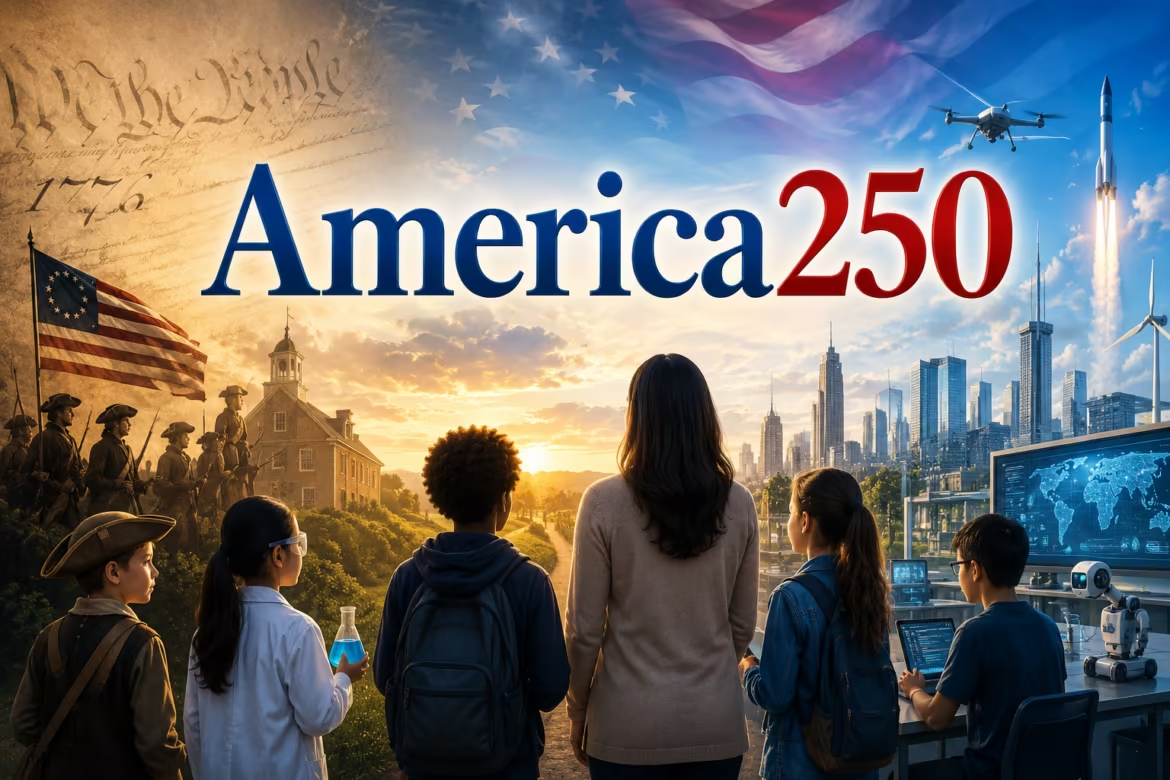
A diverse group of students and a woman stand together, facing a sunrise cityscape with a large 'America 250' banner overhead and a flag nearby.
Hot Topics - controversialK-12

America250: Celebrating the Nation We Continue to Build

by EdCircuit Staff July 3, 2026
written by EdCircuit Staff 8 minutes read

America250 is more than a national celebration. It is a moment for reflection, gratitude, and optimism about the future of the United States.

On July 4, 2026, America will celebrate its 250th birthday. Across the nation, communities will gather for parades, fireworks, ceremonies, exhibits, performances, and commemorative events. Schools, museums, libraries, civic organizations, and historical societies are preparing for what promises to be one of the largest national commemorations in modern American history.

For many Americans, America250 represents far more than an anniversary.

It is a chance to pause and reflect on a nation that has continually reinvented itself for two and a half centuries.

It is an opportunity to honor sacrifice, celebrate achievement, recognize resilience, and inspire future generations.

For educators, it may become one of the most meaningful moments of an entire career.

Because while America250 celebrates the nation’s first 250 years, schools are helping prepare the leaders who will shape the next 250.

A Celebration Most Americans Will Experience Only Once

Few generations are given the opportunity to celebrate a milestone of this magnitude.

Many educators remember the excitement surrounding the Bicentennial in 1976. Schools organized special projects. Communities hosted celebrations. Families gathered to mark the nation’s 200th birthday.

Today’s students have no memory of that event.

Most were born nearly half a century after the Bicentennial.

America250 will be their defining national milestone.

Years from now, students may remember where they were when the country celebrated its 250th birthday. They may remember school assemblies, community festivals, classroom discussions, service projects, and conversations about what America means to them.

For many, it will become a lifelong memory.

And memories matter.

They shape how we view our communities, our nation, and our place within both.

America’s Story Is Really a Story About People

History books often focus on presidents, wars, legislation, inventions, and major events.

But America’s story has always been about people.

Ordinary people doing extraordinary things.

The first-generation student who becomes the first member of their family to attend college.

The teacher who spends thirty years helping children discover their potential.

The military veteran who returns home and dedicates a second career to serving students.

The immigrant family that arrives with little more than hope and determination before building a thriving business.

The nurse who works through a crisis.

The firefighter who protects a neighborhood.

The scientist who sat in a public-school classroom before helping develop life-saving medical treatments.

The student who overcomes homelessness, poverty, illness, or personal tragedy and still crosses the graduation stage.

These stories often go untold outside local communities.

Yet they represent the very best of America.

Walk through any school in the country and you will find stories of perseverance, determination, innovation, service, and hope.

Every student carries a story.

Every educator influences a story.

Every community contributes to the larger American story.

America250 provides an opportunity to celebrate those stories alongside the nation’s history.

Because America was not built by famous names alone.

It was built by generations of people who believed they could leave things better than they found them.

Why Schools Matter More Than Ever

Schools have always played a central role in preparing future generations.

They are where students learn to think critically.

Where they develop empathy.

Where they learn to collaborate.

Where they begin to understand responsibility.

Where they discover their passions.

Where they gain the skills necessary to navigate an increasingly complex world.

America250 arrives at a particularly important moment.

Today’s students are growing up in a world defined by rapid technological change, global connectivity, artificial intelligence, and evolving workforce expectations.

The future they will inherit looks dramatically different from the world many educators entered when they began teaching.

That reality makes the work happening inside schools more important than ever.

From Quill Pens to Artificial Intelligence

Perhaps no comparison better illustrates America’s journey than the transformation of education itself.

When the Declaration of Independence was signed in 1776, information traveled at the speed of a horse.

Books were scarce.

Communication could take weeks or months.

Research often required access to physical documents.

Education looked dramatically different than it does today.

Fast forward 250 years.

Students can collaborate with peers around the world in real time.

Artificial intelligence can support learning, research, creativity, and problem-solving.

Virtual reality can transport students to historical events, scientific environments, and distant locations.

Translation tools help break language barriers.

Digital resources place vast amounts of information at students’ fingertips.

The founders of the nation could never have imagined these technologies.

Yet they would likely recognize something that remains unchanged:

Education remains one of the most powerful forces shaping the future of a nation.

Today’s classrooms are preparing students for careers that do not yet exist, technologies that have not yet been invented, and challenges that have not yet emerged.

That responsibility is both exciting and profound.

A Leadership Opportunity for Schools and Districts

America250 is not simply a teaching opportunity.

It is a leadership opportunity.

Across the country, school leaders are navigating increasingly complex challenges. Political division, technology debates, budget pressures, mental health concerns, workforce shortages, and rapidly changing expectations all compete for attention.

Yet America’s 250th anniversary offers something rare.

A chance to unite communities around a shared experience.

Regardless of background, geography, profession, or political perspective, communities can come together to celebrate the values that connect them:

Education.

Opportunity.

Innovation.

Service.

Community.

Hope.

School districts have a unique opportunity to lead those conversations.

America250 can become more than a celebration.

It can become a catalyst for meaningful dialogue about the future communities want to create for their students.

Connecting History to the Future

The most powerful America250 celebrations will not focus solely on the past.

They will focus on possibility.

Students today will help define the next chapter of American history.

They will become teachers, scientists, engineers, healthcare professionals, entrepreneurs, military leaders, public servants, artists, innovators, and community advocates.

They will solve problems we cannot yet imagine.

They will create technologies we have not yet envisioned.

They will face challenges that require creativity, resilience, and collaboration.

And they will make decisions that shape the future of their communities and the nation.

When students understand that they are part of a larger story, learning becomes more meaningful.

History becomes relevant.

Citizenship becomes personal.

Service becomes purposeful.

The future becomes something they can actively influence.

The Educators Building Tomorrow

America250 also provides an opportunity to recognize the individuals helping prepare the next generation every day.

Teachers.

Paraprofessionals.

Counselors.

Principals.

Technology leaders.

Librarians.

Custodians.

Bus drivers.

Administrative assistants.

Cafeteria staff.

Coaches.

Support personnel.

Countless individuals contribute to the educational experience of students every single day.

Many work long hours with little recognition.

Many quietly change lives without ever appearing in headlines.

Yet their influence extends far beyond the walls of a school building.

The student who discovers a love of science.

The graduate who becomes a doctor.

The entrepreneur who starts a company.

The teacher who returns to inspire future generations.

The engineer who develops life-changing technology.

Each success story often begins with an educator who believed in a student.

America250 reminds us that building a stronger nation begins by investing in the people who help shape future generations.

The Next 250 Years Begin Today

Perhaps the most powerful aspect of America250 is that it is not really about the past.

It is about possibility.

The students entering kindergarten this year may witness America’s 300th birthday celebration in 2076.

The students graduating high school today will spend their lives helping shape communities, industries, governments, and institutions.

The decisions they make will influence the nation for decades.

That is why America250 matters.

Not because it marks the end of a chapter.

But because it reminds us that the story continues.

Every generation inherits the responsibility of moving the nation forward.

Every generation contributes something new.

Every generation helps write the next chapter.

A Celebration Worth Remembering

America250 offers schools an opportunity unlike any other.

It is a chance to celebrate history without becoming trapped by it.

To honor sacrifice while embracing progress.

To connect communities through shared experiences.

To inspire students to think beyond themselves.

To recognize educators who help shape the future every day.

And to remind young people that they have an important role to play in the story of America.

Two hundred and fifty years ago, a group of individuals began writing a story that continues today.

Two hundred and fifty years from now, historians may not remember every lesson taught in 2026.

They may not remember every classroom project, every school board meeting, or every technology initiative.

But they will live in the America shaped by the students sitting in today’s classrooms.

That is why America250 matters.

Not because it celebrates the first 250 years.

But because it reminds us that the next 250 years are already beginning.

And those future chapters are waiting to be written.

Play video: America's 250 | Nonprofit prepares local students for the future (15 minutes 1 second)15:01
America's 250 | Nonprofit prepares local students for the future15 min 1 sABC24 Memphis on YouTube

ABC24 Memphis – America’s 250 | Nonprofit prepares local students for the future (Play video)

Subscribe to edCircuit to stay up to date on all of our shows, podcasts, news, and thought leadership articles.

July 3, 2026 0 comments
0 FacebookTwitterPinterestLinkedinWhatsappCopy LinkEmail
Group of diverse children gathered around a glowing holographic shield and network icons representing cybersecurity, on a table in a classroom setting.
Digital CitizenshipCybersecurityK-12Hot Topics - controversial

Why Students Need Digital Citizenship Earlier Than Ever

by EdCircuit Staff July 2, 2026
written by EdCircuit Staff 9 minutes read

Digital citizenship education is becoming one of the most important investments schools can make as students face growing cybersecurity threats, artificial intelligence tools, misinformation, social media pressures, and online risks at younger ages than ever before.

Not long ago, digital citizenship was often viewed as an extension of technology class. Students might receive a lesson about internet safety, cyberbullying, or protecting passwords sometime in upper elementary or middle school. The assumption was that children would gradually encounter technology as they got older and could learn responsible online behavior when the need arose.

That assumption no longer reflects reality.

Today’s students are growing up in a world where digital interactions begin almost as soon as they can speak. Many children learn to swipe a screen before they learn to tie their shoes. They use tablets in preschool, watch videos on connected devices, play online games with people they have never met, communicate through messaging platforms, and increasingly interact with artificial intelligence-powered tools before reaching middle school.

Technology is no longer something students use occasionally. It is woven into nearly every aspect of their lives.

As a result, digital citizenship has evolved from a technology topic into a life skill.

The question is no longer whether schools should teach digital citizenship. The question is how early they should begin.

For many educators, technology leaders, and cybersecurity professionals, the answer is becoming increasingly clear: much earlier than we once imagined.

Students Are No Longer Just Users of Technology

One of the biggest misconceptions about technology in schools is that students are simply consumers of digital tools.

In reality, students are active participants in complex digital ecosystems.

Every day they create accounts, share information, access cloud-based systems, collaborate online, upload content, communicate digitally, and interact with platforms that collect and process data. They make decisions that can impact their privacy, their safety, and in some cases the security of their schools.

This shift has elevated the importance of digital citizenship far beyond teaching students how to behave online.

Students have become stakeholders in digital security.

In many ways, they have become one of the most important layers of defense.

Why Students Are the First Line of Defense

When school leaders discuss cybersecurity, conversations often focus on firewalls, endpoint protection, security monitoring, multi-factor authentication, network segmentation, and threat detection systems.

Those tools matter.

They are essential.

But many successful cyberattacks do not begin by exploiting technology.

They begin by exploiting people.

A phishing email convinces someone to click a malicious link.

A fake login page captures credentials.

A suspicious file is downloaded.

A password is shared.

A social engineering attack succeeds because someone trusted a message they should have questioned.

Increasingly, students are among the people being targeted.

Imagine a fifth-grade student receiving an email claiming their school account password has expired.

Imagine a middle school student being asked to log into what appears to be a familiar educational platform.

Imagine a high school student receiving a direct message promising access to study guides, gaming rewards, or free downloads.

Cybercriminals understand that younger users often have less experience recognizing suspicious activity.

That is why students must be taught to identify warning signs early.

Every student who recognizes a phishing attempt and reports it helps protect the district.

Every student who understands password security reduces risk.

Every student who knows how to question suspicious requests becomes another layer of cybersecurity protection.

The reality is that students are no longer on the sidelines of cybersecurity.

They are part of the security team whether schools intentionally prepare them for that role or not.

The Digital Footprint Starts Earlier Than Most Students Realize

One of the most powerful concepts within digital citizenship is helping students understand that their online actions create a lasting record.

Many young people assume digital content is temporary.

They believe a post disappears.

A comment is forgotten.

A photo vanishes.

A video is lost in an endless feed.

The truth is far different.

Content can be copied, archived, screenshotted, shared, and rediscovered years later.

The digital footprint a student begins creating in elementary school can follow them through middle school, high school, college admissions, scholarship opportunities, internships, and employment.

This is not meant to create fear.

It is meant to create awareness.

Students need to understand that digital citizenship is not simply about avoiding mistakes.

It is about intentionally building a positive digital identity.

The same technology that can create problems can also create opportunities.

Students can use digital platforms to showcase creativity, leadership, academic achievement, community service, and innovation.

Helping students understand this distinction is one of the most valuable lessons schools can provide.

Artificial Intelligence Has Changed the Conversation

The rapid adoption of artificial intelligence has fundamentally changed what digital citizenship looks like.

Just a few years ago, most conversations focused on social media, cyberbullying, passwords, and internet safety.

Today, students have access to AI systems capable of generating essays, images, videos, code, presentations, research summaries, and answers to nearly any question.

The opportunities are remarkable.

The challenges are equally significant.

Students must learn how to use AI responsibly.

They need to understand that AI-generated information can be inaccurate.

They need to recognize that AI systems can produce bias, misinformation, fabricated citations, and convincing but incorrect answers.

A student who blindly trusts AI without verification can quickly spread inaccurate information.

A student who understands digital citizenship approaches AI differently.

They question outputs.

They verify sources.

They cross-check information.

They apply critical thinking.

In many ways, digital citizenship has become the foundation of AI literacy.

The schools that teach students how to think critically about AI today are preparing them for a future workforce where AI will be integrated into nearly every profession.

The Misinformation Challenge Is Growing

Students today consume more information in a single day than previous generations could access in weeks.

Unfortunately, not all of that information is accurate.

Social media feeds, videos, websites, influencers, online communities, and AI-generated content create an environment where misinformation can spread rapidly.

Students encounter:

  • Fake news stories
  • Manipulated images
  • Deepfake videos
  • Misleading headlines
  • False statistics
  • AI-generated misinformation
  • Fraudulent websites
  • Impersonation accounts

Without proper instruction, it becomes increasingly difficult to distinguish fact from fiction.

Digital citizenship helps students develop the habits necessary to navigate this environment.

Students learn to evaluate sources.

They learn to identify bias.

They learn to verify information before sharing it.

They learn to question content designed to provoke emotional reactions.

Most importantly, they learn that being informed requires effort.

These skills extend far beyond school assignments.

They are essential for participating in society, making informed decisions, and becoming responsible citizens.

The Personal Device Reality

One reason digital citizenship must begin earlier is that learning no longer occurs solely on school-owned devices.

Students move constantly between multiple digital environments.

A student may start a school assignment on a district-issued Chromebook, continue it on a personal tablet, communicate through a smartphone, and then spend the evening gaming online with friends.

The boundaries between school technology and personal technology have largely disappeared.

This means cybersecurity risks, privacy concerns, and digital citizenship challenges travel with students wherever they go.

A suspicious message received at home can impact school accounts.

A compromised password used on a gaming platform can affect educational systems.

An inappropriate social media post can create consequences that follow students into school the next day.

The digital world no longer has clear borders.

Digital citizenship education helps students navigate this reality by developing habits that apply across all devices, platforms, and environments.

Digital Citizenship Is Character Education

While technology often dominates discussions about digital citizenship, the topic is ultimately about people.

It is about how individuals treat one another.

It is about responsibility.

It is about empathy.

It is about integrity.

Students need guidance on how to communicate respectfully online, engage in healthy discussions, disagree constructively, and understand the impact their words can have on others.

The absence of face-to-face interaction can make it easier for students to forget that real people exist behind screens.

Digital citizenship helps restore that perspective.

Students learn that kindness matters online.

Respect matters online.

Accountability matters online.

The values schools teach in classrooms should extend naturally into digital spaces.

Why Elementary School Is the Right Place to Start

Many school leaders have recognized that waiting until middle school is simply too late.

By then, students may already have years of online experience and habits that are difficult to change.

Digital citizenship can be introduced in age-appropriate ways beginning in elementary school.

Young learners can explore concepts such as:

  • Protecting personal information
  • Creating strong passwords
  • Asking trusted adults for help
  • Being kind online
  • Recognizing suspicious messages
  • Understanding what should and should not be shared

As students mature, those lessons can evolve into deeper conversations about privacy, cybersecurity, AI, misinformation, digital ethics, intellectual property, and online reputation.

Just as schools do not wait until high school to teach reading, they should not wait until adolescence to teach responsible technology use.

The earlier these habits develop, the stronger they become.

Digital Citizenship Is Workforce Readiness

Perhaps the most overlooked aspect of digital citizenship is its connection to future careers.

Employers increasingly expect workers to understand cybersecurity basics, communicate professionally online, evaluate information critically, and use technology responsibly.

The workforce students will enter will be shaped by artificial intelligence, automation, cloud computing, cybersecurity concerns, and digital collaboration.

These are no longer specialized skills reserved for technology professionals.

They are becoming universal expectations.

Students who understand digital citizenship are developing competencies that will serve them throughout their careers.

They are learning how to protect information.

How to evaluate sources.

How to use technology ethically.

How to communicate professionally.

How to collaborate responsibly.

Those skills are becoming just as valuable as traditional academic knowledge.

Building a Generation of Responsible Digital Citizens

The goal of digital citizenship is not to create students who fear technology.

The goal is to create students who understand technology, question information, protect themselves and others, and use digital tools responsibly.

The students sitting in elementary classrooms today will inherit a world powered by artificial intelligence, connected systems, cloud computing, digital communication, and technologies that have yet to be invented.

The habits they develop now will shape how effectively they navigate that future.

Schools that invest in digital citizenship education are doing far more than protecting networks or reducing cyber risk.

They are preparing students to become informed citizens, responsible technology users, ethical decision-makers, and future leaders.

And as cybersecurity threats, artificial intelligence, and digital interactions continue to expand, one truth becomes increasingly difficult to ignore:

Digital citizenship is no longer a lesson schools can afford to delay.

It has become a foundational skill for success, safety, and leadership in the digital age.

Play video: Digital Citizenship Week | Artificial Intelligence (2 minutes 22 seconds)2:22
Digital Citizenship Week | Artificial Intelligence2 min 22 sCaldwell County Schools on YouTube

Caldwell County Schools – Digital Citizenship  (Play video)

Subscribe to edCircuit to stay up to date on all of our shows, podcasts, news, and thought leadership articles.

July 2, 2026 0 comments
0 FacebookTwitterPinterestLinkedinWhatsappCopy LinkEmail
A boy sits at his desk with his head resting on his hand, looking bored amidst an attention crissis, while other children use tablets in a classroom setting.
Hot Topics - controversialK-12

The Attention Crisis in Elementary Schools

by EdCircuit Staff July 1, 2026
written by EdCircuit Staff 7 minutes read

The attention crisis in elementary schools isn’t emerging—it’s already here, and classrooms are feeling the impact every day.

Across K–5 environments, something has shifted in how students engage with learning. Tasks that once required sustained focus now feel harder to maintain. Independent work is more frequently interrupted by frustration. The patience needed to work through difficulty is thinner, and the expectation for immediate answers is growing stronger.

Teachers are not imagining this change. They are experiencing it in real time, across subjects and grade levels.

This is not isolated to one classroom or one district.

It is systemic—and it is reshaping how students learn.

What Teachers Are Seeing Right Now

When elementary educators describe their classrooms today, a consistent pattern begins to emerge.

Students often:

  • Struggle to maintain attention during independent work
  • Seek help almost immediately after encountering difficulty
  • Show less tolerance for tasks that require sustained effort
  • Move quickly from engagement to frustration

In some classrooms, students are asking for assistance within seconds of starting a task—not because they are incapable, but because they are no longer accustomed to sitting with uncertainty.

This shift is subtle at first, but over time it becomes more pronounced.

Attention is not just about whether students are on task.

It is about how long they can stay with the task—and what happens when it becomes challenging.

Teachers are increasingly finding themselves not just delivering instruction, but actively rebuilding students’ ability to focus, persist, and work through complexity.

What educators are experiencing is not isolated—it’s being observed across districts and classrooms nationwide.

The video below highlights how schools are actively working to address declining attention spans, while also revealing just how widespread the challenge has become.

WBDJ7 – Combating Students’ Attention Span Crisis (Play video)

Play video: Combating Students' Attention Span Crisis (3 minutes 14 seconds)3:14

Combating Students' Attention Span Crisis3 min 14 sWDBJ7 on YouTube

The Role of Screen Time in Shaping Attention

Screen time is now deeply embedded in elementary instruction. Digital tools are used for reading, math, assessment, and enrichment. In many cases, they provide interactive and engaging learning experiences.

However, the design of these experiences matters.

Many digital platforms are built around:

  • Immediate feedback
  • Rapid task completion
  • High levels of visual stimulation
  • Frequent transitions between activities

These features can increase engagement, but they also shape expectations.

Students begin to anticipate:

  • Quick responses
  • Continuous interaction
  • Minimal waiting

Over time, slower forms of learning—such as reading extended text, writing independently, or solving multi-step problems—can feel unfamiliar or even uncomfortable.

We didn’t just introduce more technology into classrooms.

We changed the pace of thinking.

And when the pace accelerates too much, depth can begin to suffer.

AI and the Acceleration of Thinking

Artificial intelligence is accelerating this shift even further.

AI tools are designed to reduce friction in the learning process. They can generate responses, offer suggestions, and guide students through tasks with remarkable speed and accuracy.

In many ways, they are powerful supports.

But learning—particularly in elementary education—is not built on speed alone.

It is built on time, effort, and process.

When students rely on AI to move quickly through assignments, an important dynamic begins to change. They spend less time sitting with ideas, less time working through confusion, and less time developing their own approaches to solving problems.

When students don’t have to think as long, they don’t build the capacity to think deeply.

AI does not just influence how students complete tasks.

It influences how long they are willing—and able—to stay with them.

The Disappearance of Productive Struggle

At the core of this issue is the gradual loss of productive struggle.

Struggle is often misunderstood as something to be minimized. In reality, it is one of the most important components of learning.

It is where students:

  • Make connections between ideas
  • Learn from mistakes
  • Develop persistence and resilience
  • Build confidence through effort

In elementary classrooms, productive struggle might look like a student revising a sentence multiple times, working through a challenging math problem, or rereading a passage to fully understand its meaning.

These moments are not inefficiencies.

They are the learning process itself.

However, when students become accustomed to tools that provide immediate answers or step-by-step guidance, their tolerance for struggle begins to decrease.

Tasks that require sustained effort can feel overwhelming. Over time, students may begin to avoid them, not because they lack ability, but because they lack the stamina to engage.

This is not a motivation issue.

It is a capacity issue—and capacity must be built.

Classroom Reality: Teachers Adjusting in Real Time

Teachers are not passive observers in this shift. They are actively adapting their practices to meet the needs they are seeing.

In many classrooms, educators are:

  • Reducing reliance on certain digital tools during key learning moments
  • Reintroducing hands-on and discussion-based activities
  • Creating structured time for sustained focus and independent thinking

Some are intentionally slowing down instruction, allowing students more time to process, reflect, and work through challenges without immediate intervention.

Others are rebalancing their approach to technology, using it more selectively and with clearer purpose.

These adjustments are not about rejecting innovation.

They are about restoring balance.

Teachers understand that engagement and attention are not the same thing. A student can appear engaged with a screen but still struggle to sustain deep focus when the task requires independent thinking.

Attention is not automatic. It is developed—and it requires intentional practice.

A Leadership Blind Spot

At the district and policy level, significant attention has been given to technology integration, AI adoption, and digital access. These are critical priorities in modern education.

However, one area remains underdeveloped in many strategic conversations:

The impact of these tools on student attention.

Few policies explicitly address:

  • How instructional design affects attention span
  • The balance between fast-paced and slow-paced learning experiences
  • The need to build cognitive stamina over time

This creates a gap between implementation and impact.

Because attention is not simply a classroom management issue.

It is a foundational learning outcome.

And without intentional design, it can be unintentionally diminished.

Rethinking Learning Design in K–5 Classrooms

If attention is declining, the response cannot be to simply increase engagement through more tools or faster-paced content.

It must be to rethink how learning is designed.

This means creating environments that:

  • Provide time for sustained thinking
  • Encourage persistence through challenging tasks
  • Balance digital and non-digital experiences
  • Value depth over speed

It also requires leaders and educators to ask more reflective questions:

  • Are students being given enough time to think independently?
  • Are we prioritizing efficiency over understanding?
  • Are our tools supporting focus, or fragmenting it?

The goal is not to remove technology from classrooms.

It is to ensure that technology enhances—not replaces—the thinking process.

The Risk of Ignoring the Shift

If the attention crisis in elementary schools is not addressed, the long-term implications extend beyond the classroom.

Students may:

  • Struggle with complex problem-solving
  • Avoid tasks that require sustained effort
  • Develop patterns of shallow engagement

These challenges may not be immediately visible in early grades, but they can compound over time, affecting how students learn in later years.

Because attention is not just about behavior.

It is about the ability to engage deeply with learning—and to stay with it long enough for understanding to take place.

A Moment That Demands Awareness

This is not a call to reverse innovation or remove technology from classrooms.

It is a call to understand its influence better.

Screen time and AI are powerful tools. When used thoughtfully, they can enhance learning, provide support, and expand opportunities for students.

But when used without intentional design, they can also reshape learning in unintended ways.

The challenge facing elementary education is not just what students are learning.

It is whether they still have the ability to stay with the learning long enough for it to matter.

What Comes Next

The attention crisis in elementary schools is not temporary.

It is a signal that how students experience learning is changing—and that these changes require a thoughtful and measured response.

The districts that respond effectively will not be the ones that move the fastest or adopt the most tools.

They will be the ones who understand when to slow learning down.

Because in the end, the future of education will not be defined by how quickly students can access answers.

It will be defined by their ability to stay with questions long enough to truly understand them.

Subscribe to edCircuit to stay up to date on all of our shows, podcasts, news, and thought leadership articles.
July 1, 2026 0 comments
0 FacebookTwitterPinterestLinkedinWhatsappCopy LinkEmail
Science classrooms then and now: a dim 2010 lab bench with a paper manual beside a 2026 lab where a student in goggles, gloves and lab coat works under a holographic molecule, live data graph and safety checklist
School SafetyArtificial IntelligenceK-12Hot Topics - controversial

Science Classrooms Are Becoming More Technology-Driven

by EdCircuit Staff June 30, 2026
written by EdCircuit Staff 9 minutes read

Science classrooms are becoming more technology-driven, and the change is reshaping teaching, learning, laboratory safety and student preparation for future careers. Technology in science classrooms now shapes how students prepare for a lab, how they collect data and how schools keep their safety records.

In a technology-driven chemistry class, a student may complete a digital safety assessment through the school’s learning management system before touching a beaker, having watched a laboratory demonstration video the night before, reviewed an interactive simulation of the experiment and received AI-generated feedback on her pre-lab questions. During the lab, wireless sensors can record temperature changes and send them to her tablet while her group works in a shared digital notebook and an AI assistant helps identify patterns in their results. For many schools this is no longer a vision of the future; it is becoming normal practice.

The change is driven by technologies that improve safety, increase engagement, personalize learning, streamline teacher workloads and prepare students for careers that depend on digital tools and scientific innovation. Today’s science classroom looks markedly different from that of a decade ago, and that change is accelerating.

How Has the Science Classroom Changed Since 2010?

The science classroom has moved from paper, binders and one-size-fits-all instruction to digital training, live data and personalized pathways, as a comparison with fifteen years ago shows.

The Science Classroom of 2010

  • Paper safety contracts
  • Printed lab manuals
  • Handwritten lab reports
  • Physical binders containing safety information
  • Manual chemical inventories
  • Traditional lectures before experiments
  • Limited access to simulations
  • One-size-fits-all instruction

The Science Classroom of 2026

  • Digital safety training and assessments
  • Interactive learning management systems
  • AI-assisted learning tools
  • Electronic laboratory notebooks
  • Digital chemical inventory systems
  • Virtual and augmented reality experiences
  • Real-time data collection sensors
  • Personalized learning pathways

The goal of science education has not changed. Students still need to develop curiosity, problem-solving skills, scientific reasoning and a deep understanding of the natural world. The tools have changed, and schools that adopt them create learning experiences closer to how science is practiced in universities, research institutions, hospitals, engineering firms and laboratories. For the wider picture of how these subjects fit together, see edCircuit’s STEM education guide.

What Principles Should Guide Technology in Science Classrooms?

Science educators can apply five principles to create safe, effective learning environments with technology in science classrooms. Each draws on the practices in this article and on published guidance:

  1. The purpose of science stays the same. Curiosity, asking questions and investigating the unknown remain the point; a device earns its place by serving them.
  2. Hands-on investigation stays at the center. The National Science Teaching Association (NSTA) calls hands-on investigations, explorations and demonstrations essential for high-quality K–12 science instruction in its position statement on safety and school science instruction (revised April 2024). Simulations and videos prepare students for that work and extend it; they do not replace it.
  3. Safety comes before the tool. Students are trained, hazards are reviewed and expectations are set before the lab begins, and digital safety records must be at least as easy to reach as paper ones. OSHA’s Hazard Communication Standard permits electronic access to safety data sheets only where it creates no barrier to immediate employee access (29 CFR 1910.1200(g)(8)).
  4. Teachers stay in charge of decisions. The U.S. Department of Education’s Office of Educational Technology made keeping humans in the loop the first recommendation of its May 2023 report, Artificial Intelligence and the Future of Teaching and Learning, and concluded that people must remain responsible for the health and safety of children.
  5. Students still do the thinking. Evaluating evidence, analyzing results, identifying bias, questioning assumptions and drawing conclusions remain the student’s work, with technology as one more tool for doing it.

For the rules, equipment and training that sit underneath all five, see edCircuit’s lab safety guide.

How Is Technology Making Science Labs Safer?

Technology is making science labs safer by replacing paper records that are easily lost with digital ones that can be found in seconds. Indeed, one of the most important drivers behind technology adoption in science education is safety. Many schools still rely on safety processes largely unchanged for decades: paper contracts are lost, training records become difficult to locate, chemical inventories fall out of date and inspection reports sit in filing cabinets. Today’s science programs increasingly use:

  • Digital safety contracts
  • Online laboratory safety training
  • Electronic chemical inventories
  • QR code access to Safety Data Sheets (SDS)
  • Digital inspection platforms
  • Incident reporting software
  • Equipment tracking systems
  • Laboratory compliance dashboards

The result is greater accountability, stronger documentation and improved oversight. Teachers can quickly verify student training records, administrators can review compliance documentation, and safety information becomes accessible within seconds rather than minutes. Technology also helps districts demonstrate their duty of care. As safety expectations grow, digital systems offer transparency and consistency that paper struggles to match, and the smart science laboratory is becoming an expectation rather than a luxury.

How Are Learning Management Systems Changing Lab Preparation?

Learning management systems move lab preparation out of class time and into the days before the lab, one of the most significant changes in science education. Traditionally, teachers spent valuable instructional time reviewing procedures, explaining hazards and discussing expectations. Today, students can prepare before class through:

  • Instructional videos
  • Interactive modules
  • Digital safety training
  • Pre-laboratory assessments
  • Virtual demonstrations
  • Guided review activities

This approach creates a more efficient and effective laboratory experience. Students arrive prepared, teachers spend less time explaining procedures, and class time can focus on inquiry, analysis, problem-solving and discussion. The aim is that students who complete digital pre-lab preparation arrive with stronger understanding, more confidence and safer laboratory habits, so that the laboratory period itself becomes more productive because preparation happened before students walked through the door.

How Is Artificial Intelligence Becoming a Science Assistant?

Artificial intelligence is becoming a science assistant by supporting explanation, feedback and resource preparation, while the scientific thinking stays with students and teachers. While much of the public conversation about AI focuses on cheating, science educators are finding productive ways to use it. AI can support students by:

  • Explaining difficult concepts
  • Generating study materials
  • Providing personalized tutoring
  • Assisting with scientific writing
  • Offering feedback on laboratory reports
  • Supporting multilingual learners

Science teachers are using AI to:

  • Create differentiated assignments
  • Develop laboratory scenarios
  • Generate discussion questions
  • Build assessments
  • Create review materials
  • Support individualized instruction

Perhaps most importantly, AI lets educators spend less time creating resources and more time with students. The most effective schools use AI to enhance scientific thinking, not replace it: evaluating evidence, analyzing results, identifying bias, questioning assumptions and drawing conclusions remain human skills, and AI is another tool in the scientific toolkit.

How Is Technology Giving Science Teachers Their Time Back?

Technology gives science teachers time back by automating routine administrative work. Teacher workload remains one of the greatest challenges facing education, and science teachers face particular demands: beyond lesson planning and grading, they often manage laboratories, chemical inventories, safety documentation, equipment maintenance and regulatory compliance. Automation now supports:

  • Assessment grading
  • Assignment collection
  • Attendance tracking
  • Safety documentation
  • Inventory management
  • Student progress monitoring
  • Communication with families

Time saved on paperwork goes to instructional design, student support and laboratory experiences, and students benefit. Technology is not replacing teachers; it is helping them focus on the work that matters most.

How Does Real-Time Data Collection Make Science More Authentic?

Real-time data collection makes school science more authentic because it lets students work with data the way modern science does. Digital sensors and probes allow students to collect and analyze data as an experiment runs. Students can measure:

  • Temperature
  • pH
  • Motion
  • Light intensity
  • Dissolved oxygen
  • Force
  • Pressure
  • Environmental conditions

Wireless technologies display results instantly and generate graphs, so students spend less time recording measurements and more time interpreting information. The learning becomes deeper and the analysis richer, and, most importantly, students begin thinking like scientists rather than simply following laboratory procedures.

How Do Virtual Labs and Simulations Expand Opportunity?

Virtual labs and simulations expand opportunity by giving students experiences that cannot happen safely or affordably in a traditional classroom. Virtual laboratories allow students to:

  • Conduct chemistry experiments safely
  • Explore molecular structures
  • Model ecosystems
  • Simulate engineering challenges
  • Investigate genetics
  • Explore astronomical events

These experiences do not replace hands-on learning; they enhance it. Students can practice procedures, repeat experiments, test variables and explore scenarios that would otherwise be impossible. For rural districts, small schools and budget-conscious programs, virtual labs provide access to learning opportunities that previously may have been unavailable.

How Does Technology Prepare Students for Safer STEM Careers?

Technology prepares students for safer STEM careers by giving them practice with the digital tools those workplaces already use. Students pursuing careers in healthcare, biotechnology, engineering, environmental science, research, computer science and manufacturing will enter environments rich with digital tools, where graduates are expected to:

  • Analyze data
  • Collaborate digitally
  • Utilize technology effectively
  • Solve complex problems
  • Communicate findings
  • Adapt to new innovations

Science classrooms have become one of the most important places where these skills are developed. Technology integration is therefore no longer simply about engagement; it is about readiness. Students who learn in technology-rich science environments gain experiences that mirror the realities of modern STEM professions.

Why Must School Leaders Act Now?

School leaders must act now because the transformation of science education depends on decisions that classroom teachers cannot make alone. District leaders, principals, curriculum directors and school boards all play critical roles, and the question facing them is increasingly straightforward:

Can schools prepare students for careers in biotechnology, engineering, medicine, environmental science, artificial intelligence, and advanced manufacturing while relying on systems designed before smartphones existed?

For many districts, the answer is becoming clear: investments in science technology are no longer optional enhancements but strategic necessities. That means supporting:

  • Professional development
  • Infrastructure improvements
  • Laboratory modernization
  • Digital safety systems
  • AI literacy initiatives
  • Long-term technology planning

Schools that fail to evolve risk a growing gap between classroom experiences and workplace realities.

What Will the Future Smart Science Classroom Include?

The next generation of science classrooms may include augmented reality, virtual reality, AI-powered tutoring, predictive analytics, digital twins, wearable sensors and immersive simulations that make today’s technologies seem basic by comparison. Yet the purpose of science education remains unchanged: curiosity, asking questions and investigating the unknown. Technology does not replace those principles; it amplifies them.

The most successful science classrooms of the future will be defined not by their devices but by how well those tools help students think critically, solve problems, conduct investigations and understand the world. The shift to technology-driven science classrooms is more than modernization; it is an opportunity to create safer laboratories, more engaging learning experiences, stronger pathways into safer STEM careers, and a generation of students better prepared for the challenges and opportunities that await them. For science educators and school leaders alike, the future of science education is already here, and the question is whether schools are ready to embrace it.

Subscribe to edCircuit to stay up to date on all of our shows, podcasts, news, and thought leadership articles.

June 30, 2026 0 comments
0 FacebookTwitterPinterestLinkedinWhatsappCopy LinkEmail
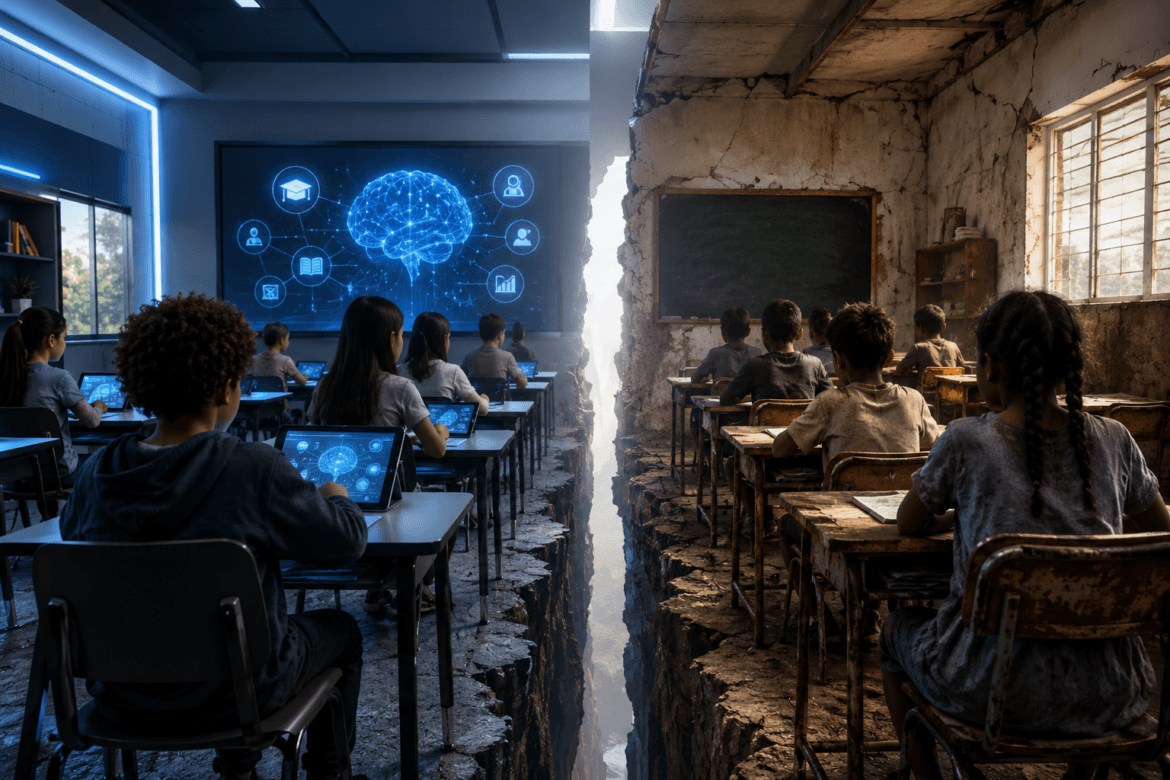
A classroom divided in half shows students with AI access and advanced technology on one side, while the other side struggles with worn desks and no tech, separated by a deep chasm.
Hot Topics - controversialArtificial IntelligenceK-12

AI Access Is Creating a New Digital Divide

by EdCircuit Staff June 29, 2026
written by EdCircuit Staff 8 minutes read

AI access in K–12 schools is rapidly creating a new digital divide that could determine which students are prepared for the future, and which students are left behind.

In one district, students are learning prompt engineering, exploring AI ethics, using intelligent tutoring systems, and interacting with classroom tools designed to personalize learning. Teachers are being trained on responsible AI integration, district leaders are building governance frameworks, and technology departments are preparing for a future where artificial intelligence becomes embedded into nearly every aspect of school operations.

In another district, educators are still being told to avoid AI tools altogether.

There are no AI literacy initiatives. No professional development sessions. No district guidance. No strategic planning discussions. Technology teams are already overwhelmed managing aging devices, cybersecurity threats, and shrinking budgets. Artificial intelligence feels less like an opportunity and more like another challenge schools simply do not have the capacity to address.

That gap may become one of the defining educational equity issues of this decade.

For years, conversations surrounding the digital divide focused on internet access, student devices, and broadband connectivity. The pandemic exposed major inequities in those areas and forced districts across the country to rapidly modernize their technology infrastructure.

But a new divide is now emerging—one that goes beyond connectivity.

The next digital divide may be defined by access to artificial intelligence.

AI Readiness Is Becoming a New Form of Educational Equity

The districts moving aggressively into AI adoption are not simply purchasing software licenses. They are building ecosystems designed to prepare students and educators for a future where AI is integrated into communication, research, business operations, healthcare, engineering, media production, cybersecurity, and countless other industries.

Some school systems are already introducing:

  • AI literacy curriculum
  • Student prompt-writing instruction
  • AI-powered tutoring platforms
  • Translation and accessibility tools
  • AI-assisted lesson planning
  • Automated administrative workflows
  • Personalized learning environments
  • Career pathway programs tied to emerging technologies

Meanwhile, other districts remain stuck in a holding pattern.

Some are waiting for state guidance. Others are concerned about cybersecurity and student data privacy. Many simply lack the staffing, infrastructure, funding, or leadership bandwidth needed to evaluate AI tools responsibly.

The disparity is becoming increasingly visible.

According to the 2026 State of EdTech District Leadership report released by Consortium for School Networking (CoSN), district leaders continue identifying artificial intelligence, cybersecurity, and staffing capacity among the most significant challenges shaping K–12 technology leadership. At the same time, many districts report concerns about preparedness, policy development, and professional development surrounding AI implementation.

The result is a rapidly widening gap between districts building AI-ready learning environments and districts struggling just to maintain existing technology systems.

Wealthier Districts Often Move Faster

The uncomfortable reality is that districts already positioned with strong technology infrastructure are often the same districts able to adopt AI the fastest.

Large suburban districts may have:

  • Dedicated instructional technology coaches
  • Data privacy officers
  • Cybersecurity teams
  • Technology integration specialists
  • Strategic planning departments
  • AI pilot programs
  • Stronger local funding support

These resources allow districts to experiment, evaluate, and scale AI initiatives more confidently.

Meanwhile, smaller and underfunded districts may rely on a single technology administrator responsible for:

  • Device management
  • Network operations
  • Cybersecurity
  • Student information systems
  • Classroom support
  • Help desk tickets
  • Testing platforms
  • Software deployment

For these schools, AI exploration can quickly become operationally overwhelming.

This creates a compounding effect in K–12 education:
The districts most capable of preparing students for an AI-driven future are often the districts that already possess significant technological advantages.

Rural Schools Face Some of the Biggest Challenges

Rural districts may face some of the most difficult barriers in the emerging AI landscape.

Limited staffing, aging infrastructure, bandwidth limitations, and recruitment challenges can all slow AI readiness. Many rural districts continue fighting to attract technology professionals, maintain aging systems, and provide equitable digital access to students spread across large geographic regions.

Yet rural students will eventually enter the same workforce as students graduating from wealthier suburban districts.

That reality is creating growing concern among education leaders.

If AI literacy becomes an expected workforce skill—as many experts believe it will—students without structured exposure to AI systems may graduate at a significant disadvantage.

The concern extends far beyond computer science classrooms.

Future careers in healthcare, agriculture, manufacturing, business, engineering, media, and skilled trades may all require workers capable of interacting with AI-powered systems. Students unfamiliar with automation, intelligent systems, and AI-assisted workflows could find themselves struggling to compete in higher education and employment environments where those technologies are already standard.

In many ways, the issue mirrors earlier concerns surrounding internet access during the rise of the digital economy.

The difference is that AI may evolve even faster.

Teachers Are Entering Two Different Professional Worlds

The AI divide is not affecting only students.

It is increasingly shaping the professional experiences of educators themselves.

In some districts, teachers are actively learning:

  • AI-enhanced lesson planning
  • Responsible prompt engineering
  • AI-assisted differentiation
  • Automated rubric creation
  • Data analysis tools
  • Accessibility supports
  • Ethical classroom integration strategies

Professional development sessions focused on AI are becoming common in forward-thinking districts. Technology departments and curriculum leaders are collaborating to help educators understand both the opportunities and limitations of artificial intelligence.

For many teachers, these tools are beginning to reduce administrative workload while creating more opportunities for personalization and instructional creativity.

In other schools, educators are receiving little guidance at all.

Some districts continue blocking AI tools entirely. Others have yet to establish clear policies, leaving teachers uncertain about what is permitted or discouraged. Many educators are experimenting privately without formal training, governance, or support structures.

This inconsistency creates another layer of inequity.

Teachers with access to strong AI training may become significantly more efficient and technologically fluent over time. Educators without support may feel increasingly isolated as AI integration accelerates across the profession.

The divide is no longer simply technological.

It is becoming instructional, operational, and professional.

Cybersecurity and Privacy Concerns Are Real

Not every district moving cautiously on AI lacks innovation.

Many school leaders have legitimate concerns.

Artificial intelligence introduces difficult questions surrounding:

  • Student data privacy
  • Cybersecurity vulnerabilities
  • Deepfakes and misinformation
  • Bias in AI-generated outputs
  • Academic integrity
  • Age-appropriate safeguards
  • Data ownership
  • Legal liability

District leaders are being asked to evaluate rapidly evolving technologies while balancing student safety, compliance obligations, and public trust.

For schools already facing ransomware threats and growing cybersecurity pressures, the stakes are high.

Questions districts continue asking include:

  • Where is student information stored?
  • Is student data used to train AI models?
  • How accurate are AI-generated outputs?
  • What safeguards protect minors?
  • How should AI-generated work be cited?
  • What happens when AI produces harmful or inaccurate information?

These concerns are valid and increasingly urgent.

However, many experts warn that avoiding AI entirely may ultimately create additional risks. Students are already using AI tools outside school environments, often without guidance or oversight.

The challenge for K–12 education may not be whether students will use AI.

It may be whether schools choose to teach students how to use it responsibly.

Workforce Readiness Is Now Part of the Conversation

Artificial intelligence is rapidly reshaping industries nationwide. Employers increasingly expect workers to understand automation, digital collaboration, data analysis, and AI-assisted workflows.

Students graduating from AI-forward districts may leave school with:

  • Stronger digital communication skills
  • Greater familiarity with emerging technologies
  • Experience evaluating AI-generated information
  • Understanding of AI ethics and limitations
  • Confidence using automation tools
  • More advanced problem-solving strategies

Meanwhile, students without meaningful exposure to AI systems may enter higher education or the workforce already behind peers who have spent years developing those skills.

This is why many education leaders now believe AI literacy may eventually become as foundational as digital literacy itself.

The schools that ignore this shift risk preparing students for a world that no longer exists.

Equity Must Remain at the Center

The solution is not reckless AI adoption.

Nor is it fear-driven avoidance.

The challenge facing K–12 education is building responsible, equitable, and sustainable AI implementation models that ensure all students—regardless of ZIP code—have opportunities to develop future-ready skills.

That may require:

  • State-level AI guidance
  • Regional collaboration models
  • Expanded professional development
  • Public-private partnerships
  • Shared technology services
  • Federal support programs
  • AI governance frameworks
  • Cross-district resource sharing

Organizations, including the International Society for Technology in Education and the Consortium for School Networking (CoSN), are increasingly helping districts navigate AI governance, policy creation, and implementation planning.

Still, the pace of change continues accelerating.

Districts waiting too long to begin these conversations may eventually find themselves struggling to close a gap that becomes increasingly difficult to overcome.

The Next Digital Divide Has Already Begun

The original digital divide focused on internet access.

The next divide may focus on access to intelligence itself—specifically, who has the opportunity to learn alongside AI systems and who does not.

This moment represents far more than a technology trend.

It is a conversation about equity, leadership, workforce readiness, educational opportunity, and the future direction of K–12 learning itself.

The districts investing thoughtfully in AI literacy, governance, infrastructure, and professional development today may ultimately shape which students are prepared to lead in an AI-driven economy.

Those unable to move forward risk leaving students to play catch-up in a future that is arriving faster every day.

The AI divide will not simply be measured by devices or bandwidth.

It may ultimately be measured by which students were prepared to shape the future—and which students were left trying to catch up to it.

Play video: Is AI in education becoming the next great digital divide? (4 minutes 4 seconds)4:04
Is AI in education becoming the next great digital divide?4 min 4 sCGTN Europe on YouTube

CGTN Europe – Is AI in education becoming the next great digital divide? (Play video)

Subscribe to edCircuit to stay up to date on all of our shows, podcasts, news, and thought leadership articles.
June 29, 2026 0 comments
0 FacebookTwitterPinterestLinkedinWhatsappCopy LinkEmail
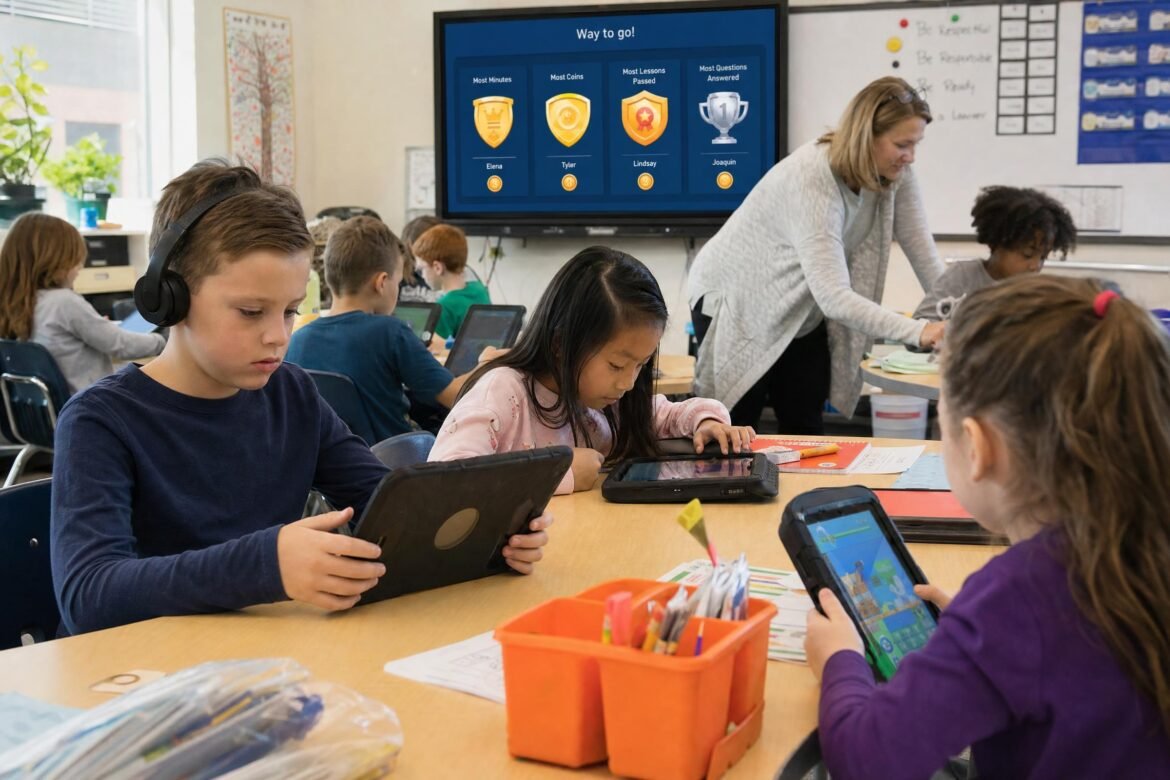
Elementary students at classroom tables playing a learning game on tablets, one wearing headphones, a teacher helping in the background and a wall screen showin
Gamification and Game-Based LearningPersonalized LearningHot Topics - controversialK-12

Gamification in Modern Classrooms Continues to Evolve

by EdCircuit Staff June 26, 2026
written by EdCircuit Staff 8 minutes read

Gamification in modern classrooms is no longer simply about points, badges, and leaderboards. What started as a creative way to motivate students has evolved into one of the most sophisticated instructional strategies in education, blending psychology, technology, personalized learning, and artificial intelligence to create engaging learning experiences that mirror the digital world students encounter every day.

Walk into many classrooms today and you may find students solving digital escape rooms, participating in mission-based science investigations, earning micro-credentials for demonstrating mastery, collaborating on team challenges, or progressing through personalized learning pathways designed specifically for their needs. In many cases, students may not even realize they are participating in a gamified experience because the focus has shifted away from rewards and toward meaningful engagement.

As educators continue searching for ways to capture student attention in an increasingly digital world, gamification is proving to be more than a trend. It is becoming a powerful instructional framework that helps schools address some of education’s most persistent challenges: engagement, motivation, personalization, and achievement.

At the same time, artificial intelligence is accelerating the evolution of gamification, creating learning experiences that would have been impossible just a few years ago.

The result is a new generation of gamified learning that looks very different from the systems educators first experimented with twenty years ago.

Gamification Has Been Around Longer Than Many Realize

While gamification often feels like a modern concept, educators have been using gamified principles for decades.

Long before laptops and tablets entered classrooms, teachers created systems that motivated students through achievement and progression.

Examples include:

  • Reading challenges
  • Classroom economies
  • Accelerated Reader programs
  • Spelling bees
  • Science fairs
  • Attendance incentives
  • Math fact competitions
  • Student leadership programs

These activities tapped into many of the same motivational principles found in modern gamification.

Students worked toward goals.

They received recognition.

They experienced progression.

They developed a sense of accomplishment.

Technology did not invent gamification. Technology expanded its possibilities.

As digital tools became more sophisticated, educators gained the ability to provide instant feedback, personalized learning paths, adaptive challenges, and immersive experiences that could engage students at entirely new levels.

Why Gamification Continues to Work

The continued success of gamification is rooted in human psychology.

Games are designed to keep participants engaged through a combination of challenge, achievement, feedback, and progression.

The same principles can be applied to learning.

Students are more likely to remain engaged when they understand:

  • What they are working toward
  • How they are progressing
  • What success looks like
  • How to improve
  • Why their work matters

Traditional educational models often struggle in these areas.

Students may complete an assignment and wait days before receiving feedback. They may not understand how a lesson connects to larger goals. They may not recognize their progress until the end of a grading period.

Gamified learning environments address these challenges by making progress visible and learning more interactive.

Rather than asking students to simply complete assignments, gamification encourages them to participate in a journey.

The difference may seem subtle, but its impact can be significant.

Today’s Students Already Live in Gamified Environments

One reason gamification continues to evolve is because students themselves are changing.

Today’s learners have grown up in environments built around engagement systems.

They earn achievements in video games.

They maintain streaks on apps.

They unlock levels.

They collect digital rewards.

They receive immediate feedback from nearly every platform they use.

Popular platforms such as Duolingo, Minecraft, and Roblox have helped shape student expectations around interaction and engagement.

Students have become accustomed to environments that provide:

  • Immediate feedback
  • Clear goals
  • Personal progression
  • Customization
  • Achievement recognition
  • Continuous challenges

When students enter a classroom that relies exclusively on passive instruction, educators may find themselves competing against experiences that are significantly more interactive.

Gamification helps bridge that gap by incorporating elements that students already find motivating while maintaining academic rigor and educational purpose.

How AI Is Reinventing Classroom Gamification

Artificial intelligence may be the most significant advancement in gamification since the arrival of educational technology platforms.

Traditional gamification systems often treated every student the same.

AI changes that.

Modern AI-powered learning platforms can analyze student performance in real time and create personalized experiences that adapt as students learn.

Imagine a middle school science classroom.

A student is working through a gamified unit on ecosystems.

Instead of progressing through identical content as every other student, an AI system can:

  • Identify misconceptions
  • Adjust challenge difficulty
  • Recommend additional resources
  • Generate personalized review activities
  • Offer enrichment opportunities
  • Predict potential learning gaps

The experience becomes dynamic rather than static.

Each student receives a customized pathway designed to maximize success.

This level of personalization was once impossible for even the most skilled educator managing a classroom of 25 or 30 students.

Today, AI is making it increasingly achievable.

Real-World Examples of Modern Gamification

The most effective gamification strategies are often the simplest.

Across the country, teachers are finding creative ways to transform learning experiences.

The Science Escape Room

A middle school science teacher may transform a unit assessment into a digital escape room.

Students must solve scientific problems, analyze data, and apply concepts to unlock clues and advance through challenges.

Rather than viewing the assessment as a test, students view it as a mission.

The learning objectives remain the same.

The experience changes completely.

Mission-Based History Learning

In social studies classrooms, students may assume the role of historians investigating primary source documents.

Each completed challenge unlocks additional evidence, moving students closer to solving a historical mystery.

Students become active participants rather than passive recipients of information.

Cybersecurity Simulations

As cybersecurity education becomes more important, many schools are implementing gamified simulations.

Students identify phishing attempts, investigate security incidents, and respond to digital threats through scenario-based challenges.

The activities build critical thinking while preparing students for real-world situations.

Mathematics Quest Systems

Some teachers organize mathematics instruction into quest-based learning pathways.

Students complete challenges, unlock advanced levels, and demonstrate mastery before progressing.

The system encourages persistence while allowing learners to move at their own pace.

Collaboration Is Replacing Competition

One of the biggest shifts in gamification involves the movement away from competition.

Early implementations frequently emphasized leaderboards and rankings.

While competition can motivate some students, it can discourage others.

Modern gamification increasingly focuses on collaboration.

Students work together to:

  • Solve complex problems
  • Complete missions
  • Earn group achievements
  • Investigate real-world challenges
  • Support team success

This shift reflects broader educational goals.

Today’s employers consistently emphasize communication, teamwork, creativity, and problem-solving.

Collaborative gamification helps students develop these essential skills while improving engagement.

Success becomes something shared rather than something won.

The Rise of Micro-Credentials and Digital Badges

Another emerging trend is the use of micro-credentials.

Instead of relying solely on grades, schools are beginning to recognize specific competencies and skills.

Students may earn digital badges for:

  • Cybersecurity awareness
  • Coding proficiency
  • STEM skills
  • Leadership
  • Communication
  • Problem-solving
  • Digital citizenship

These credentials create visible evidence of learning and can help students build portfolios that showcase accomplishments beyond traditional report cards.

As workforce expectations continue evolving, micro-credentials may become increasingly valuable indicators of student readiness.

Immersive Technology Is Expanding Possibilities

Virtual reality, augmented reality, and mixed reality technologies are creating new opportunities for gamified learning.

Students can now:

  • Explore ancient civilizations
  • Visit distant ecosystems
  • Conduct virtual laboratory experiments
  • Practice technical skills
  • Investigate historical events

Gamification enhances these experiences by introducing missions, objectives, achievements, and challenges.

Instead of reading about a concept, students actively engage with it.

The combination of immersive technology and gamification creates powerful opportunities for experiential learning.

As equipment becomes more affordable, these experiences are likely to become increasingly common in K–12 classrooms.

What School Leaders Need to Know

As gamification continues evolving, district leaders face important decisions about implementation.

The goal should never be to make every classroom feel like a video game.

Instead, leaders should focus on how gamification supports educational outcomes.

Several factors deserve consideration.

Professional Development Matters

Effective gamification requires thoughtful instructional design.

Teachers need training not only on technology platforms but also on motivational theory, student engagement, and learning design principles.

Equity Must Remain a Priority

Schools must ensure all students have access to gamified learning opportunities.

Technology access, device availability, and internet connectivity remain important considerations.

Data Privacy Cannot Be Ignored

Many gamified platforms collect student data.

District leaders should carefully evaluate privacy policies, cybersecurity protections, and compliance requirements before implementation.

Measure More Than Engagement

While student engagement is important, schools should also evaluate:

  • Academic performance
  • Knowledge retention
  • Attendance
  • Participation
  • Student confidence
  • Collaboration skills

Successful gamification should improve both engagement and learning outcomes.

The Future of Gamification

The future of gamification may look dramatically different from what exists today.

Artificial intelligence is likely to drive the next generation of learning experiences.

Future systems may create:

  • AI-generated quests
  • Personalized learning adventures
  • Real-time adaptive challenges
  • Intelligent tutoring systems
  • Career simulation experiences
  • Cross-curricular learning missions

Students may move through educational experiences that continuously adapt to their interests, abilities, and goals.

Learning could become increasingly individualized while still maintaining opportunities for collaboration and community.

The technology is advancing rapidly.

The instructional possibilities are expanding just as quickly.

More Than a Trend

Gamification has survived long enough to prove it is not a passing educational fad.

What began as a collection of points, badges, and rewards has matured into a comprehensive instructional strategy capable of supporting engagement, personalization, collaboration, and achievement.

Its continued evolution reflects a broader shift occurring throughout education.

Students increasingly expect interactive experiences.

Teachers need tools that support differentiation.

School leaders are searching for strategies that improve outcomes while preparing students for a rapidly changing future.

Gamification sits at the intersection of all three.

The future classroom may not resemble a video game, but it will likely borrow many of the principles that make games so powerful: immediate feedback, meaningful challenges, visible progress, collaboration, personalization, and continuous growth.

In an era increasingly shaped by artificial intelligence and digital learning, those principles may become some of the most important drivers of student success. As gamification continues to evolve, schools that embrace its potential thoughtfully and strategically will be better positioned to engage learners, support achievement, and prepare students for the world that awaits them beyond graduation.

Subscribe to edCircuit to stay up to date on all of our shows, podcasts, news, and thought leadership articles.

June 26, 2026 0 comments
0 FacebookTwitterPinterestLinkedinWhatsappCopy LinkEmail
Newer Posts
Older Posts

Participate

  • Contribute
  • Sponsor
  • Submit Release
  • Subscribe
  • Get Interviewed

We value your privacy

We use cookies to enhance your browsing experience, serve personalized ads or content, and analyze our traffic. By clicking "Accept All", you consent to our use of cookies.

Customize
  • Needed for the site to work: signing in, the cart, your consent choice. Always on.

    8 cookies
    • ss_consent 1 yearYour cookie choice on this site, so you are not asked again.
    • wordpress_logged_in_* 2 days, or 14 days with "remember me"Keeps you signed in as you move between pages.
    • wordpress_sec_* 2 days, or 14 days with "remember me"The secure half of your sign-in.
    • wordpress_test_cookie SessionChecks that your browser accepts cookies when you sign in.
    • wp-settings-* 1 yearYour display settings when signed in.
    • wp_woocommerce_session_* 2 daysYour shopping session: the cart and the checkout.
    • woocommerce_cart_hash SessionTells the site whether your cart has changed.
    • woocommerce_items_in_cart SessionWhether your cart holds anything.
  • Remembers choices you make, such as a language or a region, and supports features like live chat.

    1 cookie
    • woocommerce_recently_viewed SessionThe products you looked at, so the site can show them again.
  • Helps us understand how visitors use the site: which pages are read, and for how long.

    2 cookies
    • _ga 2 yearsGoogle Analytics: tells one visitor from another. Set only after you allow analytics.
    • _ga_* 2 yearsGoogle Analytics: keeps your session state. Set only after you allow analytics.
  • Measures how fast pages load so we can make them faster.

  • Used to show you content and offers that match your interests, on this site and elsewhere.

    1 cookie
    • sbjs_* SessionWooCommerce order attribution: where you came from, so a purchase can be credited to the campaign or site that sent you.

Your browser asks us not to sell or share your information (Global Privacy Control), so advertising cookies stay off.

Do not sell or share my personal information

Some cookies from other companies help show you offers on other sites. Tick the box and save your preference to opt out of that sharing; untick it to opt back in at any time.

Your browser sends Global Privacy Control, so this preference is set for you and cannot be changed here.

Sign In

Keep me signed in until I sign out

Forgot your password?

Password Recovery

A new password will be emailed to you.

Have received a new password? Login here

Shopping Cart

Close

No products in the cart.

Close
-
00:00
00:00

Queue

Update Required Flash plugin
-
00:00
00:00

Your cart (items: 0)

Products in cart

Product Details Total
Subtotal $0.00
Shipping and discounts calculated at checkout.
View cart
Go to checkout

Your shopping cart is empty

Return to shop

Notifications