
edCircuit
  • Start Here
    • Login
    • Register
    • Subscribe
    • Submit a Press release
    • Advertise or Sponsor
    • Contribute
    • Get Interviewed
  • On The Wire
  • EdTech
    • All EdTech
    • Online Learning
    • Hybrid and Remote Learning
    • Augmented and Virtual Reality
    • ESports
    • Gamification and Game-Based Learning
    • Digital Citizenship
    • EdTech Entrepreneurs
    • Market Trends
    • Future of Education
  • K-12 Education
    • All K-12
    • K-12 Teachers
    • Teaching Strategies
    • Special Education and IEPs
    • Dyslexia
    • Gifted and Advanced Learning
    • Early Childhood, Pre-K and Kindergarten
    • School Calendar
    • Tutoring and Homework Help
    • Attendance and Absenteeism
    • After-School Programs
    • School Counselors
    • Homeschooling
    • School Models
    • Teacher Retention
    • Parents
    • Students
    • STEM and STEAM Education
  • Teaching and Learning
    • Literacy and Reading
    • Math Education
    • Civics and History Education
    • Financial Literacy
    • Assessment and Testing
    • Curriculum and Instruction
    • Personalized Learning
    • Project-Based Learning
    • Social-Emotional Learning
    • Executive Function
    • Creativity
    • Diversity, Equity, Inclusion
  • Professional Development
    • All Professional Development
    • Educators
    • Administrators
    • edLeaders
  • Higher Education
    • All Higher Education
    • College Admissions
    • Career and Technical Education (CTE)
    • Graduation
    • FAFSA and Financial Aid
    • Student Loans
  • Artificial Intelligence
  • Cybersecurity
  • School Safety
    • All School Safety
    • Science and Lab Safety
    • School Design and Facilities
    • Bullying
    • Duty of Care and School Liability
  • Continuing Education
    • All Continuing Education
    • Online Certificate Programs
    • Teaching Jobs and Careers
    • Teacher Appreciation
  • Education Policy and Government
    • All Education Policy
    • Department of Education
    • School Choice
    • Global
    • Advocates
  • EDU Shows
    • All EDU Shows
    • Safer Ed
    • Mind the Gap
    • EdTech Questions
    • CoffeEd
    • InFocus
    • InformED Report
  • EDU Podcasts
    • All EDU Podcasts
    • Author Chats
    • CoSN The Podcast
    • Education Today
    • Building the Bridge
    • Students Speak
  • Education Industry Guides and Reports
  • Archived Media
    • Future of School: The Podcast
    • Equity Everywhere
  • About edCircuit
  • Subscribe
edCircuit
  • LOGIN
Home Tags Posts tagged with "Headline"
Tag:

Headline

This if for posts to be in the featured/top section of site
A School Safety Camera mobile surveillance unit with solar panels is positioned outside a modern school building as students walk toward the entrance in the morning.
School SafetyK-12Hot Topics - controversial

School Safety Camera Trailers Arrive on Campuses

by EdCircuit Staff June 18, 2026
written by EdCircuit Staff 9 minutes read

School safety camera trailers are becoming one of the newest visible security measures appearing on K–12 campuses, marking another evolution in how districts approach campus protection, deterrence, and emergency preparedness.

You may expect to see portable camera trailers positioned in mall parking lots, near concert venues, construction sites, or outside professional sporting events. Increasingly, however, these highly visible surveillance towers are beginning to appear on school grounds as districts search for additional ways to strengthen security and deter threats before they escalate.

In Ohio, the Ohio School Safety Center (OSSC) recently announced a new initiative providing mobile camera trailers to schools seeking additional safety precautions. Since launching the effort, the center reports that camera trailers have already been deployed at 13 school events statewide. According to the OSSC, the trailers provide elevated, wide-angle views of outdoor event spaces, allowing school officials and law enforcement to monitor crowd activity, identify potential safety concerns, and respond quickly to incidents.

Ohio schools interested in utilizing the trailers can request them directly through the state’s official program portal. Camera Tower Request Form

The initiative reflects a broader national trend: schools are increasingly adopting layered security strategies that combine physical infrastructure, technology, behavioral threat assessment, communication systems, and community awareness rather than relying on a single solution.

More Than Cameras: Ohio’s Broader School Safety Strategy

The camera trailer initiative is only one piece of Ohio’s larger statewide school safety infrastructure.

Established in 2019, the Ohio School Safety Center was created through a partnership between Ohio Homeland Security and the Ohio Department of Education and Workforce to help schools strengthen prevention, preparedness, response, and recovery efforts related to safety and security.

Since its creation, the OSSC has expanded its role far beyond traditional security planning. Today, the center provides districts with resources related to:

  • Behavioral Threat Assessment & Management (BTAM)
  • Anonymous reporting systems
  • Emergency operations planning
  • Safety training and exercises
  • School climate initiatives
  • Suicide prevention resources
  • Emergency response coordination
  • Violence prevention strategies
  • Mental health awareness
  • Safety grants and funding guidance

The camera trailer initiative represents another example of Ohio continuing to expand layered school safety strategies rather than relying solely on reactive approaches after incidents occur.

As school safety challenges continue evolving nationally, programs like Ohio’s may offer a framework other states could study when building coordinated statewide safety support systems for districts.

The Rise of Visible Security Measures

Unlike traditional fixed surveillance cameras mounted on buildings, portable camera trailers are intentionally designed to be seen.

Many feature elevated telescoping poles, multiple high-definition cameras, flashing lights, solar panels, loudspeakers, and live-feed monitoring capabilities. Their size and visibility are part of the strategy. In many cases, the goal is not only to capture evidence but to prevent incidents from happening in the first place.

Security experts often describe visible surveillance as a “deterrence multiplier.” The logic is straightforward: individuals considering theft, vandalism, violence, or unauthorized access may reconsider when they know their actions are highly visible and potentially being monitored in real time.

For schools, that visibility can be especially important during:

  • Athletic events
  • Graduation ceremonies
  • After-school activities
  • Summer programming
  • Parking lot monitoring
  • Temporary security situations
  • Construction projects
  • Campus renovations
  • Outdoor gathering areas
  • Remote athletic or practice fields

That last category may become increasingly important for districts during the summer months.

Many school campuses include baseball diamonds, practice fields, maintenance buildings, storage facilities, or remote athletic spaces located far from the main building and outside the visibility range of traditional parking lot cameras. Portable camera trailers can now be temporarily positioned in those locations to provide additional monitoring during summer break, construction periods, camps, or large outdoor events.

For districts managing sprawling campuses, flexibility may become one of the biggest advantages of mobile surveillance systems.

Play video: Mobile camera trailers offered for free to schools looking to deter violence (2 minutes 13 seconds)2:13
Mobile camera trailers offered for free to schools looking to deter violence2 min 13 sWBNS 10TV on YouTube

WBNS 10TV – Mobile camera trailers offered for free to schools looking to deter violence (Play video)

A Growing Connection to Behavioral Threat Assessment & Management

One of the most important conversations surrounding security technology today is how it connects to Behavioral Threat Assessment & Management (BTAM).

Behavioral Threat Assessment & Management is not about predicting violence based on stereotypes or appearances. Instead, BTAM focuses on identifying concerning behaviors, patterns, communications, or escalating actions that may indicate someone is moving toward a pathway to violence.

Many districts now use multidisciplinary threat assessment teams composed of administrators, school resource officers, counselors, psychologists, and other trained personnel to evaluate concerning situations before they become emergencies.

Visible security infrastructure, including portable camera trailers, can support these efforts in several ways.

First, camera systems may help document behavioral patterns or incidents occurring around campus entrances, parking lots, or gathering spaces. Second, they may provide additional situational awareness during an active investigation or safety concern. Third, their presence alone may discourage escalation by reinforcing that campuses are actively monitored environments.

Importantly, security professionals repeatedly emphasize that technology should never replace human relationships, student support systems, or mental health intervention. Instead, technology functions as one component within a larger safety ecosystem.

That distinction matters.

A camera trailer cannot identify a student in crisis on its own. It cannot replace a counselor, trusted teacher, or behavioral intervention specialist. But it can provide additional visibility during moments where rapid awareness becomes critical.

The Question Many Families Will Ask: Who Is Watching?

As schools adopt more visible security technologies, questions surrounding privacy and monitoring are inevitable.

Some parents and students may initially feel uncomfortable seeing surveillance towers positioned near school entrances or parking lots. Others may question who has access to footage, whether monitoring occurs in real time, and how long recordings are retained.

Those concerns are not unusual.

The reality is that most school campuses already operate extensive surveillance systems. Fixed cameras are now common in hallways, entrances, buses, cafeterias, athletic facilities, and parking lots across the country.

Portable camera trailers expand that visibility outward, particularly in areas where fixed infrastructure may not exist.

Still, transparency becomes essential.

District leaders implementing these systems will likely need clear communication strategies that explain:

  • Why the technology is being used
  • When the trailers will be deployed
  • Who monitors the systems
  • How footage is stored
  • What policies govern access
  • How long recordings are retained
  • How student privacy protections are maintained

Without clear communication, schools risk creating confusion or distrust around safety initiatives that are intended to reassure communities.

Many districts may also need to establish policies clarifying whether trailers are monitored continuously in real time or used primarily for recording and investigative purposes.

That operational detail matters significantly.

A district with 24/7 active monitoring capabilities requires staffing, training, and clear response procedures. A district using trailers primarily as a deterrent and evidence collection tool faces a different set of operational considerations.

At the same time, school leaders may need to acknowledge a growing generational reality: today’s students are growing up in increasingly monitored environments. From smartphones and public venues to buses, retail stores, and digital platforms, surveillance technology has become deeply integrated into daily life.

For some families, visible camera towers may feel reassuring. For others, they may raise concerns about whether schools are beginning to resemble highly monitored public spaces rather than traditional learning environments.

How districts communicate intent, transparency, and policy may ultimately shape community perception more than the technology itself.

School Safety Is Increasingly About Layered Protection

One of the most important realities in modern school safety is that no single product, system, or strategy can fully secure a campus.

Experts increasingly describe effective school safety as “layered security,” where multiple systems work together to reduce vulnerabilities and improve response capabilities.

Those layers may include:

  • Visitor management systems
  • Controlled entry access
  • Behavioral threat assessment teams
  • Emergency communication systems
  • School resource officers
  • Mental health supports
  • Anonymous reporting platforms
  • Surveillance systems
  • Safety drills and training
  • AI-assisted monitoring tools
  • Community partnerships

Portable camera trailers fit within that layered framework.

For some districts, they may provide flexible temporary coverage during events or construction. For others, they may serve as supplemental deterrence in areas with limited camera infrastructure. Rural districts, in particular, may find portable systems useful because they can be repositioned based on changing needs.

The mobility factor is significant.

Unlike permanent surveillance installations requiring major infrastructure investment, portable systems can often be deployed rapidly and moved as circumstances change.

The Future of School Surveillance May Be Smarter

As school safety technology evolves, portable camera systems may eventually become part of larger integrated safety ecosystems powered by artificial intelligence and advanced analytics.

Some modern surveillance systems are already capable of identifying unusual movement patterns, unauthorized access attempts, perimeter breaches, or abandoned objects. Other emerging technologies include audio detection systems capable of recognizing gunshots, aggressive behavior, or emergency keywords.

Some security platforms are also exploring integrations with:

  • AI-assisted anomaly detection
  • License plate recognition systems
  • Emergency response coordination tools
  • Automated alert systems
  • Real-time mapping platforms
  • Unified command centers

These developments also raise important ethical and operational questions.

How much monitoring is appropriate on school grounds? Who controls access to data? What role should AI play in interpreting student behavior? And how can districts balance safety innovation while maintaining trust and privacy?

Those conversations are likely to accelerate as technology becomes more advanced and more visible on campuses.

Other States and Districts Are Watching Closely

Ohio is not alone in exploring visible mobile surveillance technology for school environments.

Across the country, districts and municipalities are increasingly experimenting with portable security systems for public spaces, events, and educational settings. Security companies promoting these systems often highlight their ability to provide temporary coverage, improve visibility, and support emergency response coordination.

Some districts have already deployed similar systems during:

  • Football games
  • State tournaments
  • School fairs and festivals
  • Summer school operations
  • Temporary campus expansions
  • Security incidents requiring increased monitoring

As school safety conversations continue evolving, other states may watch Ohio’s rollout closely to evaluate effectiveness, community response, operational costs, and overall deterrence impact.

The visibility of the program itself may also influence adoption.

When communities begin seeing these trailers positioned outside schools, conversations around surveillance, campus protection, and proactive safety planning are likely to increase.

The Balance Between Security and School Climate

One of the ongoing challenges facing school leaders is balancing visible security with maintaining a welcoming educational environment.

Too little security can create concern among families who expect schools to proactively protect students and staff.

Too much visible security, however, can create fears that campuses feel overly hardened or institutionalized.

Districts must navigate that balance carefully.

How a trailer is deployed, communicated, and integrated into broader safety culture matters just as much as the technology itself.

Schools that frame security within a broader message of student well-being, preparedness, and community protection may find stronger public support than districts that rely solely on fear-based messaging.

Ultimately, the goal is not to make schools feel like fortified facilities.

The goal is to create environments where students, educators, and families feel safe enough to focus on learning.

The sight of camera trailers on school campuses may once have seemed unimaginable, but for many districts navigating modern safety challenges, visible deterrence is quickly becoming part of the new educational landscape.

Subscribe to edCircuit to stay up to date on all of our shows, podcasts, news, and thought leadership articles.

June 18, 2026 0 comments
0 FacebookTwitterPinterestLinkedinWhatsappCopy LinkEmail
A woman on the front steps of a brick row house talking with a neighbor standing on the stoop next door, documentary style, faces not identifiable
edLeadersHot Topics - controversialK-12Attendance and Absenteeism

When Data Isn’t Enough: What Ethnographic Research Taught Us About Chronic Absenteeism

by Thomas Ferrell June 17, 2026
written by Thomas Ferrell 4 minutes read

Early in my career, I believed better data systems and tighter intervention protocols could solve chronic absenteeism. But after more than two decades in K-12 education, serving as a classroom teacher, a high school principal, and now as the Director of High School Education in Virginia’s Henrico County Public Schools, I’ve learned that data can tell you who is missing, but cannot tell you why. Even more importantly, I’ve learned that the gap between those two questions is where students fall through the cracks.

Listening to Families Through Ethnographic Research

Through a recent pilot initiative conducted in collaboration with Concentric Educational Solutions, our team had the opportunity to go deeper. We went into the community and onto front porches to have real, sometimes uncomfortable conversations with our chronically absent students and their families. The ethnographic research that emerged from this work offered a level of context that no attendance dashboard could fully capture. Through this direct, sustained engagement with students and families on their own terms, in their own spaces, without an agenda beyond listening and understanding, our district team learned a number of important lessons, including:

Root causes are rarely what we assume. Transportation barriers, work obligations, housing instability, unaddressed trauma, and real disconnection from school culture were the primary reasons for chronic absences and not apathy or defiance. When you sit across from a family and ask, without judgment, and hear what’s actually in the way of attending school, the answers are both humbling and clarifying. Too often, schools design interventions around the absences they expect to see rather than the ones that are actually occurring. Ethnographic inquiry uncovers what is really coming between kids and school, forces school systems to confront that gap honestly, and then build responses around what’s really happening on the ground, and not assumptions.

Resource allocation has to follow the evidence. Before this work, we were investing in broad-based awareness campaigns, generalized outreach, and a variety of student supports. The ethnographic findings we uncovered through this work helped us zero in on our efforts to provide more targeted, student-specific supports that connect families to community resources that addressed the actual barriers to attendance. When resources are finite, and they always are, precision matters. Understanding root causes at the individual and community levels allowed us to deploy resources where they would have the greatest impact, rather than spreading them thin across interventions that didn’t reach the students who needed them most.

Targeting matters more than volume. Not every chronically absent student needs the same intervention. The research we received through this collaboration helped us build more precise student profiles and deploy the right support at the right time. That kind of intentionality is what separates attendance work that moves the needle from attendance work that generates paperwork. A student missing school due to caregiving responsibilities at home needs a fundamentally different response than one who feels unsafe in the building. Knowing the difference is everything.

Team structure shapes outcomes. Perhaps most practically, this work prompted us to reorganize how our district team operates. Cross-functional collaboration between school counselors, social workers, administrators, and community liaisons grew much stronger. Chronic absenteeism is rarely a single-department problem, and it shouldn’t be treated as one. When the right people are aligned around shared data and a shared sense of urgency, the work accelerates. So do the results.

Connection Over Compliance in Attendance Work

This work affirmed that effective attendance intervention isn’t built around compliance or consequences. It’s built around connection, a genuine commitment to the human being behind every absence, and to reconnecting students and families with schools, community, and a sense of possibility. That’s what a human-centered approach actually looks like in practice.

We know from a Utah study cited by four federal departments in 2015 that students chronically absent in even one school year between eighth and twelfth grade are over seven times more likely to drop out. We know the pandemic accelerated a crisis that was already building. What we sometimes forget is that behind every data point is a child who, with the right support, can and will come back.

That’s the work. And it starts with showing up for them the way we’re asking them to show up for us.

If you are ready to move beyond dashboard data and adopt a human-centered approach to solve your chronic absenteeism crisis, consider starting with ethnographic research in your own community. It’s time to build intervention strategies that address the real root causes and ensure every student feels connected and supported. 

Subscribe to edCircuit to stay up to date on all of our shows, podcasts, news, and thought leadership articles.
June 17, 2026 0 comments
0 FacebookTwitterPinterestLinkedinWhatsappCopy LinkEmail
Four people in blue shirts refurbish laptops on a wooden table during Student Device Return, cleaning screens and checking devices, with tools and electronic accessories organized nearby.
Hot Topics - controversialDigital CitizenshipSchool SafetyK-12

Student Device Return Is More Than Repairs

by EdCircuit Staff June 17, 2026
written by EdCircuit Staff 8 minutes read

Student device return season begins quietly in schools across the country. The final bell rings, lockers empty, classrooms shut down for summer, and carts of Chromebooks, tablets, and laptops begin stacking up in hallways, media centers, libraries, and IT offices.

For many districts, the process feels routine.

Screens are checked for cracks. Chargers are counted. Asset tags are scanned. Repairs are documented. Cases are inspected for damage. Devices are stacked, sorted, and shelved for summer work.

But behind every returned device is something schools cannot afford to overlook: student information, digital identities, accessibility settings, communication tools, saved files, passwords, downloads, and months of educational activity that may still live inside the machine.

What appears to be a simple technology collection process has quietly evolved into one of the most important operational, privacy, cybersecurity, and student-support responsibilities districts face during the summer months.

A school-issued device is no longer just a piece of hardware. It is an extension of the classroom, a portal into learning systems, a communication tool, a testing environment, a storage space for student work, and, for some students, a critical accessibility support device.

That means summer device collection is about far more than determining whether a student owes the district a replacement charger.

It is about stewardship.

Districts that approach student device return strategically are not only protecting technology investments. They are protecting student privacy, reducing cybersecurity risks, preserving accessibility supports, preparing devices for instruction, and ensuring a smoother start to the next school year.

And increasingly, school leaders are realizing this process deserves far more attention than it typically receives.

The Physical Inspection Is Only the Beginning

The visible side of student device return is still important.

Districts must account for every device issued throughout the year. Technology teams inspect screens, hinges, keyboards, batteries, ports, webcams, touchpads, styluses, protective cases, and chargers. Devices are tagged for repairs, warranty work, replacement parts, or retirement.

Some devices may need simple fixes. Others may require battery replacement, keyboard repairs, screen swaps, or full replacement due to damage or age.

According to Frontline Education, effective device lifecycle management includes tracking, maintaining, repairing, collecting, refreshing, and redeploying student technology throughout the entire school year—not just during deployment season.

Summer becomes the district’s largest maintenance window.

IT departments often spend weeks repairing fleets, reimaging systems, updating operating systems, replacing broken parts, and evaluating which devices remain viable for another school year. Inventory systems must also be updated to reflect lost, damaged, or retired equipment so districts can budget accurately for future purchases.

But once the physical inspection is complete, districts face a much larger question:

What information is still on the device?

The Hidden Layer: Student Information

A returned student device may still contain downloaded assignments, saved passwords, browser history, screenshots, photos, videos, cached files, locally stored documents, autofill information, communication logs, or application data connected to the student who used it throughout the year.

Even in cloud-based learning environments, local information often remains on devices longer than many schools realize.

And unlike a cracked screen or damaged keyboard, those risks are invisible.

The next student who receives the device should never gain accidental access to another student’s information, accounts, or educational materials. Yet without a structured process, that possibility becomes very real.

The U.S. Department of Education’s Student Privacy Policy Office explains that FERPA protects the privacy of student education records maintained by schools and educational agencies.

That does not necessarily mean every downloaded worksheet becomes a formal education record. But it does mean schools have a responsibility to thoughtfully manage student-related information and prevent unauthorized access.

Summer device return should therefore include more than hardware collection. It should include a formal review of what must be archived, what should remain within official district systems, and what must be securely removed before a device is reassigned.

Districts increasingly recognize that a proper reset process is not optional—it is part of responsible digital operations.

Archive, Delete, or Retain?

One of the most overlooked challenges in student device return is deciding what happens to the information tied to the device.

Not everything should be deleted immediately. But not everything should remain indefinitely either.

The U.S. Department of Education’s Best Practices for Data Destruction guidance notes that schools should establish clear policies for data retention and destruction.

That creates an important distinction for districts.

Some information belongs in official systems such as:

  • student information systems
  • learning management systems
  • assessment platforms
  • special education documentation systems
  • district-approved cloud storage environments

Other information may need to be returned to students or families, especially creative work, portfolios, projects, or locally saved materials students want to preserve.

And some information should be securely removed entirely before a device enters storage, repair, recycling, or reassignment.

Without consistent procedures, districts risk creating uneven privacy practices across buildings and departments. One school may fully wipe devices immediately, while another stores devices untouched for months with student sessions still active.

Consistency matters.

This is where collaboration between IT leaders, records personnel, curriculum teams, building administrators, and special education staff becomes essential.

Cybersecurity Starts During Summer Collection

Summer device return is also one of the best opportunities districts have to strengthen cybersecurity before the next school year begins.

Throughout the year, student devices may accumulate unauthorized browser extensions, outdated software, unapproved applications, suspicious downloads, cached credentials, or security vulnerabilities.

When thousands of devices reconnect in August, those weaknesses can scale quickly across a district network.

The Cybersecurity and Infrastructure Security Agency (CISA) encourages K–12 schools to prioritize practical cybersecurity protections and build stronger long-term security plans.

Summer creates a rare reset window.

Devices can be:

  • reimaged
  • patched
  • updated
  • scanned for vulnerabilities
  • reset to district standards
  • reenrolled in device management systems
  • stripped of unauthorized software
  • reassigned with updated security policies

This is also the ideal time for districts to evaluate whether acceptable use policies are functioning effectively. Were students bypassing filters? Installing unauthorized tools? Accessing restricted content? Circumventing device management settings?

The purpose should not be punitive.

Instead, districts can use summer findings to improve safeguards, strengthen configurations, and better prepare systems for the following school year.

Every returned device becomes a snapshot of how well a district’s technology ecosystem functioned throughout the year.

When Devices Become Accessibility Tools

The most sensitive part of student device return often involves students receiving special education services or using assistive technology.

For some students, a device is not simply a Chromebook or tablet.

It is their communication system.

It may contain speech-generation software, personalized accessibility settings, visual schedules, motor accommodations, language supports, enlarged interfaces, customized symbols, sensory tools, or communication profiles built carefully over months—or even years.

A careless reset could erase months of personalization and directly impact a student’s ability to communicate and participate in learning.

That is why assistive technology devices should never follow the same workflow as standard student inventory.

Before devices are wiped or reassigned, schools should determine:

  • whether communication systems are backed up
  • where accessibility profiles are stored
  • whether settings transfer between devices
  • what information must remain archived
  • who verifies the device configuration
  • how summer services or extended school year programs are supported

This process often requires collaboration between:

  • IT departments
  • intervention specialists
  • speech-language pathologists
  • occupational therapists
  • classroom teachers
  • assistive technology coordinators
  • special education administrators

The transition between school years can already be difficult for students requiring specialized supports. Losing carefully configured technology settings only creates additional barriers.

Districts that approach this thoughtfully demonstrate that technology management is also student support management.

Preparing Devices for the Next School Year

Once devices are repaired, cleaned, updated, reset, and secured, districts begin preparing them for redeployment.

This stage is far more strategic than many people realize.

Devices may need:

  • updated operating systems
  • grade-level restrictions
  • testing software
  • instructional applications
  • accessibility tools
  • filtering adjustments
  • new asset tags
  • replacement batteries
  • refreshed cases
  • updated management profiles

Different student populations may require entirely different configurations.

Elementary students may need stricter filtering and simplified interfaces. High school students may require specialized software for advanced coursework. Career and technical education students may need industry-specific applications. Students receiving special education services may require accessibility tools installed before the first day of school—not weeks later.

The quality of a district’s back-to-school technology experience is often determined during summer preparation.

A smooth August rollout rarely happens by accident.

Sustainability and the Device Lifecycle

Summer device return also forces districts to confront a growing challenge in K–12 education: technology sustainability.

Not every device collected in May will return to classrooms in August.

Some devices will be retired because of age, battery degradation, repeated damage, or outdated hardware. Others may be refurbished for secondary use, reassigned to younger grades, donated, harvested for parts, or responsibly recycled.

As districts continue operating large one-to-one device programs, long-term lifecycle planning has become increasingly important.

That includes:

  • battery disposal
  • electronic waste management
  • responsible recycling
  • secure destruction of retired storage devices
  • refurbishment planning
  • budgeting for refresh cycles

A student device is no longer a short-term technology purchase. It is part of an ongoing operational ecosystem that districts must maintain responsibly and sustainably.

A Leadership Opportunity Most Schools Never Talk About

Student device return may never receive the attention of artificial intelligence initiatives, cybersecurity conferences, or major technology rollouts.

But it represents something equally important.

It is where district operations, student privacy, accessibility, cybersecurity, compliance, and instructional readiness all intersect at once.

It is where schools demonstrate whether technology is being managed intentionally—or simply collected and redistributed year after year.

The strongest districts understand that device stewardship extends beyond physical equipment. It includes protecting student information, preserving accessibility supports, reducing security risks, maintaining operational consistency, and ensuring every student begins the next school year with technology that is truly ready for learning.

What happens after a student turns in a device says a great deal about how a district approaches technology leadership overall.

And increasingly, schools are discovering that student device return is not the end of the technology cycle.

It is the beginning of the next one.

Subscribe to edCircuit to stay up to date on all of our shows, podcasts, news, and thought leadership articles.

June 17, 2026 0 comments
0 FacebookTwitterPinterestLinkedinWhatsappCopy LinkEmail
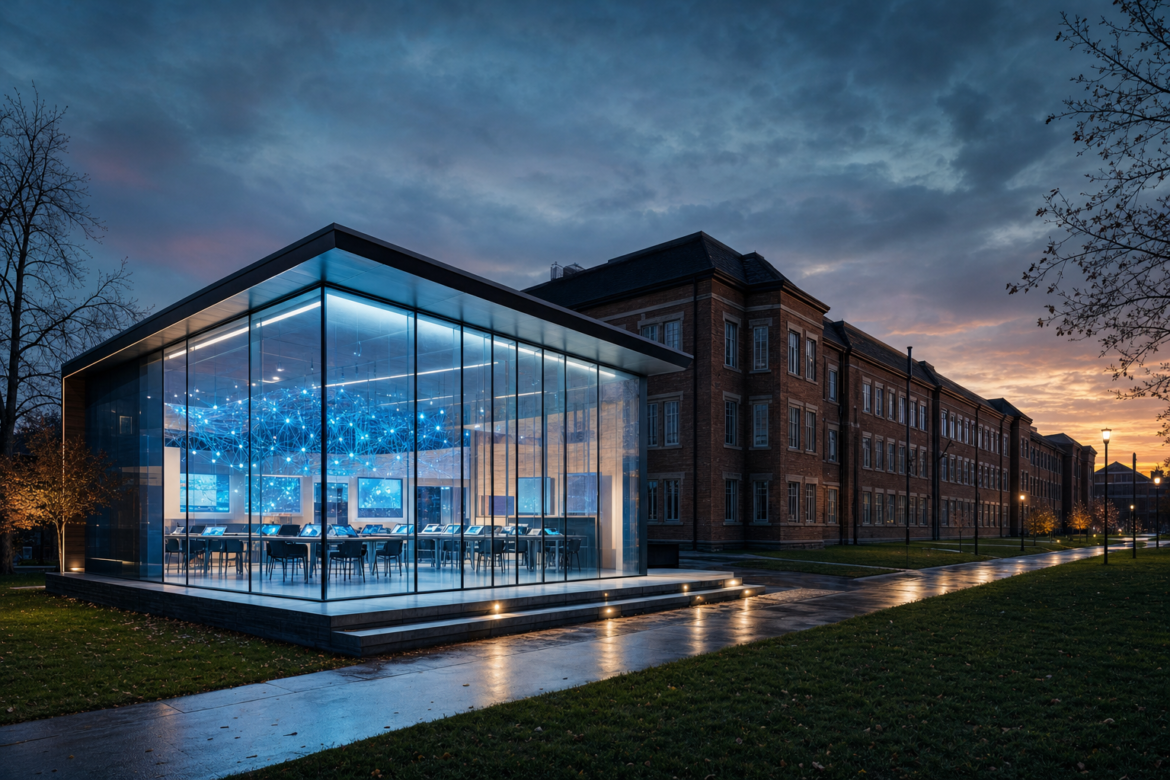
AI in charter schools: a small glass-walled school glows like an innovation lab full of AI light in front of a dim traditional brick school building at dusk
Personalized LearningHot Topics - controversialArtificial IntelligenceSchool ChoiceK-12

How AI in Charter Schools Is Reshaping Education

by EdCircuit Staff June 16, 2026
written by EdCircuit Staff 9 minutes read

AI in charter schools is rapidly transforming how educators teach, how students learn, and how schools approach personalization, staffing, and instructional innovation across K–12 education.

Across the United States, charter schools are increasingly emerging as some of the most aggressive adopters of artificial intelligence in education. Some are using AI tools to help teachers generate lesson plans, streamline administrative work, and analyze student performance data. Others are building entire instructional models around AI-supported tutoring, adaptive learning platforms, and competency-based learning systems.

The momentum is accelerating during a period of enormous pressure across American education. Schools continue facing teacher shortages, rising academic expectations, learning recovery challenges, and increasing demands for individualized instruction. At the same time, district leaders are being asked to prepare students for a future workforce where artificial intelligence will likely become part of nearly every profession.

For many charter schools, AI is being viewed not simply as a technology tool, but as a potential redesign of how education itself operates.

That shift is fueling both excitement and concern.

Supporters see opportunities for more personalized learning, improved efficiency, and expanded student support systems. Critics warn about excessive screen time, diminished human interaction, data privacy risks, and the possibility of schools moving too quickly without clear safeguards.

What is becoming increasingly clear, however, is that charter schools are helping shape the national conversation around AI in education faster than many traditional school systems.

Charter Schools Have Long Served as Innovation Labs

Charter schools have historically operated as educational innovation spaces. Their structures often allow school leaders greater flexibility when adopting new instructional models, redesigning schedules, piloting technologies, and experimenting with alternative learning environments.

That flexibility is now intersecting with one of the most disruptive technologies education has encountered in decades.

While many traditional public school districts remain cautious about artificial intelligence adoption due to policy concerns, procurement requirements, governance structures, and community debate, charter schools are often able to move more quickly.

In Rochester, New York, staff members at a charter school recently discussed how AI tools are already being used to support lesson planning and classroom preparation. Educators described using AI to generate instructional ideas, create differentiated activities, streamline planning time, and reduce repetitive administrative tasks.

Importantly, teachers emphasized that AI was not replacing educators. Instead, it was helping free up time for relationship-building, classroom engagement, and direct student support.

That distinction matters.

The schools seeing the most promising early results are generally not framing AI as a replacement for teachers. Instead, they are positioning AI as an instructional assistant capable of supporting educators in increasingly demanding environments.

For schools operating with limited staffing, expanding student needs, and growing instructional expectations, that efficiency can be highly attractive.

AI-Powered Charter Schools Are Expanding

While some schools are cautiously integrating AI into existing classrooms, others are beginning to redesign the educational experience around artificial intelligence itself.

One of the most widely discussed examples emerged in Cobb County, Georgia, where officials approved plans for an AI-powered charter school that would heavily incorporate adaptive learning systems and AI-supported instruction into the school day.

The proposed model immediately sparked national attention.

Supporters argued that AI-driven systems could personalize learning at a level traditional classrooms often struggle to achieve. Students could move at their own pace, receive individualized academic support, and spend more time mastering concepts instead of progressing through standardized pacing models.

Critics, however, raised concerns about screen dependency, reduced teacher interaction, and whether AI-centered learning environments could adequately support students socially and emotionally.

The debate reflects a broader shift occurring across K–12 education.

Artificial intelligence is no longer being discussed solely as a classroom tool. In some schools, it is beginning to influence the structure of instruction itself.

Adaptive learning systems can now analyze student performance in real time, identify gaps in understanding, adjust instructional difficulty, recommend interventions, and provide immediate feedback. For advocates of personalized learning, that capability represents a major breakthrough.

Traditional classrooms often require teachers to simultaneously support students performing significantly above, below, and at grade level. AI systems promise to help manage that complexity more efficiently and consistently.

Whether those systems can truly replicate the nuance of human instruction remains a major point of debate.

Arizona’s AI-Centered Learning Model

Arizona has become another focal point in the national AI education discussion after reports highlighted a charter school model heavily centered around artificial intelligence-supported learning.

The school’s structure reportedly combines shortened direct instruction periods with AI-driven academic learning and educator mentorship. Students engage with adaptive systems that personalize instruction while teachers focus more heavily on coaching, discussion, intervention, and relationship-building.

The model challenges many long-standing assumptions about what classrooms should look like.

For decades, educational technology primarily supplemented traditional instruction. AI is now beginning to reshape the architecture of learning itself.

Instead of teachers spending the majority of class time delivering whole-group instruction, portions of content delivery and skills practice are handled through AI-supported systems while educators guide deeper learning experiences.

Supporters believe this could allow teachers to spend more meaningful time engaging students individually rather than focusing heavily on repetitive instructional tasks.

Critics remain cautious.

Questions surrounding data privacy, algorithmic bias, student monitoring, academic integrity, and developmental impacts continue to surface in nearly every AI-related educational conversation.

Some educators and families worry that schools could become overly dependent on digital systems before researchers fully understand the long-term effects of AI-centered learning environments.

Others fear that aggressive AI adoption could widen educational inequities if access to high-quality technology infrastructure varies significantly between communities.

Play video: How a new Arizona school will use AI to teach students in 2-hour models (2 minutes 3 seconds)2:03
How a new Arizona school will use AI to teach students in 2-hour models2 min 3 sABC15 Arizona on YouTube

ABC15 Arizona – How a new Arizona school will use AI to teach students in 2-hour models (Play video)

Parents and Communities Are Watching Closely

As charter schools expand AI implementation, many parents and community members are beginning to ask difficult but important questions.

How much student data is being collected?

Who owns that data?

How long is it stored?

How transparent are schools being about AI usage?

Can families opt out?

What happens when AI systems make mistakes or provide inaccurate information?

These concerns are becoming increasingly common as schools introduce generative AI platforms, adaptive tutoring systems, and automated instructional tools into classrooms.

For many families, the conversation is not simply about innovation. It is about trust.

Parents want to know that schools are protecting student privacy, maintaining strong human relationships, and ensuring technology is being used responsibly rather than simply chasing trends.

Screen time is also becoming a major area of concern.

Many educators spent years attempting to balance device usage following the rapid expansion of one-to-one technology initiatives during and after the pandemic. Some families now worry that AI-centered instruction could push schools even further toward screen-heavy learning environments.

At the same time, many parents also recognize the growing importance of AI literacy.

Families increasingly understand that students entering future colleges and workplaces will likely interact with artificial intelligence regularly. As a result, some communities see responsible AI exposure as an important part of preparing students for the future economy.

This creates a complicated balancing act for school leaders.

Schools must innovate without losing the human-centered foundations that families expect from education.

TeachAI and the Push for Responsible Implementation

As AI adoption accelerates, national organizations are increasingly emphasizing the need for thoughtful implementation frameworks rather than rapid experimentation without safeguards.

One of the most influential initiatives is TeachAI, a coalition supported by organizations including Code.org, ETS, Khan Academy, and the World Economic Forum.

TeachAI focuses on helping schools develop guidance around AI literacy, instructional use, policy development, and ethical implementation. The initiative encourages schools to approach artificial intelligence not simply as a technology purchase, but as a major educational transformation requiring clear governance and intentional planning.

That guidance is becoming increasingly important as schools navigate rapidly evolving AI systems.

Educational leaders are now being asked to establish policies surrounding:

  • Student data privacy
  • AI literacy and digital citizenship
  • Academic integrity
  • Human oversight
  • Transparency with families
  • Teacher professional development
  • Bias detection and evaluation
  • Responsible classroom use

Without clear frameworks, AI adoption can quickly become fragmented or inconsistent across classrooms and schools.

Organizations like TeachAI argue that students must not only learn with AI, but also learn about AI.

That distinction could become one of the defining educational priorities of the next decade.

Why Charter Schools Are Moving Faster Than Many Districts

Several factors help explain why charter schools are often moving more quickly than traditional districts when it comes to AI implementation.

First, charter schools frequently have greater operational flexibility. Many can pilot instructional tools and redesign learning models without navigating the same bureaucratic layers that larger districts face.

Second, innovation often plays a role in charter school identity and enrollment strategy. Families searching for alternative educational experiences may be attracted to schools promoting advanced technology integration and personalized learning.

Third, many charter networks already emphasize competency-based instruction and individualized learning pathways, making AI systems feel like a natural extension of existing educational philosophies.

Teacher workload is also playing a significant role.

Educators nationwide continue facing growing administrative demands, staffing shortages, burnout, and increased instructional expectations. AI-assisted lesson planning, grading support, assessment creation, and differentiated instruction tools can provide meaningful time savings in stretched environments.

Still, faster adoption does not necessarily guarantee stronger implementation.

Education history is filled with technologies that promised transformational change but delivered inconsistent results when schools lacked adequate training, pedagogical alignment, or long-term strategic planning.

Artificial intelligence could face similar challenges if schools prioritize speed over thoughtful implementation.

The Human Element Remains Central

One of the strongest themes emerging from schools experimenting with AI is the continued importance of human relationships in education.

Even highly advanced AI systems cannot replicate empathy, mentorship, emotional intelligence, encouragement, or classroom culture.

Students still need trusted adults.

They need educators who recognize frustration, motivate reluctant learners, build confidence, foster belonging, and create emotionally safe environments where students feel connected and supported.

Many teachers currently using AI tools emphasize that the technology works best when it enhances human instruction rather than replacing it.

That balance may ultimately determine whether AI adoption gains long-term public trust in K–12 education.

Families may support AI-generated tutoring, adaptive learning systems, and educator productivity tools if they believe schools are strengthening—not weakening—human connection in classrooms.

Resistance will likely grow if schools appear to prioritize efficiency over relationships.

A Defining Moment for the Future of Education

The rapid expansion of AI in charter schools signals something much larger than a temporary education technology trend.

It represents a fundamental conversation about the future structure of teaching, learning, personalization, and instructional delivery in American education.

Some charter schools are cautiously integrating AI into existing classrooms. Others are redesigning entire educational models around adaptive learning systems and AI-supported instruction.

The long-term outcomes remain uncertain.

What is clear, however, is that the schools experimenting with artificial intelligence today may help shape what classrooms look like tomorrow.

The challenge for educational leaders will not simply be adopting AI tools. It will ensure that innovation never outpaces the human relationships, ethical responsibilities, and student-centered values that define meaningful learning.

Subscribe to edCircuit to stay up to date on all of our shows, podcasts, news, and thought leadership articles.

June 16, 2026 0 comments
0 FacebookTwitterPinterestLinkedinWhatsappCopy LinkEmail
A security camera overlooks a school hallway with blue lockers and students with backpacks, a bus visible outside
Hot Topics - controversialSchool SafetyK-12

School Bus Cameras and Student Privacy

by EdCircuit Staff June 15, 2026
written by EdCircuit Staff 5 minutes read

School bus cameras are now standard equipment in many districts. Cameras inside the bus record what happens in the aisle and the seats, and cameras outside, often mounted on the stop arm, photograph drivers who illegally pass a stopped bus. For families, the questions usually come after something happens: a child says they were bullied on the ride home, or a fight breaks out at the back of the bus. Does the footage exist, how long is it kept, and can a parent see it?

The answers depend on federal privacy law, state law and each district’s own policy, and they are often not what families expect. This article explains how bus cameras are used, how long footage is usually kept, whether buses record audio, who can view the video, and how a parent can ask to see it.

Why districts put cameras on school buses

A bus driver faces forward, watches the road, and is responsible for dozens of students behind them. Cameras give districts a way to review incidents the driver could not see: fights, bullying, vandalism, unsafe behavior and disputes between students and drivers. They protect drivers from false accusations as well as holding them accountable, and they help administrators investigate quickly and fairly. Exterior cameras serve a different purpose, catching drivers who ignore a bus’s flashing lights and extended stop arm, one of the most dangerous moments of a child’s school day.

Many districts now connect bus cameras to the same video systems they use in school buildings, and some are adding artificial intelligence to flag incidents or search footage. That makes the questions about storage, access and privacy more pressing. edCircuit looked at the wider picture in Cameras in Schools: Safety, Surveillance, and Privacy.

How long do school bus cameras keep footage?

Usually not long. Most bus camera systems record continuously and overwrite the oldest video once storage fills, unless someone flags a recording to keep. Retention periods are set by each district, and they range from days to weeks. One New York district’s policy, for example, keeps bus video for 30 days before it may be erased, and treats recordings used in a disciplinary matter as student records. Video connected to an incident, a complaint, a police request or possible litigation is normally saved for longer.

The practical lesson for families is timing. A parent who waits several weeks to report a problem may find the footage has already been recorded over. The first step is to tell the school promptly, in writing, the date, the approximate time and the bus route, and to ask that the video be preserved.

Do school bus cameras record audio?

Some do, but audio raises legal questions that video does not. Federal wiretap law generally allows recording a conversation when one participant consents, under 18 U.S.C. § 2511, but several states set stricter rules. Pennsylvania amended its wiretap law in 2014 to expressly allow audio recording on school buses, provided the district adopts a policy, notifies parents each year and posts a notice on each bus. Families who want to know whether their district records audio should look for it in the district’s transportation or video policy, or ask.

Who can see school bus camera footage?

Access is normally limited to administrators, transportation and security staff, and police when they are investigating. Teachers do not usually have access, and neither do parents by default. The federal Family Educational Rights and Privacy Act sets the rules when a video becomes part of a student’s education record. Under the U.S. Department of Education’s guidance on photos and videos, a recording is an education record when it is directly related to a student, such as video used to discipline that student, and the school keeps it. Parents then generally have the right to inspect and review it, but the school is not usually required to give them a copy.

Because a bus video usually shows many students, schools must blur or separate the other students’ images when they reasonably can before showing it. Courts have weighed the same balance under public records laws. In 2020, Pennsylvania’s Supreme Court held in Easton Area School District v. Miller that a school bus video was a public record that a newspaper could obtain, but that the images of the students in it had to be redacted before release.

How parents can request bus camera footage

Most districts ask parents to make the request in writing. A clear request names the date, the approximate time, the bus number or route, and what the parent believes happened, and asks the district to preserve the recording. The district will usually review the video first, decide whether it is part of the student’s record, and then arrange a supervised viewing, often in an administrator’s office, with other students blurred if possible. If a family disagrees with the district’s response, it can raise the matter with the school board, the state education department, or through a public records request where state law allows.

What district policies should include

Bus camera rules differ widely from one district to the next, which is a large part of why families are confused. A clear policy, posted where families can find it, should say where cameras are mounted and whether audio is recorded, how long footage is kept, who may view it, how parents can request a viewing, how recordings are preserved for investigations, how the system is secured against unauthorized access, and when police are involved. Districts adding AI features should also say what those features do and what data they keep.

Cameras can make bus rides safer and investigations fairer. They work best when families know the rules before an incident happens, rather than learning them afterward.

Video: 12 News – AI cameras on Wichita school buses raise privacy concerns (Play video)

Related reading

  • Cameras in Schools: Safety, Surveillance, and Privacy
  • Student Data Privacy: What Happens After Graduation?
  • School Safety: SRO vs School Safety Officer Explained
  • Flock Cameras in Schools: Safety or Surveillance?

Subscribe to edCircuit to stay up to date on all of our shows, podcasts, news, and thought leadership articles.

June 15, 2026 0 comments
0 FacebookTwitterPinterestLinkedinWhatsappCopy LinkEmail
AI guardrails in K-12 schools: an aerial view of a winding mountain road of blue AI data light kept on course by glowing golden guardrails up to a lit school
Hot Topics - controversialArtificial IntelligenceK-12

AI Guardrails Are Reshaping K–12 Schools

by EdCircuit Staff June 12, 2026
written by EdCircuit Staff 8 minutes read

AI guardrails in K–12 schools are rapidly becoming one of the most urgent leadership priorities in education as school districts attempt to govern technologies evolving faster than state laws can keep pace.

Across the country, district leaders are being forced to make major decisions surrounding artificial intelligence without comprehensive legislation, established best practices, or long-term regulatory frameworks fully in place. While policymakers continue debating how AI should be regulated, students and teachers are already bringing these technologies into classrooms, assignments, communication systems, and daily workflows.

The result is a rapidly growing movement inside K–12 education where districts are creating their own AI guardrails before formal state guidance fully arrives.

In some school systems, district leaders are launching AI task forces, developing acceptable use policies, creating vendor review processes, and training teachers on responsible AI integration. Other districts are still struggling to determine where AI belongs in education at all.

What is becoming increasingly clear, however, is that waiting may no longer be an option.

Artificial intelligence is no longer a future conversation in K–12 education.

It is already influencing classrooms, curriculum, cybersecurity, communication, and student learning across the country.

District Leaders Are Being Forced to Move Faster Than Policy

One of the defining challenges of the AI era is the speed at which technology is evolving compared to public policy.

Generative AI platforms have moved into mainstream education at a pace rarely seen with previous technologies. Yet many states still lack comprehensive guidance surrounding:

  • Student AI usage
  • Teacher AI integration
  • Vendor accountability
  • Academic integrity
  • Student data privacy
  • AI procurement
  • Deepfake protections
  • Ethical classroom implementation

That uncertainty is placing enormous pressure on district leadership teams.

Superintendents, curriculum directors, chief technology officers, and school boards are increasingly being asked to answer questions lawmakers themselves are still debating.

Questions such as:

  • Should students use AI for writing support?
  • Can AI-generated content be submitted for assignments?
  • What AI tools are safe for classrooms?
  • How should districts vet AI vendors?
  • Can AI systems store student information?
  • What happens when AI-generated information is inaccurate?
  • How should teachers disclose AI-assisted content?
  • Should AI literacy become part of curriculum standards?

For many districts, the absence of clear regulation has created an unusual reality: local school systems are effectively becoming early AI policymakers.

According to emerging guidance from organizations such as Consortium for School Networking and International Society for Technology in Education, districts increasingly recognize that they cannot afford to wait years for complete state or federal direction while AI tools continue rapidly entering classrooms.

AI Committees and Task Forces Are Expanding

One of the first steps many districts are taking is creating internal AI committees.

These groups often include:

  • Technology leaders
  • Curriculum directors
  • Teachers
  • Principals
  • School attorneys
  • Cybersecurity staff
  • Communications personnel
  • Student support services
  • Equity leaders
  • Community representatives

The goal is not simply approving AI tools.

Districts are attempting to create governance structures capable of adapting alongside rapidly evolving technologies.

Some districts are now building:

  • AI acceptable use policies
  • AI procurement frameworks
  • AI ethics guidelines
  • Teacher disclosure expectations
  • Student AI literacy initiatives
  • AI communication protocols
  • Vendor vetting systems
  • Deepfake response procedures

Several school systems nationwide have already begun publishing interim AI guidance documents to help staff navigate the rapidly changing landscape.

Others are piloting small-scale AI implementation programs before expanding districtwide adoption.

In many ways, districts are attempting to balance innovation with caution.

They understand students are already using AI tools outside school environments. The challenge is determining how schools can guide responsible use rather than simply react to misuse after problems emerge.

Student Data Privacy Is Driving Many Decisions

Among the biggest concerns surrounding AI adoption is student data privacy.

District technology leaders understand that many AI systems rely on cloud infrastructure, machine learning models, and large-scale data processing. That creates significant concerns regarding how student information is collected, stored, retained, and potentially used.

District leaders continue asking critical questions:

  • Is student data used to train AI models?
  • Can vendors retain student interactions?
  • Where is information stored geographically?
  • Are student conversations encrypted?
  • How transparent are vendor contracts?
  • Do AI platforms comply with FERPA and COPPA expectations?
  • What safeguards protect minors?

For schools already under pressure from growing cybersecurity threats, AI introduces another major layer of operational risk.

Some districts are now treating AI tools similarly to other high-risk technology platforms by requiring:

  • Privacy impact reviews
  • Cybersecurity evaluations
  • Legal review
  • Accessibility testing
  • Instructional alignment analysis
  • Equity assessments
  • Administrative approval processes

This additional scrutiny can slow deployment timelines, but many district leaders argue that the risks surrounding student information require careful oversight.

The challenge is especially difficult because AI tools evolve continuously. A platform approved today may look very different six months later as vendors rapidly update capabilities and data practices.

Academic Integrity Policies Are Rapidly Changing

Artificial intelligence is also forcing districts to reconsider long-standing definitions of originality, plagiarism, authorship, and student work.

Traditional academic integrity policies were not written for a world where students can instantly generate essays, coding assistance, study guides, summaries, or presentations using AI systems.

As a result, districts are now revising student handbooks and classroom expectations.

Some schools are moving away from strict AI bans and toward responsible use models focused on:

  • Prompt literacy
  • Critical thinking
  • Reflection-based assignments
  • Citation expectations
  • Authentic assessment design
  • Ethical AI collaboration
  • Process-focused learning

Many educators increasingly recognize that students will continue using AI regardless of school restrictions.

The larger question is whether schools will help students understand how to use these technologies responsibly, ethically, and critically.

This shift is transforming classroom conversations.

Rather than asking only, “Did AI write this?” educators are increasingly asking:

  • How was AI used?
  • Did the student verify the information?
  • Did learning still occur?
  • Was AI used ethically and transparently?

That represents a major cultural shift for K–12 education.

Teachers Need Clear AI Guardrails Too

The AI conversation is not centered solely on students.

Teachers themselves are increasingly using AI for:

  • Lesson planning
  • Rubric generation
  • Translation support
  • Parent communication
  • Differentiated instruction
  • Brainstorming activities
  • Administrative efficiency
  • Classroom resource development

However, many educators remain uncertain about what is officially permitted.

Without clear district guidance, teachers may fear:

  • Violating policy
  • Exposing student data
  • Relying too heavily on AI-generated material
  • Sharing inaccurate information
  • Introducing biased content
  • Creating copyright concerns

This uncertainty is pushing districts to create professional guardrails alongside student policies.

Some districts now require staff training before AI tool usage. Others have created approved platform lists or tiered AI access models separating classroom-safe tools from restricted technologies.

Professional development is becoming increasingly important because many teachers are asking not only how to use AI—but when it should or should not be used.

Parents and Communities Want Transparency

Districts are also recognizing that AI governance cannot happen behind closed doors.

Parents and communities increasingly want transparency regarding:

  • How AI is being used
  • What student data is collected
  • Whether AI influences grading
  • How schools protect children online
  • What safeguards exist against misinformation
  • Whether AI could eventually replace human interaction

Some parents are enthusiastic about AI’s educational potential.

Others remain deeply cautious.

Concerns surrounding surveillance, deepfakes, misinformation, and excessive screen dependence continue shaping public conversations around educational technology.

As a result, many districts are beginning to include community engagement as part of AI governance planning.

School boards are increasingly discussing AI during public meetings, and district leaders are recognizing that community trust may become one of the most important factors influencing long-term AI adoption.

Cybersecurity Teams Are Preparing for AI Threats

Artificial intelligence is also creating new cybersecurity concerns for K–12 schools.

District cybersecurity leaders worry AI may increase:

  • Sophisticated phishing attacks
  • Social engineering scams
  • Deepfake impersonation
  • AI-generated misinformation
  • Credential theft attempts
  • Automated malware development

K–12 schools already remain frequent ransomware targets. AI-assisted cyber threats may further complicate district security planning.

As a result, many districts are now integrating AI awareness into broader cybersecurity strategies.

Some schools are:

  • Updating incident response plans
  • Expanding phishing awareness training
  • Developing deepfake verification procedures
  • Strengthening communication protocols
  • Teaching AI-focused digital literacy

The intersection of AI and cybersecurity is quickly becoming one of the most important operational challenges facing district technology leaders.

The Role of District Leadership Is Changing

Artificial intelligence is fundamentally reshaping K–12 leadership itself.

Technology directors are no longer simply infrastructure managers. Curriculum leaders are no longer evaluating only textbooks and instructional software. Superintendents are no longer discussing technology only through operational lenses.

AI governance now intersects with:

  • Ethics
  • Privacy
  • Cybersecurity
  • Instruction
  • Workforce readiness
  • Community trust
  • Equity
  • Student well-being
  • Strategic planning
  • Legal compliance

This represents a major shift in how districts approach innovation.

School systems are no longer reacting to technology years after adoption begins.

They are being forced to proactively shape policies while technologies are still evolving in real time.

The Districts Asking the Smartest Questions May Lead the Future

Eventually, state and federal AI regulations will become more defined.

But district leaders understand they cannot afford to wait.

Students are already using AI. Teachers are already experimenting with it. Vendors are already marketing AI-powered platforms directly to schools.

The districts moving fastest are not necessarily the ones adopting the most AI tools.

They may ultimately be the districts asking the smartest questions first.

The goal of AI guardrails is not to eliminate innovation.

It is to create environments where innovation can occur responsibly, securely, ethically, and equitably.

The districts building thoughtful governance frameworks today may ultimately become the models that shape how K–12 education navigates artificial intelligence for years to come.

Subscribe to edCircuit to stay up to date on all of our shows, podcasts, news, and thought leadership articles.

June 12, 2026 0 comments
0 FacebookTwitterPinterestLinkedinWhatsappCopy LinkEmail
Newer Posts
Older Posts

Participate

  • Contribute
  • Sponsor
  • Submit Release
  • Subscribe
  • Get Interviewed

We value your privacy

We use cookies to enhance your browsing experience, serve personalized ads or content, and analyze our traffic. By clicking "Accept All", you consent to our use of cookies.

Customize
  • Needed for the site to work: signing in, the cart, your consent choice. Always on.

    8 cookies
    • ss_consent 1 yearYour cookie choice on this site, so you are not asked again.
    • wordpress_logged_in_* 2 days, or 14 days with "remember me"Keeps you signed in as you move between pages.
    • wordpress_sec_* 2 days, or 14 days with "remember me"The secure half of your sign-in.
    • wordpress_test_cookie SessionChecks that your browser accepts cookies when you sign in.
    • wp-settings-* 1 yearYour display settings when signed in.
    • wp_woocommerce_session_* 2 daysYour shopping session: the cart and the checkout.
    • woocommerce_cart_hash SessionTells the site whether your cart has changed.
    • woocommerce_items_in_cart SessionWhether your cart holds anything.
  • Remembers choices you make, such as a language or a region, and supports features like live chat.

    1 cookie
    • woocommerce_recently_viewed SessionThe products you looked at, so the site can show them again.
  • Helps us understand how visitors use the site: which pages are read, and for how long.

    2 cookies
    • _ga 2 yearsGoogle Analytics: tells one visitor from another. Set only after you allow analytics.
    • _ga_* 2 yearsGoogle Analytics: keeps your session state. Set only after you allow analytics.
  • Measures how fast pages load so we can make them faster.

  • Used to show you content and offers that match your interests, on this site and elsewhere.

    1 cookie
    • sbjs_* SessionWooCommerce order attribution: where you came from, so a purchase can be credited to the campaign or site that sent you.

Your browser asks us not to sell or share your information (Global Privacy Control), so advertising cookies stay off.

Do not sell or share my personal information

Some cookies from other companies help show you offers on other sites. Tick the box and save your preference to opt out of that sharing; untick it to opt back in at any time.

Your browser sends Global Privacy Control, so this preference is set for you and cannot be changed here.

Sign In

Keep me signed in until I sign out

Forgot your password?

Password Recovery

A new password will be emailed to you.

Have received a new password? Login here

Shopping Cart

Close

No products in the cart.

Close
-
00:00
00:00

Queue

Update Required Flash plugin
-
00:00
00:00

Your cart (items: 0)

Products in cart

Product Details Total
Subtotal $0.00
Shipping and discounts calculated at checkout.
View cart
Go to checkout

Your shopping cart is empty

Return to shop

Notifications