edCircuit
  • Start Here
    • Login
    • Register
    • Subscribe
    • Submit a Press release
    • Advertise or Sponsor
    • Contribute
    • Get Interviewed
  • On The Wire
  • K-12 Education
    • All K-12
    • K-12 Teachers
    • Teaching Strategies
    • Special Education and IEPs
    • Dyslexia
    • Gifted and Advanced Learning
    • Early Childhood, Pre-K and Kindergarten
    • School Calendar
    • Tutoring and Homework Help
    • Attendance and Absenteeism
    • After-School Programs
    • School Counselors
    • Homeschooling
    • School Models
    • Teacher Retention
    • Parents
    • Students
  • Teaching and Learning
    • Literacy and Reading
    • Math Education
    • Civics and History Education
    • Financial Literacy
    • Assessment and Testing
    • Curriculum and Instruction
    • Personalized Learning
    • Project-Based Learning
    • Social-Emotional Learning
    • Executive Function
    • Creativity
    • Diversity, Equity, Inclusion
  • Professional Development
    • All Professional Development
    • Educators
    • Administrators
    • edLeaders
  • Higher Education
    • All Higher Education
    • College Admissions
    • Career and Technical Education (CTE)
    • Graduation
    • FAFSA and Financial Aid
    • Student Loans
  • Artificial Intelligence
  • Cybersecurity
  • School Safety
    • All School Safety
    • Science and Lab Safety
    • School Design and Facilities
    • Bullying
    • Duty of Care and School Liability
  • Continuing Education
    • All Continuing Education
    • Online Certificate Programs
    • Teaching Jobs and Careers
    • Teacher Appreciation
  • Education Policy and Government
    • All Education Policy
    • Department of Education
    • School Choice
    • Global
    • Advocates
  • EdTech
    • All EdTech
    • Online Learning
    • Hybrid and Remote Learning
    • Augmented and Virtual Reality
    • ESports
    • Gamification and Game-Based Learning
    • Digital Citizenship
    • EdTech Entrepreneurs
    • Market Trends
    • Future of Education
  • STEM and STEAM Education
  • Media
    • EDU Shows
    • EDU Podcasts
    • Education Industry Guides and Reports
  • About edCircuit
Saturday, October 17 2026 - Welcome
  • LOGIN
Home Tags Posts tagged with "Headline"
Tag:

Headline

This if for posts to be in the featured/top section of site
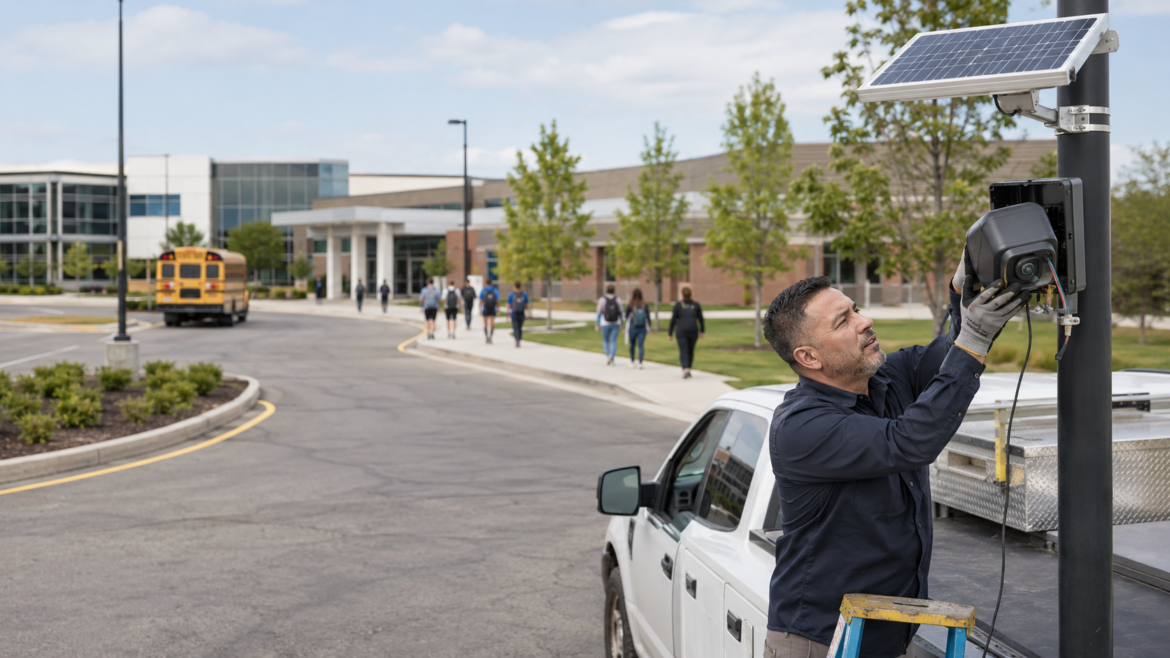
Maintenance worker on a ladder attaches a solar-powered camera to a streetlight on a college campus while students walk by in the background.
Hot Topics - controversialK-12School Safety

Flock Cameras in Schools Face Growing Pushback

by EdCircuit Staff September 17, 2026
written by EdCircuit Staff 10 minutes read

Flock cameras in schools are facing growing scrutiny as students return to class and communities ask more questions about privacy, data sharing and public oversight.

In August, edCircuit examined the growing use of Flock cameras in schools and the questions automatic license plate readers raise about safety, surveillance and access to vehicle information.

Since that article was published, several school systems have taken action.

Pflugerville Independent School District in Texas physically removed its cameras. Olentangy Local Schools in Ohio ended its agreement. Meanwhile, Clark County School District in Nevada paused its police department’s access to a regional Flock network while its newly appointed police chief reviews the program.

The beginning of the school year has also brought new student-led campaigns. High school students in Georgia and Colorado are asking their districts to remove Flock cameras from school property, while the University of Minnesota has agreed to remove one camera following community concerns.

These developments do not mean every school system will abandon automatic license plate readers. They do show that leaders are being asked to provide more than a general promise that the technology improves safety.

Communities want to know what the cameras have accomplished, who can search the information, where the data travels and whether the benefits justify collecting vehicle records from everyone who enters school property.

Pflugerville Removes Its School Cameras

On August 26, Pflugerville Independent School District announced that it was immediately suspending its use of Flock Safety cameras.

The district did not simply turn them off.

“All Flock Safety cameras on district property have been removed as of this morning,” PfISD said in its announcement.

The cameras had operated at district high schools and the Pfield athletic complex. According to the district, they provided real-time law enforcement alerts when a stolen vehicle or a vehicle on a watch list entered school property.

PfISD said its police department had been reviewing the system since Police Chief Tyler Smith was hired in December. The district ultimately followed the direction taken by the Pflugerville City Council and cited the community’s position on the issue.

The timing was important. One day earlier, the city council voted unanimously to end the city’s Flock agreement after concerns arose about outside searches involving its municipal camera network.

Public records discussed during the debate reportedly showed nearly 1.6 million searches by 459 outside organizations over approximately six months.

Those figures involved the city’s network, not the school district’s cameras. Still, the larger dispute placed the technology—and the question of who could reach the data—under closer local scrutiny.

PfISD maintained that its system was limited to license plate and vehicle information used to support campus safety. Its statement did not identify misuse by a district employee. Instead, the district said it listened to community concerns and decided that continued use was no longer appropriate.

Olentangy Ends Its Agreement With Little Public Discussion

Olentangy Local Schools in Central Ohio confirmed that it canceled its Flock contract sometime during the summer.

WOSU reported that the cameras were expected to be removed, but the district did not provide a detailed statement explaining its decision.

The lack of information leaves several questions unanswered. It is unclear when district leaders began reviewing the system, what evidence they considered or whether the cancellation was discussed publicly before it occurred.

Ending a surveillance program deserves transparency, but so does beginning one.

Families should not have to learn through a news report that a district collected license plate information or quietly discontinued the practice.

A public explanation does not need to disclose sensitive security procedures. It should identify the purpose of the system, how long it operated, the general rules governing access, whether information was shared and why district leaders decided to end it.

Back-to-School Pushback Expands

The recent district cancellations are now being followed by student-led campaigns in other parts of the country.

At Alpharetta High School in Georgia, seniors Aditya Manchanda and Henry Jones started a petition on September 1 asking Fulton County Schools to remove Flock cameras from their campus.

The cameras are positioned at school entrances and record vehicles entering and leaving the property. The students have raised concerns about privacy, cost and the potential reach of the information.

Their campaign is not limited to one building. The students hope the district will reconsider the cameras installed throughout Fulton County Schools.

According to Atlanta News First, the school board approved the system in 2022, and cameras are now installed at all 104 schools in the district. The original district-wide installation cost approximately $626,300.

Fulton County Schools is defending the program. The district says the cameras have supported safety investigations and that an audit process is in place to monitor their use.

School police also cited a specific result. Following a shooting outside Palmetto Elementary School, investigators reportedly used Flock information to help identify and locate a suspect within hours.

That example is important. Districts should be expected to present documented results when defending the technology, just as critics should be able to question whether those results justify continuous vehicle-data collection.

Students in Love-land, Colorado, are raising similar concerns. After five Flock cameras were installed at schools in his district, high school senior Gabe Sayer organized a petition and launched DeFlock Love-land, a student-led initiative calling on the school board and city council to remove the cameras.

A September report on student opposition cited an analysis of government procurement records indicating that Flock technology has been adopted by at least 100 school districts.

The back-to-school movement is not yet a nationwide wave of district cancellations. It is, however, producing new questions from students who are directly affected by surveillance systems installed around their schools.

Their involvement also raises a governance question: Should students be included when districts evaluate technology that records activity around campuses they enter every day?

Campus Concerns Extend Beyond K–12

The debate is also reaching higher education.

On September 11, the University of Minnesota announced that it would remove a recently installed Flock camera near its West Bank campus following concerns from a state lawmaker and community members.

The university said removing that camera was the appropriate step for supporting community trust while maintaining safety coverage.

The decision applies to one camera, not the university’s entire license plate reader system. The university reportedly operates at least 10 automatic license plate readers and maintains that the technology has helped recover stolen vehicles, locate missing people and identify suspects.

Even so, the decision demonstrates that camera placement matters. A school or university may decide that a system is justified in one location while determining that another location creates unnecessary concern or reaches beyond a clearly defined safety need.

A Pause Is Not the Same as Removing Cameras

Some recent headlines require a closer look.

Clark County School District in Nevada announced in August that its police department would pause its use of Flock while Police Chief Jeff Clark reviewed department procedures.

Unlike Pflugerville and Olentangy, Clark County did not own or operate Flock cameras on school property. Its police department had access to cameras maintained by other agencies and businesses throughout the Las Vegas Valley.

The Nevada Independent reported that the district had access to the network since at least August 2024. District police could use the system in assigned investigations, but the arrangement received broader attention only after public-records reporting disclosed it.

The district paused that access while the chief conducted his review. No cameras were removed from school grounds because the district did not maintain cameras there.

The Clark County situation raises a different concern: A district can participate in a large license plate surveillance network without installing a single reader on campus.

Reviews of school use should therefore examine both the cameras a district owns and the outside databases its employees can search.

Flock Announces New Safeguards

District decisions are unfolding as Flock Safety changes several of its policies.

On August 13, the company announced new privacy and accountability measures, including a recommended seven-day retention period rather than the previous 30-day default.

The distinctions matter for schools.

Flock later clarified that the new seven-day default applies only to new law-enforcement customers. Existing law-enforcement customers may keep locally approved retention periods, and private-sector customers retain the terms established for their accounts.

Multifactor authentication applies to all Flock users. However, several other announced protections—including required case codes, misuse detection and automatic lockouts—are primarily designed for law-enforcement customers. Some of those requirements are scheduled to take effect by the end of 2026.

District leaders should not assume that a company-wide announcement automatically changed their local settings.

They should determine how their accounts are classified and verify the retention period, sharing permissions, user access and auditing requirements that apply to their systems.

A safeguard only protects information when it applies to the account, is configured correctly and is regularly reviewed.

The Debate Reaches Congress

The debate is no longer limited to individual cities and school boards.

On September 15, a bipartisan pair of federal lawmakers announced the proposed No FLOCK Act.

The proposal would pressure states to limit automatic license plate readers to specific purposes, including identifying stolen vehicles, finding missing or endangered people, locating vehicles registered to people with felony warrants and investigating vehicles connected to felony offenses.

States that failed to establish those restrictions could eventually risk losing a portion of their federal transportation funding.

The proposal is not law, and its future in Congress is uncertain. Its introduction nevertheless demonstrates how quickly questions about license plate readers have moved from local contract discussions to the national policy debate.

What Districts Should Review Before Renewing

The recent cancellations, reviews and student campaigns give school boards a practical reason to revisit existing agreements before they renew automatically.

District leaders should be prepared to answer five questions:

  1. What documented safety results has the system produced?

    Leaders should know how many alerts led to verified threats, recovered vehicles, completed investigations, located missing people or other meaningful outcomes.

  2. Who can search the information?

    The answer should include district employees, school police, local law enforcement, partner agencies and anyone with access through a shared network.

  3. How long is the information retained?

    Districts should verify the actual setting governing their account rather than rely on a vendor’s general recommendation.

  4. What happens when information is exported?

    Downloads, screenshots, reports and records transferred into investigative files may remain after the original data is deleted.

  5. Has the community been told how the system works?

    Families and students should be able to find a plain-language policy explaining why the cameras are used, what they collect, who has access and how concerns can be reported.

These questions do not predetermine the outcome.

One district may decide that the cameras have helped address specific safety problems and should remain. Another may conclude that conventional security cameras, staffing, access controls, lighting or other measures are a better investment.

What matters is that the decision is based on evidence and made in public.

The Burden Is on the District

Automatic license plate readers can provide useful information following a theft, threat, missing-person report or other serious incident. That capability has not disappeared because several districts canceled their contracts.

But usefulness alone is not enough.

Pflugerville removed its cameras after listening to community concerns. Olentangy canceled its contract with little public explanation. Clark County paused access to a regional network while its police chief conducted a review.

Students in Alpharetta and Love-land are now asking their districts to reconsider the technology, while the University of Minnesota has agreed to remove one camera following questions about its location and reach.

These cases leave school districts with a straightforward obligation: If they collect or search vehicle information, they must be able to explain why.

If a district decides to keep Flock cameras, it should publish the rules, limit access, review every sharing arrangement and report whether the system is delivering meaningful results.

If leaders cannot demonstrate that the cameras are addressing a clearly defined school safety problem, removal may be the more responsible decision.

Subscribe to edCircuit to stay up to date on all of our shows, podcasts, news and thought leadership articles.
September 17, 2026 0 comments
0 FacebookTwitterPinterestLinkedinWhatsappCopy LinkEmail
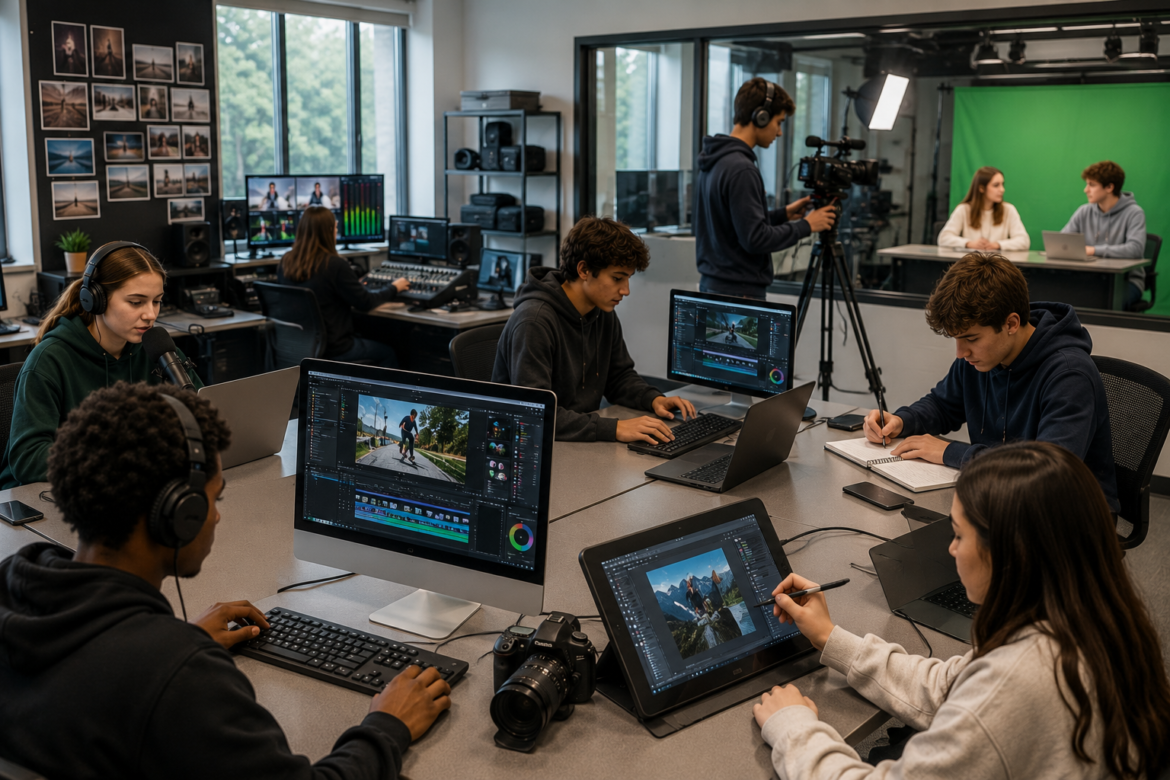
A classroom recording studio with students editing on laptops and tablets while a camera crew films a two-person interview in the background.
StudentsHot Topics - controversialK-12

Inside Today’s High School Media Classroom

by EdCircuit Staff September 17, 2026
written by EdCircuit Staff 7 minutes read

Inside today’s high school media classroom, students are not just learning about media; they are actively producing it in real time.

Walk into one of these classrooms, and it does not feel like a traditional learning environment. It feels like a production studio. There is movement, energy, collaboration, and purpose. Students are not sitting quietly at desks completing worksheets. They are working in teams, solving problems, managing deadlines, and creating content that will be seen, heard, and shared.

At any given moment, multiple projects are happening at once.

One group of students may be editing video footage from a recent school event, carefully selecting clips, adjusting audio, and adding graphics to create a polished final product. Across the room, another group may be recording a podcast, testing microphones, reviewing notes, and preparing to interview a guest. A third group might be designing social media graphics or writing captions for upcoming posts, thinking about how to engage their audience.

In another corner, a livestream team is preparing for an upcoming broadcast. They are checking camera angles, running audio tests, and coordinating roles. Each student has a responsibility: camera operator, director, audio technician, on-air talent. When the broadcast begins, there is no pause button. They have to be ready.

It is not simulated work.

It is real.

In many schools, student-created content is now the primary way the community experiences school life—through social media, video, and livestreams.

A Classroom Built on Roles and Responsibility

One of the most important shifts in today’s media classroom is the structure. Instead of working individually, students often take on defined roles within a team. Much like a professional newsroom or production company, every role matters.

There are writers who research and craft stories. There are editors who refine content and ensure accuracy. There are videographers who capture footage and photographers who frame key moments. There are producers who oversee projects, making sure everything stays on schedule. There are hosts, anchors, and interviewers who bring stories to life on camera or through audio.

Students quickly learn that their work impacts others.

If a videographer misses a shot, the editor has less to work with. If a script is not ready, the production is delayed. If audio is not captured correctly, the final product suffers. These are real consequences, and they create a level of accountability that is difficult to replicate in traditional assignments.

At the same time, they also create opportunities.

Students learn to rely on each other. They learn to communicate clearly, solve problems under pressure, and adjust when things do not go as planned. They begin to understand what it means to be part of a team working toward a shared goal.

From Idea to Execution: The Production Process

Every project in a media classroom follows a process, and students experience each step from start to finish.

It often begins with an idea.

A story about student achievement. A recap of a game. A feature on a teacher. A preview of an upcoming event. Students brainstorm topics, discuss angles, and decide how best to tell the story. Should it be a video? A podcast? A written article? A social post? The format matters.

Once the idea is set, planning begins.

Students outline scripts, schedule interviews, gather equipment, and assign roles. They prepare questions, research their subject, and think through the flow of the final piece. This stage teaches organization and foresight—skills that are critical in any field.

Then comes production.

Cameras are set up. Audio is checked. Interviews are conducted. Footage is captured. This is where preparation meets reality. Unexpected challenges arise—background noise, lighting issues, missed moments—and students must adapt quickly.

After production comes editing.

This is where everything comes together. Students review footage, select the best clips, add transitions, adjust audio levels, include graphics, and refine pacing. They learn that editing is not just technical—it is storytelling. What they choose to include or leave out shapes how the story is understood.

Finally, the content is published.

Whether it is posted on a school website, shared on social media, streamed live, or distributed as a podcast, the work reaches an audience. That audience may include classmates, parents, teachers, administrators, and community members.

And that changes everything.

In a single class period, a team might shoot footage, edit a video, design graphics, write captions, and publish content before the bell rings—reaching hundreds or even thousands of viewers before the school day ends.

The Pressure and Power of a Real Audience

In a traditional classroom, most assignments are seen by one person: the teacher.

In a media classroom, the audience is much larger.

Students know their work will be viewed, shared, and discussed. That reality raises the stakes. It pushes them to be more thoughtful, more precise, and more invested in the outcome. They begin to understand that communication is not just about completing a task—it is about connecting with people.

They also learn to handle feedback.

Not every piece will be perfect. Sometimes a video does not perform well. A post may not get the engagement they expected. A broadcast may have technical issues. These moments become learning opportunities. Students reflect, adjust, and improve.

This cycle—create, publish, reflect, improve—is at the heart of the media classroom experience.

Technology That Mirrors the Real World

The tools used in today’s media classrooms are increasingly aligned with industry standards.

Students work with professional or near-professional cameras, microphones, lighting equipment, and editing software. They learn how to operate tripods, frame shots, manage audio levels, and use editing platforms to produce high-quality content. Many also explore graphic design tools, analytics dashboards, and streaming platforms.

These tools are not introduced for the sake of technology alone.

They are introduced because they support the process of communication.

Students learn that the tool is only as effective as the person using it. A high-end camera does not guarantee a strong story. Clear audio does not replace thoughtful questions. Technology enhances communication, but it does not define it.

AI in the Media Classroom: Power and Responsibility

Artificial intelligence is beginning to play a larger role in media classrooms, and students are learning how to use it in meaningful ways.

They use AI tools to transcribe interviews quickly, saving hours of manual work. They generate captions to make content more accessible. They experiment with translation tools to reach broader audiences. Some use AI to help organize ideas or refine scripts.

These tools increase efficiency, but they also require careful guidance.

Students must learn when to rely on AI and when to rely on their own judgment. They must understand the importance of verifying information, maintaining originality, and preserving authenticity. AI can assist with production, but it cannot replace creativity, curiosity, or ethical decision-making.

Those lessons are essential.

Preparing Students for What Comes Next

Perhaps the most powerful aspect of today’s media classroom is how clearly it connects to the real world.

Students are not guessing what these skills might be used for—they are using them now.

Some students build portfolios that include video work, photography, writing samples, and social media campaigns. Others begin freelancing, taking photos at events or creating content for local organizations. Some discover a passion for storytelling that leads them toward careers in journalism, broadcasting, or film. Others realize that these skills apply to fields like marketing, communications, education, or business.

Even students who do not pursue media careers benefit from the experience.

They leave with the ability to communicate clearly, think critically, work collaboratively, and adapt to new tools and challenges. These are skills that matter in every profession.

More Than a Class

Inside today’s high school media classroom, something bigger is happening than content creation.

Students are finding their voice.

They are learning how to ask questions, listen carefully, and tell stories that matter. They are discovering how to work with others, meet deadlines, and take ownership of their work. They are building confidence, not just in their technical abilities, but in their ability to contribute something meaningful.

For many students, it becomes more than a class.

It becomes a place where they feel connected, challenged, and inspired.

A Classroom That Reflects the Future

The high school media classroom is not just keeping up with change—it is helping students lead it.

As technology continues to evolve, so will the tools and platforms students use. But the core experience will remain the same: creating, communicating, and connecting.

They are not preparing for the future.

They are already creating it.

Play video: Redesigning My High School Digital Media Classroom! (7 minutes 59 seconds)7:59
Redesigning My High School Digital Media Classroom!7 min 59 sTom Buck on YouTube

Tom Buck – Redesigning My High School Digital Media Classroom! (Play video)

Subscribe to edCircuit to stay up to date on all of our shows, podcasts, news, and thought leadership articles.

September 17, 2026 0 comments
0 FacebookTwitterPinterestLinkedinWhatsappCopy LinkEmail
AI in schools and decisions it should never make: a human hand holds an A-plus report card steady inside a swirl of AI light carrying safety and mental-health symbols
Hot Topics - controversialArtificial IntelligenceK-12Assessment and Testing

AI in Schools: What Technology Should Never Decide

by EdCircuit Staff September 16, 2026
written by EdCircuit Staff 13 minutes read

AI in schools can organize information, identify patterns, suggest resources, and help educators notice concerns. It can also be confidently wrong.

Imagine a ninth-grade student whose attendance has fallen sharply. A district dashboard labels her “high risk” and predicts that she is unlikely to graduate on time. Based on her attendance, grades, and missing assignments, the system recommends an intensive intervention. It also suggests moving her out of an advanced course to reduce her workload.

The recommendation appears objective. It is supported by data and expressed with the certainty of a mathematical calculation.

What the system does not know is that the student has been arriving late because she helps get her younger brother to school while her mother recovers from surgery. Her lower math grade reflects three missing assignments, not an inability to understand the material. The advanced course is also the class she cares about most—and one of the strongest reasons she continues coming to school.

A counselor who knows the student might see a family that needs temporary flexibility and transportation assistance. An algorithm may see only a collection of risk factors.

That difference matters.

As artificial intelligence becomes more deeply embedded in education, school leaders will face growing pressure to use it for more than lesson planning and administrative work. AI systems are already being developed to evaluate student writing, predict academic performance, recommend interventions, identify behavioral risks, monitor online activity, create schedules, support hiring, and analyze teacher performance.

Some of those uses may be helpful. Others move technology uncomfortably close to decisions that can alter a student’s education or an educator’s career.

The question is no longer simply whether schools can use AI to make these decisions.

The question is whether they should.

Drawing the Line Between Assistance and Authority

Most schools do not intend to place an algorithm in charge. The shift usually happens more quietly.

A risk score influences which students are invited into an advanced program. An automated flag is treated as evidence of academic dishonesty. A generated summary becomes the starting point for a special education meeting. A behavior prediction shapes how an administrator interprets a student’s actions.

No policy may explicitly say that the technology has final authority. Yet if educators rarely question its output, the practical result is almost the same.

People tend to trust recommendations that appear precise, particularly when those recommendations are produced by complicated systems. A score of 92 percent can feel more reliable than a teacher’s concern or a counselor’s professional judgment—even when no one can clearly explain what the number represents, which information produced it, or how often the system is wrong.

This is where schools must establish a firm boundary: AI can support a high-impact decision, but it cannot own that decision.

The NIST Artificial Intelligence Risk Management Framework encourages organizations to govern, map, measure, and manage AI risk throughout the life of a system. NIST also emphasizes the need to clearly define human roles and responsibilities when AI contributes to decision-making.

For school districts, this requires more than purchasing an approved tool and reminding employees to “use professional judgment.” Leaders must identify which decisions AI may inform, which decisions it may never make, and who remains accountable when its output causes harm.

When a Decision Changes a Student’s Future

Not every use of AI carries the same level of risk. A tool that helps draft a family newsletter is not equivalent to one that influences whether a student is suspended, placed in remedial coursework, referred for a mental health evaluation, or denied access to an academic opportunity.

The closer a decision comes to a student’s rights, safety, identity, education, or future, the more directly people must remain involved.

Grades and academic integrity

AI can help educators create practice questions, compare work with a rubric, or identify areas where a student may need additional feedback. It should not have final authority over grades, academic credit, promotion, or graduation.

Student work exists within a classroom context. Teachers know what was taught, how an assignment was introduced, what support a student received, whether accommodations apply, and how the work compares with the student’s previous performance. They can ask follow-up questions. They can review drafts. They can give a student another opportunity to demonstrate understanding.

A scoring system sees only the information it receives.

The same boundary should apply to AI-detection tools. A detector’s output may give a teacher a reason to look more closely, but it is not proof of misconduct. No student should fail an assignment or receive an academic dishonesty charge because software produced a probability score.

When concerns arise, the teacher should review the student’s notes, drafts, citations, document history, and previous work. Most importantly, the teacher should speak with the student.

That conversation may confirm inappropriate AI use. It may also reveal tutoring assistance, a new writing strategy, an accessibility tool, or a student whose formal writing sounds different from classroom conversation. The purpose of the review is to establish what happened—not to defend the software’s conclusion.

Discipline and behavior

Disciplinary decisions require evidence, context, consistency, and due process. They also sit within a long history of unequal outcomes.

An AI system trained on previous disciplinary records may absorb the patterns contained in those records. Removing race, disability, language status, or sex from the dataset does not automatically remove the possibility of bias. Attendance, neighborhood, course history, previous referrals, and school mobility can all function as proxies for circumstances that disproportionately affect particular groups.

Predictive labels can also shape how adults view a child. Once a student has been classified as a behavioral risk, an ambiguous action may appear more deliberate, defiant, or threatening than it otherwise would.

Federal civil rights protections still apply when schools use automated systems. The Department of Education’s Office for Civil Rights enforces laws prohibiting discrimination in covered educational settings based on race, color, national origin, sex, disability, and age. A district cannot transfer its responsibility for fair treatment to a vendor, model, or dataset.

AI may help organize incident reports or reveal districtwide patterns worth examining. It should never determine whether a student is guilty, what the student intended, or which consequence is appropriate.

Those judgments must remain with educators who can examine the evidence, listen to the student, consider disability-related needs, apply policy consistently, and explain the final decision.

Special education and student services

A screening system may help a school notice students who need additional attention. It cannot diagnose a disability or decide whether a student qualifies for services.

Special education decisions are intentionally collaborative and individualized. Under the Individuals with Disabilities Education Act, parents have the right to participate in meetings involving their child’s identification, evaluation, educational placement, and access to a free appropriate public education. IDEA also provides procedural protections involving records, notice, independent evaluations, mediation, and complaints. These safeguards are outlined in the Department of Education’s IDEA resources for parents and families.

Section 504 decisions also require people who understand the student, the evaluation data, and the available placement options. The Department’s Section 504 guidance states that schools must draw from multiple sources, document the information considered, and examine significant factors affecting the student’s learning.

AI can help organize records, summarize assessment results, or prepare questions for a meeting. It cannot replace the people in that meeting—and it should never predetermine the outcome before the student, family, teachers, and specialists have been heard.

Safety and mental health

School safety tools present one of the most difficult challenges for education leaders.

AI products may claim to detect threats, monitor online activity, recognize emotional distress, analyze student writing, or identify unusual behavior. Schools are understandably interested in anything that could help them respond before a crisis occurs.

But both missed warnings and false alarms can cause serious harm.

A student may search for information about self-harm because she is worried about a friend. Another may use violent language while discussing a novel. A sarcastic message between classmates may look threatening when separated from its context. A student with a disability may behave in a way that a monitoring system mistakenly interprets as suspicious.

An automated alert may justify a timely review. It should not automatically label a student dangerous, trigger discipline, produce a mental health conclusion, or initiate law-enforcement involvement.

When safety may be at risk, trained professionals must assess the actual situation, speak with the student, review credible evidence, consider context, and follow established crisis or threat-assessment procedures. Urgency makes qualified human judgment more important, not less.

Districts must also tell their communities what is being monitored, what information is collected, who can access it, how long it is retained, and what may happen when a student is flagged. Surveillance that students and families do not understand can damage trust, even when it was introduced with good intentions.

Placement and opportunity

Some of the most consequential decisions in education do not look like punishments.

Who is recommended for gifted education? Who receives an intensive intervention? Which students are invited to take algebra early, enroll in an Advanced Placement course, visit a college, apply for a competitive program, or explore a particular career?

AI could help schools identify students whose abilities have been overlooked. It could also reinforce old patterns if predictions based on the past are allowed to shape future opportunities.

If certain students have historically been underrepresented in advanced coursework, a system trained on past enrollment data may treat their underrepresentation as normal. If attendance and discipline are heavily weighted, students experiencing poverty, housing instability, family caregiving responsibilities, or unreliable transportation may be classified as less likely to succeed.

The denial may never appear in writing. It may take the form of a missing invitation, a lowered recommendation, or a counselor who unknowingly spends more time with students the system considers “college ready.”

Students should never be reduced to the likelihood that they will repeat someone else’s path.

Schools can use AI to expand the group of students considered for an opportunity. They should not use it to quietly close the door.

Human Oversight Must Be More Than a Signature

Schools frequently describe their AI systems as operating with a “human in the loop.” That phrase sounds reassuring, but it does not tell families whether the person is meaningfully involved.

If an administrator receives an automated recommendation but cannot review the underlying information, challenge the result, or understand why it was produced, the administrator is not providing real oversight.

Meaningful human review requires the responsible person to:

  • Know that AI contributed to the recommendation
  • Review the evidence and data behind it
  • Understand the tool’s intended purpose and limitations
  • Speak with the affected student, family, or employee when appropriate
  • Have the authority to reject the recommendation
  • Document and explain the final decision

The person reviewing the output also needs time. A counselor responsible for hundreds of students cannot meaningfully investigate dozens of automated alerts each morning. When the volume of recommendations exceeds a school’s capacity to examine them, staff members will inevitably begin accepting the system’s conclusions.

Families and eligible students may also have rights concerning information maintained in education records. The Department of Education’s FERPA overview explains rights to inspect education records, request amendments to information believed to be inaccurate, and control many disclosures of personally identifiable information.

Districts should determine whether AI-generated scores, classifications, summaries, and alerts become part of a student’s education record. An unexplained label should not follow a child from year to year without a way to inspect it, correct inaccurate information, or challenge its continued use.

Six Questions Before Approving a High-Impact Use

Before adopting an AI system, school leaders should identify the most serious action someone could take based on its output.

Could the system affect a grade, disciplinary record, course placement, special education referral, safety response, academic opportunity, or employment decision?

If so, leaders should be able to answer six questions:

  1. What decision will the system influence?
    Broad promises about improving outcomes are not enough. The district should identify the specific decisions staff members may make with the output.
  2. What information produces the recommendation?
    Leaders should know where the data comes from, how current it is, and whether it was originally collected for a different purpose.
  3. How accurate is the system for the district’s students?
    Overall accuracy can hide substantial differences among student groups, languages, disabilities, grade levels, and uncommon situations.
  4. What happens when the system is wrong?
    A harmless spelling suggestion and a false safety alert do not require the same safeguards.
  5. Can the affected person understand and challenge the result?
    Students, families, and employees should not have to discover on their own that an automated recommendation influenced a consequential decision.
  6. Who can suspend the system?
    A district needs a clear process for stopping use when the tool performs poorly, causes harm, creates inequitable outcomes, or is used outside its approved purpose.

The U.S. Department of Education’s 2025 AI guidance supports responsible AI integration while emphasizing privacy, compliance with existing requirements, and engagement with affected stakeholders—especially parents.

That engagement should happen before a high-impact system is deployed, not after families begin challenging its decisions.

UNESCO has made a similar argument internationally. Its 2025 education work emphasizes that AI in education must remain grounded in human rights and that the future of learning will be shaped by the governance and ethical choices leaders make now.

Technology Cannot Carry Responsibility

The strongest case for AI in education is not that it can remove people from difficult decisions. It is that it can give people better information and more time to make those decisions well.

Teachers need relief from repetitive work. Counselors need better ways to notice students who are struggling. Administrators need help understanding complex systems. Families deserve communication that is timely and accessible.

AI can contribute to all of that.

What it cannot do is sit across from a student and recognize that the story behind the data has changed. It cannot take responsibility for a false accusation, an unfair placement, a missed accommodation, or an opportunity quietly withheld. It cannot rebuild trust with a family after a harmful decision.

People must do those things.

The goal is not to keep AI out of every consequential conversation. It is to make sure technology enters those conversations in the proper role: as a source of information, a prompt for better questions, and sometimes a warning that deserves careful investigation.

Never as the final authority.

The best use of AI in schools will not be the one that replaces human judgment. It will be the one that helps educators exercise that judgment with greater clarity, fairness, and care.


Editor’s note: edCircuit is vendor-neutral and does not endorse products or services. Any mention of a specific solution is included for contextual and informational purposes only.

Subscribe to edCircuit to stay up to date on all of our shows, podcasts, news, and thought leadership articles.

September 16, 2026 0 comments
0 FacebookTwitterPinterestLinkedinWhatsappCopy LinkEmail
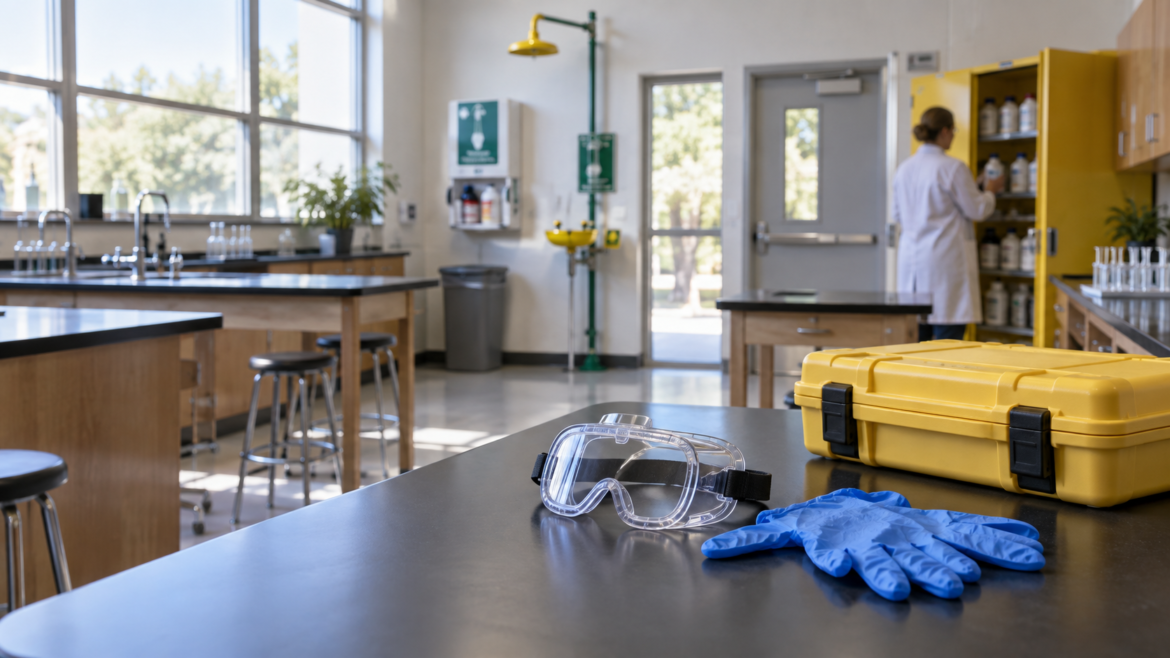
Lab bench in a science classroom with safety goggles, blue gloves, and a yellow tool case in the foreground, and a person in a lab coat near a yellow cabinet in the background.
Hot Topics - controversialSchool SafetyScience and Lab SafetyK-12

Chemical Hygiene Plan: A Portland Reminder for Every School

by EdCircuit Staff September 15, 2026
written by EdCircuit Staff 6 minutes read

A current Chemical Hygiene Plan is one of the most important safety documents in a school building—especially when a chemical emergency forces adults to make fast decisions with incomplete information.

This week, an incident at Benson Polytechnic High School in Portland, Oregon, gave school leaders across the country a difficult but important reminder. Portland Police now say a 15-year-old student suffered a medical emergency after mixing chemicals and inhaling the gases released—not after drinking the mixture, as initially reported. The student is expected to survive.

School staff provided lifesaving care, the building was evacuated, and hazardous-materials responders neutralized the spill. No other injuries were reported.

The investigation remains ongoing, and there is no reason to speculate about the substances involved, their source, or the student’s intent. What is clear is that trained adults acted quickly, the school protected the larger community, and specialized responders took over the chemical scene.

That is how a serious chemical event should move: care for people, isolate the hazard, communicate clearly, and let appropriately trained responders determine what comes next.

A plan must work in the real building

A Chemical Hygiene Plan, or CHP, is the written framework that explains how hazardous chemicals will be managed in a particular laboratory or workplace. Under OSHA’s Laboratory Standard, employers covered by the rule must maintain a written CHP addressing safety procedures, protective equipment, training, emergency response, waste, and the personnel responsible for carrying the plan out.

That OSHA standard is designed to protect employees. But a school’s chemical-safety system should be built to protect everyone who may be affected: teachers, lab aides, custodians, students, visitors, and first responders.

And it must reflect the real building—not an idealized version of it.

Chemicals may be present in science classrooms, STEM and engineering spaces, career-tech programs, art rooms, maintenance areas, pools, and custodial closets. A strong plan accounts for where materials are used, stored, moved, and potentially accessed.

It also answers straightforward questions before an emergency forces people to answer them under pressure:

  • Who is responsible for chemical safety in this building or district?
  • Where are Safety Data Sheets and emergency contacts located?
  • Which spills can trained staff address, and which require evacuation and emergency response?
  • Who can stop instruction, close an area, or evacuate a building?
  • How will the school communicate with students, families, transportation, and first responders?
  • What happens after the immediate emergency is over?

If a teacher, school nurse, custodian, principal, and front-office staff member would give five different answers, that inconsistency is the risk.

The first rule of a spill: do not create another victim

Schools sometimes treat spill response as a cleanup issue. It is not. It is an exposure-control issue.

When a spill involves an unknown substance, visible vapors, an unusual odor, a reaction, a possible inhalation hazard, or anyone who is ill, the priority is to move people away from the area, alert school leadership, and call 911 immediately. Prevent others from entering until emergency responders determine the area is safe.

No employee should be expected to clean an unknown or potentially hazardous spill simply because they are nearby. Cleanup requires a clear understanding of the material, its hazards, appropriate protective equipment, and the limits of the person responding. In many situations, the right decision is to wait for the fire department or a trained hazardous-materials team.

The Benson response demonstrates why that distinction matters. The campus was evacuated, responders assessed students and staff, and specialized personnel neutralized the material. The school did not treat a potentially dangerous release as a routine custodial task.

A well-written CHP makes these decisions easier because it defines the response before emotions, uncertainty, and crowded hallways take over.

Every school needs a chemical safety leader

OSHA defines a Chemical Hygiene Officer as an employee designated by the employer and qualified by training or experience to provide technical guidance in developing and implementing the CHP.

That person should not be the only individual who cares about safety. The role works best when it is supported by administrators, science teachers, facilities staff, nurses, and district leadership. But someone must own the process.

A designated Chemical Hygiene Officer should know what chemicals are in the building, where they are stored, which materials require special handling, whether eyewash stations and ventilation are functioning, and whether staff have been trained for the work they are actually doing.

Training cannot be generic. A science teacher using acids, a maintenance employee working with industrial cleaners, and an art teacher handling solvents face different risks. They should understand the specific hazards in their work area, how to recognize a release, what protective measures are in place, and when to stop work and seek help.

The Chemical Hygiene Officer also helps prevent a common school problem: materials outliving the people who purchased them. A bottle may remain on a shelf long after the teacher who knew how to use it has moved on. A current inventory, clear labeling, secure storage, and documented disposal prevent “mystery chemicals” from becoming tomorrow’s emergency.

Practice the response before it is needed

Students practice fire drills because nobody expects them to read a manual while an alarm is sounding. Chemical emergencies deserve the same practical preparation.

That does not mean every staff member must become a hazardous-materials responder. It means everyone should know their role.

Teachers should know when to halt instruction and clear the room. Front-office personnel should know who to call and what information to communicate. Administrators should know evacuation locations and how to keep students from re-entering an area. Nurses should know the school’s exposure-response procedures and how to share relevant chemical information with medical professionals. Facilities staff should know when a problem exceeds the scope of routine cleanup.

The plan should also be visible when it matters. Emergency contact numbers, exit routes, eyewash and shower locations, spill-kit locations, and basic response procedures should not be buried in a folder that only one person can access.

After any incident or near miss, the question should not be, “Who made a mistake?” The better question is, “What did our system fail to make clear?”

Near misses are valuable information. They reveal where training, storage, supervision, communication, or procedures need to improve before someone is hurt.

Annual review is the minimum

OSHA requires covered employers to review and evaluate the effectiveness of the CHP at least annually and update it as necessary. Schools should also revisit the plan when there is a staffing change, a new course or laboratory activity, a renovation, new equipment, a change in chemical inventory, or an incident.

A plan that was sound two years ago may no longer match the people, rooms, equipment, or chemicals in the building today.

School leaders do not need to wait for a headline to ask three questions:

  1. Do we have a current, building-specific Chemical Hygiene Plan that staff can find and use?
  2. Is a qualified person clearly responsible for chemical safety, inventory, training, and follow-up?
  3. Have we practiced what happens when a spill is too dangerous or too unknown for staff to handle?

The Portland incident is first and foremost about a young person and a school community recovering from a traumatic event. It should also prompt every district to take a sober look at its own readiness.

Chemical safety is not just about having the right cabinet, eyewash station, or spill kit. It is about making sure the right people know what to do the moment something goes wrong.

Sources:
Portland Police Bureau update
 Oregon Public Broadcasting coverage
OSHA Laboratory Standard, 29 CFR 1910.1450
OSHA Chemical Hygiene Plan guidance

Subscribe to edCircuit to stay up to date on all of our shows, podcasts, news, and thought leadership articles.

September 15, 2026 0 comments
0 FacebookTwitterPinterestLinkedinWhatsappCopy LinkEmail
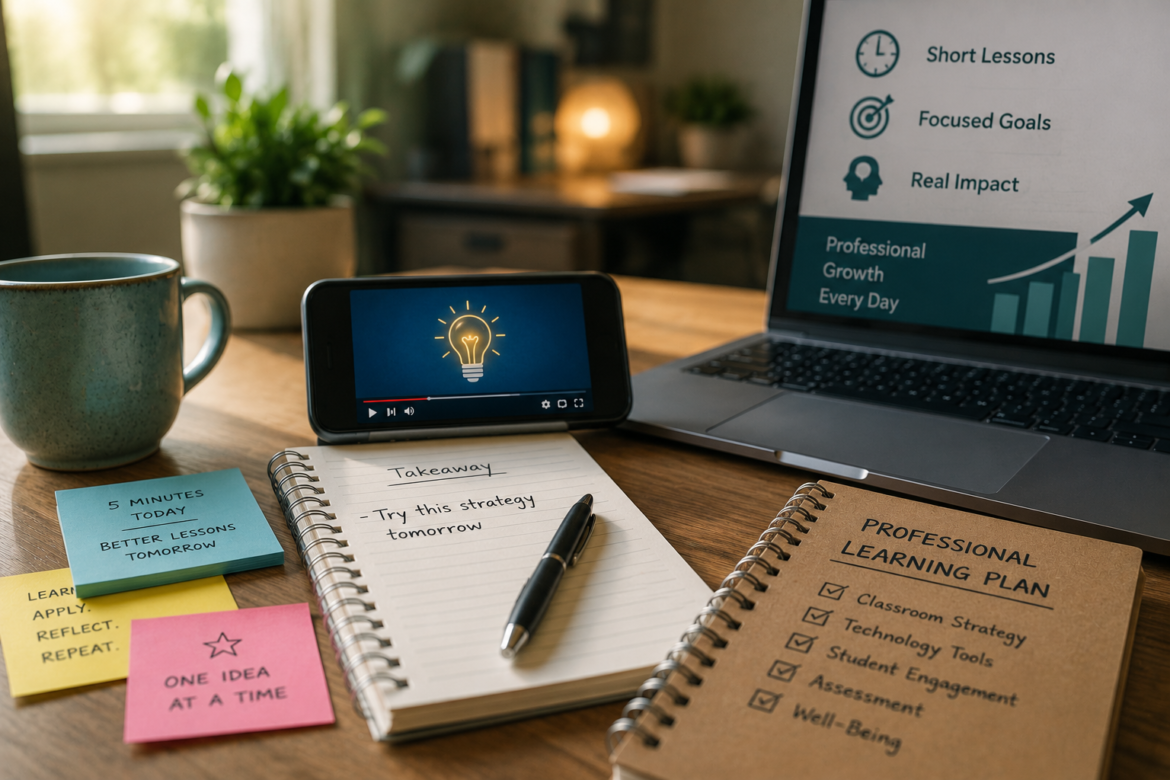
Desk setup for learning: notebook, colorful sticky notes, smartphone playing a video, mug, and a laptop with a growth chart slide in the background.
EducatorsK-12 TeachersProfessional DevelopmentHot Topics - controversialArticle SeriesK-12

Teacher In-Service Meets Microlearning

by EdCircuit Staff September 15, 2026
written by EdCircuit Staff 6 minutes read

Teacher in-service has traditionally been measured in hours.

A full-day workshop before school begins.

A three-hour keynote presentation.

An afternoon filled with breakout sessions.

For decades, schools assumed that meaningful professional learning required setting aside large blocks of time. The longer educators sat in training, the more they were expected to learn.

Today, districts across the country are beginning to challenge that assumption.

It is 3:45 on a Wednesday afternoon.

Students have just left for the day. Parent emails are waiting. Papers still need to be graded. A volleyball game starts in an hour. Tomorrow’s lesson isn’t quite finished.

A teacher doesn’t have three hours for professional development.

She has fifteen minutes.

Increasingly, schools are recognizing that those fifteen minutes may be enough.

Rather than asking educators to absorb dozens of ideas during lengthy workshops, teacher in-service is evolving toward microlearning—short, focused learning experiences designed to deliver one meaningful idea that educators can immediately apply.

The shift isn’t simply about saving time.

It is about making professional learning more effective.

Great Learning Isn’t Measured in Hours

One of the biggest misconceptions about microlearning is that it lowers expectations.

It doesn’t.

Microlearning changes how learning is delivered—not how much educators are expected to know.

Instead of presenting twenty different ideas during a single workshop, microlearning focuses on one concept, one skill, or one challenge at a time.

A ten-minute lesson introducing a new artificial intelligence tool.

A five-minute refresher on cybersecurity awareness.

A short video explaining updated laboratory safety procedures.

A brief coaching module focused on questioning strategies.

Each learning experience has one clear purpose.

Teachers leave knowing exactly what they can try the next day.

Great professional learning isn’t defined by its length.

It is defined by what educators do differently when they return to their classrooms.

Why Smaller Learning Often Works Better

Anyone who has attended an all-day conference understands what happens by mid-afternoon.

The notebook is still open.

The speaker is still presenting.

But attention begins to fade.

Professional learning works best when educators have time to process new ideas, apply them, reflect on the results, and build upon that experience.

Microlearning supports that natural cycle.

Rather than overwhelming educators with information they may not use for weeks or months, districts increasingly provide smaller learning experiences that connect directly to immediate classroom practice.

Teachers learn one strategy.

They implement it.

They reflect.

Then they learn the next.

Professional growth becomes continuous instead of concentrated.

Learning That Fits the Reality of Teaching

Teaching has never been a profession with extra time.

Today’s educators balance instruction, assessment, technology integration, family communication, meetings, extracurricular activities, and countless unexpected situations throughout every school day.

Finding six uninterrupted hours for professional learning has become increasingly difficult.

Microlearning acknowledges that reality.

A teacher may complete a ten-minute literacy module during a planning period.

A principal listens to a leadership podcast while driving between buildings.

A science teacher reviews laboratory safety procedures moments before introducing new equipment.

An instructional coach watches a short AI demonstration before meeting with faculty.

Professional learning becomes part of the workday instead of competing with it.

That flexibility is one of microlearning’s greatest strengths.

Learning When It Matters Most

Traditional professional development often asked educators to remember information they might not use for months.

Microlearning changes the timing.

Learning happens when educators actually need it.

A teacher exploring artificial intelligence for the first time can watch a short instructional video that evening and begin experimenting with new classroom strategies the next morning.

A counselor preparing for a difficult student conversation can review current mental health guidance before school begins.

A chemistry teacher introducing unfamiliar equipment can complete a brief safety refresher moments before instruction starts.

Knowledge delivered at the moment of need is far more likely to become knowledge applied in practice.

Professional learning becomes timely instead of theoretical.

Technology Is Fueling the Movement

Microlearning would be difficult without today’s technology.

Learning management systems organize short learning modules into searchable libraries.

Podcasts allow educators to learn while commuting or exercising.

Mobile devices place professional learning in educators’ pockets.

Interactive simulations provide immediate practice opportunities.

Artificial intelligence is now beginning to personalize microlearning itself.

Imagine opening your district’s learning platform.

Instead of searching through hundreds of courses, AI recommends a five-minute learning module based on your teaching assignment, previous professional development, current district initiatives, and classroom goals.

Professional learning becomes easier to find because technology understands what educators need.

Rather than replacing teachers, AI is helping remove barriers to learning.

Building a Habit Instead of Hosting an Event

Perhaps the greatest strength of microlearning is that it changes how educators think about professional growth.

Traditional teacher in-service often felt like an event.

Microlearning feels like a habit.

Teachers learn.

They apply.

They reflect.

They improve.

Then they repeat the process.

Professional learning becomes woven into everyday practice rather than reserved for designated days on the school calendar.

Small learning experiences accumulate over time.

Five minutes today.

Ten minutes next week.

Fifteen minutes before a new instructional unit.

Over the course of a school year, those moments represent dozens of meaningful opportunities for growth.

Short Learning Doesn’t Replace Collaboration

Some educators worry that shorter learning experiences might reduce collaboration.

The opposite is often true.

Teachers complete a brief learning module independently, then discuss implementation during grade-level meetings, professional learning communities, or instructional coaching sessions.

The learning begins individually.

The improvement happens collectively.

Microlearning provides the spark.

Collaboration helps sustain the momentum.

The strongest districts are finding ways to combine both.

Looking Ahead

As education continues changing, teacher in-service must evolve alongside it.

Artificial intelligence.

Cybersecurity.

Student data privacy.

Instructional technology.

School safety.

New teaching strategies.

Educators need opportunities to continually update their knowledge throughout the year.

Waiting for annual professional development days is no longer enough.

Microlearning provides a model that is flexible, timely, practical, and increasingly personalized.

The future of teacher in-service will not be measured by the number of hours educators spend sitting in professional development.

It will be measured by the number of meaningful learning moments that improve teaching, strengthen schools, and ultimately help students succeed.

Sometimes the most important professional growth begins not with a six-hour workshop…

…but with five focused minutes that change tomorrow’s lesson.


The Future of Professional Learning Series

Part 1: Teacher In-Service Has Changed

Part 2: Teacher In-Service Beyond the Auditorium

Part 3: Teacher In-Service Is No Longer One Size Fits All

Part 4: Teacher In-Service Meets Microlearning (Current Article)

Coming Next: Teacher In-Service and Artificial Intelligence — exploring how AI is personalizing professional learning through adaptive recommendations, coaching, and just-in-time support for educators.

Subscribe to edCircuit to stay up to date on all of our shows, podcasts, news, and thought leadership articles.

September 15, 2026 0 comments
0 FacebookTwitterPinterestLinkedinWhatsappCopy LinkEmail
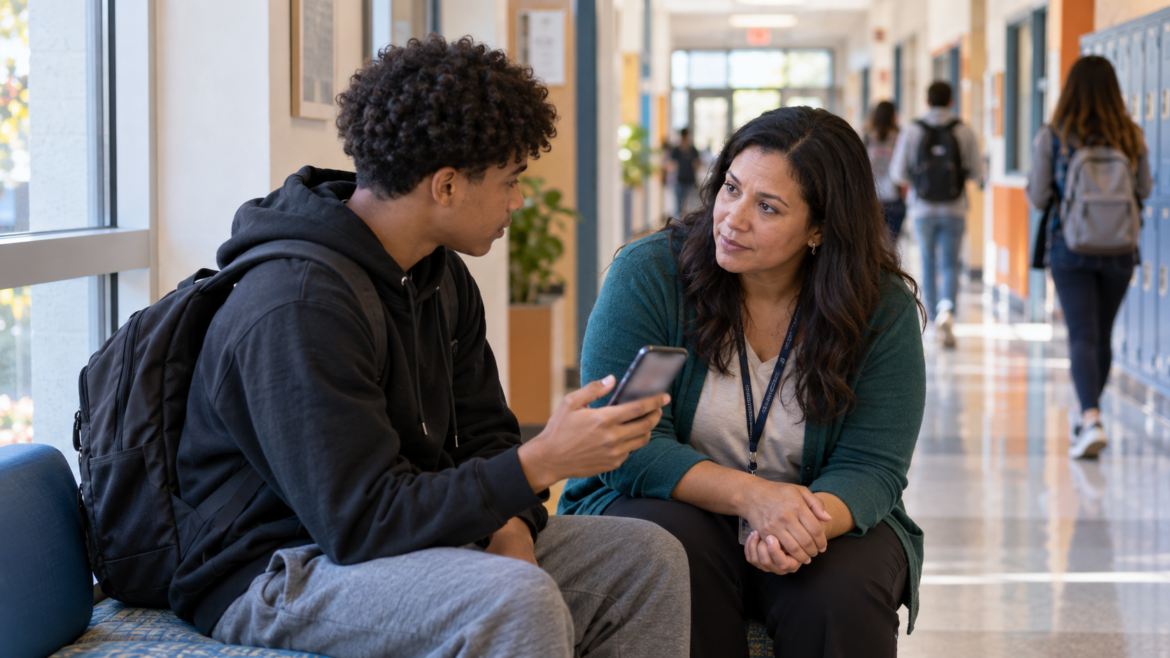
Student with a backpack sits in a bright school hallway, showing a phone to a staff member who listens attentively at his side.
K-12Safer EdSchool Safety

School Threat Assessment: Connecting Warning Signs

by EdCircuit Staff September 14, 2026
written by EdCircuit Staff 6 minutes read

School threat assessment depends less on one person seeing everything than on a system that connects what different people see.

A teacher notices a troubling sentence in an assignment. A coach sees a sudden change in behavior. A student finds a disturbing social media post. A counselor knows the same student is dealing with a significant personal loss.

Each observation may seem incomplete. Together, they may reveal a student who needs support—or a situation requiring immediate attention.

The warning signs were not invisible. They were isolated.

That challenge is the focus of the latest episode of Safer Ed: how schools can recognize, report, and evaluate concerning behavior before a situation becomes a crisis.

Listen to the Episode

Safer Ed Season 4, Episode 2

Before a Crisis: How Schools Recognize and Respond to Concerning Behavior


Reporting Is Not an Accusation

One of the most important points raised in the episode is also one of the most easily misunderstood: reporting a concern does not mean declaring that someone is dangerous.

People often hesitate because they are uncertain about what they observed. Was the comment a joke? Was the student simply frustrated? Would sharing the concern damage a relationship or trigger an unnecessary disciplinary response?

Teachers, coaches, bus drivers, cafeteria employees, students, and families are not expected to answer those questions alone. Their responsibility is to share credible concerns through the school’s established reporting process.

A report gives a trained team the opportunity to gather information, understand the context, and determine whether support or intervention is needed.

If proof becomes the threshold for speaking up, meaningful information may remain hidden until a situation has already escalated.

Connect Context, Not Labels

As discussed in the podcast, behavioral threat assessment and management—commonly called BTAM—is not designed to predict which student will become violent. It is not a personality profile, disciplinary shortcut, or checklist for labeling students.

A student who writes about violence does not automatically pose a threat. Neither does a student experiencing anger, isolation, depression, conflict, or a sudden behavioral change. Even a threatening statement must be considered within the circumstances in which it occurred.

A trained team may examine what was communicated, whether a target was identified, whether behavior has escalated, and whether there are indications of planning or preparation. The team should also consider stressors, relationships, available support, and other factors that may affect the situation.

The U.S. Secret Service National Threat Assessment Center describes behavioral threat assessment as a multidisciplinary process grounded in observable behavior and reliable information—not stereotypes or assumptions.

That distinction protects school safety while helping ensure that students are treated fairly.

No One Should Evaluate a Serious Concern Alone

A central theme of the episode is the danger of isolated information. The same principle applies to decision-making.

No single employee should be expected to evaluate a serious concern alone. A multidisciplinary team may bring together school leadership, counselors, psychologists, educators, student-support personnel, special education professionals, and law enforcement or community partners when appropriate.

Each person sees a different part of the school environment.

An administrator may understand school operations and disciplinary history. A counselor may recognize support needs and protective factors. A teacher may have observed changes in classroom behavior. A coach or activity advisor may understand a conflict that others have not seen. A special education professional can provide important context about communication, disability-related needs, and existing services.

Bringing those perspectives together helps the team separate verified information from rumor and choose a response that fits the circumstances.

Build a Reporting System People Trust

Telling students and staff to “report concerns” is not a complete reporting system.

People should know what types of behavior or communication to report, where to send the information, whether anonymous or confidential options are available, and what to do when danger appears immediate.

Reporting options should extend beyond a single office or administrator. Concerns can emerge during transportation, athletic practices, field trips, evening activities, and weekends.

Students are especially important to this process. They often see messages, posts, videos, and group conversations that adults never encounter. They may recognize a change in a peer before it becomes visible in a classroom.

But students will only share what they know when they believe adults will listen and respond responsibly.

The federal K–12 Bystander Reporting Toolkit emphasizes awareness, accessibility, trust, appropriate follow-up, and protection against retaliation.

Trust is shaped by what happens after someone speaks up.

A rushed response such as “They were probably joking” can end the conversation before important details are shared. The receiving adult should listen carefully, document what was directly seen or heard, determine whether anyone appears to be in immediate danger, and follow the school’s reporting procedure.

Adults should avoid promising secrecy, conducting an informal investigation, confronting the person of concern without guidance, or circulating information among people who do not need to know.

If a threat to life or safety appears immediate, the school should activate its emergency procedures and contact emergency services. Behavioral threat assessment supports prevention; it does not replace crisis response.

Assessment Must Become Action

Identifying and evaluating a concern is only the beginning. Prevention depends on what happens next.

A management plan may include mental health services, family engagement, conflict resolution, academic assistance, increased supervision, changes in access, community-based support, or law-enforcement involvement when warranted.

Support and safety are not competing priorities. Helping a student address a grievance, loss, conflict, or unmet need may be an important part of reducing risk.

Discipline may still be appropriate, but removing a student from school does not automatically resolve the underlying concern. Suspension or expulsion can interrupt the school’s contact with a student while leaving a personal crisis, grievance, or conflict unchanged.

When discipline is necessary, it should be coordinated with a broader plan for safety, communication, support, and follow-up.

The episode also emphasizes that situations can change. New stressors emerge, relationships shift, and previously effective supports may stop working. A strong management plan identifies who will maintain contact, monitor meaningful developments, and reconvene the team when new information appears.

Avoid Underreaction and Overreaction

Both extremes can cause harm.

Ignoring concerning behavior may allow a situation to escalate. Treating every troubling statement as evidence of violent intent can damage trust, discourage future reporting, and unfairly remove students from learning.

A structured process helps schools replace isolated judgment with a fair, documented, multidisciplinary review.

School leaders should consider five questions:

  • Do students and employees know what to report?
  • Can concerns be submitted outside the regular school day?
  • Are staff members trained to receive and route reports?
  • Are decisions based on verified behavior and context?
  • Does every assessment lead to appropriate support and follow-up?

No process can predict every act or eliminate every risk. The goal is to prevent meaningful information from remaining scattered across classrooms, offices, conversations, and devices.

Continue the Conversation

Listen to Safer Ed Season 4, Episode 2, “Before a Crisis: How Schools Recognize and Respond to Concerning Behavior,” and use the discussion to begin a conversation with your staff:

Do people know what to report, how to report it, and what will happen after they do?

Explore Science Safety’s online Behavioral Threat Assessment and Management module, designed to help school staff identify, assess, and manage potentially dangerous or violent situations.

Safer Ed is sponsored by Science Safety and produced in partnership with edCircuit.

Subscribe to edCircuit to stay up to date on all of our shows, podcasts, news, and thought leadership articles.

September 14, 2026 0 comments
0 FacebookTwitterPinterestLinkedinWhatsappCopy LinkEmail
Newer Posts
Older Posts

Participate

  • Contribute
  • Sponsor
  • Submit Release
  • Subscribe
  • Get Interviewed

We value your privacy

We use cookies to enhance your browsing experience, serve personalized ads or content, and analyze our traffic. By clicking "Accept All", you consent to our use of cookies.

Customize
  • Needed for the site to work: signing in, the cart, your consent choice. Always on.

    8 cookies
    • ss_consent 1 yearYour cookie choice on this site, so you are not asked again.
    • wordpress_logged_in_* 2 days, or 14 days with "remember me"Keeps you signed in as you move between pages.
    • wordpress_sec_* 2 days, or 14 days with "remember me"The secure half of your sign-in.
    • wordpress_test_cookie SessionChecks that your browser accepts cookies when you sign in.
    • wp-settings-* 1 yearYour display settings when signed in.
    • wp_woocommerce_session_* 2 daysYour shopping session: the cart and the checkout.
    • woocommerce_cart_hash SessionTells the site whether your cart has changed.
    • woocommerce_items_in_cart SessionWhether your cart holds anything.
  • Remembers choices you make, such as a language or a region, and supports features like live chat.

    1 cookie
    • woocommerce_recently_viewed SessionThe products you looked at, so the site can show them again.
  • Helps us understand how visitors use the site: which pages are read, and for how long.

    2 cookies
    • _ga 2 yearsGoogle Analytics: tells one visitor from another. Set only after you allow analytics.
    • _ga_* 2 yearsGoogle Analytics: keeps your session state. Set only after you allow analytics.
  • Measures how fast pages load so we can make them faster.

  • Used to show you content and offers that match your interests, on this site and elsewhere.

    1 cookie
    • sbjs_* SessionWooCommerce order attribution: where you came from, so a purchase can be credited to the campaign or site that sent you.

Your browser asks us not to sell or share your information (Global Privacy Control), so advertising cookies stay off.

Do not sell or share my personal information

Some cookies from other companies help show you offers on other sites. Tick the box and save your preference to opt out of that sharing; untick it to opt back in at any time.

Your browser sends Global Privacy Control, so this preference is set for you and cannot be changed here.

Sign In

Keep me signed in until I sign out

Forgot your password?

Password Recovery

A new password will be emailed to you.

Have received a new password? Login here

Shopping Cart

Close

No products in the cart.

Close
-
00:00
00:00

Queue

Update Required Flash plugin
-
00:00
00:00

Your cart (items: 0)

Products in cart

Product Details Total
Subtotal $0.00
Shipping and discounts calculated at checkout.
View cart
Go to checkout

Your shopping cart is empty

Return to shop

Notifications