

edCircuit
  • Start Here
    • Login
    • Register
    • Subscribe
    • Submit a Press release
    • Advertise or Sponsor
    • Contribute
    • Get Interviewed
  • On The Wire
  • EdTech
    • All EdTech
    • Online Learning
    • Hybrid and Remote Learning
    • Augmented and Virtual Reality
    • ESports
    • Gamification and Game-Based Learning
    • Digital Citizenship
    • EdTech Entrepreneurs
    • Market Trends
    • Future of Education
  • K-12 Education
    • All K-12
    • K-12 Teachers
    • Teaching Strategies
    • Special Education and IEPs
    • Dyslexia
    • Gifted and Advanced Learning
    • Early Childhood, Pre-K and Kindergarten
    • School Calendar
    • Tutoring and Homework Help
    • Attendance and Absenteeism
    • After-School Programs
    • School Counselors
    • Homeschooling
    • School Models
    • Teacher Retention
    • Parents
    • Students
    • STEM and STEAM Education
  • Teaching and Learning
    • Literacy and Reading
    • Math Education
    • Civics and History Education
    • Financial Literacy
    • Assessment and Testing
    • Curriculum and Instruction
    • Personalized Learning
    • Project-Based Learning
    • Social-Emotional Learning
    • Executive Function
    • Creativity
    • Diversity, Equity, Inclusion
  • Professional Development
    • All Professional Development
    • Educators
    • Administrators
    • edLeaders
  • Higher Education
    • All Higher Education
    • College Admissions
    • Career and Technical Education (CTE)
    • Graduation
    • FAFSA and Financial Aid
    • Student Loans
  • Artificial Intelligence
  • Cybersecurity
  • School Safety
    • All School Safety
    • Science and Lab Safety
    • School Design and Facilities
    • Bullying
    • Duty of Care and School Liability
  • Continuing Education
    • All Continuing Education
    • Online Certificate Programs
    • Teaching Jobs and Careers
    • Teacher Appreciation
  • Education Policy and Government
    • All Education Policy
    • Department of Education
    • School Choice
    • Global
    • Advocates
  • EDU Shows
    • All EDU Shows
    • Safer Ed
    • Mind the Gap
    • EdTech Questions
    • CoffeEd
    • InFocus
    • InformED Report
  • EDU Podcasts
    • All EDU Podcasts
    • Author Chats
    • CoSN The Podcast
    • Education Today
    • Building the Bridge
    • Students Speak
  • Education Industry Guides and Reports
  • Archived Media
    • Future of School: The Podcast
    • Equity Everywhere
  • About edCircuit
  • Subscribe
edCircuit
  • LOGIN
Home Tags Posts tagged with "Headline"
Tag:

Headline

This if for posts to be in the featured/top section of site
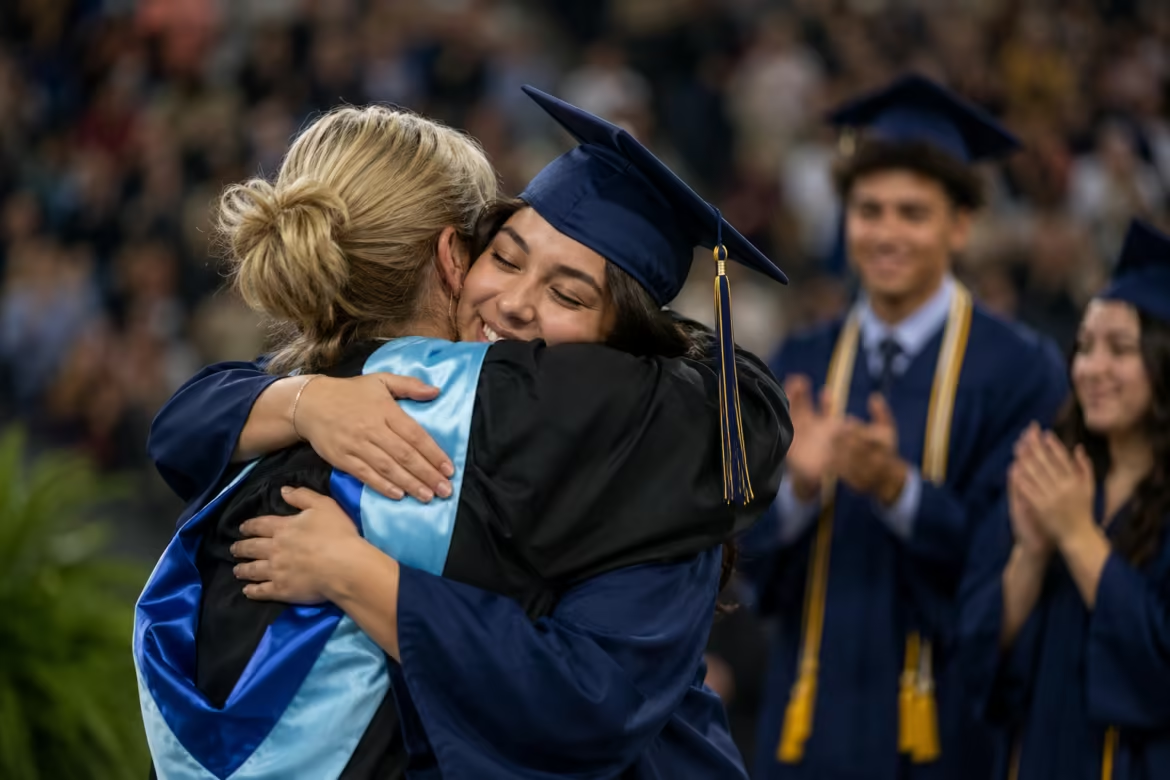
Graduate in a blue cap and gown hugs a smiling person at a graduation ceremony as classmates applaud in the background of a crowded arena.
Hot Topics - controversialGraduationK-12

Graduation Season Through the Eyes of Educators

by EdCircuit Staff June 4, 2026
written by EdCircuit Staff 9 minutes read

Graduation season is one of the most emotional and meaningful times in education, reminding educators why they chose a profession dedicated to changing lives.

Across the country, stadium lights shine, auditoriums fill with proud families, and thousands of students put on caps and gowns to celebrate a milestone years in the making. Cameras flash. Names are called. Diplomas are handed out. Applause echoes through gymnasiums and athletic fields.

For parents and families, graduation is often a celebration of accomplishment and possibility.

For students, it is the closing chapter of one journey and the beginning of another.

For educators, however, graduation season means something far deeper.

It is a season of reflection.

A season of pride.

A season of gratitude.

And often, a season of tears.

Because while the audience sees graduates crossing a stage, educators see the stories behind every diploma.

They see the obstacles that were overcome.

They see the moments when students almost gave up.

They see the victories that nobody else noticed.

And they see the incredible growth that transformed children into young adults ready to take on the world.

Every Diploma Tells a Story

To many people, graduation appears to be a single event.

Educators know it is the culmination of thousands of moments.

Every diploma handed out represents a unique journey.

Some students arrive at graduation after years of academic success and achievement.

Others arrive after overcoming challenges that once made graduation seem impossible.

One graduate may have spent months in hospitals while continuing coursework between treatments.

Another may have arrived in the United States speaking little English and worked tirelessly to master a new language while adjusting to a new culture.

One student may have balanced academics while caring for younger siblings each night.

Another may have spent years battling anxiety, depression, or personal hardships while quietly showing up to class every day.

Some students faced homelessness.

Others experienced family loss.

Some struggled academically before finding confidence through the encouragement of a teacher who refused to let them fail.

Many of these stories never make headlines.

Yet educators know them well.

Graduation season reminds teachers, counselors, administrators, and support staff that success is not measured solely by grades, awards, or college acceptance letters.

Sometimes success simply means refusing to quit.

Sometimes success means showing up one more day.

Sometimes success means believing in yourself after years of self-doubt.

And sometimes success looks exactly like a student walking across a stage despite every obstacle that stood in their way.

The Students Educators Never Forget

Ask any veteran educator about graduation season, and they will almost certainly begin talking about students.

Not curriculum.

Not assessments.

Not accountability reports.

Students.

The shy student who eventually became a student leader.

The struggling reader who discovered a love of learning.

The athlete who learned resilience after an injury.

The student who found confidence through music, theater, robotics, agriculture, art, or career-technical education.

Educators remember these students because they represent the heart of education.

Years later, teachers can often recall specific moments with remarkable clarity.

The student who finally understood a difficult concept.

The senior who returned to say thank you.

The graduate who accomplished something everyone said was impossible.

Those memories stay with educators long after the final bell rings.

Many teachers can point to former students who changed the trajectory of their own lives simply by reminding them why education matters.

Graduation season brings many of those memories rushing back.

The Power of One Adult Who Believes

Educational research consistently highlights the importance of caring relationships in schools.

Yet graduation season provides the most powerful evidence of all.

Many successful graduates can identify a specific adult who made a difference.

A teacher who saw potential.

A coach who demanded excellence.

A counselor who provided guidance.

A principal who offered encouragement.

A paraprofessional who provided daily support.

A bus driver who greeted them every morning.

A cafeteria employee who made them feel seen.

These relationships often become turning points in a student’s life.

Educators frequently underestimate their own influence.

A conversation lasting five minutes may become a memory a student carries for decades.

A word of encouragement offered during a difficult moment can completely change someone’s future.

Students rarely remember every lesson.

But they often remember how educators made them feel.

They remember who believed in them.

They remember who listened.

They remember who cared.

Graduation season serves as proof that those moments matter.

The Day Parents See What Educators Saw All Along

Graduation is often an emotional experience for families.

Parents watch their children walk across a stage and wonder where the years went.

They remember the first days of school.

Homework battles.

Sporting events.

Concerts.

Science fairs.

School dances.

Countless moments that led to this day.

What many parents may not fully realize is that educators have been witnessing a different version of that journey.

Teachers saw confidence emerge.

Counselors watched students overcome fear.

Coaches observed leadership develop.

Administrators witnessed personal growth.

School employees celebrated quiet victories that happened far from public view.

Graduation day often becomes the moment when families and educators share the same realization:

The student standing on the stage is not the same student who first walked through the school doors years earlier.

Together, families and educators helped make that transformation possible.

When Students Choose the Educator Who Changed Their Life

One of the most meaningful traditions growing in schools today allows graduating seniors to recognize an educator or school employee who had a profound impact on their life.

In some districts, selected educators accompany graduates during special ceremonies.

In others, students invite a teacher, coach, counselor, or mentor to present their diploma.

The results are often unforgettable.

A student chooses the elementary teacher who first sparked a love of learning.

A graduate selects the counselor who helped them navigate difficult personal circumstances.

A student-athlete honors a coach who became a trusted mentor.

Another chooses a school secretary who offered encouragement every day.

The beauty of these moments lies in what they reveal.

Students notice.

They notice kindness.

They notice consistency.

They notice support.

They notice belief.

Most importantly, they remember.

For educators, being selected by a graduate is often among the highest honors they will ever receive.

No evaluation score.

No award.

No plaque.

No recognition program can fully compare to hearing a student say:

“You made a difference in my life.”

The School Employees Who Never Ask for Recognition

Graduation season also shines a light on people who rarely receive public attention.

Schools are filled with individuals who quietly contribute to student success every single day.

The bus driver who learns every student’s name.

The cafeteria worker who notices when a child seems troubled.

The school nurse who provides comfort and care.

The secretary who helps anxious parents navigate challenges.

The custodian who creates a welcoming environment.

The paraprofessional who supports students through academic and personal obstacles.

The technology specialist who keeps learning running.

The assistant principal who spends hours helping students get back on track.

These professionals rarely seek recognition.

Yet their impact is often enormous.

Graduation day belongs to them, too.

Because every diploma represents the work of an entire school community.

Success Looks Different for Every Student

One of the most important lessons graduation season teaches is that success has many definitions.

For one student, success may mean admission to a prestigious university.

For another, success may mean earning an industry credential that leads directly to employment.

One graduate may join the military.

Another may begin an apprenticeship.

Another may attend community college.

Another may launch a business.

Another may simply be celebrating the achievement of earning a diploma despite overwhelming adversity.

Each pathway deserves respect.

Each accomplishment deserves celebration.

Each graduate deserves recognition.

Educators understand that the purpose of education is not creating identical outcomes.

It is helping every student discover and pursue their own potential.

Graduation showcases hundreds of unique success stories all at once.

That diversity is something worth celebrating.

The Graduates Who Changed Their Teachers

One truth rarely discussed is that students often change educators just as much as educators change students.

Every teacher has graduates they will never forget.

Students who taught resilience.

Students who demonstrated courage.

Students who revealed the power of perseverance.

Students who reminded educators why they entered the profession.

Sometimes a student overcomes extraordinary circumstances.

Sometimes a student shows remarkable kindness.

Sometimes a student grows in ways that inspire everyone around them.

These students become part of an educator’s story.

Years later, teachers may forget lesson plans, assignments, and meetings.

But they remember the students.

They remember the journeys.

And they remember the lives they were fortunate enough to witness.

Why Graduation Still Matters

In an era dominated by discussions about test scores, accountability, funding, artificial intelligence, curriculum debates, and policy challenges, graduation offers a powerful reminder of what education is truly about.

People.

Relationships.

Growth.

Opportunity.

Hope.

Graduation reminds educators that their work extends far beyond academics.

It reminds them that education changes lives.

It reminds them that every investment of time, patience, encouragement, and care matters.

The ceremony itself may last only a few hours.

The impact lasts a lifetime.

The Moment That Makes Everything Worth It

Somewhere this graduation season, a teacher will quietly wipe away a tear.

Not because of a test score.

Not because of a ranking.

Not because of an award.

But because a young person they once met as a nervous freshman, an uncertain middle school student, or a struggling learner is walking confidently across a stage prepared for the future.

The audience will see a graduate.

The educator will see a journey.

They will see the late nights.

The difficult conversations.

The setbacks.

The growth.

The courage.

The resilience.

And for one brief moment, every lesson, every phone call, every email, every word of encouragement, every act of patience, and every expression of belief will feel worth it.

Because the greatest achievement in education is not the diploma itself.

It is helping a young person discover that they are capable of far more than they ever imagined.

That is what graduation season means to educators.

And that is why, year after year, it remains one of the most meaningful moments in education.

Subscribe to edCircuit to stay up to date on all of our shows, podcasts, news, and thought leadership articles.
June 4, 2026 0 comments
0 FacebookTwitterPinterestLinkedinWhatsappCopy LinkEmail
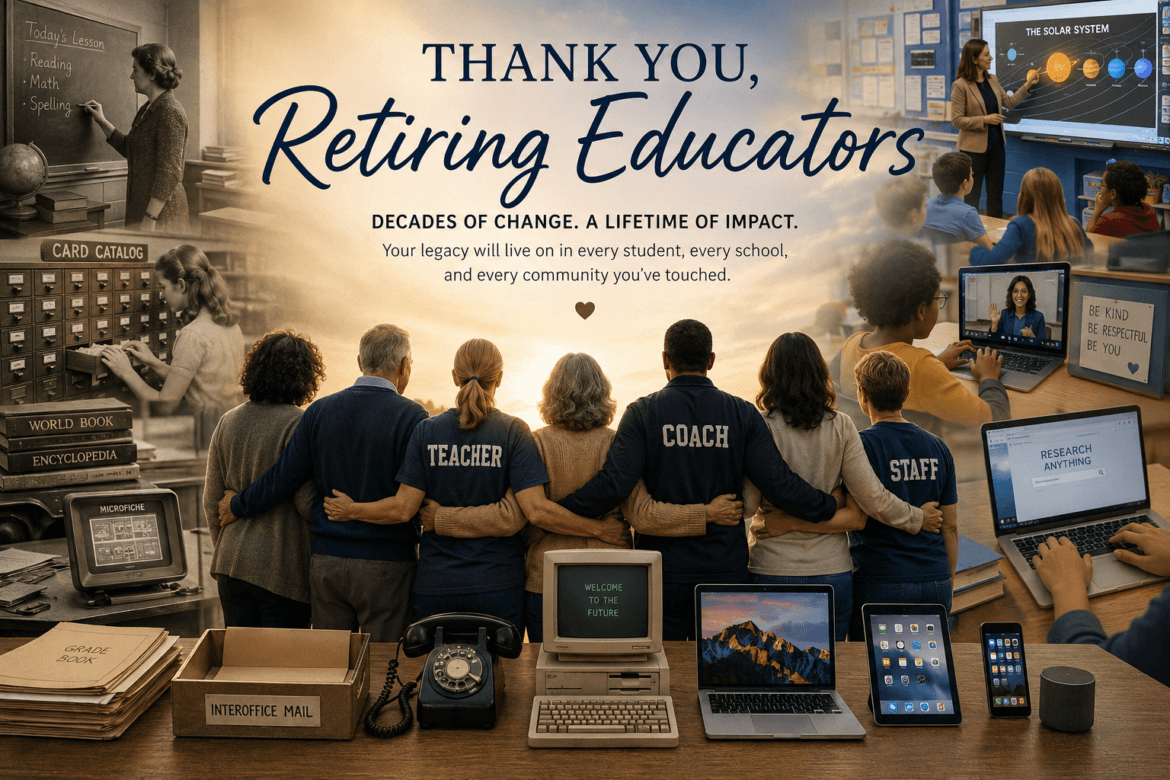
A group of educators stand arm-in-arm facing a collage of classroom scenes, technology, and educational materials, with text expressing gratitude to Retiring Educators for their lifelong impact.
EducatorsHot Topics - controversialK-12

Retiring Educators Leave a Lasting Legacy

by EdCircuit Staff June 3, 2026
written by EdCircuit Staff 7 minutes read

Retiring educators are leaving behind far more than lesson plans, classroom keys, or staff badges. They are closing the chapter on careers that helped shape generations of students while navigating one of the most transformative eras in educational history.

For many educators and school employees retiring this year, their careers began in a completely different world. Attendance was taken by hand. Grades were recorded in paper gradebooks. Overhead projectors represented cutting-edge classroom technology. Interoffice mail trays carried memos across school buildings, and school libraries relied on card catalogs, encyclopedias, microfiche machines, and the Dewey Decimal System to help students conduct research.

Today’s schools look almost unrecognizable by comparison.

Those same educators witnessed the arrival of desktop computers, internet access, email communication, smartboards, laptops, online testing platforms, one-to-one student devices, video conferencing, digital citizenship programs, cybersecurity training, learning management systems, artificial intelligence, and mobile learning.

And through every stage of that transformation, they continued doing the most important work in education: helping students feel safe, supported, challenged, and capable of success.

From Chalkboards to Smartboards

Education is one of the few professions where individuals dedicate decades of their lives not only to mastering their craft but also to constantly reinventing it. Retiring educators did not simply work through change—they adapted to it, learned from it, and often helped lead it.

Many began their careers writing lessons on chalkboards and pulling down classroom maps by hand. Chalk later became dry-erase markers. Film strips became VHS tapes. VHS tapes turned into DVDs. DVDs disappeared into streaming platforms, YouTube clips, and digital learning libraries.

Research papers once required long afternoons inside libraries flipping through encyclopedias and carefully scrolling through microfiche archives. Students today can search the internet in seconds or ask digital assistants like Siri and Alexa for answers instantly.

School librarians experienced one of the greatest transformations of all. Many spent years teaching students how to use card catalogs, alphabetical filing systems, and physical research indexes before transitioning into online databases, digital literacy instruction, internet safety education, and modern search platforms. The role never stopped being important—it simply evolved alongside technology.

Coaches experienced dramatic changes as well. Game film once involved wheeling televisions into classrooms and rewinding VHS tapes repeatedly to scout opponents. Today, coaches analyze digital film instantly, exchange breakdowns online, and use advanced software platforms to evaluate tendencies, statistics, and player development. But the mission remained the same: mentoring young people through teamwork, accountability, resilience, and leadership.

They did not just witness educational transformation.
They helped lead it.

The People Behind the School Day

School secretaries and administrative assistants experienced their own technological revolution inside school offices. Many began their careers handwriting attendance records, maintaining paper student files, scheduling appointments in large desk calendars, sorting stacks of paperwork, and answering constantly ringing landline phones.

Over time, those systems evolved into digital attendance tracking, online scheduling platforms, student information systems, mass notification software, email communication, and real-time parent messaging applications. Yet despite the changing technology, school office staff continued serving as the welcoming face and steady heartbeat of the school building.

School nurses transitioned from paper medication logs and filing cabinets to digital health systems, online medical records, and real-time communication with families and healthcare providers. Cafeteria teams evolved from handwritten lunch counts and cash trays to digital student meal accounts and automated systems.

Bus drivers safely transported generations of students through rain, snow, traffic, and early mornings while learning new routing systems, communication tools, and safety procedures. Custodians adapted to evolving safety expectations, facility technology, and sanitation protocols long before most people realized how important those responsibilities truly were.

Technology departments transformed from maintaining a few desktop computers into managing entire digital ecosystems that support modern learning environments.

Together, these individuals created the foundation that allowed schools to function every single day.

Adapting Through Every Era of Change

Parent communication changed dramatically throughout the careers of retiring educators. Newsletters once folded neatly into backpacks became emails, text alerts, district apps, social media updates, and instant notifications delivered directly to phones within seconds.

Snow day announcements that families once waited to hear on television or radio stations are now posted instantly online. Permission slips became digital forms. Report cards became parent portals. Staff meetings evolved into virtual video conferences.

Technology changed rapidly, but expectations changed even faster.

Retiring educators also experienced enormous societal shifts outside the classroom walls. Expectations surrounding school safety, mental health support, digital citizenship, cybersecurity awareness, student wellness, and social-emotional learning evolved dramatically throughout their careers.

Many educators entering retirement today taught through national tragedies, economic downturns, changing state standards, staffing shortages, evolving testing requirements, and the unprecedented disruption of the COVID-19 pandemic.

That pandemic alone reshaped education forever.

Teachers learned virtual instruction almost overnight. Principals became crisis managers. Technology departments became educational lifelines. School staff distributed meals, solved connectivity issues, supported families remotely, and worked tirelessly to keep students connected to learning during one of the most uncertain periods in modern history.

And through every challenge, educators continued showing up for students.

Technology changed.
Students changed.
Society changed.
But their commitment never did.

More Than a Job

There is something emotional about retirement in education.

The final dismissal bell.

The empty classroom.

The bulletin boards coming down.

The final concert, graduation, science fair, football game, musical performance, or staff meeting.

The final bus duty assignment.

For many educators, schools became a second home. Colleagues became extended family. Students became lifelong memories. Retirement brings excitement and opportunity, but it also carries reflection and emotion because education is never simply “a job.”

It becomes part of a person’s identity.

Ask almost any retired teacher and they can still remember former students decades later. They remember classroom breakthroughs, funny stories, difficult moments, and students who simply needed someone to believe in them.

That lasting impact is what makes education special.

Very few professions allow individuals to directly shape the lives of thousands of young people over the course of a career. Retiring educators helped students learn to read, solve equations, perform music, understand science, write essays, compete in athletics, discover creativity, and build confidence in themselves.

Some inspired future teachers.

Some inspired doctors, engineers, artists, military personnel, entrepreneurs, scientists, and community leaders.

Some simply gave students consistency and kindness during difficult moments in life.

That impact cannot fully be measured through data, test scores, or graduation rates.

It lives inside the lives students eventually build for themselves.

The Generation That Helped Schools Evolve

Future classrooms may include AI-supported learning, augmented reality instruction, advanced robotics, and technologies that do not yet exist. But students will still need trusted adults who encourage them, challenge them, guide them, and believe in their potential.

That human connection is the true legacy retiring educators leave behind.

Their generation helped schools transition from analog to digital.

From chalkboards to smartboards.

From encyclopedias to search engines.

From microfiche to cloud storage.

From handwritten attendance sheets to real-time student information systems.

From landline phones to mobile communication.

From projector transparencies to interactive learning displays.

Yet through every innovation and every challenge, educators continued showing up every morning for students.

That consistency matters.

In a world that constantly changes, schools often remain one of the few stable places in a child’s life. Retiring educators helped preserve that stability for decades.

A Legacy That Will Continue

Their fingerprints are everywhere.

Inside school traditions.

Inside classroom culture.

Inside athletic programs.

Inside music departments.

Inside science labs.

Inside libraries.

Inside school offices.

Inside students who grew into confident adults because someone in a school believed in them.

Retirement may mark the end of a career, but it does not erase the legacy those educators leave behind.

In many ways, their work continues every single day through the students, schools, and communities they helped shape.

To every retiring teacher, principal, counselor, librarian, paraprofessional, bus driver, custodian, secretary, technology specialist, cafeteria worker, coach, and school employee: thank you.

Thank you for adapting.

Thank you for persevering.

Thank you for staying ahead of the curve.

Thank you for helping schools evolve while never losing sight of what mattered most.

And most importantly, thank you for dedicating your life to students.

Subscribe to edCircuit to stay up to date on all of our shows, podcasts, news, and thought leadership articles.

June 3, 2026 0 comments
0 FacebookTwitterPinterestLinkedinWhatsappCopy LinkEmail
Collage of students in blue coveralls engaged in Career and Technical Education STEM activities, including engineering, programming, welding, electronics, and medical training in a modern lab environment.
K-12Hot Topics - controversialCareer and Technical Education (CTE)

Career and Technical Education Jobs Rising Fast

by EdCircuit Staff June 2, 2026
written by EdCircuit Staff 8 minutes read

Career and Technical Education jobs are transforming how schools prepare students for successful, debt-free careers after graduation. Across the country, educators are witnessing a major shift in how students and families view life after high school. For decades, the traditional message was simple: attend a four-year university, earn a degree, and begin a career. But rising tuition costs, growing student loan debt, and increasing demand for skilled workers are changing that conversation in powerful ways.

Today, many students are discovering that success can begin immediately after high school through skilled trades, technical certifications, apprenticeships, and workforce partnerships that lead directly to stable, meaningful careers. More importantly, schools are helping students understand that choosing a technical pathway is not settling for less. In many cases, it is opening the door to opportunity, financial independence, entrepreneurship, and long-term success.

This movement is about more than workforce development. It is about changing lives.

Across America, high schools are redesigning learning spaces, modernizing Career and Technical Education (CTE) programs, and building stronger partnerships with community colleges, trade organizations, healthcare systems, unions, and local businesses. Welding labs now resemble advanced manufacturing facilities. Healthcare classrooms feature patient simulation mannequins and emergency response equipment. Cybersecurity labs mimic real-world network environments. Students are no longer simply learning about careers. They are experiencing them firsthand.

For many students, these programs provide something traditional classrooms sometimes struggle to offer: a direct connection between education and purpose.

A New Definition of Success

The conversation around postsecondary success is evolving rapidly. Families who once believed a four-year university was the only respectable path are increasingly recognizing the value of skilled trades and technical careers. Parents are seeing graduates enter the workforce with strong salaries, retirement benefits, job security, and little to no college debt.

At the same time, industries across the country are facing workforce shortages in construction, manufacturing, healthcare, information technology, and infrastructure. Schools are responding by creating pathways that prepare students to fill those critical roles while giving them a head start financially and professionally.

Counselors and educators are also helping students understand a critical truth: success looks different for every learner.

Some students thrive in lecture halls and academic research environments. Others thrive when working with their hands, solving technical problems, building systems, repairing equipment, or learning through real-world application. Career and Technical Education allows schools to honor those different strengths while helping students build confidence in their future.

The result is a generation of students beginning to realize they have options.

1. Electricians and Electrical Technology

Electrical technology has quickly become one of the most sought-after CTE pathways in the country. As communities expand infrastructure, modernize buildings, and adopt renewable energy systems, electricians are becoming increasingly valuable.

Today’s high school electrical programs are far more advanced than many people realize. Students often work in fully equipped training labs where they learn circuitry, wiring, blueprint reading, motor controls, safety procedures, and electrical diagnostics. Some graduate with OSHA certifications or apprenticeship hours already completed.

What makes this pathway especially attractive is the combination of strong earning potential and limited educational debt. Many apprenticeships allow students to earn income while continuing their training, helping them build careers without the financial burden many college graduates face.

One student in a Midwest CTE program recently completed his electrical certification pathway before graduation and immediately entered a paid apprenticeship with a local contractor. By age 20, he had already purchased his first truck, avoided student loans entirely, and was mentoring younger students interested in the trade.

Stories like these are becoming more common across the country.

High schools are increasingly partnering with unions, construction firms, and workforce development agencies to ensure students transition smoothly from the classroom into real employment opportunities. These partnerships are helping students see that technical careers can offer stability, pride, and long-term growth.

2. HVAC and Climate Control Technology

Heating, ventilation, air conditioning, and refrigeration careers are also experiencing enormous demand. Every school, hospital, office building, home, and commercial facility depends on climate control systems operating safely and efficiently.

Modern HVAC careers combine technical skill with advanced technology. Students learn how to troubleshoot digital systems, improve energy efficiency, analyze airflow systems, and maintain complex environmental controls. In many programs, students work directly on training units identical to the equipment used in the field.

For students who enjoy problem-solving and hands-on learning, HVAC programs can become life-changing opportunities.

Many school districts now partner directly with local HVAC companies to provide internships, job-shadowing experiences, and mentorship opportunities. These community relationships help students build professional connections before they even graduate.

What also makes HVAC appealing is job security. Climate systems require ongoing installation, maintenance, upgrades, and emergency repairs year-round. Skilled technicians remain in demand regardless of economic conditions.

For educators, HVAC programs also represent something larger: proof that skilled trades now require advanced technical thinking, digital literacy, communication skills, and professionalism.

These are highly skilled careers shaping the future of infrastructure and sustainability.

3. Healthcare Support Careers

Healthcare continues to be one of the fastest-growing employment sectors in America, and high schools are helping students enter the field earlier than ever before.

CTE healthcare programs now offer pathways in nursing assistance, sports medicine, emergency medical response, medical assisting, phlebotomy, and patient care. Many students graduate with certifications that allow them to begin working immediately while continuing their education if they choose.

Inside these classrooms, students often practice patient care techniques using healthcare simulation equipment designed to replicate real medical environments. Some programs partner directly with hospitals and healthcare providers, allowing students to complete clinical experiences before graduation.

These experiences are transformative.

Students not only learn technical healthcare skills, but they also develop empathy, communication, teamwork, and responsibility. Many discover a sense of purpose that shapes their future career decisions.

In one district, a student enrolled in a healthcare pathway after helping care for a grandparent during an illness. Through clinical experiences and mentorship opportunities, she discovered a passion for nursing and became the first member of her family to pursue a healthcare career.

Career and Technical Education programs often do more than prepare students for jobs. They help students discover who they are.

4. Welding and Advanced Manufacturing

Manufacturing has evolved dramatically over the past two decades. Today’s advanced manufacturing environments rely heavily on robotics, automation, engineering technology, computer-assisted design, and precision systems.

High school welding and manufacturing programs are evolving alongside those changes.

Students now learn fabrication, robotic welding, CNC machining, blueprint interpretation, and advanced safety procedures using industry-grade equipment. Many schools have transformed outdated shop classrooms into modern innovation labs filled with digital fabrication systems and advanced manufacturing tools.

Community partnerships are driving much of this transformation. Local manufacturers increasingly recognize that workforce development must begin before graduation. As a result, many companies are donating equipment, funding training programs, sponsoring student competitions, and offering paid internships to students.

This connection between schools and industry creates enormous opportunity.

Students who once felt disconnected from traditional academic environments are discovering confidence through technical mastery and hands-on achievement. Educators are watching students who struggled in conventional classrooms become leaders in welding labs, engineering teams, and robotics competitions.

These programs are helping students understand that skilled trades require intelligence, precision, creativity, and discipline.

5. Cybersecurity and Information Technology

One of the fastest-growing CTE pathways today is cybersecurity and information technology. As schools, businesses, healthcare systems, and government agencies face growing digital threats, the demand for skilled IT professionals continues to rise.

High schools are responding by building cybersecurity labs, networking academies, coding programs, and IT certification pathways that prepare students for immediate employment opportunities after graduation.

Students may graduate with certifications in networking, cybersecurity fundamentals, cloud systems, or hardware support while gaining real-world troubleshooting experience in simulated technology environments.

This pathway also reflects how modern Career and Technical Education has evolved far beyond outdated stereotypes.

Today’s CTE programs include highly sophisticated technology fields that blend analytical thinking, problem-solving, communication, and innovation. Students interested in technology can now begin building professional careers directly from high school while continuing to grow their skills over time.

Partnerships with local technology companies, colleges, and workforce organizations are helping students understand that cybersecurity is not just a future career pathway. It is one of the most critical industries shaping the future of society.

How Schools Are Changing Lives

The most inspiring part of the Career and Technical Education movement may be the renewed sense of purpose many students are discovering.

Educators frequently talk about the moment a student realizes they are good at something meaningful. Sometimes that moment happens in a welding lab. Sometimes it happens during a healthcare clinical rotation. Sometimes it happens while troubleshooting a network issue or wiring a circuit board.

Those moments matter.

Students who may have once doubted themselves begin to see a future filled with possibility. Families begin viewing technical careers with pride and excitement. Communities benefit from stronger local workforce pipelines. Employers gain access to motivated young professionals ready to contribute.

Schools are no longer simply preparing students for tests. Increasingly, they are preparing students for life.

Career and Technical Education programs are helping students understand that there are many pathways to success, and every pathway deserves respect.

That message may be one of the most important lessons education can offer today.

At a time when many families are questioning the cost of higher education, and students are searching for purpose, CTE programs are providing something incredibly powerful: hope, direction, and opportunity.

And for countless students across America, that opportunity is changing lives forever.

Subscribe to edCircuit to stay up to date on all of our shows, podcasts, news, and thought leadership articles.
June 2, 2026 0 comments
0 FacebookTwitterPinterestLinkedinWhatsappCopy LinkEmail
AI in elementary schools, too much too soon: a giant wave of AI screens and light curls over a tiny kindergarten desk with crayons and a block tower
Hot Topics - controversialArtificial IntelligenceK-12

AI in Elementary Schools: Too Much, Too Soon?

by EdCircuit Staff June 1, 2026
written by EdCircuit Staff 6 minutes read

AI in elementary schools is being adopted before it’s fully understood—and for the youngest learners, that may carry the greatest risk.

Across K–5 classrooms, artificial intelligence is no longer theoretical. It is embedded in writing tools, reading platforms, math programs, and classroom workflows. Districts are piloting it. Vendors are accelerating it. Teachers are navigating it—often without clear guidance.

And while AI conversations at the secondary level focus on cheating and academic integrity, elementary education presents a far more foundational challenge.

This is not about misuse.
This is about development.

Because when AI enters elementary classrooms, it doesn’t just change how students complete tasks.

It changes how they learn to think.

The Rush to Adopt: Innovation or Acceleration Without Direction?

AI adoption is moving quickly—and in many districts, the pace is being driven by urgency rather than strategy.

Leaders are asking:

  • Are we preparing students for an AI-driven future?
  • Are we falling behind other districts?
  • Are we missing an opportunity to innovate?

These are valid questions. But they are also creating a quiet pressure to act before systems are ready.

In many cases, AI is being introduced:

  • Without clear grade-level expectations
  • Without consistent instructional models
  • Without a full understanding of long-term impact

This is not new territory for education technology. But AI is different.

Unlike previous tools, AI doesn’t just deliver content.

It generates it.
It interprets it.
It can even think through it—on behalf of the student.

And that changes everything.

The Developmental Question We Can’t Ignore

Elementary education is not just about content—it’s about building the cognitive foundation for all future learning.

Students are developing:

  • Sentence structure
  • Reading comprehension
  • Logical reasoning
  • Problem-solving persistence

These skills require time, repetition, and—most importantly—struggle.

AI introduces a fundamental tension into this process.

If a student uses AI to:

  • Generate a sentence
  • Organize an idea
  • Solve a problem

What happens to the learning that would have occurred without it?

This is the question many districts have not fully answered.

Because the concern is not that AI might fail students.

It’s that it may succeed in ways that quietly replace the very skills students are supposed to develop.

In some elementary classrooms, students are already using AI tools to generate writing responses before they’ve fully mastered sentence construction on their own.

That’s not a misuse of the tool.

It’s a signal.

When Support Becomes Substitution

AI is often positioned as a support system—and in many cases, it is.

It can:

  • Provide immediate feedback
  • Suggest improvements
  • Personalize learning experiences

But for younger students, the line between support and substitution is thin—and easy to cross.

When AI begins to:

  • Complete sentences
  • Offer full responses
  • Guide thinking step-by-step

Students may begin to rely on it not as a tool—but as a replacement for effort.

And that shift matters.

Because productive struggle is not a barrier to learning.

It is the process of learning.

If AI removes that struggle too early, it may also remove the opportunity for students to develop:

  • Independence
  • Resilience
  • Deep understanding

In elementary classrooms, AI doesn’t just answer questions.

It shapes how students learn to ask them.

The Classroom Reality: Teachers Navigating Without a Map

Teachers are navigating this shift in real time.

They are being asked to:

  • Integrate AI tools
  • Innovate instruction
  • Prepare students for a changing future

All while maintaining focus, engagement, and foundational skill development.

What they don’t always have is clarity.

In some classrooms, AI is being embraced as a support tool. In others, it is being limited to preserve core skill development. Most fall somewhere in between.

This inconsistency is not a failure.

It is a reflection of a system still trying to define itself.

In many cases, teachers are quietly adjusting their use of AI—not out of resistance, but out of observation.

They are seeing:

  • Students are relying too quickly on suggestions
  • Reduced patience for independent work
  • A shift away from sustained thinking

And they are responding accordingly.

This is not a rejection of innovation.

It is professional judgment in action.

The Policy Gap in K–5 Education

While AI policies are rapidly emerging across states and districts, most are focused on:

  • Data privacy
  • Cybersecurity
  • Academic integrity at the secondary level

Very few directly address:

  • AI use in elementary classrooms
  • Developmentally appropriate expectations
  • Instructional boundaries for young learners

This creates a critical gap.

Because elementary education is not simply a smaller version of secondary education.

It is a distinct stage—one where how students learn matters just as much as what they learn.

Without clear guidance, districts risk:

  • Overuse without intention
  • Inconsistent implementation
  • Missed opportunities to shape AI use in meaningful ways

And perhaps most importantly:

They risk allowing AI to define learning—rather than designing learning around students.

What Districts Should Be Asking Right Now

This moment calls for intentional leadership.

Not avoidance. Not acceleration.

Alignment.

Districts must begin asking:

  • What role should AI play at each grade level?
  • What skills must students develop independently before using AI support?
  • Where does AI enhance learning—and where does it replace it?
  • How do we ensure teachers are leading the use of AI, not reacting to it?

These are not easy questions.

But they are necessary.

Because without clear answers, AI becomes something that happens to classrooms—rather than something designed for them.

The Risk of Getting This Wrong

If AI is introduced too aggressively in elementary education, the consequences may not be immediate.

In fact, early results may look positive:

  • Faster task completion
  • Improved outputs
  • Higher engagement

But over time, deeper gaps may begin to emerge.

Students may:

  • Struggle with independent writing
  • Rely on prompts instead of thinking
  • Avoid complex problem-solving

And by the time those gaps are visible, they may be difficult to reverse.

Because foundational learning is not easily rebuilt.

The Opportunity to Get It Right

This is not a call to slow innovation.

It is a call to lead it.

When introduced thoughtfully, AI can:

  • Support differentiated instruction
  • Provide meaningful feedback
  • Enhance—not replace—student thinking

The goal is not to remove AI from elementary classrooms.

It is to ensure that students remain the ones doing the learning.

That means:

  • Using AI to extend thinking—not shortcut it
  • Preserving space for struggle and discovery
  • Aligning technology use with developmental readiness

A Defining Moment for Elementary Education

AI is not just another tool entering the classroom.

It is reshaping how learning can occur.

For elementary education, that shift carries both promise and risk.

The question is not whether AI belongs in K–5 classrooms.

The question is whether we are introducing it at the right time, in the right way, for the right reasons.

Because in elementary education, we are not just introducing tools.

We are shaping how students learn for the rest of their lives.

And once that foundation begins to shift, it is not easily rebuilt.

That is why this moment matters more than most.

Subscribe to edCircuit to stay up to date on all of our shows, podcasts, news, and thought leadership articles.
June 1, 2026 0 comments
0 FacebookTwitterPinterestLinkedinWhatsappCopy LinkEmail
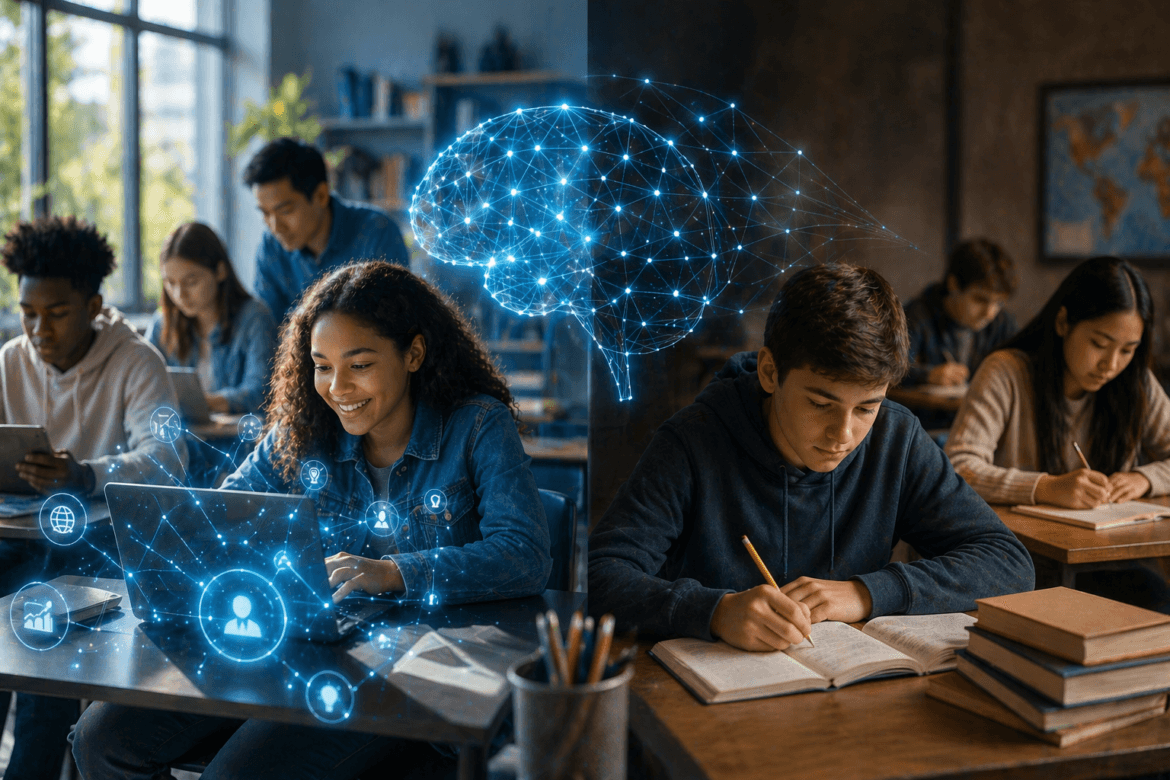
Two groups of students study in a classroom; one explores AI Literacy in Education with laptops displaying digital network graphics, while the other writes in notebooks with books on their desks.
K-12Hot Topics - controversialArtificial Intelligence

AI Literacy in Education Defines the New Divide

by EdCircuit Staff May 29, 2026
written by EdCircuit Staff 5 minutes read

AI literacy in education is quickly becoming the most important skill schools are not yet consistently teaching.

Two students sit in the same classroom with the same assignment.

One uses AI to research, refine, and elevate their work.
The other submits what they know—limited by time, resources, and support.

Both had access to the same tools.
Only one knew how to use them.

For years, the digital divide was defined by access—who had devices, who had internet, and who did not. Districts invested heavily to close that gap, ensuring students could connect, participate, and engage.

But a new divide is emerging.

Students today are not separated by whether they have access to technology.
They are separated by whether they know how to use artificial intelligence effectively, responsibly, and strategically.

And that gap is growing fast.

Access Was the First Battle—Literacy Is the Next

The past decade in education has focused on getting devices into students’ hands. One-to-one initiatives, expanded broadband, and digital platforms became central to classroom learning.

That work mattered—and it still does.

But access alone no longer guarantees opportunity.

A student with a laptop who does not understand how to:

  • Prompt AI tools effectively
  • Evaluate the accuracy of responses
  • Recognize bias or misinformation
  • Use AI to deepen thinking rather than replace it

is at a significant disadvantage compared to a peer who does.

This is the shift:

From access to information… to access to intelligence—and the ability to use it.

The Students Who Are Already Ahead

In classrooms across the country, some students are quietly gaining an edge.

They are:

  • Using AI to refine essays rather than generate them
  • Asking better questions and iterating on responses
  • Leveraging AI to study, organize, and plan
  • Exploring concepts beyond what is taught in class

These students are not just using AI—they are learning how to think with it.

Meanwhile, other students:

  • Avoid AI because they are unsure how to use it
  • Use it improperly and face consequences
  • Are restricted from using it altogether
  • Or simply don’t realize what is possible

The result is not just a performance gap.
It is a gap in capability.

In many districts, the students gaining the biggest advantage from AI are not the highest-performing—they are the ones who figured it out first.

The Classroom Reality: Uneven and Unstructured

In many schools, AI use is already happening—but without structure.

Some teachers are integrating AI thoughtfully, guiding students on how to use it responsibly and effectively. Others are still trying to understand it themselves. Some are banning it entirely.

This creates an inconsistent learning environment where:

  • One student learns how to use AI as a tool for thinking
  • Another learns to avoid it
  • And another learns through trial and error—with no guidance

The inconsistency is not just confusing—it’s inequitable.

Because the students who figure it out on their own will move ahead, while others fall behind without even realizing why.

The Risk: Outsourcing Thinking Instead of Enhancing It

One of the biggest concerns around AI in education is that it allows students to bypass learning.

That concern is valid—but incomplete.

The real issue is not that students are using AI.
It’s that they are using it without being taught how to use it well.

Without AI literacy:

  • Students may accept incorrect information as fact
  • Rely on AI to do thinking for them
  • Lose opportunities to develop critical skills

With AI literacy:

  • Students learn to question outputs
  • Refine their thinking through iteration
  • Use AI as a partner, not a shortcut

The difference is not the tool.
It’s the instruction around it.

The Leadership Gap: Why AI Literacy Isn’t Scaling Yet

Despite its importance, AI literacy is not yet a consistent part of K–12 education.

Why?

Because districts are still:

  • Developing policies
  • Navigating privacy concerns
  • Determining appropriate use cases
  • Figuring out how to train educators

In many districts, AI use is already happening—but without policy, without training, and without consistency.

That is where inequity takes hold.

The longer districts wait to define and teach AI literacy,
the more they allow inequity to organize itself—quietly, and at scale.

What AI Literacy in Education Should Actually Include

If schools are serious about equity, AI literacy must be intentional, structured, and system-wide.

1. Prompting as a Skill

Students should learn how to ask better questions, refine prompts, and guide AI toward useful responses.

2. Critical Evaluation

AI outputs should be analyzed, questioned, and validated—not accepted at face value.

3. Ethical Use

Students need clear guidance on:

  • When AI use is appropriate
  • How to cite or acknowledge AI assistance
  • Where the line exists between support and misuse

4. Bias Awareness

Students should understand that AI is not neutral—and learn how bias can appear in responses.

5. Integration into Instruction

AI literacy should not be a standalone lesson. It should be embedded into:

  • Writing
  • Research
  • Problem-solving
  • Project-based learning

The Urgency: This Gap Is Already Forming

The most important thing for leaders to understand is this:

The AI literacy gap is not coming—it is already here.

Students are already experimenting, learning, and adapting. Some are gaining fluency quickly. Others are not.

And unlike previous technology shifts, this one is moving faster.

There is no slow adoption curve.
There is no extended adjustment period.

There is only a widening gap between:

  • Students who know how to use AI
  • And students who do not

The Path Forward: Teach It, Don’t Avoid It

Avoiding AI does not prevent inequity.
It accelerates it.

Schools that delay or restrict AI without providing guidance risk leaving students unprepared for a world where AI is embedded in nearly every field.

Instead, the path forward is clear:

  • Teach students how to use AI
  • Provide consistent expectations
  • Support educators with training
  • Align practices across classrooms

AI literacy must become part of what it means to be an educated student.

Final Thought

AI will not replace students.

But it will amplify the gap between those who know how to think with it…
and those who were never taught how.

Subscribe to edCircuit to stay up to date on all of our shows, podcasts, news, and thought leadership articles.
May 29, 2026 0 comments
0 FacebookTwitterPinterestLinkedinWhatsappCopy LinkEmail
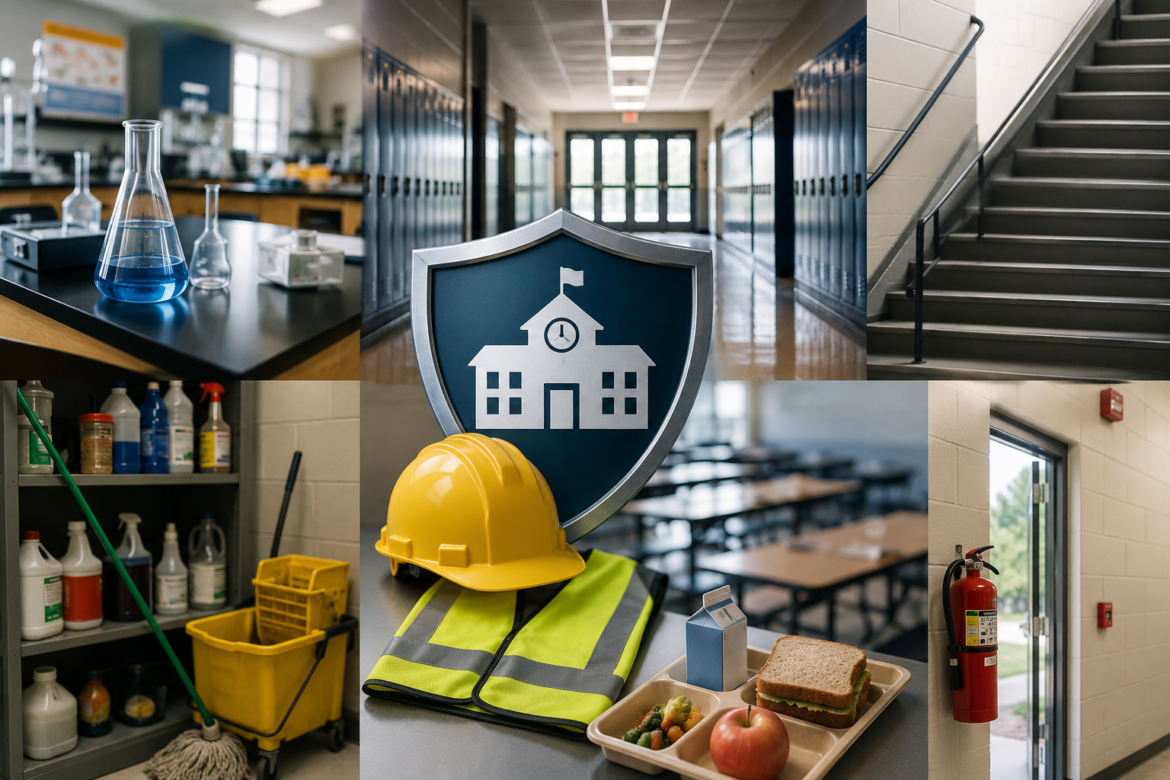
Collage of a school hallway, stairwell, science lab, cleaning supplies, cafeteria, safety gear and a fire extinguisher
Hot Topics - controversialSchool SafetyScience and Lab SafetyK-12Duty of Care and School Liability

OSHA Compliance in Schools: Hidden Safety Risks

by EdCircuit Staff May 28, 2026
written by EdCircuit Staff 5 minutes read

School safety usually brings to mind locked doors and emergency drills. A great deal of it is quieter: a blocked exit near a stairwell, unlabeled chemicals in a custodial closet, an extension cord across a classroom floor, an eyewash station in a science prep room that nobody has tested in months. These are the hazards the federal Occupational Safety and Health Administration exists to prevent in workplaces, and a school is a workplace for teachers, custodians, food service workers and maintenance staff, as well as a place of learning for students.

Whether OSHA’s rules legally apply to a particular school depends on the state and on whether the school is public or private. The safety principles behind them apply everywhere. This article explains OSHA requirements for schools, where the most common hazards are found, and what school leaders can do before an injury forces the issue.

Does OSHA apply to schools?

It depends on the school. Federal OSHA covers private employers, including private and religious schools, under its rules for nonprofit and educational employers. Federal OSHA does not cover state and local government employees, which includes public school staff, according to OSHA’s own guidance. Those workers are protected only where a state runs its own OSHA-approved plan. There are 22 State Plans that cover both private employers and state and local government workers, and seven more that cover only government workers. In those states, public school employees have OSHA-style protection through the state plan; in the remaining states, public school employees fall outside OSHA’s reach, a gap the Congressional Research Service has described.

Even where OSHA does not apply, its standards describe the practices safety professionals expect in any workplace, and they are a sensible benchmark for any school. A school’s duty of care, its legal and ethical obligation to protect students and staff from foreseeable harm, does not depend on which agency has jurisdiction.

Why it matters: injuries among school workers

School work is more hazardous than many people assume. Local government elementary and secondary schools recorded 4.0 nonfatal injuries and illnesses for every 100 full-time workers in 2024, compared with 2.4 in private schools, according to the Bureau of Labor Statistics. In 2021, local government schools reported 176,200 work-related injuries and illnesses, a 40.9 percent increase from 2020, the BLS reported.

Science labs and chemical safety

Science labs and prep rooms are among the highest-risk spaces in any school. They hold corrosives, flammables, compressed gases, biological materials, heat sources and electrical equipment, often in rooms with aging ventilation and safety equipment. OSHA’s Laboratory Standard requires covered employers whose staff use hazardous chemicals in laboratories to write and carry out a Chemical Hygiene Plan and to designate a Chemical Hygiene Officer, an employee qualified by training or experience to guide its implementation.

In practice, many schools have never formally named one. When no one is assigned, responsibility does not disappear; it falls on principals, facilities directors and superintendents, who may not know the chemical inventory or the condition of the eyewash stations. Science Safety offers Chemical Hygiene Officer certification training for school staff, and every chemical in a school should have an accessible Safety Data Sheet.

Custodial closets and maintenance areas

Custodial closets are one of the most overlooked hazard areas in schools. Inspectors commonly find incompatible products stored side by side, unlabeled spray bottles, leaking containers, missing Safety Data Sheets, poor ventilation and storage that unauthorized people can reach. Bleach stored near ammonia-based cleaners is a classic example of a mistake that can produce toxic gas. Custodial and maintenance staff handle chemicals every day, often after hours with little supervision, so hazard communication training, personal protective equipment and a written chemical management procedure are basic protections, not extras.

Hallways, stairwells and emergency exits

Clutter is easy to stop noticing. Boxes stored in corridors, furniture in stairwells, overflow supplies in exit paths and cords across walking surfaces may seem harmless on an ordinary day, but in a fire, a smoke condition, severe weather or a panic, they slow evacuation and cause falls. Exit routes exist for fast escape, and anything that blocks them is a safety failure. Because conditions change during the day, the most effective schools build quick, frequent egress checks into the routines of custodial and administrative staff rather than relying on an annual inspection. The Safer Ed podcast episode When Storage Becomes Risk looks at how storage turns into a hazard in STEM spaces.

Safer EdWhen Storage Becomes Risk: The Hidden Safety System in STEM SpacesMarch 16, 2026 · 8 min 37 sPlay episode: When Storage Becomes Risk: The Hidden Safety System in STEM Spaces (8 minutes 37 seconds)0:00-8:37Follow on SpotifyApple

Kitchens, classrooms and other workspaces

School kitchens operate much like commercial food service, with burns, slips on wet or greasy floors, cuts, lifting injuries and chemical cleaners as common risks, often made worse by short staffing. Classrooms carry hazards too: overloaded power strips, space heaters near paper, heavy items stored overhead, unanchored shelving that can tip, and rooms crowded with extra furniture. None of these requires an expensive fix, but each requires someone to notice it and act.

OSHA requirements for schools: where to start

For a district that wants to align with OSHA expectations, a few steps make the largest difference. Find out whether your state has an OSHA State Plan that covers public employees, and what it requires. Assign safety responsibilities by name, including a Chemical Hygiene Officer for any school with laboratories. Keep a current chemical inventory and Safety Data Sheets, and train staff in hazard communication. Inspect exits, eyewash stations, fire extinguishers and AEDs on a regular schedule. Give custodial, maintenance and food service staff the training and protective equipment their work requires, and give every employee a simple way to report hazards.

The safest schools are not necessarily the newest or the wealthiest. They are the ones where someone owns each safety task, problems are reported and fixed quickly, and leaders treat the condition of the building as part of their responsibility to students and staff.

Related reading

  • School Lockdown: Duty of Care and Safety Protocols
  • Occupancy Load in STEAM Instructional Spaces
  • STEM Lab Inspections and Legal Requirements
  • Chemical Safety in Educational Settings: Best Practices for Schools

Subscribe to edCircuit to stay up to date on all of our shows, podcasts, news, and thought leadership articles.

May 28, 2026 0 comments
0 FacebookTwitterPinterestLinkedinWhatsappCopy LinkEmail
Newer Posts
Older Posts

Participate

  • Contribute
  • Sponsor
  • Submit Release
  • Subscribe
  • Get Interviewed

We value your privacy

We use cookies to enhance your browsing experience, serve personalized ads or content, and analyze our traffic. By clicking "Accept All", you consent to our use of cookies.

Customize
  • Needed for the site to work: signing in, the cart, your consent choice. Always on.

    8 cookies
    • ss_consent 1 yearYour cookie choice on this site, so you are not asked again.
    • wordpress_logged_in_* 2 days, or 14 days with "remember me"Keeps you signed in as you move between pages.
    • wordpress_sec_* 2 days, or 14 days with "remember me"The secure half of your sign-in.
    • wordpress_test_cookie SessionChecks that your browser accepts cookies when you sign in.
    • wp-settings-* 1 yearYour display settings when signed in.
    • wp_woocommerce_session_* 2 daysYour shopping session: the cart and the checkout.
    • woocommerce_cart_hash SessionTells the site whether your cart has changed.
    • woocommerce_items_in_cart SessionWhether your cart holds anything.
  • Remembers choices you make, such as a language or a region, and supports features like live chat.

    1 cookie
    • woocommerce_recently_viewed SessionThe products you looked at, so the site can show them again.
  • Helps us understand how visitors use the site: which pages are read, and for how long.

    2 cookies
    • _ga 2 yearsGoogle Analytics: tells one visitor from another. Set only after you allow analytics.
    • _ga_* 2 yearsGoogle Analytics: keeps your session state. Set only after you allow analytics.
  • Measures how fast pages load so we can make them faster.

  • Used to show you content and offers that match your interests, on this site and elsewhere.

    1 cookie
    • sbjs_* SessionWooCommerce order attribution: where you came from, so a purchase can be credited to the campaign or site that sent you.

Your browser asks us not to sell or share your information (Global Privacy Control), so advertising cookies stay off.

Do not sell or share my personal information

Some cookies from other companies help show you offers on other sites. Tick the box and save your preference to opt out of that sharing; untick it to opt back in at any time.

Your browser sends Global Privacy Control, so this preference is set for you and cannot be changed here.

Sign In

Keep me signed in until I sign out

Forgot your password?

Password Recovery

A new password will be emailed to you.

Have received a new password? Login here

Shopping Cart

Close

No products in the cart.

Close
-
00:00
00:00

Queue

Update Required Flash plugin
-
00:00
00:00

Your cart (items: 0)

Products in cart

Product Details Total
Subtotal $0.00
Shipping and discounts calculated at checkout.
View cart
Go to checkout

Your shopping cart is empty

Return to shop

Notifications