

edCircuit
  • Start Here
    • Login
    • Register
    • Subscribe
    • Submit a Press release
    • Advertise or Sponsor
    • Contribute
    • Get Interviewed
  • On The Wire
  • K-12 Education
    • All K-12
    • K-12 Teachers
    • Teaching Strategies
    • Special Education and IEPs
    • Dyslexia
    • Gifted and Advanced Learning
    • Early Childhood, Pre-K and Kindergarten
    • School Calendar
    • Tutoring and Homework Help
    • Attendance and Absenteeism
    • After-School Programs
    • School Counselors
    • Homeschooling
    • School Models
    • Teacher Retention
    • Parents
    • Students
  • Teaching and Learning
    • Literacy and Reading
    • Math Education
    • Civics and History Education
    • Financial Literacy
    • Assessment and Testing
    • Curriculum and Instruction
    • Personalized Learning
    • Project-Based Learning
    • Social-Emotional Learning
    • Executive Function
    • Creativity
    • Diversity, Equity, Inclusion
  • Professional Development
    • All Professional Development
    • Educators
    • Administrators
    • edLeaders
  • Higher Education
    • All Higher Education
    • College Admissions
    • Career and Technical Education (CTE)
    • Graduation
    • FAFSA and Financial Aid
    • Student Loans
  • Artificial Intelligence
  • Cybersecurity
  • School Safety
    • All School Safety
    • Science and Lab Safety
    • School Design and Facilities
    • Bullying
    • Duty of Care and School Liability
  • Continuing Education
    • All Continuing Education
    • Online Certificate Programs
    • Teaching Jobs and Careers
    • Teacher Appreciation
  • Education Policy and Government
    • All Education Policy
    • Department of Education
    • School Choice
    • Global
    • Advocates
  • EdTech
    • All EdTech
    • Online Learning
    • Hybrid and Remote Learning
    • Augmented and Virtual Reality
    • ESports
    • Gamification and Game-Based Learning
    • Digital Citizenship
    • EdTech Entrepreneurs
    • Market Trends
    • Future of Education
  • STEM and STEAM Education
  • Media
    • EDU Shows
    • EDU Podcasts
    • Education Industry Guides and Reports
  • About edCircuit
  • Subscribe
edCircuit
  • LOGIN
Home Tags Posts tagged with "Headline"
Tag:

Headline

This if for posts to be in the featured/top section of site
A father and son look at homework at the kitchen table as AI light rises from the laptop, growth marks on the door frame
Hot Topics - controversialArtificial IntelligenceK-12Education Industry Guides and Reports

AI for Students: A Parent’s Guide by Age

by EdCircuit Staff August 5, 2026
written by EdCircuit Staff 22 minutes read

AI for students means the chatbots and other artificial intelligence tools children use for homework, writing, studying and creative projects, such as ChatGPT, Google Gemini, Microsoft Copilot and Khanmigo. Most children now use them. In a Common Sense Media census released in June 2026, 86 percent of children aged 9 to 17 said they use AI, and nearly a quarter use it every day. Yet more than four in ten said no parent or guardian had ever talked with them about AI safety.

AI for students often enters a family’s life through an ordinary moment: a parent asks about homework, and a child replies, “I already finished it with AI.” Did the tool explain a difficult idea, improve the child’s work, or quietly do the thinking for them?

Artificial intelligence can serve as a tutor, brainstorming partner, editor, and study aid. It can also invent sources, weaken original thinking, and make finished work look far better than a student’s actual understanding. Parents can take a more useful role: coach. That means staying close when children are young, setting clear boundaries in middle school, and gradually handing them more responsibility in high school.

The goal is not simply to raise children who know how to use AI. It is to raise young people who know what they should—and should not—ask it to do.

This guide sets out what AI for kids should look like at each age: the age limits the main services set, how to coach students in elementary, middle and high school, what research shows about AI and learning, and what families need to know about cheating, chatbot companions, privacy and deepfakes. Each section links to edCircuit’s more detailed coverage, and the wider picture for schools is in AI in Education: A Guide for Schools and Colleges.

Parents Do Not Need to Master Every Tool

Many parents assume their children understand AI better than they do. Children may know where to click, but knowing how to open a chatbot is not the same as knowing how to judge its answer.

Parents already bring something more important: knowledge of their child, their family’s values, and the difference between finishing and learning. A 2026 Common Sense Media report found that 67% of kids and teens aged 12 to 17 use AI at least sometimes, compared with 49% of parents. Many parents also underestimate their own child’s use: in a Pew Research Center survey released in February 2026, 64% of teens said they use chatbots, while 51% of parents said their teen does and about three in ten were not sure.

That gap matters. If parents wait until they fully understand every platform, the conversation may never happen. A better starting point is simple: “Show me how you are using it.” What follows should depend on the child’s age and readiness.

What age can a child use AI?

ChatGPT and Microsoft Copilot set 13 as the minimum age for a child’s own account, and ChatGPT asks for a parent’s permission until 18. Younger children can use Google’s Gemini only through a parent’s account. That matches the line drawn by UNESCO’s 2023 guidance on generative AI in education, which recommends 13 as the minimum age for independent conversations with AI chatbots and notes that many experts would set it at 16.

Common Sense Media’s recommendations give families a simple age-by-age rule:

  • Age 5 and under: no AI chatbots.
  • Ages 6 to 12: chatbots only with an adult supervising.
  • Ages 13 to 17: independent use, but only for schoolwork, homework and creative projects.
  • Under 18: no AI chatbots for companionship, including mental health and emotional support.

The rules of the services children use most, as of October 2026:

ServiceAge ruleWhat parents can do
ChatGPT (OpenAI)13 and older; under 18 needs a parent’s permission (terms effective January 1, 2026)Link a parent account to a teen’s (parental controls) to reduce sensitive content, set quiet hours, turn off memory, voice and image tools, and receive safety alerts. Linking does not let a parent read the teen’s conversations.
Gemini (Google)Under 13 only through a parent’s Family Link account (Google)Turn access on or off in Family Link. Google says its filters “are not perfect.”
Microsoft Copilot13 and older (Microsoft)Microsoft says it does not train its AI models on young people’s data.
Character.AIOpen-ended chat ended for users under 18 by November 25, 2025 (Character.AI)Check that a teen’s account is registered with the correct age.
Meta AI charactersTeen access paused worldwide on January 23, 2026 (Meta)The Meta AI assistant stays available to teens with default protections.
Khanmigo (Khan Academy)Children use it through a parent’s or school’s account (Khan Academy)A parent subscription covers up to 10 children and shows chat history and safety alerts.

A school may also give students AI tools under its own agreement with the company. Those tools are covered by the school’s privacy terms, which a child’s personal account is not.

Is ChatGPT safe for kids?

ChatGPT is not built for children under 13, and its terms require a parent’s permission until 18. For teens it is safer with parental controls switched on: a linked teen account gets less graphic content, fewer viral challenges, no sexual, romantic or violent role-play and less content about extreme beauty ideals, and parents can set quiet hours when ChatGPT cannot be used. Since January 2026 OpenAI has also been estimating users’ ages and placing accounts that likely belong to someone under 18 into the teen experience. Parents cannot read their teen’s chats through these controls, so the conversation at home still matters.

Other services differ. Google lets parents give children under 13 access to Gemini through Family Link, with extra filters, including ones meant to stop Gemini from claiming to be a person. Google says those filters “are not perfect,” and Common Sense Media rated both Gemini’s under-13 and teen versions “High Risk” in September 2025. Character.AI ended open-ended chat for users under 18 in November 2025, and Meta paused teens’ access to its AI characters in January 2026. Companion apps of this kind are the ones Common Sense says no one under 18 should use.

How to judge any AI app

New AI apps appear every month, so the questions matter more than any list:

  • What minimum age do its terms set, and does it ask for a parent’s permission?
  • Does it have parental controls, and what can a parent actually see?
  • Does it use conversations to train its AI, and can that be turned off?
  • Does it say plainly that it is not a person?
  • Does it role-play as a friend or partner? If so, it is not for children.
  • Does it show its sources, so a child can check the answers?
  • Does the school already use it under a privacy agreement?

How to talk to your child about AI

Start with what AI is, in words a child can hold on to: an AI chatbot is a computer program that has read a huge amount of writing and learned which words usually come next. It does not know things the way a person does, so it can sound sure of itself and still be wrong. It also does not have feelings, even when it says it does.

Then ask more than you tell. Questions that work at different ages:

  • Younger children: “Do you think the computer knows the answer, or is it guessing?” “How could we check?”
  • Middle school: “When does AI help you learn, and when does it just get the work done?” “Has an AI ever told you something that turned out to be wrong?”
  • Teens: “How do your friends use AI for school, and what do your teachers say about it?” “Would you talk to an AI about something that was bothering you? Why or why not?”

The aim is a conversation that keeps going, not a single talk. More than four in ten children in the Common Sense census said no parent or guardian had ever talked with them about AI safety.

Elementary School: Explore Side by Side

For elementary-age children, AI should usually be a shared experience. Young children are still learning that a confident answer is not always a correct one. Because generative AI responds in a smooth, authoritative voice, a child may assume it knows more than it does.

Keep early experiences low-stakes and creative. Ask for ideas for a science activity, clues about an animal, or the opening of a story the child must finish. Then ask, “Does that match your book?” or “What would you change?”

Those questions return control to the child. AI has contributed something, but it has not become the author or source of truth. Explain that an AI system finds patterns in large amounts of information and predicts a response; it does not understand as a person does. When it gives a weak answer, investigate the mistake together. Catching AI being wrong is a powerful early lesson.

Parents should review age requirements and privacy practices. UNESCO’s guidance recommends age 13 as the minimum threshold for independent conversations with generative AI platforms. Children should never enter their full name, school, location, passwords, photographs, health information, or private family details.

The family rule at this age can stay short: We use AI together to explore ideas. It does not do your schoolwork for you.

For the tools elementary teachers use and the age limit of each, see The Top 10 AI Tools for Elementary Education.

Middle School: Practice With Clear Boundaries

Middle school is where AI use becomes harder to monitor and more important to discuss. Students have more independence, more demanding assignments, and more temptation to look for a fast answer when they feel confused or rushed.

A practical routine is: think first, ask second, verify third.

Before opening an AI tool, the student should make an honest attempt: outline an idea, solve the first step, or produce a rough paragraph. AI can then explain the concept another way, create practice questions, or provide feedback. Finally, the student must check important claims against class materials and trustworthy sources.

Make the difference between help and substitution easy to recognize. Asking AI to create a practice quiz supports studying. Asking it to write the history response removes the work the student needs to do. Feedback can strengthen a draft; submitting a generated paragraph as original work misrepresents what the student knows.

AI may be permitted for one assignment and prohibited for another. A household rule cannot replace classroom directions. When the policy is unclear, students should ask the teacher.

This is a good time to introduce an “AI receipt.” A student who uses AI should be prepared to explain:

  • Which tool was used
  • What the student asked it to do
  • What information or feedback it provided
  • What the student changed, rejected, or verified
  • Which parts of the final work are entirely the student’s own

The receipt is a habit of transparency, not another formal assignment. If a child cannot explain how AI contributed, the tool probably did too much.

Middle schoolers are also ready to learn about hallucinations, bias, manipulated media, and false citations. Ask them to compare two AI answers or locate the original source behind a claim. Testing a response teaches more than another warning not to trust everything online.

False citations are a real risk, not a hypothetical one. In a study published in November 2025, 19.9 percent of the references GPT-4o produced for research reviews were invented, and 45.4 percent of the real ones contained errors. edCircuit’s AI Literacy for Students: A Grade-by-Grade Guide sets out what students should learn at each stage, and The Best AI Tools for Middle School Classrooms reviews the tools themselves.

High School: Expect Accountable Independence

High school students need room to develop confidence. They will encounter AI in advanced courses, college planning, internships, and future workplaces. A complete ban may leave them unprepared. Unrestricted use can leave them unable to work without it.

At this age, AI can become a legitimate learning partner. A student might rehearse an interview, challenge an argument with an opposing view, reorganize study notes, or request a new explanation after attempting a math problem. The student remains responsible for the facts, voice, and final product.

More freedom should bring more accountability. Teens should preserve drafts, confirm quotations and citations in original sources, disclose AI assistance when required, and never fabricate data, references, or experiences. Uploading personal records, unpublished work, or someone else’s information can also create privacy concerns.

Families also need direct conversations about deepfakes, impersonation, non-consensual images, and AI companions. UNICEF’s June 2026 policy brief on AI chatbots and companions stresses age-appropriate safeguards and transparency that users are interacting with a nonhuman system. A chatbot may sound caring, but serious academic, social, health, or emotional concerns require a real person.

Parents do not need to inspect every prompt. Better questions reveal more: “What was your purpose?” “What part shows your own thinking?” “How did you check the answer?” and “Would you be comfortable explaining this use to your teacher?”

edCircuit’s Top 10 AI Tools Shaping High School Learning lists what each tool does and who it is meant for.

AI activities to do together

Children learn how AI works fastest by using it with an adult and looking closely at what it does. A few activities that take minutes and need no special equipment:

  • Catch the mistake. Ask a chatbot about something your child knows well, such as a favorite book, a sports team or your town, and look for errors together.
  • Ask it twice. Ask the same question in two different ways, or of two different tools, and talk about why the answers differ.
  • Check the source. Ask the AI where its answer came from, then open the source together to see whether it exists and says what the AI claimed.
  • Teach a computer. Google’s free Teachable Machine lets a child train a simple model to recognize pictures, sounds or poses, and can run entirely on the device. In Quick, Draw!, a neural network tries to guess a child’s doodles; the drawings are added to a public data set.
  • Follow a course. Code.org’s free AI lessons run from How AI Makes Decisions in grades 3 to 5 to AI Foundations in high school.

Does AI help children learn?

It depends on how the tool is built and used. When AI is designed to teach, results can be strong. In a World Bank study in Nigeria, a six-week after-school program using Microsoft Copilot raised secondary students’ English scores by 0.23 standard deviations, which the researchers equated to 1.5 to 2 years of typical schooling. When students simply get answers, the effect can reverse. In a study of nearly 1,000 high school students in Turkey, those who used GPT-4 freely during math practice did better in practice but 17 percent worse on the later exam than students without it. A version built as a tutor, with safeguards against handing out answers, largely prevented that harm.

For parents, the practical lesson is the same one this guide gives at every age: AI that makes a child explain, attempt and check helps learning, and AI that does the work for them does not. Some tools are built that way on purpose. ChatGPT offers a study mode, and Khan Academy says Khanmigo “never gives the answer.”

AI, cheating and AI detectors

Students know AI cheating happens: 59 percent of teens in the Pew survey think using AI to cheat is a regular occurrence at their school. Schools that try to catch it with software run into a problem. AI detectors are not reliable. A 2023 study found seven detectors labeled essays by non-native English writers as AI-written 61 percent of the time on average, and Turnitin advises that its AI score should not be the sole basis for action against a student. In a 2024 Common Sense Media survey, 10 percent of teens said a teacher had wrongly flagged their work as AI-generated, including 20 percent of Black teens and 7 percent of white teens.

The best protection for an honest student is a record of the work: drafts, notes and version history, along with the “AI receipt” described above. Parents should also know the school’s rules, which vary widely. Some districts restrict AI by grade, as in New York City Schools Ban AI Through Grade 8, and many leave it to each teacher. AI Rules for Schools: A Back-to-School Guide explains what a clear school policy looks like.

AI chatbots, companions and emotional support

The use most experts warn against is not homework. It is AI as a friend. In a Common Sense Media survey from July 2025, 72 percent of teens aged 13 to 17 had used AI companions at least once and 52 percent used them at least a few times a month. A third of those users had chosen to discuss something important or serious with an AI companion instead of a real person. Common Sense recommends that no one under 18 use companion platforms, and only 18 percent of parents in the Pew survey said they would be comfortable with their teen using a chatbot for emotional support.

The American Academy of Pediatrics advises parents to take a calm, curious approach so children feel safe telling them about their experiences, to look at chats together, to talk about the difference between people and chatbots, and to keep younger children’s AI use in a shared space. A child who withdraws from friends and family and turns to a chatbot instead is a reason to talk with the child’s doctor.

Regulators are moving in the same direction. The Federal Trade Commission opened an inquiry in September 2025 into how seven companies, including OpenAI, Meta, Alphabet, Snap and Character.AI, test their chatbots’ effects on children and teens. California’s SB 243, signed in October 2025, requires companion chatbots to tell users they know are minors that they are talking to AI and to remind them at least every three hours to take a break. In September 2026 California added SB 1119, which requires parental controls, crisis protocols and a notice to parents when a child turns off safety settings, and a Colorado law with similar protections for minors takes effect on January 1, 2027.

Privacy: what children should not share

The federal Children’s Online Privacy Protection Act (COPPA) protects children under 13. Under its updated rule, which companies had to follow by April 22, 2026, a service needs a parent’s separate consent before sharing a child’s personal information with third parties, such as for targeted advertising. COPPA does not cover teenagers, so the family’s own habits matter more as children get older.

The safest rules are simple. Use school-provided accounts for schoolwork where the school offers them. Never enter a full name, address, school, passwords, photographs or health details, and never upload another person’s photo or information. Check whether a service uses conversations to train its AI; ChatGPT’s parental controls include that setting. Digital Footprint: Why Schools Must Teach It Now explains why what children share now can follow them later.

Deepfakes and AI-made images

AI makes it easy to fake a photo or video of a real person, and students are already the targets. In a Center for Democracy & Technology survey covering the 2023–24 school year, 15 percent of high school students said they knew of AI-generated intimate images depicting someone at their school. The federal TAKE IT DOWN Act, law since May 19, 2025, makes it a crime to publish such images without consent, including AI-made ones, and requires platforms to remove them within 48 hours of a request.

Children should hear plainly that making or sharing a fake image of a classmate causes real harm and can break the law. If a child is the target, save the evidence, report the image to the platform and tell the school. AI Deepfakes: The New School Safety Threat covers how schools are responding.

What to do if…

  • AI shows your child something upsetting. Stay calm, look at it together, report it in the app, and tighten its safety settings. A calm reaction makes it more likely your child will tell you next time.
  • Homework looks too polished. Ask your child to explain how they did it and to show their drafts or AI receipt before assuming cheating. AI detectors are not reliable enough to settle the question.
  • Your child would rather talk to a chatbot than to friends. Ask what they get from it, set limits on companion apps, and talk with the child’s doctor if they are withdrawing from people.
  • AI gives health, safety or legal advice. Check it with a real person, such as a doctor, pharmacist or teacher, before acting on it.
  • Your child is the target of a fake image. Save the evidence, report it to the platform and tell the school, as described above.

Questions parents ask about AI

What age should a child start using AI?

With an adult, from early elementary school. Alone, not before 13, the minimum age set by ChatGPT, Microsoft Copilot and UNESCO’s guidance, and then only for schoolwork and creative projects, as Common Sense Media recommends.

Is AI bad for children’s learning?

It can be. When students use AI to get answers, research shows they can learn less, as in the Turkey study above. When AI is set up to make them explain and practice, it can help. The difference is in how it is used.

How much time should my child spend using AI?

edCircuit found no official daily time limit for AI from a health or education body. The family’s existing screen-time rules are a sensible starting point, and ChatGPT’s parental controls can enforce quiet hours.

Can I see my child’s AI chats?

It depends on the service. ChatGPT’s parental controls do not show a teen’s conversations. Khanmigo’s parent subscription does show chat history. The most reliable way is still to ask your child to show you.

Should I let my child use AI for homework?

Follow the teacher’s rules for each assignment first. Where AI is allowed, use the routine above: think first, ask second, verify third, and be ready to explain what the AI did.

Questions to ask your child’s school

  • Which AI tools are approved, and for which grades?
  • Does the school have a privacy agreement with each company?
  • How will each assignment say whether AI is allowed, and how should students show their use?
  • Does the school use AI detectors, and what happens if a student’s work is flagged?
  • Is AI literacy taught, and in which grades?
  • How will the school respond to a deepfake involving a student?

AI terms parents should know

  • Generative AI: AI that creates new text, images, audio or video in response to a request.
  • Chatbot: a program you talk to by typing or speaking, such as ChatGPT, Gemini or Copilot.
  • Prompt: the question or instruction a person gives an AI.
  • Hallucination: a confident answer from an AI that is false, including invented facts and sources.
  • Training data: the large collection of text, images or other material an AI learned its patterns from.
  • AI companion: a chatbot designed to act as a friend, partner or confidant.
  • Deepfake: a fake image, video or voice recording of a real person, made with AI.
  • Age assurance: the ways a service checks or estimates a user’s age.

Build a Family Standard That Can Grow

A family AI agreement does not need pages of rules. Start with five expectations: protect personal information, follow school policies, attempt the work before using AI, verify important claims, and be honest about meaningful assistance. Revisit those expectations as the child matures and the technology changes.

Parents should model the same habits. If AI helps draft an email or plan a trip, show children the inaccurate detail you caught, the suggestion you rejected, and the decision you made yourself.

No family will handle every situation perfectly. What matters is keeping the conversation open and returning responsibility to the student.

Tonight, parents can begin with one question: “Show me one way you use AI.” Then listen. Ask what it helped with, what it may have gotten wrong, and what work still belonged to the child.

Parents will never keep pace with every new platform, and they do not have to. Their lasting job is to teach children not to surrender their curiosity, judgment, privacy, or voice. If students learn to use AI while remaining responsible for their own thinking, they will be prepared for far more than the next assignment. They will be prepared to make good decisions in a world that will keep asking them to hand those decisions to a machine.

Related reading

  • AI in Education: A Guide for Schools and Colleges
  • AI Literacy for Students: A Grade-by-Grade Guide
  • AI Rules for Schools: A Back-to-School Guide
  • AI Deepfakes: The New School Safety Threat
  • Digital Footprint: Why Schools Must Teach It Now

Subscribe to edCircuit to stay up to date on all of our shows, podcasts, news, and thought leadership articles.


August 5, 2026 0 comments
0 FacebookTwitterPinterestLinkedinWhatsappCopy LinkEmail
Instructor and three students wearing safety goggles and gloves work on a blue liquid experiment at a lab bench.
Science SafetyScience and Lab SafetyK-12Hot Topics - controversialSchool Safety

Science Lab Safety Culture Starts With Leadership

by EdCircuit Staff August 5, 2026
written by EdCircuit Staff 8 minutes read

Science lab safety culture is not built during an inspection. It is not created by a checklist, a training session or a compliance report. A true safety culture develops over time through thousands of decisions made by educators, administrators, laboratory managers, facilities personnel and students. It is reflected in what people do when nobody is watching: whether damaged equipment is reported immediately or quietly ignored, whether a teacher speaks up about a concern, and whether a student feels comfortable asking a safety question. Most importantly, it is reflected in whether safety is treated as a responsibility shared by everyone or delegated to a single individual.

The strongest science programs understand an important truth. Inspections may identify problems, compliance may establish expectations and training may provide knowledge, but culture determines what happens next. A strong culture of safety transforms safety from a requirement into a value, and values tend to outlast rules.

What Does a Strong Lab Safety Culture Look Like?

Walk into two science classrooms. At first glance, they appear nearly identical. Both have eyewash stations, safety showers, chemical storage cabinets and PPE for students, and both have trained teachers and modern equipment. Yet within minutes, the differences become obvious.

In the first classroom, students enter and immediately begin preparing for laboratory activities. Safety goggles are worn without reminders. Questions are encouraged. Procedures are reviewed naturally. Students understand expectations because those expectations have been reinforced consistently throughout the year.

In the second classroom, safety feels more like an interruption. Procedures are discussed only when necessary. Expectations vary. Students view safety requirements as obstacles rather than responsibilities.

The difference between these classrooms is not equipment; it is culture. One classroom has integrated safety into everyday learning, and the other treats safety as a task. The American Chemical Society’s guidelines for secondary schools put the starting point plainly: it is imperative to create a culture of safety in the science classroom from the first meeting of the class, with students showing they know the expectations, for example through a quiz and a signed safety contract. The safest laboratories are rarely defined by the resources they possess. They are defined by the behaviors they encourage.

Why Is Lab Safety Important in School?

When schools discuss laboratory safety, the conversation often begins with equipment: eyewash stations, fire extinguishers, safety showers, fume hoods and chemical storage systems. These resources are essential, but equipment alone does not create a safe environment. A safety shower only helps if it remains accessible, PPE only works when it is worn correctly, and emergency equipment only protects people when it is maintained and ready for use. Every safety system ultimately depends on human behavior, and the stakes are real: the U.S. Chemical Safety Board identified 66 incidents in elementary and secondary schools between 2001 and 2018 that injured 170 students.

This is why culture matters. Safety is not simply a collection of equipment, policies and procedures; it is a reflection of how people think, communicate and respond. The strongest science programs understand that safety is fundamentally about people protecting people. For the rules, equipment and training behind a safe lab, see edCircuit’s lab safety guide for K–12 science labs.

The Most Powerful Safety Tool Is Communication

One of the most overlooked elements of laboratory safety has nothing to do with chemicals or equipment. It is communication. In healthy safety cultures, people feel comfortable speaking up: teachers raise concerns, students ask questions, laboratory assistants share observations, facilities personnel identify issues and administrators listen. No one fears criticism for reporting a concern.

This environment is often described as psychological safety. It means individuals trust that raising a concern will be viewed as responsible rather than disruptive, and it may be one of the most important characteristics of a strong safety culture. NSTA builds the same idea into its guidance: teachers are asked to document and report unsafe conditions such as overcrowding and to modify or drop an activity they judge cannot be done safely, and its safety statement says a district should not discipline a teacher for exercising that judgment reasonably.

Many incidents are prevented because someone spoke up, many hazards are corrected because someone asked a question, and many improvements occur because someone noticed something others missed. The strongest science programs encourage these conversations long before problems develop. They understand that silence is rarely a sign that everything is fine; often, it is simply a sign that people are uncomfortable speaking.

Why Do Near Misses Matter?

Imagine a teacher opening a chemical storage cabinet and noticing a container beginning to deteriorate. The label is fading and the container shows signs of age, so the material is removed and evaluated. Nothing happens: no spill occurs, no emergency response is required and no headlines are written. Most people would never consider this a significant event, yet it may have been one of the most important safety victories of the year, because a potential problem was identified before it became an incident.

Strong safety cultures celebrate these moments. They understand that preventing incidents is often invisible: the absence of an accident rarely receives attention, but the systems, observations and decisions that prevented it deserve recognition. The ACS guidelines encourage students, too, to report incidents that cause no harm, so that lessons can be learned from these near misses. The safest laboratories are not those that never encounter hazards; they are the laboratories that identify hazards before they create consequences. For how schools turn near misses into action, see Who Owns Safety? Turning Near Misses Into Action.

The Chemical Hygiene Officer as a Culture Builder

Many people associate the Chemical Hygiene Officer with compliance: inventories, documentation, inspections and training. Where OSHA’s Laboratory Standard applies, designating one is required. While these responsibilities are important, the most effective CHOs contribute something even more valuable. They help shape culture.

A strong CHO becomes an educator, mentor, advocate and connector. They encourage conversations, promote accountability, support professional growth, and help staff understand not only what procedures exist but why they matter. They connect teachers, administrators, facilities teams and leadership around a common goal, and in many schools the CHO becomes one of the most important champions of safety culture, keeping safety visible long after inspections have ended. Culture rarely develops by accident; it grows because people intentionally nurture it. See Chemical Hygiene Officer: Why Every District Needs One.

How Does Safety Leadership Set the Tone?

Every strong safety culture begins with leadership. Teachers influence classrooms, principals influence buildings, superintendents influence districts and school boards influence organizational priorities, and people pay attention to what leaders prioritize. When leaders ask questions about laboratory safety, participate in inspections, allocate resources to address concerns and celebrate safety successes, staff notice, and the message becomes clear: safety matters. Conversely, when safety conversations disappear, priorities often shift.

The National Academies’ Prudent Practices in the Laboratory makes the same point about schools, noting that administrators must provide support for teachers who are not subject matter experts in safety. The strongest leaders understand that culture is shaped not only by what they say but by what they consistently support. Safety culture grows when leadership demonstrates commitment through action.

Students Shape the Future of Safety

One of the most powerful aspects of science education is that students are learning more than science. They are learning habits, professional expectations and responsibility. Students who learn to wear PPE correctly today may become healthcare professionals tomorrow; students who learn the importance of chemical safety may become engineers, researchers, manufacturers or laboratory technicians; and students who learn to identify hazards and communicate concerns carry those skills into future careers.

Every science classroom becomes an opportunity to teach both scientific knowledge and professional responsibility. Prudent Practices describes forming “a lifelong attitude of safety consciousness” as part of every stage of scientific education, from primary school through postdoctoral training. The impact extends far beyond graduation: a strong safety culture helps prepare students not only for academic success but for success in the workplace.

Culture Outlasts Compliance

Regulations change, policies evolve, personnel retire and leadership transitions occur, but a strong safety culture remains. People keep asking questions, and training, inspections and improvements continue, because safety has become part of the organization’s identity. This is one reason culture matters so much: it creates sustainability and keeps safety important even when circumstances change.

The strongest science programs are not dependent on one individual. They are supported by shared values, and when safety becomes part of the culture, it becomes part of how the organization thinks.

The Legacy We Leave Behind

Years from now, students may not remember every experiment they completed or every scientific concept they studied. They may, however, remember the habits they learned: preparing before acting, identifying risks before proceeding, communicating concerns rather than ignoring them, and seeing safety treated as something important. Those lessons extend far beyond the laboratory and influence future engineers, healthcare professionals, researchers, technicians, educators and leaders.

A strong science lab safety culture does more than protect students today; it helps shape the professionals they become tomorrow. The safest laboratories are not built by inspections alone. They are built by people who believe every student deserves an environment where curiosity is encouraged, discovery is celebrated and safety is woven into every aspect of learning. That is what a true science lab safety culture looks like, and that is a legacy worth building.

Subscribe to edCircuit to stay up to date on all of our shows, podcasts, news, and thought leadership articles.

August 5, 2026 0 comments
0 FacebookTwitterPinterestLinkedinWhatsappCopy LinkEmail
A diverse team in a conference room listening to a speaker, with a large screen behind them labeled 'Technology Leadership' and icons for Strategy, People, Cybersecurity, AI, and Student Success.
Hot Topics - controversialK-12

Technology Leadership Is No Longer About Technology

by EdCircuit Staff August 4, 2026
written by EdCircuit Staff 8 minutes read

Technology leadership has changed dramatically over the past decade as K-12 leaders are increasingly asked to navigate cybersecurity, artificial intelligence, strategic planning, and district-wide transformation. While technical expertise remains essential, the expectations placed upon technology leaders today extend far beyond keeping systems operational.

Not long ago, success was largely measured by uptime, device deployments, and the speed with which problems were resolved. Technology departments often operated behind the scenes, stepping into the spotlight only when something stopped working. Today, however, digital tools have become deeply embedded in every aspect of school operations. As a result, technology leaders are being asked to do much more than maintain infrastructure. They are helping shape strategy, influence organizational priorities, and guide districts through an era defined by rapid change and increasing complexity.

The profession itself has evolved. And perhaps the most important realization for leaders is that technology leadership has become less about managing systems and more about leading people.

From Technology Manager to Strategic Leader

For many years, technology departments were largely reactive. A network outage, a failed server, or a broken device would trigger a response, and success often meant restoring operations as quickly as possible. Technology leaders became experts at solving problems, but they were not always included in broader discussions about instruction, operations, or long-term planning.

That model no longer reflects reality.

Technology now influences nearly every district initiative. Conversations around curriculum, professional learning, communication, transportation, student services, assessment, and school safety all involve technology in some way. Because of this, technology leaders are increasingly participating in cabinet meetings, strategic planning sessions, and discussions that shape the future direction of their organizations.

This shift has transformed the expectations placed upon the profession. Leaders are no longer simply expected to maintain systems. They are expected to anticipate challenges, identify opportunities, and help organizations prepare for changes that may still be years away. In many ways, the role has evolved from technical manager to strategic advisor.

The distinction matters. Managers focus on maintaining systems. Leaders focus on helping organizations move forward.

Today’s districts need both, but the growing complexity of education has elevated the importance of leadership.

Technology Is Embedded Throughout the Organization

One reason the profession has changed so dramatically is that technology itself has changed. There was a time when technology departments could operate independently from the rest of the organization. Those days have largely disappeared.

Technology now touches every aspect of the educational experience. Instruction depends on digital tools and learning platforms. Communication systems connect schools with families. Transportation departments rely on software to optimize routes. Business offices use digital systems to manage budgets and operations. Data platforms help leaders make decisions, while cybersecurity safeguards the information that flows throughout the organization.

Artificial intelligence has accelerated this interconnectedness even further. Questions about AI are not confined to technology departments. They involve curriculum leaders, legal teams, professional development staff, superintendents, and school boards. Similar conversations are taking place around accessibility, privacy, digital citizenship, and data governance.

Technology is no longer a separate initiative that exists alongside the district. It has become part of the fabric of the organization itself.

As a result, technology leaders must understand far more than hardware and software. They must understand how technology supports instruction, influences operations, and contributes to the overall mission of the district.

Technical Skills Remain Essential—But They Are No Longer Enough

None of this diminishes the importance of technical expertise. Districts still need leaders who understand infrastructure, cybersecurity, systems integration, cloud environments, and emerging technologies. Those skills provide the foundation that allows schools to operate effectively.

However, technical knowledge alone is no longer sufficient.

Increasingly, the most effective leaders distinguish themselves through skills that historically were not associated with information technology. Communication, collaboration, relationship building, strategic planning, and change management have become just as important as understanding networks and servers. In many organizations, those human-centered skills are what separate highly capable technicians from highly effective leaders.

Consider the conversations technology leaders have on a typical day. They may explain cybersecurity risks to a board member, discuss classroom needs with teachers, collaborate with finance departments on budgeting, and help superintendents evaluate emerging technologies. Each conversation requires a different perspective and a different approach.

The ability to translate complexity into clarity has become one of the defining skills of modern technology leadership.

People rarely need leaders to overwhelm them with technical details. They need leaders who can help them understand why those details matter and how technology supports larger organizational goals.

Artificial Intelligence Has Accelerated the Evolution

Few developments have highlighted the changing nature of technology leadership more than artificial intelligence.

Just a few years ago, many technology conversations focused primarily on implementation. Leaders asked whether systems could support a new platform or whether sufficient bandwidth existed to deploy a particular tool. Artificial intelligence has changed those conversations dramatically.

Today’s questions are far more complex.

Should these tools be used?

What policies are needed?

How should districts address privacy concerns?

How do educators receive appropriate training?

What role should human oversight play?

How do schools ensure ethical and responsible use?

These are not simply technical questions. They are leadership questions.

Artificial intelligence has forced districts to think more deeply about governance, accountability, and organizational culture. Technology leaders are increasingly responsible for bringing stakeholders together, facilitating difficult conversations, and helping organizations establish thoughtful approaches to innovation.

In many respects, AI has accelerated a trend that was already underway. It has highlighted the reality that technology decisions are ultimately people decisions.

Cybersecurity Has Become an Organizational Responsibility

Cybersecurity offers another example of how dramatically the profession has evolved.

Five or ten years ago, cybersecurity conversations often remained inside the technology office. Today, cyber risks affect the entire organization. Insurance providers, legal counsel, communication teams, boards of education, and superintendents all have a stake in cybersecurity preparedness.

The reason is simple. A cyberattack is no longer merely a technical problem.

It is an organizational crisis.

A ransomware attack can disrupt instruction, interrupt operations, damage public trust, and create significant financial consequences. Recovering from an incident often requires collaboration across multiple departments and clear communication with stakeholders.

As a result, technology leaders are increasingly responsible for more than installing software or maintaining firewalls. They help develop response plans, conduct staff training, evaluate risks, and ensure that continuity plans are in place.

Cybersecurity has become a leadership responsibility because protecting systems ultimately means protecting people.

Relationships Matter More Than Ever

Perhaps one of the greatest misconceptions about technology leadership is that the profession revolves around devices and systems.

In reality, technology leaders spend far more time working with people.

They collaborate with teachers and administrators. They communicate with families and board members. They work alongside business offices, transportation departments, and curriculum teams. They build relationships with vendors, community organizations, and external partners.

Success depends upon trust.

Trust allows leaders to guide change. Trust creates support during difficult decisions. Trust enables organizations to respond effectively during times of uncertainty. And trust is built through relationships.

Highly effective leaders understand that influence is not achieved through technical expertise alone. It is earned through credibility, communication, and collaboration. People are far more likely to embrace change when they trust the individuals leading it.

Leadership has always been a people profession.

Technology simply provides the context.

The Best Leaders Think Beyond Today’s Problems

The pace of change in education can make it easy to focus entirely on immediate challenges. Device refresh cycles, software updates, budget constraints, and cybersecurity threats demand attention every day. Yet leadership requires a perspective that extends beyond the next issue or the next school year.

Strategic leaders think about what comes next.

They consider how artificial intelligence may reshape teaching and learning. They evaluate how digital tools can improve access and equity. They examine emerging cyber risks and prepare for challenges that have not yet appeared. They align technology decisions with long-term priorities rather than short-term trends.

Most importantly, they ask how today’s decisions will influence the experiences students have tomorrow.

That perspective separates management from leadership. Managers solve today’s problems. Leaders prepare organizations for the future.

As technology continues to evolve, districts will increasingly look for individuals who can do both.

The Future of Technology Leadership Is Human

Artificial intelligence will continue to evolve. Cybersecurity threats will become more sophisticated. New tools and platforms will emerge, and expectations placed upon schools will continue to change.

Yet the qualities that define effective leadership are unlikely to change.

Organizations will always need people who communicate clearly, build trust, bring others together, and connect innovation to purpose. Those qualities are not replacing technical expertise, but they are becoming equally important.

The future of the profession will not belong solely to those who understand the most about servers, switches, or software platforms. Those skills will always matter, but they are no longer enough. The leaders who thrive in the years ahead will be the ones who can connect technology to people, translate complexity into clarity, and help organizations navigate change with confidence.

Because technology leadership was never really about technology.

It has always been about people.

Subscribe to edCircuit to stay up to date on all of our shows, podcasts, news, and thought leadership articles.

August 4, 2026 0 comments
0 FacebookTwitterPinterestLinkedinWhatsappCopy LinkEmail
Smiling man in a blue shirt and tie sits at a desk with a laptop as a woman in a beige cardigan leans over to talk to him.
EducatorsK-12 TeachersHot Topics - controversialTeacher RetentionK-12

Why New Teachers Need More Than Orientation

by EdCircuit Staff August 3, 2026
written by EdCircuit Staff 7 minutes read

Why new teachers need more than orientation is becoming one of the most important conversations in education. Every fall, thousands of educators walk into classrooms filled with excitement, hope, and purpose. They also walk in carrying uncertainty, questions, and the quiet pressure to prove they belong. While orientation programs provide an important starting point, lasting success is built through relationships, mentorship, and a culture that reminds new teachers they are not expected to do this work alone.

For many educators, the dream of having their own classroom begins long before they receive their first set of keys. Years of preparation, student teaching experiences, and countless hours spent studying instructional strategies all lead to that first day. Yet nothing can fully prepare someone for the realities of managing a classroom, connecting with families, collaborating with colleagues, and balancing the countless responsibilities that accompany teaching. The first year is filled with moments of inspiration and moments of doubt. It is often exhilarating and exhausting at the same time.

Orientation programs remain an essential part of welcoming educators into a district. They introduce curriculum, technology systems, policies, procedures, and expectations. But orientation cannot answer every question that emerges during the school year. It cannot prepare a teacher for a difficult parent conference, a lesson that falls flat, or the emotional weight of helping students through personal challenges.

The schools that excel at supporting new teachers understand something important. Onboarding is not an event.

It is a relationship.

Belonging Matters More Than Ever

One of the greatest needs for new educators is not another handbook or another presentation. It is belonging.

Every teacher wants to feel valued, respected, and connected to something larger than themselves. New teachers are not simply joining a profession. They are joining a community. Whether they remain in that community often depends on how welcomed they feel during those first months.

Belonging is created through seemingly small moments. It is found in the veteran teacher who checks in after a challenging lesson. It is found in the principal who stops by simply to ask how things are going. It is found in the office secretary who greets everyone by name and the custodian who offers words of encouragement at the end of a long day.

Those moments matter because they send a powerful message.

You are not alone.

Schools with strong cultures understand that people stay where they feel connected. Relationships create resilience, and resilience helps educators navigate the inevitable challenges that accompany the profession.

The First 100 Days Matter

The experiences teachers have during their first few months often shape how they feel about the profession itself. Long after the orientation binders have been put away, new teachers remember the people who helped them navigate those early days.

Sometimes the moments that matter most are the simplest ones. A mentor stopping by after a difficult lesson. A principal leaving a handwritten note celebrating a small victory. A colleague inviting a new teacher to lunch. A department chair sharing resources without being asked.

These acts may seem ordinary, but they communicate something extraordinary.

You belong here.

Research and experience consistently show that relationships and school culture influence teacher retention. New teachers who feel isolated are more likely to question whether they made the right career choice. Those who experience support and connection are more likely to remain, grow, and eventually become mentors themselves.

The first hundred days do not determine everything.

But they often determine whether teachers see themselves building a career or simply surviving a year.

Veteran Teachers Shape the Experience

Few people influence a new teacher’s experience more than veteran educators.

Experienced teachers possess a wealth of knowledge that cannot be found in textbooks or professional development sessions. They understand the traditions of the school, the expectations of the community, and the unique personality that defines the building. More importantly, they remember what it felt like to be new.

Mentorship does not require perfection. It requires presence.

Sometimes the greatest gift an experienced teacher can provide is reassurance. A conversation in the hallway, a willingness to share resources, or simply reminding a colleague that difficult days are normal can have a profound impact.

Strong schools create cultures where collaboration replaces competition. When veteran educators embrace new teachers as teammates rather than observers, everyone benefits. Students receive stronger instruction, teachers experience greater satisfaction, and schools become places where people genuinely want to remain.

Principals Set the Tone

Leadership matters.

New teachers pay close attention to how principals communicate, how they respond to challenges, and whether they prioritize relationships. Principals who create cultures built on trust and collaboration help teachers develop confidence and professionalism.

The best principals understand that encouragement is not weakness and support is not lowering expectations. High standards and compassion can coexist. Teachers perform at their best when they know they are trusted and when they believe their leaders genuinely care about their growth and success.

A principal who regularly visits classrooms, celebrates successes, and provides thoughtful feedback sends a clear message.

Teaching matters.

And so do the people doing the work.

Support Staff Are Unsung Heroes

Every school depends on individuals whose contributions often go unnoticed.

Administrative assistants, paraprofessionals, counselors, custodians, cafeteria employees, transportation personnel, technology specialists, and countless others shape the daily experiences of educators and students. For new teachers, these individuals frequently become trusted guides.

They know the rhythms of the building and understand the traditions that define the community. Their kindness, wisdom, and encouragement often help teachers feel at home.

Successful schools recognize that culture is built by everyone, not just administrators and classroom teachers.

Every interaction matters.

Students and Families Play a Role

Relationships with students and families often become the reason teachers remain in the profession.

Students have an incredible ability to inspire and remind educators why they chose this career in the first place. Parents and guardians who communicate openly and extend grace to new teachers help establish trust and partnership.

Communities benefit when families recognize that new educators are learning alongside their students. Encouragement and understanding go a long way toward building confidence and fostering collaboration.

Education has always been built on relationships, and strong partnerships between schools and families create better outcomes for everyone.

Supporting Teachers Means Supporting Students

Teacher retention is often discussed in terms of staffing shortages and recruitment challenges, but the issue goes much deeper.

Students thrive when they experience stability, consistency, and strong relationships with trusted adults. When schools invest in supporting educators, they are ultimately investing in children.

Teachers who feel connected and valued are more likely to remain in the profession. They are more likely to become mentors themselves. Over time, those same educators often emerge as department chairs, instructional coaches, principals, and district leaders.

The future of education depends on the people entering classrooms today.

Supporting them during those early years is not simply an investment in individuals.

It is an investment in the future of schools.

Great Schools Build People

Orientation lasts a few days.

Belonging lasts for years.

The schools that retain exceptional teachers are rarely defined by the size of their budgets or the age of their buildings. They are defined by how people treat one another. They are places where new educators are encouraged, where mistakes are viewed as opportunities to learn, and where relationships matter more than titles.

Because long after the orientation breakfasts have ended and the welcome packets have been tucked away, teachers remember something far more important.

They remember how people made them feel.

Great schools do not simply build programs.

They build people.

And the teachers who feel supported today often become the mentors, leaders, and changemakers who shape the future of education tomorrow.

Because the future of education is not built during orientation.

It is built through relationships.

Play video: New Teacher Welcome Video (1 minute 18 seconds)1:18
New Teacher Welcome Video1 min 18 sOmaha Public Schools on YouTube

Omaha Public Schools – New Teacher Welcome Video (Play video)

Subscribe to edCircuit to stay up to date on all of our shows, podcasts, news, and thought leadership articles.
August 3, 2026 0 comments
0 FacebookTwitterPinterestLinkedinWhatsappCopy LinkEmail
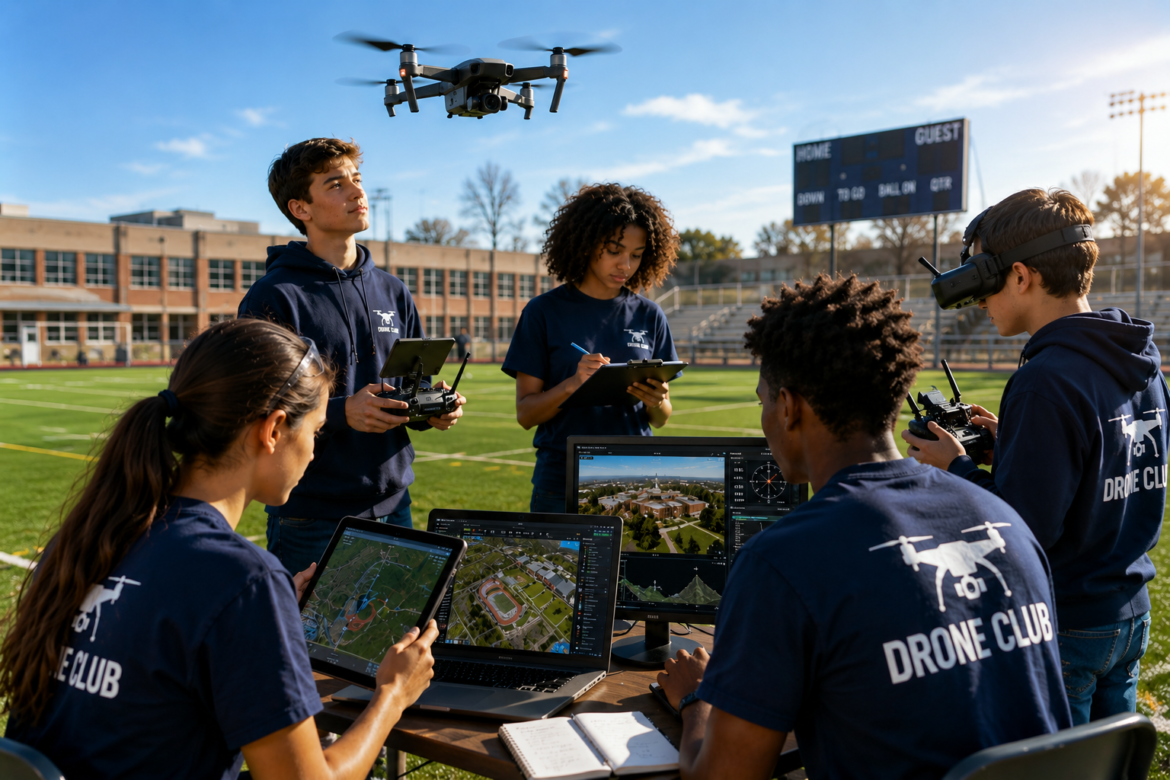
Group of drone club students on a football field testing a quadcopter while laptops and tablets display flight data.
Hot Topics - controversialSTEM and STEAM EducationK-12

Drone Clubs in Schools Are Launching Future Careers

by EdCircuit Staff July 31, 2026
written by EdCircuit Staff 8 minutes read

Drone clubs in schools are helping students develop Safer STEM, aviation, engineering, and technology skills while preparing them for careers in some of the fastest-growing industries in the modern economy.

A drone lifts off from a school athletic field and climbs steadily into the morning sky.

Students watch a live video feed as the aircraft surveys the campus below. One student monitors flight telemetry. Another tracks battery performance and weather conditions. A third reviews aerial imagery being collected in real time and begins analyzing the data.

To an outside observer, it may appear that students are simply flying a drone.

In reality, they are learning many of the same skills used by engineers, surveyors, emergency responders, construction managers, agricultural specialists, aviation professionals, environmental scientists, and technology experts every day.

Across the country, drone clubs are emerging as one of the most exciting and versatile opportunities in K-12 education. What makes these programs particularly powerful is their ability to blend science, technology, engineering, mathematics, aviation, artificial intelligence, problem-solving, leadership, and career exploration into a single experience.

For educators, administrators, and parents searching for opportunities that genuinely connect classroom learning to the real world, drone clubs may represent one of the most promising pathways available today.

More Than Flying: A Gateway to Real-World Learning

One of the biggest misconceptions about drone clubs is that they are primarily about operating small aircraft.

The reality is far more impressive.

A successful drone program introduces students to a wide range of disciplines that extend far beyond flight operations. Students learn about aerodynamics, aviation safety, weather patterns, data collection, engineering design, photography, videography, mapping technologies, geographic information systems (GIS), mission planning, risk management, and emerging technologies such as automation and artificial intelligence.

Flying the drone is often just the beginning.

Students must determine the purpose of the flight, evaluate environmental conditions, plan routes, collect information, analyze results, and communicate findings. These are the same types of challenges professionals face in industries that increasingly rely on drone technology.

The result is a learning experience that feels authentic because it is authentic.

Students are not simply completing assignments.

They are solving problems.

One of the Fastest-Growing Technologies in the Workforce

Few technologies have expanded into as many industries as drones.

Construction companies use drones to monitor project progress and generate highly detailed site maps. Farmers use them to assess crop health and improve productivity. Utility companies inspect power lines, pipelines, and infrastructure. Public safety agencies deploy drones during search-and-rescue operations, natural disasters, and emergency response situations.

Environmental organizations use drones to monitor wildlife habitats and conservation projects. Transportation agencies rely on aerial imagery to support planning and infrastructure development. Media companies use drones to capture footage that would have been impossible or prohibitively expensive only a few years ago.

The list continues to grow.

As organizations discover new uses for drone technology, the demand for skilled professionals continues to rise.

Students participating in drone clubs gain exposure to industries that are actively searching for future talent.

That makes these programs much more than extracurricular activities.

They become workforce development opportunities.

Building STEM Skills Through Hands-On Exploration

Educators often struggle with a common challenge: helping students understand why classroom concepts matter.

Drone programs naturally solve that problem.

Mathematics becomes more meaningful when students calculate distances, altitudes, and flight paths.

Physics concepts become easier to understand when students see lift, drag, thrust, and motion in action.

Geography comes alive when students create maps and analyze aerial imagery.

Engineering becomes tangible when students troubleshoot equipment, improve performance, and solve technical challenges.

Computer science gains relevance when students use software platforms to process flight data and generate visualizations.

Instead of learning concepts in isolation, students experience how multiple disciplines work together to accomplish a mission.

That connection between theory and application often leads to higher engagement and deeper learning.

Preparing Students for FAA and Aviation Pathways

One of the most overlooked benefits of drone education is its connection to aviation careers.

Many students who join a drone club because they enjoy technology discover a much broader interest in aviation, aerospace, and flight operations.

Drone clubs provide an early introduction to concepts associated with the Federal Aviation Administration’s Part 107 Remote Pilot certification, which is required for many commercial drone operations in the United States.

While students may not immediately pursue certification, they begin learning about airspace, flight planning, weather considerations, safety procedures, regulations, and operational responsibilities.

These experiences can spark interest in careers as pilots, aviation managers, aerospace engineers, flight systems specialists, air traffic professionals, and drone operators.

For students fascinated by aviation, drone clubs often become the first step toward a much larger journey.

National Competitions Create Excitement and Opportunity

One reason drone clubs are expanding rapidly is the growing number of competitions and organized programs available to schools.

Students can participate in programs supported by the AUVSI Foundation, which promotes STEM learning through drone and autonomous systems education.

The Academy of Model Aeronautics provides educational resources, safety guidance, and opportunities for students interested in aviation and drone operations.

The REC Foundation has helped fuel the growth of student drone competitions through its Aerial Drone Competition programs, which challenge students to combine flight skills, teamwork, engineering, and problem-solving.

Drone Soccer is also gaining momentum across the country, creating exciting opportunities for schools to engage students through competition while introducing concepts related to aviation, engineering, and technology.

Organizations such as SkillsUSA continue expanding opportunities for students interested in aviation, technology, and emerging workforce skills.

These competitions provide more than trophies.

They build teamwork, leadership, communication skills, and confidence while exposing students to peers who share similar interests.

Play video: Harmony Public Schools Hosts Mission 2026 Time Warp Drone Competition (1 minute 35 seconds)1:35
Harmony Public Schools Hosts Mission 2026 Time Warp Drone Competition1 min 35 sHarmony Public Schools on YouTube

Harmony Public Schools – Harmony Public Schools Hosts Mission 2026 Time Warp Drone Competition (Play video)

Drones as Problem Solvers for Schools

One of the most exciting opportunities for drone clubs is their ability to contribute directly to the school community.

Students can create aerial campus maps for facilities planning.

They can support environmental science projects by documenting restoration efforts or analyzing local ecosystems.

They can assist media programs by producing aerial footage for school promotional videos.

Athletic departments can use drone footage to highlight facilities and events.

STEM classes can use aerial imagery for interdisciplinary projects that connect science, mathematics, geography, and technology.

In many cases, drone clubs become valuable contributors to the broader educational mission of the school.

Students see firsthand how technology can be used to solve real problems and create meaningful outcomes.

That experience is incredibly powerful.

Artificial Intelligence and Autonomous Systems

The future of drones is increasingly connected to artificial intelligence.

Modern drone platforms already use AI-assisted technologies for navigation, obstacle avoidance, object recognition, mapping, and data analysis.

As autonomous systems continue advancing, drones will play an even larger role in industries ranging from transportation and agriculture to infrastructure management and public safety.

Students participating in drone clubs gain exposure to these emerging technologies at an early age.

They begin understanding how automation works, how data is analyzed, and how intelligent systems make decisions.

These experiences prepare students not only for drone-related careers but also for a future where artificial intelligence and autonomous technologies become increasingly common across nearly every profession.

Creating Powerful Community Partnerships

Drone clubs offer some of the strongest partnership opportunities of any student organization.

Local engineering firms, construction companies, agricultural businesses, public safety agencies, utilities, airports, transportation departments, environmental organizations, and universities often have a direct interest in drone technology.

Many are eager to support schools because they recognize the growing need for skilled professionals.

These organizations can provide guest speakers, demonstrations, mentorship opportunities, site visits, internships, and career exploration experiences.

Students gain valuable insight into how drone technology is being used in the real world.

Schools gain access to expertise and resources.

Communities benefit from stronger connections between education and workforce development.

Everyone wins.

Helping Students Discover What’s Possible

Perhaps the greatest strength of a drone club is its ability to expand students’ understanding of what is possible.

Many students join because flying a drone sounds exciting.

What they often discover is a world of opportunities they never knew existed.

They discover careers.

They discover technology.

They discover engineering.

They discover aviation.

They discover leadership.

They discover confidence.

Most importantly, they begin to see themselves as future innovators.

That shift in perspective can change the trajectory of a student’s life.

Looking Beyond the Horizon

At first glance, a drone club may appear to be about aircraft.

Look closer, however, and something much more meaningful is happening.

Students are learning how technology solves problems.

They are developing technical and leadership skills.

They are connecting classroom concepts to real-world applications.

They are exploring industries that continue to transform the global economy.

Somewhere on a school athletic field today, a student is preparing a drone for flight. They are checking weather conditions, reviewing safety procedures, planning a mission, and collecting data that will help solve a real-world challenge.

A decade from now, that same student may be designing autonomous aircraft, supporting emergency response operations, managing infrastructure projects, protecting natural resources, developing aerospace technologies, or helping shape the future of aviation.

Drone clubs are not simply teaching students how to fly.

They are helping students discover how high their futures can soar.

Play video: Drone club at Parkway Elementary School soaring to new heights (1 minute 49 seconds)1:49
Drone club at Parkway Elementary School soaring to new heights1 min 49 sWJBF on YouTube

WJBF – Drone club at Parkway Elementary School soaring to new heights (Play video)

Subscribe to edCircuit to stay up to date on all of our shows, podcasts, news, and thought leadership articles.

July 31, 2026 0 comments
0 FacebookTwitterPinterestLinkedinWhatsappCopy LinkEmail
Classroom scene: a balance with a money bag and coin stacks beside a tablet showing a graduation cap atop a stack of books, surrounded by educational icons in the air.
K-12EdTechHot Topics - controversial

Educational Technology Investments: Beyond ROI

by EdCircuit Staff July 30, 2026
written by EdCircuit Staff 8 minutes read

Educational technology investments are under greater scrutiny than ever, and the return on investment (ROI) of educational technology is harder to measure than a simple calculation suggests, forcing school leaders to think more broadly about the value technology creates for students, educators and communities.

For decades, conversations about technology spending have focused largely on cost. How much will it take to purchase a device? What is the annual subscription fee? Can the district afford the infrastructure upgrade? Those questions remain important, but they no longer tell the entire story. As district leaders navigate tighter budgets, increased accountability and rapidly evolving technologies, they are being asked a much more difficult question: what value does this investment actually create?

Unlike businesses, school systems are not designed to maximize profits. Their mission is to create opportunities, support learning and prepare students for the future. That means educational technology investments should be evaluated differently. Financial returns matter, but so do access, equity, resilience, engagement and long-term outcomes that are often impossible to capture in a spreadsheet. Understanding that broader picture requires leaders to think beyond return on investment and take a more complete approach to evaluating technology.

Why Are Educational Technology Investments Different?

School districts make decisions in a very different environment than private businesses. A corporation may evaluate investments primarily through profitability and efficiency. Schools certainly care about efficiency, but their purpose extends well beyond financial performance: districts exist to serve students, support educators, and provide opportunities that help young people succeed inside and outside the classroom.

That mission changes the way leaders should think about technology. One district may invest in a platform that improves communication with families. Another may expand access to Advanced Placement courses or dual-enrollment opportunities through digital resources. Still another may strengthen cybersecurity to safeguard sensitive student information. None of those decisions is intended to generate profit; their value lies in something larger.

Educational technology investments often influence outcomes that unfold over years rather than months. They affect access, instructional quality, operational resilience, and the experiences students and educators have every day. As a result, leaders need frameworks that let them evaluate investments more comprehensively, and three concepts are particularly important: Total Cost of Ownership, Return on Investment and Value of Investment. For the wider landscape of edtech investment, see HolonIQ’s tracking of venture investment in education technology companies.

What Is Total Cost of Ownership in Educational Technology?

Technology leaders have long understood that the purchase price of a product rarely tells the full story. A district might acquire a new software platform for what appears to be a reasonable cost, only to discover that implementation requires additional staffing, professional development, technical support and integration work. Over time, updates, licensing changes and replacement cycles add even more expense. This broader view is commonly called Total Cost of Ownership: looking beyond the initial investment to the entire lifecycle of a solution.

Hidden costs often include:

  • Professional development
  • Technical support
  • Device replacement cycles
  • Integration and implementation
  • Additional staffing requirements
  • Downtime and productivity losses
  • Infrastructure upgrades
  • Ongoing maintenance

Staffing is the cost districts most often underestimate. In CoSN’s 2026 State of EdTech survey, 58 percent of district technology leaders said they were understaffed for the technology used in teaching and learning, a gap CoSN notes can affect the efficacy of the programs districts buy. Ignoring factors like these creates unrealistic expectations and difficult conversations later. Technology leaders who understand Total Cost of Ownership are better equipped to make sustainable decisions; they recognize that the cheapest option is not always the most economical over time, and that a higher initial investment may deliver greater long-term value. In an era of tighter budgets, that kind of strategic thinking is increasingly important.

How Do Schools Measure the ROI of Educational Technology?

Return on Investment remains one of the most familiar ways organizations evaluate spending decisions, and in education, ROI often focuses on measurable financial benefits and operational efficiencies. Districts may realize savings by consolidating systems, reducing printing costs, streamlining workflows or improving resource allocation, and in some cases technology can even create new opportunities for funding or reimbursement. Those benefits matter: efficiency, time and resources all matter.

But Return on Investment only tells part of the story. Many educational outcomes cannot easily be reduced to dollars and cents, and some of the most meaningful impacts technology creates may never appear on a balance sheet. That is where leaders must broaden the conversation.

Why Does Value of Investment Matter More Than Ever?

Perhaps the most important question districts can ask is not “What did we save?” but “What did we create?” Value of Investment expands the conversation beyond financial returns and asks leaders to consider the broader impact technology has on teaching, learning and operations. Some forms of value are easy to recognize; others are more difficult to quantify:

  • How do districts measure increased collaboration among teachers?
  • How do they calculate improved communication with families?
  • What is the value of greater access to learning opportunities?
  • How should leaders measure trust, resilience or student engagement?

These questions rarely have precise answers, but they represent outcomes that matter deeply to school communities. Technology creates value in ways that extend far beyond efficiency. It creates opportunity, access, flexibility and resilience, and increasingly those qualities are essential components of modern education. These are also the benefits of investing in education technology that are easiest to overlook; edCircuit explores them further in Educational Technology Benefits Beyond the Classroom.

Some of the Greatest Returns Are Unexpected

Technology investments often produce benefits that leaders never anticipated. Consider a district that introduces Wi-Fi on buses. The original goal may be to give students additional learning time during long commutes, but over time leaders may discover another benefit: fewer disciplinary incidents and fewer interruptions for administrators and transportation staff. The investment created value beyond academics. Its funding has changed, however: in September 2025 the Federal Communications Commission declared Wi-Fi on school buses ineligible for E-Rate support, reversing a 2023 ruling, which changes the cost side of that calculation.

Similarly, districts that expand digital access to Advanced Placement courses or specialized programs may find that students who previously lacked opportunities now have pathways that better prepare them for college and careers. Infrastructure investments offer another example. Network redundancy and upgraded fiber connections rarely generate excitement, yet reliable systems protect instructional time and reduce disruptions that harm learning. The value of uninterrupted access may not be immediately visible, but teachers and students experience it every day.

Cybersecurity investments present perhaps the most challenging example, because success often means that nothing happens: no ransomware attack, no breach, no emergency response and no interruption to learning. CoSN’s 2026 survey found that 65 percent of district technology leaders cite insufficient cybersecurity staffing and the lack of a dedicated budget as their top barriers. The absence of a crisis may not produce headlines, but it represents tremendous value. Sometimes the greatest returns are the problems that never occur.

What Should Districts Measure?

Because technology creates both financial and non-financial benefits, leaders must carefully consider how they define success. Too often, districts focus on metrics simply because they are easy to collect, such as usage statistics, help desk tickets, login rates and device counts. Those numbers provide valuable information, but they do not necessarily reveal impact. Instead, leaders should ask several questions before making an investment:

  • What problem are we trying to solve?
  • What outcomes do we hope to achieve?
  • How will we know whether we were successful?
  • What metrics truly matter?
  • How does this investment align with district priorities?

Answering those questions early creates clarity and improves accountability. More importantly, it helps leaders focus on outcomes rather than activities, because activity does not always equal impact, and metrics do not always equal meaning.

The Most Valuable Outcomes May Take Years to Appear

One of the challenges facing district leaders is that some returns unfold slowly. Technology investments can influence graduation rates, college readiness, career pathways and long-term opportunities, and those outcomes may not become visible for years. A student who gains access to advanced coursework through digital learning may ultimately earn college credit, pursue a STEM career, or enter a profession that transforms the trajectory of their life. A district that invests in cybersecurity today may avoid disruptions that protect instruction and preserve community trust for years to come. A communication platform may strengthen family engagement and create stronger partnerships between schools and communities.

These outcomes are difficult to quantify, but that does not make them less important. Some of the most meaningful returns are long-term and deeply human.

Moving From Cost to Value

Educational technology leaders are increasingly asked to justify spending decisions, and rightly so. Accountability matters, resources are limited, and communities deserve transparency. But the conversation should not stop with cost, because districts that focus exclusively on price risk overlooking the larger purpose behind technology investments. Technology is not simply about devices, software or infrastructure. It is about the opportunities those tools create, protecting learning, supporting educators, connecting families and preparing students for a future that continues to evolve.

Ultimately, the question leaders should ask is not simply “How much does this cost?” The better question is “What value does this create?” Some of the most important returns in education can never be fully measured in dollars.

Subscribe to edCircuit to stay up to date on all of our shows, podcasts, news, and thought leadership articles.

July 30, 2026 0 comments
0 FacebookTwitterPinterestLinkedinWhatsappCopy LinkEmail
Newer Posts
Older Posts

Participate

  • Contribute
  • Sponsor
  • Submit Release
  • Subscribe
  • Get Interviewed

We value your privacy

We use cookies to enhance your browsing experience, serve personalized ads or content, and analyze our traffic. By clicking "Accept All", you consent to our use of cookies.

Customize
  • Needed for the site to work: signing in, the cart, your consent choice. Always on.

    8 cookies
    • ss_consent 1 yearYour cookie choice on this site, so you are not asked again.
    • wordpress_logged_in_* 2 days, or 14 days with "remember me"Keeps you signed in as you move between pages.
    • wordpress_sec_* 2 days, or 14 days with "remember me"The secure half of your sign-in.
    • wordpress_test_cookie SessionChecks that your browser accepts cookies when you sign in.
    • wp-settings-* 1 yearYour display settings when signed in.
    • wp_woocommerce_session_* 2 daysYour shopping session: the cart and the checkout.
    • woocommerce_cart_hash SessionTells the site whether your cart has changed.
    • woocommerce_items_in_cart SessionWhether your cart holds anything.
  • Remembers choices you make, such as a language or a region, and supports features like live chat.

    1 cookie
    • woocommerce_recently_viewed SessionThe products you looked at, so the site can show them again.
  • Helps us understand how visitors use the site: which pages are read, and for how long.

    2 cookies
    • _ga 2 yearsGoogle Analytics: tells one visitor from another. Set only after you allow analytics.
    • _ga_* 2 yearsGoogle Analytics: keeps your session state. Set only after you allow analytics.
  • Measures how fast pages load so we can make them faster.

  • Used to show you content and offers that match your interests, on this site and elsewhere.

    1 cookie
    • sbjs_* SessionWooCommerce order attribution: where you came from, so a purchase can be credited to the campaign or site that sent you.

Your browser asks us not to sell or share your information (Global Privacy Control), so advertising cookies stay off.

Do not sell or share my personal information

Some cookies from other companies help show you offers on other sites. Tick the box and save your preference to opt out of that sharing; untick it to opt back in at any time.

Your browser sends Global Privacy Control, so this preference is set for you and cannot be changed here.

Sign In

Keep me signed in until I sign out

Forgot your password?

Password Recovery

A new password will be emailed to you.

Have received a new password? Login here

Shopping Cart

Close

No products in the cart.

Close
-
00:00
00:00

Queue

Update Required Flash plugin
-
00:00
00:00

Your cart (items: 0)

Products in cart

Product Details Total
Subtotal $0.00
Shipping and discounts calculated at checkout.
View cart
Go to checkout

Your shopping cart is empty

Return to shop

Notifications